Final election results in Armenia: Pashinyan's party wins majority






Final results of Armenia’s 2026 election
Armenia‘s Central Election Commission has announced the final results of the parliamentary elections held on 7 June.
Three political forces won seats in parliament:
- the ruling Civil Contract party of Prime Minister Nikol Pashinyan;
- the Strong Armenia alliance, led by Russian businessman Samvel Karapetyan;
- the Armenia alliance of former president Robert Kocharyan.
Prosperous Armenia, the party of businessman Gagik Tsarukyan, won 3.9893% of the vote and failed to clear the 4% electoral threshold.
The Central Election Commission invalidated the results at three of Armenia’s 2,005 polling stations. However, the commission will not hold repeat voting at those locations. The commission’s chairman said the violations could not have affected the overall outcome of the election.
The opposition disagrees. Six opposition groups, including Prosperous Armenia, issued a joint statement after the vote. They said that “systematic and organised violations took place during the elections, significantly affecting voters’ freedom of choice and the conditions for fair political competition”.
Under Armenian law, political parties can challenge the final election results in the Constitutional Court. Levon Kocharyan, a representative of the Armenia alliance, has already announced plans to file an appeal. Opposition groups also intend to discuss “other methods of struggle”.
According to political analyst Robert Ghevondyan, an appeal to the Constitutional Court would mark the first time since the 2018 revolution that political forces have challenged election results.
“I consider it unlikely that the election results will be declared invalid and that new elections will take place. However, given the political situation, such a possibility still exists,” he said.
Ghevondyan believes the new parliament will continue the “traditions” of the previous legislature, where opposition parties focused on disrupting parliamentary work rather than participating in it. He expects to see “disorder, tension, disputes and theatrical performances” in the new parliament.
- ‘Not concerned’: Pashinyan on possible expulsion of Armenia from Russian-led military bloc
- Fact-checkers expose alleged Russian FSB interference in Armenia’s parliamentary elections
- Pressure from Russia on Armenia ahead of elections: economy as tool of influence
- Russian intelligence operatives sent to ‘target Pashinyan’: The Insider investigation
Protest takes place alongside CEC session
Representatives of three parties that took part in the elections — the Strong Armenia and Armenia alliances, as well as the Prosperous Armenia party — staged a protest outside the Central Election Commission. They demanded that the authorities annul the election results and hold a new vote. Opposition groups argued that “mass violations” had occurred during the electoral process.
“The only widespread phenomenon recorded during these elections was the distribution of large-scale vote-buying bribes,” Arusyak Julhakyan, a representative of the ruling party, said during the CEC session.
Throughout the election campaign, on election day and in its aftermath, the Anti-Corruption Committee reported dozens of alleged vote-buying cases. All of them involved three opposition forces. Investigators opened criminal cases and arrested several people.
Julhakyan stressed that the authorities had fully ensured citizens’ electoral rights during the vote.
Meanwhile, Iveta Tonoyan of Prosperous Armenia said that “the purpose of the CEC’s decision is to prevent Prosperous Armenia from entering parliament”. She argued that one person — Prime Minister Pashinyan — controls the commission.
“At the polling stations where the authorities invalidated the results, Prosperous Armenia won more than 200 votes. If officials had counted those votes, the party would have entered parliament and Civil Contract would have lost its three-fifths majority. Yet the CEC claims this would not have had a significant impact on the final results,” said Levon Kocharyan of the Armenia alliance.
A three-fifths majority in parliament will allow the ruling party to adopt or amend constitutional laws on its own, including the electoral and judicial codes. It will also allow the party to elect the ombudsman and appoint judges to the Constitutional Court and the Court of Cassation without support from the opposition.
How many votes did the ruling party and opposition forces receive?
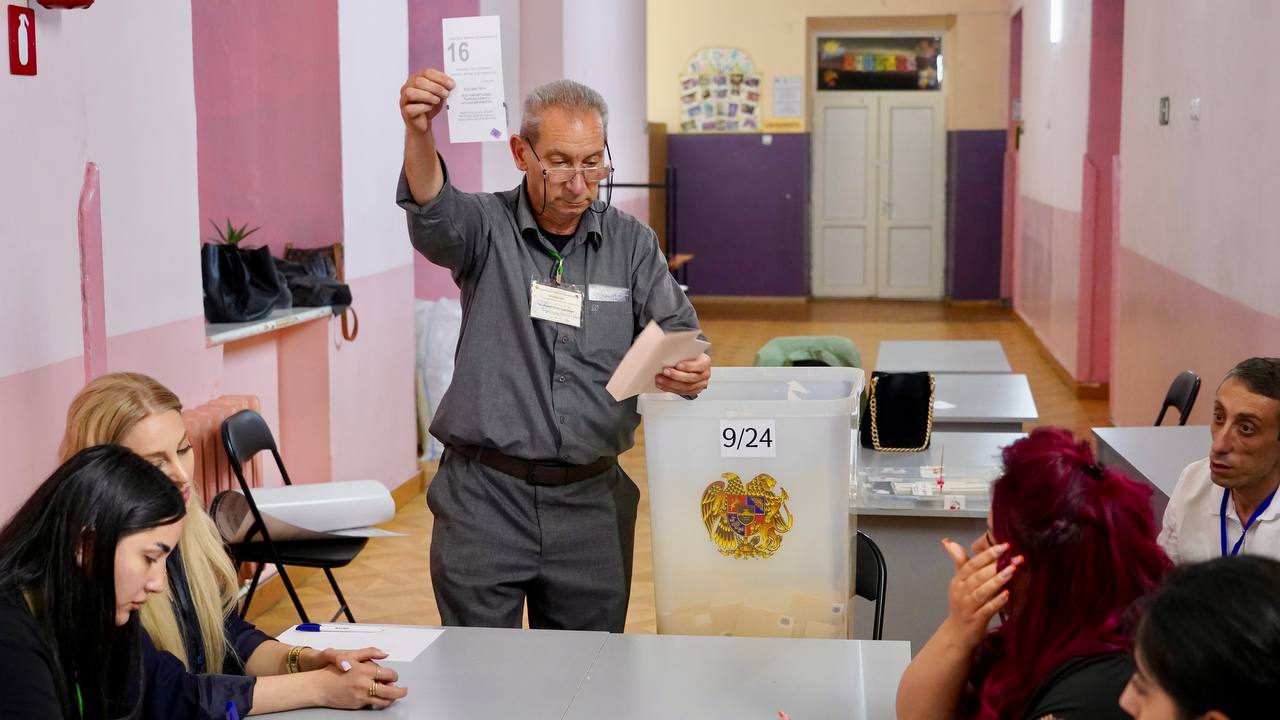
According to the Central Election Commission’s final statement, the ruling Civil Contract party won 726,819 votes, or 49.7456% of the total vote.
The three opposition forces seeking parliamentary representation received the following results:
- Strong Armenia alliance — 340,006 votes (23.2710%);
- Armenia alliance — 144,983 votes (9.9231%);
- Prosperous Armenia party — 58,287 votes (3.9893%).
After officials conducted a recount following the publication of the preliminary results, the vote totals for all parties decreased slightly. However, the adjustment had a significant impact only on Prosperous Armenia, which failed to clear the 4% electoral threshold.
Ruling party to hold 64 of 105 seats
During a session held on the evening of 14 June, CEC chairman Vahagn Hovakimyan announced the distribution of parliamentary mandates:
- Civil Contract — 61 seats;
- Strong Armenia alliance — 28 seats;
- Armenia alliance — 12 seats.
He also announced that Civil Contract would receive three additional seats reserved for national minorities, representing the Yezidi, Russian and Kurdish communities. Strong Armenia will receive one additional minority seat representing the Assyrian community.
As a result, Civil Contract will hold 64 seats in the 105-member parliament, Strong Armenia will have 29 seats and the Armenia alliance will hold 12 seats.
“The decision takes effect upon publication and may be challenged in the Constitutional Court until 18:00 on the fifth day following its publication,” the CEC chairman said.
Why will there be no repeat vote? The CEC’s explanation
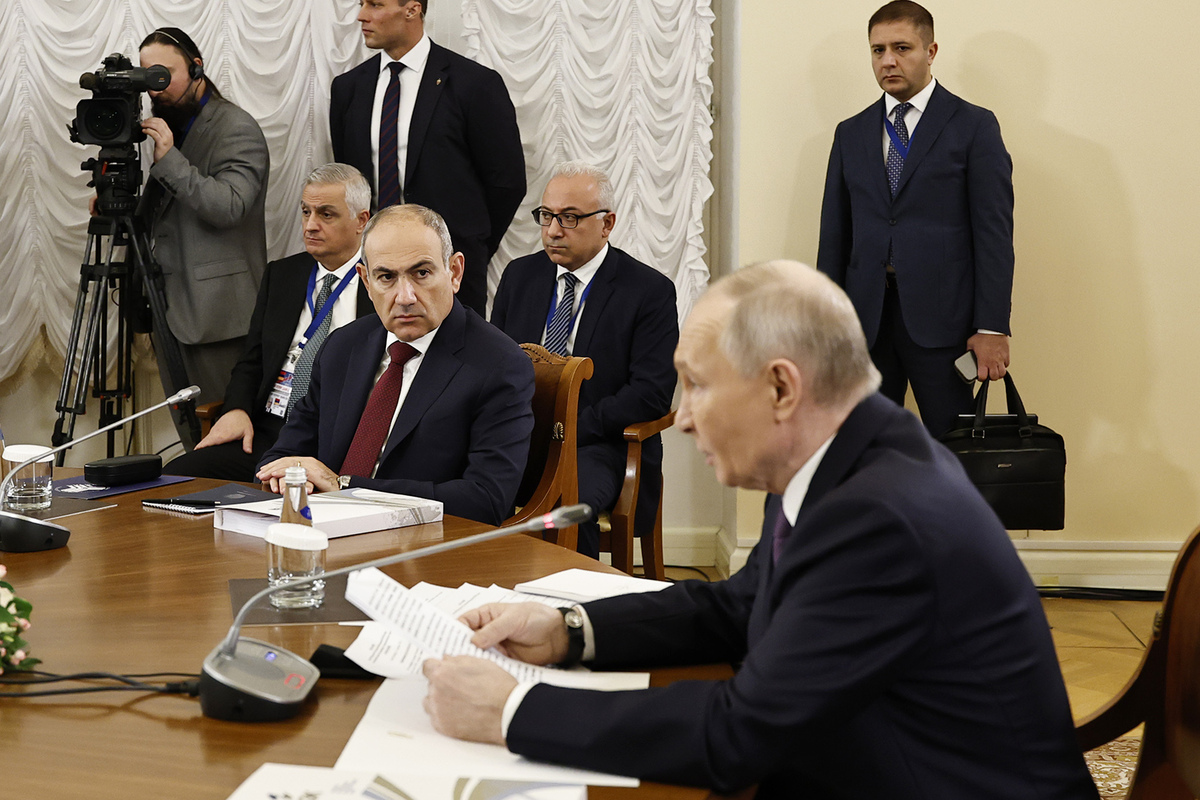
Armenia’s Central Election Commission invalidated the election results at three polling stations.
At polling stations 35/65 and 10/51, the commission acted after representatives of the Strong Armenia alliance complained that military personnel had cast ballots after 20:00.
At polling station 12/13, the commission cited the absence of ballot papers for the National Democratic Pole party.
“The commission should not automatically call repeat elections after invalidating the results at a polling station. When making such a decision, the CEC must take into account both the protection of voters’ genuine will and the legality of the election results,” the commission said.
The CEC justified its decision not to hold a repeat vote as follows:
“A voter’s choice may no longer reflect their original political preferences or free expression of will. Instead, voters may calculate how to influence results that are already known. This risk is commonly described as tactical voting.
Because tactical voting may occur, a repeat vote does not guarantee a fair election outcome.”
The commission also argued that a repeat vote could violate the principle of voter equality, because one group of voters would find itself in significantly different circumstances from all others.
According to the CEC, authorities should not hold repeat elections if they “cannot guarantee a free, equal and fair outcome”.
“By refusing to hold a repeat vote, the commission is not ignoring the violation. Rather, it is rejecting a measure that could distort voters’ will even further,” the commission said.

Opposition statement: ‘Official results do not reflect the will of the people’
Six opposition forces that took part in the election — the Strong Armenia and Armenia alliances, as well as the Prosperous Armenia, Bright Armenia, Armenian National Congress and National Democratic Pole parties — issued a joint statement.
They argued that “systematic and organised violations” occurred throughout the electoral process, including:
- the widespread use of administrative resources and pressure;
- political persecution and arrests;
- deliberate obstruction of opposition campaign headquarters;
- abuse of information and campaigning tools;
- selective invalidation of vote-counting results.
“The official figures do not reflect the true will of the people or the actual election results. Results recorded under such conditions cannot serve as the basis for forming a legitimate government that enjoys the confidence of the majority of the population,” the statement said.
The opposition also argued that Nikol Pashinyan and his “regime” bear “full responsibility for any further escalation of the situation” in the country.
At the same time, opposition leaders said they would act exclusively within the framework of the constitution, the law and democratic principles.
‘Those who handed out election bribes will not get another chance’ – Pashinyan
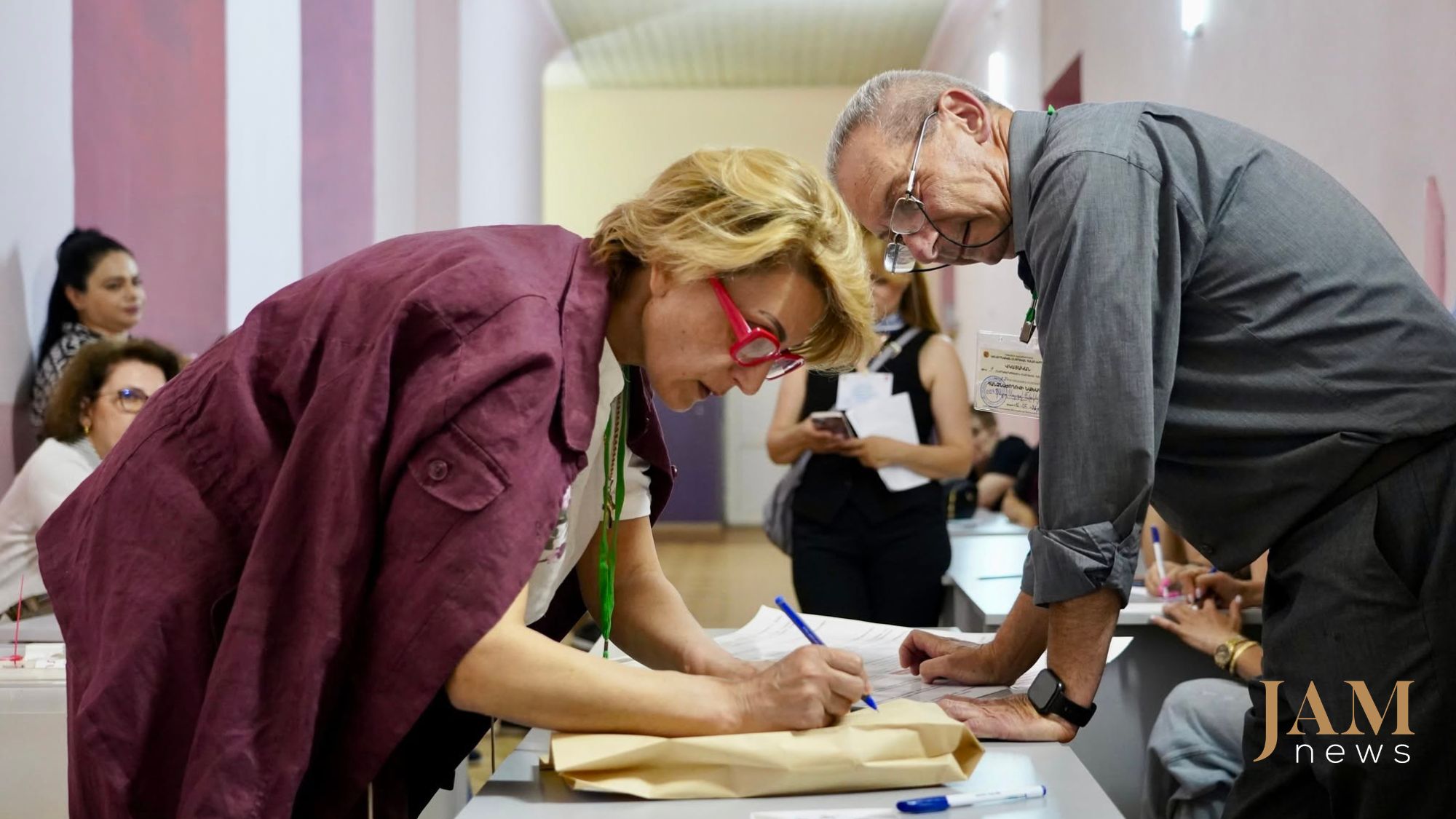
“According to the logic of some people, the Republic of Armenia should apologise to those who handed out election bribes because those bribes did not fully translate into the election results. Therefore, they believe these forces should receive a second, third, fourth and fifth chance,” the Armenian prime minister said.
He described that logic as absurd. Pashinyan said the forces that distributed election bribes would not receive “a single additional chance” and argued that “the people decided this through their vote”.
In a separate video statement, Pashinyan said the three opposition forces “cannot do anything for one simple reason: they do not have, never had and never will have the support of the people”.
“The people have clearly demanded that this three-headed mafia be brought to its knees and destroyed. That must inevitably happen,” Pashinyan said, referring to the Strong Armenia and Armenia alliances, as well as the Prosperous Armenia party.

Reactions
Political analyst Tigran Grigoryan said:
“The CEC did not order a repeat vote at the polling stations where it invalidated the results. That decision directly affects both Prosperous Armenia’s failure to enter parliament and the number of seats allocated to Civil Contract. The ruling party gains three additional seats and secures a three-fifths majority.
They spent an entire week ‘fighting’ to prevent Russia from suddenly discrediting the election results. Then, in full public view and amid renewed calls to dismantle criminal-oligarchic forces, they awarded themselves three additional mandates in what appears to be a clear violation of the law.
As a result, they are effectively undermining the legitimacy of the election outcome. Of course, people will now explain that they are engaging in obvious lawlessness in the name of sovereignty and democracy. But that is no longer the main issue.
This sets a very dangerous precedent and shows that the ruling force no longer has any red lines.”
Human rights defender and Independent Observer mission representative Daniel Ioannisyan said:
“The CEC should have focused on the political forces that benefited from vote-buying rather than acting as it did and violating the law.
The commission should have disqualified the beneficiaries of election bribery from participating in the vote. There was extensive evidence that people distributed bribes in their favour. The CEC has both the authority and the obligation to act in such cases. That would have been a far more justified decision than what the commission actually did by placing a legal time bomb beneath the election results.
The CEC has effectively and unlawfully taken away the mandates that Prosperous Armenia would not have received without vote-buying conducted in its favour. It will be interesting to see how the Constitutional Court judges respond.
As the saying goes, a thief stole from another thief, and God — in this case the Constitutional Court — saw it and was astonished.”

Final results of Armenia’s 2026 election