Armenia seeks alternatives amid concerns over possible Russian gas price hike






Russian gas pressure on Armenia
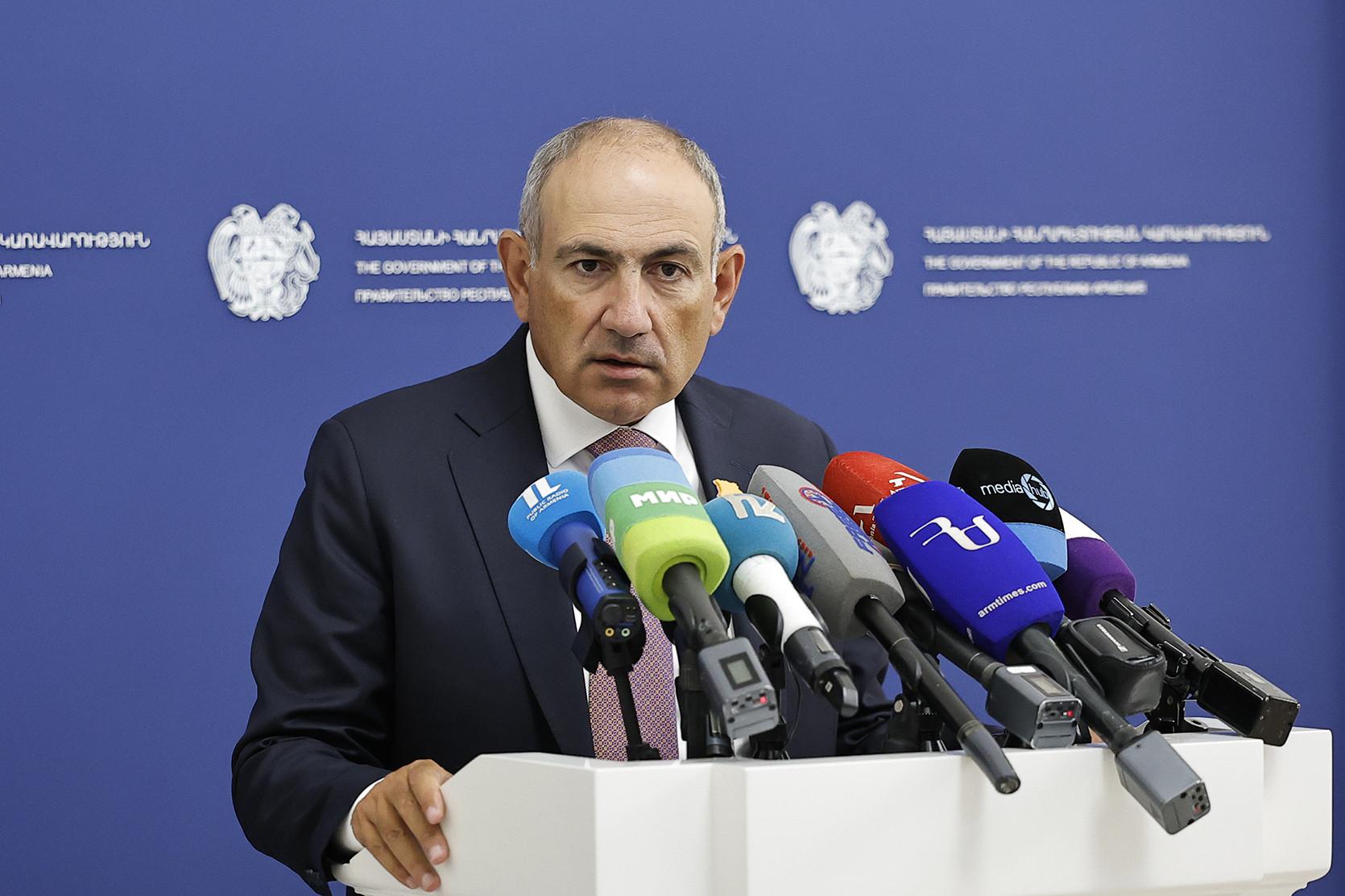
If the issue of raising gas tariffs arises, the Armenian authorities will discuss it with their Russian counterparts in a friendly atmosphere, Sargis Khandanyan, an MP from the ruling Civil Contract faction, told journalists.
Khandanyan added that he had no information about any negotiations with Russia over gas tariffs. However, he expressed confidence that, if necessary, Armenia would be able to find alternatives to Russian gas. These could include supplies from Iran, although this is not the only option.
Yerevan and Tehran have already discussed the issue. Following talks held with Iranian partners by Armenia’s Minister of Territorial Administration and Infrastructure, Davit Khudatyan, it emerged that the volume of Iranian gas supplies could potentially be doubled.
“This decision has nothing to do with any other country, Russia in particular. It is a profitable economic activity that both countries are interested in expanding,” the Armenian minister said.
Political analyst Robert Ghevondyan notes that there has recently been increasingly frequent talk of a possible revision of Russian gas prices. He views the issue in the context of the levers of pressure being used against Armenia. In his view, Moscow has already exhausted much of its arsenal and is now resorting to economic leverage, including in the energy sector.
“Political, cultural and terrorist levers, as well as the influence of the criminal subculture, are no longer working for various reasons. And Russia, in order to prevent Armenia from strengthening its independence, has decided to make full use of its last remaining lever,” Ghevondyan said.
- Armenia begins shift from Russia towards EU – but finish line remains distant
- Pashinyan: ‘Russia wants either exclusive ties or nothing’
- ‘Moscow will only push Armenia out of Russian-led blocs’: Reaction to Russia’s foreign intelligence claim
- Armenia to restore tracks near Turkish and Azerbaijani borders on its own despite Russian control of its railways
‘This scenario cannot be ruled out’: On gas imports from Azerbaijan
Journalists asked MP Sargis Khandanyan how likely it was that the tariff on gas imports from Russia could change by the end of the year.
“I am not aware of when this issue was last discussed with Russia. Nor am I aware of any information that would give grounds to believe that the gas tariff could change,” he replied.
At the same time, the MP noted that the government attaches great importance to diversifying supplies. He recalled the agreements reached during the visit of Armenia’s Minister of Territorial Administration and Infrastructure to Iran. According to him, the “Trump Route” could also be considered as one such opportunity:
“As part of the transit route that will connect Azerbaijan with Nakhchivan through Armenian territory, a gas pipeline will be built. This could provide another opportunity. We could consider this pipeline as an additional source. Of course, this is a very theoretical idea, but it would not be difficult to implement.”
Asked about the possibility of importing gas from Azerbaijan, Khandanyan said that Yerevan and Baku were discussing a broad range of issues:
“I do not know how far we have progressed on the issue of gas supplies, but this scenario cannot be ruled out.”
In late October 2025, Azerbaijani President Ilham Aliyev announced that all restrictions on transit to Armenia would be lifted. Since then, Armenia has been receiving petroleum products from the neighbouring country by rail. According to official figures, Azerbaijan has already supplied Armenia with 20,000 tonnes of petroleum products.
Yerevan and Tehran agree to increase gas supplies. Can Moscow stand in the way?
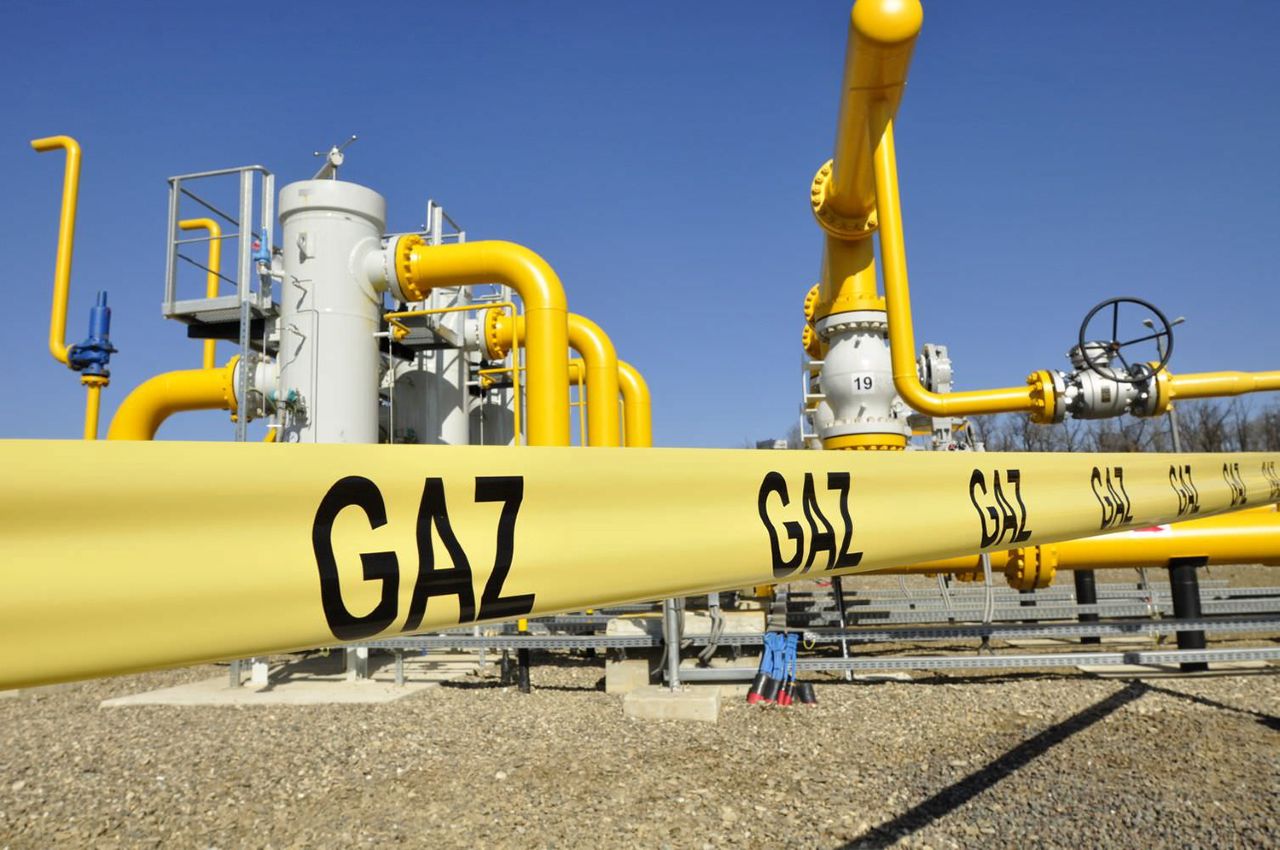
Minister of Territorial Administration and Infrastructure Davit Khudatyan paid a three-day visit to Iran. Upon returning from Tehran, he said that the volume of Iranian gas supplied under the “Gas for Electricity” programme could be at least doubled. He explained that the pipeline’s capacity exceeds the volume of gas currently being supplied.
Under the programme, Armenia has been receiving gas from Iran since 2009, converting it into electricity which is then supplied back to Iran.
To increase gas imports and export a corresponding volume of electricity to Iran, construction of the Iran-Armenia high-voltage power transmission line needs to be completed. The Armenian government hopes that the long-delayed project will be completed by the end of the year.
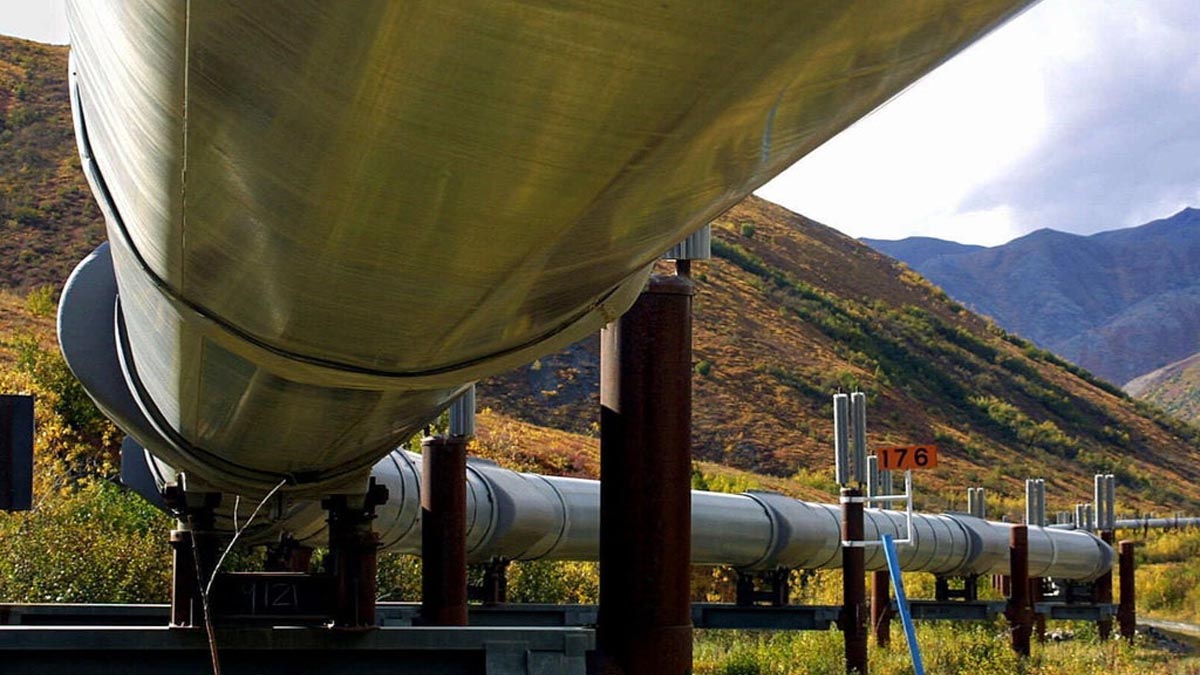
Meanwhile, since 2015, the Armenian section of the pipeline carrying gas from Iran has been controlled by Russian company Gazprom.
As a result, some experts doubt whether Iranian gas supplies can be increased without Moscow’s consent. The Armenian government, however, has assured that there will be no obstacles to expanding supplies under the “Gas for Electricity” programme.
Expert commentaty
Political commentator Artem Yerkanyan says:
“Russian Security Council Deputy Secretary Alexei Shevtsov threatened that unless Armenia revises its foreign policy course, it will have to pay $800 for Russian gas instead of the current $177. Compensating for that difference would cost at least $1bn. That is more than the €50m the European Union has promised Armenia as compensation for the impact of strained relations with Russia.
It is worth explaining what the figures of $177 and $800 actually mean. Russia’s Gazprom sells gas for $177 to Gazprom Armenia, which is owned by Gazprom itself. In other words, it also earns revenue from the distribution of the gas, and that revenue also goes to Gazprom. Therefore, I think it would be incorrect to say that Armenia buys gas for $177.
It is also unclear where the figure of $800 comes from, considering the following:
- China buys Russian gas for $258;
- Turkey for $280;
- Hungary, Serbia and Slovakia for $400;
- Spain, France and Belgium for $450.
Moreover, according to a forecast by Russia’s Ministry of Economic Development, by the end of this year the average price at which Russia will sell gas to countries outside the EAEU [an economic bloc led by Russia] will be $290.
If the average price is $290, why are they planning to sell it to Armenia for $800? That is unclear.”
Political analyst Robert Ghevondyan argues:
“Following the elections, the Armenian authorities have continued to pursue a multi-vector foreign policy. Dependence on Russia is steadily declining, with the economic dimension playing an increasingly important role in this process.
While Russia is trying to exert economic pressure, Armenia is opening up new markets that Armenian businesses previously ‘failed to notice’ because of their excessive focus on the Russian market. Although problems remain with some goods, economic diversification is advancing rapidly.
In the energy sector, Armenia has alternatives when it comes to building a new nuclear reactor, which in itself is a headache for Russia.
It is no coincidence that, alongside economic blackmail, Rosatom executives periodically make Armenia ‘attractive’ offers to build a new Russian nuclear reactor. However, the Armenian authorities are likely to opt for a different proposal.
A rise in gas prices could initially cause problems. But Armenia has alternatives here as well: Iranian, Turkmen and now Azerbaijani gas.
Consequently, in the near future, Russian gas may find itself merely competing on the market. This would limit the Kremlin’s ability to use gas prices to blackmail Armenia.
In conclusion, it should be noted that increased pressure from Russia is having the opposite effect. Armenia is steadily ‘freeing itself’ from excessive Russian influence and diversifying its economy. The Kremlin does not appear to recognise this yet, but that is its problem.”