Top stories in Azerbaijan, Armenia, and Georgia from 10-14 August, 2026
 Live
Live




-
Friday, 14 August, Georgia. Georgian company Solidus: “300 tonnes of petrol was sent to Abkhazia — this is a bridge between Georgian and Abkhaz businesses”
-
Friday, August 14, Armenia. “In the near future, exports from Armenia to Azerbaijan will also take place,” says Nikol Pashinyan
-
Friday, 14 August, Azerbaijan. Successful progress in the construction of the railway in Nakhchivan
-
Thursday, 13 August, Armenia. A phone call took place between the prime minister of Armenia and the president of Ukraine
-
Thursday, 13 August, Georgia. Fuel shortage in Abkhazia and gasoline supplies from Tbilisi
-
Thursday, 13 August, Azerbaijan. Amnesty International says the health of jailed opposition leader Ali Karimli and ToplumTV co-founder Alasgar Mammadli has deteriorated
-
Wednesday, 12 August, Georgia. Prime Minister and Tbilisi mayor: “A propaganda campaign is being waged from abroad to fuel Russophobia in Georgia”
-
Wednesday, 12 August, Azerbaijan. President Ilham Aliyev gave a major interview to Azerbaijan’s state TV in Nakhchivan
-
Wednesday, 12 August, Armenia. Military academy graduates will now receive an apartment along with their officer rank
-
Tuesday, 11 August, Azerbaijan. US, Azerbaijan and Armenia issue joint statement marking first anniversary of Washington peace summit
-
Tuesday, 11 August, Armenia. MP from from the ruling party: “All our citizens can now feel that peace has truly arrived”
-
Tuesday, 11 August, Georgia. Investigation launched after opposition leader says Georgian forces “shot prisoners of war” during the 1990s Georgian-Abkhaz war
-
Monday, 10 August, Georgia.
-
Monday, 10 August, Azerbaijan. A year has passed since the historic Washington peace summit between the leaders of Azerbaijan and Armenia, attended by Donald Trump
-
Top stories in Azerbaijan, Armenia, and Georgia from 3-7 August, 2026

-
Friday, 14 August, Georgia. Georgian company Solidus: “300 tonnes of petrol was sent to Abkhazia — this is a bridge between Georgian and Abkhaz businesses”
● The Georgian company behind the recent fuel shipment to Abkhazia has been identified. Radio Liberty reports that the fuel was delivered across the Enguri bridge by Solidus, a company with “special enterprise” status. Its owner, Giorgi Arveladze, said the shipment amounted to about 300 tonnes, rather than the 3,000 tonnes reported earlier by some media outlets and Telegram channels. Arveladze said the fuel was mainly intended for residents of [mostly Georgian-populated] Gali District and local petrol stations. “I work with Abkhaz partners. This is a bridge between Georgian and Abkhaz businesses,” he said.
PM Irakli Kobakhidze confirmed on 12 August that fuel had indeed been supplied from territory controlled by Tbilisi, stressing that it was brought in by private business. The de facto Abkhaz authorities also confirmed the shipment, saying it was needed because supplies from Russia had been disrupted.
● Opposition economist Roman Gotsiridze earlier alleged that the authorities may have used a company with special permission to trade with Abkhazia to make the shipment while avoiding possible sanctions risks.
He suggested that a major Georgian oil company could have been behind the supply and accused Georgian Dream of acting “on Russia’s instructions”.
● Georgia’s Communications Commission has fined opposition TV channel TV Pirveli 5,000 lari (about $1,910) for breaching broadcasting regulations.
The regulator said the channel had used language reflecting personal opinions in its news coverage and had failed to meet requirements for accuracy in reporting facts.
It is the third sanction against TV Pirveli in the past year. The channel was previously given a written warning and fined 2,500 lari ($955). The Georgian Charter of Journalistic Ethics described the latest decision as pressure on the channel’s editorial independence. Since March 2025, the commission has had broader powers to monitor the content of broadcast media.
● Germany’s new ambassador to Georgia, Barbara Foss, has taken up her post, replacing Peter Fischer, who left at the end of June after completing his diplomatic term. Fischer was a vocal critic of Georgian Dream and was repeatedly attacked by Georgian officials, including over allegations that he was interfering in Georgia’s domestic affairs.
“Current tensions are making relations between Germany and the European Union and Georgia more difficult. Despite this, Germany’s strong support for Georgia’s democratic and pro-European path remains unchanged,” Foss said.
● Traffic restrictions in the Darial Gorge have been lifted and the Dariali border crossing has returned to normal operation. On 13 August, an early-warning system detected signs of possible mudflow activity. People and workers in the area were moved to safety and traffic near the village of Gveleti was temporarily restricted.
An inspection by specialists from Georgia’s National Environment Agency found no signs of slope collapses or rockfalls around the glacier. The road was reopened following the agency’s recommendation.
● Eleven people injured when a minibus plunged into a gorge at Gomis Mta in western Georgia on 12 August have been taken to Batumi Republican Hospital. Health Minister Mikheil Sarjveladze visited them in hospital.
Four Belarusian citizens were killed in the crash. The minibus was reportedly driven by a Georgian citizen. The driver will be transferred to a temporary detention facility after being discharged from hospital. The Interior Ministry is investigating the accident under Article 276 of the Criminal Code, which covers violations of road safety rules resulting in death.
● A 12-year-old boy was killed in a car crash in Ponichala, Tbilisi. Local media report that he had taken his parents’ car without their knowledge before the accident. He died at the scene.
● One person was killed in a crash on the motorway near Khashuri. A minibus collided with several cars. The Interior Ministry has opened a criminal investigation into a road safety violation resulting in death.
● Kyrgyzstan’s Interior Minister Ulan Niyazbekov has arrived in Georgia for an official visit. He was met at Tbilisi International Airport by his Georgian counterpart, Sulkhan Tamazashvili. Niyazbekov is leading an official delegation.
-
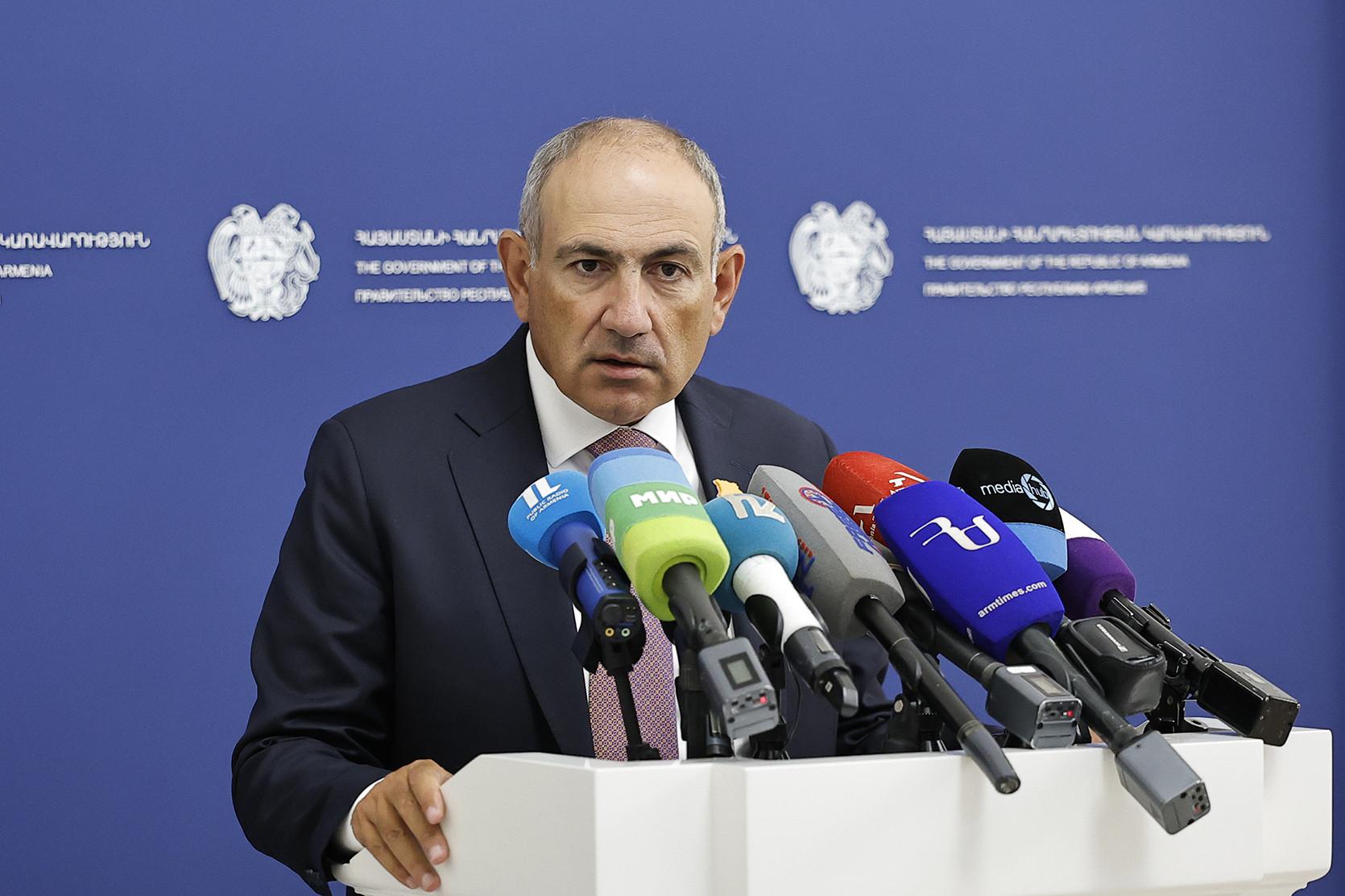
Friday, August 14, Armenia. “In the near future, exports from Armenia to Azerbaijan will also take place,” says Nikol Pashinyan
● Russia continues to pressure Armenia to choose between the Moscow-led Eurasian Economic Union (EAEU) and the European Union. Addressing the issue once again during a briefing, Prime Minister Nikol Pashinyan said Moscow expects Armenia to choose between “two alternatives,” while the “second alternative” has not yet fully taken shape. “We will certainly make that choice in the future through a referendum. But that will happen only after we complete the necessary institutional preparations and formally apply for EU membership,” Pashinyan said.
Until then, he stressed, Armenia needs both the EAEU and the EU. He also argued that Armenian society should not be limited to choosing between just two integration projects.“The people must have the opportunity to choose. A third option may emerge: neither the EAEU nor the EU. In other words, perhaps we need neither structure. Who says every country must belong to some bloc?” he said.
● Yerevan wants to resolve the issue of Armenia’s railway network “in a friendly manner” and without escalating tensions, Pashinyan said when asked whether the government intends to strip Russia of its concessionary management of Armenia’s railways. The concession agreement between the Armenian government and a Russian company was signed in 2008 for a period of 30 years. Since then, however, freight traffic has halved, some routes have ceased operating, and mandatory investment commitments have largely remained unfulfilled.
At the same time, Armenia is seeking the full reopening of regional transport links, which requires restoring railway connections to the borders with Azerbaijan and Turkey. As the Russian company operating Armenia’s railways has not undertaken the reconstruction of these sections, Yerevan is exploring ways to implement the project independently. According to Pashinyan, Armenia does not want to terminate the concession agreement and is instead working with experts to identify solutions acceptable to both sides. More details are available here.
● Amid Russian restrictions on imports of Armenian products and goods, Russian Agriculture Minister Oksana Lut met Armenian Economy Minister Gevorg Papoyan. Following the meeting, the Russian Agriculture Ministry issued a statement outlining the conditions under which Moscow would be prepared to lift the restrictions. “Ensuring the safety of agricultural products, including the use of domestic raw materials by Armenian producers, pesticide controls, supply-chain traceability and other mandatory requirements, is a key condition for resuming imports of goods currently subject to restrictions,” the statement said. Lut described compliance with veterinary and phytosanitary standards as Russia’s unconditional priority.
Armenian analysts, however, see political motives behind the economic pressure, noting that restrictions on Armenian imports began on the eve of parliamentary elections and have continued amid a deepening crisis in bilateral relations.
● “There is an agenda for mutual trade with Azerbaijan, and in the near future exports from Armenia to Azerbaijan will also take place,” Pashinyan told journalists. He did not specify which goods would be exported or which Armenian companies would be involved. At present, trade flows only from Azerbaijan to Armenia.
● The Armenian government is actively implementing the EU Visa Liberalisation Action Plan. Another meeting of the working group tasked with coordinating Armenia’s commitments under the process has taken place. Participants reviewed progress on recommendations contained in the European Commission’s first assessment report, covering public order and security, external relations and fundamental rights. Of the 72 measures stemming from the EU recommendations, 41 have already been completed, while work on the remainder is ongoing.
● Relations between Armenia and the United Kingdom have advanced significantly in recent years and are developing within the framework of a strategic partnership, Armenian Parliament Speaker Ruben Rubinyan and UK Ambassador to Armenia Alexandra Cole said during a meeting held the previous day.
● Former parliamentary speaker Alen Simonyan has been appointed Secretary of Armenia’s Security Council, replacing Armen Grigoryan, who held the position for eight years. Asked about Grigoryan’s future plans, Prime Minister Pashinyan said: “At this stage, he prefers to take a break from work within the public administration system, and I respect that decision.”
● Tensions flared in parliament following remarks by opposition MP Edgar Ghazaryan of the Strong Armenia faction, who described members of the ruling party as “scum.” Deputy Speaker Hayk Konjoryan said such language was unacceptable and warned that Ghazaryan would be removed from the parliament building if similar incidents were repeated. The dispute later continued outside the chamber before being defused by Speaker Ruben Rubinyan and Strong Armenia faction leader Narek Karapetyan. He acknowledged that Ghazaryan’s remarks had gone beyond the bounds of accepted parliamentary etiquette but said there was no question of him relinquishing his mandate.
● Armenia’s Defence Ministry said the body of a serviceman with a gunshot wound was discovered at a military unit on 13 August. The Investigative Committee has launched criminal proceedings into the death, though no further details have been released. It is the second such incident reported this month. Following the latest case, Prime Minister Pashinyan announced personnel changes in the Military Police and the Defence Ministry’s Department of Moral and Psychological Support. “We will thoroughly analyse why our efforts in this area are not producing the desired results and draw conclusions. Yes, there must be individual accountability,” the prime minister said.
● The government has allocated 325 million drams (about $891,000) for the purchase of school buses. Each vehicle is expected to cost around 65 million drams (approximately $179,000). The move follows the closure of schools in several small villages. Pupils from those communities will now be transported to schools in neighbouring settlements and brought back home after classes.
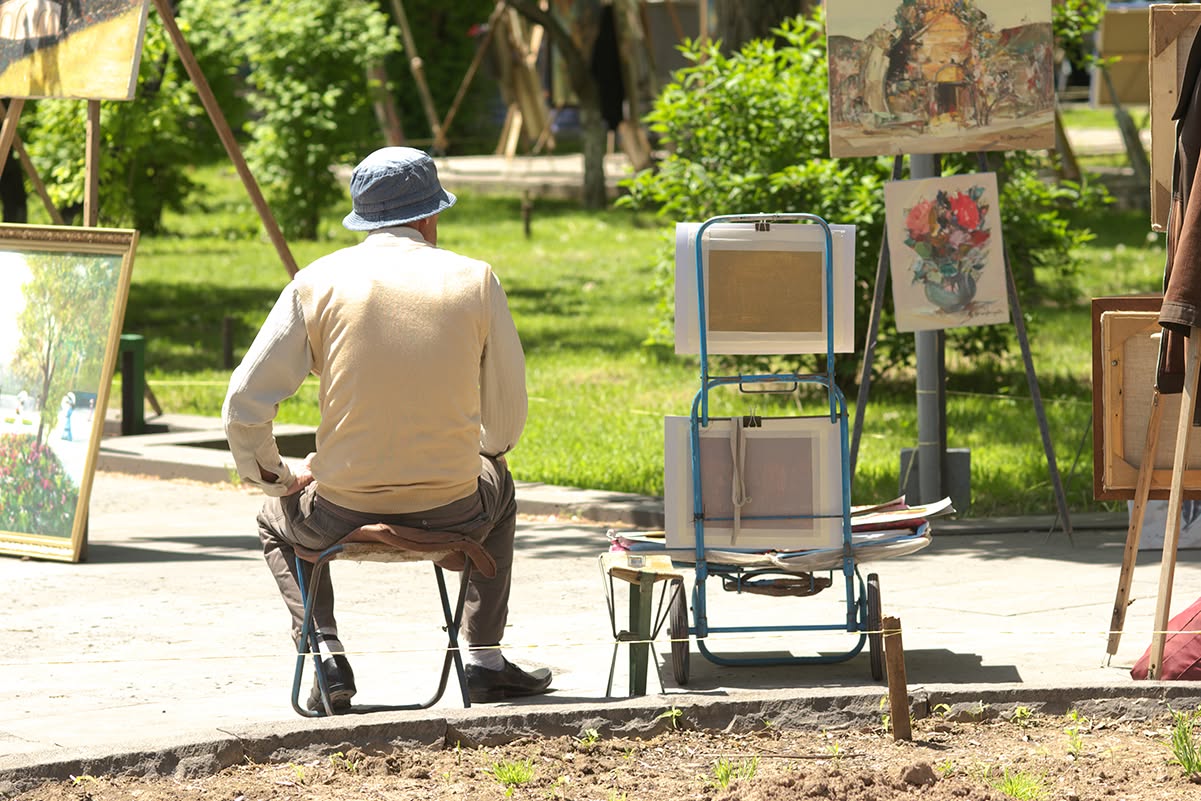
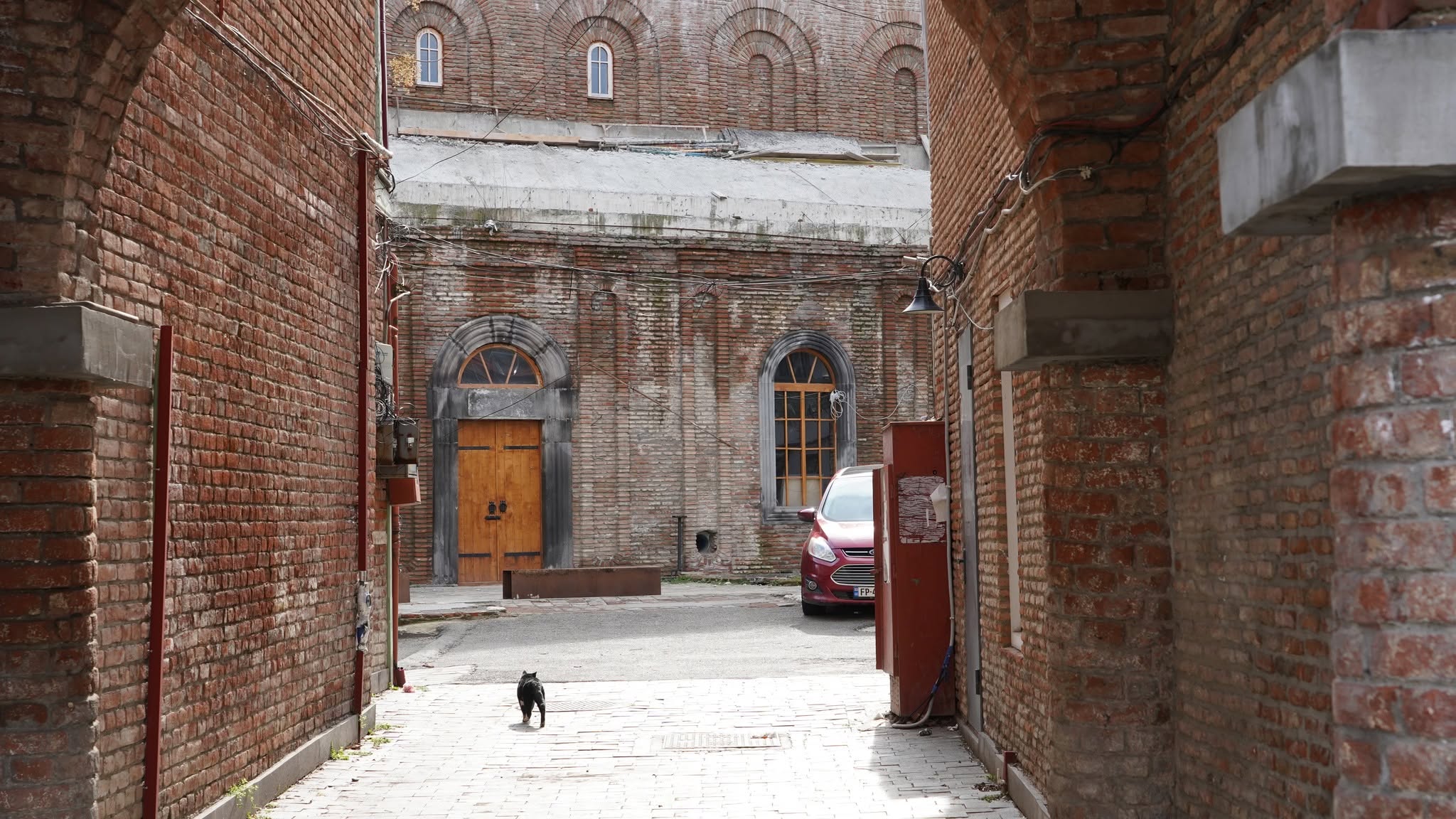
Yerevan. Photo JAMnews -
Friday, 14 August, Azerbaijan. Successful progress in the construction of the railway in Nakhchivan
● “Two consecutive mine explosions occurred over two days in territories liberated from Armenian occupation, injuring three civilians. Overall, 436 people have been injured in Azerbaijan as a result of mine explosions since the end of the Second Karabakh War in 2020.” This was stated by the Azerbaijani Foreign Ministry in a post on X.
● Azerbaijan’s state-owned railway company, Azerbaijan Railways, reported progress in the construction of a railway in the Nakhchivan Autonomous Republic. The railway will connect Nakhchivan to the TRIPP transit route in Armenia and, from there, to the Zangezur Corridor leading to mainland Azerbaijan. Construction is currently underway on the first seven-kilometre section, running from the Azerbaijani-Armenian border towards Ordubad. The railway will be 194 kilometres long within Nakhchivan, or 264 kilometres including sidings. The project includes the construction and reconstruction of 10 stations and 29 bridges. Once completed, the route will establish a direct railway connection between mainland Azerbaijan and the Nakhchivan Autonomous Republic, as well as a direct railway link to Türkiye. Around 15 million tonnes of cargo per year are expected to be transported along the railway once it becomes operational.
● Political scientist and peace activist Bahruz Samadov, who was sentenced to 15 years in prison on charges of treason, has called on the international community to step up efforts to secure his release, saying that his eyesight is rapidly deteriorating. His relatives shared his appeal on social media. “More than a year has passed since the peace summit in Washington, yet I am still being held in detention under all kinds of deprivation, in complete contradiction to the peace agenda. Not once has a doctor come to examine the condition of my eyes. I am on the verge of blindness,” Samadov wrote. No response from the authorities to his appeal has been published.
Bahruz Samadov is a doctoral student at Charles University in the Czech Republic. He was detained in August 2024 after travelling to Baku for a holiday. Samadov continues to deny any wrongdoing. In April last year, he wrote an open letter to Armenian Prime Minister Nikol Pashinyan, asking him to publicly state that Samadov had no cooperation with Armenian intelligence services. Earlier this year, Armenia’s Foreign Intelligence Service stated that it had never had any links with Bahruz Samadov. More details on the case here.
● A working meeting was held in Baku between representatives of the defence ministries of Azerbaijan, Hungary and Kazakhstan. The meeting focused on methods of disseminating military information and combating disinformation.
● Armenian Prime Minister Nikol Pashinyan said at a briefing that Azerbaijani specialists had visited Armenia twice — in September 2025 and January 2026. “Bilateral work is underway on power transmission lines, pipelines, cables and railways,” he said.
Earlier this year, Armenia and Azerbaijan announced plans to integrate their electricity systems on an equal basis, allowing the two countries to mutually export and import electricity. A few days ago, President Ilham Aliyev said that Azerbaijani energy specialists had conducted an assessment in Armenia, including identifying locations where electricity poles would be installed. More details on the project to connect the two countries’ electricity systems here.
● The Facebook page of Azadlıq newspaper, the official publication of the opposition Azerbaijan Popular Front Party, has been blocked, the newspaper’s editor, Rahim Hajiyev, who works abroad, told Meydan TV. According to Hajiyev, the reason given for the block was a post about a suicide published in 2019. A few days earlier, the newspaper’s Instagram page had also been blocked. Hajiyev says Meta, which owns both platforms, has been receiving a constant stream of complaints about the page, mostly from internet trolls. He claims the authorities are behind the complaints, as the newspaper regularly publishes material critical of government policies. Azadlıq editor-in-chief Ganımat Zahid described the blocking of the page as another continuation of the government’s policy of putting pressure on social media. Access to the newspaper’s website, azadliq.info, from Azerbaijan was restricted by a court decision back in 2017. More details here on website blocking in Azerbaijan.
Meydan TV notes that the blocking comes amid renewed attention to the Azerbaijani state’s financial interest in Meta. In 2024, Azerbaijan’s state oil fund, SOFAZ, invested $179 million in Meta shares, making the company one of the fund’s five largest technology investments for the first time.
● Twenty railcars carrying a total of 1,400 tonnes of Russian wheat were sent to Armenia in transit through Azerbaijan. More than 40,000 tonnes of Russian wheat have now been delivered to Armenia via this route.
● Nine people have been isolated in the infectious diseases department of a hospital in Ganja after coming into contact with a cow that tested positive for anthrax. “The situation is under control. The necessary epidemiological measures are being taken. There is no evidence of the disease spreading among the population or animals, and there is no reason for concern,” said a joint statement by the Ministry of Health, the Food Safety Agency and the medical agency TƏBİB.
● The U-17 World Beach Wrestling Championship and the fourth stage of the World Series C will be held in Azerbaijan for the first time, from August 27 to 29 at the Sea Breeze resort. More than 200 athletes from 34 countries are expected to take part.
PHOTO: A historic mercury street thermometer in central Baku has been restored. It had been a popular symbol of the capital for decades.
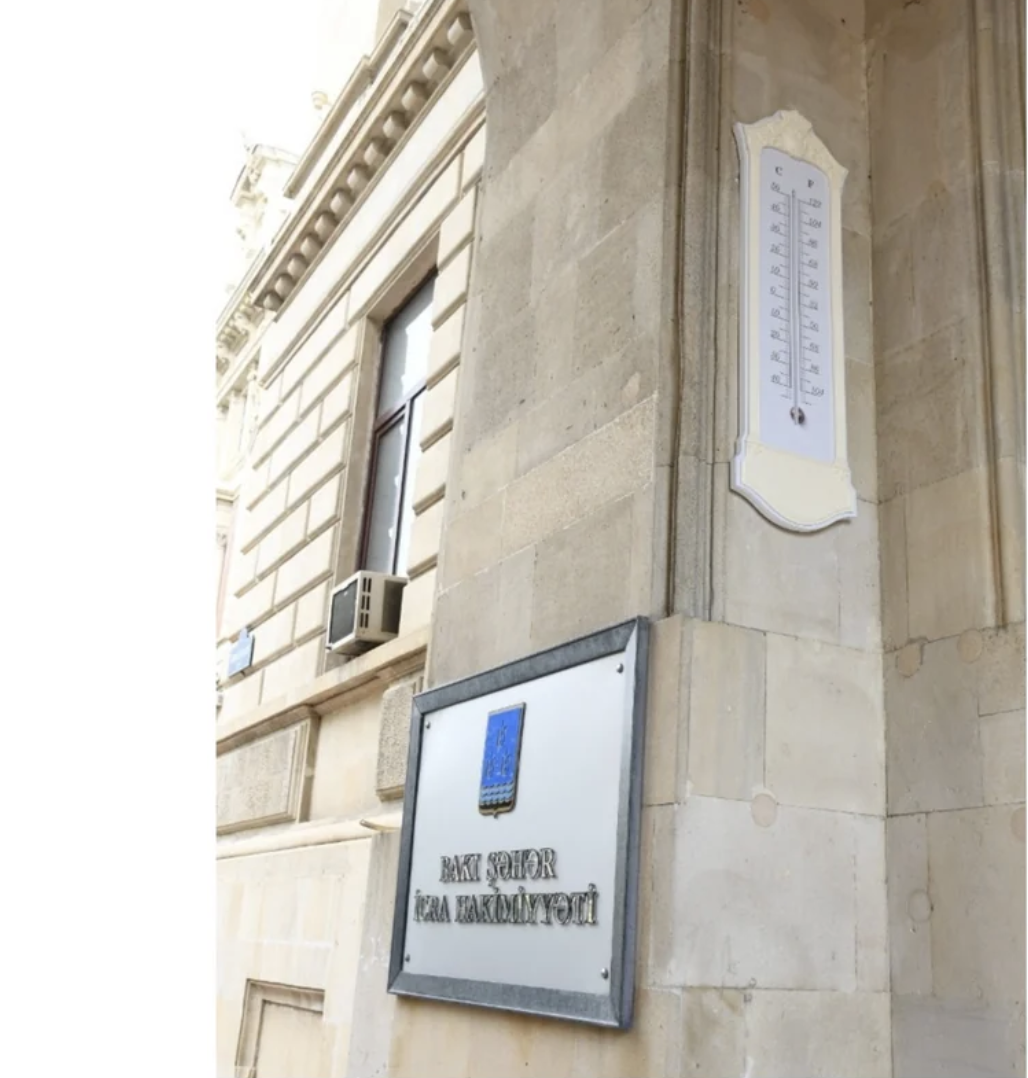
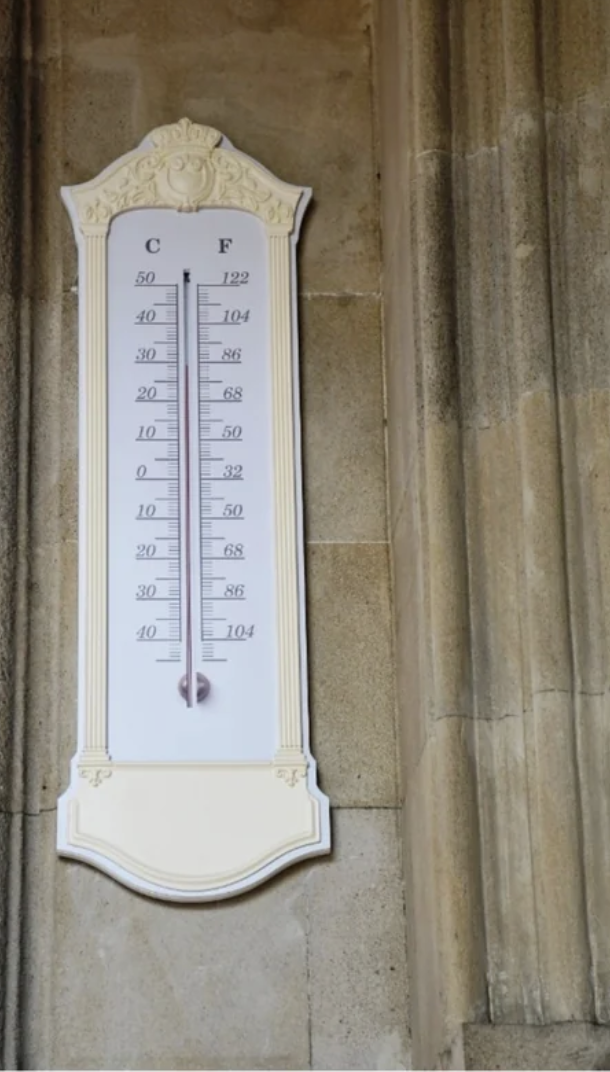
-
Thursday, 13 August, Armenia. A phone call took place between the prime minister of Armenia and the president of Ukraine
● Armenian Prime Minister Nikol Pashinyan spoke by phone with Ukrainian President Volodymyr Zelenskyy. They discussed bilateral relations, exchanged views on regional and global developments, and stressed the importance of advancing lasting and sustainable peace. “Relations between Ukraine and Armenia are becoming even more constructive, and it is important that we maintain a constant dialogue. We discussed the results of my visit to Armenia and priority areas of cooperation. I also thank the prime minister for his congratulations on the 975th anniversary of the founding of the Kyiv-Pechersk Lavra, an important date for Christians across our region. We agreed to stay in touch,” Zelenskyy said after the call.
● “A nuclear power plant has a service life. And that service life is determined neither by the government of Armenia, nor by the government of Azerbaijan, nor by the government of any other country in the world,” Armenian ruling-party MP Arman Yeghoyan said in response to a statement by Azerbaijan’s president. In an interview with AzTV, Ilham Aliyev said that the Metsamor nuclear power plant is “outdated” and poses a potential threat to the entire region. According to him, “sooner or later, it must be shut down,” after which “Armenia will face a complete energy crisis.” At the same time, the Azerbaijani president said that an energy corridor running through Armenia to Nakhchivan and then to Türkiye and Europe “will allow Armenia’s energy system to withstand a crisis.” What else the Azerbaijani president said and how Yerevan responded — here.
● Armenian Parliament Speaker Ruben Rubinyan received Chinese Ambassador Li Xinwei. They discussed relations between Armenia and China. The two countries officially elevated their bilateral relations to the level of strategic partnership on August 31 last year. The relevant document was signed in Beijing. During the meeting with the Armenian parliament speaker, they discussed further deepening interparliamentary relations and expanding cooperation in various areas of mutual interest.
● Russian Foreign Ministry spokesperson Maria Zakharova strongly criticized reports that 103-year-old Armenian World War II veteran Rozalia Abgaryan may be questioned as part of a criminal case concerning an alleged violation of a ban on charitable activities during the election period. Zakharova said the incident reflects “moral and spiritual decay” brought about by Armenia’s rapprochement with Europe and Kyiv.
“We cannot view this report separately from a series of events and steps by Yerevan that look like outright mockery of our shared history and memory. No one has forgotten that the ‘sovereign’ politicians and officials of the republic did not have the courage to rein in Zelenskyy when he threatened strikes on the Victory Day parade on Red Square from the Armenian capital. Now Armenian justice, which is moving toward ‘democratic’ European standards, has reached Abgaryan,” Zakharova said.
● “We do not agree to adopting a Constitution at Aliyev’s demand. Changing the country’s basic law under external pressure is a mistake and disastrous for the future of the Armenian state,” said Narek Karapetyan, head of the parliamentary faction of the opposition Strong Armenia bloc. He also said the authorities would not succeed in pressuring the opposition or forcing it to support changes imposed from outside, because it had “received a direct mandate from citizens who oppose Baku’s demands.”
● Armenia is discussing the next stage of introducing universal health insurance. In the first stage, launched at the beginning of 2026, children under 18, people aged 65 and over, citizens aged 18–65 with a disability, socially vulnerable people, and families of fallen servicemen were included in the system free of charge, without paying an insurance contribution. Those earning more than 200,000 drams ($550) per month were also insured by paying contributions. However, the state covers most of the insurance contributions for this group.
In 2027, people earning up to 200,000 drams are expected to be insured on the same basis. Employers may also become involved in paying insurance contributions. The government says the entire population will be covered by 2029. More about how health insurance works in Armenia — here.
● The Armenian church of Karasun Manuk (Forty Infants), located in southern Türkiye, is being renovated. The 1876 building was badly damaged during the devastating earthquake that struck Türkiye in February 2023. Part of the altar was damaged and destroyed. The restoration work is reportedly being carried out with state support of 5 million lira ($105,000).
● A video has appeared on social media showing a man subjecting a minor to psychological pressure. The minor, his parents and others involved in the incident were invited to a local police department. It emerged that the minor had posted an insulting message about a store on one of the social media platforms. The store owner then subjected him to psychological pressure in an attempt to punish him, filmed the incident and posted it online.
● “At the International Olympiad in Artificial Intelligence, our students won two bronze medals and ranked fifth among 120 countries in the team competition, behind only New Zealand, Hong Kong, Puerto Rico and Spain,” Education, Science, Culture and Sports Minister Zhanna Andreasyan said on Facebook.
-
Thursday, 13 August, Georgia. Fuel shortage in Abkhazia and gasoline supplies from Tbilisi
● Prime Minister Irakli Kobakhidze confirmed that, amid a severe fuel shortage in Abkhazia, gasoline was supplied from territory controlled by Tbilisi. He said the shipment was arranged by private businesses, not the government. “If we have an opportunity to ease the situation for people living there — both Georgians and Abkhaz — we will continue to do so,” Kobakhidze said. The shortage of gasoline and diesel fuel in Abkhazia emerged amid disruptions to supplies from Russia, which have been linked to Ukrainian strikes on Russian energy facilities.
● Abkhazia confirmed that Georgian fuel supplies had indeed been arranged as an alternative source amid the shortage. The Abkhaz news agency Apsnypress contacted the Abkhaz government for comment following Kobakhidze’s statement and received the following response: “Fuel supplies continue to be delivered from the Russian Federation under contracted volumes. However, due to circumstances caused by external factors, there is not enough motor fuel to meet Abkhazia’s needs. Fuel market participants have managed to find an opportunity to arrange supplies from the territory of Georgia.”
● Kobakhidze’s statement drew strong criticism from the opposition. “The import of fuel into Abkhazia by a Georgian company with the government’s permission actually means supplying Russian military bases,” economist and opposition politician Roman Gotsiridze said. He demanded that the government immediately disclose which company supplied the fuel and in what volume, as well as determine whether it was used by Russian military personnel. He said it was “not impossible that the fuel could have been transported further into Russia.” “The company involved in this betrayal will not escape sanctions,” he said.
● Former President Mikheil Saakashvili also commented on the situation from prison. “It is a lie that the gasoline entering Georgia is going to Abkhazia! Only a very small portion remains there; in fact, it is being sent to southern regions of Russia, where Ukrainian strikes have caused shortages and gasoline is very expensive,” he wrote on Facebook. In his view, this is what explains the rise in gasoline prices in Georgia. “This is what it means to become Russia’s economic vassal,” he said.
● The EU said Georgia has experienced “significant backsliding” in democracy and human rights. The EU’s annual report says repression against protesters, journalists, opposition politicians and civil society intensified in 2025. According to the EU, human rights were “seriously restricted” by repressive measures and laws undermining freedom of expression, assembly and association. In some cases, the ill-treatment of protesters by security forces reached the level of “torture or inhuman and degrading treatment.” The report notes that none of those responsible were held accountable, creating an “atmosphere of impunity.” The EU also points to arbitrary detentions, widespread use of pre-trial detention and disproportionately harsh sentences against protesters and journalists.
● A minibus plunged into a ravine on Mount Gomi in western Georgia, killing at least four people. All of them were citizens of Belarus. According to available information, there were no children among the victims. The injured were taken to the nearest clinic. The minibus was driven by a Georgian citizen, whose life is not in danger. An investigation has been launched into a violation of traffic safety rules resulting in a death.
-
Thursday, 13 August, Azerbaijan. Amnesty International says the health of jailed opposition leader Ali Karimli and ToplumTV co-founder Alasgar Mammadli has deteriorated
● AZN 258 million (approximately $152 million) has been allocated for 2026–2027 to accelerate the socio-economic development of the Nakhchivan Autonomous Republic. The region plans to expand the use of renewable energy sources, upgrade roads and transport infrastructure, build new schools and kindergartens and renovate existing ones, and continue the construction and major renovation of residential buildings, including heating boiler facilities. The day before, President Ilham Aliyev made a major policy speech on increasing attention to Nakhchivan and its role as a key link in transport and energy projects in the South Caucasus connecting the region with Central Asia and Europe. More here
● Georgia considers strengthening trilateral ties with Azerbaijan and Türkiye extremely important, including for regional connectivity, Georgian Prime Minister Irakli Kobakhidze said, commenting on President Ilham Aliyev’s remarks that Azerbaijan’s main electricity export route to the European market runs through Georgia and Türkiye. Kobakhidze noted that the European Union has included the Black Sea submarine cable project on its list of Projects of Common Interest.
● Oil transportation through the Baku-Tbilisi-Ceyhan pipeline increased by 10% in June, with daily oil exports reaching 547,000 barrels. At the same time, OPEC data show that compared with June 2025, oil transportation through the pipeline decreased by 5%.
● Amnesty International issued a statement warning of a significant deterioration in the health of jailed opposition Popular Front Party leader Ali Karimli and media expert and ToplumTV co-founder Alasgar Mammadli. Their families and lawyers say their health has deteriorated due to poor prison conditions and a lack of necessary medical care. Marie Struthers, Amnesty International’s director for Eastern Europe and Central Asia, said Karimli has been denied adequate access to clean drinking water and ventilation, which could amount to torture. Mammadli, who has been diagnosed with thyroid cancer, has repeatedly had his lawyers request that he be transferred to house arrest. “These are two of hundreds of people who have become victims of intensifying political repression in Azerbaijan. Journalists, activists, outspoken government critics and opposition politicians have been targeted by the crackdown. Political activist Bahruz Hasanly, Ali Karimli’s bodyguard, is another recent victim of this persecution. He is currently facing extradition from Ukraine to Azerbaijan, where he may be subjected to torture and other forms of ill-treatment,” Struthers said.
Ali Karimli has been in detention since November last year on charges of attempting to overthrow the government. He denies the charges.
Alasgar Mammadli was sentenced in July to 14 years in prison on charges of smuggling and other serious economic crimes. Other ToplumTV representatives and activists were sentenced on similar charges to prison terms of up to 15 years. The journalists deny the charges and say they are being punished for exposing corruption among government officials.
Bahruz Hasanly, who lives in Ukraine, was detained in Kharkiv in July at the request of Azerbaijan’s Prosecutor General’s Office on fraud charges as part of the case against Ali Karimli. Hasanly calls the charges “baseless and false” and says they are linked to his political activities.
● Additional passenger train services are expected to be launched soon between Baku and Tbilisi. Discussions are underway between the Georgian and Azerbaijani state railway companies, the management of Georgian Railways told the state-run Report news agency. Local residents have been posting numerous complaints on social media about difficulties buying tickets for this route due to very high demand.
● Prospects for joint projects were discussed at a meeting in Baku between Economy Minister Mikayil Jabbarov and Ma Bin, deputy general manager of Chinese company Xinjiang Joinworld Co., Ltd. The Chinese company is a leading global producer of aluminum and aluminum foil for electronics.
● Azerbaijan’s state oil company SOCAR reduced greenhouse gas emissions by approximately 1 million tonnes of CO₂ equivalent in 2025 and issued $200 million in green bonds to support renewable energy projects. This is stated in SOCAR’s annual report. The company identified addressing climate change, business ethics and combating environmental pollution as key areas for further sustainable development.
● Azerbaijan hopes to use US technology to address the landmine contamination caused during the 30-year occupation of Azerbaijani territories by Armenian forces. Azerbaijan’s ambassador to the US, Khazar Ibrahim, said this in an interview with Axios. He noted that Azerbaijan is one of the most heavily mine-contaminated countries in the world per capita, and that modern technology could help make demining faster and more effective. He also stressed that clearing the territory of mines remains a costly, lengthy and dangerous process. The ambassador again said that one of the key aspects of demining is having accurate maps showing the location of mines, which Azerbaijan hopes to obtain from Armenia.
● Another mine explosion occurred in the Khojavend district, which was liberated from Armenian occupation during the Second Karabakh War in autumn 2020. Three local residents were injured after a bulldozer hit a mine in an area that had not yet been cleared of ordnance reportedly planted by the Armenian side. All three were taken to hospital with minor injuries. The State Agency for Mine Action (ANAMA), the Interior Ministry and the Prosecutor General’s Office again urged citizens to follow safety rules.
● A criminal case has been opened in the Lankaran district under the article concerning incitement to suicide after the bodies of a man born in 1997 and a minor girl born in 2010 were found in a forest. The two victims were reportedly relatives. Other circumstances remain unknown.
● A fire broke out at a shop in Baku and then spread to nearby residential buildings. Several families were evacuated. The fire was extinguished within a short time. One resident suffered smoke inhalation and was hospitalized.
-
Wednesday, 12 August, Georgia. Prime Minister and Tbilisi mayor: “A propaganda campaign is being waged from abroad to fuel Russophobia in Georgia”
● Prime Minister Irakli Kobakhidze has refused to directly call Russia an enemy of Georgia. “You want to get a headline saying that I declare the Russian Federation an enemy,” he told reporters from opposition media. “That would be a specific political statement, which would then have to be followed by concrete steps.” Kobakhidze said it was precisely this kind of approach that led to the 2008 war, again placing responsibility for the outbreak of the conflict on Georgia’s then leadership and former president Mikheil Saakashvili. Read more here
● From prison, Mikheil Saakashvili hit back at Kobakhidze’s remarks, accusing the government, the opposition and society of passivity. He said Georgia had allowed “incredibly treacherous statements” to go unanswered in recent days, which he described as effectively amounting to “mass surrender to the enemy”. Saakashvili said most of the opposition was staying silent either because it feared prosecution, had been “bought off”, or believed that defending Georgia would somehow serve his political interests. Others, he wrote, were simply abroad or on holiday. He also accused much of Georgian society of falling into apathy: “Some people really believe Russian propaganda, some are simply outright traitors, but the majority have fallen into apathy and are waiting for the outcome of the war in Ukraine, as if Ukraine’s victory will immediately be served to us on a plate and Ivanishvili will simply disappear.”
Saakashvili further claimed that Bidzina Ivanishvili [oligarch, founder of the ruling Georgian Dream party] was preparing, “on the orders of the Russians”, to formally recognise the loss of Abkhazia and the Tskhinvali region, and that the current silence had convinced the authorities that there would be no serious resistance. “The stopwatch of Georgia’s existence or non-existence has been started, and against the backdrop of the silence of the people and politicians, the country is rapidly moving towards a tragic end,” he warned.
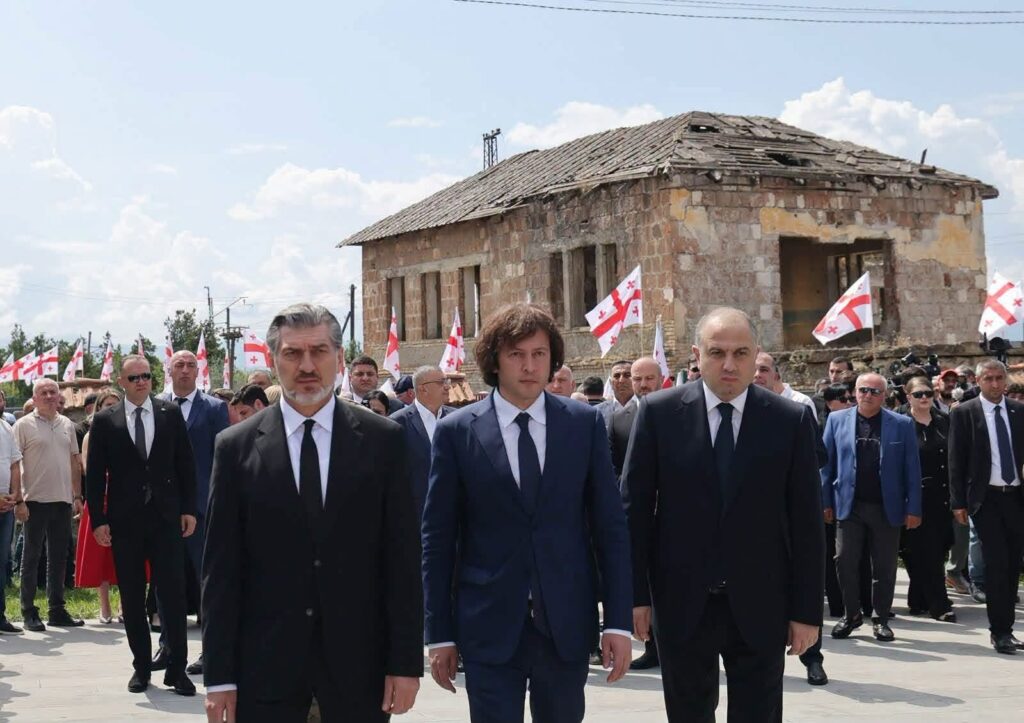
● Georgia has commemorated the 17 servicemen killed in the Battle of Shindisi during the August 2008 war. The Georgian soldiers were killed on 11 August 2008 in an unequal battle with a Russian military unit near the village of Shindisi. Prime Minister Irakli Kobakhidze described their sacrifice as “an exceptional and exemplary” act of heroism for future generations.
● Giorgi Baramidze, one of the leaders of the United National Movement, says he fears he could be handed over to Russia, where he has been sentenced in absentia to six and a half years in prison for fighting alongside Ukraine. “I do not rule out arrest, a bullet or physical retaliation,” Baramidze told TV Pirveli, accusing the Georgian authorities of conducting a campaign to discredit him. The comments came after Georgia’s Prosecutor’s Office opened an investigation into alleged treason and sabotage over Baramidze’s remarks about the war in Abkhazia. He had said Georgian forces “did not take prisoners” and “shot” them in the early days of the war. He later clarified that he was not referring to people who had already surrendered and acknowledged that he should have used different wording to describe the events. Read more here
● Mamuka Mdinaradze, who was recently appointed minister of regional development, will become state minister for regional policy in September. He said he did not rule out moving on from the new post after a relatively short period, once he had put the system of government in order and if new challenges emerged elsewhere. Mdinaradze has changed senior positions several times over the past year. In September 2025, he left his post as parliamentary leader of Georgian Dream to head the State Security Service. This spring, a separate position of state minister for coordinating law-enforcement agencies was created for him. That post is now being abolished, with Mdinaradze moving to the newly created regional policy role.
● Tbilisi Mayor Kakha Kaladze says a “propaganda campaign is being waged against Georgia from abroad” to create the impression that Georgians mistreat “tourists of certain nationalities”. “Special fake accounts and bots are spreading lies on social media. They write that Georgian citizens leave Russian tourists alone in the woods or deliberately spoil food they have ordered in restaurants. Then this information is published by major foreign websites and later spread by bloggers who are controlled by the people behind these lies,” he said in an interview with Russian sports journalist and blogger Nobel Arustamyan. “I want to state openly and officially that all this information is absolutely false. In our country, nobody treats any tourist badly, regardless of their nationality,” Kaladze said.
● The government plans to tighten road-safety requirements. The National Road Safety Strategy for 2026–2030 envisages mandatory child seats for pre-school children, while seat-belt requirements would also apply to passengers in the back seats. The government is also considering the introduction of alcohol interlocks – devices that prevent a vehicle from starting if the driver is intoxicated. New drivers could face a special probationary period and tougher penalties for violations. According to the strategy, drivers with less than four years’ experience were responsible for more than 18% of road crashes in 2024. In 2025, 164 pedestrians were killed on Georgian roads, accounting for 35% of all road deaths. Read more here
● A court has begun the substantive hearing of the case against former Prosecutor General of Georgia Otar Romanov-Partciladze, who is accused of organising the contract killing of businessman and alleged criminal authority Levan Jangveladze. Romanov-Partciladz is charged with organising a premeditated murder for hire and financial gain, an offence punishable by 16 to 20 years in prison or life imprisonment. The former prosecutor general is a Russian citizen and is wanted internationally. Four other defendants have already been convicted in the same case, all receiving life sentences.
● Two people have been arrested in Batumi over an alleged assault and threats against Adjara Public Broadcaster employee Koba Partenadze. The journalist said he had been repeatedly attacked, verbally and physically abused, and threatened with being stabbed. The Georgian Charter of Journalistic Ethics called on the Interior Ministry to ensure his safety and promptly investigate the attacks. According to the ministry, one of the suspects physically assaulted Partenadze on 9 August, while the other threatened him with a knife. The investigation concerns assault and threats.
● The Interior Ministry has resumed the search for Guram Dadianidze, who disappeared 12 years ago. About 50 ministry employees are once again searching the area around Kvemo Mleta village in Dusheti municipality, where the 17-year-old went missing in 2014. Special equipment, including a scanner, is being used. The search was resumed after a video was accidentally found on YouTube. According to the defence side, it was filmed on the day the teenager disappeared and contains the voice of a young man calling for help. The authenticity of the video has not yet been confirmed by experts.
● Residents of Gulguла village in Telavi municipality have protested against a landfill located about three kilometres from the village. They have been demanding for years that it be closed and relocated. Residents say the smell and unsanitary conditions have made life unbearable. They are also particularly concerned that a borehole supplying the village with drinking water is located near the landfill. Protesters tried to block the road, but police were deployed at the scene.
● An international fugitive wanted under an Interpol Red Notice has been arrested in Batumi. According to the Interior Ministry, the man was wanted by Turkish authorities over a murder committed in Turkey. Extradition proceedings have been launched.
Photo: Georgian government officials at the Shindisi Heroes memorial.
-
Wednesday, 12 August, Azerbaijan. President Ilham Aliyev gave a major interview to Azerbaijan’s state TV in Nakhchivan
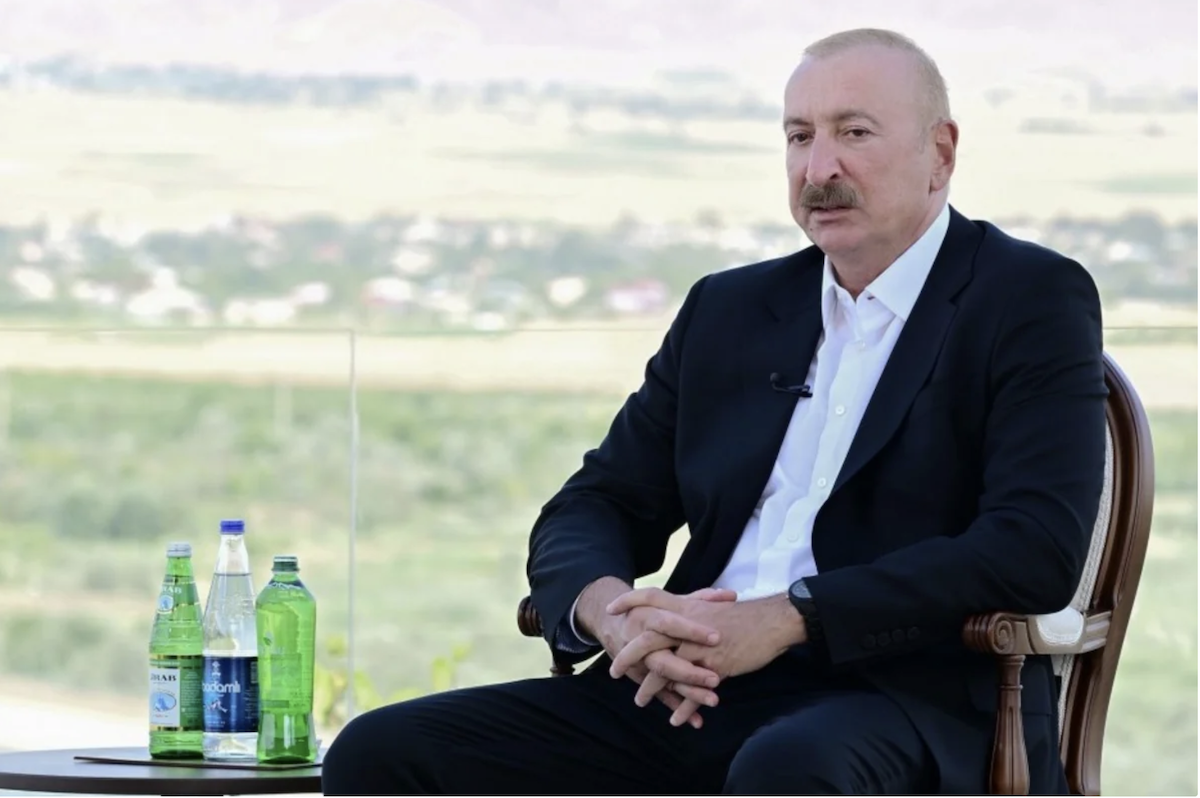
● President Ilham Aliyev gave a major policy-setting interview to the state television channel in the Nakhchivan Autonomous Republic. Among other things, he said:
• Nakhchivan and the territories liberated from Armenian occupation — Karabakh and Eastern Zangazur — historically formed a single space. A similar system of governance is now being established in Nakhchivan, which will effectively unite these three regions administratively as well.
• Nakhchivan’s autonomous status will remain, but the rules of governance will change. The three regions will develop based on a unified concept, including a special presidential representative and structural reforms.
• The Zangezur Corridor, which will connect the main part of Azerbaijan with Nakhchivan by land through Armenian territory, will become an important component of two transport corridors: North-South (the Russia-Azerbaijan-Iran route) and East-West.
• After the road along the Zangezur Corridor route is opened, a second railway line from Azerbaijan to Iran will also be opened.
• The North-South transport corridor leads toward the Persian Gulf. The transit of at least 15 million tonnes of cargo through this region will create more jobs and increase economic activity. Nakhchivan will become one of the indispensable transport hubs.
• A project has already been prepared to build power transmission lines from the main part of Azerbaijan to Nakhchivan through Armenian territory.
• The foundation has been laid for a large industrial park in Nakhchivan. A 300-megawatt thermal power plant will be an important part of the project. It will fully provide Nakhchivan with a stable supply of electricity, while the surplus will be exported.
• Nakhchivan is currently 100% supplied with gas through an exchange arrangement with Iran. For this purpose, a gas pipeline was built from Iran to the autonomous republic, and the region has been fully gasified.
• Nakhchivan is the most favorable location in Azerbaijan for solar power generation. An area of more than 600 hectares has already been allocated, where solar power plants with a combined capacity of hundreds of megawatts will be built.
• These projects are attractive to investors. Plans also call for the export of large volumes of electricity from Nakhchivan.
• Karabakh and Eastern Zangazur have already been declared green energy zones, and Nakhchivan will also become such a zone. An energy storage system based on batteries with a capacity of at least 100 megawatts will be installed in the autonomous republic.
• Nakhchivan has enormous tourism potential, but its development is hampered by a shortage of hotels. The foundation has already been laid for a new five-star hotel in central Nakhchivan, which is expected to be ready to receive guests around 2028.
● Ilham Aliyev devoted much of his remarks to his assessment of the Second Karabakh War in the autumn of 2020. The war was ended by a trilateral statement signed by the presidents of Azerbaijan and Russia and the prime minister of Armenia. “In fact, for Armenia this was an act of surrender, because Armenia capitulated. The Aghdam, Kalbajar and Lachin districts, which were still under occupation, were returned without a single shot being fired. Naturally, Armenia did not do this voluntarily; we forced it to. If, in a war, you force someone to do something, it means that the other side has capitulated,” Aliyev said. He noted that the term should not be interpreted as insulting in any way. “It is simply a reality. We must know history as it is,” Ilham Aliyev said.
● The president said that on November 9, after the liberation of the city of Shusha from occupation, he “categorically insisted” during the trilateral negotiations that the statement must include a corridor connecting the main part of Azerbaijan with Nakhchivan. “Armenia did not want to agree to this. But it did not have that many alternatives. If the war had continued, Azerbaijan would have suffered losses, but Armenia’s losses would have been much greater. Because their forces were, so to speak, surrounded, and their complete destruction was actually quite possible. Therefore, Armenia agreed, and that statement contains this specific provision.”
● Ilham Aliyev said that during the five years since the Second Karabakh War, Armenia had delayed implementation of this provision, and no practical steps had been taken to open the Zangezur Corridor. “Russia either could not ensure this, or there were some other reasons, and until August last year this issue remained frozen,” he said. Aliyev stressed that the situation changed when the United States became involved in the issue, around spring 2025. Then, “the implementation of this project, called TRIPP, successfully began.”
● Ilham Aliyev: “As soon as the Second Karabakh War ended, Azerbaijan began rebuilding the railways and roads, including those leading to Nakhchivan. Next year, the railway will reach the Armenian border, while construction is underway in Nakhchivan. […] We want at least 15 million tonnes of cargo to pass through this transport corridor.”
● Ilham Aliyev: “Many countries and international organizations are interested in the Nakhchivan segment of Azerbaijan’s railways, one of them being the European Union. EU representatives were sent to Nakhchivan, familiarized themselves with the situation and want to become participants in this project. We have no objection, of course, provided that the controlling stake belongs to the Azerbaijani state. An international consortium of investors could be established; we are open to this. But even without their participation, we will build the railway ourselves.”
● The president took part in two ceremonies in Nakhchivan: the laying of the foundation stone for the 310-hectare Nakhchivan Industrial Park and the foundation of a social housing complex with 518 apartments. The complex will include modern infrastructure, including autonomous electricity, gas and water supply systems, a kindergarten, catering facilities and a park.
● The central part of Nakhchivan city will be transformed, the president said. The total length of roads and streets will be 188.4 kilometers, while the cycling infrastructure will extend for 122 kilometers. This means that more than 65% of the entire road and street network will be adapted for bicycle traffic.
● A trilateral meeting was held in Washington between Azerbaijani Deputy Foreign Minister Elnur Mammadov, Armenian Deputy Foreign Minister Vahan Kostanyan and US Under Secretary of State for Political Affairs Allison Hooker. According to the Foreign Ministry, the meeting marked the first anniversary of the historic Washington peace summit on August 8, 2025, and focused on the process of normalizing relations between Azerbaijan and Armenia. They discussed the implementation of the “Trump Route” transit project, TRIPP. Details of the ongoing delimitation of the Azerbaijan-Armenia border were also presented. Particular attention was paid to confidence-building measures, the Foreign Ministry said.
● During his visit to Washington, Elnur Mammadov met with Andrew Schofer, Deputy Assistant Secretary of State for European and Eurasian Affairs. They discussed implementation of the Strategic Partnership Charter and the outcomes of the Baku Economic Dialogue.
● Prominent activist Ayhan Israfilov, a board member of the “Workers’ Desk” Trade Union Confederation, was released after serving a three-year prison sentence. He was charged with possession and distribution of drugs, which he categorically denied, saying he was being persecuted for his human rights activities. A week earlier, another member of the organization, human rights activist Elvin Mustafayev, was also released after serving a three-year sentence on similar charges. The “Workers’ Desk” Trade Union Confederation was established in 2022 and mainly focused on protecting the rights of workers in the service sector. The chairman of “Workers’ Desk,” Afiyaddin Mammadov, and another member of the organization, Mohiyaddin Orujov, remain in prison. According to the Azerbaijani service of Radio Free Europe/Radio Liberty, Mammadov was charged with intentionally causing serious bodily harm and sentenced to eight years in prison, with about five years remaining. Orujov was charged with producing and acquiring drugs, and his sentence expires this year. All of the activists consider the charges fabricated and politically motivated.
-
Wednesday, 12 August, Armenia. Military academy graduates will now receive an apartment along with their officer rank
● Prime Minister Nikol Pashinyan met with ambassadors of Arab countries accredited to Armenia. He said the government attaches importance to deepening cooperation with Arab states and is interested in developing new initiatives to strengthen political, diplomatic and economic ties.
● Armenia, Azerbaijan and the United States have held talks in Washington to mark the first anniversary of last year’s peace summit. Armenian Deputy Foreign Minister Vahan Kostanyan, Azerbaijani Deputy Foreign Minister Elnur Mammadov and US Under Secretary of State for Political Affairs Allison Hooker discussed the progress made since the summit, regional infrastructure projects and confidence-building measures. According to Armenia’s Foreign Ministry, Kostanyan praised US President Donald Trump’s personal contribution both to last year’s summit and to the efforts to institutionalise peace between Armenia and Azerbaijan this year.
● Armenia and Iran have reached an understanding on the proposed TRIPP transit route, according to ruling-party MP Sargis Khandanyan. The project, named after the US president who helped broker agreement between Armenia and Azerbaijan, would connect Azerbaijan with its Nakhchivan exclave through Armenian territory while preserving Armenia’s sovereignty over the route. The plan has raised concerns in Iran because the route would run through southern Armenia, close to the Iranian border, and because the US is involved as a business partner. “I don’t think the tense Iranian-American relationship can affect the implementation of this programme,” Khandanyan said. He added that the railway component was still being assessed, including its route and feasibility, after which construction could begin. “I see no political obstacles to implementing the project,” he said. Read more here
● Armenia could also look to diversify its gas supplies if Russia raises prices, Khandanyan said. He said the issue would first be discussed with Moscow “in a friendly atmosphere”, but Armenia could seek alternative sources, including Iran. Asked about possible gas imports from Azerbaijan, Khandanyan said Yerevan and Baku were discussing a broad range of issues. “I don’t know how far we have got on the issue of gas supplies, but this scenario is not excluded,” he said.
● Russia says Armenia could lose its voting rights in the Russia-led Collective Security Treaty Organisation (CSTO). Russian Deputy Foreign Minister Mikhail Galuzin said the issue could be discussed at the organisation’s summit on 11 November. “Yerevan’s refusal to participate in the organisation’s work and its failure to sign annual budget decisions only means that it is not exercising its right; it does not end Armenia’s obligations to pay its national contribution on time,” Galuzin said. Armenia has effectively frozen its participation in the CSTO and has not taken part in its work or paid contributions for the past two years. Yerevan says this is a response to the alliance’s failure to assist Armenia when Azerbaijani forces entered what Armenia considers its sovereign territory in 2021 and 2022.
The CSTO said it could not intervene because the Armenian-Azerbaijani border had not been formally delimited. Pashinyan responded at the time: “The CSTO has an area of responsibility defined by borders. If there is no border, there is no area of responsibility; if there is no area of responsibility, there is no organisation.”
Responding to Galuzin’s latest comments, Armenia’s ruling party said there were currently “no reasons or circumstances” that could lead Yerevan to increase its involvement in the CSTO.
● Defence Minister Suren Papikyan said graduates of Armenia’s military academy will now receive an apartment along with their officer rank. “I have already signed [the documents],” Papikyan said. “Each certificate we will give our officers is currently valued at 41,956,000 drams ($115,000).” He urged young people to choose a military career and “defend the Republic of Armenia”.
● A one-off birth allowance will rise to 500,000 drams ($1,377) from 1 September 2026, the government says. Parents will be able to apply online or through a local branch of the Unified Social Service. The government has expanded financial incentives aimed at encouraging larger families in recent years. According to official figures cited by local media, the number of families having a third or fourth child increased by around 45% between 2018 and 2024.
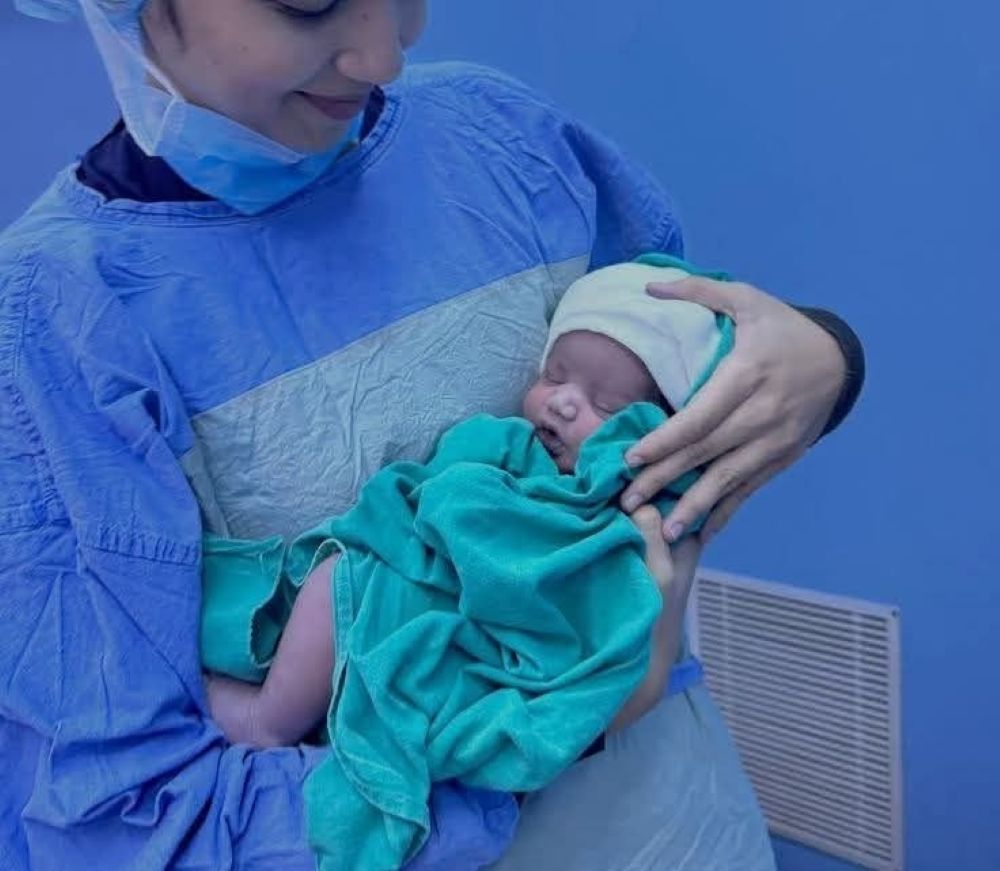
● A newborn baby has been found abandoned in the courtyard of a residential building in Yerevan. A local resident, Narek Petrosyan, heard the baby crying and found it beneath a makeshift shelter made of metal sheets, in an area where children often play. “I immediately called an ambulance, which arrived within five minutes. The police also came,” Petrosyan told reporters. The baby was taken to a medical centre and is reported to be in satisfactory condition. No further details have been released.
-
Tuesday, 11 August, Azerbaijan. US, Azerbaijan and Armenia issue joint statement marking first anniversary of Washington peace summit
● The United States, Armenia and Azerbaijan issued a joint statement marking the first anniversary of the peace summit held at the White House on August 8, 2025. At the time, President Ilham Aliyev and Prime Minister Nikol Pashinyan, with the participation of Donald Trump, signed a joint Declaration on Peace. In the presence of the three leaders, the foreign ministers of Armenia and Azerbaijan initialled the draft Agreement on the Establishment of Peace and Interstate Relations between Armenia and Azerbaijan. Later, Ilham Aliyev and Nikol Pashinyan jointly nominated President Donald Trump for the Nobel Peace Prize. The statement says, among other things:
The United States, Armenia and Azerbaijan reaffirm their support for the territorial integrity and jurisdiction of Armenia and Azerbaijan within their internationally recognized borders.
Over the year since the leaders’ meeting, the countries have carried out foundational work.
Progress has been made on the Trump Route transit project (TRIPP). The United States and Armenia have reached an agreement to establish TRIPP Development Company, which will oversee infrastructure development. Engineering and survey work is underway in Armenia. Azerbaijan has practically completed construction of the road and railway on its territory, which will connect to TRIPP in Armenia. The three countries also support the construction of a power transmission line along the TRIPP route.
The United States has allocated $201 million to the Trans-Caspian Enterprise Fund to attract private investment to the Trans-Caspian Trade Route (Middle Corridor) in the South Caucasus and Central Asia.
Azerbaijan has lifted all transit restrictions on Armenia. Over the past year, around 60,000 tonnes of cargo have been transported through Azerbaijan to and from Armenia. Azerbaijan has also supplied Armenia with 20,000 tonnes of petroleum products.
A bilateral agreement on internet use has been signed, which will also contribute to the development of Eurasian telecommunications network infrastructure.
The international Minsk Group, established in the 1990s to help resolve the Karabakh conflict, has been dissolved.
At the invitation of the United States, Armenia and Azerbaijan joined the Peace Council.
The United States has deepened its relations with Armenia and Azerbaijan by signing charters establishing new bilateral strategic partnerships. The United States is committed to fully implementing all signed documents and strengthening bilateral relations with both countries.
The steps taken by Azerbaijan and Armenia toward lasting peace serve as an example to the world. The United States looks forward to a bright and prosperous future for the region.
● In Ukraine, Bahruz Hasanli, a former bodyguard of Ali Karimli, the detained chairman of Azerbaijan’s opposition Popular Front Party, has been arrested again. According to the party, this happened after an Azerbaijani appeals court upheld a prosecution appeal and overturned a court decision ordering Hasanli’s release. He was previously detained in Kharkiv at the request of the Azerbaijani side. According to Ukrainian human rights groups, Azerbaijani authorities accuse Hasanli of transferring $850,000 to Ali Karimli “for the purpose of organizing a coup.” The Kharkiv Human Rights Protection Group, the Center for Civil Liberties and the Helsinki Human Rights Union of Ukraine have appealed to Ukraine’s Prosecutor General’s Office not to extradite Hasanli to Azerbaijan, “as he faces ill-treatment, torture and an unfair trial” there.
Bahruz Hasanli has lived in Kharkiv with his wife and minor child since 2016.
● Active bilateral cooperation in the energy sector was discussed at a meeting between Energy Minister Parviz Shahbazov and Chinese Ambassador Lu Mei. The importance of the construction of a 100 MW solar power plant in the Gobustan district by Universal International Holdings Limited was highlighted. They also discussed a study of Azerbaijan’s electricity grid being conducted by China Electric Power Planning & Engineering Institute (EPPEI). Cooperation under China’s Belt and Road Initiative was also discussed.
● A delegation of Paraguayan businesspeople is planning to visit Baku to introduce local consumers to mate, the Paraguayan tea. Paraguay’s ambassador, based in Ankara, Guillermo Sosa, said the delegation will take part in a food exhibition in Istanbul at the end of August and will then travel to Baku, where they will hold meetings with Azerbaijani businesspeople and companies.
● Elvin Mustafayev, a prominent activist who was released in early August after serving a three-year prison sentence and is a member of the Confederation of Trade Unions’ “Workers’ Department,” told Meydan TV in an interview that prisoners in Azerbaijan are deliberately subjected to harsh and unbearable conditions in order to force them to pay money in exchange for better living conditions.
Elvin Mustafayev was arrested in August 2023 on charges of drug possession. The activist denied the charges and said he was being punished for his civic activities and criticism of the authorities.
● The State Security Service identified members of an international cybercrime network that used fake WhatsApp accounts impersonating government officials and law enforcement officers to demand that civil servants and company employees transfer money to foreign bank accounts. The State Security Service said the criminal groups operate outside Azerbaijan and are led by foreign nationals. Work to fully expose the network is continuing in cooperation with the competent authorities of foreign countries and operators of the relevant platforms.
● The Interior Ministry shut down a criminal group that was illegally organizing online betting and gambling through the banned 1xBet and MostBet platforms. The organizers — five people in total — were detained. Through the AzeCash Telegram channel, they recruited citizens to participate in illegal gambling. The total turnover amounted to 10 million manats, or about $6 million. The Interior Ministry once again warned citizens that participation in illegal online gambling carries criminal liability.
● Jackie Chan has arrived in Azerbaijan to film the fourth installment of the popular action-adventure franchise Armour of God. The working title of the film is Armour of God 4: Ultimatum. Baku will be one of the locations for the new film. Filming is also taking place in Kazakhstan. Locations selected for the film include Icherisheher (the Old City), Highland Park, the funicular, the Green Theatre and Fountain Square.
● An earthquake measuring 3.9 in magnitude occurred on the Azerbaijan-Armenia border, with its epicenter on the Armenian side.
The video was posted on the Instagram page of the official account of the film franchise, managed by Salem Jackiechan
View this post on Instagram -
Tuesday, 11 August, Armenia. MP from from the ruling party: “All our citizens can now feel that peace has truly arrived”
● The United States, Armenia and Azerbaijan issued a joint statement marking the anniversary of the Washington peace summit held on August 8, 2025. The statement says the joint declaration provided Armenia and Azerbaijan with a concrete roadmap for strengthening peace and deepening their partnership. The “Trump Route” (TRIPP) is moving from the planning stage toward reality. Engineering surveys are already underway in Armenia. Azerbaijan has nearly completed construction on its territory of the highway and railway that will connect to TRIPP in Armenia. The three countries also support the construction of a power transmission line through TRIPP,” the statement says, among other things.
● “All our citizens can now feel that peace has truly arrived,” said Sona Ghazaryan, a lawmaker from the ruling Civil Contract party. She noted that, as part of the process of unblocking regional communications, senior US officials have visited Armenia and funding for the TRIPP transit project has been increased. Ghazaryan stressed that “the government has not backed down from its red lines and has made no territorial concessions, and the TRIPP project is not a ‘corridor.’”
● Aram Vardevanyan, a lawmaker from the opposition Strong Armenia bloc, was elected deputy speaker of parliament. In addition to opposition lawmakers, several MPs from the ruling party supported Vardevanyan’s candidacy. Local media report that this was done deliberately to secure the necessary number of votes for his election.
● The Foreign Ministry conveyed a meeting proposal to the wife of Ruben Vardanyan, the former state minister of the former unrecognized Nagorno-Karabakh Republic, who was sentenced to 20 years in prison in Azerbaijan. This was reported to the Armenian service of Radio Free Europe/Radio Liberty by Foreign Ministry spokesperson Ani Badalyan.
Veronika Zonabend, Ruben Vardanyan’s wife, proposed in June organizing a visit by an international women’s delegation to Baku and appealed to Azerbaijan’s ombudsperson for assistance in making the visit possible.
● In the newly elected parliament, representatives of the ruling party will chair eight committees. Three committees will be headed by lawmakers from the Strong Armenia bloc, while one will be headed by a lawmaker from the Armenia bloc. Both blocs are part of the pro-Russian opposition.
● The National Assembly of Armenia will establish a temporary parliamentary ethics committee. The initiative was unanimously supported by 92 lawmakers.
● “The prime minister himself demonstrated the meaninglessness of the law on launching the process of joining the European Union when he spoke at a meeting of the Eurasian Intergovernmental Council, which operates under Russia’s leadership,” said Anna Grigoryan, head of the parliamentary faction of the Armenia bloc. She drew attention to Nikol Pashinyan’s remarks that it is impossible to hold a referendum on choosing between EU membership and membership in the Russian-led Eurasian Economic Union, since Armenia is currently not in a position to join the European Union. “Why was this declarative law on launching Armenia’s EU accession process adopted in 2025 at all? Nikol Pashinyan says Armenia has no alternative in the form of the EU. Then why does he or the foreign minister travel to Brussels and ask for help in ‘fighting Russian disinformation’?” Grigoryan said.
-
Tuesday, 11 August, Georgia. Investigation launched after opposition leader says Georgian forces “shot prisoners of war” during the 1990s Georgian-Abkhaz war
● The Prosecutor’s Office has launched an investigation into statements about the Georgian-Abkhaz war in the early 1990s made by Giorgi Baramidze, one of the leaders of the opposition United National Movement. A case has been opened under articles concerning “high treason” and “threat to state interests.” In a conversation on a local podcast, Baramidze said that Georgian forces “did not take prisoners, they shot them [those detained].” The statement, made during an interview with a podcast, triggered a strong reaction from the public and the Georgian government. The de facto Abkhaz authorities also issued statements. Several Georgian experts said Baramidze’s account was not consistent with the facts.
● The Prosecutor’s Office has already become involved in the case. The government considers Baramidze’s remarks harmful to Georgia’s interests, while part of the opposition has also criticized his statement, although it sees no grounds for an investigation. Baramidze’s words have already been incorporated into the narrative of the de facto authorities of occupied Abkhazia.
● The number of Iranian companies registered in Georgia has increased by approximately 510% since 2012. In 2025–2026, their number exceeded 12,800. At the same time, experts note that official data do not reflect their actual economic activity. This is stated in a report by the Economic Policy Research Center (EPRC). According to the organization, total foreign direct investment from Iran to Georgia amounted to $41 million between 2013 and 2024. The preliminary figure for 2025 is only about $400,000. The center highlights a sharp discrepancy between the number of companies and the economic activity they generate. The increase is not reflected on a corresponding scale in investment, employment or other official financial indicators. Dozens of companies are also registered at the same address. The organization says this raises questions about the use of shell companies, opaque financial transactions, money laundering and possible sanctions evasion.
● The report pays particular attention to US sanctions imposed on August 8 against the Georgian crypto company Shelbit. According to the US Treasury Department, the company is linked to financing Iran’s Islamic Revolutionary Guard Corps and illicit financial activity. According to the EPRC, the rapid growth in the number of Iranian companies in Georgia following this incident should be viewed in the context of a “confirmed threat.”
● Kazakhstan plans to increase oil exports through Georgia amid delays in implementing the Caspian Pipeline Consortium project through Russia. According to the Azerbaijani pro-government agency Report, Kazakhstan is considering the Baku-Tbilisi-Ceyhan and Baku-Supsa pipelines as alternative routes. Kazakhstan’s state-owned company KazMunayGas plans to increase its oil exports through the Baku-Tbilisi-Ceyhan pipeline by 31% in 2026, to 1.7 million tonnes. In January–June this year, 704,000 tonnes of Kazakh oil had already been transported from the port of Aktau along this route. The Baku-Supsa project, which is also being considered as an alternative route, has been suspended for almost four years.
● Prime Minister Irakli Kobakhidze met with UN Resident Coordinator in Georgia Didier Tzvetkov. According to reports, they discussed implementation of the UN Sustainable Development Cooperation Framework for 2026–2030, cooperation between the Georgian government and UN agencies, as well as the human rights and humanitarian situation in the occupied territories of Abkhazia and the Tskhinvali region.
● The Charter of Journalistic Ethics has called on the Interior Ministry to immediately investigate repeated attacks against Ajara TV journalist Koba Partenadze and ensure his safety. Partenadze said he is insulted and subjected to attacks and threats almost every evening in Batumi because he dyed his hair. The journalist published a video showing young people using homophobic slurs and threatening him with a knife. The Charter says Partenadze has repeatedly appealed to the police. “The atmosphere of impunity in the country and the inaction of law enforcement agencies pose a threat to the safety of journalists,” the Charter said.
● Tbilisi Mayor Kakha Kaladze gave an interview to a Russian blogger, prompting criticism from some members of the public. According to Kaladze, he happened to meet the blogger at a café. The blogger asked him questions about Tbilisi. Kaladze rejected the criticism, saying that “Georgia should be open to tourists from all countries, including Russians.”
● Part of the new Tbilisi Zoo — the “Caucasus Exhibition” — opened to visitors on a trial basis on August 9. The official opening is planned for the autumn, but due to high public interest, it was decided to open the completed space earlier. The design of the new enclosures was influenced by archaeological discoveries dating back 3,000–5,000 years BC that were uncovered during construction, including skeletons and pottery. The part of the zoo already open to visitors is home to bears, wolves, western and eastern Caucasian hyenas, lynxes and African wild dogs. The enclosures are designed to allow the animals to behave naturally, so visitors may not always be able to see them.
● Tbilisi Zoo Director Zurab Gurielidze told journalists that the main goal of the new space is to preserve, breed and return endangered species of Caucasus fauna to their natural habitats. The zoo is already working on returning deer and elk to the wild. Some of the deer have already been released into Algeti National Park. Here is a video story.
● A Chinese youth delegation is visiting Georgia from August 9 to 15 (pictured). Education Minister Givi Mikanadze and Youth Agency head Aleksandre Kajaia met with members of the delegation and discussed cooperation between Georgia and China in the youth sector, exchange of experience and strengthening ties between the two peoples. The Chinese group will visit historical and cultural landmarks, museums and educational institutions, and take part in events and workshops dedicated to Georgian traditions.

-
Monday, 10 August, Georgia.
● On the 18th anniversary of the August 2008 war, Georgia’s international partners again reaffirmed their support for the country’s sovereignty and territorial integrity. In a joint statement, the UK, France, Germany and Italy condemned Russia’s continued military presence in Abkhazia and the Tskhinvali region and said recent Russian moves raised concerns about the possible formal annexation of South Ossetia. Latvia, Lithuania and Estonia also reiterated their support for Georgia’s territorial integrity.
Ukraine’s Foreign Minister Andrii Sybiha said Russia’s 2008 aggression against Georgia had paved the way for its subsequent military aggression against Ukraine.
Georgia’s Foreign Ministry said Russia continued to violate the 12 August 2008 ceasefire agreement, militarise Abkhazia and the Tskhinvali region and take steps towards their de facto annexation. State flags were flown at half-mast across Georgia in memory of those killed in the war.
● The anniversary also reignited a domestic dispute over responsibility for the 2008 war. Prime minister Irakli Kobakhidze blamed the then Georgian leadership and former president Mikheil Saakashvili for starting the war, describing Saakashvili as a “disgraceful foreign agent” and the conflict as an “adventure inspired from outside”.
Parliament speaker Shalva Papuashvili said the war would not have happened had Georgian Dream been in power in 2008. He also claimed that, had the current opposition been in government in 2022 [when Russia invaded Ukraine], Georgia would have been drawn into the war.
Papuashvili described Saakashvili’s government as a “puppet regime” that had turned Georgia into a “pawn in a geopolitical game”.
Tbilisi mayor Kakha Kaladze, commenting on the international response to the war, said the conflict had only lasted “two or three days” and argued that this had not been long enough to trigger an international campaign against Russia and Russians “like the one we see today”.
● The authorities in Tskhinvali responded to Kobakhidze’s comments by saying that, in their view, responsibility for the war lay not only with Saakashvili personally but with Georgia as a state.
“This has been known from the very beginning, and South Ossetia has been saying this for all 18 years,” the de facto South Ossetian Foreign Ministry said.
The statement said Saakashvili, as head of state, had acted on behalf of the Georgian state and issued what it described as “criminal orders” as part of an “anti-Ossetian and anti-Abkhaz policy”. It therefore argued that responsibility for the August 2008 war should be borne by Georgia “as the subject of this policy”.
● Moscow welcomed the Georgian government’s statements about the 2008 war. The Russian foreign ministry said it considered recognition of the “full responsibility of the Saakashvili regime for unleashing the armed conflict” justified.
Moscow also welcomed what it described as statements by Georgia’s leadership on the need for reconciliation with Abkhaz and South Ossetian communities. It said it hoped this “change in approach” would be followed by practical steps towards resolving relations with Abkhazia and South Ossetia.
At the same time, Russia called on Tbilisi to sign non-use-of-force agreements with Abkhazia and South Ossetia – which Moscow recognises as independent states – and begin demarcating and delimiting their so-called “state borders”.
● Another Russian response came from security council deputy chairman Dmitry Medvedev, who was Russia’s president during the 2008 war. He said the West had used Georgia as a “blunt instrument of geopolitical struggle” against Russia, claiming that, despite promises of NATO and EU membership, “the fate of this country did not interest it at all”.
Medvedev said the current Georgian government was pursuing a “pragmatic policy”, while arguing that the consequences of the Saakashvili government’s actions would be felt for a long time. He also drew a parallel with Armenia, saying Yerevan could face a similar fate if it continued pursuing a Western-oriented course.
● Saakashvili, for his part, said he had remained in Georgia during the war despite what he described as requests from Russian President Vladimir Putin and then-French President Nicolas Sarkozy that he leave the country. He also said US partners had offered him refuge.
Saakashvili argued that Russia had failed to achieve its strategic objectives in Georgia in 2008 and claimed that those objectives were ultimately achieved after Georgian Dream came to power in 2012.
● On Georgia’s Black Sea coast, waves washed ashore what appeared to be part of a drone near the resort village of Shekvetili. The Interior Ministry opened an investigation under an article of the criminal code covering violations of international flight rules, but said the origin of the debris had not yet been established.
UNM representative Tatia Nikolashvili said the fragment was believed to be from a Russian military drone and claimed it was the third such fragment found by holidaymakers in recent days. The interior ministry has not confirmed that claim.
● The US has sanctioned Georgia-registered company SHPS Shelbit and its owner, Savash Kaivanpour. According to the US Treasury Department, Shelbit Exchange processed digital-asset transactions linked to Iran’s Islamic Revolutionary Guard Corps.
OFAC said millions of dollars in digital assets had moved through addresses associated with Shelbit, including transfers to IRGC-linked infrastructure and Iran’s Nobitex cryptocurrency exchange, which is also under US sanctions. The Treasury also said Shelbit serviced a network of Persian-language online gambling sites through which tens of millions of dollars in digital assets were transferred.
● A Tbilisi court has remanded two minors – Nia Imnadze and Anastasia Beruashvili – in custody in the case involving the death of Giga Avaliani. Prosecutors allege that Imnadze encouraged peers to attack the young teacher, while Beruashvili failed to report a particularly serious crime to law enforcement. Seven people have been detained in the case so far, four of whom have already been convicted.
● A second assault involving minors was reported in Tbilisi. Glovo courier Davit Dvalishvili was attacked while delivering an order. His lawyer said a group of minors assaulted him and that he was taken to hospital in serious condition. According to the lawyer, Dvalishvili told her: “They were killing me the same way they killed Avaliani.”
● Animal rights activists gathered outside the government administration in Tbilisi to protest what they described as the mass disappearance of dogs from the streets and the work of the animal monitoring agency.
The activists demanded to know where the animals were being taken, saying some of the missing dogs had already been sterilised. “They tell us they are not killing them. But the question is: where are they taking them if they are not killing them?” one protester said.
The activists have drawn up a petition and begun collecting signatures. They said the protests would continue until the authorities offered what they described as a “humane solution” to the problem.
-
Monday, 10 August, Azerbaijan. A year has passed since the historic Washington peace summit between the leaders of Azerbaijan and Armenia, attended by Donald Trump
● President Ilham Aliyev and Donald Trump held a phone call to mark the first anniversary of the historic Washington peace summit attended by the leaders of Azerbaijan, Armenia and the United States. The conversation highlighted major positive changes that have taken place as a result of the summit, including the export of Azerbaijani petroleum products to Armenia, the transit of cargo through Azerbaijan to Armenia, and the launch of trade relations between the two countries.
● The phone call also noted that infrastructure work in Azerbaijan as part of the Trump Route transit project, TRIPP, is nearing completion. The project will connect Azerbaijan with its Nakhchivan exclave through Armenian territory. The sides expressed hope that work on the TRIPP project in Armenia will begin soon.
● Donald Trump praised Ilham Aliyev’s role in the peace process. It was emphasized that no incident capable of undermining peace in the region had occurred over the past year.
● The signing of the strategic partnership document between Azerbaijan and the United States was described as a historic event, with confidence expressed that the partnership would continue to develop successfully.
● Donald Trump also held a phone call with Armenian Prime Minister Nikol Pashinyan. Pashinyan stressed the decisive importance of Trump’s personal efforts in establishing peace between Armenia and Azerbaijan. They also discussed the implementation of the TRIPP transit project and issues on the bilateral Armenian-American agenda.
● Armenian Prime Minister Nikol Pashinyan called Azerbaijani President Ilham Aliyev. The leaders reportedly discussed the first anniversary of the Washington peace summit. They particularly highlighted the importance of the initialling at the summit of the text of a peace agreement between the two countries. The important role of President Donald Trump and the US government in advancing the peace process was emphasized. The development of trade and economic ties between Azerbaijan and Armenia was highlighted as a clear demonstration of the benefits of peace. The leaders also discussed the implementation of the TRIPP transit project.
● US Chargé d’Affaires in Azerbaijan Amy Carlon published a video message marking the anniversary of the Washington summit. She noted that during the summit, the sides initialled an agreement that laid the foundation for lasting peace between Azerbaijan and Armenia after more than three decades of conflict. Over the past year, both countries have taken concrete steps in this direction. There have been regular exchanges between civil society representatives from the two countries, while the first signs of cross-border trade have emerged, including Armenia’s regular purchases of Azerbaijani fuel. Carlon described the TRIPP transit project as one of the key elements of the August 8, 2025 agreement. “This route will provide Azerbaijan with unimpeded access to Nakhchivan and will contribute to integration and the development of East-West transport connectivity,” she said.
Speaking about active contacts and high-level visits between Azerbaijan and the United States, Carlon highlighted the importance of the memorandum of understanding on cooperation in critical minerals, signed in June. She also said the two countries had held their first bilateral economic dialogue, while US companies had signed commercial and investment agreements worth billions of dollars. “And this is only the beginning. There is much more to come,” Amy Carlon said.
● US Secretary of State Marco Rubio congratulated Armenia and Azerbaijan on “the courage and vision they have demonstrated over the past year” and said Washington “looks forward to continued progress toward a durable peace in the South Caucasus.” Rubio’s statement was published on the State Department website. “TRIPP — a multimodal transit route that will modernize rail and road networks, energy and digital infrastructure — is close to becoming a reality: engineering surveys for the railway in Armenia are already underway, while Azerbaijan is on the verge of completing the road and railway infrastructure that will connect with Armenia,” the statement said.
● Marco Rubio also announced the launch of the Trans-Caspian Corporate Fund, with the US government contributing $201 million to encourage private-sector investment along the Middle Corridor. “TRIPP is a vital link in the Trans-Caspian trade route, […] a model for how economic cooperation can strengthen peace after the resolution of longstanding disputes,” the statement said.
● US presidential special envoy Steve Witkoff also marked the anniversary. “Thanks to President Donald Trump’s leadership, the South Caucasus is safer, more prosperous and more stable, and the future of these great countries [Azerbaijan and Armenia] looks bright. Proud to be part of this historic administration,” Witkoff wrote on X.
● EU Special Representative for the South Caucasus Magdalena Grono published a post on X marking the first anniversary of the Washington summit. “The European Union strongly welcomes the positive and constructive steps taken to institutionalize and advance the peace process. The leaders of Azerbaijan and Armenia have opened the way to lasting and irreversible peace,” Grono wrote.
● The British Embassy in Azerbaijan issued a statement praising the political will of the leaders who took a historic step toward peace and reaffirming its support for efforts to achieve lasting peace in the South Caucasus.
● “President Ilham Aliyev won the war, but he also won the peace! A year has passed since the Washington peace summit,” presidential aide Hikmet Hajiyev wrote on X, sharing a video from the summit.
● President Ilham Aliyev sent a letter of appreciation to Donald Trump, stressing that “the historic peace summit organized by Trump laid the foundation for peace between Azerbaijan and Armenia.” “You succeeded in bringing an end to a three-decade-long conflict and laid the foundation for an era of reconciliation and mutually beneficial partnership between the peoples,” Aliyev wrote. Key points from the letter:
One of the most significant outcomes of the summit, the TRIPP transit project, has enormous potential to strengthen regional transport connectivity and enhance security in the South Caucasus.
Over the past year, important steps have been taken to develop relations between Azerbaijan and Armenia. Restrictions on the transit of goods to Armenia through Azerbaijan have been lifted, and Azerbaijani petroleum products are also being delivered to Armenia.
The Washington meeting in August last year was a historic milestone in bilateral relations, which have entered a qualitatively new stage of strategic partnership.
During Vice President JD Vance’s visit to Azerbaijan six months ago, a Strategic Partnership Charter covering a wide range of areas was signed.
Baku considers Trump’s decision to extend the suspension of the discriminatory Section 907 of the Freedom Support Act an important step toward restoring historical justice. The amendment was adopted after the outbreak of the First Karabakh War and prohibits US government assistance to Azerbaijan.
“The invaluable contribution of the US president to the remarkable progress achieved in such a short period in strengthening the strategic partnership between the two countries, which has reached its highest level in the 34-year history of diplomatic relations.”
● Armenian Prime Minister Nikol Pashinyan issued a message marking the first anniversary of the trilateral meeting of the leaders of Azerbaijan, Armenia and the United States in Washington. “Until August 8, 2025, our state was at a dead end, while after August 8, boundless opportunities opened up before us. Whether we make use of them or not depends on our collective will,” Pashinyan said. He stressed that the chapter of conflict between the two countries has been closed and that peace has become part of citizens’ everyday lives. Pashinyan said Armenia would soon begin the practical implementation of the TRIPP transit project, “and this will become a major regional and international event.”
● Azerbaijan once again reaffirmed its full support for a peaceful settlement of the conflict in Georgia based on the principle of territorial integrity within internationally recognized borders. The Azerbaijani Foreign Ministry issued a special statement marking the 18th anniversary of the Georgian-Russian “August” war. The statement also emphasized that Azerbaijan attaches great importance to its strategic partnership with Georgia.
● Turkish Foreign Minister Hakan Fidan suggested that a defense alliance could be created in the Caucasus and sign a mutual defense agreement with a similar alliance established on August 7 by Türkiye, Saudi Arabia and Pakistan. Under the Mecca Agreement signed by the three countries, an armed attack on any one of them will henceforth be regarded as a military intervention against all participants in the agreement. “Azerbaijan and Armenia are moving toward concluding a final peace agreement, and Ankara is actively supporting this process. This creates prospects in the security and economic spheres. Türkiye takes such a position regarding the Middle East, the Caucasus, the Mediterranean basin and Europe. By building such cooperation, Türkiye is becoming the only NATO member with diplomatic influence in all parts of the world,” Fidan said.
● A mine incident was reported in the Khojavend district of Karabakh. According to reports, a bulldozer operated by a local resident hit a mine in an uncleared area. No one was injured in the incident. Authorities once again urged citizens to follow safety rules.
● A major fire broke out at the Baku Oil Terminal on Sunday. The Ministry of Emergency Situations said the fire was extinguished quickly, preventing it from spreading over a large area. No one was injured.
President Ilham Aliyev — won the war, but also won the peace!
One year since the Washington Peace Summit. pic.twitter.com/B7tuoD3rwh
— Hikmet Hajiyev (@HikmetHajiyev) August 8, 2026
-
Top stories in Azerbaijan, Armenia, and Georgia from 3-7 August, 2026