Mecca defence pact: new opportunities for South Caucasus and Azerbaijan






Mecca defence agreement and Azerbaijan
The joint defence agreement signed in Mecca on 7 August marks an important step towards shaping the region’s security architecture, establishing collective defence commitments between three leading Muslim-majority states.
Saudi Crown Prince Mohammed bin Salman, Turkish President Recep Tayyip Erdogan and Pakistani Prime Minister Shehbaz Sharif signed the agreement. It stipulates that an armed attack on one party will be treated as an attack on the other two.
The agreement also has the potential to influence the future security architecture of the South Caucasus.
Context of the Mecca joint defence agreement
The agreement builds on the Saudi-Pakistani Strategic Mutual Defence Agreement signed in September 2025. Official statements describe it as a purely defensive mechanism that does not target any country, including Iran, and has no religious or sectarian basis.
The parties stress that the agreement remains open to expansion. Turkish Foreign Minister Hakan Fidan said that, technically, the deal resembles Article 5 of NATO. He said the parties plan to establish a ministerial-level committee and a secretariat based in Saudi Arabia. Erdogan’s vision includes expanding the initial three-member group and potentially involving other countries, including Egypt.
The strength of the agreement lies in the complementary advantages of its members. Turkey has NATO’s second-largest army and a developed defence industry, particularly in unmanned aerial vehicles. Saudi Arabia has significant financial resources, energy reserves and a unique symbolic status in the Muslim world. Pakistan, meanwhile, has a large and experienced military and is the only Muslim-majority country with nuclear weapons.
At the same time, the agreement does not establish an integrated command structure like NATO’s. The parties are still working out its operational details.
Prospects for expansion and the South Caucasus
In comments to Report on 9 August, Fidan said he did not rule out a similar joint defence agreement with South Caucasus countries.
He highlighted Turkey’s strategic role as a link between the Middle East, the Caucasus, the Mediterranean and Europe. He also said that completing the peace process between Azerbaijan and Armenia could open new security and economic opportunities. In the future, this could create conditions for a similar mechanism.
The statement does not amount to an official invitation. However, it opens the door to discussions about long-term scenarios for the region.
Azerbaijan’s position and the question of ties with Israel
Azerbaijan already maintains close relations with all three members of the agreement. The 2021 Shusha Declaration provides for mutual assistance with Turkey. Turkey, Azerbaijan and Pakistan also cooperate in a trilateral format, including summits held in Lachin in 2025. Defence industry cooperation is expanding, while Saudi Arabia’s investment interest is growing. Although Baku remains outside the formal agreement, it maintains privileged relations with all three capitals.
Israel is a particularly important issue in this context. Some social media posts have claimed that Azerbaijan would supposedly “give up recognition of Israel” if it joined the agreement.
Azerbaijan’s strategic partnership with Israel – including arms supplies that played an important role in the 2020 war, oil exports, intelligence cooperation and technology – is long-standing and stable.
There is no evidence in official sources that the members of the Mecca agreement have demanded or made it a condition for Azerbaijan to sever ties with Israel or withdraw its recognition of the country. Baku has repeatedly shown that it can act as an unofficial mediator between Turkey and Israel. Formal participation in the agreement could test this balance, but Azerbaijan’s current policy prioritises a flexible, multi-vector foreign policy. Claims that “Azerbaijan must give up recognition of Israel to join the agreement” are not supported by specific evidence and remain rumours for now.
Benefits and risks in the context of multi-vector policy
Potential benefits for the South Caucasus and Azerbaijan include stronger collective deterrence, expanded defence industry and technological capabilities, an influx of Saudi capital, synergies with the Middle Corridor, stronger symbolic ties between Turkic and the broader Muslim worlds, and greater strategic autonomy amid questions surrounding external security guarantees.
Azerbaijan could benefit from closer ties among its partners without formally joining the agreement, while retaining room to manoeuvre in its relations with the West, Israel, Central Asia and other partners.
There are also risks. These include the possibility of becoming involved in Middle Eastern conflicts, including tensions involving Iran; potential pressure on relations with Israel and Azerbaijan’s image in the West; and possible negative effects on the peace process with Armenia or ties with Iran and Russia. Another risk is the new format’s institutional immaturity, particularly the absence of a clearly defined commitment to automatically deploy military forces.
Azerbaijan’s tradition of an independent, non-aligned foreign policy makes full membership in the agreement in the near future unlikely.
Likelihood of joining and the limits of Azerbaijan’s multi-vector policy
Azerbaijan’s multi-vector foreign policy does not mean automatically distancing itself from new regional initiatives. Baku seeks to balance the interests of its partners and tends to join new platforms when suitable opportunities arise. Azerbaijan’s decision in 2026 to join the Board of Peace, established at the initiative of US President Donald Trump, as a founding member provides a practical example of this approach. Close ties with Turkey and Pakistan, the trilateral Turkey-Azerbaijan-Pakistan format and the Shusha Declaration could also increase Baku’s interest in the Mecca format.
The 2026 war with Iran demonstrated the practical limits of this balance more clearly. Azerbaijan officially declared neutrality, repeatedly stressed its support for Iran’s sovereignty and said its territory was not being used against third countries. However, several international media outlets, including CNN, reported that Israeli special forces and intelligence structures were allegedly deployed on Azerbaijani territory during the war. Baku called these claims “completely unfounded”.
Several think tanks, including the Institute for National Security Studies (INSS), described Azerbaijan’s position as a “carefully maintained balance between its officially declared neutrality and practical rapprochement”. Turkey’s decision not to take part in the war and its advice to Baku to maintain a cautious position also influenced this approach.
This dynamic takes on additional significance in the context of the Mecca agreement. The agreement’s principle that “an attack on one is an attack on all”, along with Saudi Arabia’s response to Iranian strikes during the war, shows how collective defence commitments can operate during periods of real tension. Azerbaijan’s deep strategic partnership with Israel, its allied relations with Turkey and Pakistan, and its expanding ties with Saudi Arabia have led some experts to believe that this rapprochement could increase Baku’s interest in formats similar to the Mecca agreement.
For Azerbaijan, therefore, the main question is not so much whether to join the agreement, but how to benefit from closer ties among its existing partners – Turkey, Pakistan, Saudi Arabia and Israel – without taking on formal commitments. This is precisely the flexibility that its multi-vector policy provides.
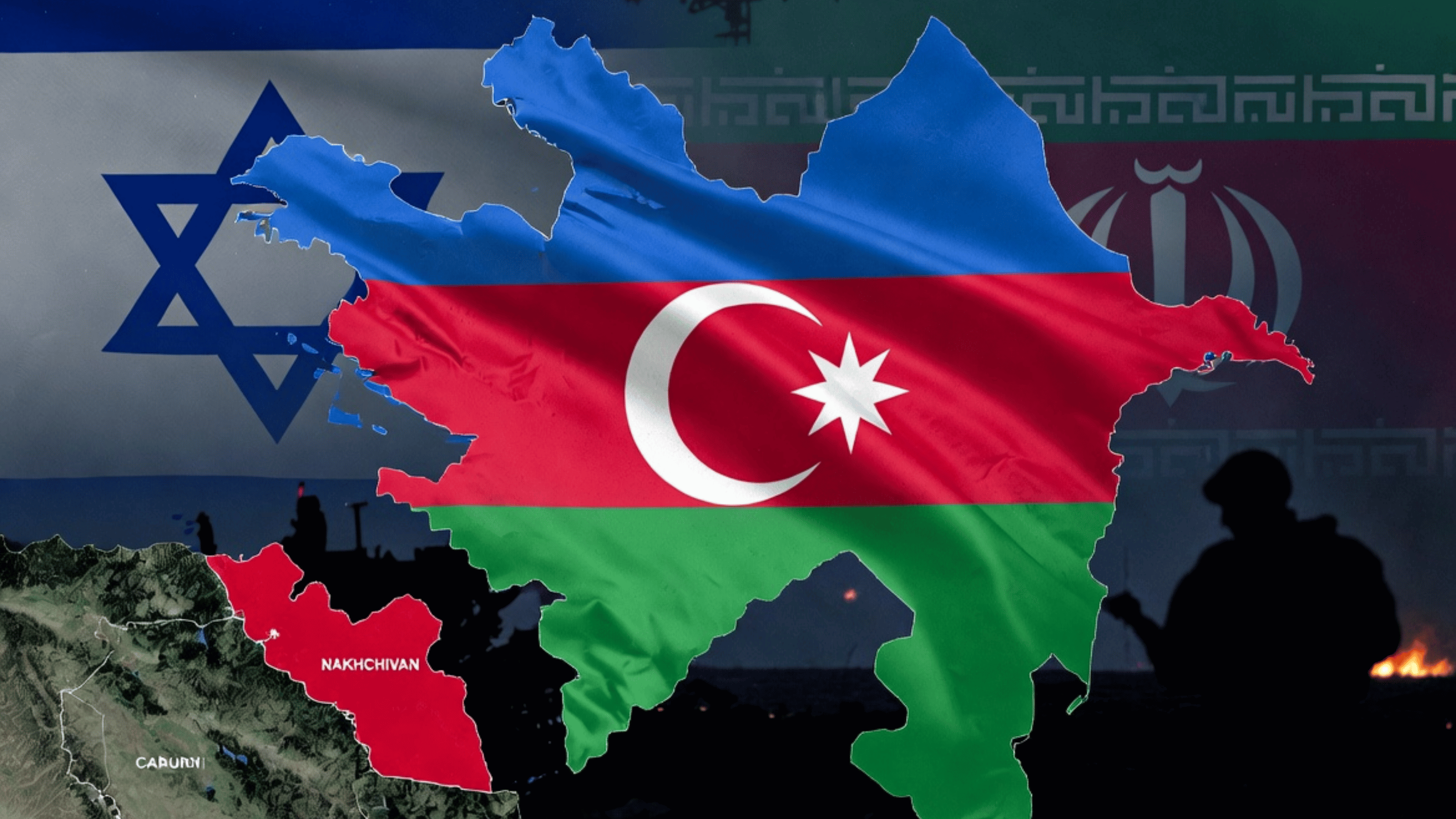
Mecca defence agreement and Azerbaijan