Myth Detector: 230 fake social media accounts created to create illusion of support for Georgian PM's statements






Fake accounts created to support Georgia’s prime minister
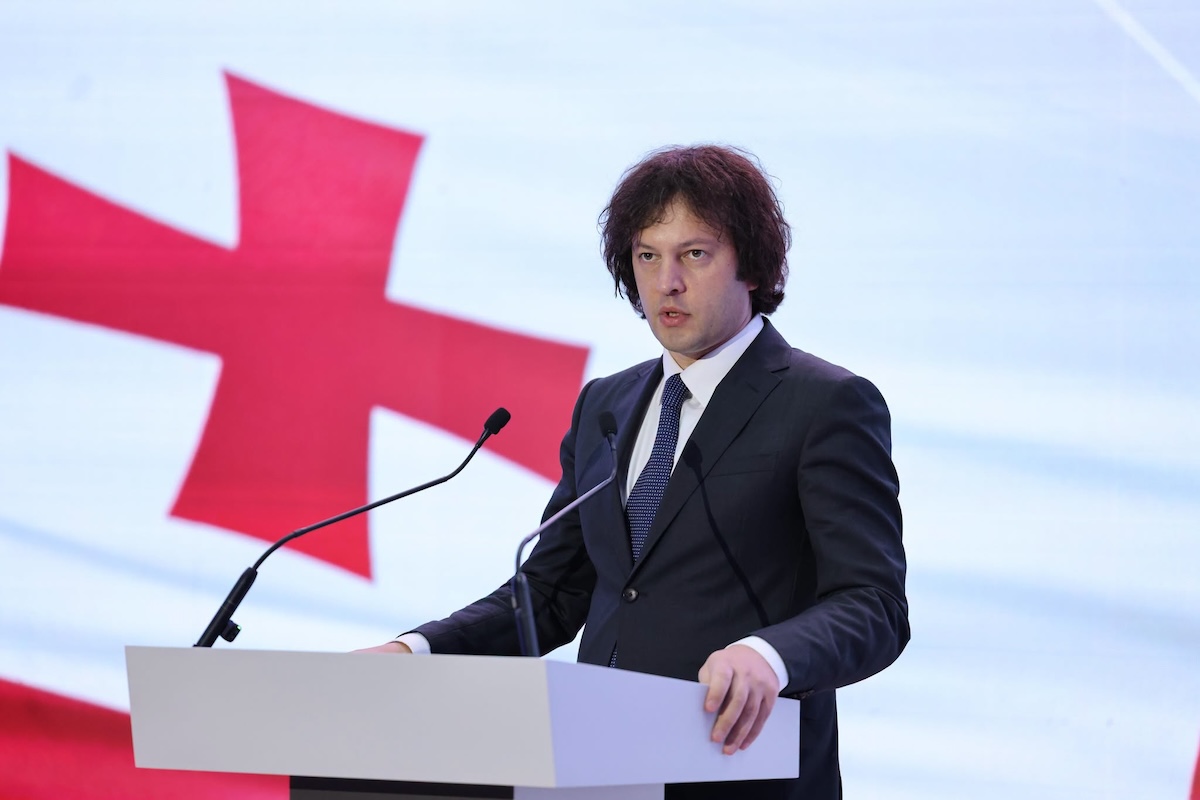
On 12 August, marking the 18th anniversary of the 2008 August War, Georgian Prime Minister Irakli Kobakhidze held a briefing. He focused in particular on what he described as the spread of “Russophobia” in Georgia and the role of the so-called “deep state” in this process.
After the briefing, pro-government messages began circulating widely on social media. Various media outlets also published visual materials promoting these messages.
According to a study by Myth Detector, 230 fake accounts took part in the campaign. The organisation analysed likes on social media posts, as well as the photos and activity of the profiles that shared them. It identified signs of coordinated and suspicious behaviour that, according to the study, aimed to increase support for specific government narratives.
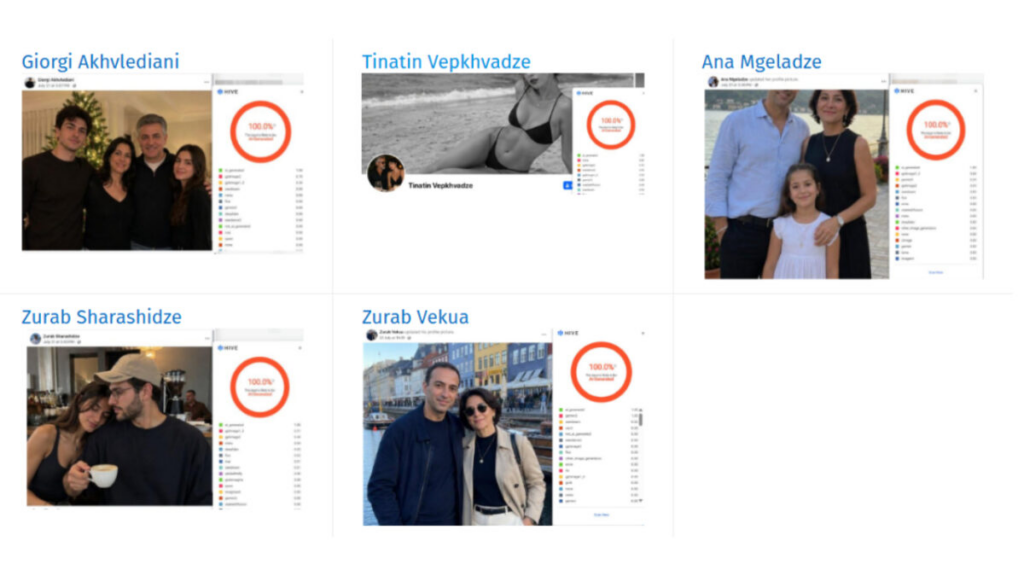
The study also says the profiles were designed to appear as if they belonged to different socio-demographic groups. Some accounts used photographs depicting idyllic family life to make themselves appear more trustworthy.
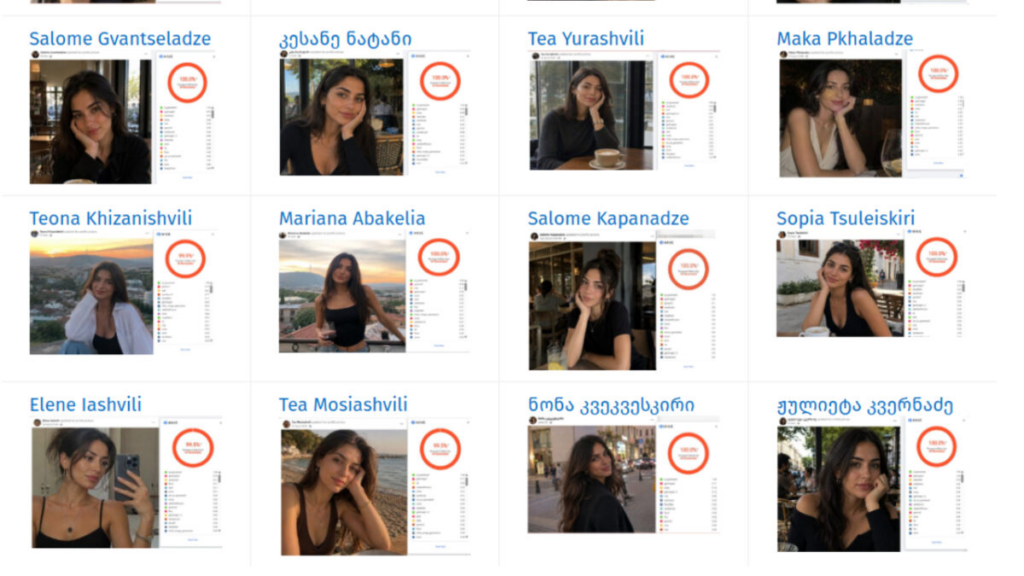
- Profile photos were generated using artificial intelligence (AI)
According to Hive Moderation, a tool for detecting AI-generated images, there was more than a 90% probability that all 230 profile photos had been generated using AI. In some cases, the probability reached 100%. A visual inspection also identified features typical of AI-generated images, including unnatural shapes of hands and fingers, as well as certain distortions.
- The photos repeat the same settings and compositions
Some accounts use identical or very similar photos, including the same images with minor changes. The visual design of different accounts also repeats similar photography styles and details. These include photos with a consistent aesthetic, featuring Tbilisi in the background, a glass of wine or a cup of coffee, a hand touching the head, or similar compositional choices. The accounts also use images showing people having fun, relaxing or taking part in sports to create an impression of authenticity. In some cases, different accounts use the same first and last names.
- An illusion of broad support is created through artificially diverse social and demographic profiles
The campaign creates the impression that it brings together people of different ages, appearances and interests. The profiles include young and older people, supporters of conservative and alternative views, as well as religious people, family-oriented users, sports enthusiasts and people who enjoy outdoor activities.
- AI-generated accounts use real workplaces and educational institutions to make their profiles appear more credible
Most profiles list places of education and employment, including the Tbilisi Transport Company, various Georgian insurance companies, commercial banks, microfinance organisations, government agencies and municipal services.
- Different accounts show identical behaviour
Most profiles list a date between 20 and 24 July 2026 as the date they began living in Georgian cities, although some accounts appear to have been created earlier.
- Profile activity focuses on the same messages
The activity of the suspicious accounts, particularly their likes, is concentrated on posts featuring conspiracy claims by the ruling party’s chairman about the “party of global war”, the “deep state’s plan” and the “opening of a second front”. They also engage with the narrative about “Russophobia”, suggesting an artificial increase in the level of support.
Fake accounts created to support Georgia’s prime minister