Top stories in Azerbaijan, Armenia, and Georgia from June 9-12 June, 2026
 Live
Live




-
Friday, 12 June, Armenia. Russia has restricted imports of a wide range of Armenian products and banned their transit through Russian territory
-
Friday, 12 June, Azerbaijan. RSF welcomes French verdict in attempted assassination case of Azerbaijani blogger Mahammad Mirzali
-
Friday, 12 June, Georgia. Brussels launches discussions on a possible suspension of Georgia’s visa-free travel regime with the EU
-
Thursday, 11 June, Georgia. Authorities announce closer ties with China as opposition warns of expanding Iranian influence networks in Georgia.
-
Thursday, 11 June, Armenia. “Export diversification is underway, with an increasing number of Armenian goods entering the European market instead of the Russian one"
-
Thursday, 11 June, Azerbaijan. Azerbaijan prioritizes development of its non-oil economy
-
Wednesday, 10 June, Azerbaijan. Since the end of the Second Karabakh War, 427 people have fallen victim to mines laid by Armenian forces
-
Wednesday, 10 June, Georgia. The prime minister held a special briefing in which he praised oligarch Bidzina Ivanishvili, the founder of the ruling party
-
Wednesday, 10 June, Armenia. Nikol Pashinyan calls for harsh punishment for anyone who gives or takes election bribes
-
Tuesday, 9 June, Armenia. Nikol Pashinyan's Civil Contract wins, but it is still unclear whether three or four political forces will enter parliament
-
Tuesday, 9 June, Georgia. The U.S. House of Representatives has passed legislation assessing the influence of Russia and China in Georgia and the South Caucasus
-
Tuesday, 9 June, Azerbaijan. Foreign ministers of Azerbaijan, Turkey and Georgia hold talks in Istanbul
-
Top stories in Azerbaijan, Armenia, and Georgia from 1-5 June, 2026

-
Friday, 12 June, Armenia. Russia has restricted imports of a wide range of Armenian products and banned their transit through Russian territory
● Turkish President Recep Tayyip Erdoğan congratulated Prime Minister Nikol Pashinyan on his party’s victory in the parliamentary elections. “I am confident that your strategic vision for establishing lasting peace and stability in the region, as well as ensuring the necessary cooperation toward this goal, will be successfully implemented,” Erdoğan said in his message.
● During the day, Pashinyan also received congratulations from the prime ministers of Belgium, Bulgaria, and Pakistan.
● There will be no major changes in the composition of Armenia’s government, Prime Minister Nikol Pashinyan said at a briefing. He declined to specify what changes would nevertheless take place, noting only that the ruling party would form the government on its own but would not reject offers of cooperation.
● “We do not intend to resume paying membership dues to the CSTO military bloc (led by Russia),” Prime Minister Nikol Pashinyan effectively stated at a briefing, commenting on Moscow’s threats to expel Armenia from the organization. “If they decide to expel us, we will have to take note of that,” Pashinyan said. Read more here
● Nikol Pashinyan: “I do not know how Russia could unilaterally revise the price of gas supplied to Armenia. There are signed agreements and arrangements between our countries, including long-term ones. But we are considering all scenarios.”
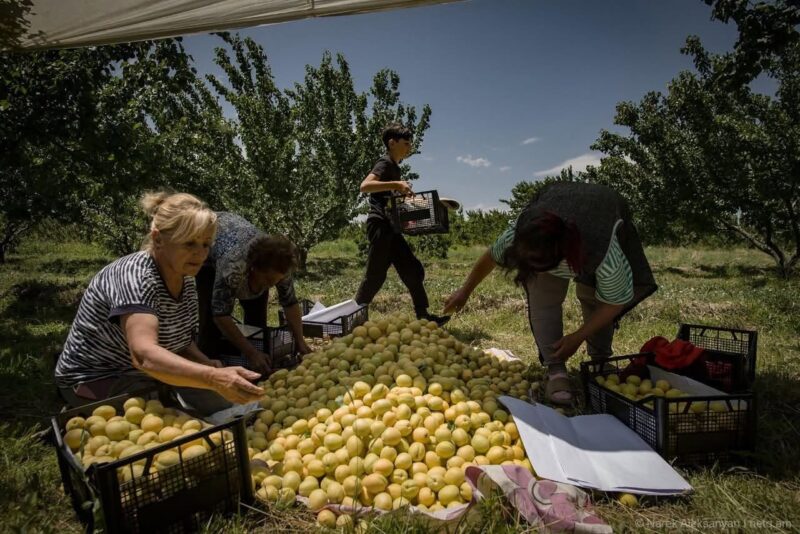
● Russia is imposing restrictions on imports of a wide range of products from Armenia starting June 12, 2026. The measures also ban the transit of Armenian goods through Russian territory. Moscow says the restrictions were introduced after pests and contamination were detected in products and quarantine measures were declared. The list of affected goods already includes flowers, alcoholic beverages produced by several leading Armenian companies, tomatoes, cucumbers, strawberries, cherries, sweet cherries, plums, peaches, nectarines, grapes, as well as live fish and fish products.
● Artur Abrahamyan, a parliamentary candidate from the opposition pro-Russian Strong Armenia bloc, has been placed on a wanted list in connection with a criminal case involving multiple alleged instances of vote-buying during the election campaign and large-scale money laundering. Earlier, the Investigative Committee announced criminal proceedings against six candidates from the same political bloc on similar charges.
● The opposition pro-Russian Strong Armenia party will appeal to the Central Election Commission seeking the annulment of the results of the June 7 parliamentary elections. Narek Karapetyan, who heads the party’s electoral list, said the party is also prepared to appeal to the Constitutional Court. “Nikol Pashinyan’s Civil Contract is the weakest force in the country. They lost their majority and received less than 50% of the vote. After so many violations, a force that does not have three-fifths of the vote cannot change the Constitution at Azerbaijan’s instruction. But we will go even further to ensure that the results are reviewed,” Karapetyan said.
● Former Defense Minister Vigen Sargsyan has been placed on a wanted list. He is accused of corruption and embezzlement of public funds on an especially large scale.
● Another shipment of petroleum products has been sent from Azerbaijan to Armenia — 17 railcars carrying 984 tons of diesel fuel.
● Armenia has imposed a six-month ban on wheat exports.
● Cigarettes, alcohol, diesel fuel, and gasoline will become more expensive in Armenia following the approval of a legislative initiative proposing revisions to excise tax rates in line with projected inflation. The proposal includes annual increases of 7% on tobacco products, 30% on heated tobacco products, 100% on electronic cigarettes in the first year followed by increases of 25% and 20% in the following two years, and 40% on hookah tobacco in the first year followed by annual increases of 30% over the next two years.
● The Department of Foreign Literature at Yerevan State University is being closed. Department head Anush Sedrakyan, an active opposition politician and critic of Prime Minister Nikol Pashinyan, claims the decision is politically motivated. “Through various hints, I was made to understand that this decision was related to my political views. I was not even officially informed of this intention, but I was told that I already knew everything myself. They probably meant that through various channels I had been told to stop engaging in politics,” Sedrakyan told the newspaper Hraparak.
● The opening of the new Meghri border crossing with Iran has been postponed by several months. According to State Revenue Committee Chairman Eduard Hakobyan, it is now expected to open in early 2027, although previous reports indicated a launch could take place in December 2026. Hakobyan said that by the end of this year, 70–80% of the preparatory work will be completed.
● Armenia has reduced its extreme poverty rate from 1.1% to 0.6% in 2025. The improvement is attributed to positive macroeconomic trends in recent years, economic growth, and the effective implementation of social policies by the government.
-
Friday, 12 June, Azerbaijan. RSF welcomes French verdict in attempted assassination case of Azerbaijani blogger Mahammad Mirzali
● Slovak State Secretary for European Union Affairs Marek Eštok is on a visit to Azerbaijan.
● The first-ever consular consultations between the foreign ministries of Azerbaijan and Thailand were held in Baku. The sides discussed expanding the bilateral legal framework and reviewed accumulated experience in evacuating citizens during crisis situations.
● Another round of political consultations between the foreign ministries of Azerbaijan and Estonia took place in Baku. The importance of mutual visits and meetings within international platforms was particularly emphasized. The sides also welcomed the opening of Estonia’s embassy in Azerbaijan.
● Appeal proceedings have begun in the case of French citizen Martin Ryan, convicted of espionage for France and sentenced to 10 years in prison, and Azerbaijani citizen Azad Mammadli, convicted of treason and sentenced to 12 years. During the preliminary hearing, the court reviewed the arguments of the appeals, with the next hearing scheduled for June 25. According to investigators, Ryan, who served as CEO of the company Merkorama in Baku, was recruited by French foreign intelligence and used as an agent. He allegedly received assignments to collect information on weapons and ammunition produced in Azerbaijan, as well as on army mobilization during the Second Karabakh War in 2020. Prosecutors also claim he attempted to recruit military personnel, former servicemen, Azerbaijanis educated in French abroad, and foreign nationals residing in Azerbaijan. It is further alleged that Ryan arranged a meeting between Azad Mammadli and French intelligence officers in Baku, with Mammadli allegedly promised foreign citizenship in exchange for cooperation. Both men were arrested on December 4, 2023. Ryan and Mammadli denied all charges. In his final statement at trial, Ryan said he came to Azerbaijan in 2015 for business purposes and had never engaged in espionage.
● Reporters Without Borders (RSF) welcomed the verdict of a French court in the case of the attempted assassination of Azerbaijani blogger Mahammad Mirzali, who lives in exile in France. The defendant was sentenced to 30 years in prison. “The court’s decision highlights that the main objective of the attack was not only to take a life, but also to create an atmosphere of terror and fear among opponents of the regime. The court has therefore officially confirmed the political nature of the attack. Through these severe prison sentences, the French judiciary has made it clear that transnational repression by authoritarian regimes on European territory will not go unpunished,” RSF said in a statement.
Mirzali is a former member of the Azerbaijan Popular Front Party and a blogger. He says he has faced persecution since organizing a campaign in Azerbaijan under the slogan “Stop Soldiers’ Deaths!” According to Mirzali, before leaving the country he was detained by police and subjected to pressure, while his father was repeatedly summoned by police and threatened. Azerbaijani authorities have never commented on these allegations.
Mirzali was stabbed in Nantes in 2021 and has since remained under special police protection. Another participant in the attack, Khayyam Haghverdiyev, was sentenced to 10 years in prison last year. The trial reportedly took place under unprecedented security measures due to claims that the defendants had extensive links to criminal networks. According to RSF, the case is one of the most significant transnational repression trials in French history.
● The issue of Azerbaijani citizens who went missing during the First Karabakh War in the early 1990s is not only a humanitarian matter but also a question of justice and lasting peace, Presidential Assistant Hikmet Hajiyev said. In a post on X, he wrote that more than three decades after the war, 4,009 Azerbaijani citizens remain listed as missing. Following the liberation of Azerbaijani territories from Armenian occupation after the Second Karabakh War in 2020, search operations uncovered the remains of 889 individuals, 313 of whom have been identified. According to Hajiyev, a total of 32 mass graves have been discovered in the liberated territories.
● Another shipment of diesel fuel has been sent from Azerbaijan to Armenia – 17 railcars carrying 984 tons in total. Direct exports of Azerbaijani petroleum products to Armenia began on December 18, 2025, with shipments transiting through Georgia. Prior to this delivery, Azerbaijan had already exported more than 12,000 tons of diesel fuel, 979 tons of AI-92 gasoline, and 2,955 tons of AI-95 gasoline to Armenia.
● A record number of transit flights passed through Azerbaijani airspace, with 1,062 flights handled in a single day on May 9. Overall, transit traffic has increased sharply in recent years: 47,065 flights crossed Azerbaijani airspace in 2021, compared to 261,085 in 2025. Farhan Guliyev, head of air traffic management at AZANS (Azerbaijan Air Navigation Services), attributed the increase to several factors, including the closure of Ukrainian airspace and parts of Russian airspace, airlines avoiding Russian airspace due to sanctions, and the consequences of the crisis in the Middle East. In particular, since tensions around Iran escalated, more than 60 new airlines have begun using Azerbaijani airspace, Guliyev said. “Azerbaijan has become one of the key alternative corridors. Accordingly, new air traffic management systems have been introduced and investments have been made to increase capacity,” he noted. Guliyev added that new air routes linking China, Central Asia, and India with Europe through Azerbaijan have already proven effective for carriers and will become even more important as East–West transport demand grows. “We are currently discussing the joint implementation of a new air traffic flow management system with countries along this route, which would increase the number of flights handled per hour from the current 250 to 300,” he said.
● The Press Council has called on global platform providers to open representative offices in Azerbaijan. Council Chairman Rashad Majid said this would help avoid complications related to the country’s proposed new laws “On Information, Informatization and Information Protection” and “On Protecting Children from Harmful Information.” The draft legislation would introduce restrictions on social media use by individuals under the age of 16, a measure that, according to Majid, enjoys support from the majority of society. Read more here about the provisions included in these new draft laws
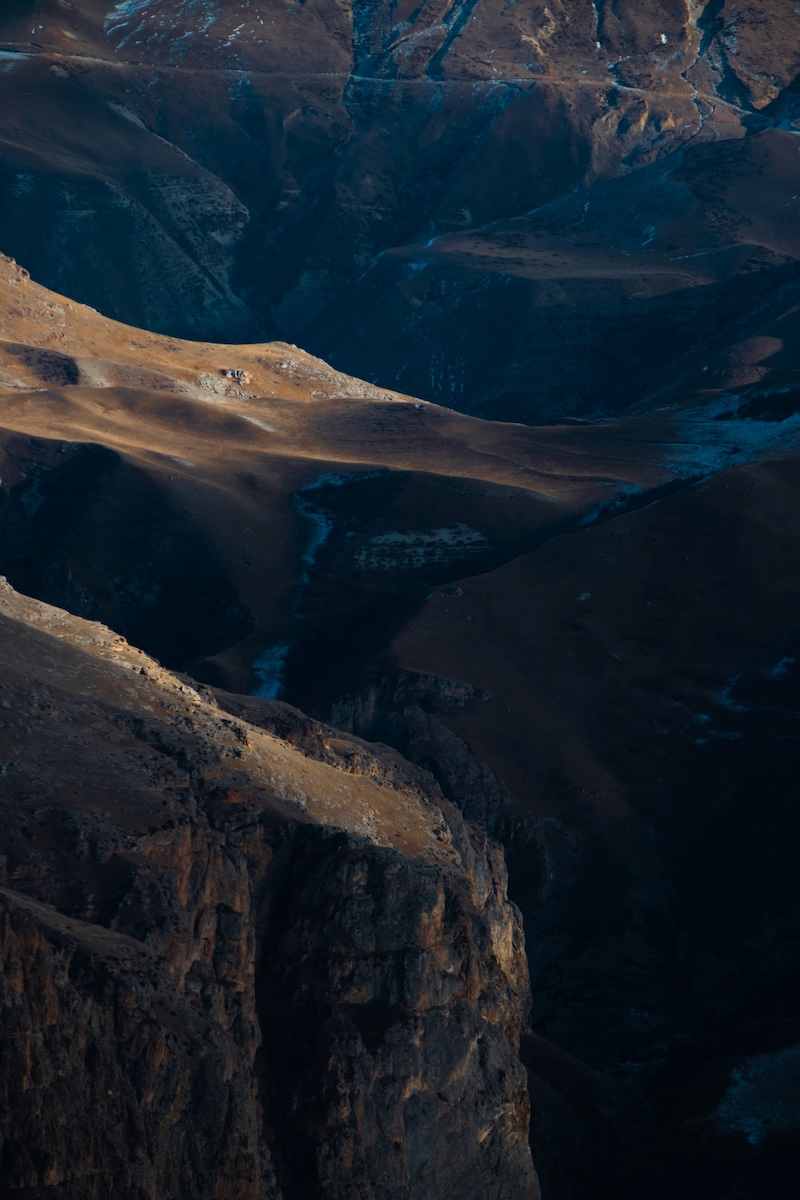
Photo: Mount Shahdag (Şahdağ), a peak of the Greater Caucasus mountain range located in Azerbaijan’s Qusar District, near the border with Russia’s Dagestan region. The summit rises 4,243 meters above sea level. Photo by Tatiana Mokhova.
-
Friday, 12 June, Georgia. Brussels launches discussions on a possible suspension of Georgia’s visa-free travel regime with the EU
● The first working meeting between Georgia and the European Commission on a possible visa-free travel suspension mechanism was held in Brussels. The mechanism could affect Georgia’s current visa-free regime with the EU. Foreign Ministry representative Giorgi Tabatadze positively assessed the meeting and said the sides exchanged views on the issue.
● Czech MEP Markéta Gregorová said that the European Parliament plans to adopt a resolution calling for targeted sanctions against leaders and members of the ruling Georgian Dream party. “We hope no one will block this resolution, as Orbán has done until now. Georgia today is not a country that deserves candidate status,” Gregorová told the Georgian news agency InterpressNews.
● Iran’s ambassador to Georgia, Seyed Ali Moussavi, held a press conference at which he stated that Iran will no longer allow the territories of neighboring countries to be used for aggression against its sovereignty. The ambassador said that “Georgian society and the government have expressed outrage over the injustice toward Iran.” He added that partners had been provided with information about the military actions of the United States and Israel. Most of the press conference focused on the historical and cultural ties between Iran and Georgia. More details here.
● International human rights organization Freedom House has published an article titled “No Reset Without Release: Georgia’s Political Prisoners and the Price of Improved Relations with Washington.” The organization argues that normalization of relations between the United States and Georgia should not take place until the Georgian government releases those whom Freedom House considers to be detained or imprisoned for exercising their fundamental freedoms.
● Law enforcement agencies from Georgia, the United States, and Poland, with the support of Europol and Eurojust, have uncovered the transnational criminal group “AudiA6” and arrested two foreign nationals in Georgia’s Adjara region. The group allegedly laundered hundreds of millions of dollars in cryptocurrency between 2022 and 2025 and operated the Dark2Web cybercrime forum. Authorities seized 173 vehicles, real estate assets, and bank accounts. More details here.
● Four more people have been arrested in connection with an incident in the city of Rustavi, where a man died at the scene from injuries sustained during a physical altercation. The charges carry a prison sentence of up to eight years.
● According to Georgia’s Interior Ministry, 17 Ukrainian citizens remain in the neutral zone at the Russian-Georgian border (none of them are women or children). They have been denied entry due to the lack of valid documents. Work is underway with international organizations to facilitate their return to Ukraine.
-
Thursday, 11 June, Georgia. Authorities announce closer ties with China as opposition warns of expanding Iranian influence networks in Georgia.
● The EU’s 21st package of sanctions against Russia also extends to cryptocurrency platforms operating in Georgia, the Financial Times reported. According to the newspaper, the measures will primarily target crypto companies and platforms operating outside Russia that Brussels accuses of providing services to sanctioned entities and helping them circumvent restrictions.
● Another 14 people accused in connection with the October 4 attack on the presidential administration have been released from custody pending formal indictments after signing plea agreements with prosecutors. On June 9, another eight defendants in the same case were released under plea agreements. Read more here
● Russia is ready to deepen relations with Georgia and considers bilateral ties to be one of the key factors contributing to the country’s economic development, Russian Foreign Ministry spokeswoman Maria Zakharova said at a briefing.
● Prime Minister Irakli Kobakhidze said the comprehensive strategic partnership agreement signed by Georgia and China on June 9 will take Georgian-Chinese relations to a new level and bring significant political and economic benefits to the country. Read more here.
● Parliament Speaker Shalva Papuashvili described the U.S. House-approved “Countering Chinese Control in the Caucasus Act” as “absolute fiction” and “information noise.” According to him, U.S. intelligence agencies are already monitoring the region and do not need new legislation to do so.
● Ruling party MP Irakli Kirtskhalia called U.S. Republican Congressman Joe Wilson, a frequent critic of the Georgian authorities, a “comical and repulsive figure.” Kirtskhalia said Wilson’s statements “mean very little to Georgia’s ruling party.”
● Federalists party chairman Giga Bokeria accused the government of double standards. According to him, while the authorities campaign against Western influence, they are facilitating the spread of influence networks linked to Iran’s ayatollah regime and the groups Hamas and Hezbollah inside Georgia. Bokeria announced a special presentation on the issue.
● Parliament Speaker Shalva Papuashvili said representatives of the opposition alliance are acting against the country’s national interests and spreading narratives that damage Georgia’s international reputation. He said attempts to portray Georgia as an ally of Russia and Iran in the region are particularly troubling and constitute a “false assessment.”
● Former President Mikheil Saakashvili, who is serving a prison sentence, said the United National Movement party he founded requires fundamental renewal. He also announced that well-known journalist Nanuka Zhorzholiani and her team are joining the party. Zhorzholiani confirmed that she had received “an interesting proposal from Saakashvili” and is currently engaged in active discussions with the party.
-
Thursday, 11 June, Armenia. “Export diversification is underway, with an increasing number of Armenian goods entering the European market instead of the Russian one"
● U.S. President Donald Trump congratulated Prime Minister Nikol Pashinyan on the victory of his party in the parliamentary elections. “Congratulations to Nikol Pashinyan on a strong victory. I am very proud to have supported him in his re-election, and I have no doubt that under his leadership the wonderful country of Armenia will achieve a level of great success and prosperity beyond all expectations,” Trump said. According to him, the election results open up new opportunities for Armenia’s further development and strengthening of the state.
● International observers published a preliminary report on Armenia’s parliamentary elections held on June 7. They noted that voters were given a genuine opportunity to choose between political alternatives and that the voting process was generally well organized. At the same time, observers identified several factors that, in their assessment, affected the level playing field of the campaign. These included reports of external pressure, including trade restrictions from Russia and security-related threats.
● Russian Foreign Ministry spokesperson Maria Zakharova called EU foreign policy chief Kaja Kallas’s statement “another lie,” after Kallas said that “the Armenian people chose a European future despite strong pressure from Russia.” Zakharova said: “Nothing other than yet another falsehood could be expected from Kaja Kallas. You have to understand, this is the kind of person she is, this is her background.”
● Armenia’s contributions to the budget of the Russian-led Collective Security Treaty Organization (CSTO) have remained unpaid for two years. Russian Foreign Minister Sergey Lavrov said the organization will consider invoking the relevant article of its charter in response.
● The export diversification process is actively underway, with an increasing share of Armenian goods entering the European market, said Head of the State Revenue Committee Eduard Hakobyan. He noted that some products that faced difficulties in the Russian-led Eurasian Economic Union market are now finding new sales channels in EU countries. In this context, Armenia has appointed a customs attaché to the European Union, while continuing trade with the EAEU in the usual manner.
● Russian Ambassador to Armenia Sergey Kopyrkin returned to Yerevan after consultations in Moscow and resumed his duties. He is expected to host a reception marking Russia Day. At the end of May, he had traveled to Moscow for consultations related to Armenia’s steps toward closer ties with the European Union.
● Armenian Foreign Minister Ararat Mirzoyan thanked his Latvian counterpart for helping organize the export of a shipment of Armenian flowers after Russia abruptly blocked what had previously been regular deliveries.
● Chairman of the pro-Russian opposition party “Prosperous Armenia,” businessman Gagik Tsarukyan, was questioned by the Investigative Committee. He denies accusations of large-scale tax evasion. His lawyer said the case was opened in 2019 but Tsarukyan was only informed of it recently. The lawyer also argued that prosecutors should have first contacted the Central Electoral Commission, as Tsarukyan is a parliamentary candidate and therefore enjoys immunity.
● Arthur Osipyan, who was detained on May 18 after an altercation with Prime Minister Nikol Pashinyan during the election campaign, has been released. He reportedly went on a hunger strike while in detention. Osipyan said he intends to sue Pashinyan for defamation and demand a public retraction. He also alleged inhumane prison conditions, including dampness, mold, and a persistent sewage smell that worsened his health.
● A 12-year-old schoolboy was hospitalized after a school excursion. According to a medical report, a high dose of narcotic substances was detected in his system, said head of the NGO “Extend a Hand” Karine Torosyan. The child is currently in serious condition with memory loss, and it is suspected that the substance was mixed into sweets. The Interior Ministry has launched an investigation.
● Unknown individuals vandalized the “Mother Armenia” memorial complex in Gyumri, removing and stealing gilded letters with the names of hero cities installed on the site. The stolen letters were later found in garbage containers. An investigation is ongoing.
● An Armenian candidate has been elected as a member of the UN Committee on the Rights of Persons with Disabilities.
-
Thursday, 11 June, Azerbaijan. Azerbaijan prioritizes development of its non-oil economy
● Foreign Minister Jeyhun Bayramov continued his official visit to Japan and held talks with his Japanese counterpart, Toshimitsu Motegi. The sides discussed successful cooperation on the Azeri–Chirag–Gunashli oil field and the Baku–Tbilisi–Ceyhan pipeline, as well as the active presence of Azerbaijani company Silk Way on the Japanese market for more than a decade.
● Investments in the reconstruction of Karabakh and Eastern Zangezur will pay for themselves within 5–12 years, Economy Minister Mikayil Jabbarov told journalists. He said this would be achieved through the successful return of thousands of Azerbaijani families who were previously internally displaced. A key condition for such a return is the economic sustainability of the regions. Jabbarov said that an economic specialization has been defined for each district of the territories recovered from Armenian occupation. Two major industrial sites have already been established in the region — the Aghdam Industrial Park and the Araz Valley Economic Zone Industrial Park — where dozens of enterprises are now operating. He also noted that the government is actively implementing infrastructure projects in the territories, including roads, energy infrastructure and social facilities for returning residents.
● Mikayil Jabbarov named mining as a priority sector within Azerbaijan’s non-oil economy. “Many deposits of gold, copper, silver and possibly critical minerals were located mainly in the territories liberated from occupation. Even within a short period, we are already seeing results from the development of this sector,” he said. The minister highlighted the construction of the Dashkasan iron ore plant and the development of the Zod deposit in the recovered territories. He also announced a project aimed at doubling aluminum production.
● Jabbarov also identified the chemical industry as another promising area of the non-oil sector, including the production of polyethylene, polymers and polypropylene.
● Agriculture was named by the minister as the third priority sector of the non-oil economy. Jabbarov said that a recently approved state program provides for government regulation, infrastructure investment and support for the private sector.
● Jabbarov also highlighted transport and logistics, tourism development, digitalization and the creation of data centers as important areas of the non-oil economy.
● Jabbarov said Azerbaijan’s non-oil exports have nearly doubled over the past six years, while during the first four months of this year they increased by more than 17%.
● Presidential aide Hikmet Hajiyev said: “Following the settlement of the conflict between Armenia and Azerbaijan and the establishment of peace in the region, new opportunities have emerged. The Middle Corridor is evolving from a transport route into a strategic geo-economic system linking Europe, the South Caucasus, Central Asia and other regions. Against the backdrop of escalating tensions in the Persian Gulf and the Middle East, the Middle Corridor is gaining additional significance. One of its key components is the Baku–Tbilisi–Kars railway. An important element of this connectivity architecture is also linked to Azerbaijan’s Nakhchivan region.”
● Azerbaijan plays a decisive role in ensuring the energy security of the European market, Moldovan Energy Minister Dorin Junghietu said after completing his visit to Baku. He reported discussing the expansion of economic and energy cooperation with Azerbaijan’s economy minister and representatives of the state oil company SOCAR. According to Junghietu, the sides reviewed prospects for supplying petroleum products and natural gas to Moldova, as well as opportunities for attracting Azerbaijani investment into the country’s energy sector.
● The pretrial detention of Mammad Ibrahim, a member of the presidium of the opposition Popular Front Party of Azerbaijan led by Ali Karimli, and former presidential administration official Eldar Amirov has been extended for another five months. The house arrest of former head of the presidential administration Ramiz Mehdiyev was also extended. All are accused under an article related to “activities threatening national security.”
● Speaking on behalf of an interregional group of 19 countries, Azerbaijan presented a joint statement at a UN conference calling for stronger international action against the threat posed by landmines. The statement emphasized the need for comprehensive international support for people disabled or otherwise affected by explosive devices and mines, as well as by armed conflict. The group includes Azerbaijan, Albania, Bangladesh, Belarus, Bosnia and Herzegovina, Cambodia, Kyrgyzstan, Laos, Malaysia, Mexico, Oman, Pakistan, Panama, San Marino, Saudi Arabia, Thailand, Timor-Leste, Turkey and Vietnam.
● Under a new preferential financing mechanism, the state will cover up to 19% of the annual interest rate on crop production loans for farmers engaged in annual cultivation. As a result, farmers will only be required to repay the principal amount of the loan to banks.
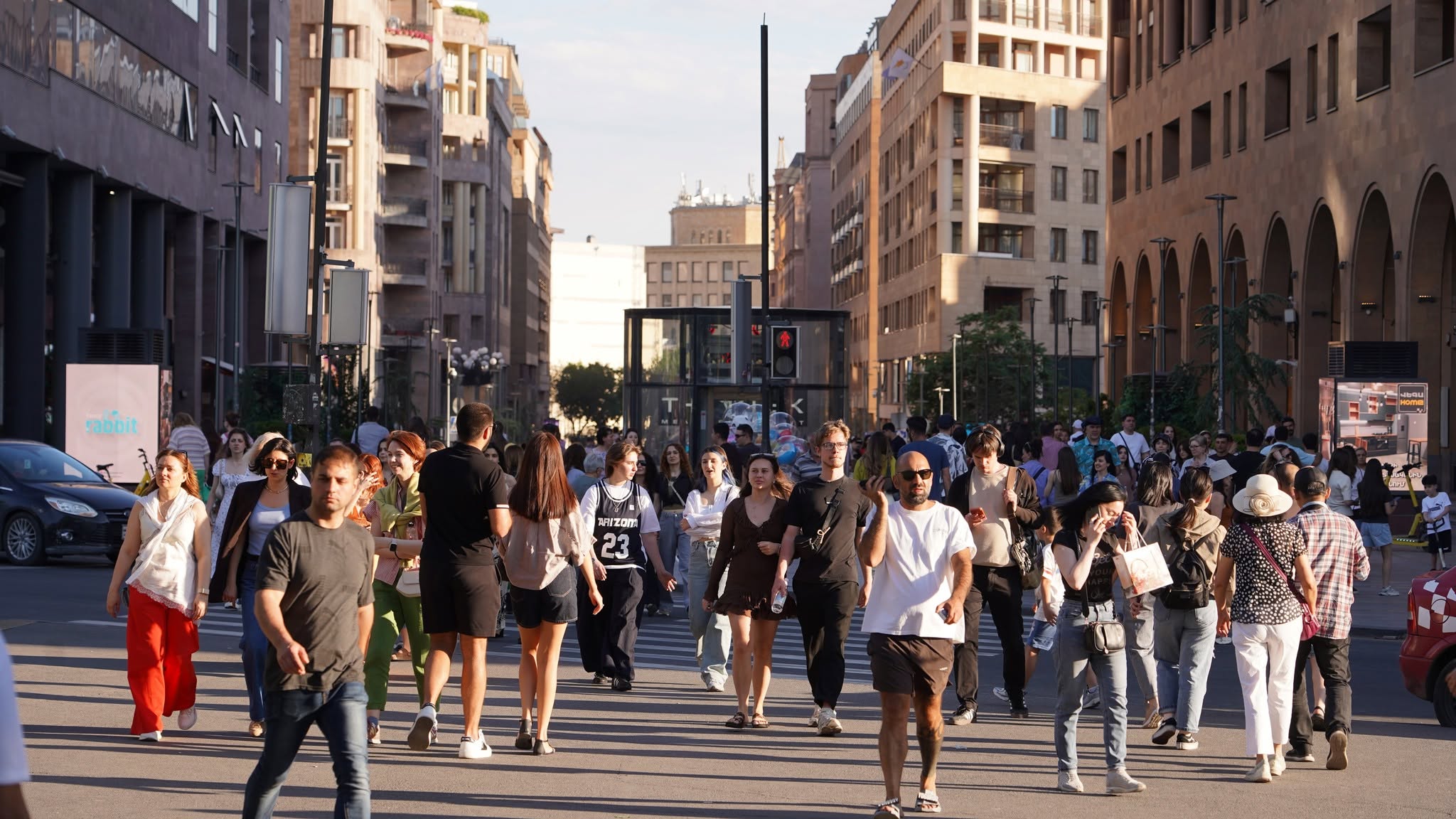
Photo by Adil Sattarov
-
Wednesday, 10 June, Azerbaijan. Since the end of the Second Karabakh War, 427 people have fallen victim to mines laid by Armenian forces
● Foreign Minister Jeyhun Bayramov is on a visit to Japan, becoming the first Azerbaijani foreign minister to visit Tokyo in 17 years. Japanese Foreign Minister Toshimitsu Motegi outlined the main topics of the talks at a press conference. “Azerbaijan, located on the Caspian Sea and one of the world’s leading producers of oil and natural gas, cooperates with Japanese companies in oil field development and exports crude oil to Japan. In addition, Azerbaijan has provided important assistance in ensuring the safety of Japanese citizens amid recent tensions in the Middle East, including by receiving Japanese nationals evacuated from Iran,” Motegi said.
● Azerbaijan and Lithuania held another round of foreign ministry consultations in Vilnius, focusing on prospects for expanding bilateral cooperation within strategic energy and transport projects. The delegations were led by the two countries’ deputy foreign ministers.
● “We firmly reject and condemn the statement by Iranian parliament member Abolfazl Zohrevand containing slander and threats against Azerbaijan,” said Azerbaijani MP Gaya Mammadov, a member of parliament’s Defense and Security Committee. He described Zohrevand’s remarks about Azerbaijan’s alleged “hostile activities against Iran” as a provocation and called on Iran’s government and parliament to condemn the statement and take appropriate action.
● The Baku Court of Appeal continued hearings on appeals filed by former political and military leaders of the former unrecognized “Nagorno-Karabakh Republic,” who are imprisoned in Azerbaijan. In February, Arayik Harutyunyan, Levon Mnatsakanyan, David Manukyan, David Ishkhanyan and David Babayan were sentenced to life imprisonment on charges including war crimes related to Armenia’s military actions against Azerbaijan, terrorism and violent seizure of power. Arkadi Ghukasyan and Bako Sahakyan received 20-year sentences; others received prison terms ranging from 15 to 19 years. The defendants were provided with translated documents they had requested at a previous hearing. All defense lawyers were given an opportunity to speak, but only Harutyunyan’s lawyer addressed the court, requesting an acquittal. Other defense attorneys asked for additional time to prepare. The next hearing is scheduled for June 16.
● Afghan Sadygov, head of the Azel.TV online channel, has been ordered to remain in pretrial detention until July 30. Authorities say a criminal case against him on extortion charges, originally opened in 2024, has been reopened at the request of alleged victims. Sadygov was detained in Georgia at Azerbaijan’s request and extradited to Baku in April this year. The journalist denies the charges and says he is being prosecuted for his critical reporting on the authorities.
● 19 Azerbaijani citizens who were aboard vessels attacked by Ukrainian drones in the Sea of Azov on June 5 are due to return home today. Search teams have also recovered the bodies of two additional victims. Azerbaijan’s Foreign Ministry said the bodies of all four deceased Azerbaijani citizens are expected to be repatriated in the coming days. The vessels were not owned by Azerbaijan and were sailing under foreign flags from Turkey to the Russian port of Rostov-on-Don to load grain. Ukrainian authorities said the ships were being used to transport Ukrainian grain as well as military cargo and fuel. Their names had allegedly been painted over and radar systems switched off. Read more here.
● The Baku Court of Appeal reduced the prison sentence of Anass Derraz, vice president of French company SAUR, from 12 years to nine years. Derraz and former French presidential security chief Alexandre Benalla are accused of seeking a large bribe from Russian-Azerbaijani billionaire Farhad Akhmedov. In exchange, they allegedly promised to help lift the seizure of his yacht Luna and assist him in avoiding international sanctions. Benalla is currently wanted through Interpol. Some analysts suggest the reduced sentence may be linked to improving relations between Azerbaijan and France and recent contacts between the two countries’ presidents. Read more here.
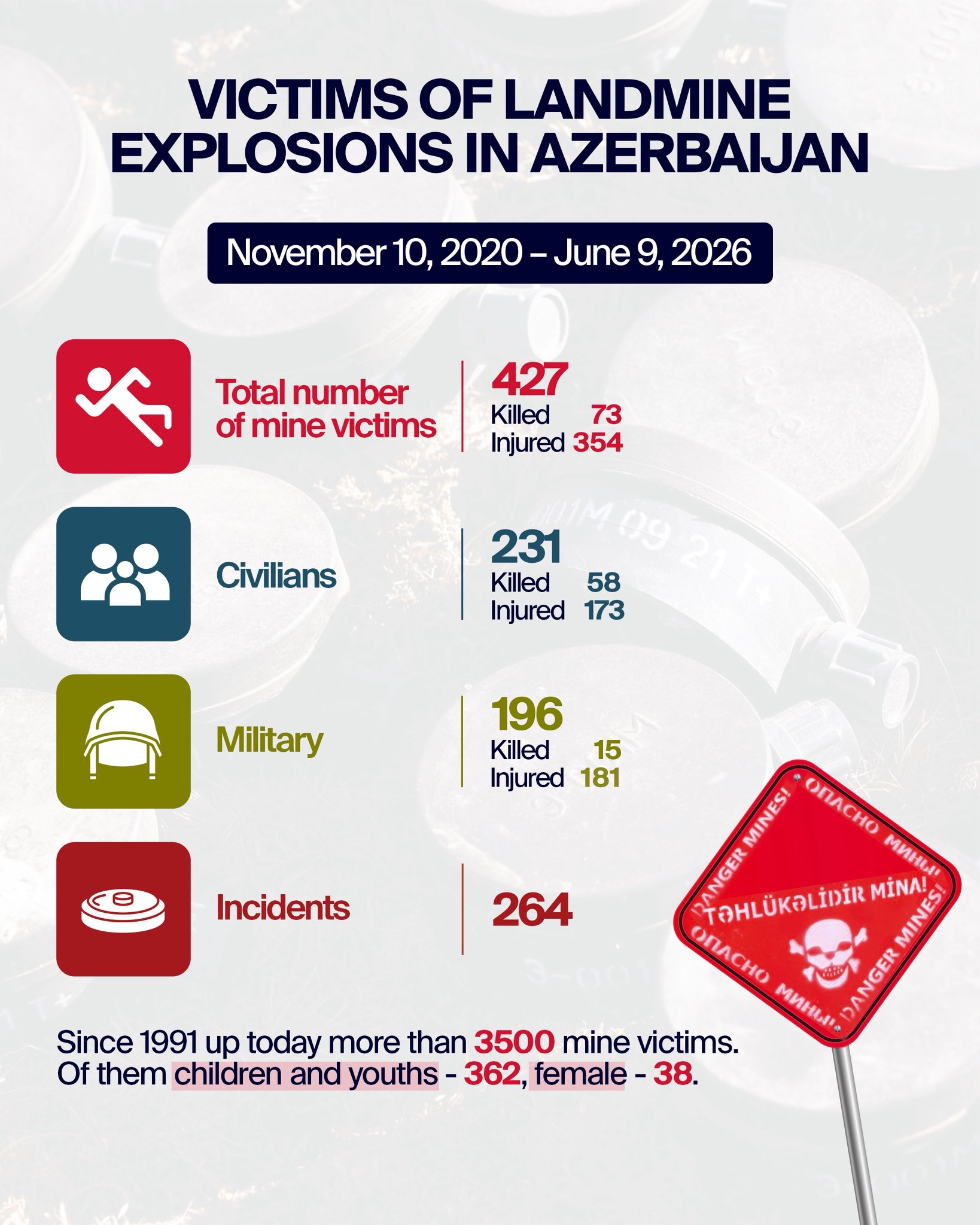
● Presidential aide Hikmet Hajiyev said that since the end of the Second Karabakh War in autumn 2020, 427 people in Azerbaijan have been injured or killed by mines laid by Armenian forces, including 73 fatalities. Since 1991, the total number of mine victims in Azerbaijan has exceeded 3,500. Hajiyev wrote on X that extensive mine contamination remains a major obstacle to the safe return of displaced persons, economic development and agriculture.
● President Ilham Aliyev signed a decree introducing additional measures to stimulate non-oil exports. The package includes state support for transportation costs incurred by Azerbaijani exporters. The decree states that development of the non-oil sector is of particular importance for ensuring the country’s strategic economic sovereignty.
● Finance Minister Sahil Babayev said the government aims to increase the share of non-oil revenues in the state budget to 70% by 2029.
● Another freight train carrying goods for Armenia has passed from Russia through Azerbaijani territory. The shipment included 12 railcars of fertilizer (828 tons) and six railcars of anthracite coal (414 tons). Earlier deliveries from Russia to Armenia via Azerbaijan included more than 29,000 tons of grain, over 6,000 tons of fertilizer, 133 tons of aluminum and 68 tons of buckwheat. Azerbaijan also exports petroleum products to Armenia. To date, deliveries have included more than 12,000 tons of diesel fuel, 979 tons of AI-92 gasoline and 2,955 tons of AI-95 gasoline.
-
Wednesday, 10 June, Georgia. The prime minister held a special briefing in which he praised oligarch Bidzina Ivanishvili, the founder of the ruling party
● Prime Minister Irakli Kobakhidze surprised the public by holding a special briefing devoted entirely to oligarch Bidzina Ivanishvili, founder and honorary chairman of the ruling Georgian Dream party. For nine minutes, Kobakhidze spoke about what he called Ivanishvili’s “special and invaluable” role in Georgian politics. Read more here.
● Georgia and China have elevated their relations to the level of a “comprehensive strategic partnership.” According to Kobakhidze, a new agreement has been signed that will further deepen economic, political and trade ties. On June 8, the U.S. House of Representatives approved a bill aimed at assessing Russian and Chinese influence in Georgia and the South Caucasus. Read more here.
● President Mikheil Kavelashvili sent a congratulatory letter to Chinese President Xi Jinping on the 34th anniversary of diplomatic relations between the two countries, highlighting progress made over the past three decades and expressing readiness to further expand the partnership.
● Opposition alliance leaders Gigi Tsereteli, Giga Bokeria and Zurab Japaridze held a briefing, arguing that political developments in the U.S. and EU are moving in Georgia’s favor, but that the ruling team is missing an opportunity to deepen ties with the West. “Instead, it is taking anti-Western steps and making the wrong bet on China, Russia and Iran,” they said. According to the opposition, fundamental changes in the country’s leadership are needed for Georgia to be included in regional projects, including the Trump Route for International Peace and Prosperity (TRIPP).
● Eight people arrested in connection with the “October 4 case,” in which a group of protesters attempted to seize the presidential administration building in Tbilisi, signed plea agreements with prosecutors. Seven were released from the courtroom. Charges included attempting to block strategic facilities and participating in group violence. Prosecutors say plea deals are expected to be signed with 13 more defendants. Read more about the events of October 4, 2025, here.
● Mamuka Bagauri, a local resident detained by Russian forces in the Georgian-Ossetian conflict zone, has been released. Georgia’s State Security Service said the EU Monitoring Mission’s (EUMM) hotline mechanism played an active role in securing his release.
● De facto Abkhaz leader Badra Gunba said authorities in Sokhumi would like to establish flights from the local airport to countries other than Russia, but that this is impossible because Georgia is blocking the process through the International Civil Aviation Organization (ICAO).
● MP Viktor Japaridze said widespread illegal cryptocurrency mining in the Svaneti region is causing recurring winter power outages and transformer explosions. In June, authorities announced a crackdown on illegal crypto mining in the mountainous region, where the practice has flourished due to heavily subsidized electricity rates. Read more here
● Zurab Burduli was sentenced to life imprisonment for killing his former wife, Tatia Lominadze, in the town of Kaspi in September 2025. Prosecutors said he stabbed her, doused her with gasoline and set her on fire. She later died in hospital.
-
Wednesday, 10 June, Armenia. Nikol Pashinyan calls for harsh punishment for anyone who gives or takes election bribes
● UK Minister for Europe, North America and Overseas Territories Stephen Doughty congratulated Prime Minister Nikol Pashinyan on his victory in Armenia’s parliamentary elections. “The UK looks forward to working with Armenia’s new democratically elected government to deliver our strategic partnership, strengthen regional stability and develop closer ties with partners across Europe,” Doughty wrote on X.
● Ukrainian President Volodymyr Zelenskyy said: “Russia’s political influence over other countries is declining. Azerbaijan is independent. Armenia – the parliamentary elections were a major success for its independence. I also believe Russia has lost Moldova. Of course, they do not want to lose Ukraine, because an independent and free Ukraine is the largest and politically most dangerous country for Russia. When Ukraine joins the European Union, Putin will face internal problems with different peoples, especially in the Caucasus. Different peoples across Russia will begin asking questions,” Zelenskyy said in an interview with The Guardian.
● The Prime Minister of Bulgaria and the President of Cyprus congratulated Nikol Pashinyan on his victory in the parliamentary elections.
● Georgian Prime Minister Irakli Kobakhidze, congratulating Pashinyan on his election victory, highlighted his personal contribution to the development of relations between Georgia and Armenia.
● Russia prefers to wait for the official election results in Armenia before congratulating Nikol Pashinyan on his victory, Kremlin spokesman Dmitry Peskov said.
● A total of 115 criminal cases have been opened in connection with election-related corruption offenses.
● Over the past two months, Armenia’s Anti-Corruption Court has received around 400 requests from the Anti-Corruption Committee for search warrants and more than 160 requests for pretrial detention and other preventive measures.
● Prime Minister Nikol Pashinyan said anyone who gives or receives an election bribe should face severe punishment. “If legislative changes are needed, they should be made immediately. However, I do not think legal changes are necessary. There is tolerance in society toward election bribery. I would not be surprised if none of those caught giving or taking election bribes in previous elections are in prison today. I demand that anyone found guilty of giving or receiving election bribes, regardless of their social status or position, remain in prison at least until the official certification of the next nationwide elections,” Pashinyan said.
● The pro-Russian opposition party Strong Armenia said the elections were marred by widespread violations and that it would present its final assessment after reviewing the full picture. The party said it has requested recounts at several polling stations.
● A decision on whether the opposition will take up its parliamentary mandates and what its next steps will be should be made jointly after consultations among political partners, said Ishkhan Saghatelian, a candidate from the pro-Russian Armenia bloc.
● Criminal proceedings have been launched against businessman Gagik Tsarukyan, chairman of the pro-Russian Prosperous Armenia party, on charges of large-scale tax evasion. As a preventive measure, he has been barred from leaving the country.
● Chief of the General Staff Edward Asryan rejected opposition claims that weapons acquired by Armenia in recent years are incompatible with the army’s existing systems. “We do not buy weapons just for the sake of buying them. We assess all parameters and criteria: whether we can integrate them, master them, use them and manage them within our overall automated system,” Asryan said.
● U.S. Chargé d’Affaires in Armenia David Allen visited Syunik Province, which borders Azerbaijan. According to the U.S. Embassy, he will meet local officials, alumni of U.S. exchange programs, Peace Corps volunteers, civil society representatives, students and U.S. partners.
● Construction of the North–South transport corridor is continuing, and work on the Kajaran Tunnel will begin in the near future, Nikol Pashinyan said.
● The project for the new Achapnyak metro station in Yerevan is ready for implementation, Pashinyan said.
● An Armenian-Polish business forum was held in Yerevan. An agreement was reached to export 20 truckloads of Armenian apricots to Poland.
-
Tuesday, 9 June, Armenia. Nikol Pashinyan's Civil Contract wins, but it is still unclear whether three or four political forces will enter parliament
● Prime Minister Nikol Pashinyan has been receiving congratulations from foreign leaders.
• U.S. Secretary of State Marco Rubio congratulated Nikol Pashinyan on his victory in Armenia’s parliamentary elections and wrote on X: “Congratulations to Prime Minister NikolPashinyan on his party’s reelection. The United States stands with Prime Minister Pashinyan and Armenia in the pursuit of peace, and we are committed to advancing the goals of the historic Washington Peace Summit, including implementation of the Trump Route for International Peace and Prosperity (TRIPP). We look forward to working together to deliver peace, stability, and prosperity to the South Caucasus and beyond.”
• Lithuanian Prime Minister Inga Ruginienė said that Armenian voters had once again expressed their support for democratic values, stability, and a European future.
• Austrian Chancellor Christian Stocker praised Armenia’s commitment to “the democratic path, resilience, and sovereignty.”
• Spanish Prime Minister Pedro Sánchez said Armenians had chosen democracy and a future that is “moving ever closer to Europe.”
• European Council President António Costa described the result as a vote for peace, stability, and closer cooperation with neighbors.
• French President Emmanuel Macron emphasized that he looks forward to continuing joint efforts “to strengthen peace, Armenia’s sovereignty, and its rapprochement with Europe.”
According to preliminary results, Prime Minister Nikol Pashinyan’s Civil Contract party won Armenia’s parliamentary elections with 49.8% of the vote. In second place came the Strong Armenia alliance of Russian-Armenian oligarch Samvel Karapetyan (23.3%), who is currently under arrest in Yerevan on charges related to calls for the overthrow of Armenia’s constitutional order. Many observers regard him as a pro-Russian politician. Third was the Armenia alliance of former President Robert Kocharyan (9.9%), who has also traditionally advocated closer ties with Moscow.
Read analysis of Armenia’s election results here
● One key question remains unresolved: whether the new parliament will consist of three or four political forces. It is still unclear whether the pro-Russian Prosperous Armenia party of businessman Gagik Tsarukyan will clear the electoral threshold. According to Central Election Commission chairman Vahagn Hovakimyan, this will determine the final distribution of seats in parliament.
● These elections have already set a record for the number of invalid ballots. While fewer than 5,000 invalid votes were recorded in both the 2018 and 2021 elections, the figure has now exceeded 17,000. It remains unclear whether this is due to technical mistakes, protest voting, or other factors.
● At the same time, compared to the previous parliamentary elections in 2021, the number of so-called “lost votes” — ballots cast for parties that failed to enter parliament — has declined. In 2021, there were around 260,000 such votes; this time the figure stands at approximately 185,000, although it could increase if Prosperous Armenia ultimately fails to pass the threshold.
● Foreign Minister Ararat Mirzoyan said that the election results marked the closing of “the chapter of authoritarianism” in the country. Prime Minister Nikol Pashinyan, meanwhile, announced that Yerevan intends to institutionalize the peace agreement with Azerbaijan in the near future.
● International observers continue to assess the election process. Damien Cottier, head of the Parliamentary Assembly of the Council of Europe delegation, said the vote took place in an “especially tense geopolitical context” and was accompanied by “direct external interference.” According to him, pressure and threats from Russia reached an “unprecedented and alarming level.”
● The OSCE also pointed to problematic aspects of the campaign, citing reports of pressure on public-sector employees, some of whom were allegedly compelled to attend rallies organized by the ruling party.
● The defeated opposition is preparing to challenge the results. Robert Kocharyan, leader of the Armenia alliance and the country’s second president, claimed that the vote took place “under conditions of total pressure, arrests of opposition figures, and unprecedented use of administrative resources.” “We are going to challenge the election results,” Kocharyan said, adding that he is discussing next steps with other opposition forces.
● Prosperous Armenia has requested recounts at a number of polling stations, arguing that its result may have been underestimated. Similar allegations have been made by the Wings of Unity party, which failed to cross the electoral threshold. The party accused the authorities of abusing administrative resources and pledged to seek a review of the results.
● Against this backdrop, the head of the Central Election Commission said recounts would be conducted at all polling stations where concerns have been raised, particularly in cases where the outcome could affect parties hovering around the electoral threshold.
● Turkey welcomed the conduct of the elections in Armenia in what it described as a “peaceful and calm atmosphere” and expressed hope that Armenia’s new leadership would show “greater courage” on issues related to regional peace and normalization of relations. Ankara also emphasized its readiness to continue contributing to stability in the South Caucasus.
● Turkish President Recep Tayyip Erdoğan met with Archbishop Sahak Mashalian, head of the Armenian Patriarchate in Turkey. Some observers interpreted the meeting as another cautious signal in support of the ongoing Armenian-Turkish dialogue.
● Following a meeting of the foreign ministers of Georgia, Turkey, and Azerbaijan in Istanbul, Georgian Foreign Minister Maka Botchorishvili welcomed the “positive momentum” in relations between Yerevan and Baku and expressed hope that the process would lead to a lasting peace.
● Finance Minister Vahe Hovhannisyan announced plans to expand Armenia’s tax deduction system, which allows citizens to reclaim part of their income tax for spending on education, sports, and healthcare. In the future, the government also intends to extend the mechanism to media professionals and representatives of civil society organizations.

-
Tuesday, 9 June, Georgia. The U.S. House of Representatives has passed legislation assessing the influence of Russia and China in Georgia and the South Caucasus
● The U.S. House of Representatives has passed legislation assessing the influence of Russia and China in Georgia and the South Caucasus. The bill, titled the “Countering Chinese Influence in the Caucasus Act,” requires the U.S. State Department, in coordination with defense and intelligence agencies, to submit a classified report to Congress no later than 180 days after the law enters into force. The legislation was introduced by Republican Congressman Joe Wilson and Democratic Congressman Steve Cohen. The House approved the bill by vote.
● Georgia’s Interior Ministry has prepared a sweeping package of legislative amendments that would significantly tighten rules governing the stay of foreign nationals in the country, including those studying in Georgia. The proposals include quotas on the admission of foreign students, additional language requirements, and mandatory reporting by universities on students through a unified state database. Educational institutions could face fines, restrictions on student enrollment, or even loss of accreditation for violations. Rules for obtaining student residence permits would also become considerably stricter. Only adult students enrolled in accredited institutions would be eligible, while poor academic performance, violations of employment conditions, or prolonged absence from the country could become grounds for revoking residence permits. Read more here.
● Parliament Speaker Shalva Papuashvili said the initiative was prompted by changes in migration policy across Europe. According to him, stricter EU approaches could redirect part of migration flows toward Georgia, and the country must be prepared. “We have seen the consequences of allowing migration processes to develop unchecked — the European Union is an example of this,” he said.
● One of the most widely discussed elements of the reform package is a proposal to criminalize “sham marriages” between Georgian citizens and foreign nationals if they are entered into for the purpose of helping obtain residence permits or citizenship. The draft law предусматривает punishment of up to two years in prison, while foreign nationals could face deportation and entry bans of up to ten years. Before granting family-based residence permits, authorities plan to verify the “genuineness” of marriages through a special commission. It remains unclear how this would be carried out — through interviews, home visits, or other mechanisms. The proposal has already raised concerns about potential state intrusion into private life. Read more here.
● Against a backdrop of growing disagreements between Tbilisi and Brussels, increasing attention is focused on the June 11 meeting between Georgia and the European Commission, where the future of visa liberalization will be discussed. European Commission spokesperson Marcus Lammert said the talks are part of an “enhanced dialogue” launched after the EU temporarily suspended visa-free travel for holders of Georgian diplomatic and service passports in March. He said actions taken by Georgian authorities undermine the principles on which the visa-free regime is based, including respect for human rights and democratic standards. According to Lammert, the goal of the meeting is to “address the circumstances that led to the suspension.”
According to sources in Brussels, the June 11 talks are being viewed as a signal of the seriousness of the situation, while the European Commission’s annual report later this year could serve as the basis for discussions on a broader review of Georgia’s visa-free regime.
● Georgia’s parliament has changed rules governing accreditation of journalists. Media outlets and individual reporters can now lose access to parliament for up to one year for repeated violations of internal regulations. New requirements include an obligation to show “due respect” for the dignity and personal space of individuals inside the parliamentary building. Authorities say the changes are based on European Parliament practices, but critics warn they could create additional pressure on independent media.
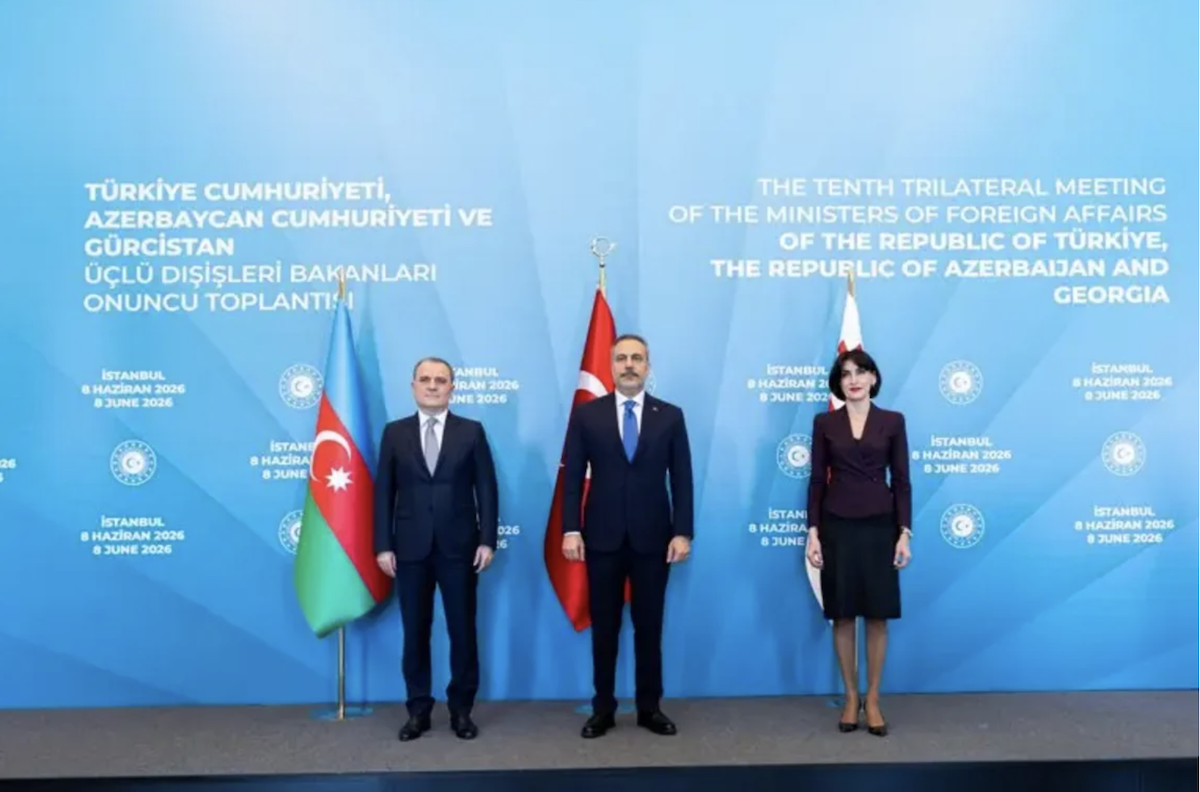
● Istanbul hosted the tenth trilateral meeting of the foreign ministers of Georgia, Turkey and Azerbaijan. Following the talks, the sides signed the “Istanbul Declaration,” reaffirming their intention to expand cooperation in regional security, transport and energy. Georgian Foreign Minister Maka Botchorishvili said the three countries are united by a “shared vision of peace, prosperity and development,” emphasizing that stability in the South Caucasus remains a key prerequisite for the region’s security and economic projects.
-
Tuesday, 9 June, Azerbaijan. Foreign ministers of Azerbaijan, Turkey and Georgia hold talks in Istanbul
● Foreign ministers of Azerbaijan, Turkey and Georgia signed the Istanbul Declaration following their trilateral meeting in Istanbul. The declaration reaffirmed mutual support for sovereignty, territorial integrity and inviolability of borders, and emphasized the importance of strengthening cooperation in transport, energy and trade. Particular attention was given to the role of the Baku-Tbilisi-Ceyhan pipeline and the Southern Gas Corridor in Europe’s energy security, as well as the importance of the Middle Corridor and the Baku-Tbilisi-Kars railway line. The importance of strengthening regional peace and security was also highlighted. The parties agreed to hold the 11th meeting of foreign ministers in Georgia in 2027.
● Foreign Minister Jeyhun Bayramov held bilateral talks with his Georgian and Turkish counterparts on the sidelines of the 10th trilateral meeting of the foreign ministers of Turkey, Azerbaijan and Georgia in Istanbul. The sides reaffirmed their commitment to implementing joint projects, including the Southern Gas Corridor, the Middle Corridor and other connectivity initiatives.
● First consular consultations between the foreign ministries of Azerbaijan and Syria were held in Baku. Discussions focused on protection of the rights and interests of citizens of both countries, as well as repatriation of Azerbaijani citizens from Syria.
● Turkey’s Foreign Ministry expressed hope that conditions would soon emerge for the signing of a peace agreement between Baku and Yerevan following Armenia’s parliamentary elections, won by the ruling party of Prime Minister Nikol Pashinyan. The ministry said Turkey would continue to support efforts aimed at ensuring regional stability based on the shared interests of South Caucasus states.
● Editor-in-chief of Azel.TV, Afghan Sadygov, was detained again in Baku and will remain in custody until July 30. His lawyer told journalists that the criminal case against Sadygov on extortion charges, originally launched in 2024, has been returned to the Azerbaijani Prosecutor General’s Office for further proceedings. The Prosecutor General’s Office stated that the case against Sadygov had been closed in 2024. However, alleged victims later appealed to a court seeking to overturn that decision. Authorities claim the journalist extorted bribes by threatening to publish damaging information. Sadygov categorically rejects the accusations and says he is being prosecuted for his critical reporting on the authorities. The Azerbaijani journalist has previously faced criminal prosecution. In December 2023, Sadygov moved to Georgia with his family. A year later, he was detained in Tbilisi and extradited to Azerbaijan.
● Secretary-General of the International Maritime Organization expressed condolences to Azerbaijan following the deaths of Azerbaijani sailors in the Sea of Azov as a result of Ukrainian drone attacks on the cargo vessels Natra and Zirkon on June 5. According to reports, five Azerbaijani sailors were killed and three others were injured. The vessels were not owned by Azerbaijan. They were sailing under foreign flags from Turkey to the Russian port of Rostov-on-Don to load grain. Ukrainian authorities stated that the vessels were being used to transport Ukrainian grain as well as military cargo and fuel. Their names had allegedly been painted over and their radar systems switched off. Read more here.
● Another group of 30 Ukrainian children has arrived in Azerbaijan for rehabilitation treatment.
-
Top stories in Azerbaijan, Armenia, and Georgia from 1-5 June, 2026