Armenia unveils exporter support programme to offset Russian restrictions






Second support programme for Armenian exporters
In response to Russian restrictions, the Armenian government has approved another support programme for Armenian exporters. The programme will provide financial compensation for exports of fresh fruit, bottled grape wine, brandy and mineral water. It will cover exports made from 1 June onwards.
Russia introduced the restrictions on the eve of Armenia’s parliamentary elections, which took place on 7 June. Prime Minister Nikol Pashinyan and other government officials expected the situation to improve immediately after the vote.
Experts linked the economic restrictions to an attempt to support pro-Russian politicians who took part in the election campaign. Both analysts and politicians expected Russia to gradually lift the measures after the election.
However, no positive developments have emerged so far. On the contrary, Russia’s agricultural watchdog, Rosselkhoznadzor, introduced new restrictions on 12 June. The agency now limits imports of “quarantine-controlled products”. The measures affect both goods produced in Armenia and goods shipped from the country.
“Moscow is also restricting transit through Russia to member states of the EAEU [the Russia-led Eurasian Economic Union]. The ban will remain in place until the parties develop a specific mechanism to ensure the safety and traceability of shipped goods,” Russian authorities announced.
Responding to the new restrictions, Economy Minister Gevorg Papoyan said the government would continue supporting citizens and would shoulder the “heavy financial burden”.
“As for our relations with our partners, I plan one, and possibly two, visits to Russia in June and July to attend various events. I will also meet with two colleagues. Naturally, we will discuss these issues as well. We will resolve the problems. These are not issues that can create serious tensions,” he said.
- Opinion: Why Putin hasn’t rushed to congratulate Pashinyan on his election victory
- ‘Russia has lost in Armenia too’ – Georgia reacts to Pashinyan’s victory
- ‘Russia’s Plan B has been activated’: analysis of Armenia’s preliminary election results
- Fact-checkers expose alleged Russian FSB interference in Armenia’s parliamentary elections
New compensation programme worth $10.6m
The Armenian government will provide compensation to both companies and individual exporters, including sole proprietors, who export fresh fruit, bottled grape wine, brandy and mineral water from Armenia during June.
The programme offers the following compensation rates:
- 200 drams (54 US cents) per kilogram of apricots;
- 250 drams (68 US cents) per kilogram of plums, peaches and nectarines;
- 400 drams ($1.10) per kilogram of cherries;
- 350 drams (95 US cents) per litre of bottled grape wine;
- 830 drams ($2.27) per litre of bottled brandy;
- 150 drams (41 US cents) per litre of bottled mineral water.
The government says it introduced the programme to support exporters. It also aims to diversify Armenia’s export markets.
Preliminary estimates suggest the programme will cost the government around 3.9bn drams ($10.6m).
To receive compensation, exporters must submit an application to the Economy Ministry either electronically or in paper form. They must also provide copies of customs declarations and invoices.
The Economy Ministry says Armenia exported fresh fruit, bottled grape wine, brandy and mineral water worth about 106.1bn drams ($290m) in 2025. Russia accounted for roughly 80.7% of those exports.
According to export projections, the support programme will cover about 11,500 tonnes of fruit exports in June 2026. It will also cover around 290,000 litres of bottled grape wine, 800,000 litres of brandy and approximately twice that volume of mineral water.
New restriction: ‘Cases of khapra beetle infestation detected’
Russia’s agricultural watchdog, Rosselkhoznadzor, says it has gradually restricted imports of certain categories of Armenian quarantine-controlled products since May 2026. The agency says it has repeatedly informed the Armenian side about violations involving shipments.
“However, detections of quarantine pests continue. In June, inspectors identified three cases of khapra beetle infestation in nuts, dried peaches and dried tomatoes imported from Armenia,” Rosselkhoznadzor said in a statement.
Officials at the Russian agency argue that these incidents point to insufficient oversight by Armenia’s competent authorities.
“The ineffective work of Armenia’s plant quarantine and protection service threatens the phytosanitary security of Russia and the EAEU,” the statement said.
Rosselkhoznadzor describes the khapra beetle as a highly destructive storage pest that does not exist in Russia. The agency outlined the potential risks posed by the insect. According to the statement, it can damage grain crops and processed grain products, infest grain storage facilities, raw material warehouses and flour depots, and “destroy up to 70% of stored products”.
Economy minister: ‘We are working to secure a special economic status for Armenia in the EU’
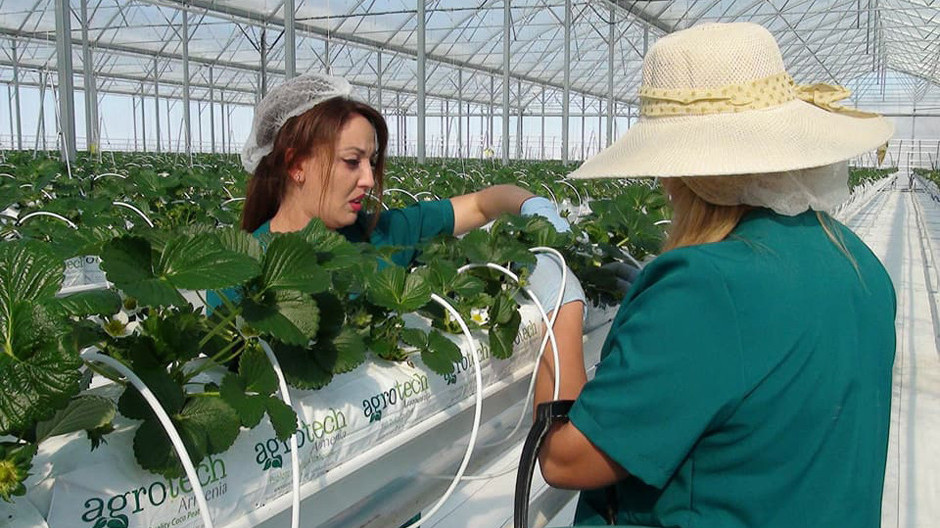
Armenian Economy Minister Gevorg Papoyan said products from Armenia’s intensive orchards and greenhouses face no export-related quality issues because they meet the highest standards. He said Armenian producers already export their goods to European Union countries, which demonstrates their competitiveness.
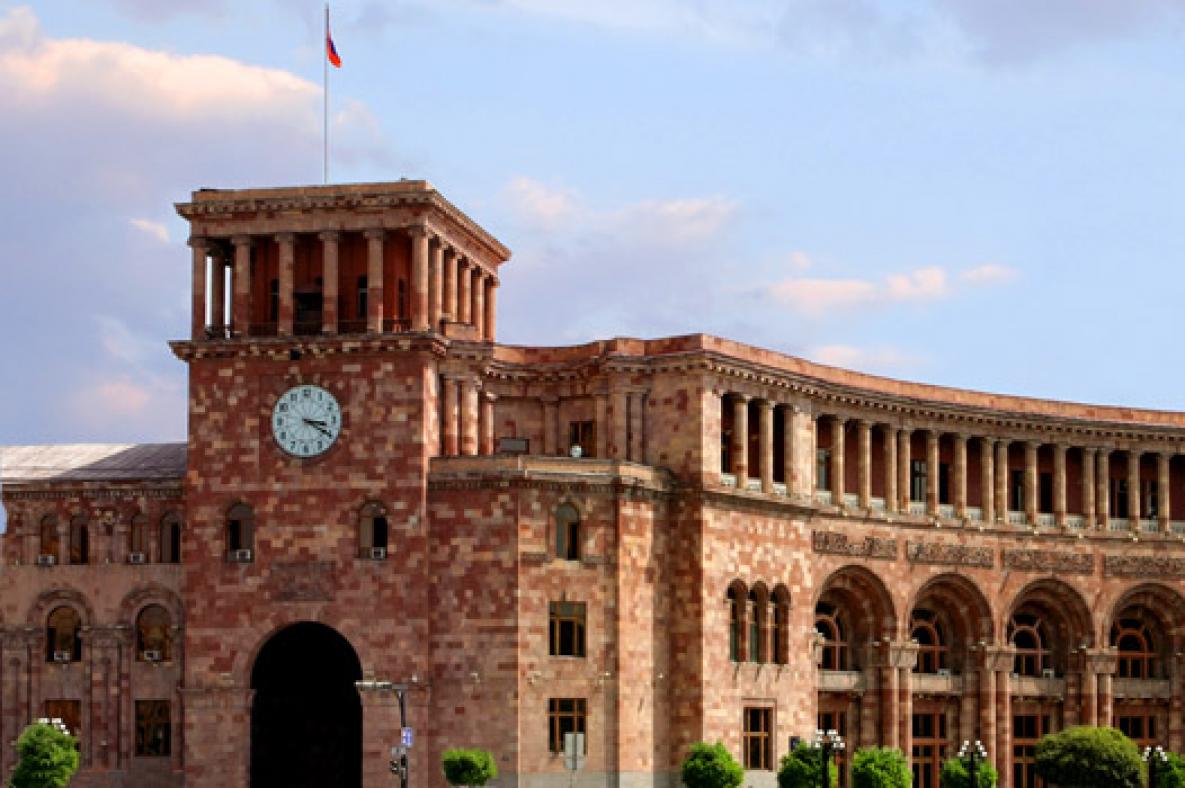
“The Economy Ministry and the Foreign Ministry are working with our European partners to secure a special economic status for Armenia, similar to the arrangements previously granted to countries such as Moldova and Ukraine,” Papoyan said.
He warned that the process would take time because it requires the approval of all EU member states. However, he expressed confidence that the efforts of the two ministries would ultimately succeed.
Papoyan also said the government would continue support programmes until Armenian products establish a stable presence in different export markets.
He explained that government programmes compensating transport costs and customs duties aim to address price competitiveness rather than product quality.
“In terms of quality, our products are competitive. They compete with products from France, Spain, Portugal, Italy, Turkey, Greece and other countries. But Greece and Spain are much closer to markets such as France and Germany than we are. That increases our costs. As a result, Armenian products face a challenge in terms of price competitiveness,” he said.
Second support programme for Armenian exporters