'Even if nuclear power plant is shut down, Armenia will not face serious problems': Reaction to Aliyev's remarks






Yerevan reacts to Aliyev’s AzTV interview
“Every nuclear power plant has an operating lifespan. Neither the Armenian government nor the Azerbaijani government, nor the government of any other country in the world, determines that lifespan,” Armenian ruling-party MP Arman Yeghoyan said in response to the Azerbaijani president’s remarks.
In an interview with AzTV, Ilham Aliyev said the Metsamor Nuclear Power Plant was “outdated” and posed a potential threat to the entire region. He said “sooner or later it must be shut down”, after which “Armenia will face a full-scale energy crisis”.
At the same time, the Azerbaijani president said an energy corridor running through Armenia to Nakhchivan, then to Turkey and Europe, would “allow Armenia’s energy system to withstand a crisis”.
MP Arman Yeghoyan responded that “Aliyev has not made any revelation”. The maximum permitted operating period of the nuclear power plant expires in 2036, a fact that has long been known.
“And we have already announced that we are considering building a new nuclear power plant and are negotiating with several international partners,” the MP said.
Political analyst Samvel Meliksetyan believes Azerbaijan is trying to portray itself as a “generous country ready to help Armenia solve its problems”, despite the long-running conflict.
He noted that this was not the first such case. Baku had previously said that Azerbaijan could serve as a reliable partner for supplying energy resources to Armenia. Meliksetyan, however, said Armenia currently has a surplus of electricity. He stressed that even if the nuclear power plant shuts down, the country will not face serious problems.
“The claim that Armenia’s energy system will face a crisis after the Metsamor Nuclear Power Plant closes is not true,” the political analyst told JAMnews.
He said Armenia does not currently need additional sources of electricity. He noted that the project for a new nuclear power plant remains under discussion and that Armenia has opportunities to expand solar power.
In addition, the fifth unit of the Hrazdan Thermal Power Plant has roughly the same generating capacity as the nuclear plant. The only problem is that the nuclear power plant produces cheaper electricity.
- ‘Regional stability is main achievement’: assessing Washington peace summit one year on
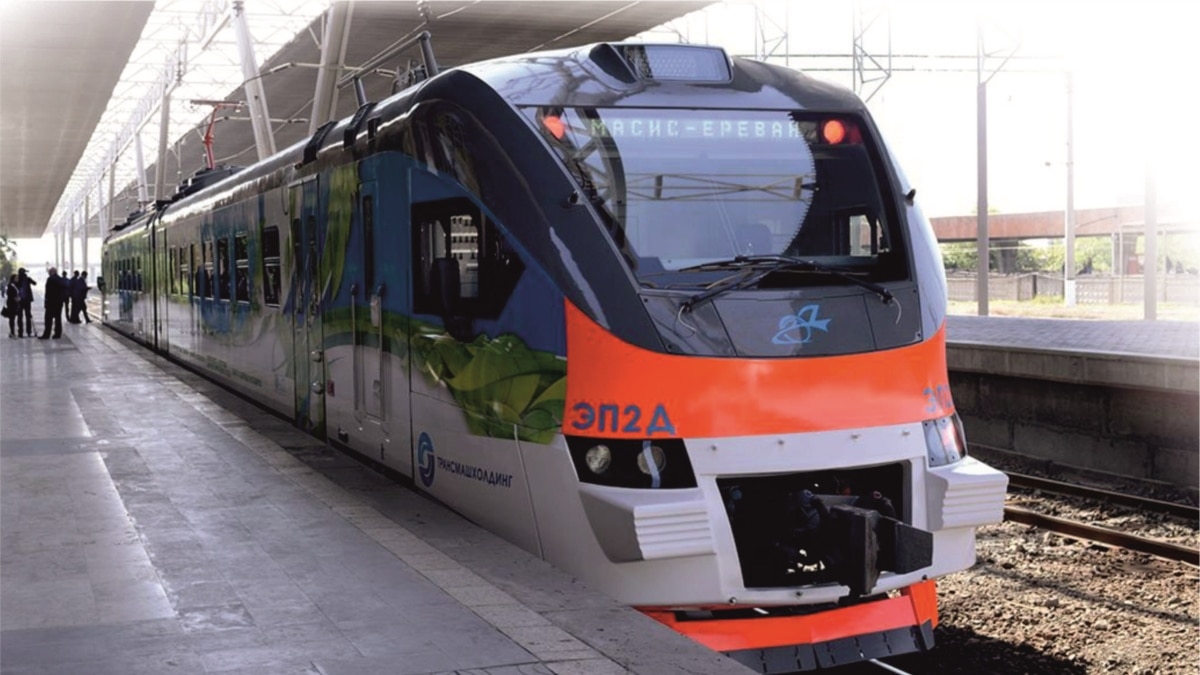
- Turkey takes practical steps to restore rail link with Armenia
- Armenia begins ratifying TRIPP agreement with US: foreign minister outlines key details
Aliyev again refers to TRIPP as the “Zangezur Corridor”
During his visit to Nakhchivan, Azerbaijani President Ilham Aliyev gave an interview to state broadcaster AzTV. Alongside the issue of the nuclear power plant’s closure, Aliyev discussed the 2020 Second Karabakh War. He called the trilateral statement of 9 November, which ended the fighting, “an act of Armenia’s capitulation”. He added that “there is no need to look for any humiliating or offensive meaning in this term; it is simply a reality”.
He then turned to the issue of transport links between mainland Azerbaijan and Nakhchivan. He stressed that this route had remained one of Baku’s strategic goals for many years.
“On 9 November, trilateral negotiations took place with the mediation of the Russian president. I insisted categorically that the statement we were about to sign must include a corridor linking mainland Azerbaijan with the Nakhchivan Autonomous Republic. The Armenian side did not want to agree to this. But it did not have many alternatives. If the war had continued, we would of course have suffered losses as well, but Armenia’s losses would have been much greater. Its troops were, so to speak, surrounded, and their destruction had effectively become a possibility,” the president said.
Point 9 of the November [statement], which the leaders of Armenia, Azerbaijan and Russia signed, does not refer only to a road linking Azerbaijan with Nakhchivan. It states: “All economic and transport links in the region shall be unblocked.” Moreover, the document does not contain the term “corridor”.
Aliyev went on to say that Armenia had delayed implementation of the relevant provision of the 9 November statement and had taken no practical steps to create the “Zangezur Corridor”.
According to him, Russia, the third signatory to the statement, either could not ensure its implementation or had other reasons for not doing so.
“Until August last year, this issue remained frozen. The situation changed when the United States became involved, around spring 2025. The implementation of the project known as TRIPP then began successfully,” Aliyev said, linking the Trump Route transit project to the idea of the “Zangezur Corridor”.
For several years, Baku had demanded that Armenia provide a “Zangezur Corridor” to connect Azerbaijan with Nakhchivan. The Armenian authorities repeatedly said they were ready to unblock all transport links, but refused to provide a “corridor”. The issue stemmed from the fact that Azerbaijan used the term “corridor” to refer to an extraterritorial route. Armenia, meanwhile, refused to give up sovereign control over its own territory.
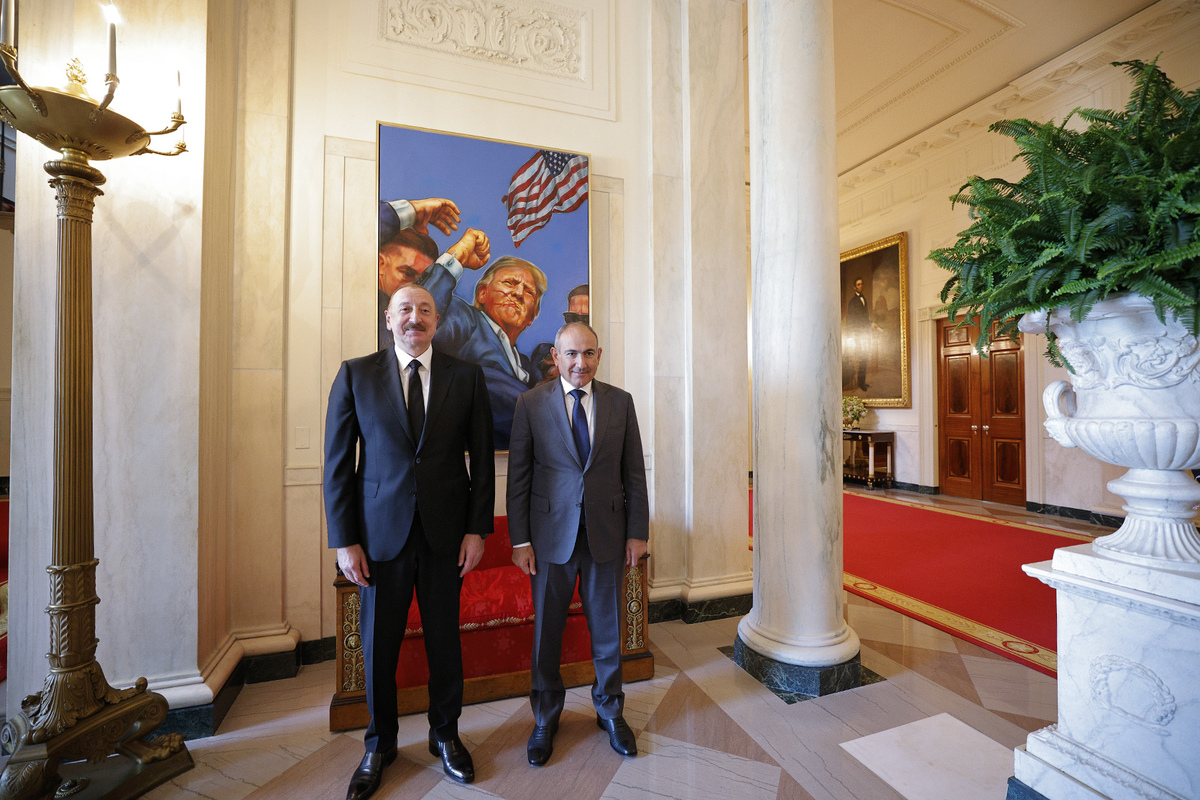
On 8 August 2025, the sides reached an agreement in Washington, with the mediation of the US president, under which Armenia would provide a route while retaining its sovereign rights. The transit project therefore received the name “Trump Route for International Peace and Prosperity” (TRIPP).
Aliyev also said that, as part of TRIPP, Azerbaijan had already prepared a project to build power transmission lines from mainland Azerbaijan to Nakhchivan through Armenian territory:
“As a result of our specialists’ survey of Armenian territory, we identified the points where the supporting pylons should be installed.”
The Azerbaijani president expressed hope that “Armenia will not delay this process”, saying it would also benefit the country.
“There is no infrastructure by that name in Armenia” — MP
Arman Yeghoyan, an MP from Armenia’s ruling Civil Contract party, said that documents signed by Armenia and Azerbaijan, including the peace agreement initialled in Washington, do not contain the term “Zangezur Corridor”.
“At the level of political narratives, you can say many things. But we are saying that there is no such concept or infrastructure with such a name or term on Armenian territory.”
The MP urged people to remember that Armenia is implementing the TRIPP project. The leaders of Armenia, Azerbaijan and the United States signed the declaration launching the project in Washington on 8 August 2025.
Comment
According to political analyst Samvel Meliksetyan, when the Azerbaijani side explains what it means by the “Zangezur Corridor”, it refers to the railway from Horadiz to Nakhchivan and then on to Turkey. He also noted that Aliyev used the name TRIPP in his interview.
The analyst said the meaning attached to the term “Zangezur Corridor” in 2022–2023 differs from what it means today. In his assessment, the project no longer involves an extraterritorial corridor:
“From a legal standpoint, TRIPP cannot become an extraterritorial corridor. But from a propaganda standpoint, Azerbaijan uses and will continue to use the term ‘Zangezur Corridor’, with some modifications.”
Meliksetyan stressed that the “Trump Route” project would proceed according to principles agreed with US mediation.
Commenting on Aliyev’s statement about building power transmission lines through Armenian territory, the political analyst said the sides were assessing the most suitable routes. He said the involvement of Azerbaijani specialists should not be interpreted as “acting on their own”.
“All the work is being carried out within the TRIPP framework. An electricity link will run through Armenian territory and connect the two parts of Azerbaijan. Azerbaijani specialists can only discuss where the link will enter Armenia from Azerbaijani territory and where it will re-enter Azerbaijan,” the expert explained.
Summing up his impressions of Aliyev’s interview, Meliksetyan said the Azerbaijani president had spoken in his characteristic style, seeking to highlight his “political achievements”.
The analyst said it was no coincidence that Aliyev focused on Nakhchivan’s economic and energy development, as well as its transport prospects. The president said Azerbaijan would finance the railway restoration itself, but also expressed interest in attracting international investors.
“Although Azerbaijan has repeatedly said that it has no financial problems, they certainly exist. Baku is trying to attract new investment to Nakhchivan through TRIPP to restore this section of the railway,” Meliksetyan said.
Yerevan reacts to Aliyev’s AzTV interview