Top stories in Azerbaijan, Armenia, and Georgia from 4-8 May, 2026
 Live
Live




-
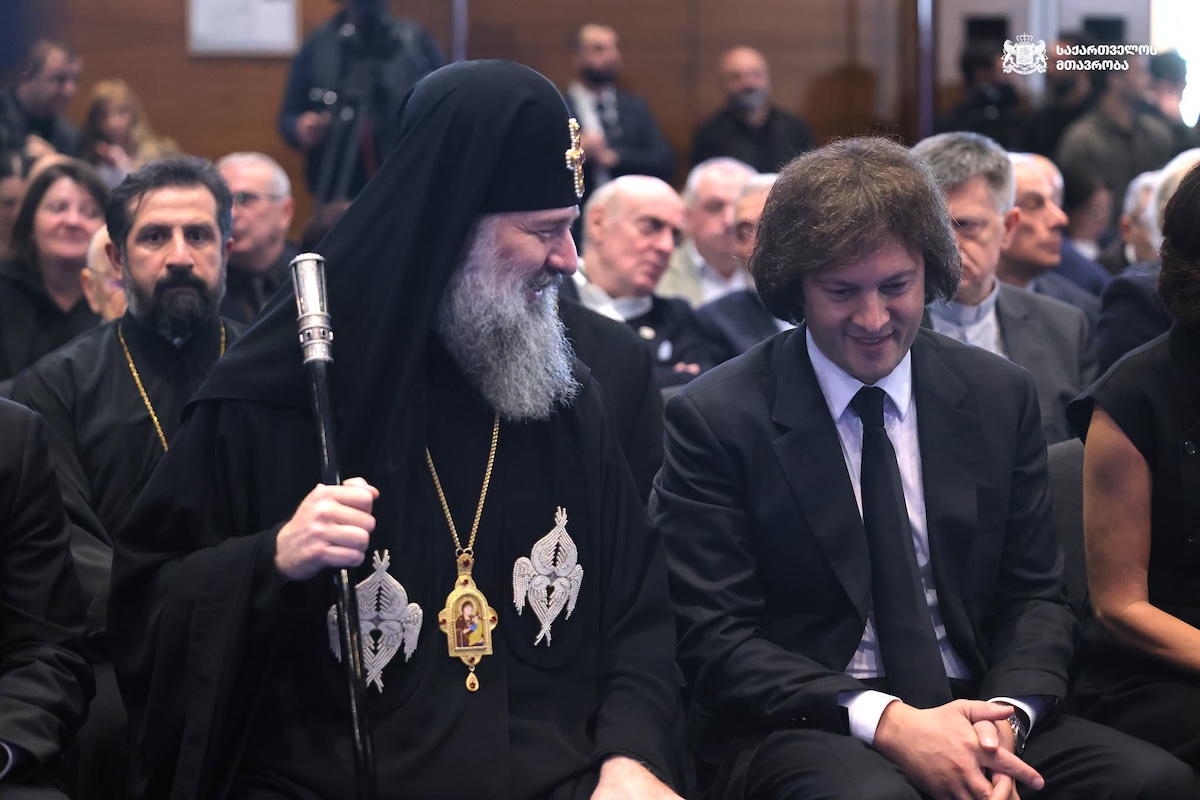
Friday, 8 May, Georgia. Five special forces officers have been arrested over violence against participants in the 2024 pro-European protests
-
Friday, 8 May, Armenia. Moscow accused Armenia of undermining the partnership over Zelensky’s visit to Yerevan
-
Friday, 8 May, Azerbaijan. About 14,000 hectares in Karabakh allocated to investors, with irrigation as the main focus
-
Thursday, 7 May, Azerbaijan. The leaders of Ukraine and Azerbaijan continue their contacts
-
Thursday, 7 May, Georgia. Khvicha Kvaratskhelia and PSG are reaching the Champions League final for the second time
-
Thursday, 7 May, Armenia. Foreign Ministry: “Armenia and Turkey have expressed readiness to establish diplomatic relations and to fully open the border”
-
Wednesday, 6 May, Armenia. First Armenia–European Union summit; Armenia–France strategic partnership declaration; Azerbaijani experts participated in the international conference “Yerevan Dialogue–2026"
-
Wednesday, 6 May, Azerbaijan. *Kaja Kallas in Baku; Azerbaijani experts at a conference in Yerevan
-
Wednesday, 6 May, Georgia. European Parliament adopts critical report on Georgia; authorities respond with harsh criticism of the EU
-
Tuesday, 5 May, Armenia. The European Political Community summit has concluded in Yerevan, and the Armenia–EU summit is beginning
-
Tuesday, 5 May, Azerbaijan. Italian Prime Minister in Baku, Ilham Aliyev addresses EU summit in Armenia via video link and criticizes the European Parliament and PACE
-
Tuesday, 5 May, Georgia. Meetings of the Georgian prime minister and foreign minister with Volodymyr Zelenskyy at the EU summit in Yerevan
-
Monday, 4 May, Armenia. Yerevan is hosting participants of the European Political Community summit
-
Monday, 4 May, Azerbaijan. President Ilham Aliyev will join the European Political Community summit in Yerevan via video link
-
Monday, 4 May, Georgia. The embassies of Germany and France expressed support for Georgia’s independent journalists on World Press Freedom Day
-
Top stories in Azerbaijan, Armenia, and Georgia from 27 April-1 May, 2026

-
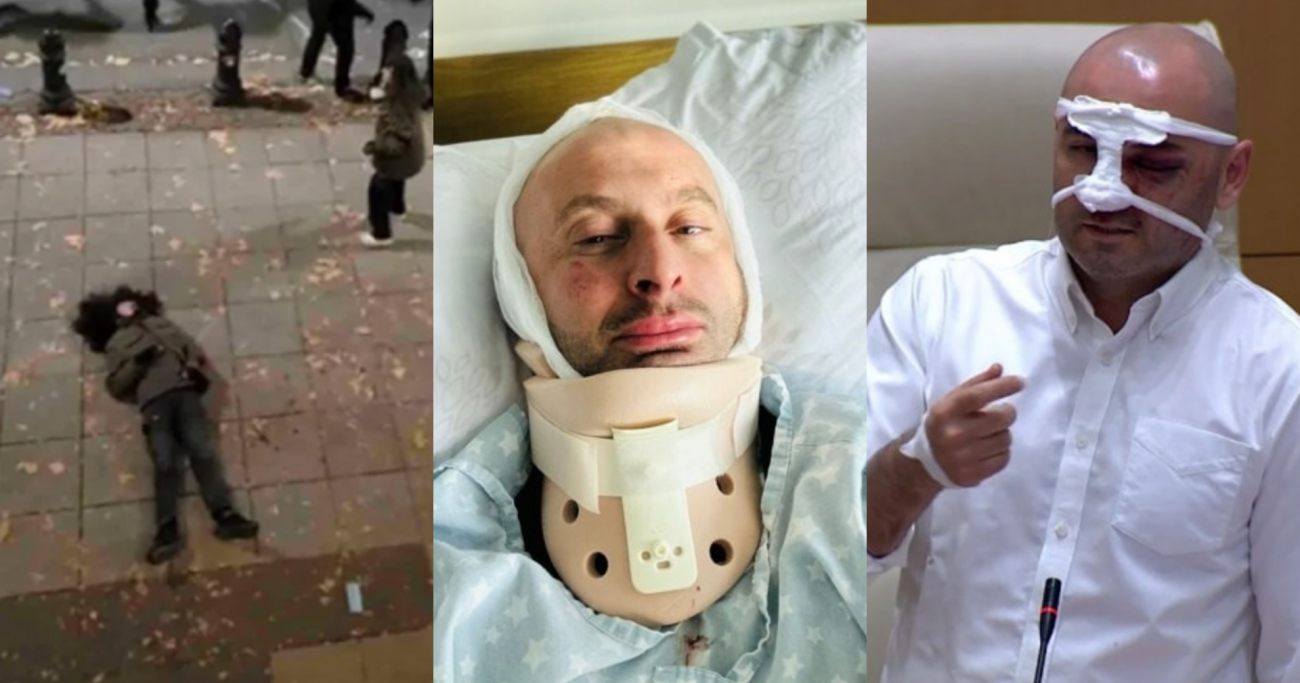
Friday, 8 May, Georgia. Five special forces officers have been arrested over violence against participants in the 2024 pro-European protests
● Five special forces officers have been arrested over the use of violence against participants in the large-scale pro-European protests in 2024. The investigation focuses on brutal beatings, which human rights groups have described as torture, of protest participant Zviad Maisashvili, politician Levan Khabeishvili, and journalist Guram Rogava. Among those detained are three former and two current members of the security forces. The Prosecutor General’s Office said it will ask the court to impose pre-trial detention as a preventive measure for all five defendants. More details on the arrests and the violence against protesters here
● Parliament Speaker Shalva Papuashvili commented on the arrests amid accusations over the past two years that the authorities were trying to cover up the crimes. “No one intended to protect anyone. After examining the materials and evidence, the prosecution concluded that there were sufficient grounds to charge specific individuals. No matter how long it took, this step was taken,” Papuashvili told journalists.
● The opposition party Lelo–Strong Georgia said the arrests of the special forces officers over the beatings of protesters are “an attempt by oligarch Ivanishvili’s government to save itself, not a real fight against crime.” According to the party, “this is a cheap farce and a poorly staged performance aimed at deceiving the public and temporarily neutralizing international pressure.”
● On May 7, Tbilisi City Court delivered verdicts in the case of 10 people arrested in connection with the events of October 4, 2025. All were found guilty of attempting a coup d’état. According to the prosecution, during rallies in Tbilisi they called for a revolution and the overthrow of the constitutional order, then led supporters to storm the presidential palace, where they were met by special forces. The defendants deny the charges and continue to insist they were arrested for civil protest and are political prisoners. Read more here
● Transparency International Georgia declared all those convicted in the “October 4 case” to be political prisoners. “The regime wants the events of October 4 to be viewed both domestically and internationally as an attempt to overthrow the government and, accordingly, as justification for suppressing the pro-European protests that have continued in the country for more than a year and a half. Despite their efforts, they failed.”
● An opposition alliance also declared all those convicted in the “October 4 case” to be political prisoners. “This verdict is not an act of justice, but a political vendetta by the regime,” the alliance said in a statement.
● Prime Minister Irakli Kobakhidze met with US Deputy Assistant Secretary of State Sonata Coulter, who is visiting Georgia with a delegation. Foreign Minister Maka Botchorishvili also attended the meeting. “Special attention was paid to the importance of transport infrastructure and Georgia’s role in the Middle Corridor,” the government administration said in a statement.
● Foreign Minister Maka Botchorishvili met with NATO Secretary General’s representative Ambassador Kevin Hamilton. According to the Foreign Ministry, the meeting focused on NATO–Georgia relations, as well as the importance of dialogue and practical cooperation. Kevin Hamilton reaffirmed the alliance’s unwavering support for Georgia’s territorial integrity and sovereignty.
● An expanded session of the Holy Synod will take place on May 11, during which the 142nd Patriarch of the Georgian Church will be elected, the Patriarchate announced.
● Giorgi Udzilauri, arrested on charges of espionage against Georgia’s interests, has been placed in pre-trial detention. The defendant denies the charges. Udzilauri is the former head of public relations at Cartu Group, a holding company owned by Bidzina Ivanishvili, founder of the ruling party and widely considered the country’s shadow ruler.
● Two more people have been convicted in the contract killing of businessman Levan Jangveladze in March last year. Mamuka Bagdavadze and Giorgi Kachkachashvili were charged with illegal acquisition and possession of firearms, concealing a crime, and providing false information. Kachkachashvili was sentenced to 10 years in prison, while Bagdavadze received 7 years. A day earlier, Giorgi Mikadze was sentenced to life imprisonment in the same case, while his brother Davit Mikadze and Giorgi Jokhadze were sentenced in absentia and placed on the wanted list. In December last year, prosecutors named former Georgian Prosecutor General Otar Partskhaladze-Romanov as the organizer of the murder. He lives in Moscow, holds Russian citizenship, and is internationally wanted. The case is directly linked to the criminal underworld. The victim was the brother of an influential crime boss.
-
Friday, 8 May, Armenia. Moscow accused Armenia of undermining the partnership over Zelensky’s visit to Yerevan
● Armenia’s ambassador to Russia, Gurgen Arsenyan, was summoned to the Russian Foreign Ministry. Moscow said it “categorically rejects” the decision to give Ukrainian President Volodymyr Zelensky a platform during recent EU-backed events in Armenia to voice what Russia called “terrorist threats” against it. Russian officials said they were deeply outraged and criticized the Armenian authorities for not condemning Zelensky’s statements, saying this contradicts the spirit of Russian-Armenian partnership.
● Prime Minister Nikol Pashinyan has responded to criticism, saying: “We sent humanitarian aid to Ukraine, and I have said that we are not Russia’s ally on the issue of Ukraine.”
● “The Armenian authorities are trying to sit on two chairs. I do not know how long one can remain in such a position,” said Kremlin aide Yuri Ushakov. He added that recent developments are damaging bilateral relations, which he said are beneficial for both countries, “but especially for Armenia.”
● The Kremlin published the list of leaders expected to attend the Victory Day parade in Moscow, and neither Prime Minister Nikol Pashinyan nor any other senior Armenian representative was included. Earlier, Pashinyan said he would not attend due to preparations for Armenia’s June 7 parliamentary elections. “During my visit to Russia in April, I informed President Putin about this,” he said.
● “Zelensky’s visit to Yerevan was a betrayal by the Armenian authorities,” said Russian-Armenian oligarch Samvel Karapetyan, who is under arrest in Armenia on charges of calling for the overthrow of the government. Karapetyan has been named as a possible prime ministerial candidate by the opposition Strong Armenia party, which is known for its pro-Russian stance. “The Europeans organized this, brought Zelensky to Yerevan so Pashinyan could give a masterclass on how to surrender your own territories. He has already surrendered everything, and the only thing left for him to sell to Europeans is anti-Russian policy — which they are happy to buy,” Karapetyan said.
● Latvian President Edgars Rinkēvičs arrived in Armenia on an official visit. His program began with a visit to the Tsitsernakaberd memorial complex, where he laid a wreath at the memorial to the victims of the Armenian Genocide in the Ottoman Empire and flowers at the Eternal Flame. Latvia’s parliament officially recognized and condemned the Armenian Genocide in May 2021. During the visit, Rinkēvičs is expected to meet Armenia’s president, prime minister, parliamentary speaker, and representatives of youth organizations.
● Prime Minister Nikol Pashinyan said he will sue Samvel Karapetyan after the oligarch claimed that Pashinyan uses hallucinogenic mushrooms before public appearances and brought “a tonne of such mushrooms from China” to Armenia. Pashinyan responded by saying he would “feed the entire tonne of hallucinogenic mushrooms to the Kaluga oligarch.” Read more here
● Prime Minister Nikol Pashinyan met in Yerevan with Janez Lenarčič, head of the OSCE/ODIHR observation mission in Armenia. They discussed preparations for the June 7 parliamentary elections. Pashinyan said the government had taken all necessary steps to ensure free, fair, and transparent elections, equal conditions for all political forces, and effective work for international observers. Lenarčič said there is strong interest in the Armenian elections among OSCE member states and that a large observer mission has been deployed across the country. He expressed hope that the vote would meet international standards.
● Citizens under house arrest will be allowed to vote in the June 7 parliamentary elections, Armenia’s Central Election Commission said.
● Nikol Pashinyan met with President Vahagn Khachaturyan and informed him that he will go on leave starting May 8 to focus on his election campaign. The leave will only be interrupted on May 28, Armenia’s Independence Day, so he can fulfill his duties as prime minister during the state holiday. “I told the government that the most important task today is to ensure the functioning of our state institutions, the free expression of the will of Armenia’s citizens, and free political competition,” Pashinyan said.
● Employees of the Shengavit district administration in Yerevan removed a campaign poster of Prosperous Armenia candidate Gevorg Stepanyan. Stepanyan said the poster had been placed on the wall of the Hayrenik cinema building with the owner’s permission. According to him, district officials tore it down and spoke aggressively to the owner, leading to a scuffle. Earlier, Yerevan City Hall spokesperson Artem Karapetyan said municipal workers had been attacked while dismantling a poster that exceeded legal campaign size limits. He said one city employee was hit in the head and hospitalized.
● Armenia’s Human Rights Defender Anahit Manasyan demanded the “immediate release of all Armenians illegally detained in Azerbaijan.” She said the trials taking place in Baku do not meet modern human rights standards and that the only legitimate solution is their immediate return home.
● Gevorg and Hambardzum Nersisyan, the brother and nephew of the Catholicos, have been released from house arrest and placed under administrative supervision. They were detained in Vagharshapat after opposition municipal candidate Harutyun Mkrtchyan accused them of obstructing his election campaign.
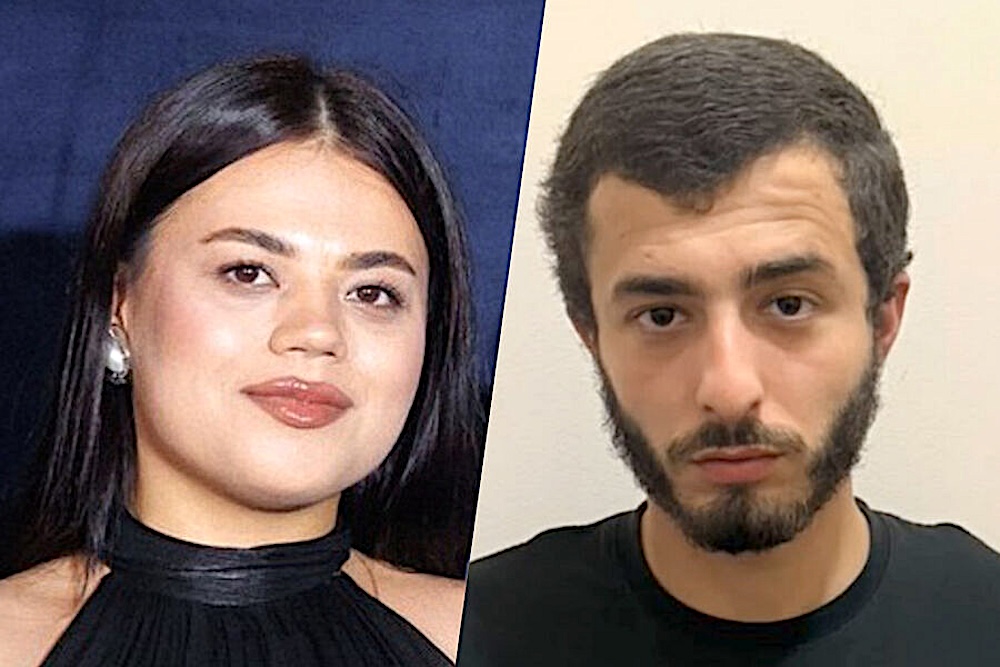
● Following the discovery of sexual abuse involving two underage girls in the town of Vedi, two men — Artur Yeremyan and 65-year-old David Aynazyan — were arrested and charged with sexual abuse of minors. The victims are sisters aged 15 and 17. The heads of the Ararat regional criminal police and community police departments were dismissed following the case.
● Elinar Vardanyan, a parliamentary candidate from the opposition Prosperous Armenia party, criticized the authorities over the Vedi case. “The incident is horrifying, but even more horrifying was Prosecutor General Anna Vardapetyan’s statement that similar cases had also occurred in Gegharkunik, Shirak and elsewhere. It sounded as if the rape of minors is something normal. The irresponsible attitude of law enforcement toward such horrific events creates the risk of similar incidents happening again,” Vardanyan said.
● A fire broke out in a residential trailer on Sheram Street in Yerevan. Local media reported that firefighters later discovered the charred body of a young Indian citizen inside. According to reports, the fire was caused by a 3-kilogram gas cylinder.
-
Friday, 8 May, Azerbaijan. About 14,000 hectares in Karabakh allocated to investors, with irrigation as the main focus
● Azerbaijan and Ukraine signed a memorandum of understanding on the introduction of an electronic permit (e-Permit) system for international road transport. The project is expected to simplify border crossings and create a more flexible and efficient operating environment for carriers. The memorandum was signed following a meeting in Leipzig between Azerbaijan’s Minister of Digital Development and Transport Rashad Nabiyev and Ukraine’s Deputy Prime Minister and Minister for Communities and Territories Development Oleksii Kuleba. The sides discussed expanding bilateral cooperation in transport, primarily increasing capacity in international road freight transport.
● Finance Minister Sahil Babayev met in Baku with a delegation from the Islamic Development Bank led by its president, Muhammad Al Jasser. The sides discussed promising areas of cooperation. It was noted that the bank has allocated more than $1 billion under state guarantees for 19 projects in Azerbaijan. These include the reconstruction of an irrigation canal in Karabakh, which officials said significantly contributes to agricultural development. The importance of expanding cooperation in water management and land reclamation, as well as transport infrastructure and railway projects, was also highlighted.
● Azerbaijan’s Milli Majlis has been granted observer status in the Parliamentary Assembly of the Mediterranean. The decision was adopted at the summit of parliamentary speakers from member and partner states of the assembly.
● Montenegro views peace between Azerbaijan and Armenia as a political victory for both countries, Speaker of the Montenegrin Parliament Andrija Mandić said during a meeting with Speaker of Azerbaijan’s Milli Majlis Sahiba Gafarova on the sidelines of the summit.
● Russian Foreign Ministry spokesperson Maria Zakharova supported Azerbaijan’s decision to end cooperation with the European Parliament. Azerbaijani authorities accused the EU institution of consistent and deliberate anti-Azerbaijani activity. “Moscow is not surprised by this decision. Azerbaijan is not the only country facing rudeness, disrespect, and direct interference in the internal affairs of sovereign states by the so-called European Parliament,” Zakharova said.
● More than 28,000 people from 177 countries have already registered to attend the 13th session of the World Urban Forum (WUF13), which will take place in Baku on May 17–22. The forum is being organized in close cooperation between Azerbaijan and the UN Human Settlements Programme (UN-Habitat) and is aimed at sharing international experience in sustainable urban development, smart cities, and innovative urban solutions.
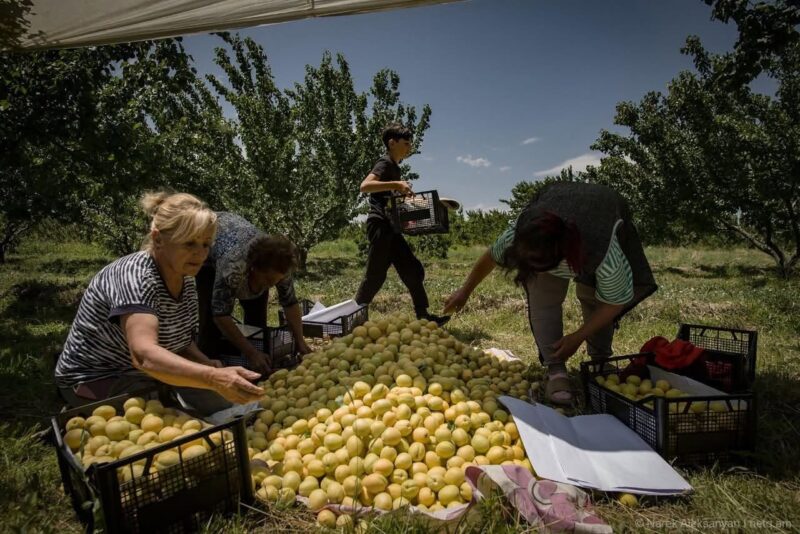
● Around 14,000 hectares of agricultural land in Karabakh have been allocated to investors, Agriculture Minister Majnun Mammadov said. Competitions are continuing to attract additional investment to the region. The minister described irrigation infrastructure as the main area for investment, noting that much of it is outdated and that the use of modern irrigation technologies remains limited. “Our main goal is to ensure direct water supply from reservoirs to fields and orchards,” he said. Mammadov noted that this work requires major investment and long-term implementation. “Today, modern irrigation technologies cover 130,000 hectares in Azerbaijan. Our goal is to increase this figure to 300,000 hectares by 2030. The use of modern irrigation methods increases yields by at least 30–40%, and in some cases by two to four times,” he added.
● Azerbaijan’s State Committee for Refugees and Internally Displaced Persons presented the state program “Great Return” for territories recaptured from Armenian occupation to 20 newly appointed senior diplomats from 19 countries. “Participants were informed about the hardships faced by more than one million people who became refugees and internally displaced persons as a result of 30 years of occupation policy and deportations by Armenia. Information was also provided about the deportation of Azerbaijanis from Armenia and crimes committed against the Azerbaijani people. Diplomats were told that large-scale infrastructure projects are currently underway in the liberated territories and that the reintegration of former displaced persons into their native lands is continuing,” the press release said.
● Amendments aimed at eliminating gender discrimination in wages have been approved. Employers are now required to ensure equal pay regardless of gender not only for identical work, but also for work of equal value.
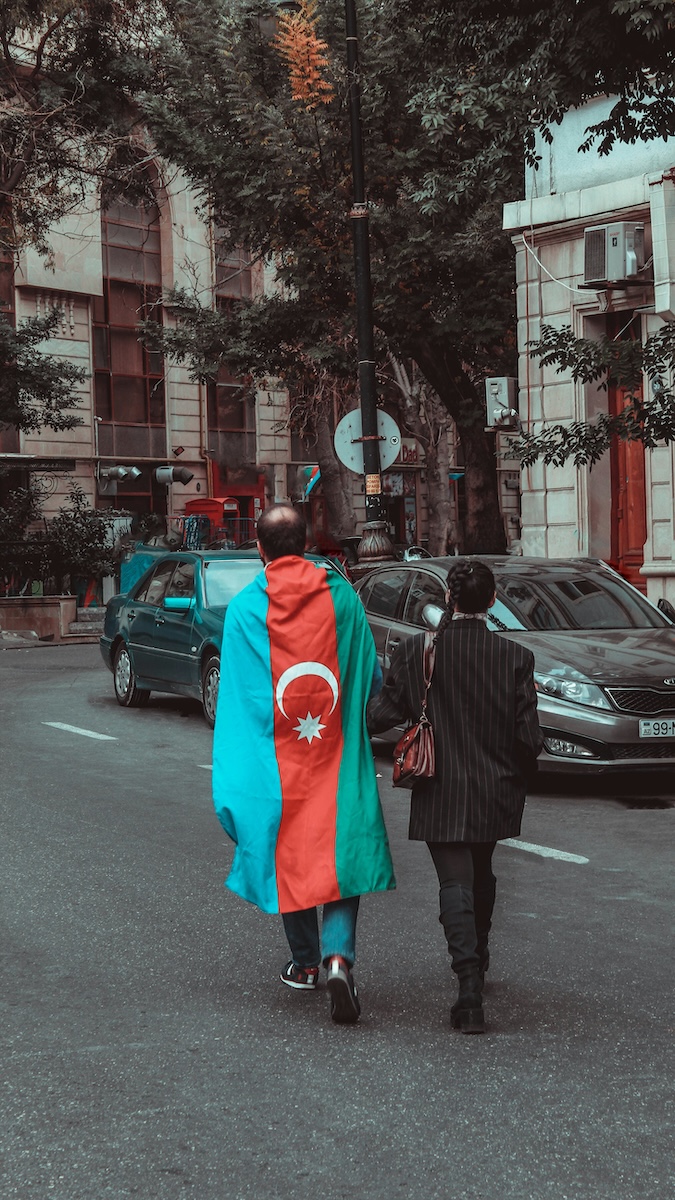
Photo by Ali Nurmemmedov
-
Thursday, 7 May, Azerbaijan. The leaders of Ukraine and Azerbaijan continue their contacts
● Azerbaijan issued a protest over statements made by French Foreign Minister Jean-Noël Barrot. “The use by the French minister of the expression ‘Nagorno-Karabakh’ in reference to the Karabakh region, which is the sovereign territory of Azerbaijan, is unacceptable,” said Azerbaijani Foreign Ministry spokesperson Aykhan Hajizada. “The French minister ignores the destruction of hundreds of mosques and other cultural heritage sites on Azerbaijani territories during the period of Armenian occupation, yet comments on the demolition of certain structures remaining from the occupation period and inappropriately refers to proceedings being considered by the International Court of Justice. This is a vivid example of a double standard. The minister is calling for a UNESCO assessment mission to be sent to the Karabakh region. But it was Azerbaijan that repeatedly called for such missions, and their implementation became impossible precisely because of obstacles created by Armenia and France,” Hajizada said. He emphasized that “such statements by the French minister do not contribute to building lasting and genuine peace in the region.”
● Posts about a telephone conversation between the presidents of Azerbaijan and Ukraine appeared on the X accounts of both leaders. Both leaders expressed satisfaction with their meeting in Azerbaijan on April 25 and stated their intention to continue working on the development of both Ukrainian-Azerbaijani bilateral relations and cooperation with other countries in the region in order to strengthen security and stability.
● Ukrainian Foreign Minister Andrii Sybiha held a phone call with Azerbaijani Foreign Minister Jeyhun Bayramov, thanking him for the hospitality shown during the visit of the Ukrainian delegation led by President Volodymyr Zelenskyy to Azerbaijan and during the leaders’ talks in Gabala. Further steps to advance bilateral cooperation were discussed. Sybiha expressed gratitude to Azerbaijan for its consistent support of Ukraine’s territorial integrity and for humanitarian assistance, particularly in the energy sector.
● Armenian National Assembly Speaker Alen Simonyan expressed readiness to visit Azerbaijan if he receives such an invitation. He also invited his counterpart, Speaker of the Azerbaijani Milli Majlis Sahiba Gafarova, to visit Yerevan.
● BP Vice President for the Caspian Region Bakhtiyar Aslanbayli and British Council Director Nargiz Hajiyeva received honorary awards on behalf of King Charles III of the United Kingdom. Aslanbayli was awarded the honorary title of “Officer of the Most Excellent Order of the British Empire.” Hajiyeva received the title of “Honorary Member of the Order of the British Empire.” The awards were presented by Ambassador Fergus Auld. He said that Aslanbayli and Hajiyeva “made an enormous contribution to the development of ties between the United Kingdom and Azerbaijan.”
● Another shipment will transit through Azerbaijani territory to Armenia today — nine railcars of grain and two railcars of aluminum, with aluminum being transported along this route for the first time.
● The president approved amendments to the Code of Administrative Offenses introducing fines for violence against children, begging, and also for the creation and distribution of illegal materials using artificial intelligence.
• For violence against a child — a fine of 200 manats (approximately $117).
• For failure to provide information about violence against a child and/or failure to take action, individuals will be fined from 200 to 300 manats (approximately $175), while officials will be fined from 400 to 600 manats (approximately $350).
• For the distribution of illegal materials using artificial intelligence, the fine will range from 80 to 150 manats (approximately $90).
• For vagrancy and begging — a fine ranging from 100 to 200 manats (approximately $117), with the possibility of administrative arrest for up to 10 days.
• For involving a minor in begging — a fine ranging from 200 to 500 manats (approximately $300) and/or administrative arrest for up to 15 days.
More detailed information about the new legislation and its possible consequences here.
● Member of parliament Vasif Gafarov proposed renaming all streets in Azerbaijan that still bear Soviet-era names, arguing that “they carry ideological content alien to Azerbaijani values and inconsistent with the national identity of Azerbaijanis.” “I believe that such an approach will contribute both to restoring our historical memory and to shaping the national spirit of future generations,” Gafarov said.
-
Thursday, 7 May, Georgia. Khvicha Kvaratskhelia and PSG are reaching the Champions League final for the second time
● Bill Browder, the author of the “Magnitsky Act,” called on the United Kingdom to impose sanctions against Bidzina Ivanishvili, the founder of the ruling “Georgian Dream” party and a billionaire widely considered to be the country’s shadow ruler. Browder spoke about this during a discussion in London dedicated to current developments in Georgia and the imprisonment of Mzia Amaghlobeli, the head of the popular independent media outlets Netgazeti and Batumelebi.
● Ukrainian Foreign Minister Andrii Sybiha said that he called his Georgian counterpart Maka Bochorishvili after meeting with her in Yerevan. “We expressed mutual interest in normalizing Ukrainian-Georgian relations and cooperating within international organizations. We also confirmed our readiness to move forward and maintain active contacts,” Sybiha wrote. The Georgian Foreign Ministry’s statement about the conversation said: “Relations between Georgia and Ukraine were discussed, the importance of dialogue was emphasized, as well as further steps in this direction.”
● According to the Formula television channel, journalist Guram Rogava was summoned for questioning after the broadcast of a report on the program “Real Story with Eliso Jariashvili.” According to the channel, Rogava is currently outside Georgia, and the questioning will take place online. Journalist Eliso Jariashvili was also summoned for questioning. As a result of a journalistic investigation conducted by the Formula agency, the identity was established, a year and a half later, of the person who seriously injured Guram Rogava while he was reporting from a protest rally in Tbilisi. More details are available here about the incident and the mass violence against journalists by law enforcement structures.
● The National Bank raised the refinancing rate by 0.25 percentage points to 8.25 percent, meaning that loans will become more expensive for nearly 250,000 citizens of Georgia. Since May 2024, the rate had remained unchanged at 8 percent. More details here.
● Brothers Davit and Giorgi Mikadze, along with Giorgi Jokhadze, were sentenced to life imprisonment after being accused of organizing the premeditated murder of businessman Levan Jangveladze for financial gain. Jangveladze was killed on March 15, 2025, on Chavchavadze Avenue. Earlier, another participant in the attack, Gela Udzilauri, had also been sentenced to imprisonment as a preventive measure. Read more here: Gang wars in Georgia: ‘thieves-in-law’ declare vendetta against former chief prosecutor
● According to Transparency International-Georgia, a company owned by Giorgi Japaridze, the son of a ruling party member of parliament, has won state procurement tenders worth more than 10.4 million lari (approximately $4 million) since 2018.
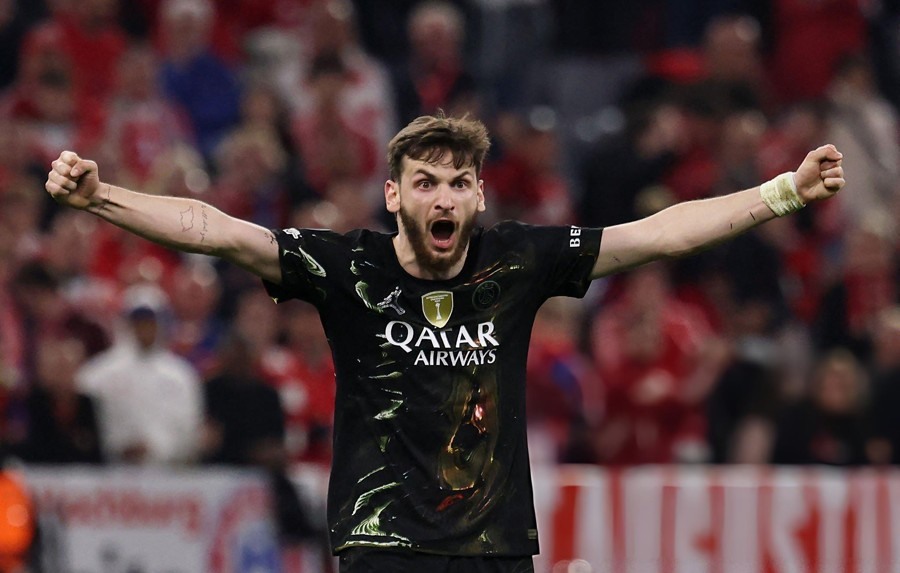
● PSG, where Georgian football star Khvicha Kvaratskhelia plays, has reached the Champions League final for the second time. Kvaratskhelia has recorded 18 goals and 10 assists in 44 matches across all competitions this season, as well as 10 goals and 6 assists in 15 Champions League matches alone. On May 30 in Budapest, Paris Saint-Germain will face Arsenal in the final.
● Georgian UFC fighter Ilia Topuria met with U.S. President Donald Trump at the White House. His next opponent, American fighter Justin Gaethje, was also present at the meeting. The fight between Topuria and Gaethje will take place in the courtyard of the White House on June 14, with the winner becoming the UFC lightweight champion.
● On June 12, at Dinamo Arena stadium in Tbilisi, American rapper Kanye West, known professionally as Ye and widely known for a series of antisemitic scandals, will perform as part of the state-supported “Stars in Georgia” project. Ticket prices have not yet been announced. Read more here
● Officers from the criminal police and customs department uncovered a case of international drug trafficking. Up to 103 kilograms of methamphetamine were seized, with an estimated street value on the so-called black market of approximately 30 million lari (around $11 million).
● According to the investigative service of the Ministry of Finance, a foreign citizen was arrested in the Samtskhe-Javakheti region for distributing a large quantity of counterfeit money — a total of 100 fake one-hundred-dollar bills and counterfeit euros worth 350 euros.
Photo: Khvicha Kvaratskhelia
-
Thursday, 7 May, Armenia. Foreign Ministry: “Armenia and Turkey have expressed readiness to establish diplomatic relations and to fully open the border”
● “Armenia and Turkey have expressed mutual readiness to establish diplomatic relations and to fully open the border,” Foreign Minister Ararat Mirzoyan said while speaking at the international conference “Yerevan Dialogue-2026.” He explained that at the first stage, the agreement предусматривает opening the border for citizens of third countries, as well as for holders of diplomatic passports.
● President Vahagn Khachaturyan: “The pace of Armenia’s economic development since 2018 has been connected to the fight against corruption. Do not look for other reasons. The success we have achieved and continue to achieve became possible precisely because of this. But now we face another task. Ensuring further economic growth will be more difficult; we need to find additional resources. Our resource is a united South Caucasus. If anyone thinks that Armenia’s economy will continue, or be able to continue, growing just as rapidly without regional cooperation — forget about it.”
● Foreign Minister Ararat Mirzoyan: “Azerbaijan is not putting forward demands during the negotiations regarding changes to Armenia’s Constitution; this issue is not part of the bilateral agenda. At the same time, I constantly hear that they are not ready to sign and ratify a peace agreement unless we change the Constitution. But Armenia’s Constitution is an internal matter. We will probably hold a referendum on the Constitution, but we are not discussing this issue with international partners.”
● Parliament Speaker Alen Simonyan stated that he does not understand what prompted the protest note that the Belarusian Foreign Ministry delivered to Armenia. Simonyan repeated that respect for human rights and freedoms is among Armenia’s highest values. “We chose the democratic path; Belarus chose a different one,” Simonyan said. He also once again accused Minsk of disrespectful treatment toward Armenia and of helping Azerbaijan prepare for the 44-day war in October 2020 — at a time when Belarus and Armenia were both members of the CSTO, the Russia-led military alliance.
● Local media are also discussing the unclear reasons behind Belarus issuing a protest note to Armenia. Some speculate that the reason may have been the visit to Yerevan by Sviatlana Tsikhanouskaya, who presents herself as the president of Belarus in exile. However, the Belarusian chargé d’affaires in Armenia did not confirm this explanation.
● Defense Minister Suren Papikyan met in Yerevan with Poland’s Deputy Prime Minister and Minister of National Defense, Władysław Kosiniak-Kamysz. An expanded meeting of the delegations then took place. The effective implementation of the bilateral cooperation plan for 2026 was highlighted. Military education, exchange of experience, and participation in joint exercises were identified as priority areas.
● Head of Foreign Intelligence Kristine Grigoryan explained the context of Prime Minister Nikol Pashinyan’s statements that if the ruling “Civil Contract” party loses the parliamentary elections on June 7, war could begin in Armenia as early as September. “If competing political forces in the election campaign begin to cast doubt on the cornerstone foundations of the peace process, this suggests that the process could later be destroyed,” Grigoryan said in response to journalists’ questions.
● Former parliament speaker of the former unrecognized Nagorno-Karabakh Republic, Davit Ishkhanyan, appealed to Armenia’s ombudsman from prison in Azerbaijan. “During my final statement, I was unable to fully say everything I wanted. At least 30–40 percent of what I intended to say I was simply not allowed to express. But I would like to quote part of what I did manage to say. The trial in Azerbaijan was not against the fifteen of us; it was against the Armenian people and Armenian statehood, with a far-reaching strategy behind it. Time will show the truth of this.” In Azerbaijan, Ishkhanyan was convicted on charges of attempting to overthrow the constitutional order and involvement in war crimes. He did not admit guilt.
● Another shipment of goods will be sent to Armenia today via a transit route through Azerbaijani territory. This consists of nine railcars of grain and two railcars of aluminum, with aluminum being transported via this route for the first time.
● Social media users are intensely discussing provocative videos posted by a 19-year-old local resident. In one video, he shows himself intentionally speeding and ultimately causing a car crash. In another video, he films himself watching a television report about the crash while eating chips. A criminal case has been opened. An additional charge stems from the fact that the young man was driving despite his driver’s license having been suspended.
● In the botanical garden in Yerevan, a Russian citizen was found hanged. A criminal case has been opened.
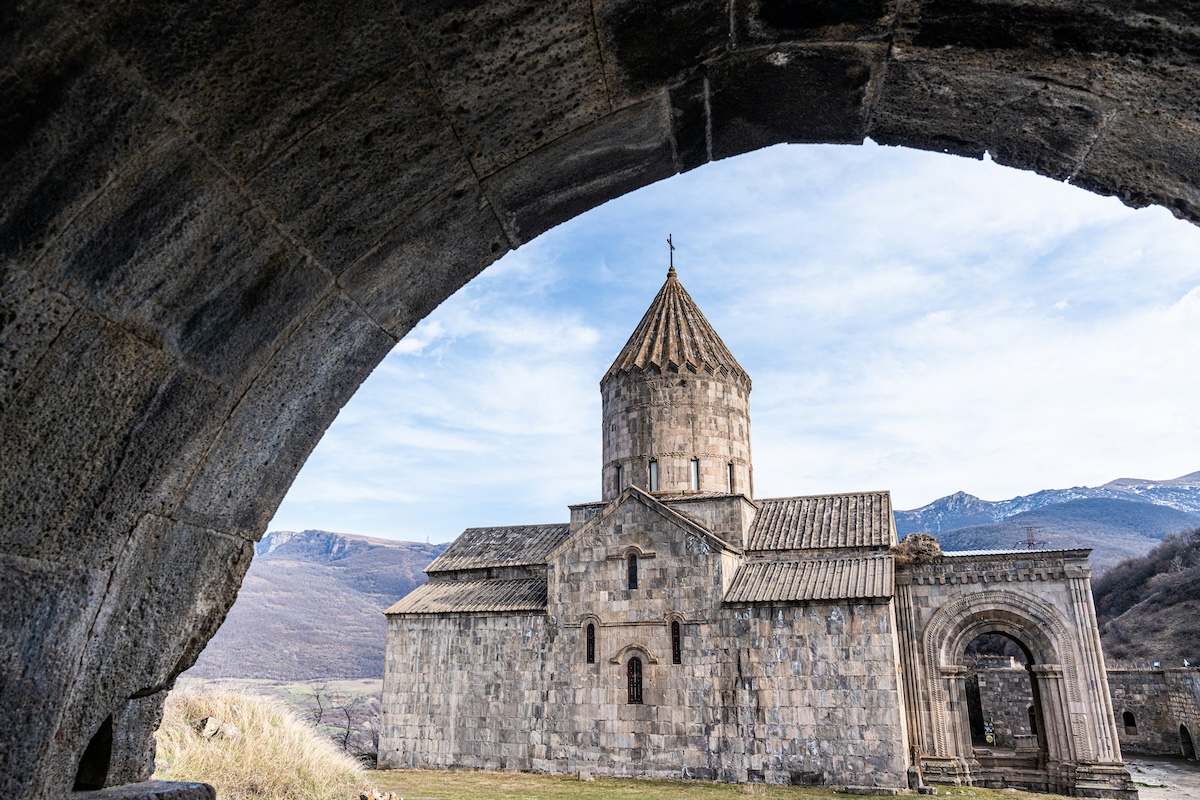
Photo by Michal Vrba , Tatev Monastery
-
Wednesday, 6 May, Armenia. First Armenia–European Union summit; Armenia–France strategic partnership declaration; Azerbaijani experts participated in the international conference “Yerevan Dialogue–2026"
● The first Armenia–European Union summit was held. Following the summit, a joint declaration consisting of 44 points was adopted, and several documents were signed, including:
A partnership document on connectivity between Armenia and the European Union.
A working arrangement on operational cooperation in border management between Armenia’s Ministry of Internal Affairs and the European Border and Coast Guard Agency (Frontex) was initialed.
An agreement was reached to publish a call for expressions of interest regarding investments in Armenia.
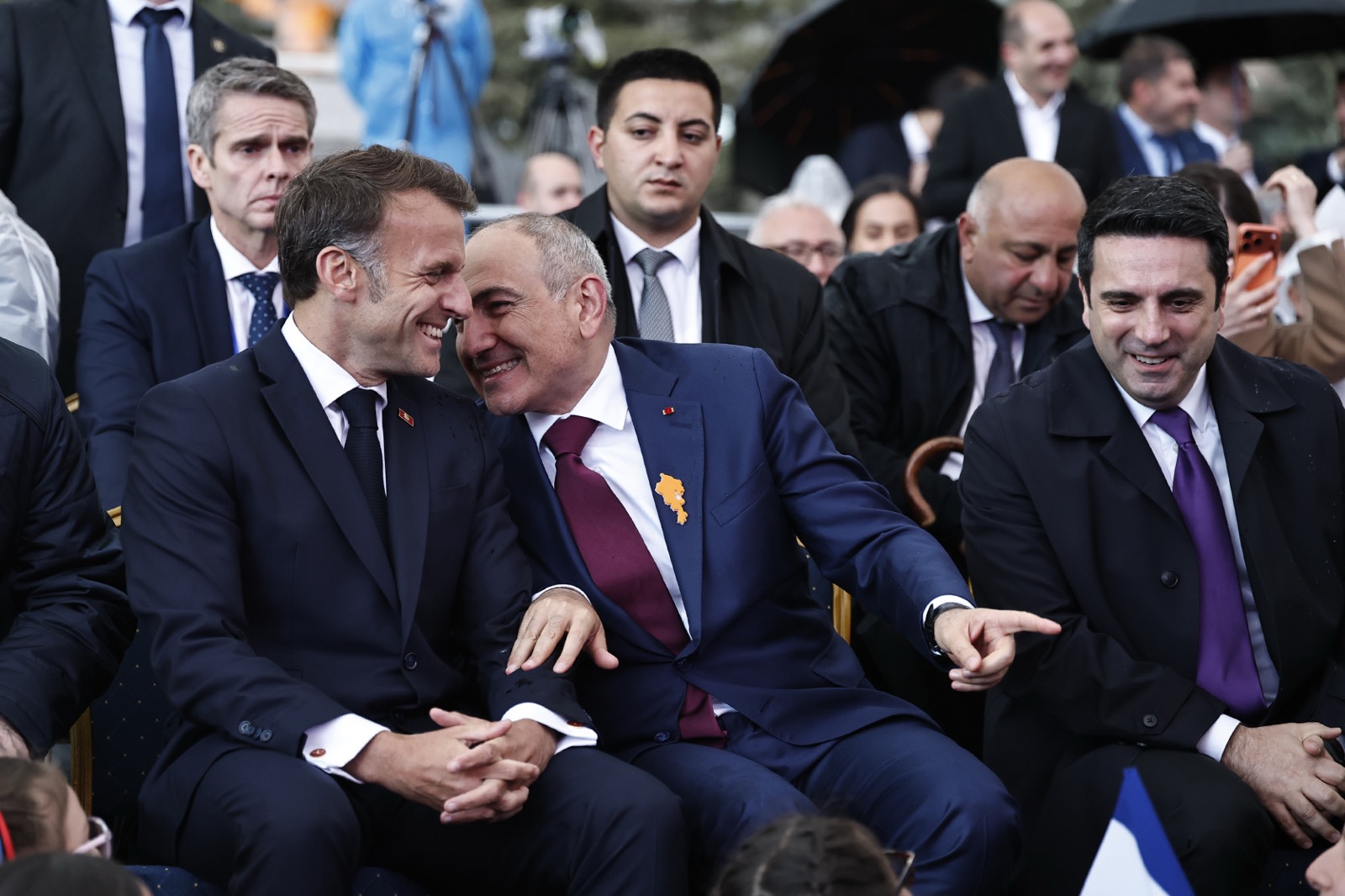
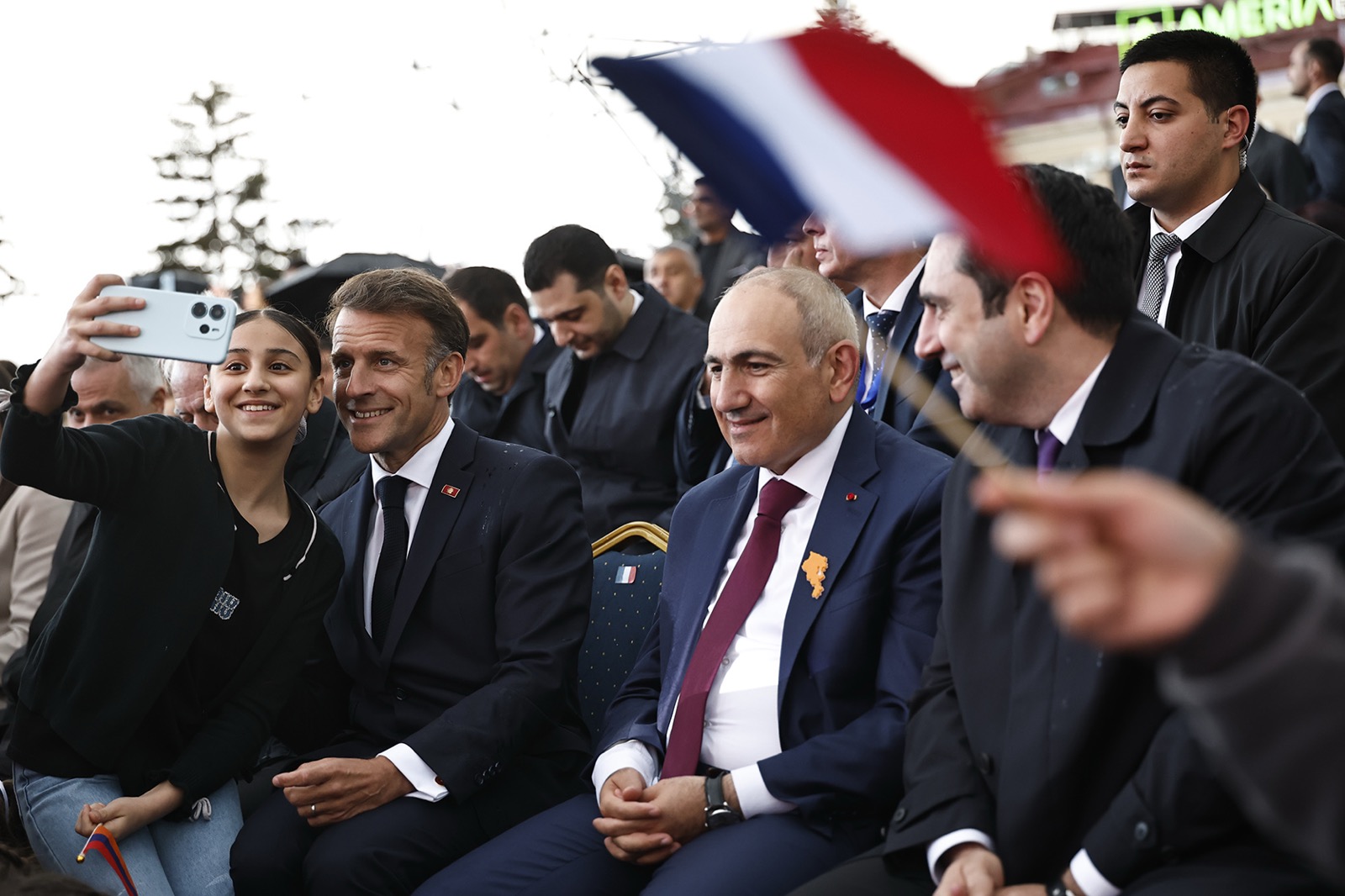
● Following the state visit of French President Emmanuel Macron, a ceremony was held for the signing of a joint declaration and the exchange of documents. A joint declaration “On the Establishment of a Strategic Partnership” was signed. Prime Minister Nikol Pashinyan stated: “Armenia and France have a very broad bilateral agenda, and the strategic partnership document primarily highlights the current state of relations while also creating opportunities for using this potential more effectively.”
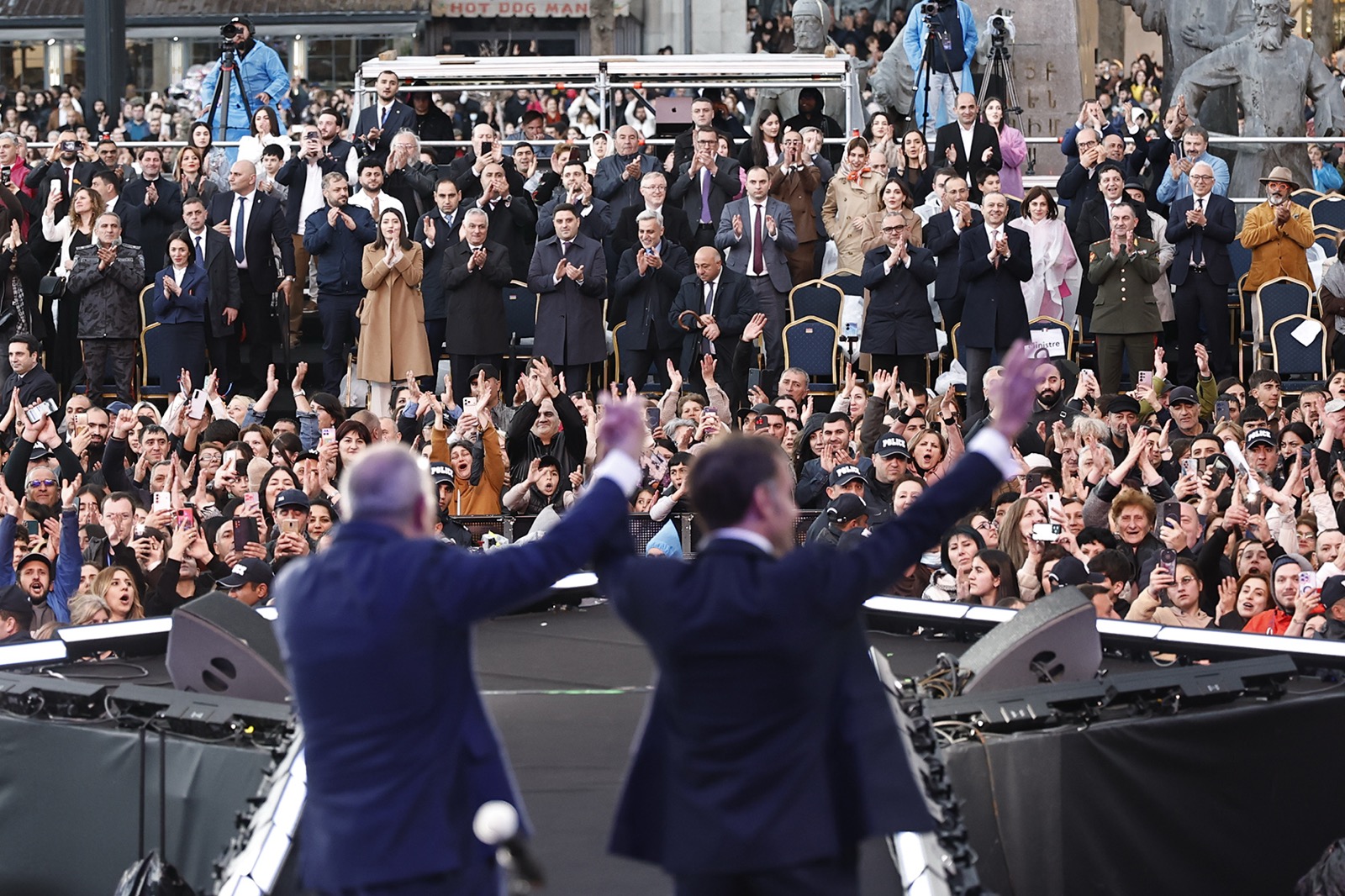
● Emmanuel Macron’s visit to Armenia has concluded. Nikol Pashinyan accompanied him to the airport in Gyumri. A concert under the slogan “Armenia–France” was held in Gyumri, featuring, among others, Patrick Fiori. Pashinyan and Macron went on stage and addressed the audience. “When I spoke with President Macron in France, I told him: ‘You are extremely popular in Armenia,’ and he replied: ‘You are exaggerating.’ Now I want to remind him — you see, I was not exaggerating,” Nikol Pashinyan said, calling on the crowd to greet the French president with applause. Emmanuel Macron also addressed the residents of Gyumri. Speaking to them, he recalled the devastating 1988 earthquake. “The world rose to its feet for you, Armenia. Time stood still, Charles Aznavour sang, France united. More than 500 firefighters, soldiers, and rescue workers came to help you. Gyumri rose again from hell. Armenia is moving forward — with peace, stability, and alongside Europe,” the French president said.
● Against the backdrop of the visits by Macron and Pashinyan to Gyumri, young people gathered near the residence of the Shirak Diocese and displayed a banner in support of Archbishop Mikael Ajapahyan, who is under arrest on charges of calling for the seizure of power. They later attempted to approach the French president with banners reading “Freedom for Archbishop Mikael,” declaring that there is no freedom of speech in Armenia and that “the country is chained.” However, police officers prevented them from getting close to Macron and the delegation.
● Armenia hosted the international conference “Yerevan Dialogue – 2026” with the participation of Armenian and international politicians and experts. Azerbaijani political analysts Farhad Mammadov, Rusif Huseynov, and Zaur Shiriyev arrived in Yerevan to take part in the conference. They are participants in the “Bridge of Peace” initiative, within the framework of which joint Azerbaijani-Armenian expert meetings are held alternately in Baku and Yerevan. Discussions at the conference covered several thematic areas, including European Union enlargement and European integration; prospects for peace and cooperation in the South Caucasus; democratic resilience in the face of hybrid threats; and other issues.
● As part of the “Yerevan Dialogue” forum, a meeting was held between the special representatives for the Armenia–Turkey normalization process — Deputy Speaker of the Armenian National Assembly Ruben Rubinyan and Ambassador Serdar Kilic. The sides emphasized the mutual interest of Armenia and Turkey in ensuring the rapid launch of the railway connection. The special representatives also noted the importance of signing a protocol on the joint restoration of the historic Ani Bridge on the border between the two countries.
● “Deepening cooperation and integration with the European Union, the regional transit project TRIPP, and the opening of communications in the region are not parallel processes, but components of one and the same process, which I would call the construction of prosperity in Armenia,” Deputy Foreign Minister Vahan Kostanyan said while speaking at the “Yerevan Dialogue – 2026” conference. He stressed that the opening of borders in the region would benefit not only the Armenian economy but the entire South Caucasus. “The impact of opening communications in the region will be even broader — it is a chance to become a link between Europe and Central Asia. We are working in this direction with all our partners. Of course, the United States is our main partner in the TRIPP project. But there are also many projects with the European Union that are not limited to transportation connectivity issues,” Kostanyan said.
● “Armenia rightfully occupies its place within the European family,” Council of Europe Secretary General Alain Berset stated while speaking at the same conference. “The parliamentary elections scheduled for June in Armenia will become another test of the strength of democracy in Europe, which is under enormous pressure both externally and internally. That is why Europe’s security was one of the central themes of the summit in Yerevan,” Alain Berset emphasized.
● “The new unprecedented momentum following the Washington summit last summer truly opens new strategic opportunities for the region,” European Union Special Representative for the South Caucasus and the crisis in Georgia Magdalena Grono said during the forum. She noted that the region is an important link between Europe and Central Asia, opening new opportunities for closer cooperation with the Middle East. “The Middle Corridor transit project is currently being actively discussed. According to our estimates, cargo volumes along the corridor have increased fourfold since 2022, and we hope they could triple again by 2030. These are precisely the kinds of investments we are discussing with our South Caucasus partners,” Grono said.
● “Armenia, Azerbaijan, and Georgia have been independent states for more than three decades. This region has experienced many tragedies, conflicts, and economic chaos. Now, for the first time in our modern history, we have a chance to become a genuine political and economic region,” Georgian Deputy Foreign Minister Lasha Darsalia said while speaking at the forum.
● “In the post-war reconfiguration of the region, Azerbaijan prefers bilateral engagement with Armenia,” Azerbaijani political analyst Rusif Huseynov said while speaking at the “Yerevan Dialogue – 2026” conference. “There are already several areas — such as the peace process, border delimitation, transport connectivity, and trade — where the bilateral format has proven highly productive and delivered tangible results. Discussions are underway regarding European Union participation in certain infrastructure projects in Armenia and Azerbaijan. Baku would certainly welcome this if the European Union proposed something beneficial for all three South Caucasus countries without creating new divisions in the region,” Huseynov said.
● Belarusian Foreign Ministry spokesperson Ruslan Varankov commented on a recent statement by Armenian National Assembly Speaker Alen Simonyan, who said: “We will not allow Armenia to become a province of Russia. We will not be governed the way Belarus is.” Varankov stressed that Belarus is a sovereign state that independently determines the format of its allied relations with Russia. “We are proud of this cooperation. Attempts to drag Minsk into domestic political disputes are a gross violation of basic diplomatic ethics,” Varankov said. He also described Simonyan’s remarks as pre-election populism and an attempt to distract the Armenian people from domestic problems, which he said include poverty, unemployment, and regional stagnation.
-
Wednesday, 6 May, Azerbaijan. *Kaja Kallas in Baku; Azerbaijani experts at a conference in Yerevan
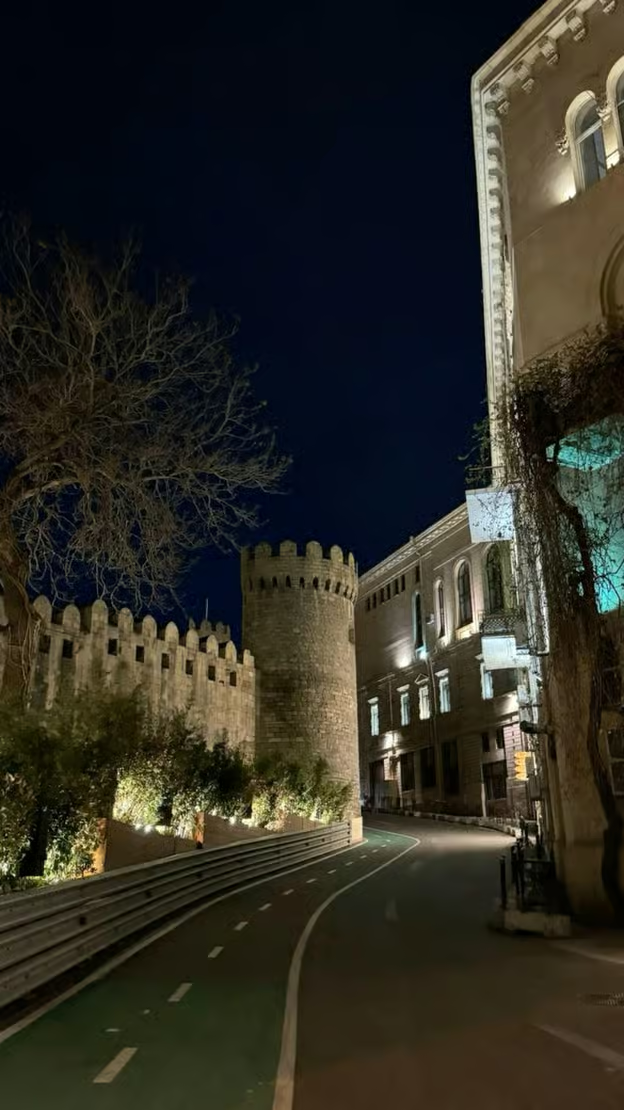
● A meeting was held in Baku between Azerbaijani President Ilham Aliyev and the European Union High Representative for Foreign Affairs and Security Policy and Vice-President of the European Commission, Kaja Kallas. She also held talks with Foreign Minister Jeyhun Bayramov, followed by an expanded-format meeting with members of the EU delegation. Official statements were released following the meetings.
President Ilham Aliyev:
- Azerbaijan has always been a reliable partner of the European Union in ensuring energy security.
- Azerbaijani gas has recently begun to be supplied to two additional EU member states — Germany and Austria.
- The European Union is one of Azerbaijan’s main trading partners.
Azerbaijan’s Foreign Ministry:
- It is important to resume negotiations on a new bilateral strategic partnership agreement between Baku and Brussels, as well as on the partnership priorities document.
- Prospects for developing cooperation between Azerbaijan and the EU within various institutions and programs were discussed.
- The sides exchanged views on the process of normalization with Armenia. Azerbaijan’s commitment to ensuring lasting peace and stability in the region was once again emphasized.
- The parties discussed prospects for developing the Middle Corridor transit route and regional infrastructure projects.
- Trade and investment, economic diversification, digitalization, innovation, and industrial cooperation were also discussed.
Kaja Kallas:
- The European Union is interested in a more structured partnership with Azerbaijan and views the country as a reliable energy partner.
- There is clear potential for deeper cooperation in trade, transport, and digital technologies.
- Stronger ties between the European Union, the South Caucasus, and Central Asia correspond to shared strategic interests.
- Progress in the South Caucasus peace process is a historic opportunity for Azerbaijan and Armenia, and it is important to preserve this momentum.
- The European Union has instruments to support the peace process, including confidence-building measures and demining activities, in which the EU is already the largest donor.
- Open and sincere dialogue on human rights remains an integral part of the European Union’s activities.
● Armenian Prime Minister Nikol Pashinyan believes that work on establishing bilateral relations with Azerbaijan will not end with the signing of a peace agreement — the countries will still have to sign additional arrangements, including sectoral cooperation agreements. He stated this during a joint appearance with President of the European Council Antonio Costa and President of the European Commission Ursula von der Leyen following the Armenia-European Union summit in Yerevan.
Pashinyan described the development of transport connectivity as an important priority, above all the full opening of roads to one another. “The border with Turkey must also open. And I have absolutely no doubt that this will happen,” he said.
Pashinyan stressed that the complete unblocking of communications is of key importance for the development of trade, while mutual respect for territorial integrity and sovereignty remains mandatory. He noted that these approaches are already reflected in agreements between the governments of the two countries adopted at the Washington summit in August 2025.
● Nikol Pashinyan: “For the first time in our shared history, Armenia and Azerbaijan are using identical or very similar rhetoric. In particular, I have noticed that I myself speak about this very often. We are learning to live in conditions of peace. Moreover, we are still trying to understand what peace is, what form it takes, and what its substance is.”
● Three Azerbaijani experts took part in the international conference “Yerevan Dialogue – 2026” in Armenia — Farhad Mammadov, Rusif Huseynov, and Zaur Shiriyev. All three participate in the “Bridge of Peace” initiative, under which joint Azerbaijani-Armenian expert meetings are held alternately in Baku and Yerevan. Speaking at the conference, Farhad Mammadov, director of the South Caucasus Research Center, stated: “Azerbaijan and Armenia are conducting negotiations in a bilateral format without the participation of third parties. This is progress that allows difficult issues to be resolved while at the same time limiting outside manipulation by other actors. The peace process became more active in August 2025 in Washington, when the leaders of the two countries agreed on a peace agenda and a sequence of steps toward peace. This creates conditions for the signing of a peace agreement between Azerbaijan and Armenia, for the normalization of relations between Armenia and Turkey, and for the opening of communications. Thus, new opportunities are opening up for the South Caucasus, while the countries of the region themselves are acting as the main driving forces of change.”
● Rusif Huseynov, director of the Topchubashov Center, also spoke at the international conference “Yerevan Dialogue – 2026” about the priority of direct bilateral engagement with Armenia, which he said “has proven very productive and delivered tangible results.” He drew attention to the need to move to the next stage — creating legal frameworks and clear bilateral diplomatic mechanisms. “Right now we are seeing certain trade and economic contacts between Armenia and Azerbaijan despite the absence of a peace agreement. I know that officials on both sides are already exchanging lists of possible goods for future trade. However, the further we move forward, the more the sides will require such mechanisms,” Huseynov said.
● “The peace process between Armenia and Azerbaijan opens new strategic opportunities and strengthens the role of the South Caucasus as a key link between Europe and Central Asia,” said the European Union Special Representative for the South Caucasus and the crisis in Georgia, Magdalena Grono, speaking at the same conference. She noted that transport connectivity should be inclusive and take into account the interests of all countries in the region. In this regard, the European Union is discussing infrastructure projects with both Yerevan and Baku, including the TRIPP initiative, also known as the Trump Route. Grono emphasized that “external actors provided important support to the peace process between Armenia and Azerbaijan, but ultimately the decisive factor was the responsibility demonstrated by both capitals.”
● Poland intends to continue strengthening relations with Azerbaijan both economically and politically, Polish Ambassador Pawel Radomski said. “Poland, as a member of the European Union, welcomes the growing momentum of cooperation between the European Union and Azerbaijan. This is facilitated in particular by the numerous high-level visits to Baku that have taken place recently, including the visit of European Commission Vice-President Kaja Kallas,” he noted. The ambassador also pointed to progress in the normalization process between Baku and Yerevan and expressed hope for the early signing of a comprehensive peace agreement. “Against the backdrop of instability in neighboring regions, we welcome Azerbaijan’s balanced and peaceful approach as a key foundation for ensuring a stable future for this strategically important region,” Radomski said.
● China has proposed that Azerbaijan consider joining the Shanghai Cooperation Organization Development Bank.
● Belarusian Industry Minister Andrei Kuznetsov arrived in Baku at the head of a delegation. The sides are discussing joint projects in mechanical engineering, including prospects for establishing a manufacturing enterprise in the Aghdam Industrial Park.
● The 19th International Agricultural Exhibition Caspian Agro Week and the 31st International Food Industry Exhibition InterFood Azerbaijan are being held in Baku. This year, 447 companies from 45 countries are participating in the exhibitions. Brazil, Ethiopia, and Northern Cyprus are participating for the first time. Large national stands have been presented by Germany, Belarus, Brazil, South Korea, Georgia, Italy, Indonesia, and the Netherlands. The exhibitions feature agricultural machinery, irrigation systems, packaging technologies, electronic agriculture, innovative technologies including waste-processing solutions, and many other products and services. The Ministry of Agriculture is participating with its own stand promoting the “Made in Azerbaijan” brand. Conferences and forums will be held alongside the exhibitions, and familiarization tours to innovative farms are also being organized. The ministry is additionally arranging exhibition tours for more than 500 farmers from various regions of the country. Among those supporting the exhibitions is the Food and Agriculture Organization of the United Nations.
● Radiologist Asif Nasirli, who was injured in the explosion at the National Oncology Center on April 30, has died. The Prosecutor General’s Office confirmed that an improvised explosive device in the radiology department was detonated by a patient born in 1988. According to investigators, he carried it out with the intention of killing the doctor. The suspect died at the scene. Nasirli sustained severe injuries, was hospitalized, but did not survive. No information about the motive has yet been released.
-
Wednesday, 6 May, Georgia. European Parliament adopts critical report on Georgia; authorities respond with harsh criticism of the EU
● The European Parliament’s Committee on Foreign Affairs adopted a sharply critical annual report on Georgia. The report warns that if the current course continues, the issue of suspending visa-free travel for all Georgian citizens could arise, for which, according to the document, the Georgian authorities would bear responsibility. Particular attention in the report is devoted to information attacks against European Union institutions and officials, including the European Union ambassador to Georgia, Pawel Herczynski, which, according to the assessment, are aimed at undermining public trust in the European Union. Read more here
● Georgia’s Foreign Ministry criticized the European Parliament report. “The report is completely detached from reality, deliberately distorts facts, presents absurd accusations, manipulates information, and spreads disinformation, thereby damaging the reputation of the European Parliament,” the ministry said in a statement. At the same time, it stated that “Georgia, as a responsible and committed partner of the European Union, once again confirms its readiness for mutually beneficial cooperation based on respect, trust, and shared values, and expects a constructive and fair approach from European Union institutions.”
● Prime Minister Irakli Kobakhidze stated that criticism of Georgia by the European Parliament and threats to revoke visa liberalization constitute “an attack on the Georgian people.” According to him, “the government is ready for open dialogue, however the European Union bureaucracy adheres to Soviet-style approaches.”
● Parliament Speaker Shalva Papuashvili stated that “the European Parliament is becoming the successor to the Congress of People’s Deputies of the Soviet Union and is adopting the same hostile decisions toward Georgia that Moscow once adopted.” Papuashvili also criticized the author of the resolution, Rasa Jukneviciene, accusing her of making “fascist statements.”
● Ruling party member of parliament Archil Gorduladze described the European Parliament as “classic Bolshevism” and stated that the European Union institution “acts against democracy and freedom of speech, lacks European principles, and acts against Georgia.”
● Another ruling party member of parliament, Levan Makhashvili, also accused the European Parliament of obstructing dialogue and partnership with Georgia and attempting to damage relations through “meaningless accusations.”
● Irakli Kobakhidze stated that Tbilisi is ready to “do everything” possible to restore relations with Ukraine as much as possible despite the problems that have accumulated between the two countries. Kobakhidze stressed that he has never mentioned Ukrainian President Volodymyr Zelenskyy in a negative context because Ukraine is a friendly country currently at war. Read more here
● Parliament Speaker from the ruling party Shalva Papuashvili commented on the meeting between Prime Minister Irakli Kobakhidze and Ukrainian President Volodymyr Zelenskyy in Yerevan. “It was President Zelenskyy’s initiative, and it demonstrates one thing: any policy that is inherently unjust is doomed to fail. We would like to remind everyone that President Zelenskyy himself included Irakli Kobakhidze on Ukraine’s sanctions list, and now he was forced to come and speak with Kobakhidze,” Papuashvili stated.
● Representatives of the opposition bloc “Lelo–Strong Georgia” — Badri Japaridze, Grigol Gegelia, and Salome Samadashvili — held a meeting with the diplomatic corps accredited in Georgia.
● According to the pro-government television channel Rustavi 2, the former head of the press service of the Cartu Group holding has been detained on suspicion of espionage. The Cartu Group belongs to Bidzina Ivanishvili, founder of the ruling party and the country’s de facto leader. According to the television channel, Udzilauri spied for one of the European countries while heading one of the departments of the investigative service of the Finance Ministry. Read more here
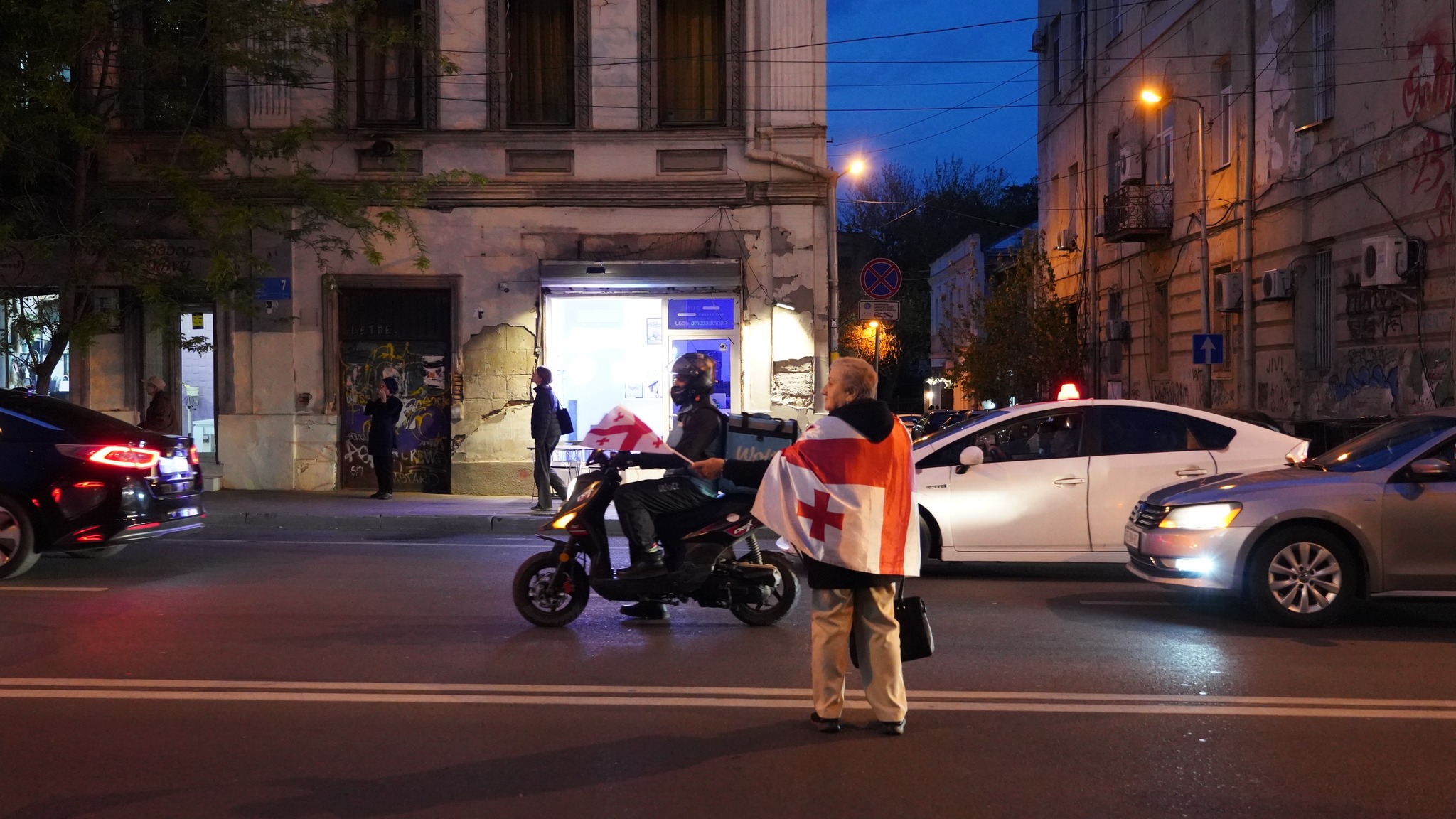
-
Tuesday, 5 May, Armenia. The European Political Community summit has concluded in Yerevan, and the Armenia–EU summit is beginning
● The Armenia–EU summit opened today, May 5, in Yerevan.
● The eighth European Political Community summit, held in Yerevan on May 4, brought together the leaders of European countries and heads of major international organizations. Overall, the European Political Community unites leaders from around 50 countries. Read more here
● “Armenia is facing a difficult pre-election environment marked by hybrid threats,” EU foreign policy chief Kaja Kallas wrote on Facebook while summing up the results of the summit. “Over the past year, our EU–Armenia partnership has developed at an unprecedented pace. We are making significant investments in the country’s resilience and supporting the integrity of the upcoming parliamentary elections on June 7,” Kallas said.
● “We discussed how democracies must jointly combat hybrid threats,” Prime Minister Nikol Pashinyan said during the joint statement following the summit. “I am confident that the discussions in Yerevan will continue after this summit as well, contributing to further cooperation and mutual understanding across the continent. I would like to take this opportunity to wish Prime Minister Martin of Ireland, as the next host country of the European Political Community summit, success in maintaining this strong momentum and synergy,” Pashinyan said.
● Volodymyr Zelensky wrote on his Telegram channel that his arrival at the summit in Yerevan marked the first visit by a president of Ukraine to Armenia in 24 years. “A good meeting with Armenian Prime Minister Nikol Pashinyan […] It is important that we are resuming active dialogue between our countries. We discussed the situation in the region, as well as security-related challenges and threats.”
● Volodymyr Zelensky proposed resuming the work of the joint Armenian-Ukrainian intergovernmental commission on economic cooperation and holding its next meeting this year in Kyiv.
● The foreign ministers of Armenia and Ukraine discussed issues of bilateral cooperation.
● European Council President António Costa: “The fact that Armenia is hosting the European Political Community summit speaks quite clearly about its geopolitical path. Europe and Armenia are moving along this path together, which is why the first-ever EU–Armenia summit will take place.
This summit became historic: for the first time it was held in the South Caucasus, and President Aliyev also participated via video link. This summit will be remembered as the summit of peace in the Caucasus, made possible by courageous political decisions and tireless diplomatic efforts.”● António Costa: “Europe must cooperate comprehensively with Armenia and the entire region in order to ensure peace and stability. Long-term peace and resilience rely on sustainable democratic institutions and strong economic ties between neighbors. That is why today’s EPC summit emphasizes combating foreign interference in democratic processes and highlights the power of connectivity in creating mutually beneficial economic partnerships.”
● Armenia’s opposition is criticizing French President Emmanuel Macron’s statement that “8 years ago [meaning before Nikol Pashinyan came to power — JAMnews], no one would have come to Armenia, 8 years ago this country was viewed at the negotiating table as a de facto satellite of Russia.” MP Ishkhan Saghatelyan said that the “warm and strong relations inherited from the past are the result of many years of work, which you and Pashinyan are trying not only to appropriate but also to distort.” Political analyst Hakob Badalyan called it “vile cynicism.” He recalled that 8 years ago Armenia hosted the Francophonie summit, which Macron himself attended together with many top representatives of the organization. [At that time, the country was already led by Nikol Pashinyan — JAMnews]. Chairman of the Republican Party of Armenia Armen Ashotyan called Macron’s words “a typical example of hypocrisy” and recalled that French presidents Jacques Chirac, Nicolas Sarkozy, and François Hollande had all visited Armenia. Armenia’s opposition is largely regarded as pro-Russian.
● Alongside the summit, a protest titled “Yes to democracy, no to hypocrisy” took place in Yerevan. Support was expressed for ethnic Armenians imprisoned in Azerbaijan as well as for political prisoners in Armenia itself. “We have two main messages. We call on senior European officials not to turn a blind eye to democratic backsliding in Armenia. Today we have dozens of political prisoners in Armenia who are being tried on fabricated charges,” said opposition Armenia bloc MP Artur Khachatryan. A group of people carrying Ukrainian and US flags approached the demonstrators. They were asked to leave but refused. However, the situation did not escalate into conflict.
● By decree of the president of Armenia, President Emmanuel Macron was awarded the Order of Glory. At the same time, by decision of President Macron, the president and prime minister of Armenia were awarded the Grand Cross of the Legion of Honour. Emmanuel Macron personally presented the awards during a state dinner.
● French President Emmanuel Macron responded to a question about ethnic Armenians imprisoned in Azerbaijan. “First I will discuss this with the president and prime minister of Armenia. Then I will speak with President Ilham Aliyev. You can count on me, I firmly believe in this peace process,” Macron said.
● Nikol Pashinyan discussed the transit project “Trump Route,” or TRIPP, with the president of Cyprus. The sides also reaffirmed their readiness to continue cooperation in all areas of mutual interest.
● Armenia and Turkey signed a protocol during the European Political Community summit in Yerevan on the joint restoration of the historic Ani Bridge located on the border between the two countries.
● A meeting between Prime Minister Nikol Pashinyan and Turkish Vice President Cevdet Yılmaz took place on the sidelines of the European Political Community summit. “We touched upon opportunities for regional cooperation between Armenia and Turkey. We welcomed the signing of the protocol on the joint restoration of the historic Ani Bridge,” Nikol Pashinyan wrote on X. Cevdet Yılmaz said the meeting was “comprehensive and productive,” with discussions focusing on steps to strengthen transport, customs, energy, and digital infrastructure and connectivity. “Based on regional peace, dialogue, and stability, we will resolutely continue our approach toward advancing normalization in the South Caucasus, expanding economic cooperation, and strengthening people-to-people contacts,” Yılmaz noted.
● Armenia and the United Kingdom signed a Declaration on Strategic Partnership.
● A stamp cancellation ceremony dedicated to the eighth European Political Community summit took place in Yerevan.
● In Karabakh, a bell tower dedicated to the Armenian Genocide and the adjacent memorial complex have been destroyed, according to Karabakh cultural heritage ombudsman Hovik Avanesyan. He said satellite data from Airbus and Planet Labs indicate that this occurred between July 14, 2025, and April 25, 2026, and described it as a “deliberate act aimed at completely ‘cleansing’ the area of any traces of Armenian presence.”
Video: At a dinner in Yerevan, French President Emmanuel Macron sings accompanied by jazz musician Vahagn Hayrapetyan, while Armenian Prime Minister Nikol Pashinyan plays the drums as accompaniment.
-
Tuesday, 5 May, Azerbaijan. Italian Prime Minister in Baku, Ilham Aliyev addresses EU summit in Armenia via video link and criticizes the European Parliament and PACE
● Italian Prime Minister Giorgia Meloni is on a visit to Azerbaijan after arriving in Baku from Yerevan. Meloni and President Ilham Aliyev first held a one-on-one meeting and then talks in an expanded format. The leaders delivered joint statements.
Ilham Aliyev:
• Azerbaijan and Italy are strategic partners.
• Italy is Azerbaijan’s number one trading partner.
• Over the past several years, the State Oil Fund of Azerbaijan has invested around $3 billion in the Italian economy.
• Last year, Azerbaijan exported a total of 25 billion cubic meters of gas, including 9.5 billion cubic meters to Italy.
• Negotiations are underway to increase these volumes.
• Around 130 Italian companies are currently operating in Azerbaijan.• In Karabakh and Eastern Zangezur, Italian companies are implementing 23 projects, and Italy holds a leading position in this area compared to other countries.
• There are concrete ideas for launching military-technical cooperation, organizing joint production, and combining Italian technologies with Azerbaijani financing.Giorgia Meloni:
• Azerbaijan is a strategic partner for Italy in gas and oil supplies. Energy resources are a crucial element of Europe’s strategic autonomy.
• Bilateral friendly relations will reach an even higher level.
• The importance of strengthening dialogue between Azerbaijan and the European Union.
• Europe can and should play a more significant role in investments aimed at deeper integration of Azerbaijan into energy networks and international transport routes.
• Energy is not the only area of our cooperation. Another decisive sphere is defense and security, where Italy’s leading achievements in aerospace, maritime security, and the protection of critical infrastructure can be utilized.● An Azerbaijani-Italian business forum is planned to take place in Baku in the second half of this year, Giorgia Meloni said. “We would like Azerbaijan to strengthen its role as a fundamental hub between Europe and Asia. From this perspective, Italy is always ready to serve as a privileged gateway to the European market. Obviously, this type of plan requires investments and long-term programs. The business forum will help transform our political cooperation into concrete opportunities,” the Italian prime minister said.
● Giorgia Meloni told journalists that one of the topics discussed with Ilham Aliyev was Azerbaijani-Armenian relations. “I once again emphasized Italy’s full support for the normalization process, reflecting a historic stage that has been given momentum by the United States. I believe that 2026 could become important in this regard, and it is extremely important to unlock the full potential of this dynamic region,” Meloni said.
● President Ilham Aliyev addressed the 8th European Political Community summit in Yerevan via video link. He said that during his meeting with European Council President António Costa and European Commission President Ursula von der Leyen in Tirana a year ago, he supported the idea of organizing the summit in Armenia in May 2026 — and proposed that, in order to maintain a balanced approach, one of the subsequent summits be held in Azerbaijan. The proposal was accepted. Aliyev invited members of the European Political Community to visit Azerbaijan in May 2028 — and Armenia also supported this. “This is a clear sign that peace between Azerbaijan and Armenia has become a reality. We have been living in peace for only nine months and are learning to live in peace,” Ilham Aliyev said.
He highlighted the following important developments:
The leaders of Armenia and Azerbaijan signed a joint declaration in Washington in August last year.
Azerbaijan lifted all transit restrictions on Armenia that had been introduced in the early 1990s. A total of 28,000 tons of cargo have already been delivered to Armenia through Azerbaijani territory.
For the first time, Azerbaijan has begun supplying Armenia with gasoline and diesel fuel, with 12,000 tons already exported.
Transport connectivity is developing. The “Trump Route for International Peace and Prosperity” will connect Azerbaijan with its exclave of Nakhchivan through Armenian territory and become part of the Middle Corridor.
● Ilham Aliyev expressed gratitude to the European Commission for its position on the peace process between Armenia and Azerbaijan, but voiced regret that “not all European institutions demonstrate the same approach.” “One of them is the European Parliament, and another is the Parliamentary Assembly of the Council of Europe.”
● Ilham Aliyev criticized the Council of Europe and said that the Azerbaijani delegation had never faced restrictions there until January 2024. “In September 2023, Azerbaijan put an end to separatism in Karabakh. We ourselves implemented the four UN Security Council resolutions adopted in 1993 that had remained only on paper for 30 years. Four months later, PACE imposed sanctions against our delegation. Unfortunately, double standards have today become a stereotypical working method for PACE. Azerbaijan’s territorial integrity has the same value as the territorial integrity of any other country. Double standards are unacceptable on this issue,” the president said.
● Ilham Aliyev also criticized the European Parliament, saying that it “instead of supporting the peace process, prefers to sabotage it.” “From May 2021, six months after the end of the second Karabakh war, until April 30, 2026, the European Parliament adopted 14 resolutions full of insults and lies against Azerbaijan. Fourteen resolutions in five years — this is a kind of obsession. The latest was adopted just four days ago, deliberately on the eve of the summit. […] The reason is that Azerbaijan restored its territorial integrity and sovereignty, ended separatism, and brought war criminals to justice. In response, on May 1 the Azerbaijani parliament decided to officially suspend cooperation with the European Parliament in all areas, terminate participation in the EU–Azerbaijan Parliamentary Cooperation Committee, and initiate procedures to withdraw from the Euronest Parliamentary Assembly.”
● In conclusion, Ilham Aliyev congratulated Prime Minister Nikol Pashinyan on hosting the European Political Community summit in Armenia. “Despite all the efforts of those who want to hinder this process, Azerbaijan remains committed to the peace agenda, and the statements of my Armenian colleague are clear confirmation of this,” Aliyev said.
● Armenian Prime Minister Nikol Pashinyan expressed gratitude to President Ilham Aliyev for participating in the European Political Community summit in Yerevan online and to the vice president of Turkey for attending “from the perspective of peace processes and regional cooperation.” Pashinyan told journalists that achieving lasting peace and opening borders with Azerbaijan and Turkey would benefit not only the region but also contribute to strengthening connectivity across the broader European space and beyond.
● European Council President António Costa told journalists that the European Political Community summit in Yerevan “became a truly historic event because it was held in the South Caucasus for the first time and was marked by the participation of Azerbaijani President Ilham Aliyev.” “This summit will forever be remembered as the summit of peace in the South Caucasus, made possible by courageous political decisions and patient diplomacy,” Costa noted.
● The temporary commission of the Milli Majlis on countering foreign interference stated that pro-Armenian circles in the West are conducting and financing hybrid attacks against Azerbaijan. According to the statement, two types of threats have become widespread — pressure through legal instruments and disinformation campaigns. The commission claims that the European Parliament and the parliaments of Belgium and the Netherlands became involved in these processes by adopting what it called an unfair anti-Azerbaijani resolution under the influence of manipulation directed by the lobbying organization European Armenian Federation for Justice and Democracy (EAFJD). The organization is headquartered in Brussels and operates in 13 European countries.
The statement named 36 members of parliament described as particularly active in anti-Azerbaijani statements and document preparation and allegedly linked to the Armenian lobby. They were described as “forces unwilling to see the implementation of the peace agenda between Armenia and Azerbaijan and the completion of the process to its logical conclusion.” According to the commission’s findings, such activities were deliberately intensified ahead of the European Political Community summit in Yerevan and the EU–Armenia summit.
The Milli Majlis stated that “officials in Armenia must take serious steps to prevent such cases, which are capable of damaging the peace agenda, or clarify the matter. Otherwise, this may be regarded as an insincere approach to the peace agenda.”
● A Serbian delegation headed by Culture Minister Nikola Selaković is in Baku discussing prospects for bilateral cooperation. During a meeting with Azerbaijani Culture Minister Adil Karimli, it was noted that relations are developing thanks to the friendly ties between the presidents of the two countries. It was also stated that the launch of direct flights between Belgrade and Baku on May 3 would become an important factor in expanding cultural ties.
Italian Prime Minister Giorgia Meloni is on a visit to #Azerbaijan, having arrived in Baku from Yerevan. Meloni and President Ilham Aliyev first held a one-on-one meeting, followed by talks in an expanded format. After the meeting, the leaders delivered joint statements to… pic.twitter.com/lo7B9iuaZG
— JAMnews (@JAMnewsCaucasus) May 4, 2026
-
Tuesday, 5 May, Georgia. Meetings of the Georgian prime minister and foreign minister with Volodymyr Zelenskyy at the EU summit in Yerevan
● “If we look at the map, we will see how important relations between Georgia and Europe are. That is why, of course, discussions are underway on what we can do to advance the transport connectivity of the Middle Corridor. We have problems with Georgia, given that the government is effectively not taking steps while declaring its desire to join the European Union. We see that the country’s authorities are moving in the wrong direction. This also creates limitations, for example, on the allocation of funding,” EU High Representative Kaja Kallas said at the European Political Community summit taking place in Yerevan.
● On the sidelines of the summit in Yerevan, Georgian Prime Minister Irakli Kobakhidze met with Ukrainian President Volodymyr Zelenskyy. According to the government administration, the meeting took place at the initiative of the Ukrainian side, and its main topic was bilateral relations. More details here.
● Ukrainian President Volodymyr Zelenskyy wrote on social media about his meeting with Irakli Kobakhidze in Yerevan and noted that “there are indeed unresolved issues between our states.”
● Following the meeting, Irakli Kobakhidze told journalists: “In general, I can say that Ukraine is a friendly country for us. Our peoples are connected by traditional historical friendship, and it was precisely this shared spirit that I expressed to President Zelenskyy.”
● A meeting between the foreign ministers of Georgia and Ukraine also took place on the sidelines of the European Political Community summit in Yerevan. Ukrainian Foreign Minister Andrii Sybiha wrote on X: “We exchanged views on a broad range of bilateral, regional, and international developments, discussed European integration and the important role of the European Union in global affairs. We also focused on expanding mutually beneficial trade and economic cooperation.”
● “Georgia has maintained a consistent and firm position throughout this period regarding its attitude toward Ukraine, as well as its support for Ukraine, and it is also important for us to see the same attitude from Ukraine,” Foreign Minister Maka Bochorishvili told journalists.
● “World politics today is characterized by the fact that what exists today may change tomorrow, and entirely different strategic goals and visions may emerge. We hope that relations with Ukraine will be positive,” said ruling party MP Gia Volski, commenting on the meetings between Georgian and Ukrainian senior officials at the summit in Yerevan.
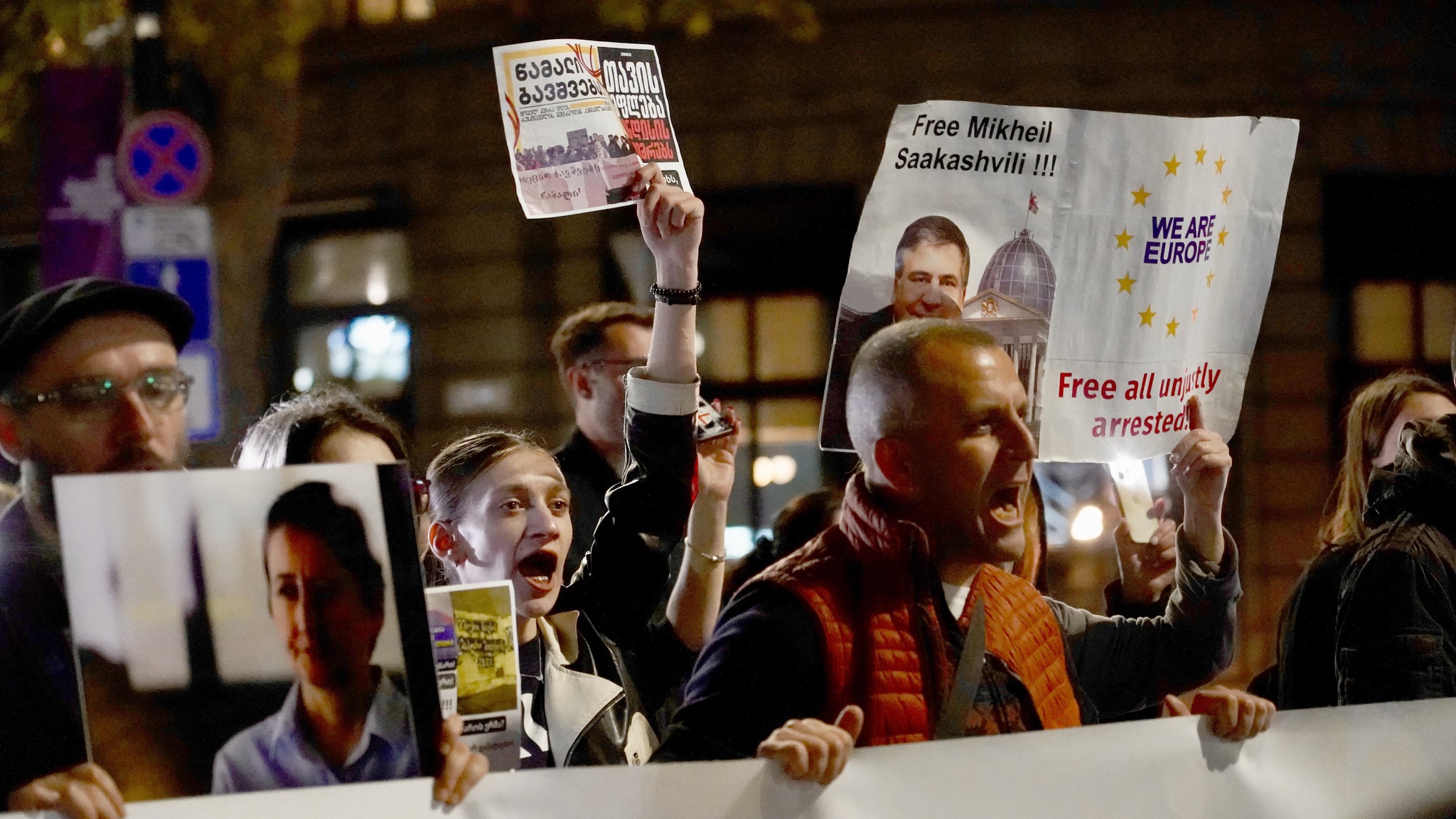
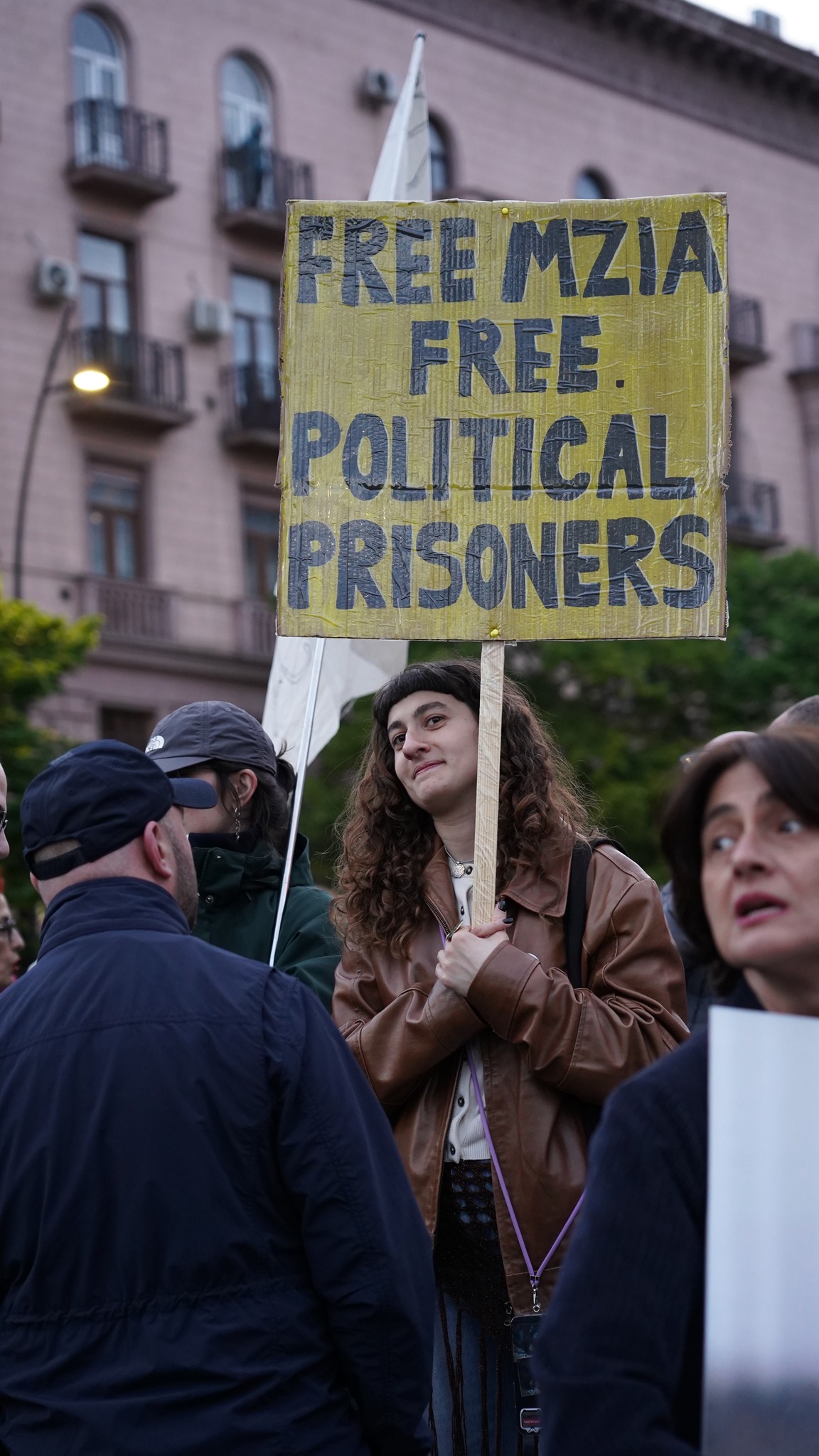
● The co-chairs of the Media Freedom Coalition from the United Kingdom and Finland issued a joint statement on the occasion of World Press Freedom Day, focusing on the situation in Georgia. The statement emphasized repression against independent media in Georgia. More details here.
● According to Russian media reports, all truck drivers will be required to submit a declaration stating the purpose of their entry into Russia through the border with Georgia. More details here.
● Today, May 5, the European Parliament will vote on its annual report on Georgia. According to amendments published on the European Commission website on March 19, some Members of the European Parliament are calling for sanctions against the pro-government TV channels Imedi, Rustavi 2, and POSTV. The document describes these channels as the “de facto communication wing” of the Georgian Dream government and accuses them of systematically spreading disinformation, defamatory campaigns, and hostile propaganda. The first two channels mentioned are already under UK sanctions.
-
Monday, 4 May, Armenia. Yerevan is hosting participants of the European Political Community summit
● Yerevan is hosting participants of the European Political Community summit. At Yerevan’s Zvartnots Airport, planes carrying high-ranking summit participants were landing almost every half hour. Among them were the presidents of France and Ukraine, the secretaries general of NATO and the Council of Europe, the prime ministers of the United Kingdom and Canada, and other senior participants. On behalf of Prime Minister Nikol Pashinyan, an official dinner was held on Sunday, May 3. More details about the summit and its participants here.
● On the first day of the conference, May 5, opening remarks will be delivered by Armenian Foreign Minister Ararat Mirzoyan, Prime Minister Nikol Pashinyan, and the special guest of the event, Secretary General of the Council of Europe Alain Berset. Numerous panel discussions will also take place that day.
● Considerable interest has been generated by the announced panel discussion titled “The South Caucasus at a Turning Point: Prospects for Peace and Cooperation.” Participants in the discussion will include Turkey’s special representative for normalization with Armenia Serdar Kılıç, Vice Speaker of Armenia’s National Assembly Ruben Rubinyan, EU Special Representative for the South Caucasus and the crisis in Georgia Magdalena Grono, Georgian Deputy Foreign Minister Lasha Darsalia, and Azerbaijani representative Rusif Huseynov, director of the Topchubashov Center.
● A panel discussion titled “Geopolitical Upheavals in the Middle East: Global Consequences and Secondary Effects” is scheduled for May 6, during which the situation surrounding Iran and the Strait of Hormuz will be discussed.
● Armenia and Bulgaria signed a declaration on strategic partnership in Yerevan. The document was signed by Nikol Pashinyan and Bulgarian President Iliana Iotova, who is visiting Yerevan to participate in the 8th European Political Community summit.
● Yerevan TV Tower was illuminated in the colors of the French and EU flags in honor of the guests and to mark the European Political Community summit taking place in Yerevan.
● During the night, people posted videos showing Nikol Pashinyan and Emmanuel Macron walking along Abovyan Street, visiting a café and a souvenir shop. Local residents welcomed the French president, and many took photos with him.
● Journalists in Yerevan asked Emmanuel Macron about the fate of ethnic Armenians imprisoned in Azerbaijan. “Immediately after my trip to Armenia, I will have another discussion with President Ilham Aliyev. You know that we always try to play our role as mediators and help,” Macron replied. He also said he plans to hold a meeting with Nikol Pashinyan to discuss the situation. Macron stressed the importance of respecting international law and added that France would continue to do everything possible to support peace and stability in the region.
● “I arrived in Yerevan to participate in two important meetings,” European Council President António Costa wrote on X. “Europe is gathering in Armenia for the 8th European Political Community summit. Leaders from across the continent, including Canada, will discuss how to cooperate in strengthening security and collective resilience. And on Tuesday we will hold the first-ever Armenia-EU summit, which will mark a key milestone in deepening our bilateral cooperation and commitment to delivering tangible benefits for our citizens and businesses,” Costa wrote.
● Against the backdrop of the summit, a protest is planned in Yerevan demanding the release of Armenians held in Baku and calling “not to turn a blind eye to the rollback of democracy in the Republic of Armenia.” The opposition Armenia bloc is urging citizens to join and “raise their voices against the rollback of democracy in the country, attacks on the Armenian Apostolic Church, and the existence of political prisoners.” Armenia’s opposition is widely regarded as predominantly pro-Russian.
● The Central Election Commission has registered 19 political forces to participate in the parliamentary elections on June 7. The list includes:
The ruling Civil Contract party
Prosperous Armenia party
Meritocratic Party of Armenia
“I Am Against Everyone” Democratic Party
Strong Armenia bloc (including the Strong Armenia party, the New Era party, and the United Armenians party)
Democratic Consolidation party
Wings of Unity party
Bright Armenia party
National Democratic Pole party
Armenia bloc of parties (including the Armenian Revolutionary Federation Dashnaktsutyun and the center-right Forward party)
Christian Democratic Party
Armenian National Congress party
New Force Reformist Party
Republic party
Alliance Progressive Centrist Party
Reformers party
Democracy, Law, Discipline party
National Awakening and Revival of the Kochara Nation party
Alliance of Defenders of Democracy of the Republic party● A train consisting of eight railcars carrying fertilizers from Russia with a total weight of 536 tons has been sent in transit from Azerbaijan to Armenia. According to Azerbaijani media reports, including this shipment, more than 25,000 tons of grain, over 1,600 tons of fertilizers, and 68 tons of buckwheat have already been sent from Russia to Armenia in transit through Azerbaijan.
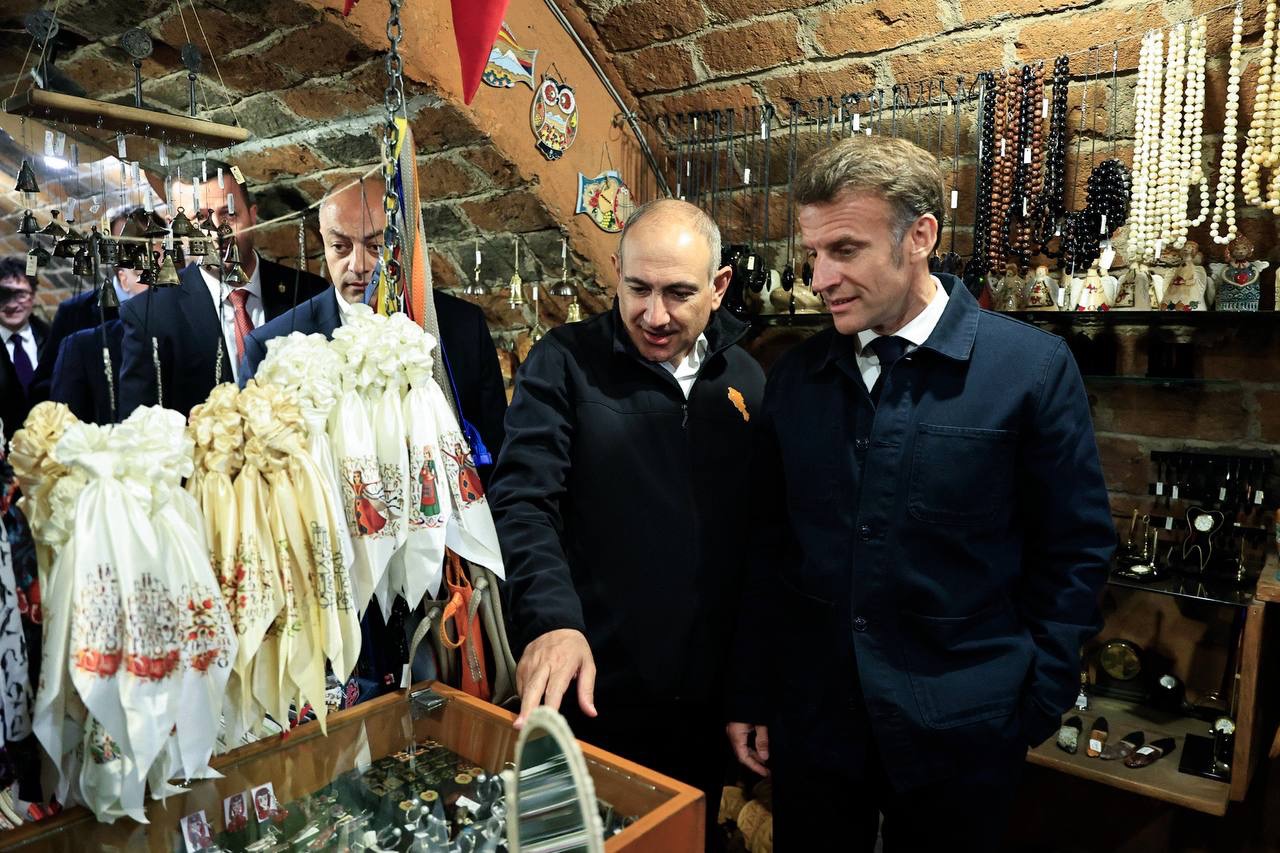
-
Monday, 4 May, Azerbaijan. President Ilham Aliyev will join the European Political Community summit in Yerevan via video link
● President Ilham Aliyev will join the European Political Community summit in Yerevan via video link and deliver remarks at the opening session.
● The Asian Development Bank plans to invest more than $10 billion by 2030 in regional connectivity, clean energy, digital transformation, and inclusive infrastructure across the South Caucasus and Central Asia region. This was announced by the bank’s president, Masato Kanda, at a press conference in Samarkand following the annual meeting of the Board of Governors held there.
● Uzbekistan has called on Azerbaijan, Tajikistan, and Kyrgyzstan to join forces to strengthen Central Asia’s role as a unified IT hub by creating one common digital space instead of several separate national ones. “Connectivity requires regional integration. Together, we can present regional products in Silicon Valley and at major international platforms such as the Mobile World Congress in Barcelona. Kazakhstan has a developed venture capital market and financial sector, while Uzbekistan has a large number of young people focused on startups. By combining efforts, we can achieve much more,” said Uzbekistan’s Minister of Digital Technologies Sherzod Shermatov at the same meeting.
● Uzbekistan and Azerbaijan are expected to decide by the end of the year on the launch of joint geological exploration projects at precious metal deposits in Uzbekistan. The potential of gold and silver deposits in the Kashkadarya and Surkhandarya regions, as well as critical materials in the Republic of Karakalpakstan and the Jizzakh region, is currently being studied. This was announced at the forum by Uzbekistan’s Deputy Minister of Mining Industry and Geology, Ural Yusupov.
● The trip by Amy Carlon, Chargé d’Affaires of the US Embassy in Baku, to Aghdam and Fuzuli [in Karabakh and Eastern Zangezur] “once again confirms the expanding US-Azerbaijani cooperation following the signing in February of the Strategic Partnership Charter by President Ilham Aliyev and US Vice President Vance, as well as our shared commitment to promoting peace, stability, and long-term recovery in the South Caucasus,” according to a post published on the diplomatic mission’s page on X. Amy Carlon took part in the trip as part of a group of representatives of the diplomatic corps accredited in Azerbaijan.
● “The European Union calls on Armenia and Azerbaijan to move forward as soon as possible with the signing and ratification of the peace treaty. Since August 2025, we have witnessed a number of unprecedented steps taken by the parties within the bilateral peace process aimed at ensuring the irreversibility of peace and further institutionalizing the process. This creates the foundation for long-term and mutually beneficial reconciliation. Much more still needs to be done to reconcile the two societies,” EU Ambassador to Armenia Vassilis Maragos told journalists in Yerevan. He noted that the “Trump Route” (TRIPP) project clearly and practically outlines how transit connectivity through Armenia can be developed and communications between Armenia and Azerbaijan restored, which serves the interests of both countries and contributes to strengthening peace and stability in the region. Maragos added that the EU is ready to provide support and expert assistance in demining efforts and the border delimitation process.
● Direct flights between Belgrade and Baku were launched on May 3 and will be operated by Air Serbia. Flights are scheduled twice a week. In Belgrade, the departure of the first flight was marked by an official ceremony attended by several Serbian ministers and the Azerbaijani ambassador to Serbia.
● Another transit shipment from Russia to Armenia via Azerbaijan has been dispatched — eight railcars carrying fertilizers with a total weight of 536 tons. Since the transit route through Azerbaijan for Armenia opened last October, more than 25,000 tons of grain, over 1,600 tons of fertilizers, and 68 tons of buckwheat have been delivered. Exports of petroleum products from Azerbaijan to Armenia are also continuing. According to customs service data, more than 8,500 tons of diesel fuel, 979 tons of AI-92 gasoline, and 2,955 tons of AI-95 gasoline have been supplied to date.
● Religious figures from Azerbaijan, Turkey, and regions of Georgia with compact Azerbaijani populations are visiting the Nakhchivan Autonomous Republic. The purpose of the trip is described as strengthening spiritual and religious ties with compatriots living abroad. Members of the group will also participate in a conference in Nakhchivan titled “The Zangezur Route — Following the Traces of History.”
● The Baku Metro company held a three-day innovation project titled “Metro Hackathon.” Selected participants were tasked with proposing ideas for the digitalization of passenger transportation using artificial intelligence. A total of 72 people took part in the competition, with participants averaging between 19 and 24 years old. They were divided into 18 teams of four people, each developing presentations of their proposals. Participants had the opportunity to work with the metro’s real database and test themselves in various fields, from AI engineering to data analytics. The jury consisted of five professional experts. The teams that took first, second, and third place received cash prizes of 5,000, 3,000, and 1,000 manats (approximately $3,000, $1,800, and $600). Promising participants were offered opportunities to implement their projects within the metro system and gain additional experience for their future careers.
● “The Ghazanchi Church in Shusha has been restored in accordance with its original architectural style,” presidential aide Hikmet Hajiyev said while publishing a video on social media. “All lawful structures, as well as historical, cultural, and religious monuments within the territory of the Republic of Azerbaijan, are protected, reserved and restored in line with national legislation,” Hajiyev wrote. The video was filmed during a two-day trip across Karabakh and Eastern Zangezur by a large group of representatives of the diplomatic corps accredited in Azerbaijan.
Inside the Ghazanchi Church in Shusha. The church has been restored in accordance with its original architectural style. All lawful structures, as well as historical, cultural, and religious monuments within the territory of the Republic of Azerbaijan, are protected, reserved and… pic.twitter.com/jcswMdiq9t
— Hikmet Hajiyev (@HikmetHajiyev) May 2, 2026
-
Monday, 4 May, Georgia. The embassies of Germany and France expressed support for Georgia’s independent journalists on World Press Freedom Day
● Prime Minister Irakli Kobakhidze has arrived in Yerevan to participate in the 8th summit of the European Political Community. According to the government administration, he attended the official reception held for the leaders participating in the summit. Today, Kobakhidze is taking part in a roundtable discussion. The Georgian delegation also includes Foreign Minister and Vice Prime Minister Maka Botchorishvili and Head of the Government Administration Levan Zhorzholiani. More about the summit and its guests here.
● “If someone had said a year ago that relations with the United States could be reset, everyone would have thought it was a fairy tale. However, everyone can see how we are gradually restoring relations that were damaged by the previous US administration,” said ruling party MP Levan Machavariani on the pro-government TV channel Imedi, which is under UK sanctions.
● The Young Lawyers’ Association published a statement on World Press Freedom Day and expressed solidarity with Georgia’s independent journalists.
● “Echo of the Caucasus,” the Russian-language project of Radio Free Europe/Radio Liberty aimed at audiences in the self-proclaimed republics of Abkhazia and South Ossetia occupied by Russia, ceased operations on May 1. RFE/RL President and CEO Stephen Capus explained the decision as part of a restructuring process.
● On the occasion of World Press Freedom Day, the German Embassy in Georgia published a statement saying that Germany firmly supports journalists who risk their own safety in pursuit of facts.
● The French Embassy in Georgia has reaffirmed its support for all Georgian journalists who, regardless of their political views, carry out their work conscientiously and courageously. According to the statement, it is the responsibility of state authorities to create political and practical legal conditions everywhere that allow journalists to exercise the necessary freedom of expression.
● Irakli Kobakhidze no longer accuses businesses that own supermarket chains of “collusion” as the reason for sharply rising food prices in Georgia. In an interview with the pro-government TV channel Imedi, he said that food in Georgia is actually inexpensive, but low household incomes prevent people from buying it. Kobakhidze directly compared the prices of the same products in Georgia and France and claimed that prices in Georgia are on average 50% lower. However, he said the key issue is not prices but purchasing power — namely, that average salaries in Georgia are two to three times lower than in France. Therefore, according to Kobakhidze, a resident of France lives two to three times better than a resident of Georgia.
● A parliamentary commission established to investigate the reasons for rising prices in the country has completed its work and published a lengthy report. Its main conclusions are largely summarized in the following points:
• Food prices rise because there are too many links in the chain from production/import to store shelves,
• Competition in this sector is weak,
• The market as a whole functions inefficiently.● The Georgian Retail Association has called on supermarket chains to introduce special “family baskets” in their stores containing products with maintained low prices. Daily Group — which includes the SPAR, Daily, Magniti, Gvirila, Ioli, and Kalata supermarket chains — has already announced its readiness to participate in the initiative.
📷 In the photo: Irakli Kobakhidze in Yerevan together with Armenian Prime Minister Nikol Pashinyan and Parliament Speaker Alen Simonyan.
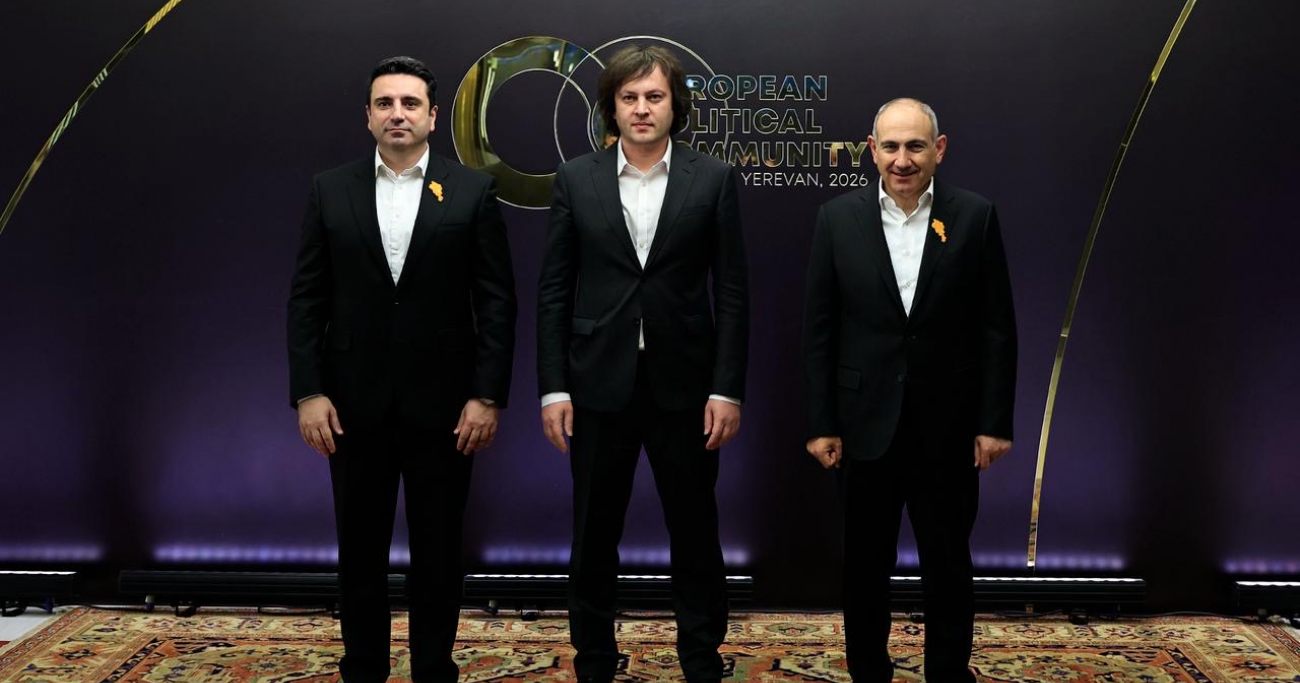
-
Top stories in Azerbaijan, Armenia, and Georgia from 27 April-1 May, 2026