Jailed Azerbaijani rights activist says authorities 'ready to imprison entire nation'






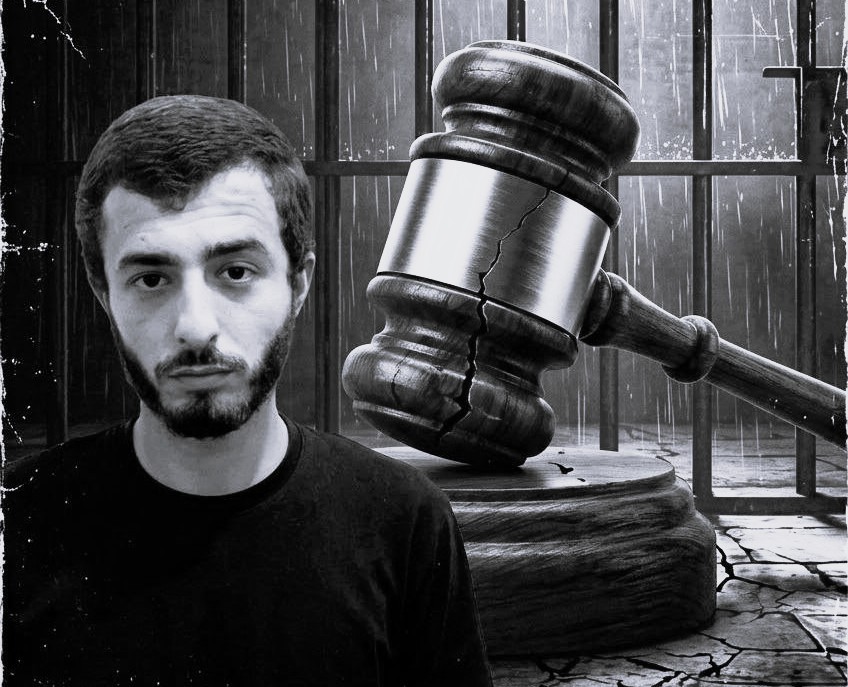
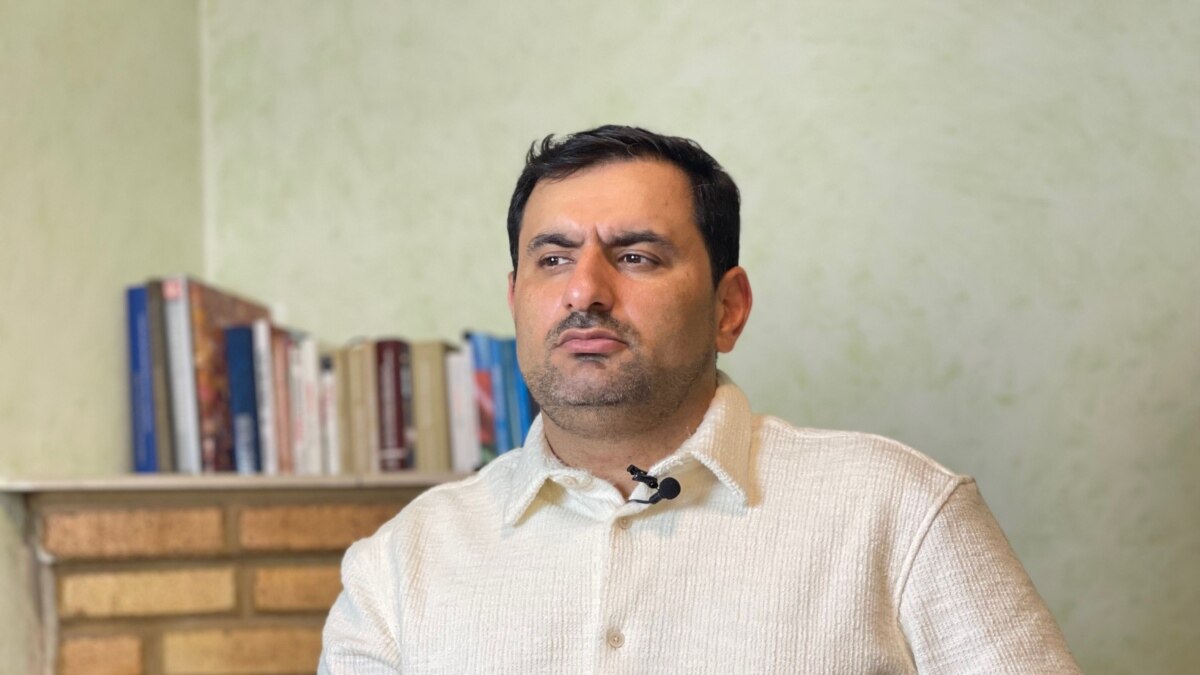
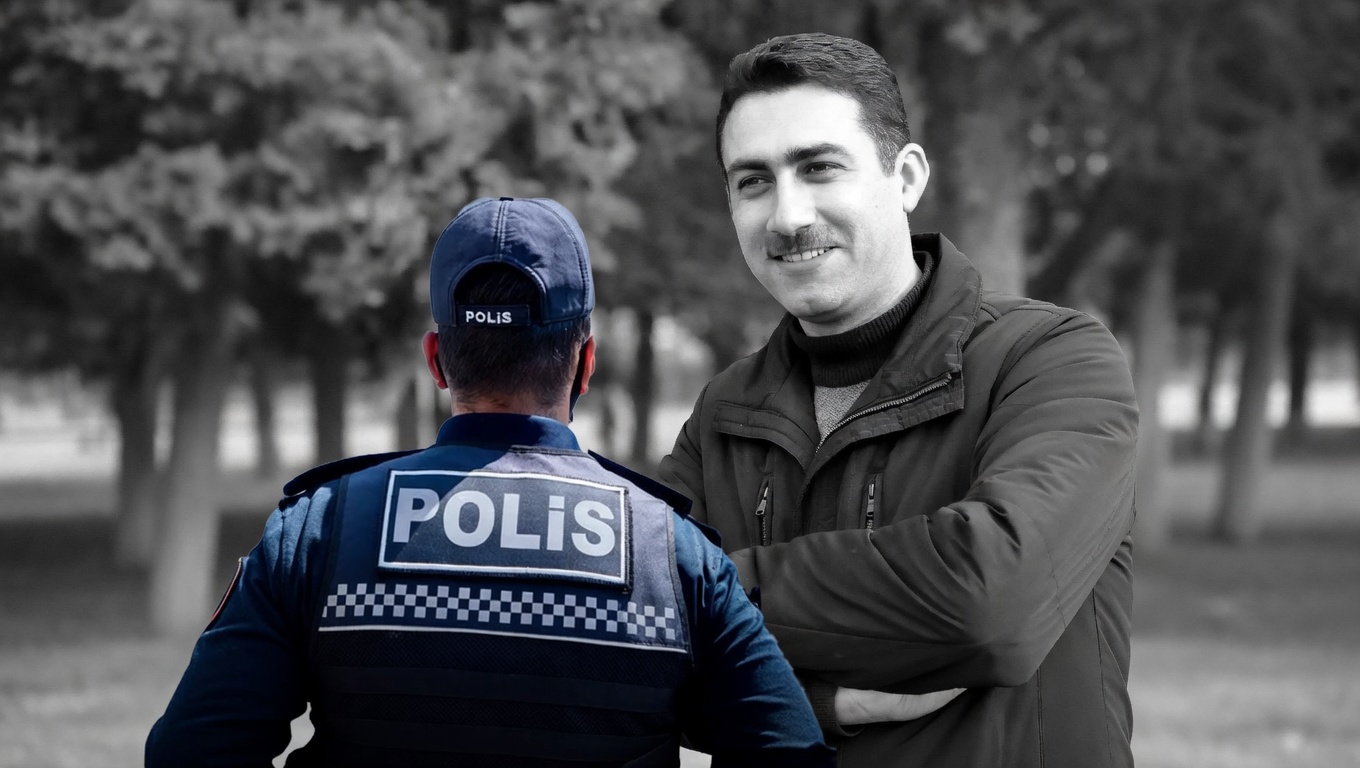
Jailed Azerbaijani rights activist Rufat Safarov
Azerbaijani human rights activist Rufat Safarov, co-founder of the rights group Defence Line, who was sentenced to eight years in prison, said in his final court statement that he would not have been arrested had he not been invited to the United States to receive a human rights award from the United States Department of State.
In a copy of his final statement sent to JAMnews, Safarov said:
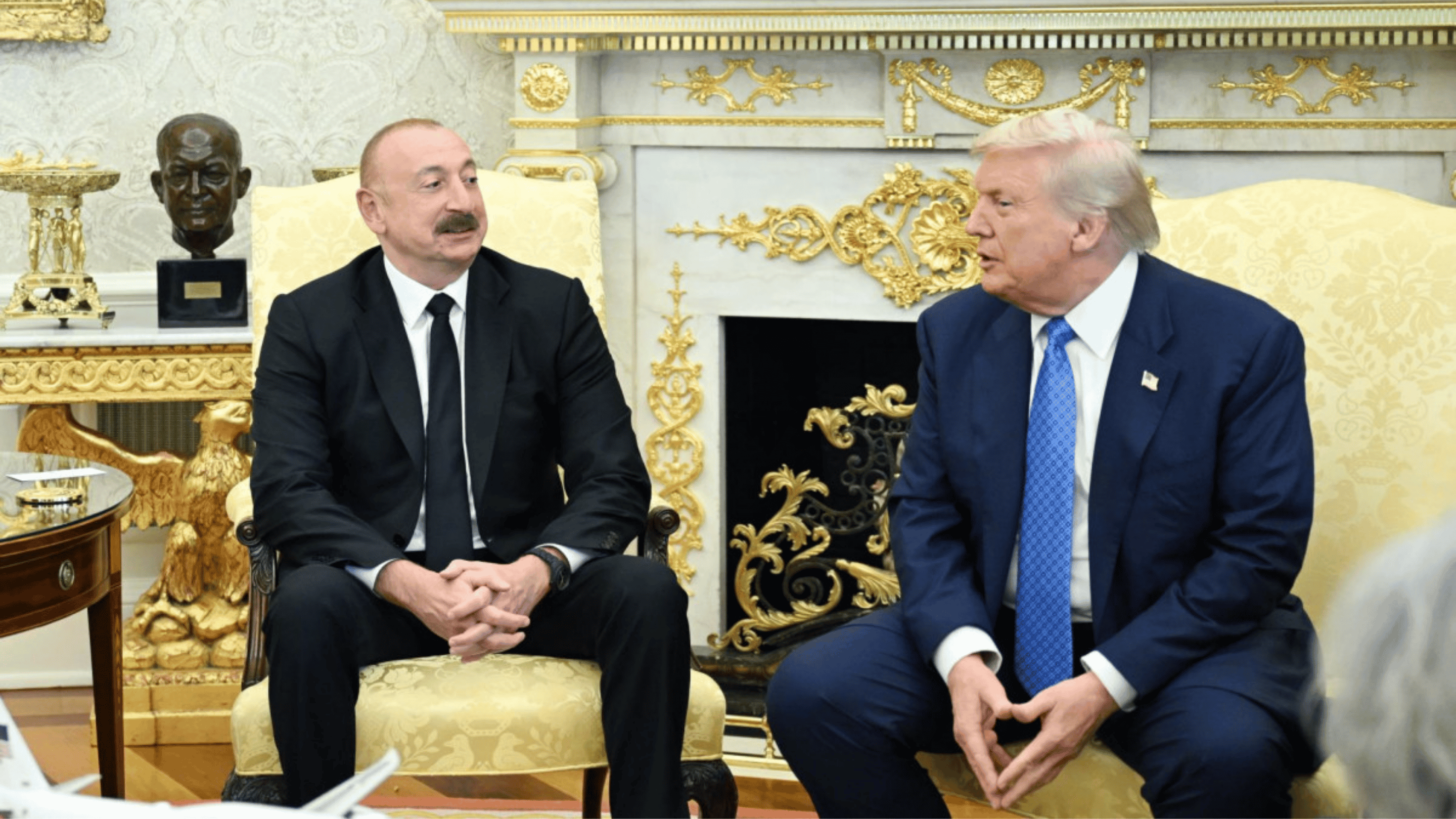
“I want to convince Azerbaijani society that if, in August 2024, the US ambassador to Azerbaijan had not recognised Defence Line’s human rights work and nominated me for an international award; if US ambassadors around the world had not endorsed my candidacy; if the secretary of state had not approved the decision; if I had not been invited to the award ceremony due to take place in Washington on 10 December; and if meetings with US senators, members of Congress and senior White House and State Department officials had not been planned as part of the visit, the Azerbaijani authorities — or, more precisely, President Ilham Aliyev — would not have authorised my arrest. After all, I travelled abroad twice and returned freely in the month before my arrest.“
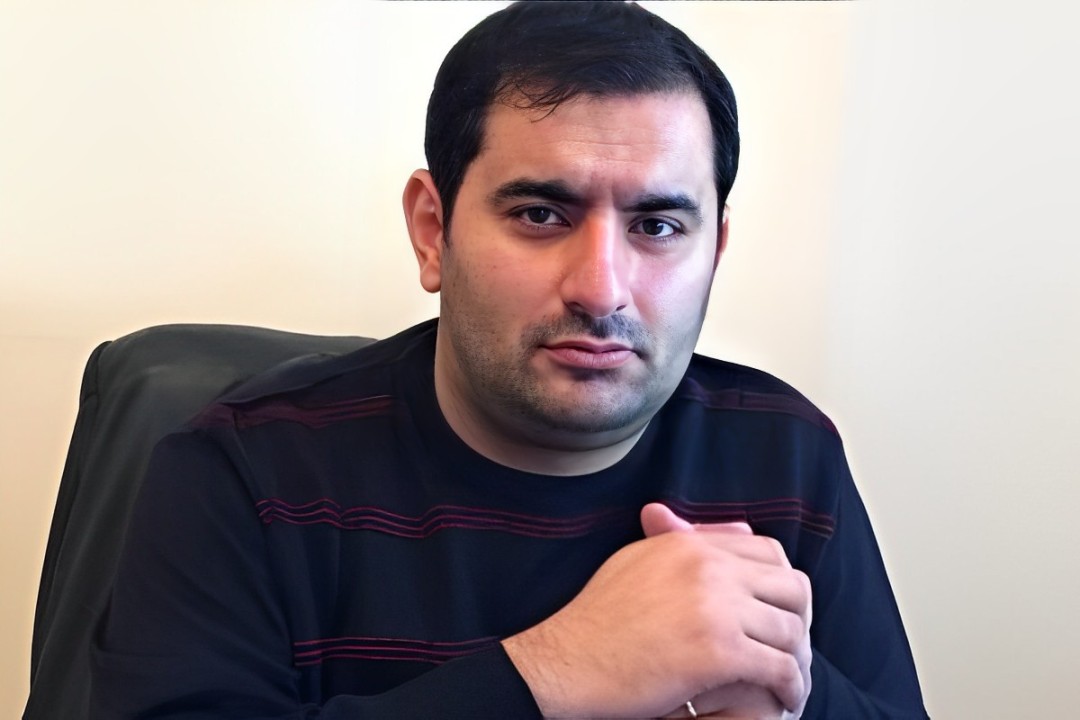
Who is Rufat Safarov?
Rufat Safarov was born on 11 October 1981 in the settlement of Zekhmet in the Armenian SSR. He attended School No. 135 in Baku’s Binagadi District and graduated from the law faculty of Baku State University.
Between 2004 and 2011, he worked as a lawyer at Azerbaijan’s Agriculture Ministry and served on the supervisory board of the state-owned company Agroleasing. In 2011, he joined the prosecution service and was appointed investigator at the prosecutor’s office in the Zardab district.
In December 2015, Safarov publicly criticised human rights violations in Azerbaijan and subsequently resigned from the prosecution service. He said he had come under pressure because his father, Eldar Sabiroglu, had criticised the head of the presidential administration, and that his own views “did not coincide with those of this regime”. Later that month, prosecutors opened a criminal case against him on bribery charges and searched his home.
After his release, Safarov became active in human rights advocacy. In 2020, he founded the rights organisation Defence Line and became its executive director.
Who is Eldar Sabiroglu?
Eldar Sabiroglu is a prominent Azerbaijani public and military figure. He served as a member of Azerbaijan’s first parliament and headed the political analysis and forecasting department of the ruling New Azerbaijan Party between 1993 and 2000.
During the 1998 presidential election, he worked as press secretary to presidential candidate Heydar Aliyev.
From 2007 to 2013, Sabiroglu served as head of the press service of Azerbaijan’s Ministry of Defence of Azerbaijan with the rank of colonel.
Detention and charges
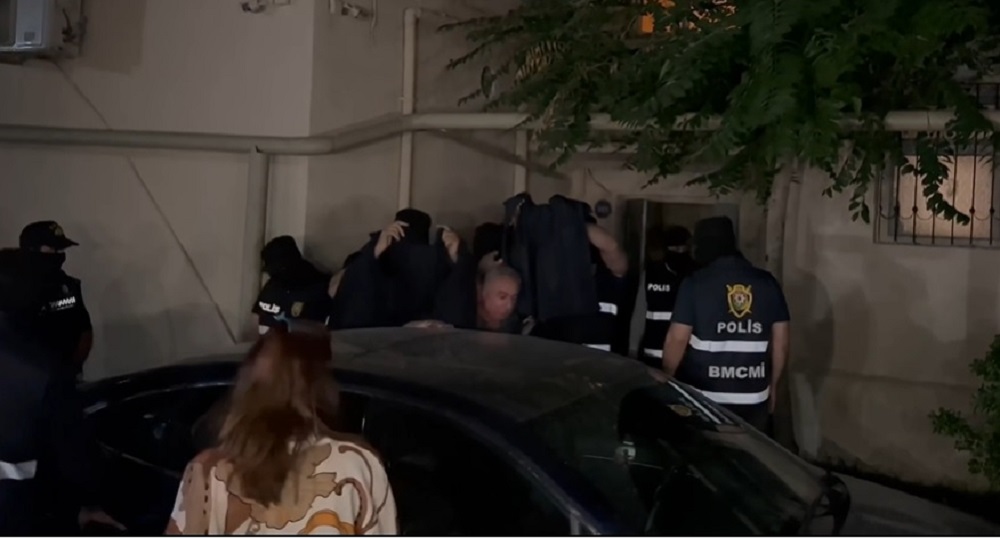
Safarov was detained by plain-clothes officers on 3 December 2024. He was charged under Article 221.1 (hooliganism) and Article 178.3.2 (fraud causing substantial financial damage) of Azerbaijan’s Criminal Code. His father, Eldar Sabiroglu, said the detention was politically motivated and took place just as then US Secretary of State Antony Blinkenwas due to present him with an award.
Safarov has described the charges as fabricated and said his arrest was linked to his human rights work.
In comments to Voice of America, Azerbaijan’s Interior Ministry said Safarov had been detained following a dispute with another citizen over the sale of a plot of land.
According to investigators, Safarov received 60,000 manats (about $35,300) from Natig Imanguliyev after promising to sell him a plot of land, but allegedly failed to transfer the property or return the money. Prosecutors say that on 3 December 2024 Imanguliyev came to Safarov’s garage to demand a refund, leading to a confrontation during which Safarov allegedly assaulted him.
The rights activist rejected the allegations. He said he did not know Imanguliyev and claimed that he himself had been attacked on the day in question.
Trial and sentence
The trial at the Baku Court for Serious Crimes concluded on 12 June 2026. During the hearing, presided over by Judge Aygun Gurbanova, Rufat Safarov said in his final statement that he had committed no crime and that the proceedings had “nothing to do with justice”.
Under the court’s ruling, Safarov was found guilty under Article 127.2.3 (intentional infliction of less serious bodily harm) and Article 178.3.2 (fraud causing substantial financial damage) of the Criminal Code and sentenced to eight years in prison.
The hooliganism charge was dropped. Safarov’s lawyers described the verdict as politically motivated and said they would appeal.
2016 corruption case
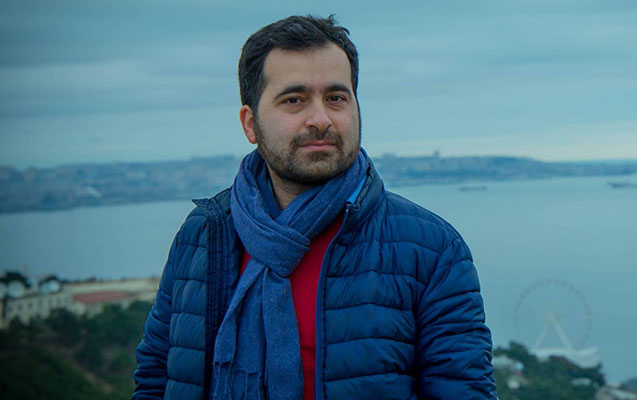
Several months after leaving his post as an investigator, Rufat Safarov was charged on 15 January 2016 with accepting a bribe under Article 311.3.2 of Azerbaijan’s Criminal Code. The Binagadi District Court ordered his pre-trial detention. Safarov described the accusations as absurd and said he considered them politically biased.
On 8 September 2016, the Lankaran Court for Serious Crimes found him guilty of repeatedly accepting bribes and sentenced him to nine years in prison. He was taken into custody in the courtroom. A number of local and international organisations subsequently recognised him as a political prisoner.
After serving two years and six months in prison, Safarov was released on 16 March 2019 under a presidential pardon decree.
Rufat Safarov’s final statement
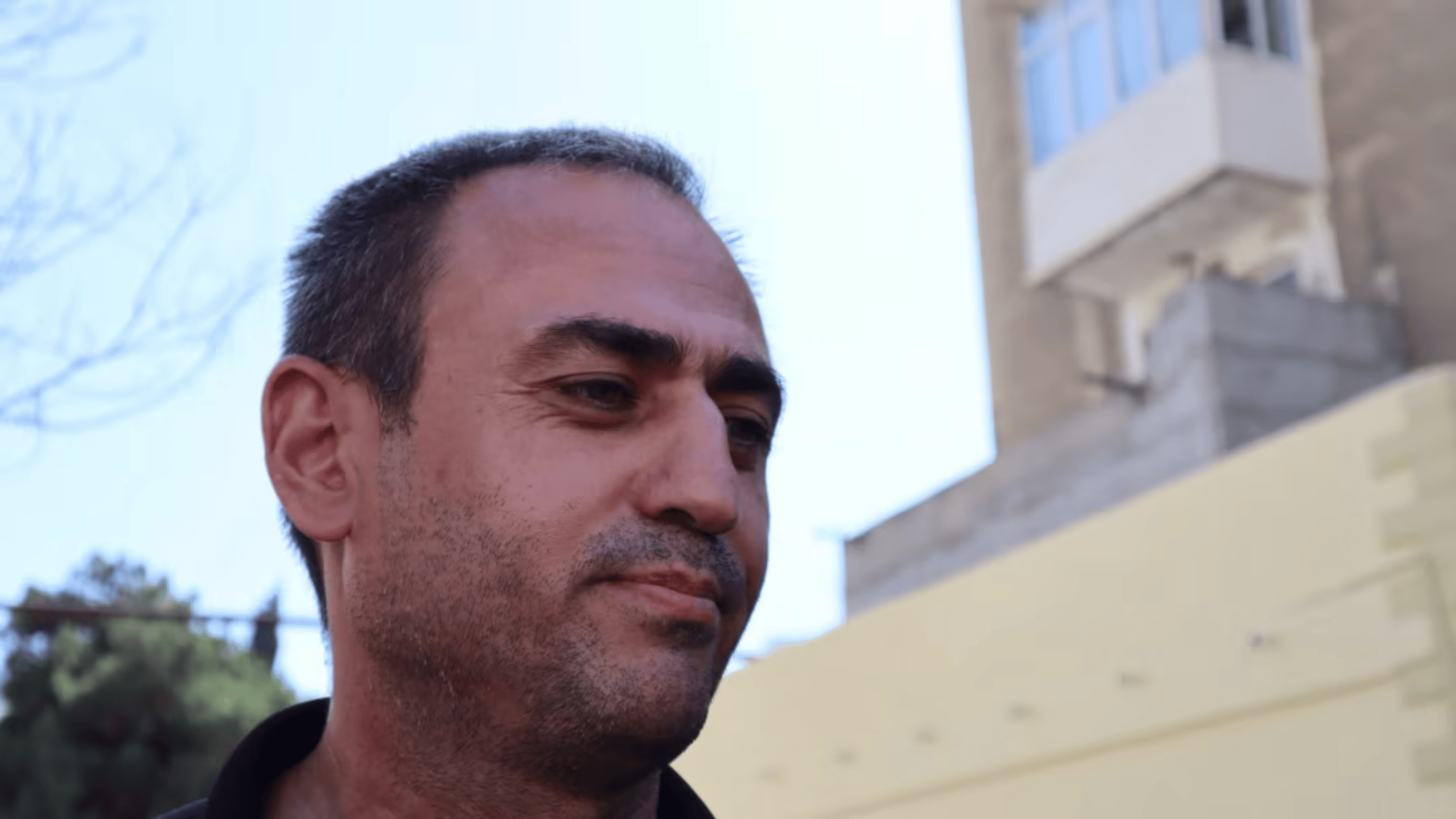
Excerpt from Rufat Safarov’s final statement:
“Honourable court,
I would like to draw your attention to the fact that immediately after I officially began my human rights work, I was summoned to the Prosecutor General’s Office. I received a warning accompanied by threats. In addition, representatives of the New Azerbaijan Party Youth Union referred on their official Facebook page to the fate of my colleague Ogtay Gyalaliyev. (In 2019, human rights activist Gyalaliyev was struck by a car in Baku, suffered severe injuries and fell into a coma.)
On several occasions, I was violently detained by police officers and subjected to harsh warnings. I spent a month under administrative arrest. Yet I regarded all this persecution, pressure, deprivation and obstruction as part of my path and continued to follow my convictions.
I want to convince Azerbaijani society that if, in August 2024, the US ambassador to Azerbaijan had not recognised the human rights work of Defence Line and nominated me for an international award; if US ambassadors around the world had not endorsed my candidacy; if the secretary of state had not approved the decision; if I had not received an invitation to the award ceremony due to take place in Washington on 10 December; and if meetings with US senators, members of Congress and senior White House and State Department officials had not been planned as part of the visit, the Azerbaijani government – or, more precisely, President Ilham Aliyev – would not have authorised my arrest.
After all, in the month before my arrest, I left the country and returned freely on two occasions. […]
Honourable court,
I ask nothing of you and demand nothing. This is because I am firmly convinced that in Azerbaijan, judges – particularly in politically significant cases – surrender their independent legal judgement to the repressive bodies of the executive branch.
Today, at the instruction of some official from the Presidential Administration or one of the generals of the law enforcement agencies, you may bring unfounded charges against me, conduct a sham trial and then sentence me to eight or nine years in prison. Yet the very nature of your profession is such that one day you may, without hesitation, send to prison the very official who is today issuing unjust orders against me and my like-minded colleagues. Azerbaijan’s legal and judicial history contains many such examples.
These words are dictated by the harsh political climate that has taken hold in my country and is incompatible with the rule of law. This grim reality recalls the methods of Stalin’s “troikas” in the 1930s. Yet the situation of Azerbaijani society appears even more hopeless. At one of the previous hearings I briefly touched on an idea that I will now express more fully.
Consider this: even within the legal system of Joseph Stalin, one of the most brutal dictators in history, there were investigators and military prosecutors who refused to carry out unlawful instructions and political orders that destroyed human lives, even when doing so could cost them their own lives.
Those investigators and military prosecutors listened to the voice of their conscience and remained true to their convictions, even with the executioner’s bell ringing in their ears.
Although the death penalty is not provided for under Azerbaijan’s criminal legislation, I must note with great regret that I cannot name a single investigator, prosecutor or judge who has refused to carry out an unlawful order and listened to the voice of conscience.
Speaking of what it means to hear both sides, when Alexander the Great listened to accusations against a man, he covered one ear with his hand. When asked why, he replied: “I am saving this ear for the accused.”
For the past 11 years, I have been taken to police stations, temporary detention facilities, pre-trial detention centres and penitentiary institutions in Azerbaijan. I have appeared before countless investigators, prosecutors and judges. I have tried to defend my violated rights and, when necessary, loudly demanded justice, but I was not heard and they did not want to hear me. This is a manifestation of a lack of conscience and a lack of faith.
At the same time, my voice is heard by the fair judges of the European Court of Human Rights beyond the borders of my country, and they deliver just judgments.
In these difficult, though not unbearable, circumstances, we continue to struggle, speak, think and repeat: fortunately, despotic regimes have not yet invented chains capable of shackling the human mind.
However, there is also an alarming aspect to this. Recently, I listened to a speech by the world-renowned Azerbaijani scientist Rafik Aliyev. Mr Aliyev said that the current pace of technological development could, within five to ten years, lead to the emergence of machines capable of reading and studying human thoughts.
In that case, the “Thought Police” familiar to us from Nineteen Eighty-Four by George Orwell could effectively become a structural subdivision of Azerbaijan’s Interior Ministry.
They will try to build a prison the size of a country of 10 million people, because hearts filled with fear and hatred will be easy to read.
Yes, the current authorities and the existing system, in order to prolong their survival, will want to imprison the entire nation within four walls. Will they succeed? The people of Azerbaijan will decide.
At the outset, as a human rights defender, I would like to remind the Azerbaijani authorities of the warning of the great thinker Denis Diderot:
‘”The people must be granted the right to criticise and complain. Secret hatred is more dangerous than open hatred.”
As one of the co-founders of the human rights organisation Defence Line, and as a citizen who has consistently and substantively criticised the methods of the current authorities, I want to believe that the struggle for popular sovereignty, the rule of law and legal supremacy in Azerbaijan will not fade away but will continue.
Even if only one person remains, there will be an Azerbaijani who will not allow that flame to be extinguished. Sitting in my cell and thinking about such a person, I recall the Chinese student who, on 5 June 1989 in Beijing, stood alone and unarmed before 17 tanks heading towards Tiananmen Square to suppress demonstrations demanding democratic change.
I would also like to take this opportunity to appeal to my former colleagues in the prosecution service not to descend into the abyss of injustice.
I would like to quote Philip Zimbardo, author of the well-known book The Lucifer Effect. The creator of the Stanford Prison Experiment observed:
“The protest of one person can be dismissed by the system as nonsense or madness. The protest of two people can be labelled an obsession. But when there are three of you, people begin to take you seriously.”
After citing this, I would like to note that when I made the decision to leave the prosecution service 11 years ago, I heard remarks circulating in the offices of the Prosecutor General’s Office:
“There is no need to pay attention to Safarov. He is crazy. He has mental problems.”
Incidentally, during the Soviet period, the authorities confined countless dissidents to psychiatric institutions and mental hospitals for criticising state bodies and official ideology.
But why look to the distant past? Similar practices still exist today. In some cases, Azerbaijani courts, acting on political instructions, declare critics of the authorities to be “mentally ill” and send them to psychiatric institutions.
In that sense, it seems I should be grateful to fate that, for this trial, I was transferred not from a psychiatric hospital but from a pre-trial detention centre.

A Spartan woman, having sent her son to war and received news of his death, said:
“I gave birth to him precisely so that he could face death without fear for the sake of his homeland.”
I very much hope that after the verdict is delivered, my dear mother, Tahira Safarova, will answer those who ask her questions in the following way:
“I gave birth to Rufat so that he would defend those whose rights have been violated and stand up to injustice. So that he would not be afraid.”
Long live a free, democratic and law-governed Azerbaijan!”
Jailed Azerbaijani rights activist Rafat Safarov