'We have very little time': How children with Duchenne muscular dystrophy in Georgia are fighting for their lives






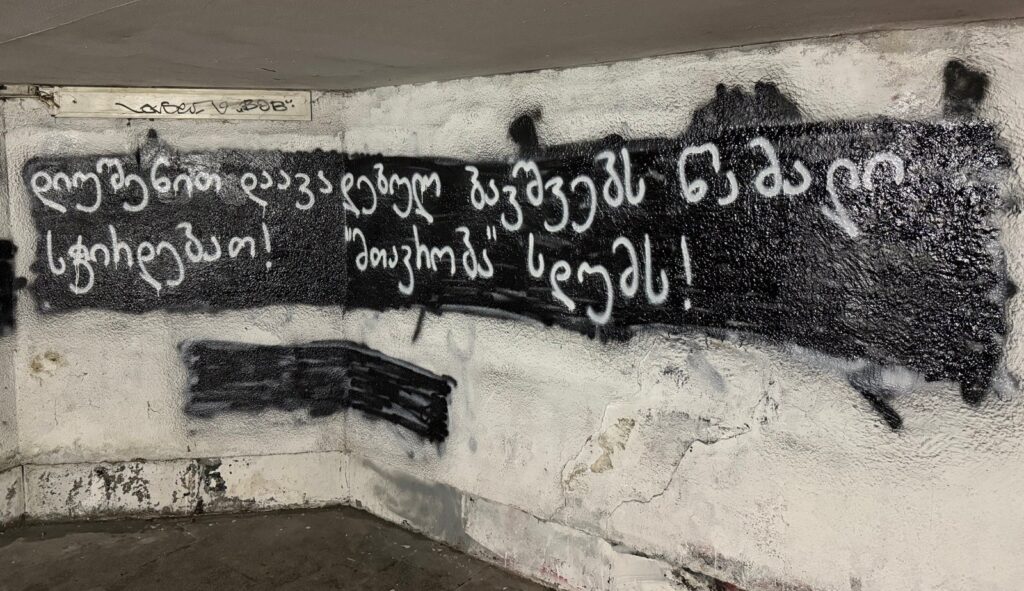
For a year, parents of children with a rare and severe genetic condition — Duchenne muscular dystrophy — have been urging the Georgian authorities to allow the import of expensive medications.
Duchenne muscular dystrophy (DMD) is a serious genetic disorder that can be life-threatening. The average life expectancy with the condition is around 20 years. However, modern treatments and new drugs can extend patients’ lives to between 30 and 40 years.
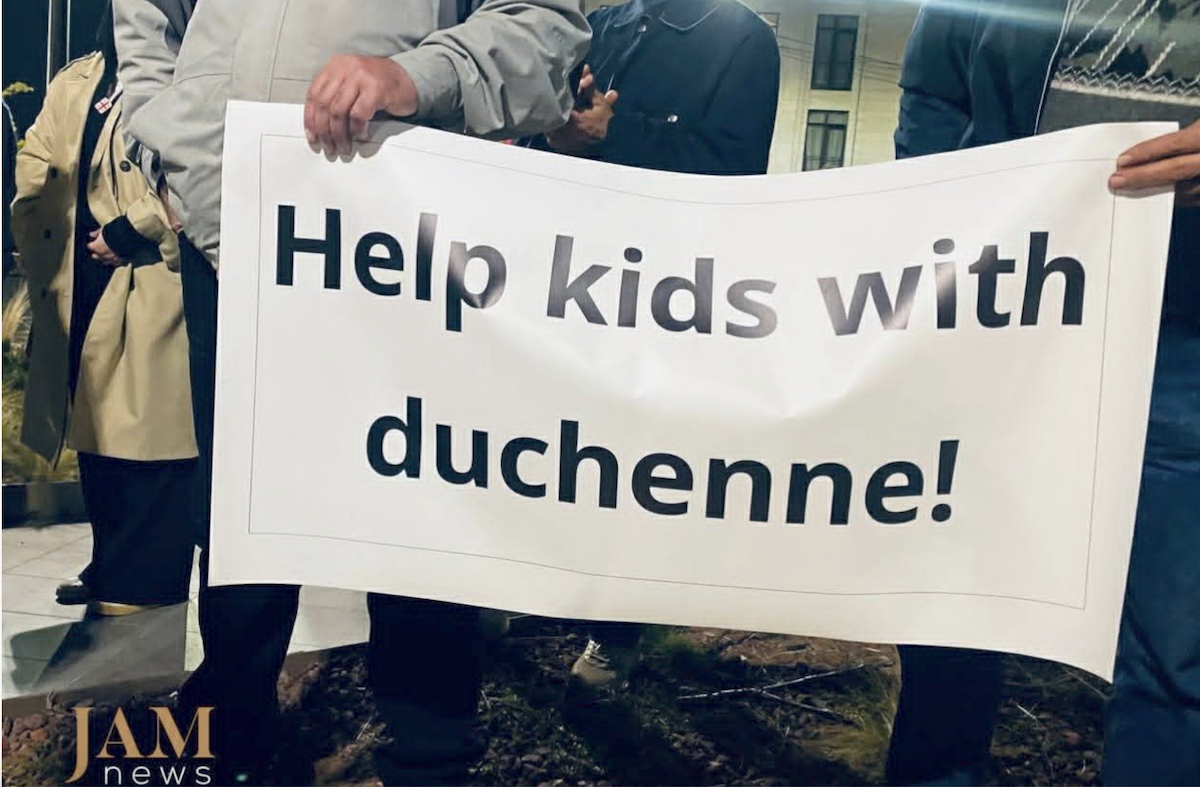
Medications already approved and used in the United States and many European countries come at a very high cost. In Georgia, no family can afford them, even if they sell all their property and rely on help from relatives.
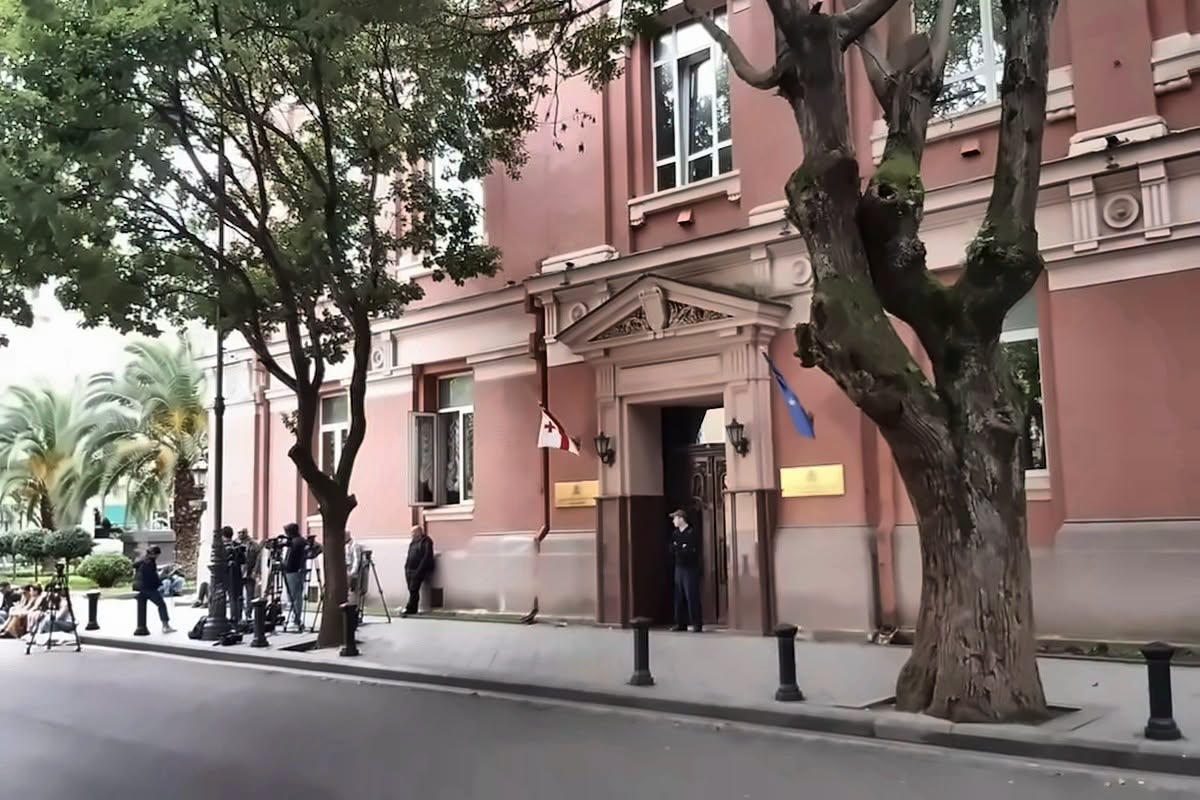
Over the past three months, parents of children with DMD have escalated their campaign to protests. Despite holding nine meetings with the health minister following large rallies, they have made no progress. They are now seeking a meeting with Prime Minister Irakli Kobakhidze, but say he has avoided them, with a police cordon set up outside the government administration building keeping parents and their children at a distance.
Meanwhile, time is working against the children.
In the past year, since parents began their campaign, three teenagers have died. The most recent case was 17-year-old Avtandil, who was buried on 3 March. A week before his death, his mother had been protesting.
This is the second time in three years that parents in Georgia have had to take to the streets to secure treatment for children with rare diseases. In 2023, parents of children with achondroplasia staged a similar campaign. After months of protests and overnight stays outside the government administration, they eventually achieved their goal.
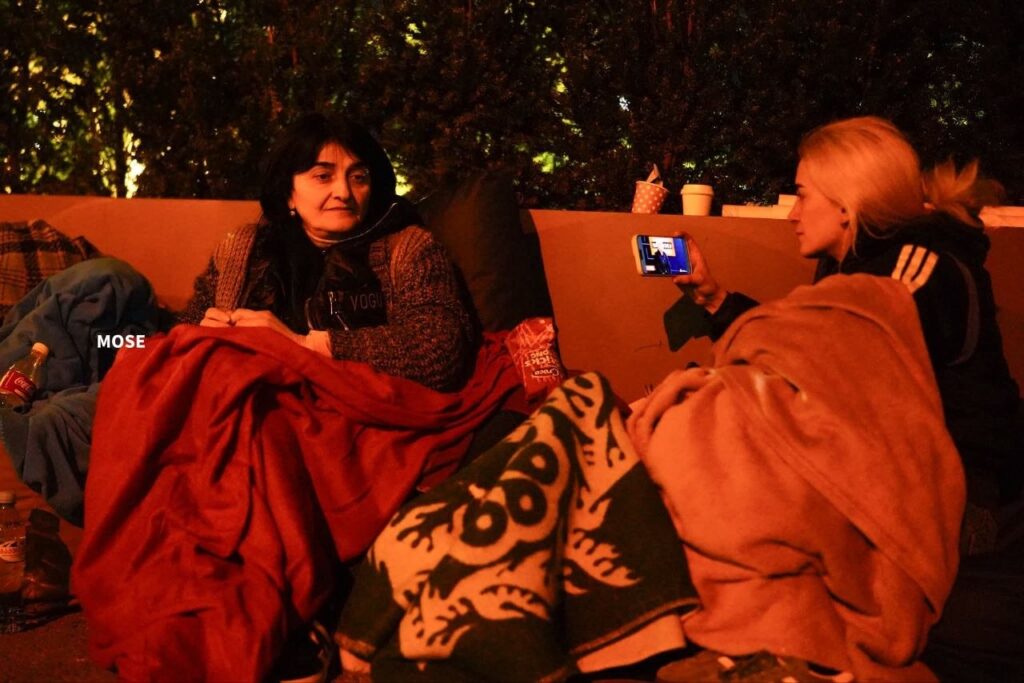
Now, parents of children with DMD hope their efforts will also succeed. On 20 April, they brought blankets and beanbags to the government building and, despite resistance from the authorities, began an open-ended protest.

Nikoloz
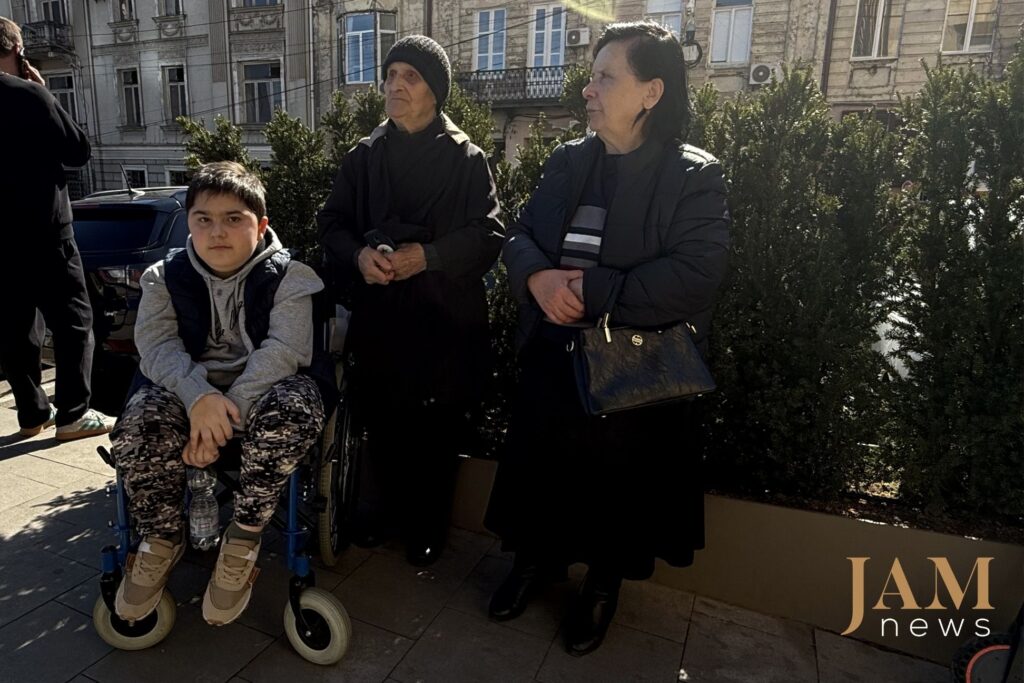
Thirteen-year-old Nikoloz Tsikarishvili sits in a wheelchair as he and his grandmother shelter from the spring sun in the shade of the government administration building.
“I sleep next to my grandson and wake up ten times a night to check if he is okay,” says 85-year-old Tsisana Tepnadze, trying to speak about Nikoloz’s illness without him hearing.

Nikoloz was about four years old when his mother, Nana Dabrundashvili, first noticed signs of the disease. By then, he was already attending kindergarten. When she came to pick him up, she saw that while other children would run down the stairs, Nikoloz struggled even to walk and had to hold on to the handrail.
Nana grew suspicious and decided to have him checked. She was already aware of the condition — a few years earlier, it had been diagnosed in her nephew, Luka.
Luka is now 18. His first symptoms of Duchenne muscular dystrophy also appeared at around the age of four. At the time, almost no one in Georgia knew about the disease.
Fourteen years ago, Nana’s sister took Luka to multiple doctors, but no one could identify the cause until a neurologist suggested a genetic test.
“The test was done in Georgia, and the results were sent abroad — to Moscow, if I remember correctly — and that’s where the diagnosis came from. Until then, we had never even heard of this disease. We looked into our entire family history, but no one had these symptoms. Then a few years later, my son was born — and how could we have imagined he would receive the same diagnosis,” Nana says.
Based on her sister’s experience, Nana knew where to begin:
“Creatine kinase is the first test you do. When it shows very high levels, there is already strong suspicion of this disease. Then we contacted the same geneticist who had helped us with Luka, and he guided us through the same process.”
Despite Luka’s case, Nikoloz’s diagnosis still came as a shock:
“It felt like a thunderbolt. Everything around you goes dark and you notice nothing. You cry day and night. You don’t know what to do. You don’t know who could support you. Doctors know very little, and there is no information online.”
Once the initial shock fades, it gives way to an endless phase of searching, experimenting and going from one specialist to another.
“You go everywhere, hoping someone might point you in the right direction. I took him to so many places. We must have seen every neurologist. We even went to a herbal practitioner who prescribed his own remedies. I suppose we thought it couldn’t make things worse.”
What is Duchenne muscular dystrophy (DMD)?
Duchenne muscular dystrophy (DMD) is a severe genetic disorder that affects muscle tissue and, over time, leads to breathing difficulties.
The first symptoms usually appear between the ages of two and five. A child may start walking later than expected, show weakness in the legs and lower back, tire quickly and fall frequently. Climbing stairs becomes difficult.
As the disease progresses, the condition worsens. By the age of nine or ten, children often lose the ability to walk independently and begin using a wheelchair.
Over time, the disease begins to affect internal organs. As the relevant muscles weaken, breathing problems develop, lung infections become more frequent, and the condition can progress to respiratory failure.
The heart muscle is also affected. This can lead to irregular heart rhythms and heart failure (cardiomyopathy). At this stage, the disease becomes life-threatening.
Duchenne muscular dystrophy is caused by a mutation linked to the X chromosome. It primarily affects boys — around one in every 3,000 to 5,000 newborns. Each year, about 20,000 boys worldwide are diagnosed with the condition.
In Georgia, up to 100 boys are currently living with this diagnosis. Most of them are minors.
Irakli
Irakli Tsulaia is 13 years old. He also uses a wheelchair. A green velvet baseball cap slips down over his eyes.
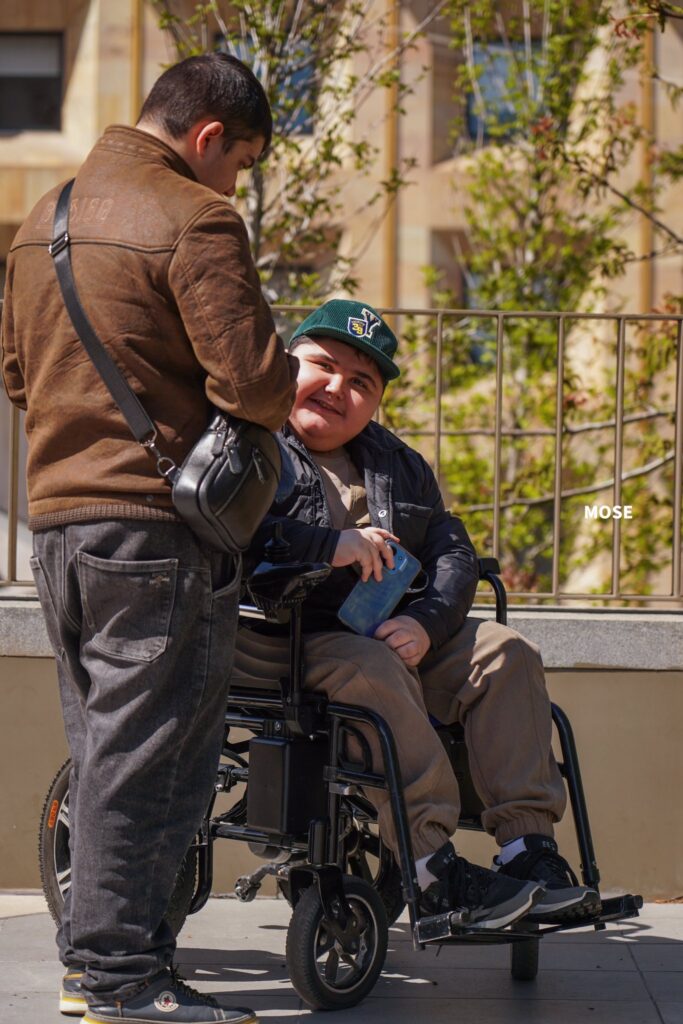
While his mother, Keti Ekhvaya, tells us Irakli’s story, he circles the square in his wheelchair in front of the government administration building. From time to time, he wheels over to us, trying to join the conversation. Whenever he approaches, Keti falls silent.
“I lived in France, and I didn’t like it there. I don’t like Tbilisi either. I prefer my Gali,” Irakli tells me, before switching to Megrelian.
When I say I don’t understand Megrelian, he laughs and tries to impress — pressing a button on his wheelchair, spinning around and speeding back towards the bushes in the square.
Irakli’s family came from the Gali district of Abkhazia. They have been living in Tbilisi since he was diagnosed with Duchenne muscular dystrophy. But even before that, they had already been through a great deal.
Irakli was about four or five years old when his mother first noticed unusual symptoms. At the time, Keti herself was very young — just 25.
She first became alarmed when Irakli could not climb the stairs without help. Kindergarten staff had also noticed he was different from other children.
In Gali, there was nowhere to turn, so they travelled to the nearby city of Kutaisi. But no one there could determine the cause. They were then referred to a paediatric clinic in Tbilisi, where Irakli was finally diagnosed.
“Not every doctor knows how to deliver a diagnosis. They told me in such a blunt way that I nearly collapsed on the spot. The doctor said plainly: it ends fatally, and it mostly affects boys. By that time, I already had a second son — just five months old. You can imagine what I went through.”
This was in 2019. At first, they travelled to Tbilisi every three months for check-ups, paying large sums of money. But Irakli’s condition did not improve, and in 2021 the family decided to go to France, where they knew treatment for the disease was available.
“We went to a clinic where one of the professors is involved in research on this condition. We waited seven months for an appointment. By the time we finally saw him, Irakli had already stopped walking and was using a wheelchair.”
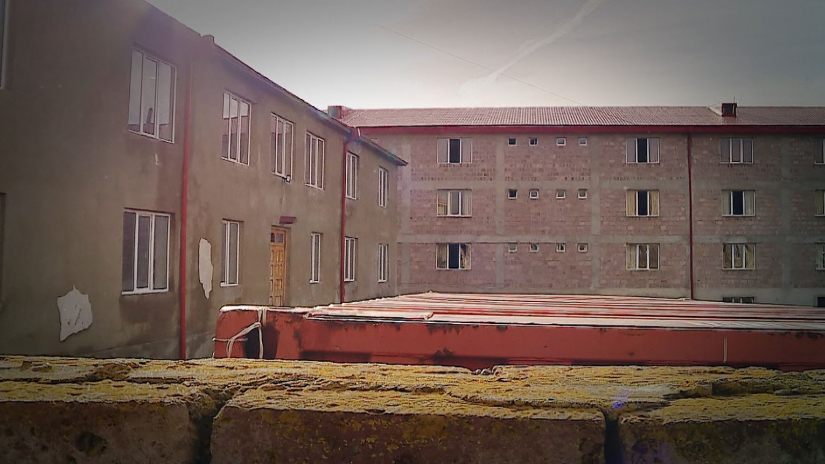
For two years in France, Irakli underwent kinesiotherapy.
“But this is also available in Georgia. French doctors told us: in your own country, you can demand that the state provide the medication and treat your child there. So we went back. We returned in a state of severe stress, psychologically shattered.”
In Gali, Irakli would not have been able to receive even the minimal treatment available in Georgia. So a month after returning, the family moved to Tbilisi.
“We started life from scratch for the third time, against the backdrop of a fatal diagnosis. Do you know what that means? You cannot celebrate your child’s birthday, because you understand what each added year of his life represents,” Keti says.
How is Duchenne muscular dystrophy treated?
There is currently no cure for Duchenne muscular dystrophy, but the condition can be managed. Modern approaches improve patients’ quality of life and extend life expectancy.
Treatment combines both medical and non-medical approaches. Medical treatment includes molecular and gene therapies, while non-medical care mainly consists of physiotherapy and rehabilitation.
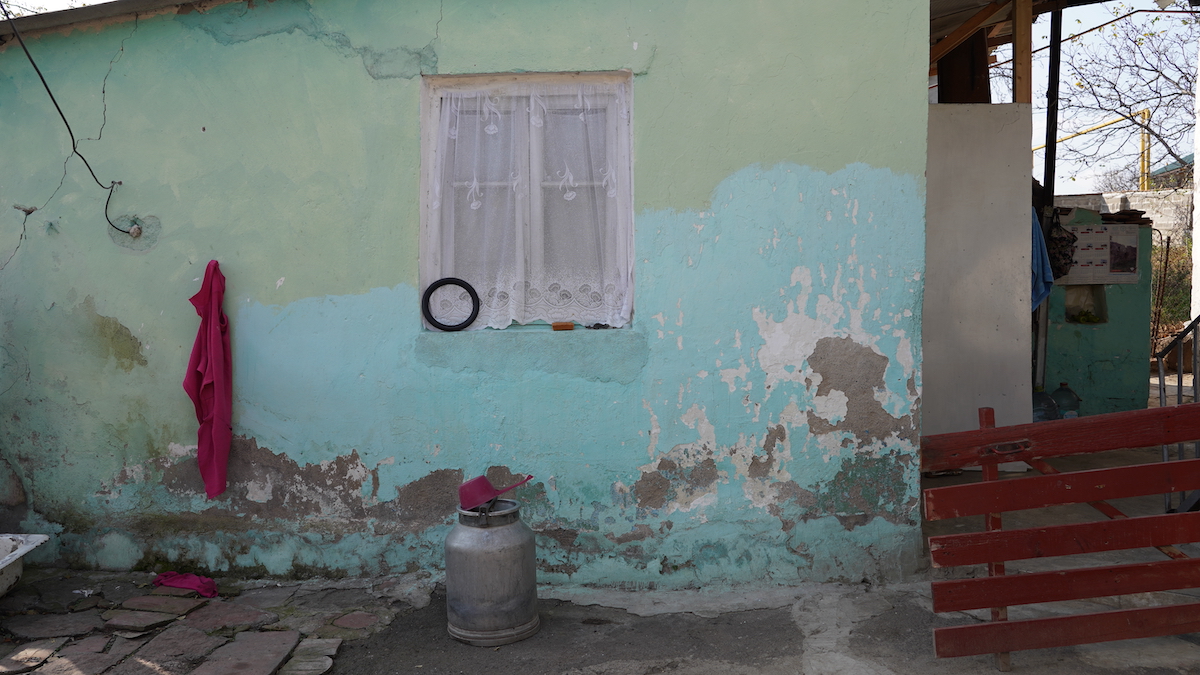
It is crucial that care is coordinated by a multidisciplinary team of specialists — including a neurologist, cardiologist, orthopaedist, physiotherapist and even a psychologist.
Several treatments are used worldwide for this condition. These include newer-generation drugs such as Elevidys, Givinostat, Vamorolone, as well as exon-skipping therapy — all of which have been approved in recent years and are now used in the United States and several European countries.
In Georgia, these medications are not yet available. Treatment for the condition only began in 2023 and is limited to hormone therapy — using prednisolone and deflazacort — along with a rehabilitation programme of 12 to 15 sessions per month. A multidisciplinary care system has yet to be established.
Introducing modern drugs and creating a multidisciplinary care team are the two main demands that parents of children with Duchenne muscular dystrophy are making of the Georgian government.
The parents’ association and their campaign
A year ago, in January 2025, parents of children with Duchenne muscular dystrophy founded the organisation “Together Against Duchenne Muscular Dystrophy”.
Before that, they had been finding one another on social media and gradually began speaking publicly about the condition.
“In the past, people simply died from this disease. No one knew anything about it or even understood the cause,” says Nana, Nikoloz’s mother.
The parents launched their campaign on several fronts at once. As noted, their main demands are for the import of essential medications into Georgia and the creation of a multidisciplinary team of specialists. These demands are repeated at all of their protests.

Thanks to protests and public attention, the parents secured meetings with Health Minister Mikheil Sarjveladze — nine in total. But so far, there has been no progress. They have not even managed to achieve the creation of a multidisciplinary team of doctors.
“This doesn’t require millions. It just needs some funding from the budget to pay these doctors and cover examinations for children. Right now, we pay for everything ourselves, going from one specialist to another, and a single consultation costs 120–130 lari [$43–47],” Nana says.
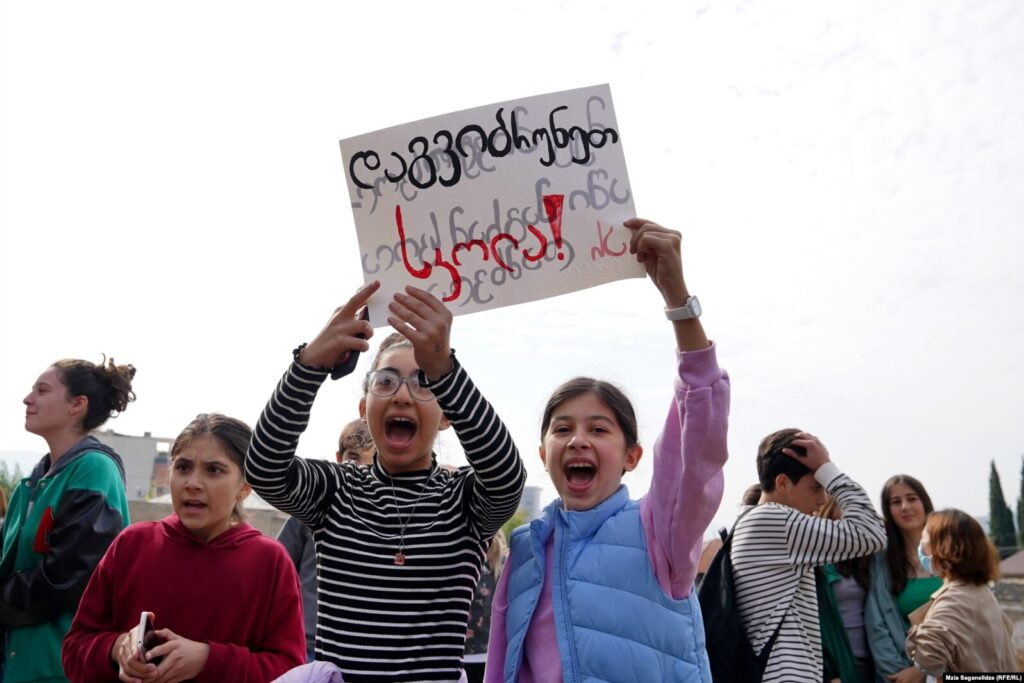
At official meetings, the minister tells parents that the drugs have not yet been approved in all countries and that further research is needed.
“He says, ‘What if we import the drug and something happens to a child?’ That’s how he tries to justify it. But do our children’s lives matter more to the minister than to us?” Keti says.
In reality, parents believe the main issue is cost. The medications are expensive. For example, Elevidys, a key treatment used to slow the disease, costs around $3m per child — although it requires only a single, one-time dose. Another drug, Givinostat, costs about $600,000 and is taken as a suspension.
“The minister told me personally they don’t have that kind of money,” says Nikoloz’s grandmother.
“At the very least, they could fund medical examinations. A full check-up with all specialists twice a year would cost around 5,000 lari [$1,815] per child,” Nana adds.
The parents’ association has, however, achieved some small victories. As a result of their campaign, the state has formally recognised these children and granted them disability status immediately after diagnosis.
Before this legal change, Nana says she had to convene a medical panel four times, and Nikoloz was not granted the status until he could no longer walk.
“In the end, I was carrying my child up the stairs in my arms, and even then the doctor hesitated. Only after we made a scene was he finally granted the status. His grandmother and I fought with everything we had,” she says.
The status entitles children to a monthly state allowance of 470 lari [$170] — a modest sum compared with their needs. Parents say it covers just two or three doctor’s consultations.
Beka: “I am already too old for treatment”
“I am already too old for treatment. I can no longer take the drugs because I am 21. Almost all my muscles are weakened. I can only sit — nothing more,” says Beka Shonia in a video recorded at home in support of children with Duchenne muscular dystrophy. He has the same diagnosis.
Beka speaks slowly and with difficulty. In the video, a tracheostomy tube can be seen in his throat, helping him to breathe.
“I am always at home. I cannot go outside because I am on mechanical ventilation,” he says.
Beka explains that he has not left his home for four years. Five years ago, he was hospitalised with bilateral pneumonia, and he has relied on assisted breathing ever since.
“I want the medication to be brought in time for children with Duchenne muscular dystrophy. Every minute, every second matters for us — so that we can enjoy life. We have very little time.”
The video spread widely on the same day that parents gathered outside the government administration building were met by a police cordon. Once again, none of them were allowed to meet the prime minister.

How much would treatment cost the state?
Former health minister Andria Urushadze says that, with effective management, treating Duchenne muscular dystrophy would cost the state around 30–35 million lari ($11–13m).
According to him, this amounts to just 1.58% of Georgia’s total healthcare programme budget.
He explains that when governments procure medicines from major international manufacturers, they typically pay below market price. Discounts of around 35–40% are often applied for countries like Georgia.
“These costs could be reduced even further if we manage to organise regional procurement. If we join with neighbouring countries and purchase in larger volumes, manufacturers will lower the price even more,” Urushadze says.
He adds that in 2026, Georgia’s healthcare budget increased by 200 million lari ($72.56m), and allocating just 17.5% of that increase would be enough to provide comprehensive treatment for all patients with Duchenne muscular dystrophy in the country.
Government position and campaign against parents
Since 20 April, after parents announced an open-ended protest, the ruling party Georgian Dream has launched an information campaign on social media and in pro-government media against drugs used to treat Duchenne muscular dystrophy.
According to the organisation International Society for Fair Elections and Democracy (ISFED), the campaign involves coordinated efforts by pro-government outlets, fake media platforms, social media pages, self-described experts, and party representatives. They claim the drugs are dangerous and cite alleged cases of patient deaths following their use.
On the morning of 21 April, after parents spent a rainy night outside the government administration building, Health Minister Mikheil Sarjveladze gave a briefing and reiterated the same message. He said the drugs parents are demanding are unsafe and do not extend life:
“The function of these medicines is not to cure, not to save lives, and not even to prolong life. Their function is only — and even that is questionable — to delay the need for a wheelchair,” he said.
He added that no drug currently exists that can fully cure Duchenne muscular dystrophy:
“There are only medications that aim to slow the progression of the disease, potentially delaying the need for a wheelchair by one to three years. At the same time, I sincerely hope that such a drug will be developed in the near future to ensure health for everyone.”
What will parents do next?
After the briefing, parents said the health minister had misrepresented the effectiveness of the drugs. They point to real-life examples — including children of Georgian emigrants — who have received the treatment and whose condition has improved.
They say they will not stop their campaign and plan to pursue legal avenues as well. Tamar Gabodze, head of Partnership for Human Rights (PHR), says they will use all legal mechanisms to ensure that children receive not only medication, but also the necessary services and care:
“These children need more than medicine. They require a range of rehabilitation services, including psychological support. Their parents need support too. They should feel the state’s care. We will pursue all of this through legal means.”
“I will die soon, and while I am alive, I want to do everything to save Nikoloz. I feel uncomfortable, even ashamed, repeating the same thing. Yes, we all know this is a disease of the century, but that does not mean the state should do nothing. There are no benefits, nothing has been taken to heart,” says Tsisana, holding tightly to her grandson’s wheelchair.
“I want not to feel ashamed in front of my son,” says Keti.
The parents say they will not give up. On the evening of 20 April, after another protest outside the government administration building, they refused to go home and began an open-ended protest.
Under new restrictive legislation in Georgia, protests cannot be held without official permission. The Interior Ministry has refused to allow the parents to hold round-the-clock demonstrations or set up tents in the square outside the government offices, but they say they will continue regardless.
The night of 20 April was the first the parents of children with Duchenne muscular dystrophy spent outside the government administration building in Tbilisi. They slept on wooden benches, as police did not allow them to bring in beanbags or tents. It rained throughout the night.
On the morning of 21 April, Georgia’s public defender (ombudsman) called on law enforcement to ensure the right to peaceful assembly for those gathered outside the government administration building.
Children with Duchenne muscular dystrophy in Georgia