From Republic Day to Independence Day: history of 28 May in Azerbaijan






Independence Day in Azerbaijan
Today, 28 May, officially observed in Azerbaijan as Independence Day, symbolises both the legacy of the 1918 republic and the restoration of independence in 1991.
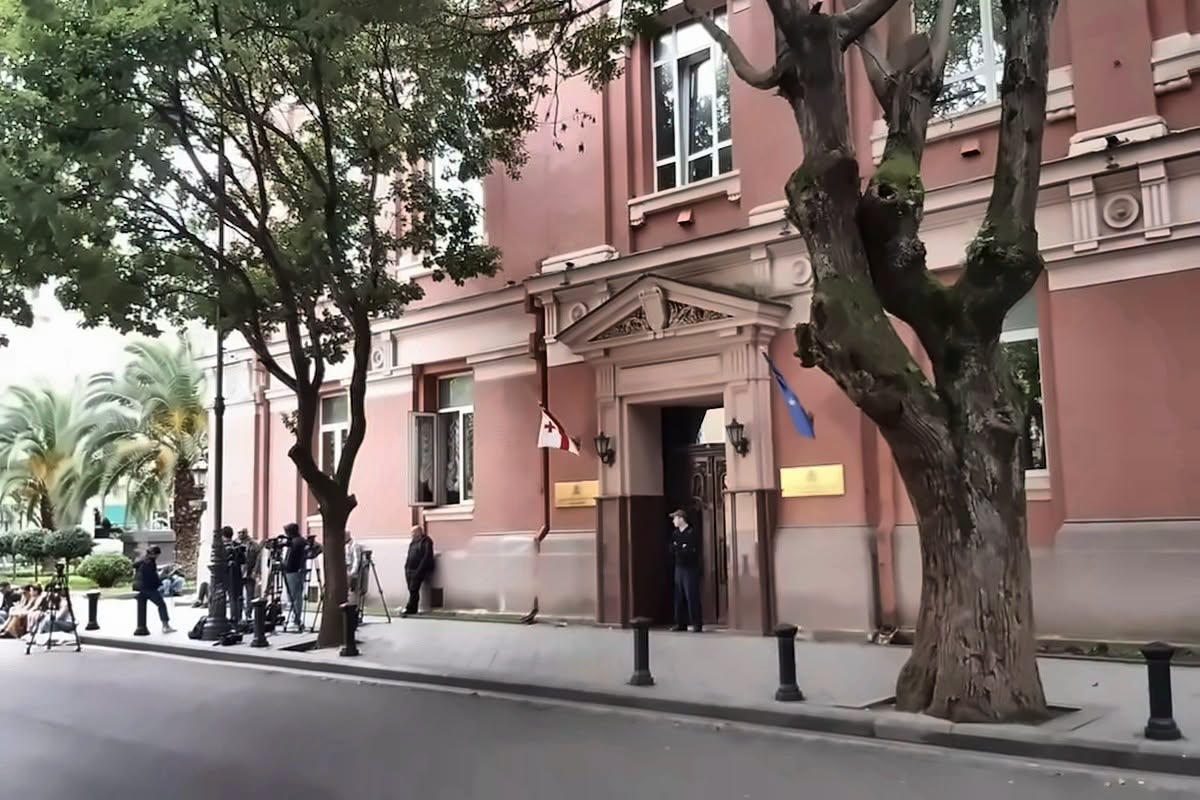
The history of 28 May dates back to 1918, when the Azerbaijani National Council adopted the Declaration of Independence in Tbilisi.
On that day, the Azerbaijan Democratic Republic was proclaimed. Official sources describe it as the first parliamentary, secular and democratic republic in the Muslim East.
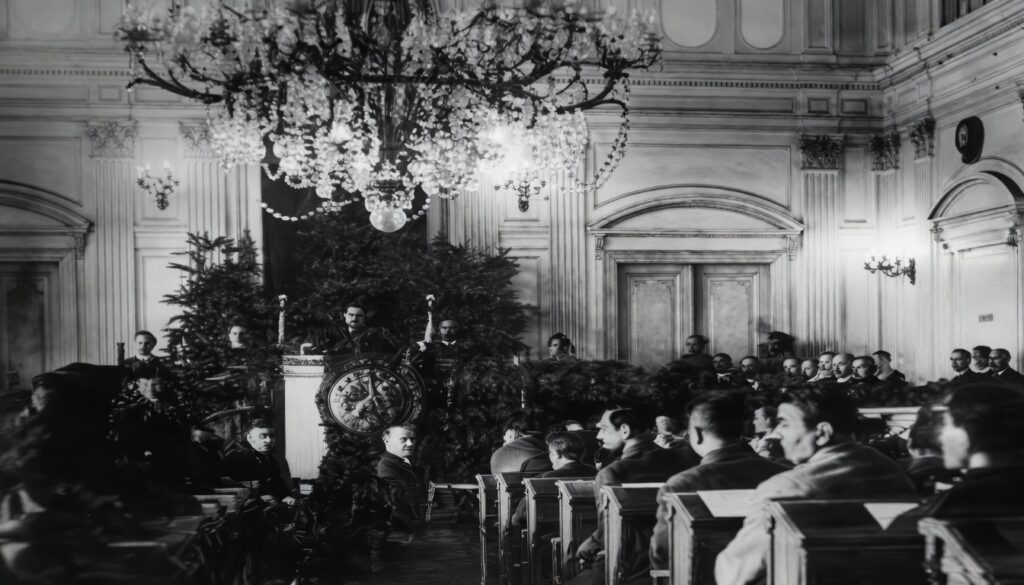
The National Council was headed by Mammad Amin Rasulzade.
The council tasked Fatali Khan Khoyski with forming the first provisional government.
Alimardan bey Topchubashov is widely regarded as one of the key figures of parliamentary diplomacy, while Hasan bey Aghayev played a leading role in parliamentary leadership. Nasib bey Yusifbeyli is closely associated with the republic’s state-building and education policies.
Rasulzade’s phrase, “Once raised, the flag will never fall!”, has also become one of the most recognisable political symbols associated with the memory of independence.
Twenty-three months of the republic
The Azerbaijan Democratic Republic existed for just 23 months. Despite its short lifespan, it accumulated significant experience in state-building.
In November 1918, lawmakers adopted a law establishing a 120-seat parliament. The parliament, which opened in December, included representatives of various political parties and ethnic groups.
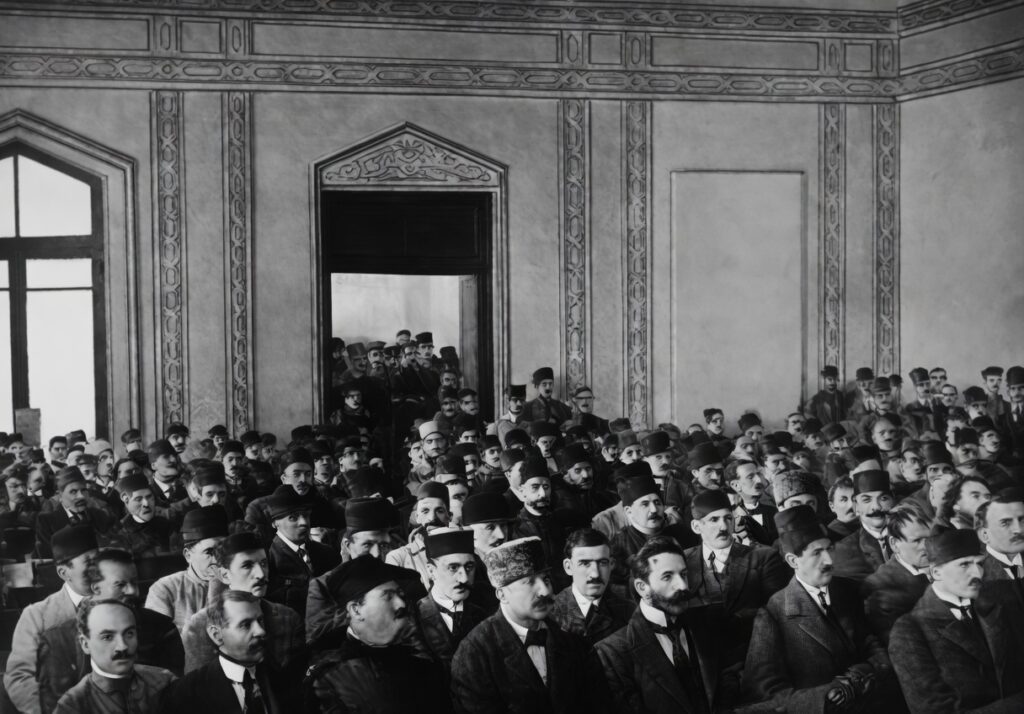
The Declaration of Independence promised legal and political guarantees to citizens regardless of nationality, religion, social background or gender. The database of the Inter-Parliamentary Union notes that Azerbaijan became the first Muslim-majority country to grant women the right to vote and stand for election.
Official documents also list the creation of a national army, the founding of the country’s first university, the expansion of education and the establishment of a national education system among the republic’s key achievements. Although the arrival of the Bolsheviks on 28 April 1920 brought this period to an end, the idea of state independence remained alive in the political consciousness.

Name change and the debate it sparked
Since 1990, Azerbaijan had marked 28 May as Republic Day.
However, the Law on Independence Day, adopted on 15 October 2021, renamed 28 May as Independence Day, while 18 October became Restoration of Independence Day.
The official justification for the law states that Azerbaijan proclaimed its independence in 1918 and restored it in 1991 as the legal successor to the Azerbaijan Democratic Republic.
In its explanation, the Milli Majlis said the change aimed to “more accurately reflect the essence and content of the historical periods”.
However, this legal clarification sparked a broader political and symbolic debate.
BBC News Azerbaijani also explored what the distinction means in everyday life by asking the question: “Independence Day or Republic Day — does the difference matter to the people of Baku?”
Under the new system, 28 May retained its status as a public holiday, while 18 October remained a working day.
At the time, Arif Hajili, then chairman of the Musavat Party, described the move as an attempt to reduce the significance of 18 October and the popular movement that led to it.

The government’s statehood narrative
The government of Ilham Aliyev seeks to demonstrate respect for the legacy of the Azerbaijan Democratic Republic. To mark the ADR’s centenary in 2018, authorities organised large-scale state events, and official speeches referred to the year as the “Year of the Azerbaijan Democratic Republic”.
That same year, the Republican Alternative (ReAl) movement planned a march in central Baku on 28 May. Organisers dedicated the event to the republic’s centenary and the preservation of its historical legacy. Although the march remained peaceful, police stopped it, citing a lack of official authorisation.
Police detained several activists. Azer Gasimli, one of the main organisers and ReAl’s leader at the time, received 30 days of administrative detention. Authorities also sentenced four other ReAl activists to between 10 and 30 days on similar charges, including resisting police and disobeying law enforcement officers. In total, police summoned dozens of participants for questioning and warned them against taking part in similar events in the future.
At the end of 2023, Ilham Aliyev signed a decree marking the 140th anniversary of Mammad Amin Rasulzade. The document describes Rasulzade as one of the founders of the ADR, chairman of the National Council and a figure who played a significant role in advancing the ideal of independence.
At the same time, the centre of gravity in this historical narrative clearly shifts to the period after 1993. The “History” section of the presidential website portrays the years from 1991 to 1993 as a period of crisis, internal conflict and weak governance, while presenting 15 June 1993 as National Salvation Day.
Official materials explicitly state that Heydar Aliyev preserved Azerbaijan’s state independence through a “saving mission”. The same materials describe him as the “architect and founder of the modern independent Azerbaijani state”.
Contradictions and competing approaches
The deepest contradiction lies in the gap between the collective, parliamentary and relatively pluralistic model of the Azerbaijan Democratic Republic and the strong presidential system of modern Azerbaijan. The ADR parliament included eleven different factions and groups, reserved seats for minorities and functioned as the highest state authority. Under the current Constitution, executive power rests with the president, who appoints and dismisses the prime minister, ministers and vice-presidents.
In 2016, the Venice Commission noted that constitutional amendments had significantly strengthened presidential powers and further weakened parliament. In its 2025 report, Freedom House said power remained concentrated in the hands of Ilham Aliyev and his family, while pressure had weakened the formal opposition over many years. Official Baku, however, presents this model as a guarantor of stability, sovereignty and effective governance.
This leads to a second contradiction: the coexistence within a single state narrative of the collective legacy of Mammad Amin Rasulzade and the founders of the ADR, alongside the image of Heydar Aliyev as the state’s “founder”, “saviour” and “architect”. On the one hand, the state celebrates Rasulzade’s anniversary and marks the ADR’s centenary. On the other, official narratives place Heydar Aliyev at the centre as the principal creator of the modern Azerbaijani state.
Scholars of memory politics often describe this phenomenon as a form of selective remembrance. One analytical paper prepared for Heinrich Böll Foundation argues that independent Azerbaijan’s memory policy rests on two pillars: commemoration of the “First Republic” and the personality cult surrounding Heydar Aliyev. Pro-government discourse also attributes special titles to him, including “National Leader” and “Great Leader”.
In this context, some view the renaming of 28 May as a historical clarification, while others see it as another step away from the history of collective state-building and towards a personalised statehood narrative centred on a single leader.
Today, the political legacy of the ADR, and particularly the tradition of the Musavat Party, survives largely at a symbolic and historical level. Whether its liberal-democratic values remain compatible with Azerbaijan’s current political reality is an open question.
Independence Day in Azerbaijan