

'Managing threat of war': Pashinyan on Grigoryan-Hajiyev meeting






Grigoryan-Hajiyev meeting in Dilijan
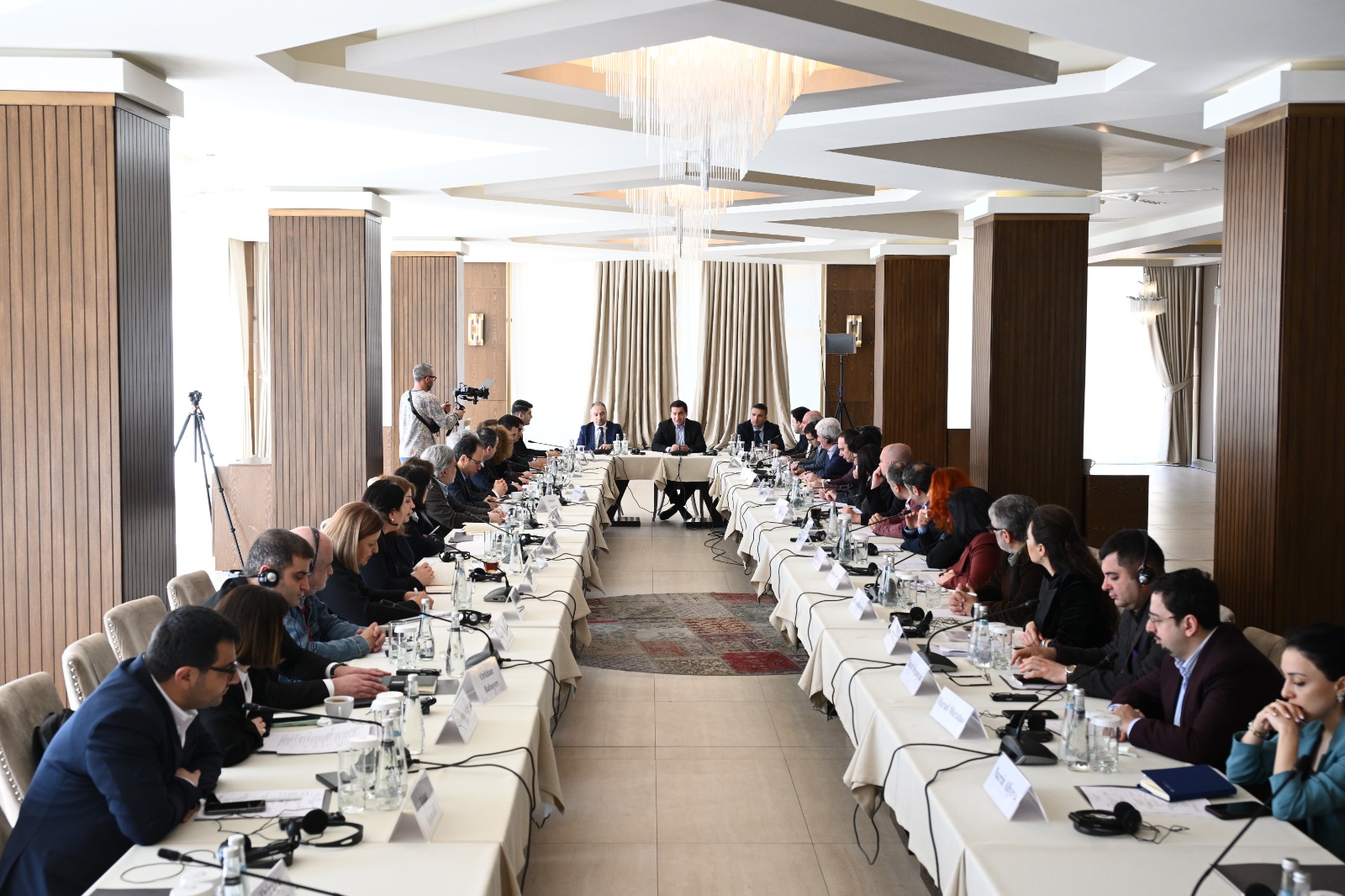
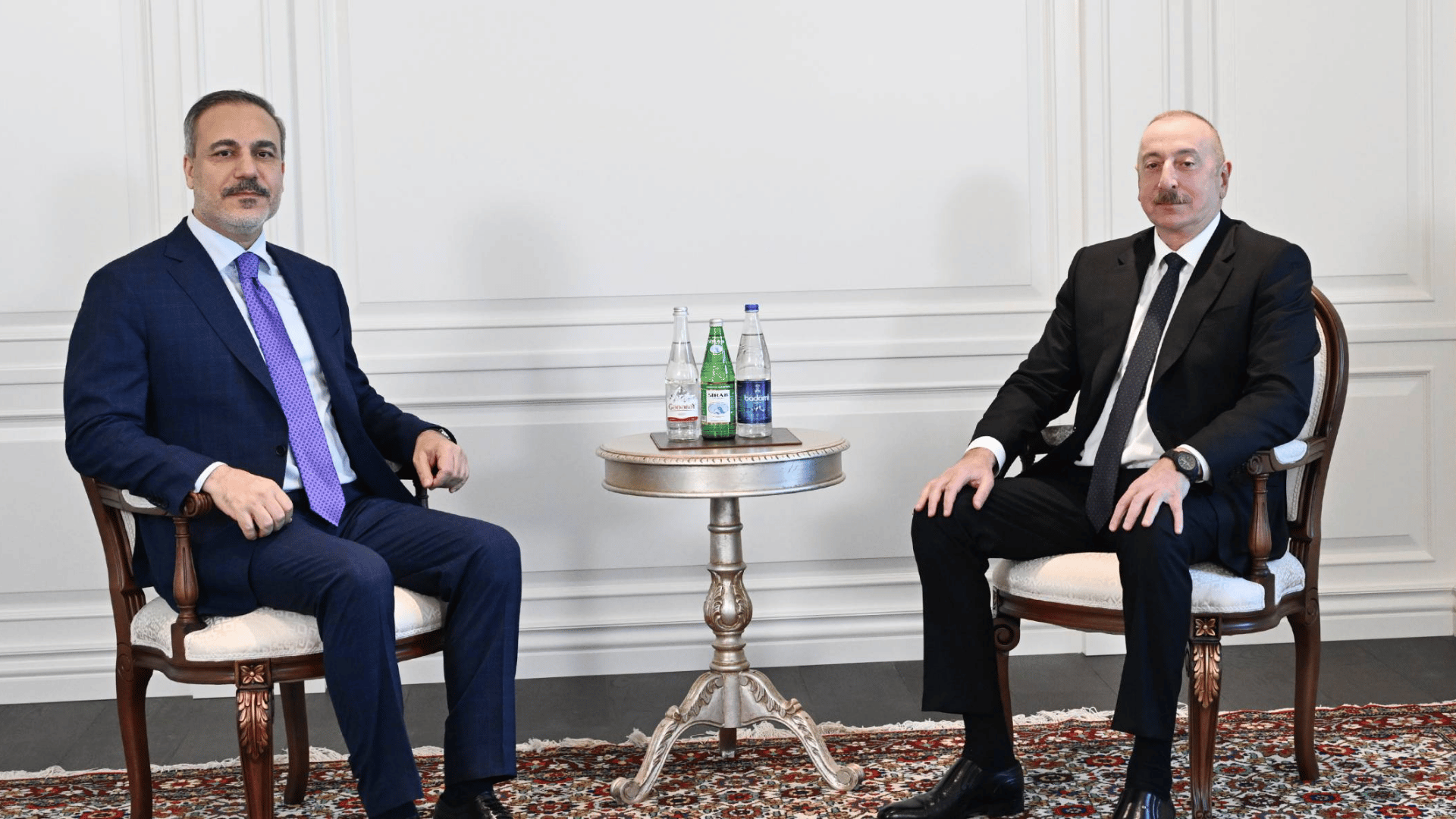
The Grigoryan-Hajiyev meeting, which took place in Dilijan on 14 June, continues to attract attention. The previous day, MPs asked Prime Minister Nikol Pashinyan in parliament to provide details of the meeting between Armenia‘s Security Council secretary and the Azerbaijani president’s aide.
Interest in the meeting was sparked not only by the fact that it was the first bilateral meeting at this level to be held on Armenian territory. Many also noted that the visit took place on the day the election results were announced. These were critically important elections that would determine Armenia’s course for the next five years. Pashinyan’s party won a majority and will form the government on its own.
Responding to MPs, the prime minister said that the meeting had been organised for the purpose of “managing the threat of war”.
For a long time, Pashinyan has repeatedly stated that peace has been established between Armenia and Azerbaijan. However, he said that in recent days the threat of war had been created by political forces that distributed bribes during the election campaign. He was referring to the Armenia and Strong Armenia alliances, as well as the Prosperous Armenia party. The ruling majority refers to them as a “three-headed party of war”, arguing that the leaders of all three forces advocate a “revision of peace”, which could lead to a new escalation.
Speaking from the parliamentary rostrum, the prime minister said that some of those outside Armenia may have questioned the election results: “In Armenia, 500,000 citizens [those who voted for these three forces] believe that the peace agreement should be revised and the Karabakh movement continued.” Pashinyan believes that such a perception could have seriously aggravated the military-political situation.
“But we know the truth. We know that there are no such people. Electoral bribes were distributed with the help of external forces interested in fuelling conflict in the region. And yes, they created a real threat of war through voter bribery,” the prime minister said.
Pashinyan was also questioned about the Grigoryan-Hajiyev meeting during his traditional weekly briefing today.
This time, he told journalists that the risk of escalation had been created by the political agenda of opposition politicians who, throughout the election campaign, spoke about the “return of 300,000 Azerbaijanis“.
“Those who raised this issue are seeking to escalate the regional situation. The fact is that they are puppets in the hands of those who want to aggravate it. And we worked to ensure that the situation did not escalate, and it did not,” he stressed.
Summing up his remarks, Pashinyan repeated his well-known statement: “There will be no war; there will be peace.”
- Final election results in Armenia: Pashinyan’s party wins majority
- Georgian experts weigh impact of Armenian election on region
- ‘Russia’s Plan B has been activated’: analysis of Armenia’s preliminary election results
‘We did not explain ourselves to anyone’ – Pashinyan on discussions of domestic issues with Baku
Journalists asked whether discussing Armenia’s domestic political affairs with Baku was “humiliating”. The question arose after the prime minister said in parliament the previous day that, during the Grigoryan-Hajiyev meeting, Armenia’s Security Council Secretary Armen Grigoryan had presented the election results to Azerbaijani presidential aide Hikmet Hajiyev.
Responding to journalists, Pashinyan disclosed new details about the meeting. First, he stressed that he had personally instructed Armenia’s Security Council secretary to contact his Azerbaijani counterpart and determine whether there was a need for a meeting. He explained the initiative by saying that expert circles in both countries had observed “certain trends” pointing to a possible deterioration of the situation.
“And we, in carrying out our duties, are engaged in managing the situation. We did not explain ourselves to anyone. Diplomatic work with countries around the world consists precisely of explaining positions to one another,” he said.
According to Pashinyan, it is important that these positions are communicated directly by representatives of the two countries, rather than conveyed by third parties, through the media or by other means.
He insisted that Armenia does not discuss its domestic political affairs with anyone.
“At the same time, we shared our political conclusions from the elections and our post-election strategy with all our international partners without exception. This is normal practice. You ask whether this is humiliating. As I translate your words now, the question could sound like this: ‘Is it humiliating to be a state?’“
The prime minister told journalists that all countries maintain constant contact with their neighbours and international partners, discussing their plans and issues of concern.
Returning to the Grigoryan-Hajiyev meeting, Pashinyan added that dozens of issues had been discussed, including management of the situation on the border. He said the issue of Armenian detainees held in Baku had also been raised.
Official statement on Grigoryan-Hajiyev meeting
Azerbaijani presidential aide Hikmet Hajiyev and the delegation accompanying him arrived in Armenia via a delimited and demarcated section of the land border.
According to the official statement, a working meeting between the sides took place in the town of Dilijan on 14 June. During the meeting, the participants:
- discussed issues related to the Armenia-Azerbaijan peace agenda;
- stressed the importance of continuing bilateral dialogue in the context of efforts aimed at strengthening long-term peace and stability in the region;
- exchanged views on measures to build mutual trust between the civil societies of the two countries.
“Armen Grigoryan and Hikmet Hajiyev decided to maintain working-level contacts confirming that the next meeting will take place in Azerbaijan,” the press release said.