Top stories in Azerbaijan, Armenia, and Georgia from 17-21 August, 2026
 Live
Live




-
Friday, August 21, Armenia. Pashinyan referred to Tigranashen by its Azerbaijani name Kyarki, sparking heated debate over the sensitive Armenia-Azerbaijan border delimitation process
-
Friday, August 21, Georgia. Imprisoned former Prime Minister Garibashvili accuses government of provocations, deception and coercion to confess to corruption
-
Friday, August 21, Azerbaijan. 40% growth in tourism sector by 2030 under new state programme for 2026–2030
-
Thursday, August 20, Azerbaijan. Ahmadbeyli–Fuzuli–Shusha highway project in Karabakh wins IRF Global award for “Innovative Methodology”
-
Thursday, August 20, Armenia. Anti-corruption cases against pro-Russian opposition figures
-
Thursday, August 20, Georgia. Transparency International-Georgia: “Developments around ex-PM Irakli Garibashvili’s revelations are linked to redistribution of influence within ruling party”
-
Wednesday, August 19, Armenia. US House delegation in Armenia, active talks on TRIPP and bilateral partnership
-
Wednesday, August 19, Azerbaijan. Azerbaijan has filed a lawsuit against CNN in a US federal court
-
Wednesday, August 19, Georgia. New statement by jailed former PM Irakli Garibashvili accusing Ivanishvili and vowing to “fight back”
-
Tuesday, August 18, Azerbiajan. Criminal case opened against three Russian journalists and political analysts over alleged calls for violence against Azerbaijan
-
Tuesday, August 18, Georgia. Imprisoned former PM Irakli Garibashvili accuses ruling party founder, oligarch Bidzina Ivanishvili, and government of blackmail
-
Tuesday, August 18, Armenia. Security Council Secretary Armen Grigoryan threatened to “crush the [pro-Russian] opposition” and mentioned former President Robert Kocharyan
-
Monday, August 17, Armenia. Armenian PM appoints graduates of leading global universities to senior government posts
-
Monday, 17 August, Georgia. Georgia’s opposition is demanding that the authorities explain the circumstances surrounding fuel deliveries to Abkhazia
-
Monday, 17 August, Azerbaijan. ILN: Restrictions on human rights and freedoms continue in Azerbaijan
-
Top stories in Azerbaijan, Armenia, and Georgia from 10-14 August, 2026

-
Friday, August 21, Armenia. Pashinyan referred to Tigranashen by its Azerbaijani name Kyarki, sparking heated debate over the sensitive Armenia-Azerbaijan border delimitation process
● New heated discussions have erupted in the media and on social networks over the sensitive process of delimiting the Armenia-Azerbaijan border. Prime Minister Nikol Pashinyan referred to the Almaty Declaration, a historic document adopted on December 21, 1991, which marked the dissolution of the Soviet Union and the establishment of the Commonwealth of Independent States (CIS), signed by Armenia, Azerbaijan and other former Soviet republics. The prime minister said that “on the maps referenced by the Almaty Declaration, the settlement of Artsvashen is recorded as part of Armenia, while the settlements of Kyarki, Baganis Ayrim, Barchudarli and Yukhari Askipara are not part of Armenia.” Parts of society criticised Pashinyan for using the Azerbaijani name Kyarki and referring to Tigranashen, currently controlled by Armenia, as not being Armenian territory.
● Russian billionaire and pro-Russian politician Samvel Karapetyan, who is under arrest in Armenia, criticised the prime minister’s statement. “Nikol Pashinyan will surrender Lori [a region bordering Georgia] as well, if he remains in power,” Karapetyan said.
● Artur Khachatryan, secretary of the parliamentary faction of the pro-Russian opposition Armenia bloc, also condemned Pashinyan’s statement. “Handing Tigranashen over to Azerbaijan would create a direct security threat and cut off key transport routes connecting central Armenia with the south. Tigranashen is of vital importance. The deployment of an Azerbaijani stronghold right in the middle of the country, on the road leading south, would create enormous risks,” Khachatryan said.
● The newly elected National Assembly announced the results of a secret ballot to elect the chairs of the standing parliamentary committees. The ruling Civil Contract party secured eight committee chair positions and seven deputy chair positions. The pro-Russian opposition was expected to receive the remaining posts: three committee chairs and four deputy chairs for the Strong Armenia bloc, and one chair and one deputy chair for the Armenia bloc. However, opposition candidates were not elected to head the standing parliamentary committees, with the sole exception of Lilit Galstyan.
● Russian Foreign Ministry spokeswoman Maria Zakharova commented on the Ukrainian president’s statement about the need to strengthen ties with Azerbaijan and restore contacts with Armenia “for the first time in a long time”. “It is absolutely impossible to understand why it is necessary to receive representatives of the Ukrainian junta, participate with them in politicised so-called gatherings, and even provide them with a platform to voice threats against Russia. I would say this should be left to their conscience, but we will not leave it at that. They must fully understand the risks involved in such a policy, including in the context of relations with Russia,” Zakharova said.
● Armenia will seek membership in the Shanghai Cooperation Organisation, while active efforts to develop cooperation with India in various fields will continue in order to take the bilateral partnership to a qualitatively new level, according to the government programme.
● Deputy Parliament Speaker Hayk Konjoryan and British Ambassador Alexandra Cole discussed the importance of developing interparliamentary relations. They agreed to establish an Armenia-UK Friendship Group in the near future.
● Prime Minister Nikol Pashinyan has been awarded the Hessian Peace Prize for his efforts to establish peace in the South Caucasus. He will receive the prize from the Albert Oswald Foundation on September 18 at the parliament of the German state of Hesse.
● The Prime Minister of South Korea congratulated Nikol Pashinyan on his reappointment as prime minister of Armenia.
● Property of former Education Minister Armen Ashotyan obtained through illicit means will be confiscated in favour of the state, including real estate and money. According to the Prosecutor General’s Office, the case involves three properties and 338.366 million drams (about $933,000).
● Residents of a dormitory in Yerevan’s Vardashen district held a protest outside the government building. They said the building is in an unsafe condition and demanded their immediate evacuation and provision of housing. The situation escalated during the protest. According to the protesters, a police officer pushed an elderly woman, after which her son struck the officer. The man was detained. His mother told journalists that her 41-year-old son has epilepsy.
● Armenia will provide medical treatment for three children from the Gaza Strip. The government has allocated 16.741 million drams (about $46,100) from its reserve fund for this purpose.
● More than 2 kg of methamphetamine was seized during searches of several apartments, the Interior Ministry reported. Seven people were detained.
● A man who saved three people from drowning in Lake Sevan drowned himself. An investigation is underway.
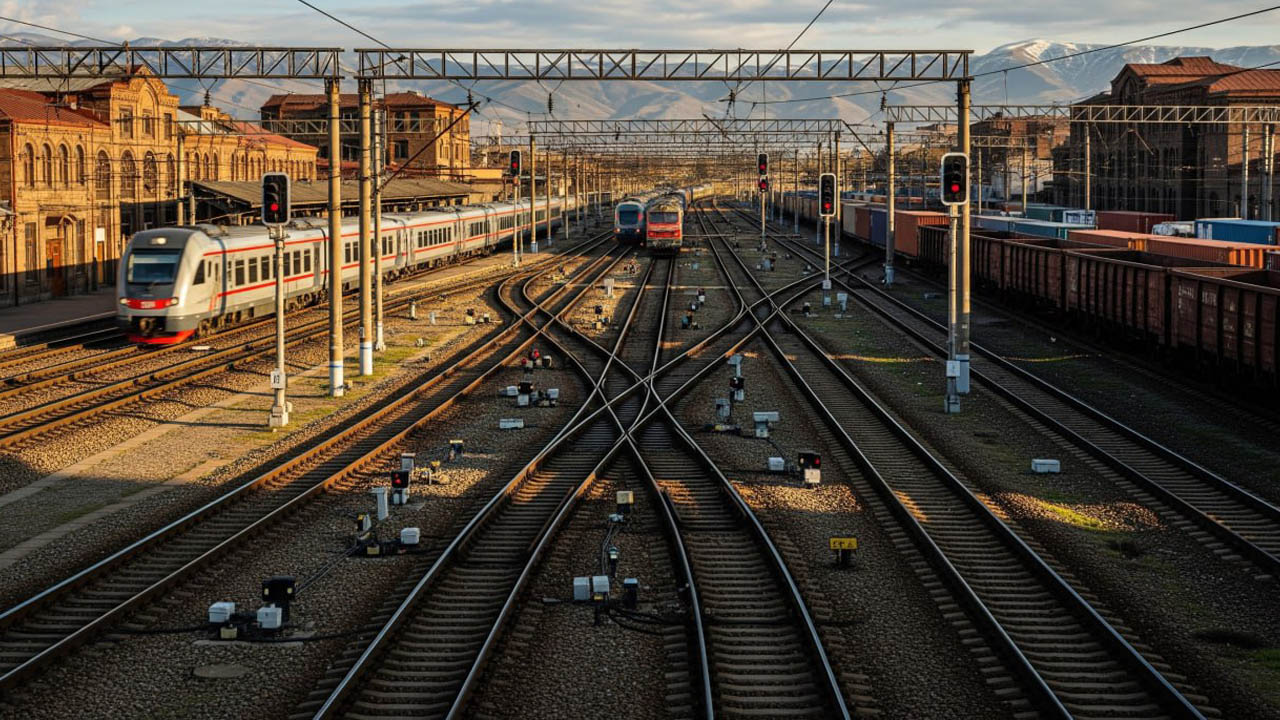
Photo JAMnews. Gyumri

-
Friday, August 21, Georgia. Imprisoned former Prime Minister Garibashvili accuses government of provocations, deception and coercion to confess to corruption
● Former Prime Minister Irakli Garibashvili, who is in prison on corruption charges, has published a third letter from prison. He accuses the government of organising provocations, deception and coercing him into confessing to corruption. Garibashvili claims he has now been threatened for a second time with the arrest of his 75-year-old father. According to him, government official Mamuka Mdinaradze passed the letter to a member of Garibashvili’s family through a close friend. The former prime minister promises to respond to any further actions by the government “like a mirror.”
● The confrontation between imprisoned former President Mikheil Saakashvili and his former ally and opposition leader Nika Gvaramia has intensified. It followed Gvaramia’s remarks on resolving the Georgian-Abkhaz conflict. He said the use of force was unacceptable and argued that Tbilisi should offer Abkhaz people EU membership together with Georgia as a path towards peaceful reunification. Saakashvili accused Gvaramia of implying a willingness to hand Abkhazia over to Russia. The former president reiterated his support for building an economically, politically and militarily strong state capable of restoring Georgia’s territorial integrity. Gvaramia responded by describing this approach as military rhetoric and populism.
● Civil society representatives have accused the ruling Georgian Dream party of spreading Russian propaganda. According to them, the campaign became particularly active in early August, ahead of the 18th anniversary of the 2008 Georgian-Russian war. The campaign centres on accusations against Georgia’s then leadership — President Mikheil Saakashvili and his ruling National Movement party — of starting the war and distorting historical facts. The signatories of the statement said the government’s repeated claim that someone in Georgia is allegedly fuelling “Russophobia” is unacceptable. They said such rhetoric harms Georgia’s national interests, deepens polarisation and makes the country more vulnerable to Russian influence.
● Mikheil Saakashvili has written about the start of a new wave of Russian migration to Georgia, linking it to the government’s talk of “fighting Russophobia”. According to him, 20,000 Russian citizens entered Georgia in a single day, and their number could exceed 200,000 in the future. Saakashvili did not provide a source confirming these figures or that those arriving intended to settle in Georgia.
● French President Emmanuel Macron has invited Prime Minister Irakli Kobakhidze to the first international summit on space issues. The meeting will take place in Paris on September 9–10, under the chairmanship of France and Germany. The summit will discuss science, research, the space economy, security and defence.
● The mother of Tamar Bachaliashvili, a programmer who was found dead in her car in 2020, is demanding that the case be reopened. She said she will hold a protest outside the Prosecutor General’s Office every Monday to demand a review of the case. Tamazashvili believes her daughter was murdered. According to the official investigation, 23-year-old Bachaliashvili died by suicide, after which the case was closed.
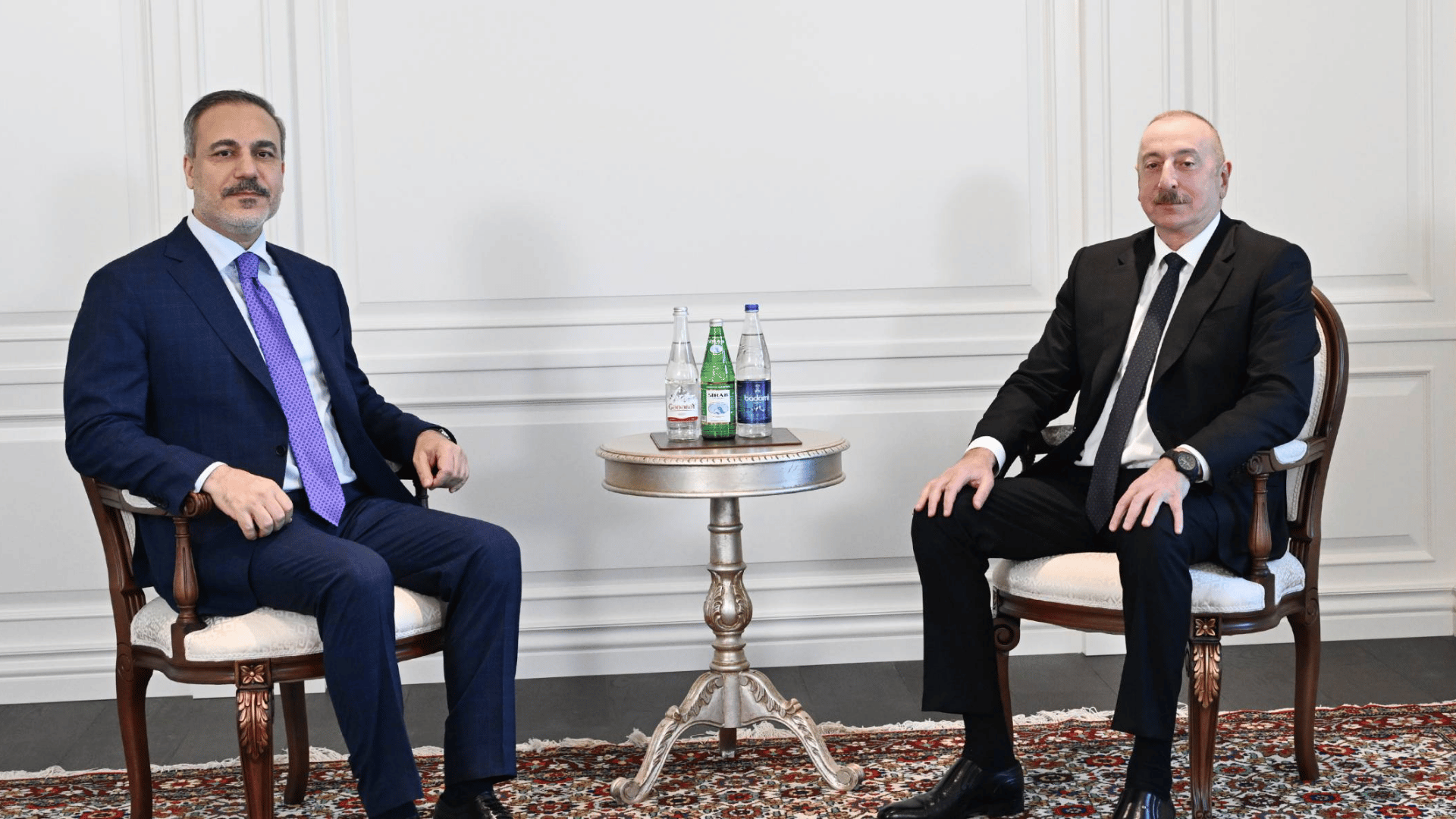
● Irakli Kobakhidze met with Turkish Ambassador to Georgia Mustafa Türker. They discussed deepening the strategic partnership, joint regional projects, and the importance of peace and stability in the South Caucasus.
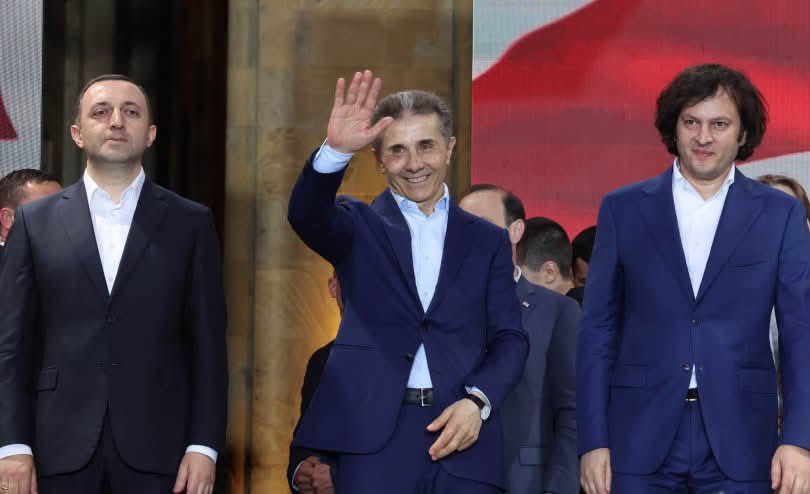
Photo: Archive. From left to right: Irakli Garibashvili, oligarch and founder of the ruling Georgian Dream party Bidzina Ivanishvili, and Irakli Kobakhidze.
-
Friday, August 21, Azerbaijan. 40% growth in tourism sector by 2030 under new state programme for 2026–2030
● A 40% real growth target for the tourism sector by 2030 has been set under Azerbaijan’s newly approved State Programme for Tourism Development for 2026–2030. According to the programme, the sector is expected to generate 8.5 billion manats (about $5 billion) in added value as early as next year. By 2030, this figure is expected to reach 12.2 billion manats (about $7 billion).
● One of the programme’s measures is to provide Azerbaijani tour operators with subsidies for bringing tourists into the country. The programme also provides compensation for expenses related to organising charter flights, additional scheduled flights to target tourism markets, and tourism-related events, including concerts and entertainment programmes. Subsidies will also be available to micro and small businesses in the tourism sector.
● Activist Ruslan Izzetli, who was sentenced in the “Toplum TV case”, has been placed in a punishment cell after demanding access to clean drinking water, his wife wrote on social media. She said there had been a long-standing problem with water in the cells, which has worsened amid the intense heat. She also said she had spoken to fellow activist Ali Zeynal, who was detained in the same case and had also protested over the issue. He is now also being transferred to a punishment cell.
The arrests in the “Toplum TV case” began in March 2024. The initial charges were related to smuggling, but the charges were later increased. All the activists and journalists deny any wrongdoing and say their arrests were politically motivated. On July 27 this year, the court handed down sentences. Akif Gurbanov, head of the Institute for Democratic Initiatives, and Ruslan Izzetli, a founding board member, were sentenced to 15 years in prison. Toplum TV co-founder Alasgar Mammadli and activist Ali Zeynal were sentenced to 14 years. Institute for Democratic Initiatives staff members Ramil Babayev and Ilkin Amrahov, and Toplum TV video editor Mushfig Jabbar were sentenced to 13 years. Journalists Farid Ismayilov and Elmir Abbasov were sentenced to 11 years, 11 months and 28 days in prison.
The court also ordered the confiscation of their cars and apartments.
In recent years, around 30 journalists and civil society activists have been arrested in Azerbaijan on similar charges. They consider the charges politically motivated, while officials deny that there are any political arrests in the country.
● Another railway shipment has been sent to Armenia via Azerbaijan — this time 39 carriages carrying a total of 2,725 tonnes of Russian wheat. Since the route was launched last year as part of agreements reached at the Washington peace summit, around 44,000 tonnes of grain, 9,000 tonnes of fertiliser, 1,136 tonnes of propane, 133 tonnes of aluminium, 1,114 tonnes of coal and 67 tonnes of timber have been transported from Russia to Armenia via Azerbaijan. During the same period, Azerbaijan exported around 15,000 tonnes of diesel fuel and about 5,000 tonnes of AI-92 and AI-95 petrol to Armenia.
● A high-profile criminal trial against former head of the Defence Ministry’s Military Medical Commission Rasim Hasanov, who was charged with fraud and bribery, has ended. He was fined 5,000 manats (about $3,000) and released from the courtroom. The Prosecutor General’s Office had sought a 10-year prison sentence and now plans to appeal the verdict.
● The State Security Service reported the arrest and transfer to Azerbaijan of Namig Agalarov, who had been wanted internationally since 2009. He is accused of organising armed ambushes and attacks on representatives of international organisations carrying out international missions, as well as their logistics networks. One of the charges involves the use of remotely controlled explosive devices. According to investigators, Agalarov operated as part of illegal armed groups in Afghanistan, Pakistan and other countries. The State Security Service said Agalarov was allegedly involved in promoting jihadism and radical religious ideas.

-
Thursday, August 20, Azerbaijan. Ahmadbeyli–Fuzuli–Shusha highway project in Karabakh wins IRF Global award for “Innovative Methodology”
● Russia’s Foreign Ministry said it is ready to provide legal assistance to three Russian experts who face criminal charges in Azerbaijan and have been placed on an international wanted list after appearing on a YouTube talk show and allegedly calling for changes to Azerbaijan’s constitutional order and violations of its territorial integrity, as well as terrorist attacks. At the same time, the statement stressed that the remarks by Ivan Knyazev, Semyon Uralov and Alexei Chadayev do not reflect Moscow’s position toward Azerbaijan.
During the discussion, the three Russian experts proposed inciting separatism in Azerbaijan through ethnic minorities, including Talysh and Lezgins. They also called for military intervention using the Caspian Flotilla and proposed a Russian amphibious landing operation in Baku. Chadayev said Azerbaijani figures should also be threatened with physical destruction and suggested using disguised explosive devices. Uralov claimed that “Moscow has the right to put the leaders of post-Soviet countries on trial under Soviet laws, since everyone born before 1991 is still a citizen of the Soviet Union.” All three experts have been placed on Azerbaijan’s wanted list. Read our analysis of the new escalation in Azerbaijan-Russia relations here.
● Ukraine’s Energy Ministry published a letter on X thanking countries around the world, including Azerbaijan, for assistance in providing energy equipment amid Russia’s ongoing aggression against Ukraine.
● Azerbaijan and Kazakhstan’s defense ministries held staff talks in Baku on prospects for military cooperation.
● Romania has increased its imports of Azerbaijani oil by almost 20% since the beginning of the year.
● Kazakhstan has increased oil exports through Georgia fivefold. In August, a record 100,000 tonnes of Kazakh oil will transit Georgia by rail and through the Batumi oil terminal. The final destination of the tankers is Türkiye.
● Armenia plans to establish trade with Azerbaijan over the next five years, according to the Armenian government’s draft programme for 2026–2031, published on its official website. “In order to institutionalize and strengthen peace, the government will continue work on signing and ratifying the agreement ‘On Establishment of Peace and Interstate Relations between Armenia and Azerbaijan,’ continue work on delimitation and demarcation of the state border with Azerbaijan, intensify contacts between civil societies and business communities of Armenia and Azerbaijan, and develop bilateral trade,” the document says.
● A 26-carriage train carrying 1,820 tonnes of Russian wheat has been sent to Armenia in transit through Azerbaijan. Since the launch of this route last year under agreements reached at the Washington peace summit, around 43,000 tonnes of grain, around 9,000 tonnes of fertilizer, 1,136 tonnes of propane, 133 tonnes of aluminium, 1,114 tonnes of coal and 67 tonnes of timber have been sent from Russia to Armenia through Azerbaijan. During the same period, around 15,000 tonnes of diesel fuel and around 5,000 tonnes of AI-92 and AI-95 gasoline were exported from Azerbaijan to Armenia.
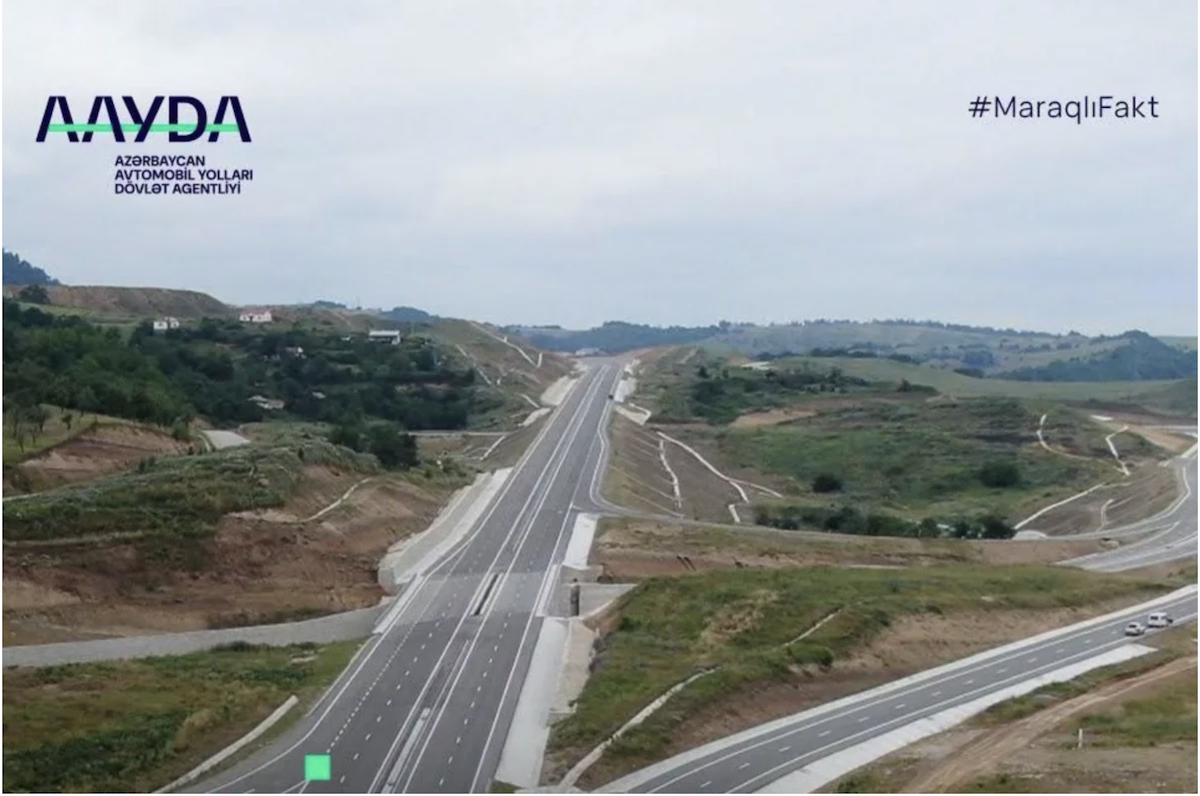
● The Ahmadbeyli–Fuzuli–Shusha highway project, which runs through Karabakh, has won the “Innovative Construction Methodology” category at a competition organized by the International Road Federation (IRF Global). The road has four to six lanes and includes seven tunnels, nine viaducts, 11 bridges, and 76 underpasses and emergency crossings. The tunnels have a combined length of more than 6.3 km, with the longest measuring 3.34 km.
● In an operation carried out jointly with Georgian law enforcement agencies, Azerbaijan brought back Anar Islam oglu Aliyev (Anar007), the alleged leader of a criminal group wanted on charges of organizing illegal gambling under the “Martin” casino name and other names associated with the chc.play platform. According to the Interior Ministry, Aliyev created an organized group to involve people in illegal gambling. He housed his “employees” in rented apartments in Tbilisi and other Georgian cities. Other members of the group had previously been detained and brought under investigation as part of the wider operation.
● Azerbaijani Greco-Roman wrestler Ayhan Javadov (60 kg) won gold at the U-20 World Championships in Slovakia. In previous days, Javidan Nehmetov (77 kg) won silver, while Emin Javadli (55 kg) and Tural Ahmedov (63 kg) won bronze.
-
Thursday, August 20, Armenia. Anti-corruption cases against pro-Russian opposition figures
● The next institutional step for Armenia should be to start talks on EU associate membership, ruling Civil Contract MP Arman Yeghoyan told journalists. He was commenting on Moscow’s repeated calls for Armenia to hold a referendum on choosing between remaining in the Russia-led Eurasian Economic Union (EAEU) and joining the EU. “If a referendum were held tomorrow, people would, of course, vote for EU membership. But for now, there is no need to leave the EAEU, and Armenia’s membership in the union is mutually beneficial for all its members,” Yeghoyan said.
● Brussels Signal has published an article on the issue. “Russia is pressuring Armenia to choose between the EU and the Eurasian Economic Union. Moscow believes that Europe’s growing presence in Armenia threatens its economic and political influence in the region, as well as its security influence,” the publication writes.
● Prime Minister’s wife Anna Hakobyan has launched a campaign against domestic violence under the slogan: “We will no longer tolerate it.” In a video address, she said violence is not a family quarrel but a pattern of behavior aimed at establishing power and control over another person. “Society must first recognize this as a vice and then eradicate it,” Hakobyan said. Read more here
● The Anti-Corruption Committee announced the arrest of Natalia Lapauri, who headed a €4 million state programme in Vanadzor and Gyumri for four years. She is accused of accepting bribes, embezzlement, money laundering and official forgery. Programme expert David Melkumyan was also arrested and is accused of aiding and abetting bribery. Two years after the completion of the costly EU programme, law enforcement authorities identified significant damage caused to the communities and launched criminal proceedings. The case involves seven articles of the Criminal Code, ranging from embezzlement to money laundering and document forgery.
● The preliminary investigation has been completed in the criminal case against Andranik Tevanyan, leader of the pro-Russian opposition Mother Armenia party, and his associate Aregnaz Manukyan, who ran for parliament from another pro-Russian party, Prosperous Armenia. Both politicians are accused of treason and espionage. According to the investigation, Tevanyan was recruited by foreign intelligence services and engaged in espionage activities. In particular, he is accused of illegally obtaining detailed information from a closed parliamentary discussion in April 2024, translating the materials into Russian and passing on information containing state secrets. The Investigative Committee says he received $622,000 for this. According to the committee, Aregnaz Manukyan passed the information from the closed session to Tevanyan.
● A protest was held outside the EU office in support of Aregnaz Manukyan and other opposition figures who are under arrest. Former Armenia bloc MP Garnik Danielyan said supporters of the pro-Russian opposition “will not break under pressure from the regime.”
● Yerevan State University department head Edik Minasyan allegedly demanded a large bribe in exchange for admission to the university. According to the preliminary investigation, he is the brother of former parliamentarian Artsvik Minasyan, a representative of the Dashnaktsutyun movement within the pro-Russian Armenia bloc.
● The EU and UN are launching a new initiative in Armenia aimed at improving air quality. The €2 million programme is called “Clean Air for Health and Green Growth in Armenia.”
● Another shipment of Russian wheat, consisting of 26 railcars, has been sent to Armenia in transit through Azerbaijan.
● A company owned by the father of ruling party member Mher Asatryan became the winner of a major procurement tender just months after being established. The deal consists of four contracts with the Areni community worth a total of 134 million drams (about $372,000), investigative outlet Hetq reports.
● Garik Martirosyan, 41, was killed after a crane collapsed at a construction site in the city of Nor Hachn. His mother was subsequently taken to hospital after suffering a stroke. A criminal case has been launched over violations of safety rules, and two people have been detained.
● According to a study by Resume.io, Armenia had a total of 32 days of paid annual leave and paid public holidays in 2025. The same source counted 42 days of paid time off in Azerbaijan and 41 in Georgia.
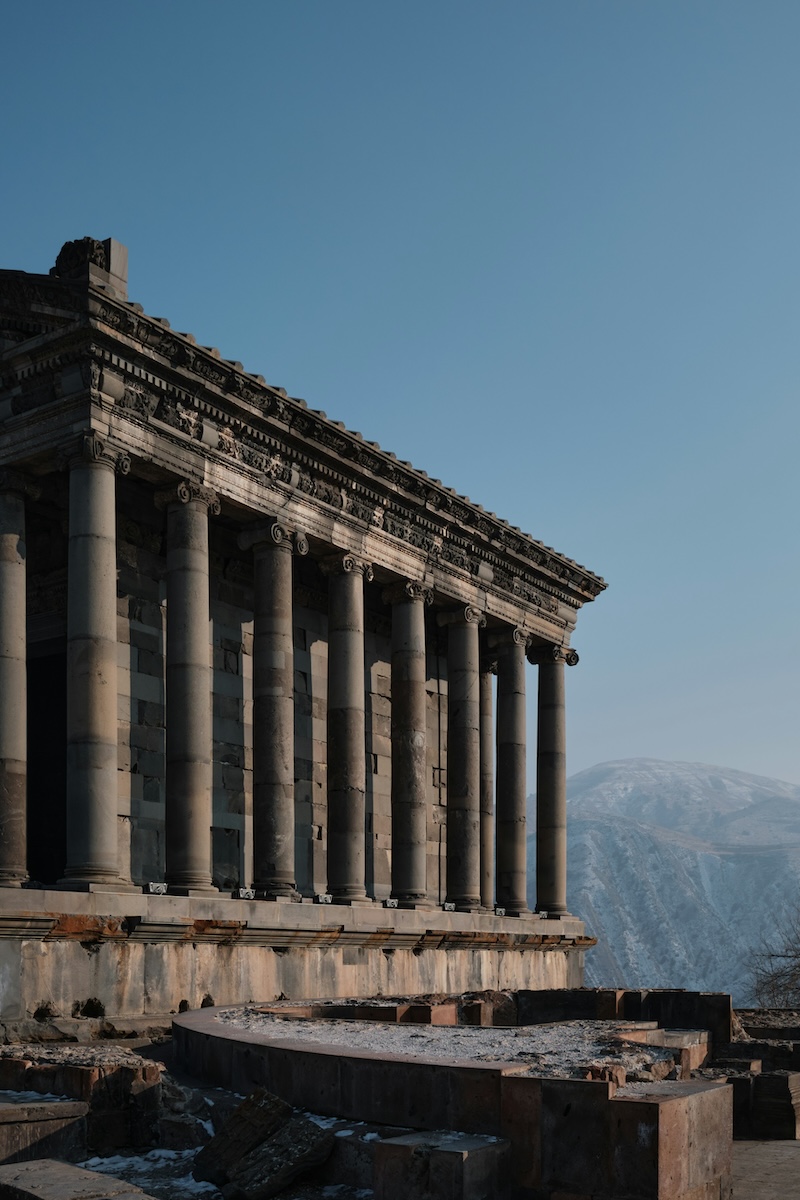
Garni temple, Armenia. Photo by Artur Adilkhanian
-
Thursday, August 20, Georgia. Transparency International-Georgia: “Developments around ex-PM Irakli Garibashvili’s revelations are linked to redistribution of influence within ruling party”
● Imprisoned former Prime Minister Irakli Garibashvili said through his lawyer that he plans to continue publishing letters making allegations against the authorities. His lawyer said his client would release the letters in stages and publish another statement soon. Garibashvili was convicted on corruption charges and has published two open letters in recent days, claiming that an anti-corruption campaign was launched against him to prevent his return to politics. He also said ruling party founder and oligarch Bidzina Ivanishvili and the government ordered him to admit to new corruption charges.
For years, Irakli Garibashvili was considered one of Ivanishvili’s closest political allies: he served as prime minister twice and later headed Georgian Dream. He was arrested on January 12, 2026. Under a plea agreement signed with the Prosecutor’s Office, he was sentenced to five years in prison and fined 1 million lari (about $385,000) for laundering illicitly obtained income. He had not previously made any public statements from prison.
● Former President Salome Zourabichvili said Irakli Garibashvili’s letters could be part of a political game unfolding within the government. She said they could be an attempt to present Garibashvili as the “new opposition.”
● Transparency International Georgia director Eka Gigauri linked the developments around Irakli Garibashvili to the distribution of influence within Georgian Dream. In her view, Prime Minister Irakli Kobakhidze is gaining increasing control over state institutions. Gigauri suggested that this could eventually lead to a confrontation between Kobakhidze and Bidzina Ivanishvili.
● Imprisoned former President Mikheil Saakashvili has made accusations against his former allies, opposition leaders Nika Gvaramia and Elene Khoshtaria. He claimed that Akhali, the party founded by Gvaramia, was initially a project created to split the United National Movement, which Saakashvili himself founded. He also claimed that Gvaramia and Khoshtaria “received tens of millions” from the Gilauri family (a family of prominent businessmen active in politics – JAMnews). Saakashvili provided no evidence to support the claim.
● The Interior Ministry has denied reports that 20,000 Russian citizens entered Georgia through the land border with Russia in the 24 hours of August 18. According to the ministry, 7,880 citizens of various countries crossed the border into Georgia during that period, while 8,406 people left Georgia. However, Russia’s customs service says 20,000 people crossed the checkpoint in both directions that day. No explanation has been given for the significant discrepancy between the official figures from the two countries.
● The Environmental Supervision Department has warned about fraudulent SMS messages being sent in its name. The messages claim that the recipient has been fined for driving violations. The attached link leads to a fake website and requests bank card details. The materials have been handed over to the Interior Ministry.
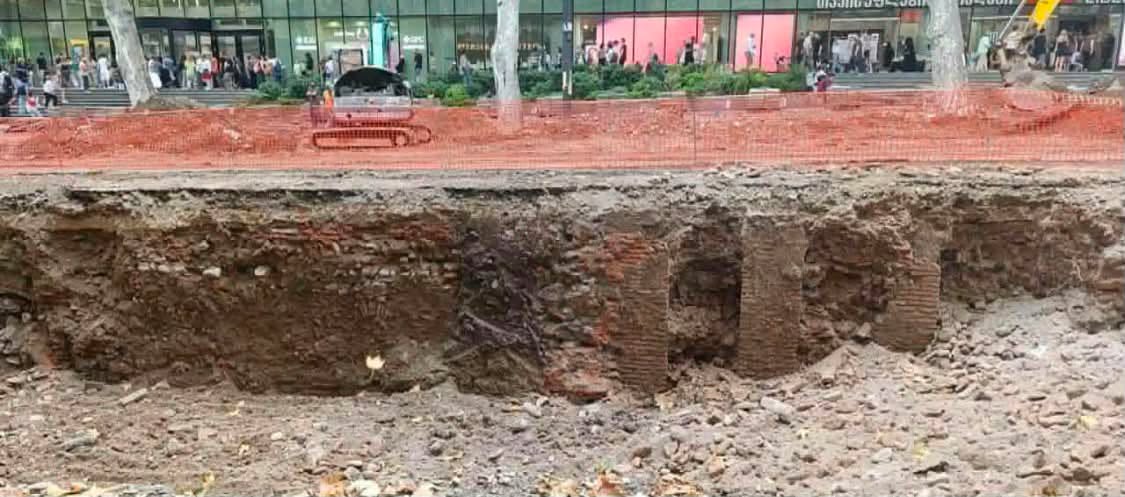
● Archaeological layers and artifacts have been discovered during the reconstruction of central Rustaveli Avenue in Tbilisi. The Movement for Cultural Heritage believes that a 19th-century donation collection system and 10th–11th-century ceramics were found. According to the movement, work in the relevant area has been suspended, but it is unclear who is overseeing the archaeological work. The Cultural Heritage Protection Agency says the finds have already been registered and, if necessary, work will continue under the supervision of archaeologists.
● In the city of Senaki, the founder and instructor of a private dance studio has been sentenced to 11 years in prison. He was found guilty of committing indecent acts against three students under the age of 14 in 2021, 2023 and 2026.
● Ivane Chkhaidze, director of Iashvili Children’s Central Hospital, said Georgia will offer a three-component flu vaccine this year. According to him, its effectiveness among children is 80%, and its use is recommended by international health organizations.
● Georgia’s foreign trade turnover increased by 7.5% in January–July, reaching $15.5 billion. Exports grew by 21.6%, while imports increased by 2.4%. The largest trading partners were Türkiye, Russia and China, while the leading export item was the re-export of passenger cars imported into Georgia.
● Georgian airports handled 2 million passengers in the second quarter of the year, 5.7% fewer than during the same period last year. The number of passenger flights also fell by 4.7%. During the same period, airports handled 1,100 cargo flights, up 21.1% from the previous year.
● Georgian ports and terminals handled 5.4 million tonnes of cargo in the second quarter of this year, 33% more than during the same period last year. According to Geostat, 461 vessels entered Georgian ports. The number of container ships increased by 34.8%, while the number of vessels carrying liquid cargo rose by 17.3%.
Photo: Reconstruction of Rustaveli Avenue in Tbilisi
Screenshot -
Wednesday, August 19, Armenia. US House delegation in Armenia, active talks on TRIPP and bilateral partnership
● A delegation from the US House of Representatives is in Armenia, led by Abraham Hamadeh, a member of the House Armed Services Committee. Active dialogue with Armenian authorities will continue until August 21. Details of the discussions have not been disclosed. According to official information, during a meeting with the foreign minister, the delegation discussed the role of the Washington peace summit of August 8, 2025 in establishing peace between Armenia and Azerbaijan, as well as efforts aimed at further institutionalizing that peace.
At a meeting with the speaker of parliament, they discussed opportunities to deepen interparliamentary cooperation and economic issues. In particular, the talks focused on unblocking communications in the South Caucasus, including the implementation of a major Armenian-American project — the Trump Route transit road (TRIPP). The road will connect Azerbaijan with its exclave of Nakhchivan and launch the process of unblocking Armenia.
The delegation was also received by the prime minister. Nikol Pashinyan said relations with the United States are developing dynamically and that it is important for Armenia to further advance cooperation “in political, economic and technological spheres.”
● The European External Action Service (EEAS) has published its annual report on human rights and democracy worldwide for the past year. Its authors positively assessed progress in legal reforms in Armenia and highlighted the implementation of “ambitious judicial, police and constitutional reforms,” while noting that the process has not been consistent enough. According to the report, Armenia’s civil society is among the most active in the region; society remains polarized, while the media features a plurality of views. The report also noted that the universal health insurance law, which will ensure access to healthcare for all segments of the population, particularly low-income groups, came into force at the beginning of 2026. “The EU-Armenia Strategic Partnership Programme, concluded in December 2025, confirms that the EU and Armenia will work together to promote human rights,” the document says.
● Armenian Ambassador to the United States Narek Mkrtchyan was a guest on The Parliament podcast hosted by the Davis Institute at The Heritage Foundation. Mkrtchyan spoke about how the Washington Declaration, signed in August 2025 by the leaders of Armenia and Azerbaijan with the mediation of Donald Trump, ended more than 30 years of hostility. He said the establishment of peace is transforming the South Caucasus, partnerships are developing, and new economic opportunities and stronger ties are emerging both within the region and with the United States.
● The Interior Ministry reports that alongside the introduction of new biometric passports, automated electronic systems (e-gates) will begin operating at border checkpoints. They will automatically identify travelers without the involvement of border service officers, significantly speeding up the border-crossing process.
● Zvartnots and Shirak airports recorded a historic passenger traffic record, handling 735,000 passengers in July 2026. This was 17.2% more than a year earlier. During the month, the two Armenian airports handled 5,058 flights. From January through July, they were used by 3,483,000 passengers, also a record figure for the airports.
● Because Yerevan will host the 17th Conference of the Parties to the UN Convention on Biological Diversity (COP17) from October 19 to 30, schools in the capital will have a two-week autumn break instead of one week. The autumn holiday is being extended because up to 15,000 visitors are expected during the event. However, students will have to make up the additional week of holiday in advance. Starting September 15, Yerevan schools will switch to a six-day school week for five weeks, with classes also held on Saturdays, so the school curriculum is not affected.
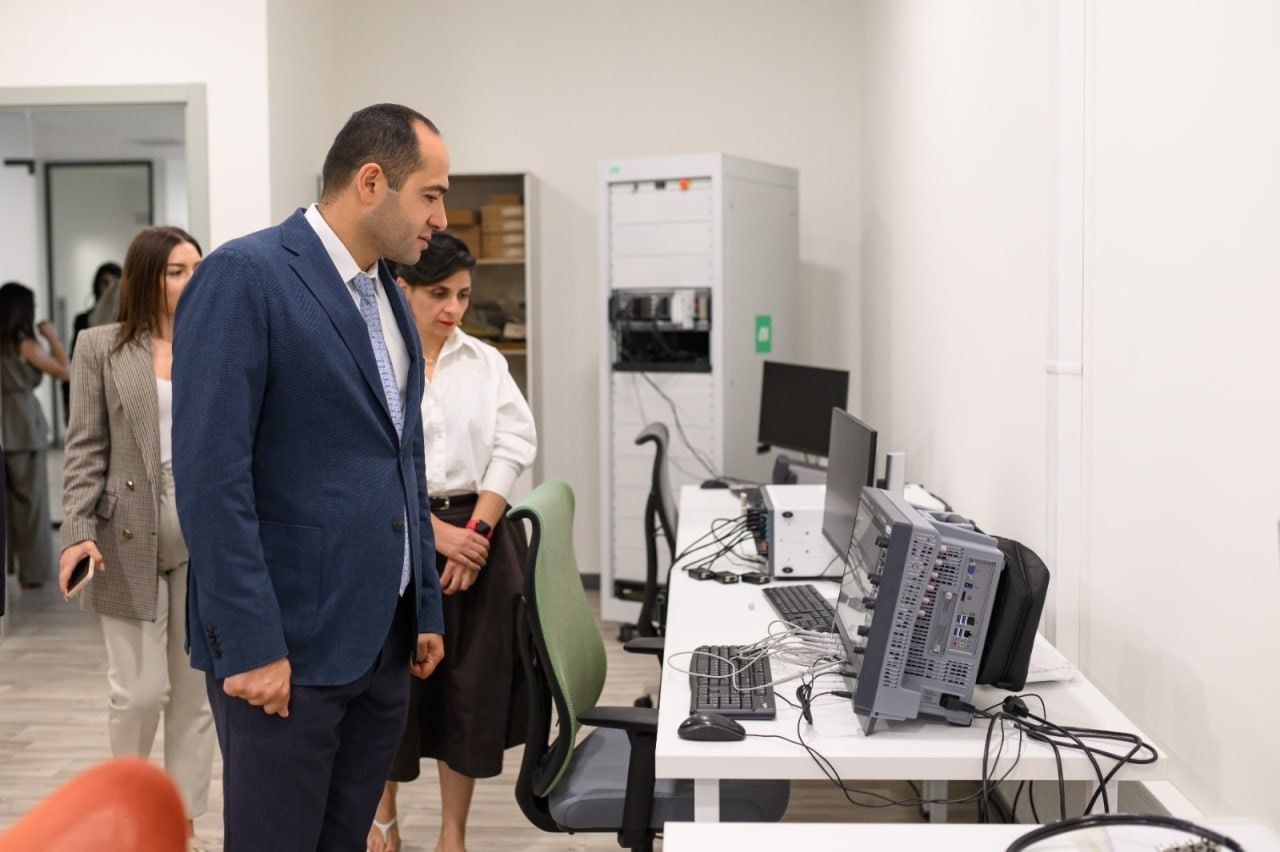
● High-Tech Industry Minister Davit Tadevosyan published these photos after visiting the Engineering City. The site is a three-hectare research and production cluster created through a public-private partnership to develop high technologies and help local IT companies enter global markets. Research units of global and regional technology leaders such as Synopsys and Emerson operate at the site. During the minister’s visit, discussions focused on the activities of companies and laboratories located there, as well as opportunities for cooperation with international partners.
● Armenian mixed martial arts (MMA) fighter Arman Tsarukyan, who competes in the lightweight division of the UFC, has announced that he will now fight under a new nickname — Batman. Tsarukyan previously competed under the nickname “Akhalakalaketsi,” after the city of Akhalkalaki in Georgia, where he was born and raised. Tsarukyan is among the top fighters in the division and is preparing for his next bout on September 20 at UFC 331 against Mauricio Ruffy. The 29-year-old fighter has competed in the lightweight division since 2019, recording 23 wins and only three losses during that time.

-
Wednesday, August 19, Azerbaijan. Azerbaijan has filed a lawsuit against CNN in a US federal court
● Developments continue around the criminal case in Azerbaijan against three Russian experts who appeared on a YouTube talk show and allegedly called for changing Azerbaijan’s constitutional order and violating its territorial integrity, as well as carrying out terrorist attacks. One of the experts, Alexei Chadayev, an adviser to Russia’s transport minister, has resigned. Russian Foreign Ministry spokeswoman Maria Zakharova said that “discussions by Russian journalists do not reflect Russia’s approach to relations with Baku. Moscow hopes for dialogue with Azerbaijan to improve the information environment.” At the same time, Zakharova noted that “Azerbaijan should see that unfriendly narratives towards Russia are constantly present in its information space.”
Context: Russian experts Ivan Knyazev, Alexei Chadayev and Semyon Uralov discussed on a YouTube channel scenarios involving the transfer of Azerbaijani territories to third countries and the incitement of separatism through ethnic minorities in the country, including Talysh and Lezgins. They also called for military intervention using the Caspian Flotilla and proposed a Russian amphibious landing operation in Baku. Chadayev said Azerbaijani figures should be threatened with physical destruction and suggested using disguised explosive devices. Uralov claimed that “Moscow has the right to put the leaders of post-Soviet countries on trial under Soviet laws, since everyone born before 1991 is still a citizen of the Soviet Union.”
All three experts have been placed on Azerbaijan’s wanted list. Read an analysis of the new escalation in Azerbaijan-Russia relations here.
● Azerbaijan’s Foreign Ministry summoned Russian Ambassador Mikhail Yevdokimov and expressed a strong protest over recent provocative statements in Russian media targeting Azerbaijan and its leadership.
● Azerbaijan has filed a lawsuit against CNN in a US federal court over what the Foreign Ministry described as unfounded and provocative claims targeting Azerbaijan. A CNN article published on June 5 said that Azerbaijani territory had allegedly been used by Israel to conduct military and intelligence operations against Iran. The article claimed that Israeli special forces were allegedly operating in southern Azerbaijan near the Iranian border, conducting intelligence and drone operations from those locations. It also claimed that Israel had allegedly placed listening devices and other intelligence equipment in Azerbaijan in advance as part of preparations for subsequent operations against Iran.
The Foreign Ministry stressed that, before publication, Baku had officially rejected the claims in response to a CNN inquiry and stated that the use of Azerbaijani territory by any third country for military or intelligence purposes against Iran was not permitted. Nevertheless, Azerbaijan’s position was not adequately reflected in the article, while its main claims were attributed to anonymous sources. After publication, Azerbaijan’s Foreign Ministry repeatedly formally demanded that CNN issue a correction, but this has not been done.
● Iranian Foreign Minister Abbas Araghchi praised the assistance provided to Iran by Azerbaijan. He also said that “the latest phone call between the presidents of Iran and Azerbaijan opened a new page in relations between the two countries.”
● Former Ukrainian President Viktor Yushchenko expressed gratitude to President Ilham Aliyev and the people of Azerbaijan for their support, humanitarian assistance, rehabilitation programmes for Ukrainian children and respect for Ukraine’s territorial integrity. Yushchenko wrote about this on social media, describing his recent visit to Baku. “President Ilham Aliyev and I have shared more than 20 years of personal friendship […] The era of friendship with the Azerbaijani people began with my meeting and establishing friendly relations with national leader Heydar Aliyev in 1989 in Nakhchivan,” Yushchenko wrote. He also highlighted the importance of the Declaration on Friendship and Strategic Partnership between the two countries, signed in May 2008 during Ilham Aliyev’s official visit to Ukraine.
● The International Press Institute (IPI) has expressed concern about the health of AbzasMedia employees currently in prison — director Ulvi Hasanli and journalist Nargiz Absalamova. The statement said the health of both journalists had deteriorated following a prolonged hunger strike. IPI called on Azerbaijani authorities to immediately provide both journalists with the necessary medical care. The organization also repeated its previous call for the release of those arrested in the “Abzas Media case.”
Ulvi Hasanli and other Abzas Media employees sentenced to lengthy prison terms, including editor-in-chief Sevinj Vagifgizi, were charged with smuggling and other serious crimes. They deny the charges and say they are being persecuted for their critical reporting. Many local and international human rights organizations consider the arrests politically motivated and have called for the journalists’ release.
● Newly appointed British Ambassador to Azerbaijan Duncan Norman presented his credentials to President Ilham Aliyev. He wrote on X that “the UK looks forward to strengthening its strategic partnership with Azerbaijan, developing economic ties and cooperation in the security sphere.”
● During his meeting with Duncan Norman, Ilham Aliyev expressed gratitude to the British government for its assistance with demining and said that “Azerbaijan needs closer international cooperation in this area.”
● Kazakhstan and Azerbaijan will launch the Trans-Caspian Fiber-Optic Communication Line in the fourth quarter of this year. Kazakhstan’s Ministry of Digital Development said the project has entered its final stage. The most labor-intensive and main phase — laying the cable along the bottom of the Caspian Sea — has already been completed. Specialists are currently configuring equipment and carrying out commissioning work. The new line is expected to become an important element in developing transit telecommunications infrastructure between Europe and Asia. The possibility of connecting other Central Asian countries to the digital corridor is also being considered.
● Problems continue with Azerbaijani transit trucks at the border with Georgia. At the “Red Bridge” customs checkpoint, 1,030 trucks have been waiting for an extended period to cross, according to Azerbaijan’s State Agency for Land Transport (AYNA). By comparison, only 47 trucks are currently at the customs checkpoint on the Russian border and 37 at the Iranian border. The authorities say negotiations are underway between the customs services of the two countries to take the necessary measures to clear the congestion.

-
Wednesday, August 19, Georgia. New statement by jailed former PM Irakli Garibashvili accusing Ivanishvili and vowing to “fight back”
● Former Prime Minister Irakli Garibashvili, who is serving a prison sentence on corruption charges, has issued a new statement from prison, claiming that the anti-corruption campaign against him was aimed at imprisoning and politically destroying him. Garibashvili said that in July he received a letter from government representative Mamuka Mdinaradze offering him the option of admitting to corruption charges in order to eliminate the risk of his possible return to politics. Garibashvili said this was a “red line” for him and that he intends to fight back.
Mdinaradze’s press office called the allegations “completely absurd.” Prime Minister Irakli Kobakhidze described Garibashvili’s statement as “very problematic,” but said he had no information about a possible new case and that Garibashvili and his family are protected.
Garibashvili was arrested on January 12, 2026. Under a plea agreement signed with the Prosecutor’s Office, he was sentenced to five years in prison and fined 1 million lari (about $385,000) for laundering illicitly obtained income. On August 17, Garibashvili made his first public statement since his arrest, holding ruling party founder and oligarch Bidzina Ivanishvili and the government responsible for his family’s safety. He said Ivanishvili had ordered him to admit to new corruption charges and leave politics permanently. He had not previously made any public statements from prison.
For years, Irakli Garibashvili was considered one of Ivanishvili’s closest political allies: he served as prime minister twice and later headed Georgian Dream. Read more here.
● Irakli Kobakhidze confirmed that fuel deliveries to Russian-occupied Abkhazia were approved by the government. As of August 18, around 680 tonnes of fuel had been delivered to the region, he said. According to the prime minister, the initiative came from Abkhazia, and the government supported the deal as part of efforts to restore trust. The fuel is being supplied by Solidus under a special permit.
● Irakli Kobakhidze accused opposition leader Nika Gvaramia and other opposition figures of launching a “campaign to surrender Abkhazia to Russia.” The comment came in response to Gvaramia’s recent high-profile statement that the basis for resolving the Abkhaz conflict should be neither war nor disputes over the past, but Georgia’s European integration, economic development and shared security interests. At the same time, Gvaramia criticized fuel deliveries from Tbilisi to Abkhazia, saying they could end up helping Russia. “The goal of these statements and criticism of fuel deliveries to Abkhazia is to prevent the restoration of trust between Georgians and Abkhaz,” Prime Minister Irakli Kobakhidze said.
● Nika Gvaramia, one of the leaders of the opposition Coalition for Change, said Mikheil Saakashvili was unfairly accusing the opposition and thereby undermining its unity. The dispute erupted after Saakashvili published a statement accusing part of the opposition of colluding with Bidzina Ivanishvili and remaining silent. Gvaramia said he had previously refrained from responding to Saakashvili’s personal attacks, but this time the accusations had also targeted his party and had contributed to politicians being imprisoned.
● Irakli Kobakhidze described the Treaty of Georgievsk, signed with the Russian Empire in 1783, as an irrevocable and “civilizational choice” by King Erekle II. Kobakhidze said that “this decision saved Georgia and the Georgian people while preserving the country’s connection with the European space.” The prime minister acknowledged the interests of the Russian Empire and the risks associated with the treaty, but called Erekle II’s decision a “brilliant act of statesmanship.” Opposition representatives see the government’s renewed focus on the Treaty of Georgievsk as an attempt to prepare public opinion for a possible new agreement with Russia. Imprisoned former President Mikheil Saakashvili claims Georgian Dream plans to sign agreements both with Russia and with the regions occupied by Russia.
● A US-Uzbek citizen wanted by the FBI has been detained at Tbilisi airport. According to the Interior Ministry, he is accused of organizing material and financial support for terrorist organizations operating in Syria, including Islamic State. The detainee arrived in Georgia from one of these countries. Extradition proceedings to the United States are underway.
● Poland has tightened entry rules for citizens arriving from Georgia, Colombia and Venezuela for employment purposes. The new rule applies to those who entered the country for work after August 15. Visa-free travel for Georgian citizens for tourism and other permitted short-term visits remains unchanged. Polish authorities cite risks of illegal employment, exploitation and human trafficking as the reasons for the decision.
● Five books by Georgian writers Lasha Bugadze and Zurab Chiaberashvili, who openly criticize government policies and support returning the country to the path of European integration, were damaged at a Biblus bookstore in Gldani Mall. Biblus reported the incident based on CCTV footage and passed the information to the relevant authorities. The company is trying to identify the person responsible.
● Tbilisi City Hall plans to reconstruct Agmashenebeli Avenue from Queen Tamar Avenue to Marjanishvili Square. The project includes repairs to the drainage system, roads, sidewalks, lighting and landscaping, as well as construction of a bicycle lane. Damaged cobblestones will be replaced with asphalt, and the infrastructure will be adapted for people with disabilities. The tender for the works closes on September 3.
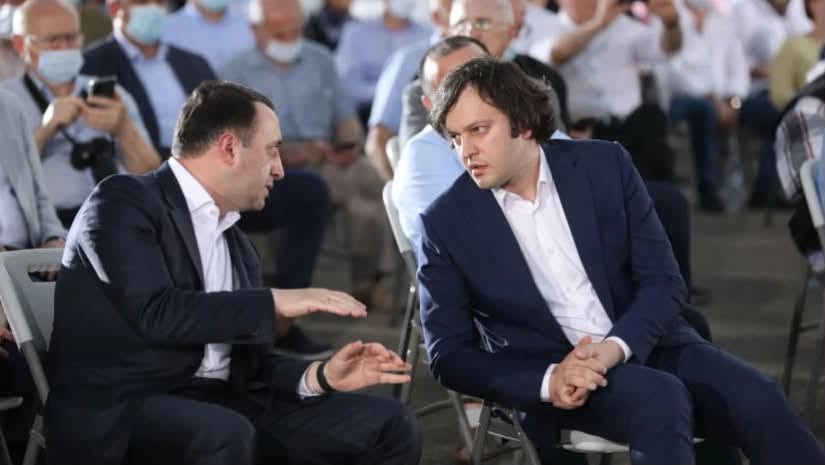
Photo: Archive. Irakli Garibashvili and Irakli Kobakhidze.
-
Tuesday, August 18, Azerbiajan. Criminal case opened against three Russian journalists and political analysts over alleged calls for violence against Azerbaijan
● The Prosecutor General’s Office has launched a criminal case against three Russian journalists and political analysts, accusing them of calls for violence against Azerbaijan, changing the country’s constitutional order and violating its territorial integrity, as well as calls for terrorism. The case concerns journalists Ivan Knyazev and Alexei Chadayev and political consultant Semyon Uralov. According to investigators, the statements in question were made on YouTube programmes. In particular, the prosecutor’s office claims that an episode published on August 13 included calls for the physical destruction and targeted killing of individuals in Azerbaijan. All three have been charged under articles covering public calls for terrorism, anti-state calls and incitement to national hatred. All three are outside Azerbaijan, have been placed on a wanted list, and a court has ordered their pre-trial detention in absentia. Baku says it has appealed to the competent authorities of other countries and is taking steps to have them internationally wanted through Interpol.
● “Statements, remarks and actions by Russian officials towards Azerbaijan provoke confrontation and entail legal responsibility,” ruling-party MP Jeyhun Mammadov told pro-government publication Report, commenting on the prosecutor’s announcement. He said that “such statements in Moscow continue despite repeated warnings from Azerbaijan, and they are incompatible with both international law and bilateral relations.”
● “Azerbaijan has become one of the key partners in the reconstruction of the Ukrainian city of Irpin, destroyed in the first days of Russia’s invasion of Ukraine,” Ukraine’s ambassador to Azerbaijan Yuriy Husyev wrote on social media, announcing that President Ilham Aliyev had been presented with a certificate naming him an honorary citizen of Irpin. He said the decision “recognizes the personal contribution of the Azerbaijani president to supporting the Irpin community from the first days of the Russian-Ukrainian war, as well as after the city’s de-occupation.” The ambassador said that with Azerbaijan’s support, Irpin Humanitarian Lyceum “Linguist” and the city’s consultative and diagnostic clinic have already been rebuilt. New large-scale projects have also been launched, including housing construction, reconstruction of a sports school and the Central House of Culture, as well as the creation of a modern arts centre.
● President Ilham Aliyev met in Baku with former Ukrainian President Viktor Yushchenko, who is visiting Azerbaijan. According to Aliyev, they recalled their more than 20-year acquaintance and joint work to strengthen Azerbaijani-Ukrainian relations, and discussed prospects for bilateral ties.
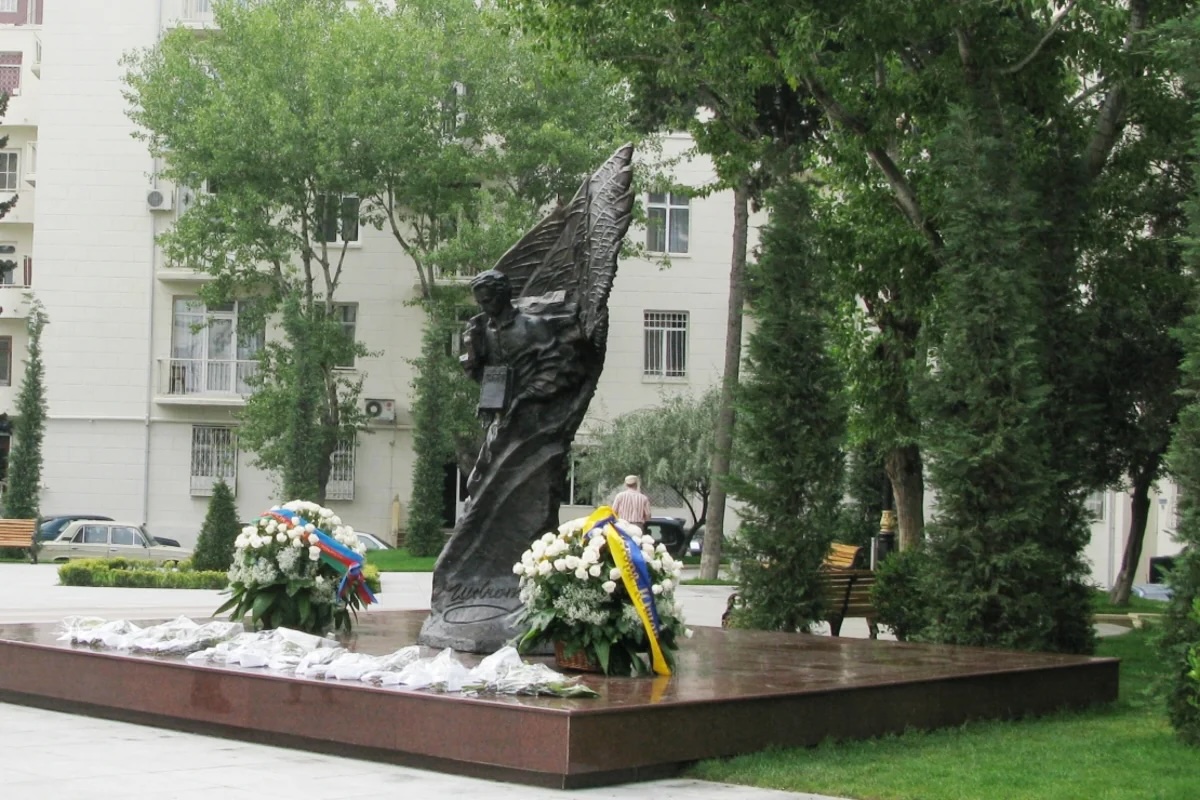
● A square in central Baku has been named after Ukrainian poet and writer Taras Shevchenko. A monument to Shevchenko has stood in the square since 2008.
● Azerbaijan has exported goods worth $17.372 million to Armenia since the beginning of the year. The value of Azerbaijan’s indirect imports from Armenia amounted to $960. No direct imports from Armenia were recorded.
● Azerbaijan ranked second among sources of foreign investment in Georgia in 2025, with total investment reaching $1.9 billion, up 19.3%. According to Georgia’s statistics service, the largest volume of investment came from the United Kingdom — $426.6 million. Türkiye ranked third with $202.4 million. The combined share of the UK, Azerbaijan and Türkiye accounted for 44.4% of Georgia’s total foreign direct investment in 2025.
● A delegation led by Elchin Yusubov, the president’s special representative for the Karabakh region, held meetings in the Romanian parliament during an official visit. The talks focused on developing bilateral relations. The sides stressed the importance of developing an action plan for joint projects and organizing mutual visits. Yusubov invited Senator Glad-Aurel Varga to visit Khankendi in Karabakh.
● Eight people suspected of cyber fraud carried out in the name of government officials and law enforcement officers have been detained. They are suspected of committing crimes in cooperation with cybercriminal groups operating abroad. Investigators found that more than 2,000 illegally obtained bank cards and mobile phone numbers were used to commit the crimes. Some of them were used to organize illegal online casinos and gambling.
● In Azerbaijan, 1,420 sets of twins and 57 sets of triplets were born in the first half of 2026.
-
Tuesday, August 18, Georgia. Imprisoned former PM Irakli Garibashvili accuses ruling party founder, oligarch Bidzina Ivanishvili, and government of blackmail
● Former Prime Minister Irakli Garibashvili, who is in prison on corruption charges, has accused ruling party founder and oligarch Bidzina Ivanishvili and the government of blackmail. He said Ivanishvili ordered him to admit to new corruption charges and leave politics for good. The letter was also shared by Garibashvili’s wife, Nunuka Tamazashvili. His lawyer confirmed the statement was authentic. Garibashvili said he would publish a detailed statement today, August 18. For years, Garibashvili was considered one of Ivanishvili’s closest political allies: he served as prime minister twice and later headed Georgian Dream. Read more here.
● A White House report has listed Georgia among 40 countries that China could use to circumvent US tariffs. Georgia is included in the category of small economies and is described as a land hub for China’s Belt and Road Initiative. According to the report, Georgia and Azerbaijan provide rail, land and maritime transit links for Chinese goods.
● Georgia did not join three renewed European Union sanctions decisions against Iran. The measures concern human rights violations in Iran and Iran’s military support for Russia and armed groups. Georgian Dream MP Tengiz Sharmanashvili said Georgia joins international sanctions only when it is in the country’s own interests. The Foreign Ministry has not publicly explained the reasons. Read more here.
● Government representatives have linked fuel deliveries from Tbilisi to Russian-occupied Abkhazia to a policy of restoring trust. Levan Makashvili, chairman of a parliamentary committee, said fuel and other goods should enter Abkhazia through Georgia. Tbilisi Mayor Kakha Kaladze said such steps are being taken within the framework of the Law on Occupation. Georgian company Solidus has exported 400 tonnes of fuel to Abkhazia in recent days and plans to continue deliveries. Read more here.
● Imprisoned former President Mikheil Saakashvili claims that fuel deliveries to Abkhazia are part of preparations for a possible agreement with Russia. According to him, “Moscow has offered Bidzina Ivanishvili a project to restore diplomatic relations between the two countries and sign separate agreements with the regions of Abkhazia and the Tskhinvali region (South Ossetia), which it occupies.”
● Saakashvili also claims that Prime Minister Irakli Kobakhidze is preparing to travel to Moscow in the coming weeks. No evidence has been provided to support these claims, and the government has not responded.
● The Prosecutor’s Office has provided details of its anti-corruption investigations. According to the statement, former Deputy Economy Minister Romeo Mikautadze personally handed a bribe from a businessman to former State Security Service chief Grigol Liluashvili. Both former officials have been in detention for several months. The Prosecutor’s Office says the money was handed over at the State Security Service building, in Liluashvili’s office. It cites testimony from the businessman, location data and other documentation to corroborate Mikautadze’s testimony. Liluashvili is under investigation on charges of accepting a particularly large bribe. Read more here.
● Debate continues over a statement by opposition leader Nika Gvaramia. He said the basis for resolving the Abkhaz conflict should be neither war nor disputes over the past, but Georgia’s European integration, economic development and shared security interests. Gvaramia referred to Armenian Prime Minister Nikol Pashinyan’s position and actions regarding the issue of the former unrecognized Nagorno-Karabakh Republic. Georgian Dream MP Archil Gorduladze described the statement as aimed against the country’s territorial integrity and accused Gvaramia and other opponents of acting against Georgia’s interests. Read more here
● Georgia received $1.9 billion in foreign direct investment in 2025, according to updated data, 19.3% more than in 2024. Some 82.5% of the investment was reinvested. The largest amount came from the United Kingdom, while financial and insurance activities attracted the most investment.
● Georgia received $350.05 million in remittances from abroad in July, 3.9% more than a year earlier. The largest amount came from the United States — $67.8 million. Remittances from Russia fell 7.15% to $42 million. Transfers from Georgia abroad increased by 4.7%.
● According to the Grain Producers Association, local farmers are struggling to sell their harvest. The association’s head said the average cost of producing wheat is 60 tetri per kilogram, while the offered price does not even reach 50 tetri. The association attributes the low price to large-scale grain imports into Georgia and rising production costs. Some farmers have still been unable to sell last year’s harvest, the association said.
● In the second quarter of this year, Georgian driving licences were issued to 222 foreign citizens. Of them, 126 were Russian citizens, accounting for almost 57% of all licences issued to foreigners. Citizens of Belarus and Ukraine followed. A total of 12,132 first-time driving licences were issued during the same period.
● In the village of Tibaana in Kakheti, a car hit four people standing on a sidewalk. One young man died at the scene and three others were injured.
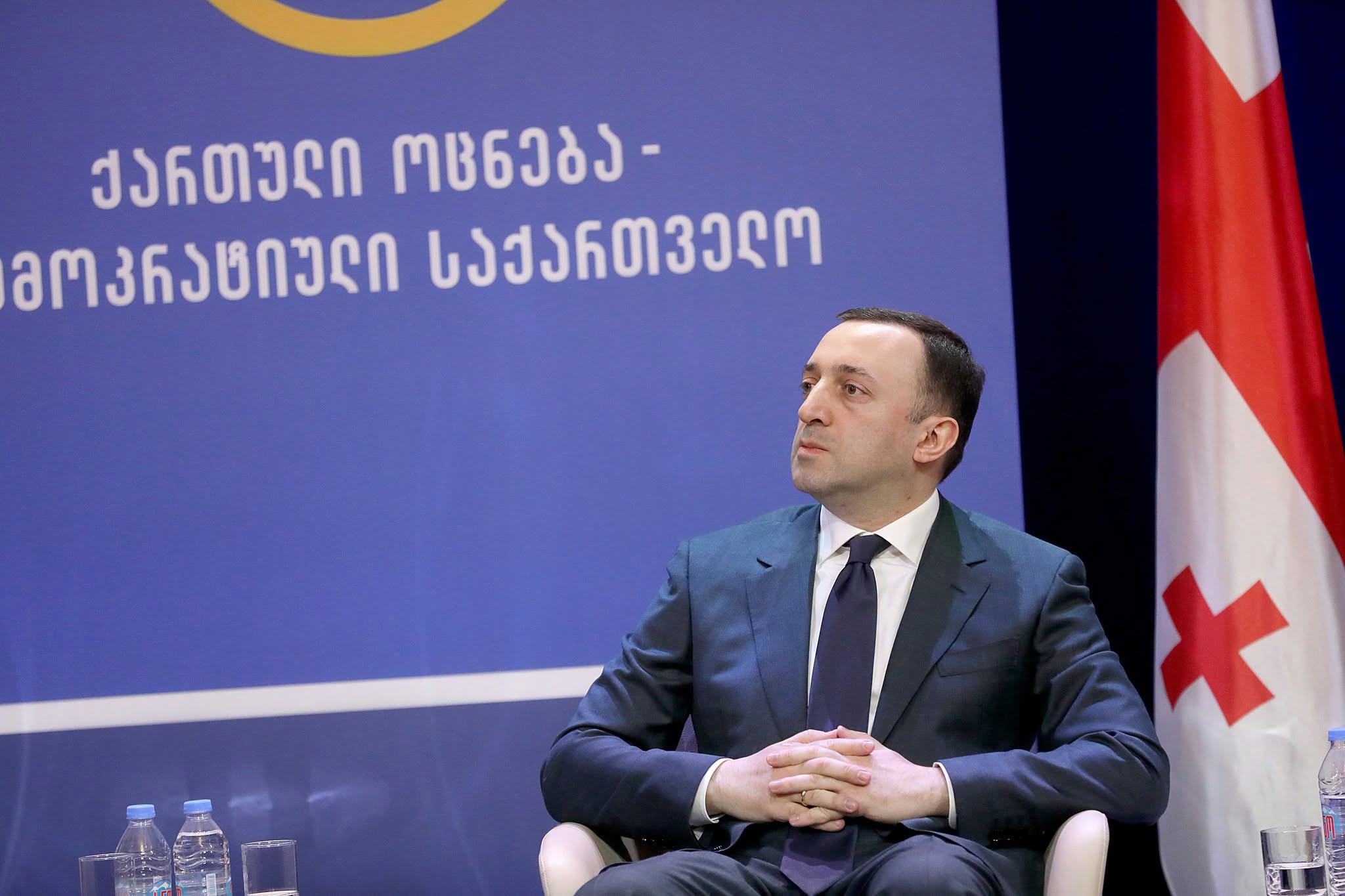
Photo: Facebook page of former Prime Minister Irakli Garibashvili.
-
Tuesday, August 18, Armenia. Security Council Secretary Armen Grigoryan threatened to “crush the [pro-Russian] opposition” and mentioned former President Robert Kocharyan
● Armenia’s Defense Minister Suren Papikyan said on Facebook that the army is engaged in a systematic fight against the criminal subculture. “By my order, groups of officers from the ministry and General Staff will be sent to military units to support officers serving on the ground and help organize military service,” Papikyan wrote.
● “Armenia has effectively frozen its participation in the CSTO (a Russia-led military alliance) and no longer maintains practical relations with the alliance,” ruling-party MP Artur Hovhannisyan told journalists, commenting on CSTO officials’ statements about possibly stripping Yerevan of its voting rights or even expelling it. “In my view, we have already passed the point of no return to some extent,” he said. Read more here
● Social media has seen heated debate over a statement by former National Assembly speaker and, since August, Security Council Secretary Armen Grigoryan. He posted a message threatening to “crush the opposition” and mentioned former President Robert Kocharyan in this context. Armenia’s opposition, like Kocharyan, has a pro-Russian reputation. Kocharyan’s office chief responded that “Armenian citizens expect the Security Council secretary to coordinate the security system, not post arrogant statuses.”
● During Indian Defence Secretary Rajesh Kumar Singh’s visit to Yerevan, Armenia and India signed a document outlining a new format for cooperation between the two countries’ armed forces’ general staffs. Singh met with Armenian Chief of General Staff Edvard Asryan, Defense Minister Suren Papikyan and High-Tech Industry Minister Davit Tadevosyan. The talks resulted in a memorandum of understanding on research, innovation and joint production in the defense industry. Experts say the document marks “a shift from simply importing weapons to deeper technological cooperation” between the two countries.
● Melikset Poghosyan, Razmik Petrosyan and Kamo Vardanyan have been dismissed as advisers to the defense minister.
● Ruling-party MP Andranik Kocharyan commented on the personnel changes and the appointment of Aram Hovhannisyan as head of the military police: “Personnel changes or dismissals in the armed forces command are a natural process and fall within the competence of the Defense Ministry.”
● Protests over problems selling agricultural produce continue. The issue is linked to an almost total Russian ban on imports of Armenian products, introduced in response to statements by Armenian authorities about their course towards European integration. This has dealt a serious blow to farmers, as Russia had been the main market for Armenian fruit, vegetables, fish and other products for decades. This time, residents of the villages of Khandjyan and Atsyq in Armavir province blocked a highway, demanding a solution. “We can wait, but peaches can’t!” villagers told the head of the local administration, who arrived at the scene.
● Azerbaijan exported $17.3 million worth of goods to Armenia in six months, Azerbaijani media report.
● Georgia’s watermelon exports to Armenia fell 118-fold, Georgian media report.
● Ruling-party MP Sisak Gabrielyan said the government plans to attract more foreign students to Armenia. According to him, their number is expected to reach 15,000 over the next five years. He also said the government plans to double science funding to 1% of GDP.
● Ways to reduce plastic waste were discussed in Yerevan at a meeting between Lusine Avetisyan, head of a department at the Environment Ministry, and Greenpeace representatives. The discussion focused on changing consumer behavior, the importance of educational and awareness programs, and encouraging demand for reusable, more environmentally friendly products.
● At the request of Georgia’s Prosecutor General’s Office, a wanted Armenian citizen identified as K.O. was detained in Georgia and extradited to Armenia. He is accused of acquiring and carrying a bladed weapon, escaping from detention and illegally crossing the state border.
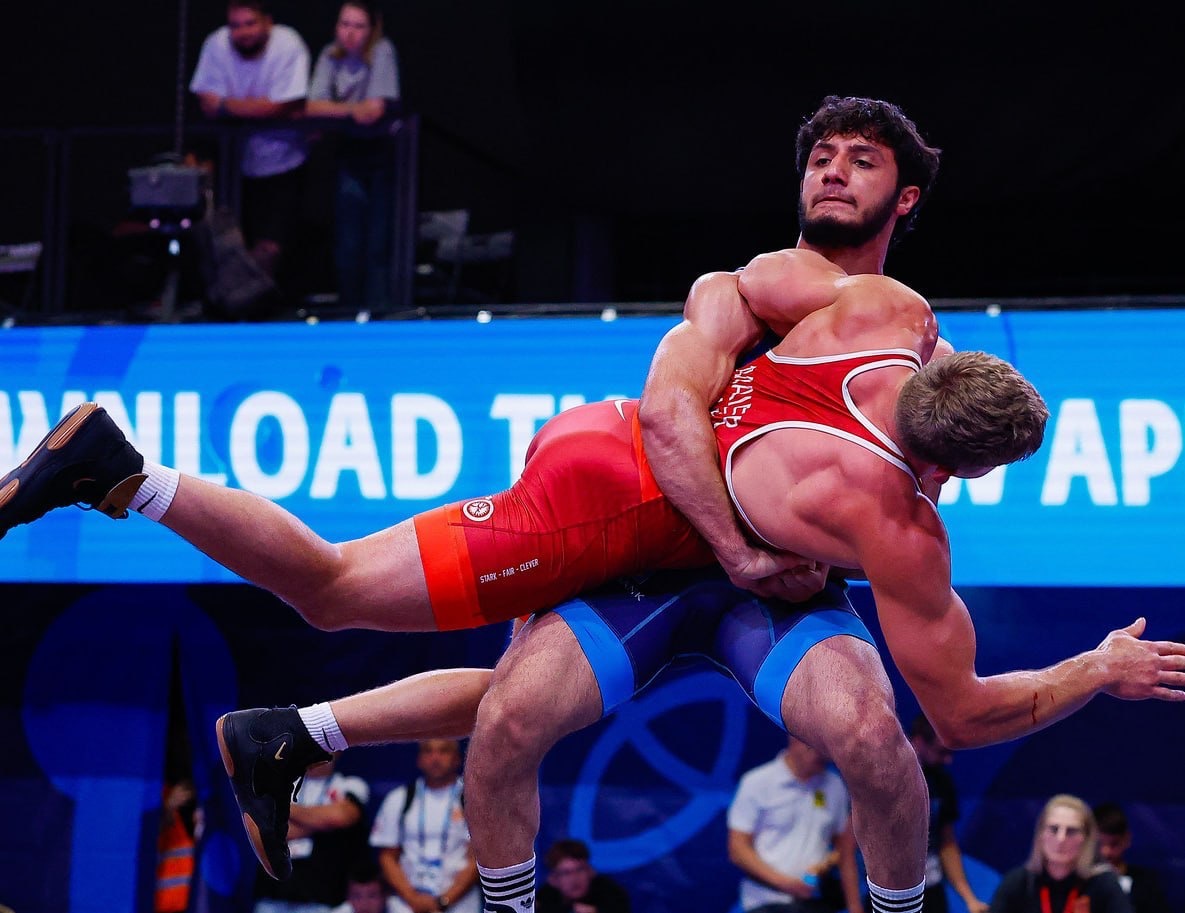
● Armenia’s Samvel Terteryan (77 kg) won gold at the U20 World Greco-Roman Wrestling Championships, defeating Azerbaijani wrestler Javidan Nematov.
● Another Armenian medalist at the U20 championships, Yurik Petrosyan (87 kg), won silver.
-
Monday, August 17, Armenia. Armenian PM appoints graduates of leading global universities to senior government posts
● Moscow has again commented on Armenia’s membership in the Russia-led Collective Security Treaty Organization (CSTO). “From the very beginning, Armenia was an active and constructive member state, making a worthy contribution to strengthening the collective potential, and the CSTO member states continue to regard the country as an ally within the organization,” CSTO Secretary General Taalatbek Masadykov said. He added that CSTO members were ready to discuss with Yerevan “without exception, all issues related to the resumption of the Armenian side’s full-fledged participation in joint work.”
Yerevan froze its participation in the CSTO in 2024 and stopped making payments to the organization’s budget the same year. The move came in response to what Armenia described as its allies’ failure to fulfil their obligations. Armenia had sought CSTO assistance after Azerbaijani forces entered its sovereign territory. There were three significant incursions deep into Armenian territory in 2021–2022. Armenia received neither military intervention from its allies nor a political assessment of the situation.
Against the backdrop of deteriorating relations between Armenia and Russia in recent years, Moscow has periodically reminded Yerevan that, under the organization’s charter, failure to settle its outstanding debt could result in the loss of its voting rights and even expulsion from the bloc. The latest warning came last week. But as recently as June, Armenia’s prime minister said he was “not concerned” about the possibility of being expelled from the CSTO. “If the member states decide to expel Armenia, we will have to take note of that decision,” he said.
● “The European Union welcomes the progress made between Baku and Yerevan over the past year following the Washington agreements [of August 8]. Brussels believes it is necessary to continue implementing the agreements reached and ensure the signing and ratification of a peace treaty,” EU foreign affairs spokesperson Anita Hipper said.
● Acting Deputy Foreign Minister Vahan Kostanyan attended celebrations in Kyiv marking the 975th anniversary of the founding of the Kyiv-Pechersk Lavra. During brief meetings with Ukraine’s president and foreign minister, he conveyed congratulations from the Armenian leadership on the occasion. According to reports, “the interlocutors particularly stressed the importance of maintaining continuous dialogue in order to enrich the bilateral agenda and further strengthen relations.”
● Two graduates of leading global universities have been appointed to senior government positions by decision of Armenia’s prime minister. Aram Khachatryan has been appointed deputy minister of economy, while David Tavadayan has been appointed chairman of the State Property Management Committee.
These are the first appointments under a pledge made by Prime Minister Nikol Pashinyan in June, shortly after his party won the parliamentary elections. He invited graduates of the world’s top universities to join the Armenian government. A total of 1,141 people responded to his call. Following interviews and professional assessments, 459 advanced to the second stage. The average age of those selected was 34. The prime minister said that the strongest candidates would be offered positions in the public sector over the course of the year.
● Major renovation work on the roadway of the Kiev Bridge in Yerevan has been completed. The construction work lasted about two months, during which the bridge and neighbouring streets were closed to traffic. City authorities said waterproofing and drainage systems had been replaced, expansion joints renovated, pavements resurfaced and new road markings applied. Work to reinforce the bridge’s supports and arches, however, will continue until the end of the year. This work will be carried out without disrupting traffic. Under the government’s programme, 40 bridges are to be built or renovated over the next five years.
● “The country’s backbone rests on Armenian exporters, and losing their market in Russia will affect every citizen. The state must understand this. It is a profound mistake to believe that the problem will be resolved and exports will continue. Business does not wait: Armenian beverages, cheese, fish and agricultural products will be replaced by Georgian, Azerbaijani, Moldovan and Uzbek goods.” Opposition Prosperous Armenia party leader and businessman Gagik Tsarukyan made the statement from detention. He has been under arrest since early July and is accused of large-scale fraud, money laundering and extortion.
● Strong winds in various parts of Yerevan and several regions of Armenia tore off roofs, damaged power lines and brought down trees. Several cars were reportedly damaged, while a streetlight collapsed in Republic Square in the centre of the capital and scaffolding fell near one of the shopping centres. “The main thing is that no one was injured,” the centre’s director told journalists.
● A settlement dating back around 15,000 years has been discovered in Yerevan at the site earmarked for the construction of an Academic City. Archaeologists said 42 structures with earthen floors had been found across an area of about 500 square metres. They said the significance of the discovery lies not only in its age. Scientists believe it is unique to the region and could provide new information about the settlement of the area.
Archaeologists believe the discovery could become part of the Academic City project and have proposed preserving it alongside the future complex. They say the unique archaeological site could become part of the identity and branding of the future Academic City, whose construction is scheduled to be completed by 2030. The complex is to include 16 universities, with capacity for 44,000 students and staff.
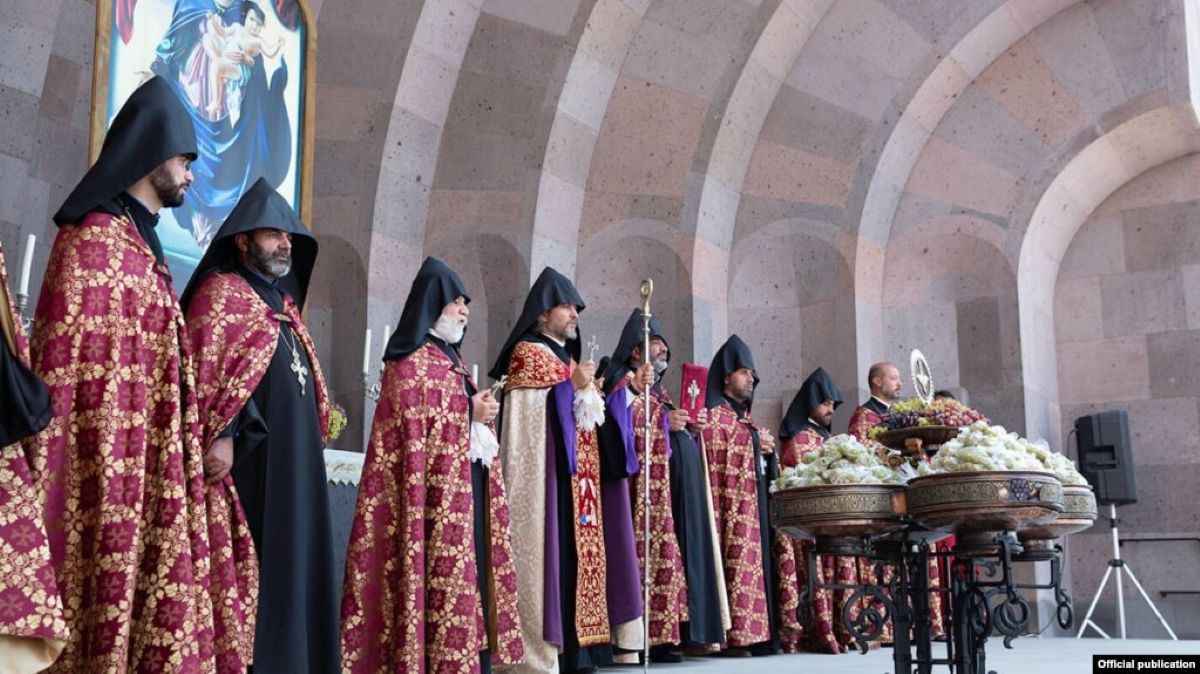
● Armenia celebrated one of the country’s most widely revered church holidays — the Feast of the Assumption of the Holy Virgin Mary. On this day, churches hold a ceremony blessing grapes. According to tradition, believers refrain from eating grapes from the new harvest until the holiday. The Armenian Apostolic Church considers grapes the “king of fruits” because wine used in the sacrament of Holy Communion is made from them. After the blessing, the grapes are distributed among worshippers.
-
Monday, 17 August, Georgia. Georgia’s opposition is demanding that the authorities explain the circumstances surrounding fuel deliveries to Abkhazia
● Georgia’s opposition is demanding that the authorities explain the circumstances surrounding fuel deliveries to Abkhazia. Opposition politicians are questioning the legal basis for moving fuel into territory not controlled by Tbilisi and the volume of the deliveries. Some suggest that the shipments may have been preceded by contacts with the Russian side.
• “I am certain that there was direct communication with Russian representatives, who likely demanded such assistance and support from Georgia’s current authorities. If that is not the case, then a particular businessman has violated Georgia’s Law on Occupied Territories, and appropriate measures should be taken against him,” Salome Samadashvili said.
• Tengiz Tevzadze of the Coalition for Change links the deliveries to a possible further rapprochement between Georgia and Russia. He warns that normalizing such steps could eventually lead to discussions about restoring diplomatic relations and railway links.
• Giorgi Sharashidze of the For Georgia party says the authorities should first clarify whether the deliveries were humanitarian in nature or part of economic activity. According to him, even the exact volume of fuel is unknown — it could be 300, 3,000 or 300,000 tonnes — and the government and prime minister are responsible for providing answers.
● Meanwhile, new fuel shipments are arriving in Abkhazia. Activists in western Georgia have published footage showing three more fuel tankers crossing the Enguri Bridge from territory controlled by Tbilisi.
● A court in Ozurgeti has ordered the continued detention of a minibus driver accused of causing an accident on Mount Gomismta in the Guria region that killed four foreign tourists. The prosecutor’s office charged him with violating traffic safety rules resulting in the deaths of more than two people. The offense carries a prison sentence of up to 10 years. According to the prosecutor’s office, the driver also did not have the appropriate category of driving licence.
● In the village of Chumlaki in Kakheti, farmers are dumping peaches they have been unable to sell. Locals say their harvest is spoiling because of difficulties finding buyers, forcing them to sell it at very low prices to avoid losing it altogether. Footage published by activists shows piles of still-fresh peaches dumped at a landfill. Farmers say many fruits are still left on the trees, but harvesting them without any guarantee of finding buyers is becoming pointless. One local resident also said that imported produce, including peaches from Armenia, is being sold on the Georgian market while local producers struggle to find buyers.
● “The killing of stray dogs must stop”: animal rights activists held another protest outside the government administration building in Tbilisi. Participants are calling on the authorities to regulate the sector and answer questions about the fate of stray animals. Activists are particularly concerned about cases in which dogs are taken from the streets at night. They are demanding to know where the animals are being taken and why even vaccinated and identified dogs are being removed. Animal rights advocates suspect that municipal shelter staff have effectively been given the authorities’ “green light” to capture vaccinated and identified dogs as well. They are calling for greater transparency and public explanations from the relevant agencies.
● On October 3, by-elections for local councils, or sakrebulos, will be held in four Georgian municipalities: Vani, Tsalka, Dmanisi and Akhmeta. The elections were called after the early termination of the mandates of majoritarian councillors.
● From April to June, 719 Georgian citizens were returned from EU countries under readmission procedures. According to the Interior Ministry, it considered 733 readmission requests in total, rejecting 14. The largest number of returns came from Germany — 327 people, followed by France with 142 and Greece with 58.
● In Chakvi, Adjara, a 35-year-old man was killed after being struck by a train. According to local residents, the victim was a Belarusian citizen. The Interior Ministry has launched an investigation into a violation of railway safety rules. The body was sent for a forensic examination.
● The Interim Committee for the Rehabilitation of the ancient Gelati Monastery has denied reports of the mass collapse of frescoes inside the church. According to the committee, all critical areas have been stabilized and planned conservation work is continuing. The committee also said the monastery’s temporary roof was manufactured in Germany specifically for Gelati and is a high-tech structure made of specialized material. The statement comes amid public criticism of the quality of the ongoing restoration work at the monastery.
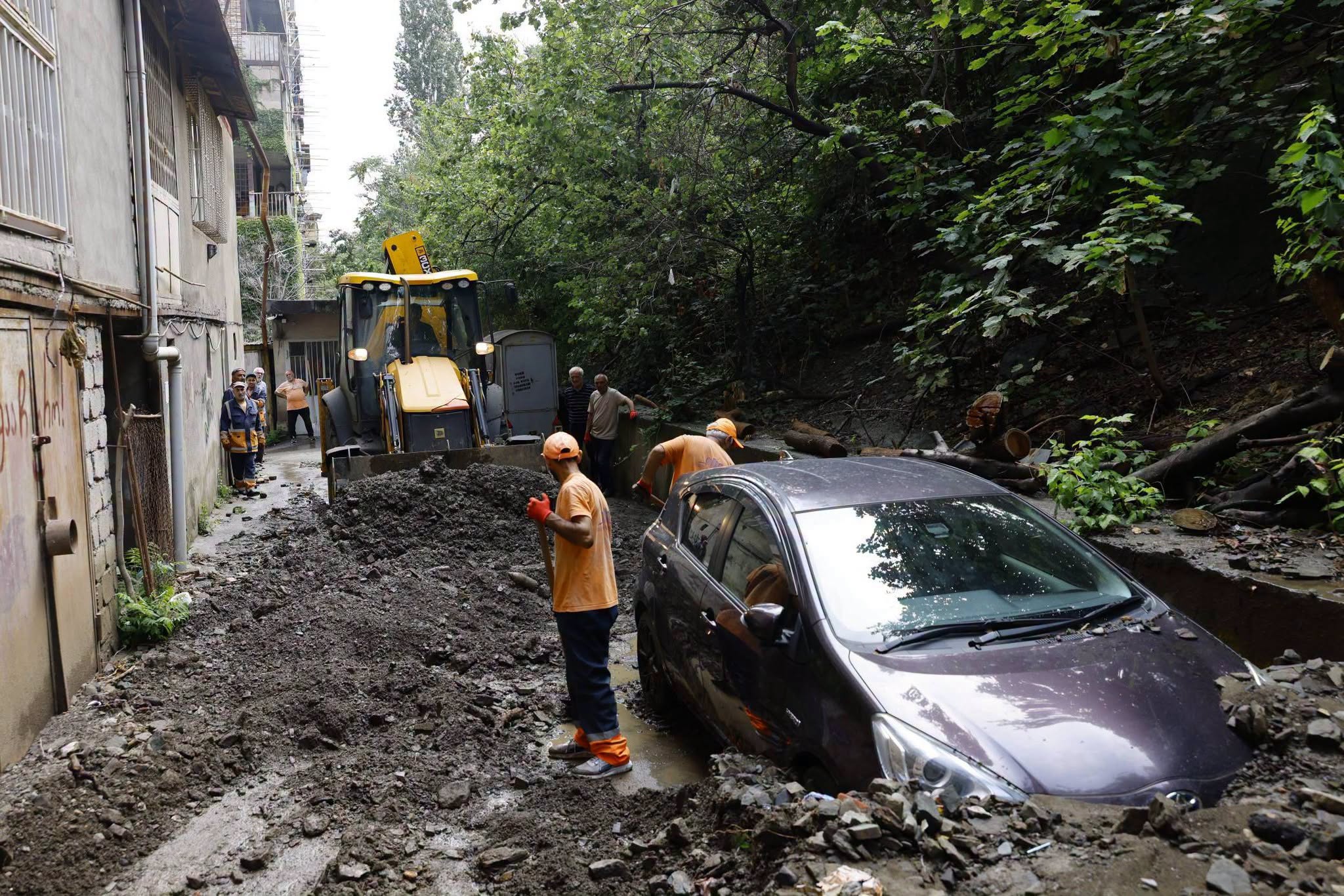
● Bad weather will continue in Georgia until midweek, according to the National Environment Agency. A storm front is expected to move through western Georgia. Sudden flooding and inundation are possible on small rivers, while landslides may occur in hilly and mountainous areas. The level of risk is assessed as moderate.
📸 Tbilisi after heavy rain. Photo: Tbilisi City Hall
-
Monday, 17 August, Azerbaijan. ILN: Restrictions on human rights and freedoms continue in Azerbaijan
● An investigation is underway into a tragedy at the Sea Breeze entertainment complex in Baku. A four-year-old child died in a swimming pool after his leg became trapped in a water pump. The rescue and ambulance teams that arrived at the scene were unable to save the child. The luxury resort complex is owned by Emin Agalarov, former son-in-law of Ilham Aliyev and a key figure in Azerbaijan’s entertainment industry.
● The International organization Independent Lawyers Network (ILN) has published a report on the state of human rights around the world during the first six months of 2026. Regarding Azerbaijan, it noted that restrictions on human rights and freedoms continued, while new rules were also introduced that further limit the activities of the media and civil society. In particular:
• At least nine Azerbaijani online media outlets have been shut down by court decisions since the beginning of the year. The main reason cited was that the outlets had not registered in a special state registry.
• Since January, liability has been introduced for “violations of public morality,” “expressing open disrespect for society” and “disregarding national and moral values.” By the end of June, 206 fines ranging from 500 to 1,000 manat (approximately $300–600) had been issued in such cases. The new laws also allow for administrative detention of up to one month.
• In 2026, the National Cybersecurity Agency was established in Azerbaijan and given powers to “protect personal data and identify information prohibited from being disseminated online.” ILN expressed concern that these powers could affect freedom of expression.
• According to ILN, at least 49 citizens have been prosecuted in cases related to foreign funding and grants. Of these, 11 have been convicted and 27 are being held in pre-trial detention.
• ILN also noted complaints of torture and ill-treatment of detainees at the Baku pre-trial detention centre. According to the report, at least eight complaints were filed during the first six months of the year, but they were not effectively investigated.
● Amnesty International has officially called on Azerbaijani President Ilham Aliyev to release 12 people detained in the Meydan TV case. The organization says the currency-smuggling charges against them are politically motivated and aimed at suppressing independent media outlets critical of the authorities. Amnesty International is also concerned about their detention conditions and reports of ill-treatment in prison. Journalist Aytaj Tapdyg is specifically mentioned. The European Federation of Journalists had previously expressed concern over her health and the denial of access to medical care.
● A new transport project in Georgia — the construction of a bypass road around Tbilisi — is of particular importance for Azerbaijan. The road will connect the E60 international highway with the Kakheti Highway. This will allow transit vehicles entering Georgia from Azerbaijan to bypass Tbilisi, making their journey faster and easier. Georgian authorities said that widening the existing road and building the new route would improve transport links between Rustavi, eastern Tbilisi, Tbilisi International Airport and new industrial zones, while significantly reducing traffic on the capital’s roads. The total cost of the project is $250 million, with construction financed through a loan from the Asian Development Bank. Tenders for two lots have now been announced as part of the project.
● The World Rhythmic Gymnastics Championships will be held in Baku in September 2027. On Sunday, at the closing ceremony of the 42nd World Rhythmic Gymnastics Championships in Frankfurt, the championship flag was handed over to representatives of Azerbaijan.
-
Top stories in Azerbaijan, Armenia, and Georgia from 10-14 August, 2026