Georgian Orthodox Church succession battle: leading contenders, Moscow's shadow and fight for power






Election of Georgia’s patriarch
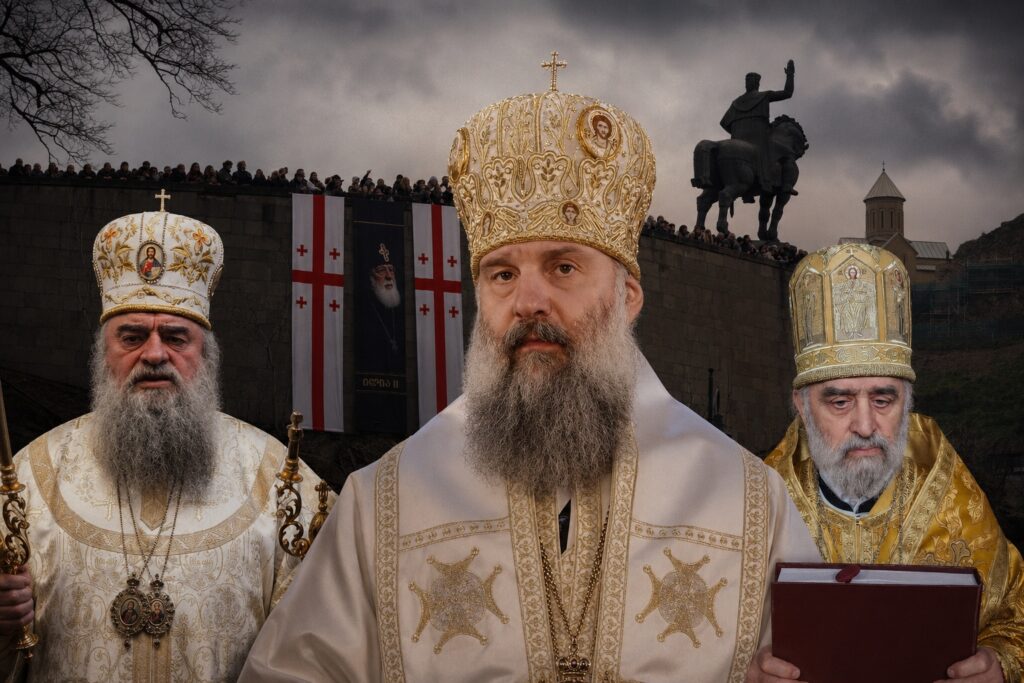
The election of a new head of the Georgian Orthodox Church is entering a decisive phase. On 11 May, an expanded session of the Holy Synod will be held and a new patriarch will likely be chosen — unless the vote proceeds to a second round.
After the first synod session, it became clear that the locum tenens of the patriarchal throne, Metropolitan Shio Mujiri, is the main frontrunner. However, his current advantage appears both strong and increasingly fragile at the same time.
From the outside, the process may look like an internal church ritual: hierarchs gather, vote and determine the candidates. In reality, its significance goes far beyond the question of who will succeed late Ilia II. In reality, the future of the country’s most influential institution is at stake, and whether it will become even more closed and closely tied to the authorities, or retain the possibility of internal renewal.
According to experts, Moscow is also closely following this struggle.
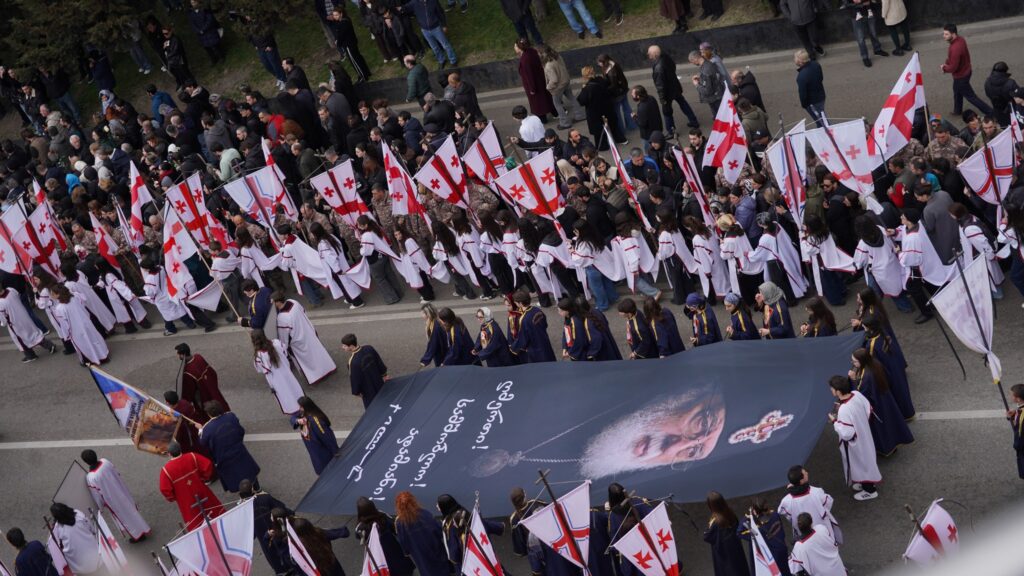
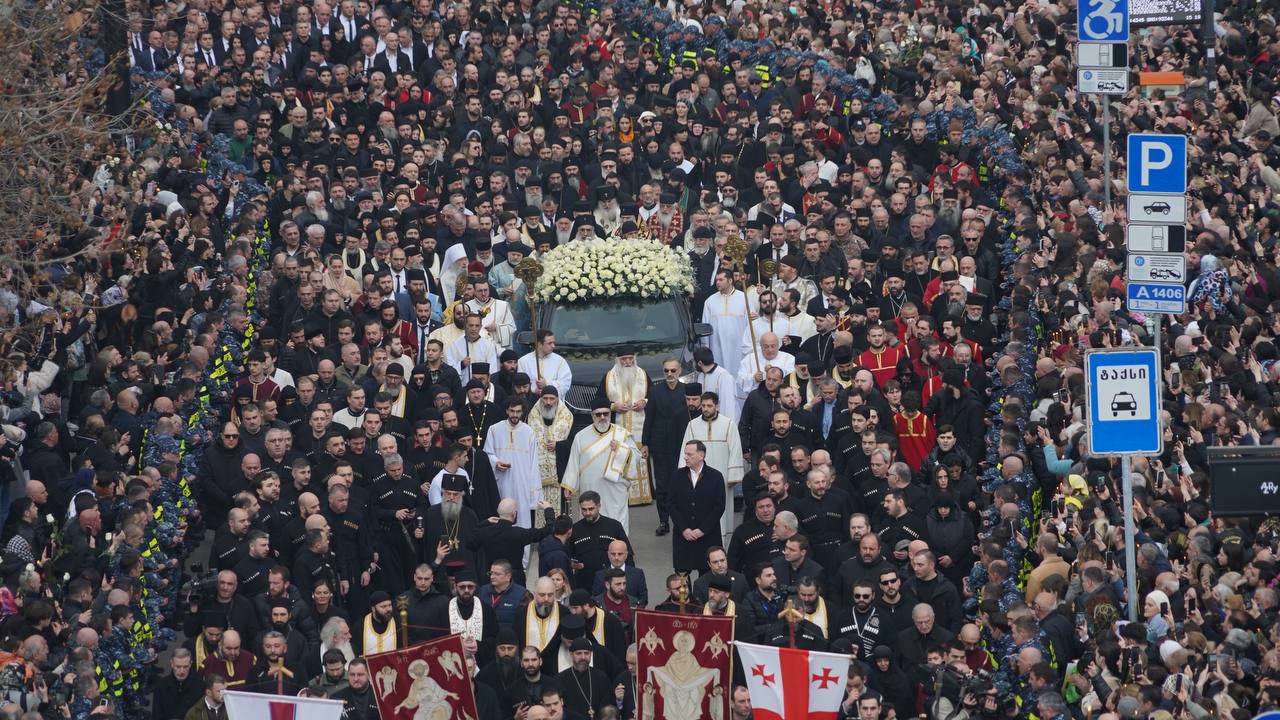
Catholicos-Patriarch Ilia II, who held the post of the country’s spiritual leader for almost half a century, died on 17 March. For several days, the historic centre of Tbilisi turned into a place of national mourning.
The Holy Trinity Cathedral, where the patriarch’s body lay in state, did not empty even at night. People came to pay their respects with their entire families, including small children. Traffic in the capital was partially restricted on the day of the funeral.
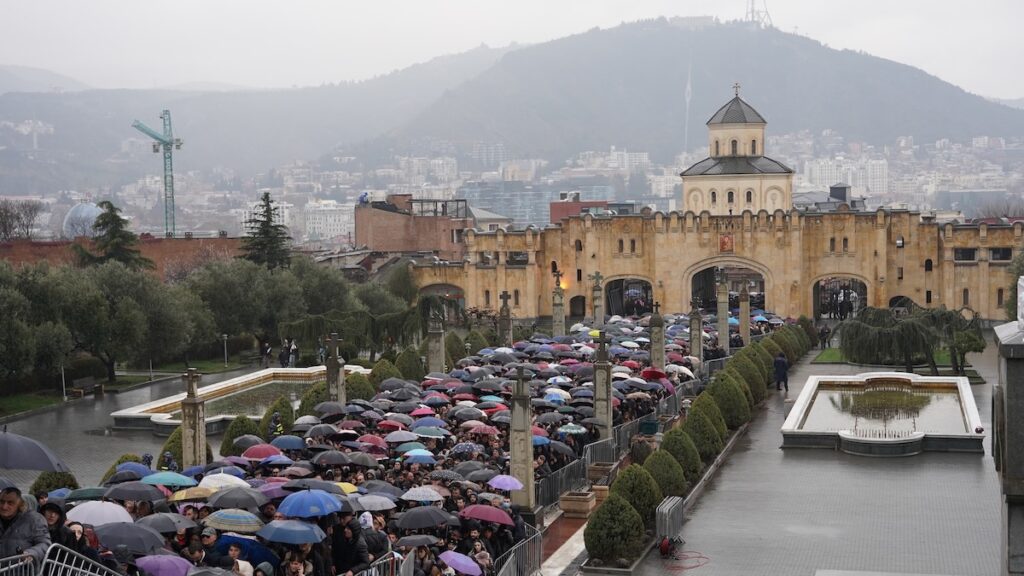
But the mourning almost immediately turned into a political event. The authorities became actively involved in organising the funeral: controlling access, shaping the public display of mourning and constructing its official narrative around it. On the day of the funeral, at the Sioni Cathedral, locum tenens Shio personally introduced Ecumenical Patriarch Bartholomew I to Bidzina Ivanishvili, the honorary chairman of Georgian Dream.
Will Shio Mujiri be appointed?
On 28 April, the Holy Synod selected three candidates, one of whom is likely to become the new head of the Georgian Orthodox Church. The vote was held by secret ballot.
The 39 members of the Synod distributed their votes as follows: the locum tenens of the patriarchal throne, Metropolitan of Senaki and Chkhorotsku Shio Mujiri, received 20 votes. Metropolitan of Mrovi-Urbnisi Iob Akiashvili and Metropolitan of Poti and Khobi Grigol Berbichashvili received seven votes each. The remaining votes were split among other candidates.
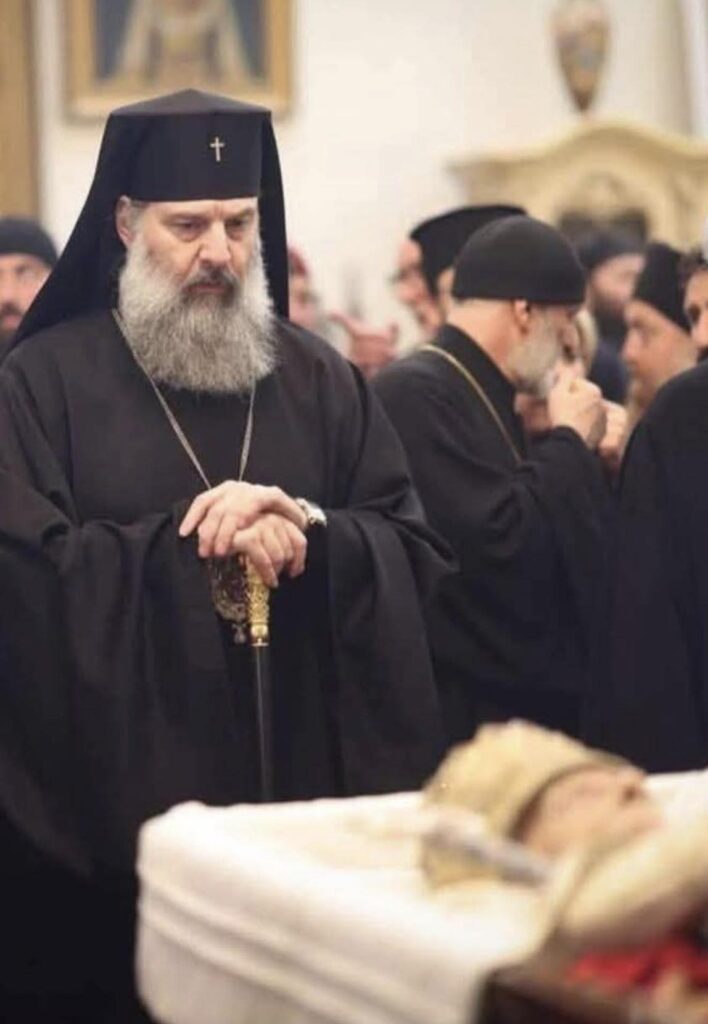
Formally, this is a victory for Shio. A minimum of 20 votes is required to be elected patriarch, and he received exactly that number. But this is precisely what makes his position vulnerable: almost half of the Synod did not support him. Losing just one vote would be enough for him to lose his majority.
Theologian Mirian Gamrekelashvili believes that the large-scale campaign surrounding Shio created the impression that his victory was inevitable. But inside the Synod, he says, the situation is more complicated.
“One lost vote may not simply mean the loss of one vote — it could mean that wavering bishops begin to follow suit. It could turn into a landslide,” Gamrekelashvili says.
According to him, significant resources were spent promoting Shio: accounts were created on social media, bots and chat groups operated, and reels and other supportive material were circulated online.
Such a campaign may not directly influence bishops’ choices, but it helps shape the wider public atmosphere.
What matters far more, Gamrekelashvili argues, are individual negotiations, promises, fears and information accumulated within the church over many years.
“Metropolitan Shio and his team accumulated a certain level of experience, gathered information, studied these people and understood what to promise to whom and how to pressure others. In simple terms: if I come to power and you are not among my supporters, I will do this or that to you — transfer you somewhere else, accuse you of something. There can be many variations.”
“The most trusted institution”
There are few countries in the post-Soviet space where the church enjoys greater trust than any state institution, with Georgia standing out as perhaps the strongest example.
Eighty-three per cent of the country’s population identify as Orthodox Christians. But the Georgian Orthodox Church is not only a spiritual authority. It is also one of the wealthiest and most organised institutions in the country. The state allocates around 25 million lari to it annually. The patriarchate owns more than 62 square kilometres of land — an area comparable to the size of Batumi. More than 30 of the Synod’s 39 members are linked to various businesses and own significant property assets.
For almost five decades, all of this power and influence was embodied by one man.
Ilia II became Catholicos-Patriarch in 1977, during the Soviet era, when religion was officially persecuted. He brought the church out of the margins of public life, made it part of the core of national identity and, after Georgia regained independence, became a figure trusted by different sides during periods of crisis.
He led the church through wars, coups and street confrontations. His word carried weight.
Now that place is vacant.
Three candidates — three models of future
Two potential candidates were barred from participating in the election ahead of the vote. Metropolitan Daniel was excluded because of his age — he is over 70 — while Metropolitan Isaiah was rejected due to the absence of “higher theological education”.
The decision was criticised by representatives of various church and expert groups. Theologian Beka Mindiashvili argued that the concept of “higher theological education” could have been interpreted more broadly — to include extensive monastic, pastoral and episcopal experience.
For the locum tenens’ campaign, the decision proved beneficial. Metropolitan Daniel had been considered a strong competitor. After his exclusion, some of his votes likely shifted to Shio’s camp.
The three candidates selected by the Synod represent different possible futures for the Georgian Orthodox Church.
Shio Mujiri: system’s successor
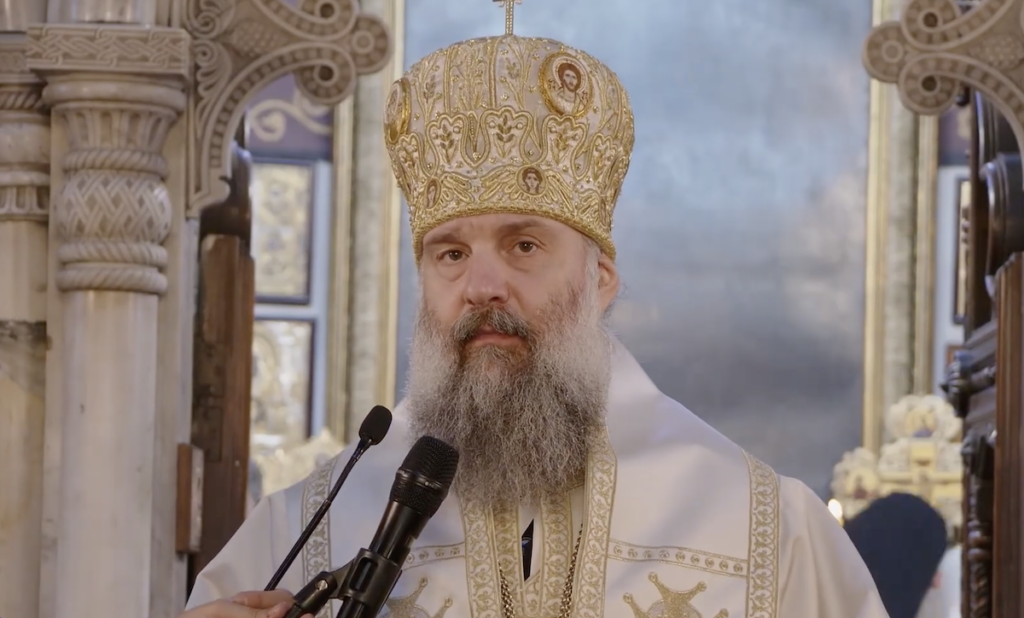
The 57-year-old Metropolitan Shio Mujiri has for nine years been viewed as the official successor to Ilia II. His biography largely explains why his candidacy provokes so much controversy.
He was born in Tbilisi, trained at the conservatoire as a cellist, took monastic vows at the Shiomgvime Monastery and later spent several years in Moscow. There, he served as rector of the Georgian community’s church and studied within the structures of the Russian Orthodox Church.
“Metropolitan Shio often repeats the core principles of the Russian conservative narrative. If you look at a series of his sermons about the role of women and compare them with what is happening in the Russian Church, it becomes clear that they are practically identical,” says theologian Mirian Gamrekelashvili.
In 2017, shortly before Shio was appointed locum tenens, Metropolitan Hilarion Alfeyev visited Georgia. At the time, he was considered the “right-hand man” of Patriarch Kirill and effectively headed the foreign relations department of the Russian Orthodox Church. Any connection between that visit and Shio’s appointment remains speculative, while the patriarchate categorically denies it.
Alfeyev later found himself in a difficult position: in 2022 he was removed from his post, and in 2024, amid a scandal involving property and blackmail allegations, he was temporarily suspended from overseeing the Budapest diocese.
There is also another episode. In 2023, “heavy metals” were reportedly found in the blood of the locum tenens. A criminal case was launched under an article concerning attempted premeditated murder. The investigation is still ongoing.
For Shio’s supporters, his 20 votes are proof of strength. For his critics, they are a sign of fragility.
“Almost half of the Synod does not support the locum tenens. It is a fragile majority,” says Levan Sutidze, editor of the online outlet Tabula and a religious affairs commentator.
Grigol Berbichashvili: reformist alternative
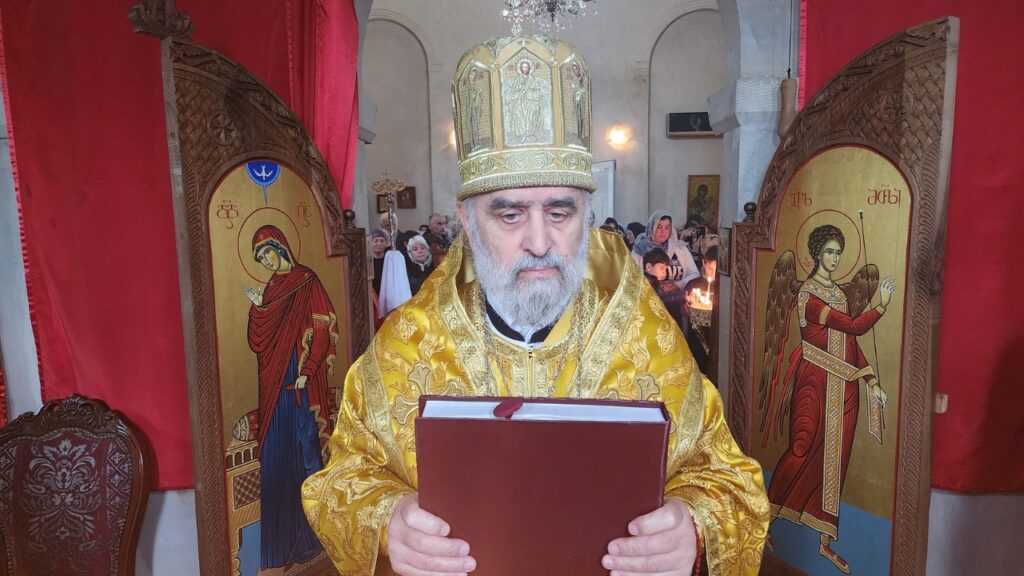
Metropolitan of Poti and Khobi Grigol received seven votes. Theologians regard him as the most reform-minded figure among the three candidates.
One of his key messages is highly explicit: the Georgian Orthodox Church must not end up in Russia’s orbit.
This issue has become particularly important since 2019, when the Russian Orthodox Church entered into a schism with the Ecumenical Patriarchate and the Church of Greece over the recognition of the autocephaly of the Orthodox Church of Ukraine. The Georgian Church has so far maintained a cautious position and has not recognised Ukrainian autocephaly.
If Russia ultimately formalises this schism, it will try to draw Georgia into its isolation as well, Mirian Gamrekelashvili warns:
“Imagine this happens and the Georgian Church is faced with such a choice, while our patriarch proves not strong enough and submits to Russia’s will. Our 1,700-year-old tradition could be lost with a single stroke of the pen,” he says.
Grigol has also spoken about the need to create a social doctrine for the church — a document setting out its position on modern challenges, from artificial intelligence to the family.
Iob Akiashvili: nationalist conservatism
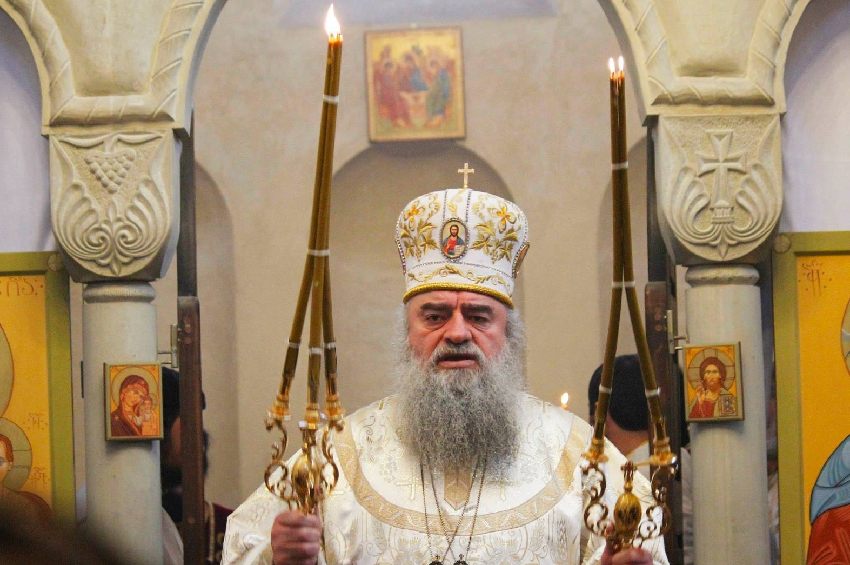
Metropolitan Iob, who also received seven votes, represents a different kind of conservatism. His campaign message centres on restoring a medieval model of the church and reviving the symbolic institution of the “anointed king”.
In the past, Iob supported Georgian Dream, but after the street violence of 2019 he criticised the authorities, effectively cutting off any path towards an alliance with the ruling party.
His niche is neither Western liberalism nor necessarily the Russian church project. Rather, it is a form of nationalist authoritarianism built around the church.
According to Mirian Gamrekelashvili, “Iob’s conservatism is based on a nationalist rather than a Russian narrative.”
Authorities deny interference — but the reality appears more complex
The ruling party insists that it is not interfering in church affairs. In practice, however, that claim appears increasingly unconvincing.
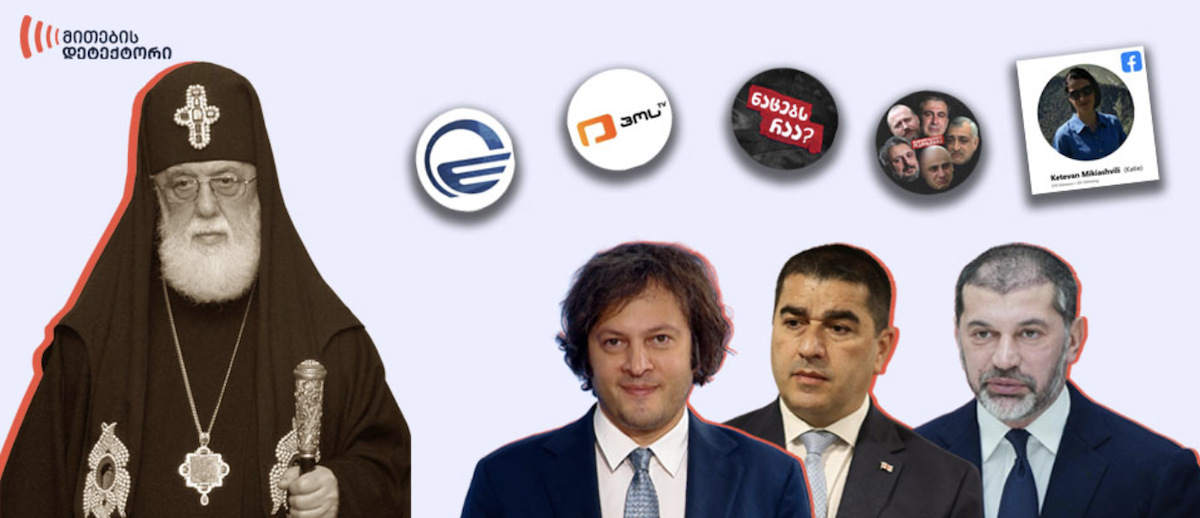
On 28 March, ten days after the death of Ilia II, Prime Minister Irakli Kobakhidze said the authorities had needed to launch a “counter-campaign” to stop what he described as a “campaign against the church”. He accused the opposition, media outlets and non-governmental organisations of organising it.
“These were not isolated politicians, but the entire spectrum — parties, media and NGOs. All together they were involved in a campaign against the church. We had to make very significant efforts to slow down and stop this campaign,” Kobakhidze said.
Georgian Dream’s efforts were indeed visible. Before the Synod vote, pro-government propagandist Giorgi Gachechiladze publicly demanded that all bishops withdraw their candidacies in favour of Shio. He also slammed all those who refused “traitors”.
According to Mirian Gamrekelashvili, such pressure can be as effective asa direct orders.
“Over the years, Georgian Dream has made it very clear to hierarchs what it is capable of. They were shown: we would not spare even the patriarch — we already tried to discredit him. And now imagine what would happen to you if we noticed that you were doing something we did not want.”
Moscow’s shadow over patriarchal election
The Russian factor in the election of a new patriarch is one of the most sensitive — and one of the hardest to prove — aspects of the process.
There is almost no direct evidence of how, exactly, or over whom Moscow exerts influence. But there is context, biographies, public statements, church diplomacy and historical memory. Together, these factors have turned Russia into one of the main shadows hanging over the election.
The issue is not only whether Russia has “its own” candidate. The question is broader: what kind of church will emerge after Ilia II? Will the Georgian Orthodox Church preserve its independent autocephalous position within the Orthodox world, or will it become more deeply drawn into Russia’s ecclesiastical and political orbit?
Russia’s influence is often associated specifically with Shio Mujiri.
One of the sharpest comments about him came from Archbishop Zenon Iaradzhuli:
“He is not Russia’s candidate, but Russia supports him — and I will always say that. Metropolitan Shio will not receive my vote. I have nothing to hide; I have said this before, and Metropolitan Shio knows it perfectly well,” Iaradzhuli said on air of Formula TV.
The Russian factor became even more visible after a statement by Russia’s Foreign Intelligence Service (SVR). The agency accused Ecumenical Patriarch Bartholomew I of attempting to interfere in the affairs of the Georgian Church and in the process of electing a new patriarch. Many interpreted the very fact of such a statement as a political signal from Moscow.
The patriarchate did not confirm the allegation. Patriarchate representative Andria Jagmaidze said that such interference by another local Orthodox church was “unthinkable” and “completely impossible” for the Georgian Church.
Beka Mindiashvili, by contrast, interprets the SVR statement as a direct attempt by Moscow to frame the patriarchal election.
“The positive thing is that the illusions have disappeared. The SVR did not release this statement by accident. Through it, they openly declared that they themselves are directly managing the process. There was no other purpose behind the statement.”
Russian influence is most clearly visible in the question of Ukrainian autocephaly. The Georgian Church has still not recognised the autocephaly of the Orthodox Church of Ukraine. For Moscow, this is not a secondary issue, but part of a much broader struggle for influence in the Orthodox world.
But Russian influence does not always operate through direct instructions. More often, it works through narratives — ideas translated into the local context through the language of “tradition”, “faith” and the “defence of identity”.
For years, parts of the Georgian clergy have repeated arguments resembling Russian conservative propaganda: that the West is destroying the family, liberalism is waging war on faith, LGBT rights threaten the nation and the church, and vaccines and modern technologies may become instruments of control.
Theologian Giorgi Tiginashvili directly links this to the Russian agenda:
“The Russian Church and the Kremlin frighten people with claims about gay marriage, about the West being morally corrupt and trying to corrupt us and enslave us through chips, vaccines and so on. These messages are identical everywhere the Kremlin’s reach extends. In this logic, Russian influence is not only church diplomacy. It is a cultural code that works through society’s fears.”
This is why the patriarchal election is connected not only to the church’s internal life, but also to Georgia’s foreign policy direction. The new patriarch will not simply become the head of the church hierarchy. To a significant extent, he will determine whether the church continues to legitimise an anti-Western cultural narrative.
Not everything can be explained by Moscow
At the same time, the Russian factor should not become a universal explanation for everything taking place. Levan Sutidze approaches the issue more cautiously: during the election campaign, there was indeed a widespread sense that “the Kremlin decided everything nine years ago”. But, in his view, such a formula does not explain the real struggle unfolding inside the Synod.
The Synod has 39 members, and every vote matters. The outcome depends not only on outside influence, but also on internal factions, personal interests, fear, private agreements, ambitions and long-standing conflicts.
“If Shio received 20 votes, that does not prove the Kremlin decided everything. It means that specific bishops, for specific reasons, at a specific moment, gave him their votes,” Sutidze argues.
This balance is important. Russian influence must be discussed, but it should not overshadow the internal struggle for power within the Georgian Orthodox Church itself.
For Moscow, these elections are objectively important. The Georgian Church is one of the country’s most influential institutions. It shapes public attitudes, elections, education, views on human rights and perceptions of Georgia’s foreign policy direction. For that reason, the new leader of such an institution cannot be irrelevant to Russia.
For Moscow, the Georgian Church can serve several purposes at once: a channel for strengthening anti-Western sentiment, a language of “traditional values” against Georgia’s European course, leverage in relations with Constantinople over Ukrainian autocephaly, and a sphere where soft power often works more effectively than overt political propaganda.
Theologian Beka Mindiashvili believes Russia is not prepared to relinquish influence over the Georgian Church.
“Even if genuinely Georgian власти return to the country, the church must remain under Russian control. This is a common plan of the Russian special services and Georgian Dream, which they have been pursuing consistently for a long time. In the future, when the Georgian state begins to stand firmly on its feet again, a Russia-controlled group within the church will have to obstruct this process in every possible way. You could say that the Russian Empire wrote this plan 300 years ago,” Mindiashvili says.
With the support of the media network.