Ten years after Brexit: Why are Britons looking back toward Europe?






Ten years after Brexit
Ten years ago, Britons voted to leave the European Union. At the time, supporters of Brexit promised to restore control over the country and put an end to years of disputes with Brussels. Today, however, nearly half of the UK population supports holding a new referendum, while the consequences of that decision continue to shape the country’s political and economic landscape.
Why did Brexit fail to deliver the promised stability? How did it reshape not only Britain but Western politics more broadly? And why, a decade later, has the question of the UK’s place in Europe returned to the forefront of public debate?
A report by Novaya Gazeta Europe
Fixing what was not broken
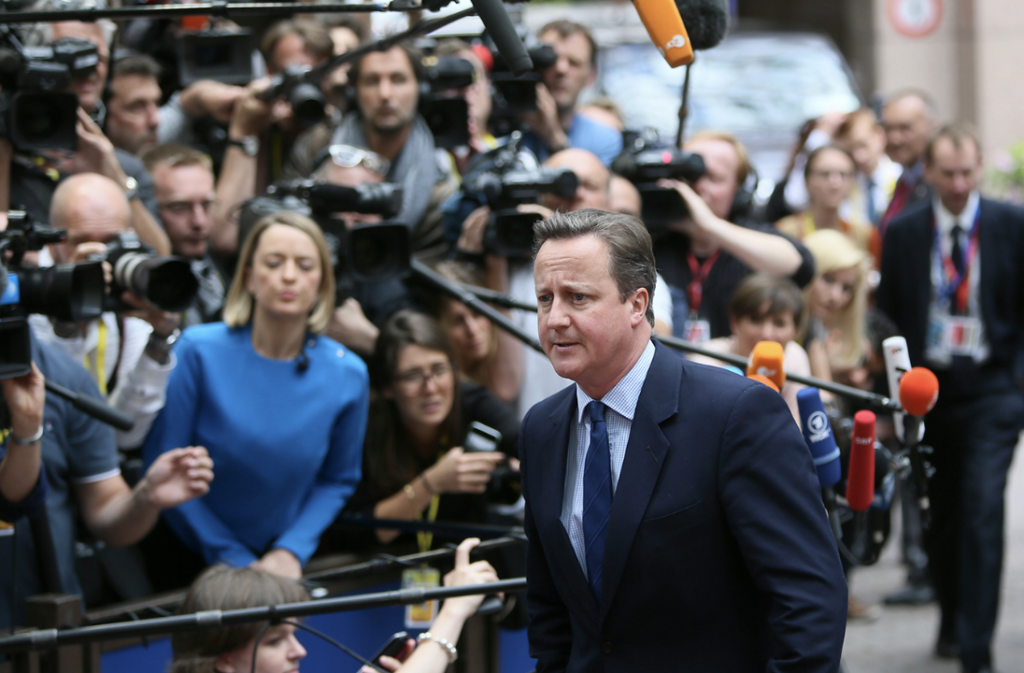
The actions of British Prime Minister David Cameron are often cited today as an example of how tactical calculation can turn into strategic defeat. By calling a referendum on leaving the European Union, he operated on the assumption that the UK already occupied an optimal position in its relationship with Brussels: benefiting from access to the single market and customs union while remaining outside both the eurozone and the Schengen Area.
The United Kingdom retained control over its borders and was not bound by a range of EU social and labor regulations that it viewed as constraints on economic competitiveness.
At the same time, London was not being pushed toward deeper integration. There was no new EU treaty forcing British policymakers into a difficult choice, nor was there widespread public anger over a perceived “dictate from Brussels.” Most Britons limited themselves to jokes about European bureaucracy and standards governing the shape of cucumbers and bananas. Membership in the EU was supported by all major political parties, as well as by the governments of Scotland, Wales, and Northern Ireland.
A natural question followed: why fix what was not broken?
After the 2014 referendum on Scottish independence, Cameron became convinced he could achieve a similar outcome on EU membership. This, in turn, would allow him to neutralize pressure from Eurosceptics within the Conservative Party and put the question of leaving the European Union to rest for the foreseeable future.
However, he made two key miscalculations. First, he brought the question to a referendum in the absence of a genuine public demand. Second, he underestimated the ability of Brexit supporters to mobilize fears related to migration, as well as growing anti-elite sentiment.
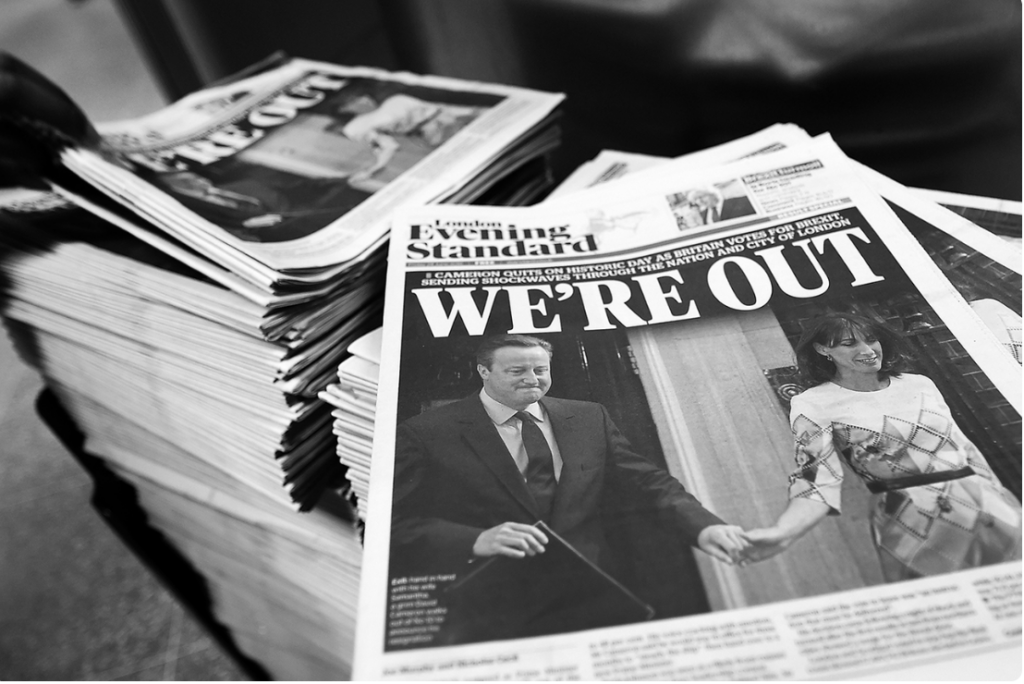
Following the vote on June 23, 2016, the pound sterling lost more than 10% of its value, reaching its lowest level since 1985. The FTSE 100 index also fell sharply. Cameron announced his resignation and left office as prime minister on July 13 of the same year.
On March 29, 2017, the formal process of the United Kingdom’s withdrawal from the EU was launched, concluding on January 31, 2020. Yet subsequent events have shown that the promise to settle the issue for generations to come remains unfulfilled.
Control over the economy
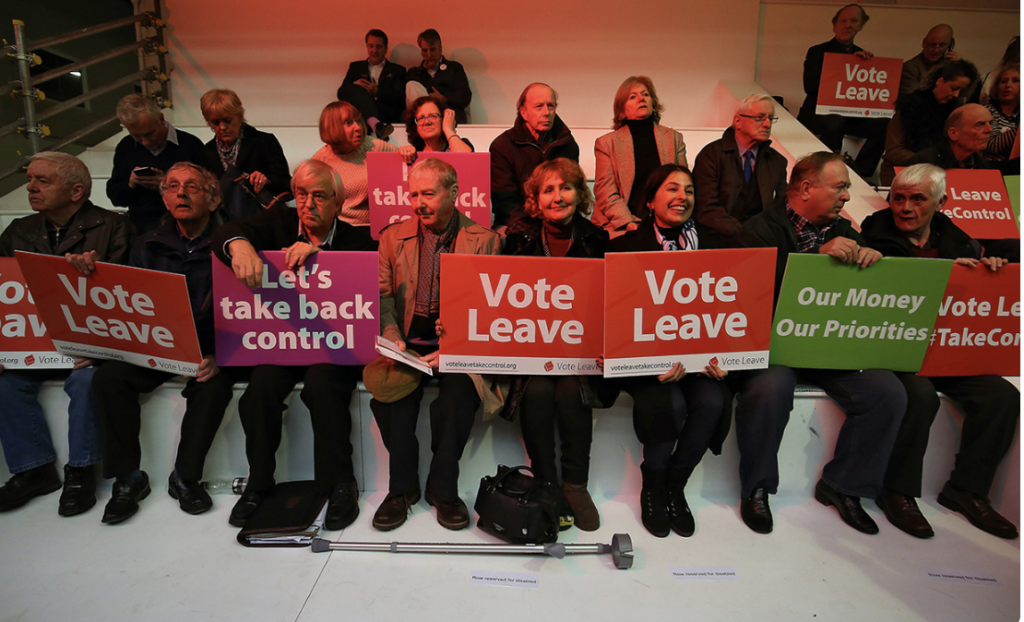
The central slogan of the Brexit campaign was “Take Back Control.” But reality proved far more complicated than its proponents had promised.
Advocates of leaving the European Union envisioned Britain as a more liberal economy, marked by lower taxes and a reduced role for the state. Yet that vision ran counter to the expectations of many voters, who instead wanted greater spending on public services.
Nor did Brexit usher in a sweeping wave of deregulation. Efforts to abandon European standards in pursuit of closer trade ties with the United States would likely have faced resistance from both the public and farmers. In the end, Britain became neither a “Singapore-on-Thames” nor a freer economy. On the contrary, as the Financial Times columnist Janan Ganesh has argued, the years since Brexit have left Britain not more global, but more dependent on the state.
The economic catastrophe predicted by Brexit’s opponents never materialized. But neither did the promised economic renaissance. Instead, Britain experienced a gradual weakening of its economy.
According to estimates by the U.S. National Bureau of Economic Research, by 2025 Britain’s gross domestic product per capita was 6 to 8 percent lower than it would have been had the country remained in the European Union. Investment fell by 12 to 18 percent, while employment and productivity were each 3 to 4 percent below their expected levels.
A study by Cambridge Econometrics found that, following Brexit, the United Kingdom had 1.8 million fewer jobs than it otherwise would have, while the average Briton in 2023 lost about £2,000 in annual income.
Manufacturing was hit particularly hard. In 2024, the British automotive industry produced 780,000 vehicles, its weakest output since 1956, excluding the pandemic years.
The consequences extended beyond business. Musicians, actors, and other creative professionals lost the right to work freely across European Union countries. What had once been guaranteed by membership in the bloc now has to be renegotiated through complex arrangements with Brussels.
In May 2025, the European Union and the United Kingdom announced a partial reset of relations covering trade, fisheries, energy, and defense. In effect, the two sides began restoring elements of cooperation that had been dismantled after Brexit.
As The Telegraph reported, Brexit did not act as a catalyst for positive transformation but instead deepened existing economic challenges. Britain gained greater control over its domestic policymaking, but at the cost of much of the advantage it once derived from membership in the European single market.
Control over migration
If the economic consequences of Brexit can be partly attributed to the pandemic and global crises, migration policy was a direct outcome of decisions taken by British authorities. Migration was, in fact, the central argument of Brexit supporters: ahead of the referendum, 48 percent of Britons named it the country’s most pressing concern.
Yet the outcome moved in the opposite direction. In 2016, net migration stood at 248,000 people; by 2023, it had risen to 860,000.
After Brexit, the government of Boris Johnson introduced a points-based system that ended the free movement of European Union citizens but simultaneously expanded pathways for labor and student migration from Asia and Africa. Many newcomers were also granted the right to bring their families. Between 2019 and 2023, the number of work visas issued to Asian nationals nearly tripled, while those issued to Africans increased almost tenfold.
According to the sociologist Hein de Haas, Brexit also produced another effect: many Eastern Europeans chose not to return home, instead settling permanently in Britain.
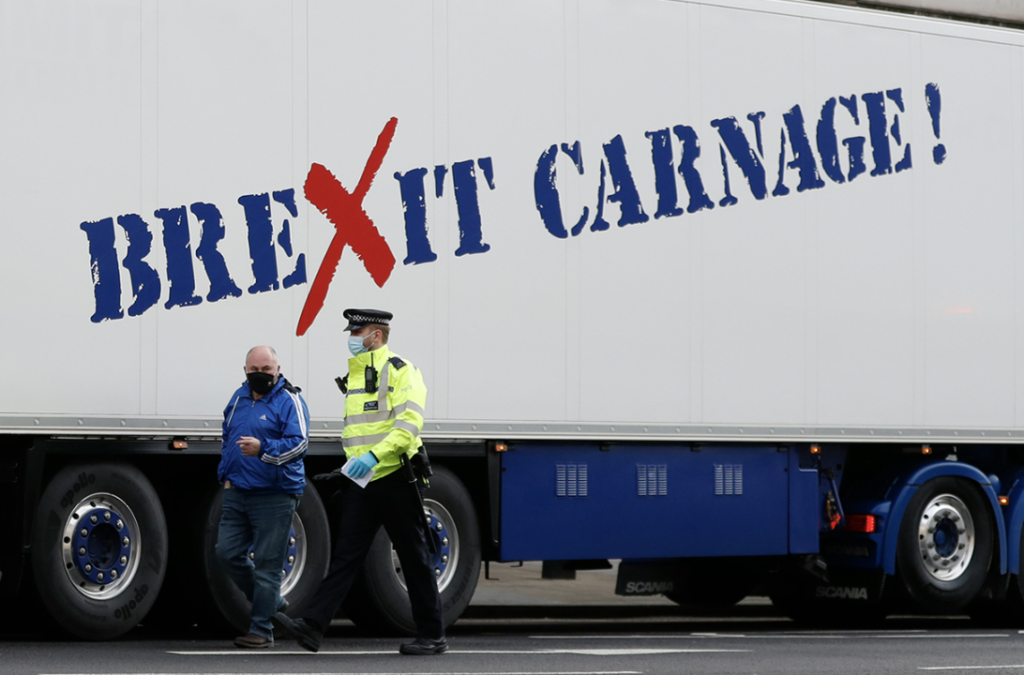
Facing rising migration levels, the government began tightening rules. From 2025, the residency requirement for permanent status will increase from five to ten years, additional language requirements will be introduced, and certain employers will lose the ability to hire foreign workers.
At the same time, irregular migration rose sharply. In 2018, 299 people crossed the English Channel in small boats; by 2023, the number had exceeded 29,000. In 2024, asylum applications reached their highest level in more than two decades.
Paradoxically, after leaving the European Union, Britain lost the ability to return asylum seekers to the first EU country they entered, a mechanism previously allowed under the Dublin Regulation.
The changes also affected British citizens themselves. In the eight years following the referendum, more than 123,000 UK nationals obtained passports from EU member states. The freedom of movement across Europe, which Britons had enjoyed for nearly half a century, came to an end. Today, they are limited to stays of no more than 90 days within any 180-day period in EU countries.
Control 0ver the United Kingdom
When calling the referendum, David Cameron expected to strengthen his position within the Conservative Party. Instead, Brexit became the source of a prolonged political crisis.
In the ten years since the vote, Britain has had six prime ministers: Cameron, Theresa May, Boris Johnson, Liz Truss, Rishi Sunak, and Keir Starmer. The last of these stepped down on June 22, under pressure from within his own party after disappointing Labour election results.
As the Financial Times columnist Janan Ganesh has noted, British politics has become significantly more fragmented since Brexit. Several major parties now compete for influence, while the traditional two-party system has been notably weakened.
The most prominent political winner of recent years has been Nigel Farage. His party, Reform UK, born out of frustration over the protracted Brexit process, has gradually emerged as one of the country’s leading political forces. Following its success in the 2026 local elections, Farage is now openly positioning himself for victory in the next general election.
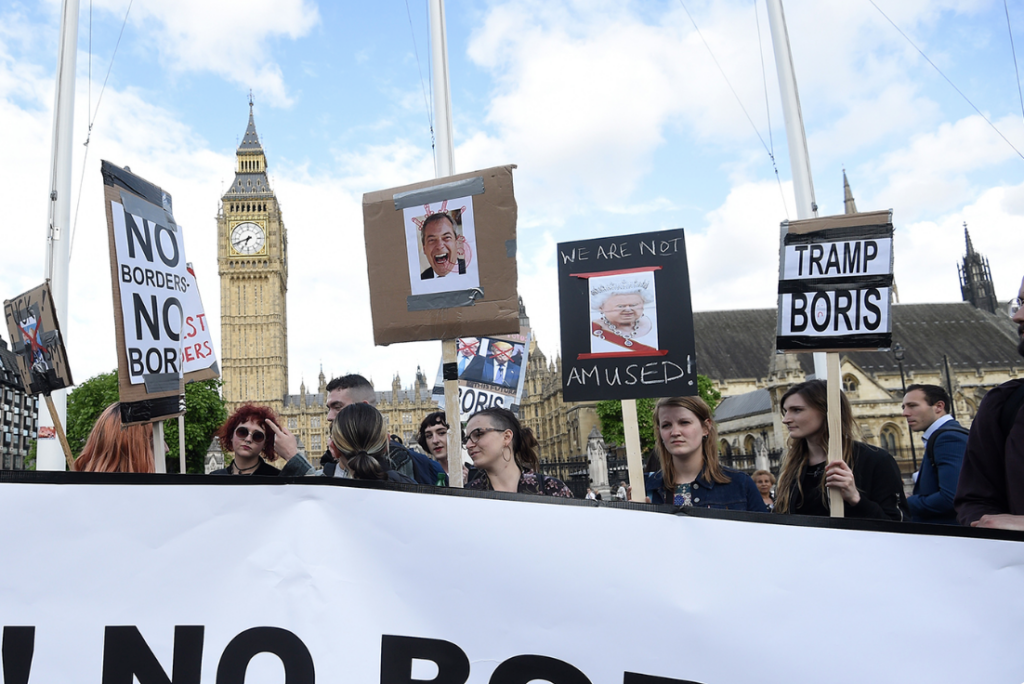
Brexit has redrawn Britain’s familiar political map. Labour lost part of its traditional electorate in the north of England, while the Conservatives saw support erode in the south and in rural areas. A significant share of these voters shifted toward Reform UK.
At the same time, the main political divide is no longer simply left versus right, but rather attitudes toward Brexit itself. British politics is increasingly defined by those who support and those who oppose leaving the European Union.
Brexit has also intensified centrifugal forces within the United Kingdom. In Scotland, another independence referendum is again under discussion, while in Wales nationalist parties advocating greater autonomy have strengthened their position.
Northern Ireland has also moved, in practical terms, further away from London. To avoid a hard border with Ireland, the region has retained close economic ties with the EU market. As a result, Brexit — which promised to restore control to London — has, in some respects, weakened the central government’s control over its own state.
Control over foreign policy
Brexit supporters promised to turn Britain into an independent “global power,” less dependent on Europe and anchored in a special relationship with the United States. Reality proved more complicated.
As early as 1962, the American diplomat Dean Acheson observed that Britain had lost an empire but had yet to find a new role in the world. After Brexit, that question returned to the center of debate. It became clear that much of Britain’s international appeal had rested on its membership in the European Union.
After Russia’s invasion of Ukraine, London instead became more actively involved in pan-European security initiatives and in support for Kyiv. Rather than distancing itself from Europe, Britain found itself compelled to coordinate more closely with its European allies.
The timing of Brexit proved particularly unfortunate. Just months after the referendum, Donald Trump was elected president of the United States, a figure skeptical of NATO and traditional alliance structures. He later returned to power and intensified pressure on the existing system of international alliances.
At the same time, nationalist and Eurosceptic forces gained strength across Europe. Even before the referendum, many analysts warned that Brexit could inspire populist movements across the continent and weaken European unity.
Political scientist Stephen Walt has described Brexit as a symptom of deeper changes within Western societies. In his view, for many people questions of national identity, tradition, and cultural values came to outweigh the liberal ideals of globalization and open borders.
Over the past decade, Europe’s political landscape has indeed shifted markedly. Far-right parties are no longer marginal forces but have become significant players in European politics. One example of this trend is the rise of Nigel Farage and his party Reform UK.
No turning back
A decade after the referendum, British attitudes toward the European Union have shifted markedly. According to a YouGov poll from April 2026, 63 percent of Britons say they would vote to rejoin the EU, while 37 percent would oppose it. Nearly half support holding a new referendum, and among younger voters that share rises to a majority.
In addition, 47 percent of respondents believe the government should pursue closer relations with the EU. Only 16 percent favor further distancing.
These changing attitudes are beginning to influence politicians as well. In June 2026, Spencer Livermore, the Treasury minister, described Britain’s return to the European Union as “inevitable,” arguing that it would serve the country’s economic interests. A number of prominent Labour politicians have likewise begun openly describing Brexit as a serious mistake.
For now, however, full reentry into the European Union remains politically unlikely. Over the past decade, the bloc has changed, and Britain would have to readopt many of the rules and obligations from which it had previously been exempt.
As a result, intermediate options are attracting growing attention, including closer integration with the European Union or some form of associate membership. A framework similar to those now being discussed in connection with Ukraine could, at least in theory, also offer a model for Britain.
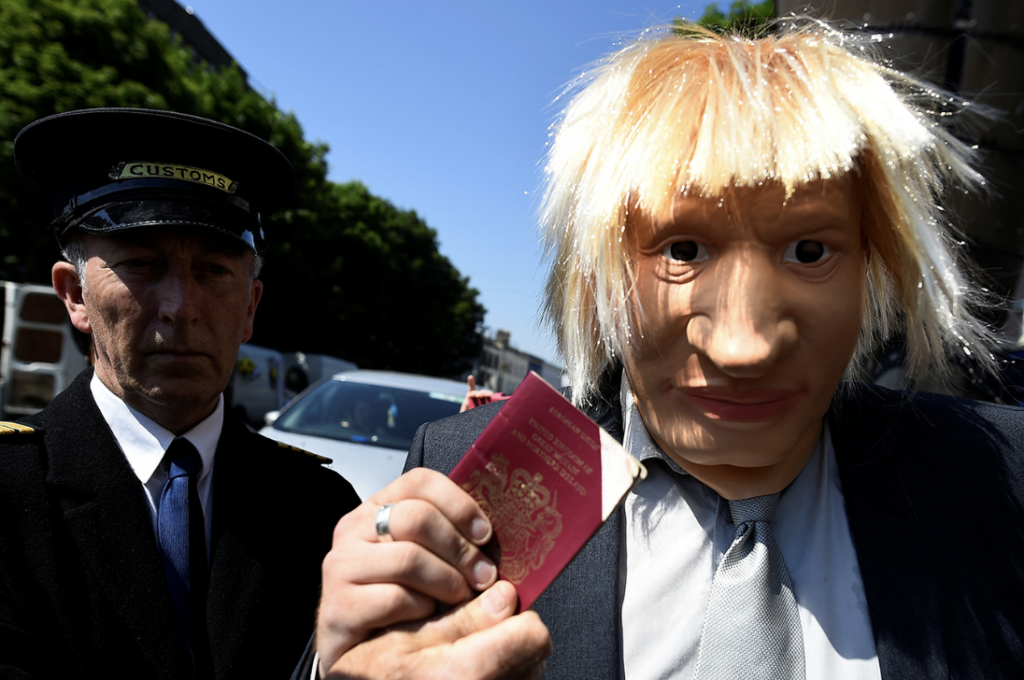
Perhaps no symbol captures the story of Brexit better than the British passport. After leaving the European Union, its cover returned to dark blue, replacing the burgundy color shared by EU member states. Brexit supporters hailed the change as the restoration of a national symbol.
It soon emerged, however, that the new passports were being produced by a French company after a British firm with more than two centuries of history lost the contract. The episode became an apt metaphor for Brexit itself: Britain left the European Union, but it could neither fully sever its ties with Europe nor, most likely, ever will.
Ten Years After Brexit
exchange