Top stories in Azerbaijan, Armenia, and Georgia from 3-7 August, 2026
 Live
Live




-
Friday, 7 August, Azerbaijan. Foreign Minister Jeyhun Bayramov is on an official visit to Ukraine
-
Friday, 7 August, Armenia. Today: Catholicos Garegin II to stand trial on charges of failing to comply with a civil court ruling
-
Friday, 7 August, Georgia. 18 years have passed since the August 2008 Russia–Georgia war over South Ossetia
-
Thursday, 6 August, Georgia. Third blackout: Georgia plunged into darkness again
-
Thursday, 6 August, Azerbaijan. Azerbaijan and Kazakhstan have completed a key stage of the Trans-Caspian fiber-optic cable project across the Caspian Sea
-
Thursday, 6 August, Armenia. Armenia-US discuss faster TRIPP implementation and growing strategic partnership
-
Wednesday, 5 August, Azerbaijan. Prominent activist Elvin Mustafayev has been released after serving a three-year prison sentence
-
Tuesday, 4 August, Azerbaijan. Swiss foreign minister, OSCE Chairperson, visits Baku
-
Tuesday, 4 August, Georgia. Georgia is marking three years since the Shovi disaster
-
Tuesday, 4 August, Armenia. The United States has doubled funding for the TRIPP+ fund
-
Monday, 3 August, Armenia. Nikol Pashinyan has been reappointed as Armenia's prime minister
-
Monday, 3 August, Georgia. New phase of Anaklia deep-water port construction begins with dredging works
-
Monday, 3 August, Azerbaijan. Hearings continue in the "NGO case": Mehriban Rahimli testifies, denies wrongdoing
-
Top stories in Azerbaijan, Armenia, and Georgia from 27-31 July, 2026

-
Friday, 7 August, Azerbaijan. Foreign Minister Jeyhun Bayramov is on an official visit to Ukraine
● Foreign Minister Jeyhun Bayramov is on an official visit to Ukraine. He held meetings with President Volodymyr Zelenskyy, Foreign Minister Andrii Sybiha, Head of the Presidential Office Kyrylo Budanov, and National Security and Defense Council Secretary Ihor Klymenko. The talks focused on the strategic partnership between Azerbaijan and Ukraine in the energy, transport and humanitarian sectors, as well as regional and international security. Special attention was given to expanding cooperation on the Middle Corridor transit route.
● During his meeting with Volodymyr Zelenskyy, the two sides highlighted the importance of the Ukrainian president’s visit to Azerbaijan in April this year and the agreements reached then, which they said had opened a new stage in bilateral relations. They reaffirmed their intention to expand cooperation in a wide range of areas. Zelenskyy thanked Azerbaijan for its humanitarian assistance to Ukraine. It was also noted that next year the two countries will mark the 35th anniversary of diplomatic relations.
● Russia’s war against Ukraine must end as soon as possible and the conflict should be resolved through diplomacy, Jeyhun Bayramov said during an expanded meeting in Kyiv with Ukrainian Foreign Minister Andrii Sybiha. At the same time, Bayramov stressed that any settlement must be based on the strict observance of international law. He also reaffirmed Azerbaijan’s consistent support for Ukraine’s sovereignty and territorial integrity within its internationally recognized borders.
● Baku is ready to supply natural gas to Ukraine if needed and is considering the use of Ukraine’s underground gas storage facilities to strengthen regional energy security, Jeyhun Bayramov said at a joint briefing with Andrii Sybiha. He noted that Azerbaijan’s state oil company SOCAR has long been active on the Ukrainian market and has ambitious plans to expand energy cooperation.
● Andrii Sybiha said Ukraine is interested in importing energy resources from Azerbaijan and has already prepared a package of proposals.
● Trade between Azerbaijan and Ukraine has reached $600 million, and Kyiv wants to restore bilateral trade to the level it was at before Russia’s full-scale invasion of Ukraine, Ukrainian Foreign Minister Andrii Sybiha said. He recalled that trade between the two countries totaled $922.4 million in 2021. Sybiha also announced that the two sides had agreed to hold the next meeting of the intergovernmental commission on economic cooperation in Ukraine. He said Kyiv values investments by Azerbaijani companies and hopes to see their presence expand through new joint projects.
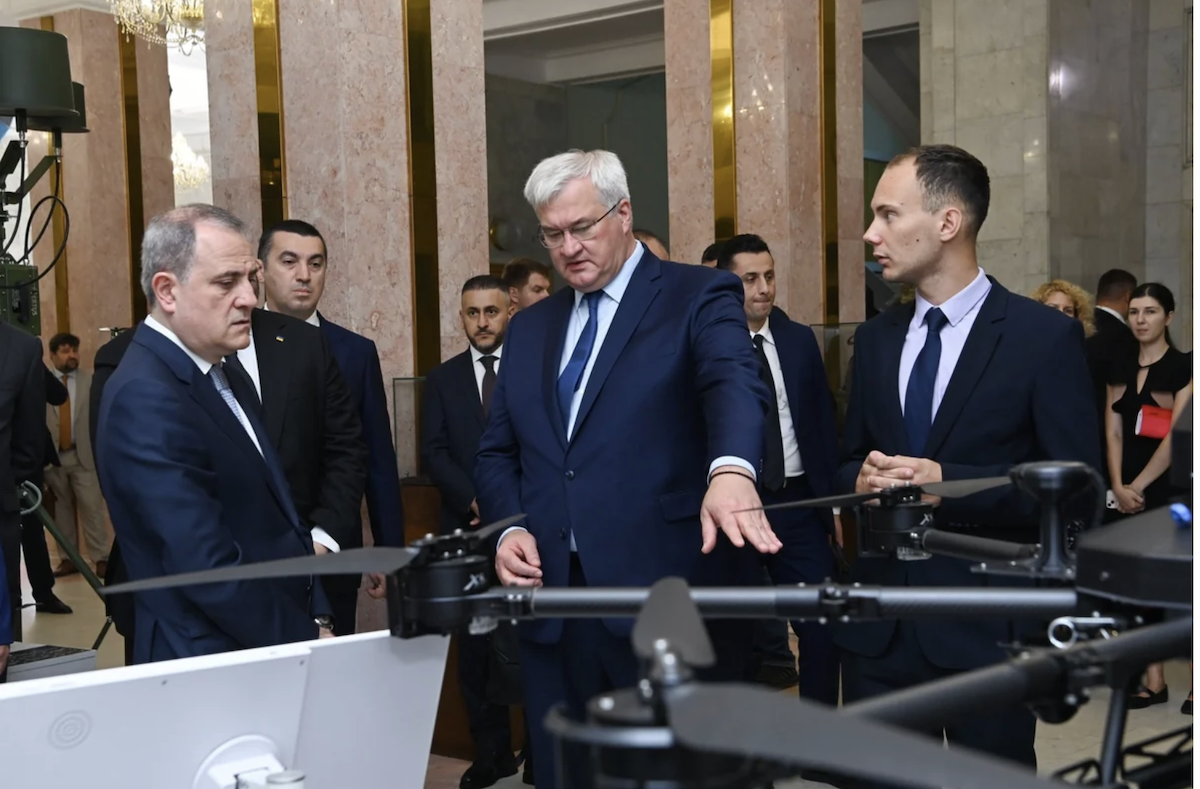
● Jeyhun Bayramov visited an exhibition of Ukrainian-made drones in Kyiv, according to Azerbaijan’s Foreign Ministry.
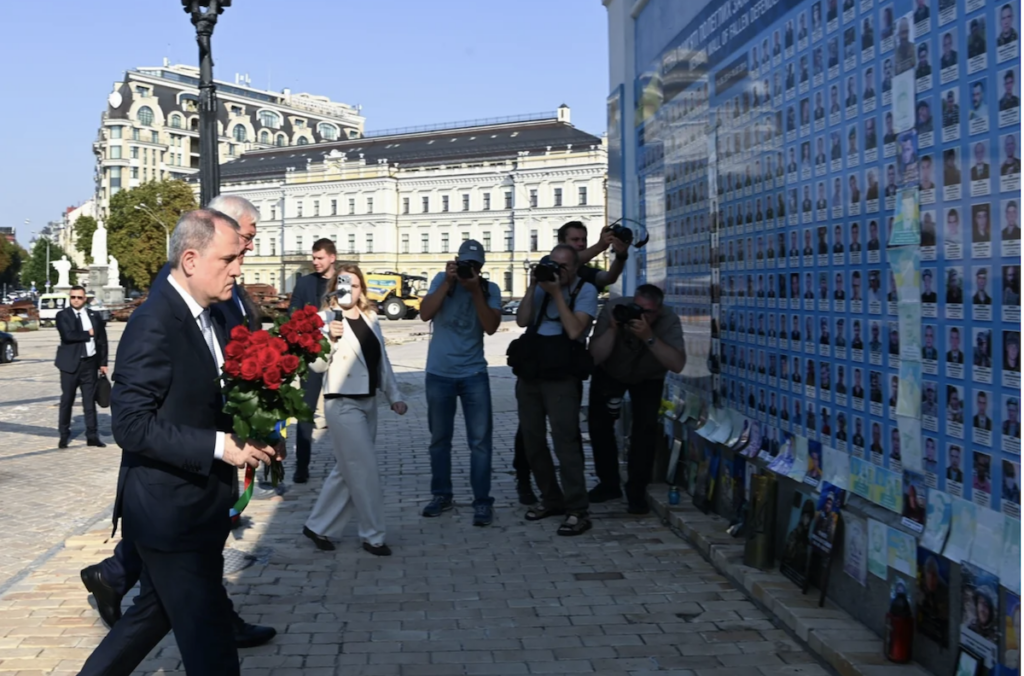
● The Azerbaijani foreign minister also laid a wreath at the memorial to Ukraine’s fallen defenders in Kyiv.
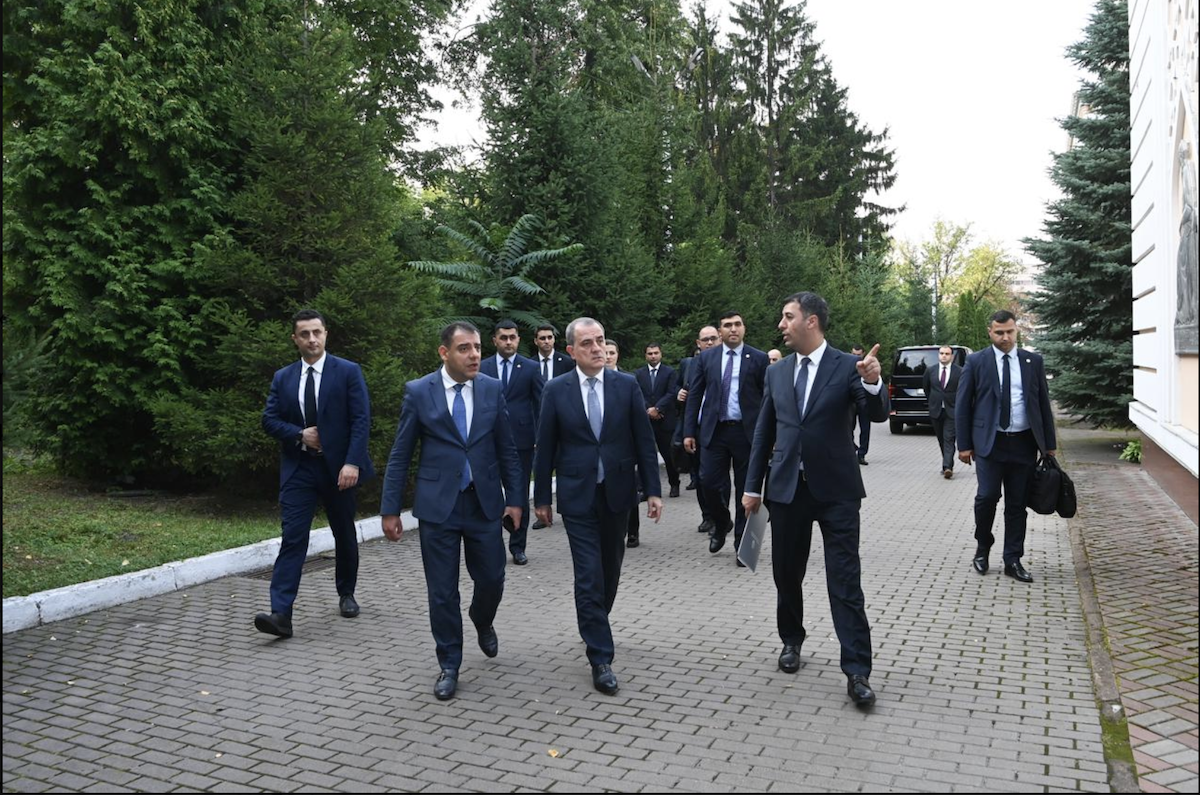
● Jeyhun Bayramov visited the city of Irpin, which suffered heavy destruction and violence during the first months of Russia’s invasion in 2022. Irpin is a sister city of Azerbaijan’s Lachin and is regarded as a symbol of humanitarian cooperation between Azerbaijan and Ukraine. The city has a park, a street and a lyceum named after academician Zarifa Aliyeva, where Azerbaijani is also taught. With Azerbaijan’s financial and humanitarian support, a local clinic has been restored. During the visit, officials discussed a new Azerbaijan-backed project to rebuild the city’s cultural center, which was destroyed at the start of the Russian invasion.
● A day after Azerbaijan sent a diplomatic note to Georgia, the Georgian Foreign Ministry promised to urgently address the situation at border crossings between the two countries, where trucks with Azerbaijani license plates have been facing lengthy delays. In some cases, vehicles were held for more than a month without drivers receiving any official explanation. The diplomatic note also said Azerbaijani trucks and trailers were being subjected to unusually frequent and lengthy inspections across Georgia. Georgia’s Foreign Ministry said the relevant authorities were taking measures required by law in response to identified violations.
● Türkiye’s National Security Council is holding a meeting today chaired by the president, with much of the discussion expected to focus on the South Caucasus. The agenda includes the new “Terror-Free Türkiye” bill currently before parliament, ongoing counterterrorism operations, diplomatic efforts to resolve the continuing US-Iran crisis, and security in the Black Sea.
● Serbian President Aleksandar Vučić said his close relationship with President Ilham Aliyev gives special momentum to the development of comprehensive cooperation between the two countries. He also praised Azerbaijan for supporting Serbia’s sovereignty and territorial integrity.
● Azerbaijan is among 78 countries backing Turkmenistan’s initiative to declare 2028 the International Year of International Law. The initiative’s sponsors said the international system is going through a period of profound transformation and growing distrust between states is creating serious challenges to global stability. They argued that the international community should focus on strengthening respect for international law and rebuilding trust in legal norms.
-
Friday, 7 August, Armenia. Today: Catholicos Garegin II to stand trial on charges of failing to comply with a civil court ruling
● Russia may advise its citizens to avoid traveling to Armenia if Russian nationals continue to be detained there at the request of third countries, Russian Federation Council Speaker Valentina Matviyenko said during a phone call with Armenian National Assembly Speaker Ruben Rubinyan.
● “Russia sees Armenia trying to raise the stakes, or simply resorting to blackmail, in its relations with Moscow,” Russian Foreign Ministry spokesperson Alexei Fadeev said at a briefing. According to Fadeev, this includes the prosecution of pro-Russian public figures in Armenia, threats of arbitration cases against Russian companies operating in the country, even though they are among the largest taxpayers to Armenia’s state budget, and demands that Moscow pay billions of dollars for facilities that Armenia’s current authorities themselves chose to give up at the beginning of their political career.
● Russia has not received any official request from Armenia to terminate the concession agreement under which Russian entities operate Armenia’s railway system, Russian Deputy Prime Minister Alexei Overchuk said. At the same time, he noted that Moscow “constantly hears about such intentions in public statements by Armenian officials.”
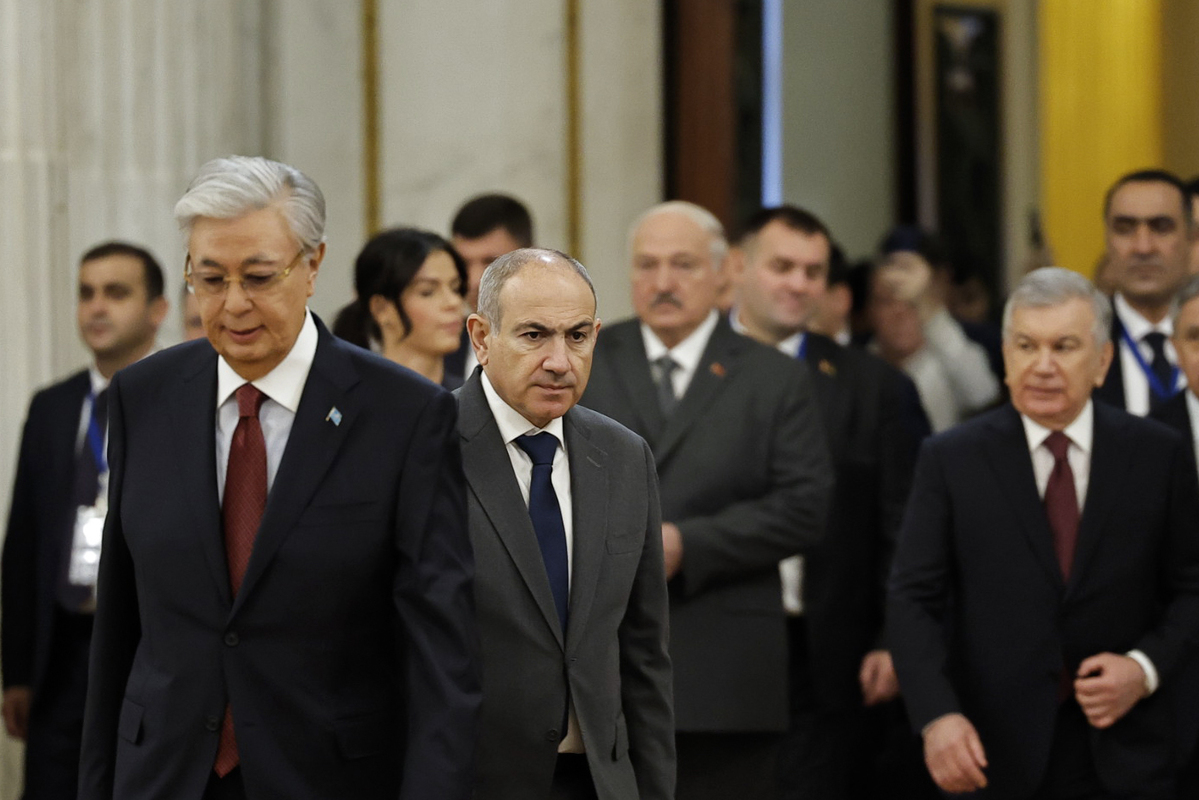
● Prime Minister Nikol Pashinyan took part in a closed-format meeting of the Eurasian Intergovernmental Council, which operates under Russia’s leadership, in Cholpon-Ata, Kyrgyzstan.
● Catholicos of All Armenians Garegin II and seven other senior Armenian Apostolic Church clerics are due to appear in court today on charges of failing to comply with a civil court ruling. The hearing marks another stage in the escalating confrontation between Prime Minister Nikol Pashinyan and the leadership of the Armenian Church. Pashinyan insists that Garegin II, who has led the church since 1999, should step down after accusing him of violating his vow of celibacy and having ties to foreign intelligence services. In this particular case, the Catholicos and the other defendants are accused of failing to comply with a court order to reinstate a bishop who was stripped of his rank after supporting the prime minister’s position. If convicted, they could face up to two years in prison.
● Several bishops expressed concern over the court case and called on the authorities to “act strictly in accordance with the rule of law, while refraining from steps that could deepen divisions in society or undermine the country’s stability.”
● “Summoning our spiritual brother, His Holiness Garegin II, to court is unacceptable and deserves condemnation,” said Aram I, Catholicos of the Great House of Cilicia. He called on the Armenian authorities “to show respect for the Church and for His Holiness, and to discuss all issues in a spirit of mutual understanding and proper respect, while observing both the laws of the state and the internal rules of the Church.”
● The pro-Russian opposition in parliament said its members will attend the court hearing in Garegin II’s case. “Everyone must see that playing with our religious feelings will have consequences,” said Narek Karapetyan, leader of the Strong Armenia parliamentary faction.
● Justice Minister Srbuhi Galyan sharply criticized a recent statement by Azerbaijani presidential aide Hikmet Hajiyev, who again called on Armenia to amend its Constitution and remove what Azerbaijan describes as territorial claims. Baku says these constitutional changes are a condition for signing a peace treaty. “We have been talking about constitutional reform for years, and I always say the same thing: whether to change the Constitution or not is solely our internal matter, and only the people of Armenia will decide whether the country needs a new Constitution,” Galyan said.
● Armenia and Russia are discussing the opening of diplomatic missions in the Armenian city of Kapan and in Vladikavkaz, the capital of Russia’s Republic of North Ossetia, Armenia’s Foreign Ministry said.
● Armenia’s Economy Ministry discussed the possible entry of the international fast-food chain Subway into the Armenian market. During a meeting with the company’s regional director, officials discussed plans to open more than 60 Subway restaurants in Armenia. Investment in each location is expected to range from about $150,000 to $300,000.
● Parents of young people serving in the Armenian army held a protest outside the government building. They are demanding that the current 18-month military service term be extended to all conscripts. “We are satisfied with everything else — the food, the clothing, everything is provided, and my son has no complaints. We simply want fairness: half of their school class is serving for two years, while the other half is serving for one and a half years,” one of the protesters said.
● Two people were injured in an explosion at a gas station near the village of Sardarapat. They were taken to a medical center for treatment.
● A group of citizens staged a protest outside the Central Bank, calling for an amnesty that would forgive interest on their outstanding loans.
● Armenia plans to rename three government ministries. The Ministry of High-Tech Industry would become the Ministry of High-Tech Industry and Artificial Intelligence, the Ministry of Labor and Social Affairs would become the Ministry of Labor and Social Protection, and the Ministry of Foreign Affairs would be renamed the Ministry of Foreign Affairs and International Trade.
-
Friday, 7 August, Georgia. 18 years have passed since the August 2008 Russia–Georgia war over South Ossetia
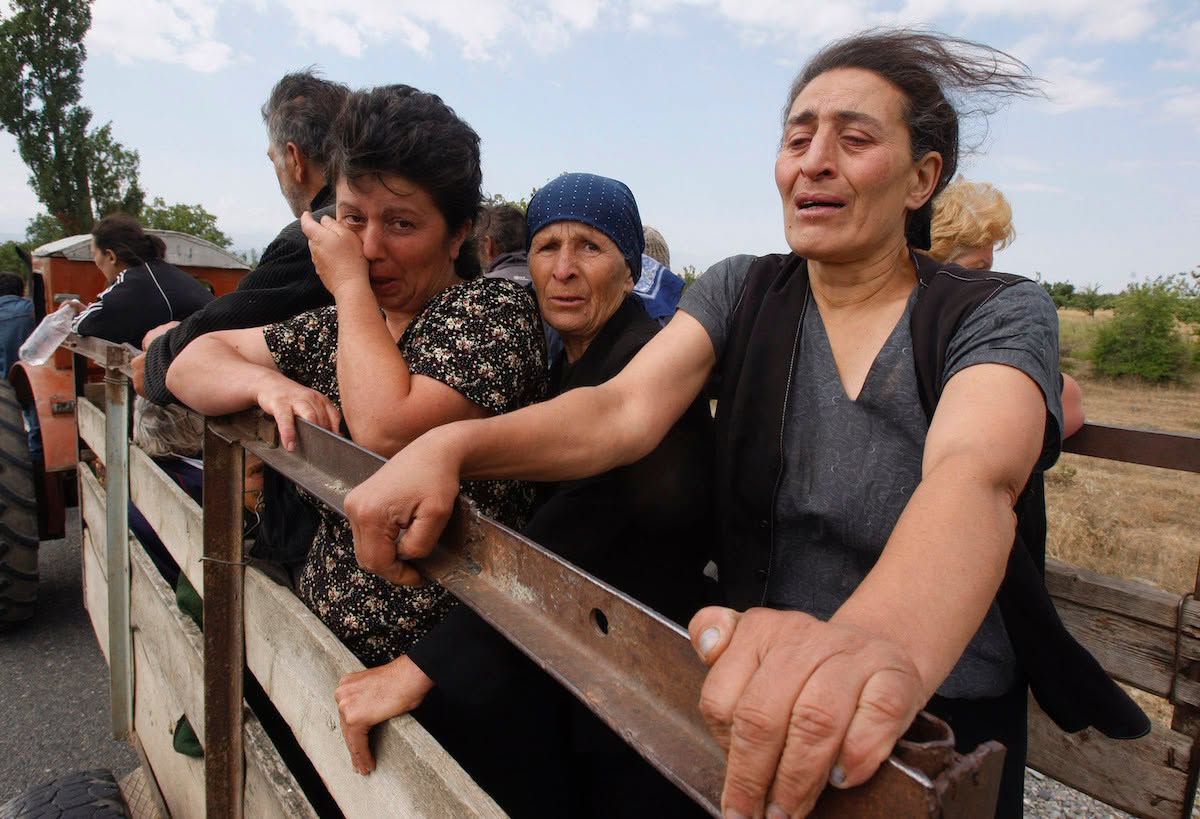
● Eighteen years have passed since the August 2008 Russia–Georgia war over South Ossetia. On the Georgian side, 412 soldiers and civilians were killed, while 365 people died on the Ossetian side. Around 20,000 ethnic Georgians were forced to flee their homes. Georgia also lost control of another 125 villages in the Tskhinvali region (South Ossetia). After the active phase of the war ended, Russia recognized South Ossetia and Abkhazia as independent states. A timeline of the events, with photos and videos, is available here.
● Representatives of Georgia’s civil society issued a joint statement marking the 18th anniversary of the August war. They said Georgia’s defense capabilities are closely linked to the support of its international partners, and that Russia’s attempts to shift responsibility for its aggression onto Georgia harm the country’s national interests.
● One year has passed since the Batumi City Court sentenced Mzia Amaghlobeli, founder of the popular media outlets Batumelebi and Netgazeti, to two years in prison for slapping a police officer who had insulted her. International organizations and diplomatic missions marked the anniversary. The OSCE Representative on Freedom of the Media, the British Embassy, and the International Press Institute called for her immediate release. The Georgian Young Lawyers’ Association (GYLA) said the European Court of Human Rights has registered a fourth complaint related to Amaghlobeli’s case. She was arrested in January 2025. Human rights groups say the case is politically motivated.
● A court found opposition leader Nika Melia guilty of contempt of court and sentenced him to one year and six months in prison. Melia is already serving a sentence on other charges. However, the new sentence replaces the previous one, meaning his expected release date remains unchanged. He is due to be released in December 2026.
● New charges have been filed in the case of the murder of young Tbilisi teacher Giga Avaliani. Prosecutors charged Nia Imnadze, the girlfriend of the main suspect, with incitement to intentionally inflict grievous bodily harm. Anastasia Beruashvili has also been charged with failing to report an especially serious crime. According to investigators, the suspects monitored Avaliani for several days before the attack and studied the route he usually took. The 28-year-old teacher died from injuries after a brutal beating in October 2025. More about the Giga Avaliani case here.
● Prime Minister Irakli Kobakhidze made another statement about what he called Russophobia and a campaign against Russian tourists, which he claims is being carried out by certain groups in Georgia. According to him, false information is being deliberately spread on social media to create the impression that Georgia is unsafe for Russian tourists and to damage the country’s economy. Georgia’s State Security Service has opened an investigation under the article on sabotage. According to the agency, the campaign, allegedly coordinated from abroad and supported by certain individuals and organizations inside Georgia, used fake bot accounts to spread claims that Georgia poses a danger to Russian tourists, including false reports about the deliberate poisoning of their food.
● According to Azerbaijani media, Baku has sent a diplomatic note to Georgia’s Foreign Ministry over what it says are unjustified delays faced by Azerbaijani truck drivers at Georgian border crossings, with some vehicles reportedly held for several weeks. In response, Georgia’s Foreign Ministry said the relevant agencies had begun an urgent review of the issue and were working on a solution. Azerbaijan’s embassy in Tbilisi also said the matter is being addressed jointly with the relevant Georgian authorities.
● In Telavi, the main city of Georgia’s Kakheti region, which was recently hit by severe flooding and mudslides, all buildings located within a 10-meter zone around the Telavi Gorge will be demolished, local authorities said. The decision is based on an expert assessment. Residents affected by the measure will be offered alternative housing or financial compensation.
📸 Georgian internally displaced people leave the Tskhinvali region (South Ossetia) during the August 2008 war. Photo: REUTERS
-
Thursday, 6 August, Georgia. Third blackout: Georgia plunged into darkness again
● Late on August 5, Georgia experienced another nationwide power outage. The blackout affected Tbilisi and almost every region of the country, bringing the metro and railway services to a halt. Electricity was restored about two hours later, but the cause of the outage remains unknown. It was the third nationwide blackout in the past two weeks. Georgia’s State Security Service is already investigating the previous incidents under a sabotage probe.
● Two more minors were arrested in connection with the murder of young Tbilisi teacher Giga Avaliani. A girl identified as N.I., who was in a relationship with the main suspect, was charged with incitement to inflict grievous bodily harm. Another minor, identified as A.B., was charged with failing to report an especially serious crime. Twenty-eight-year-old teacher Giga Avaliani died in October 2025 after being brutally beaten in an attack involving minors. At the request of his family, investigators are examining the possible involvement of everyone connected to the case. More on the case here.
● Prominent journalist Vakho Sanaia has been released after serving a 14-day administrative detention sentence for social media posts containing profanity. He was greeted with applause by family members and supporters outside the detention center. Sanaia was arrested on July 22 over a social media post about Parliament Speaker Shalva Papuashvili and MP Vladimer Bozhadze. The case was launched following a complaint by the Interior Ministry’s Department for Combating Hate Crimes.
● At the congress of the opposition United National Movement, Irakli Pavlenishvili was elected head of the party’s governing council. Other members elected to the council are Petre Tsiskarishvili, Ani Tsitlidze, Giorgi Chaladze, Lasha Parulava, Giorgi Botkoveli, Levan Bezhashvili and Irakli Nadiradze. Former party chair Tina Bokuchava declined to join the governing council and remains a member of the political council.
● Georgia’s Interior Ministry has launched detention procedures against Hungarian journalist Laszlo Robert Mezes. According to the ministry, he overstayed his legal period of stay and is now in the country without legal grounds.
● The Georgian government has signed an agreement with ItalFarmaco to purchase Givinostat, a medicine used to treat Duchenne muscular dystrophy. Georgia will become one of the first countries to include the drug in its state-funded healthcare program. The Health Ministry is also working to procure another medicine for the disease. The decision follows weeks of continuous street protests by parents of children with Duchenne muscular dystrophy and activists demanding state support.
● School uniforms will become mandatory for primary school students starting with the new academic year. Uniform sales will begin on September 1. Education Minister Givi Mikanadze said that if parents refuse to comply, disciplinary measures предусмотренные by school regulations will be applied. He also announced that students in the first, seventh and tenth grades will receive new textbooks, and reminded the public that the use of mobile phones during lessons will be restricted.
📸 Photo: Vakho Sanaia with his family. Photo from social media.

Screenshot -
Thursday, 6 August, Azerbaijan. Azerbaijan and Kazakhstan have completed a key stage of the Trans-Caspian fiber-optic cable project across the Caspian Sea
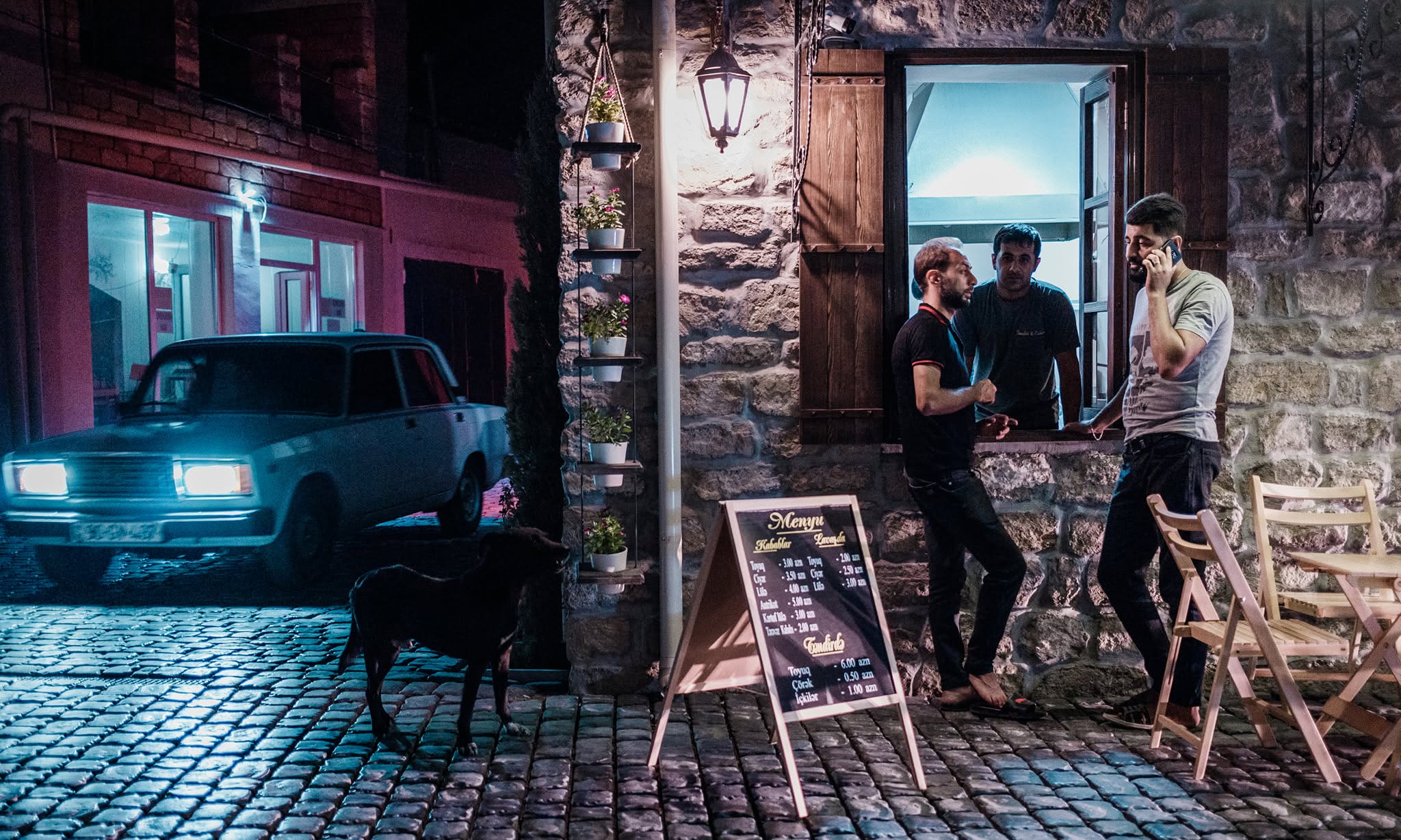
● A mass fight outside a restaurant in the city of Ganja ended in a fatal stabbing. A 42-year-old man, Azer Yusifov, died at the scene after being stabbed. Three other people were also injured and taken to hospital. Police have detained a 19-year-old local resident on suspicion of murder.
● Azerbaijan and Kazakhstan have completed a key stage of the Trans-Caspian fiber-optic cable project across the Caspian Sea. The undersea cable linking Sumgayit and Aktau has reached Kazakhstan’s coast and is now being connected to onshore infrastructure. According to Kazakhstan’s Ministry of Digital Development, the new link will connect the two countries’ digital infrastructure and create a direct high-speed data route between Asia and Europe, improving the reliability of international communications.
The offshore cable-laying began in July 2026 and was carried out around the clock using a specialized vessel, with 70 specialists involved in the project. The project is being financed entirely by the operators, Kazakhtelecom and AzerTelecom International, without the use of public funds.
● Presidential aide Hikmet Hajiyev told the Turkish newspaper Milliyet that Azerbaijan has consistently sought peace despite what he described as “Armenia’s genocide against Azerbaijan.” He said there is now peace in the South Caucasus and argued that if the Armenia-Azerbaijan conflict had continued, instability from neighboring regions could have spread there as well. Hajiyev also welcomed Armenia’s new “Real Armenia” concept, saying the country’s leadership now understands that its previous policies had harmed Armenia’s own development and recognizes the importance of good relations with Azerbaijan and Türkiye.
● Turkish-American chemist Ergün Kirlikovali has published an open letter criticizing author and risk analyst Nassim Nicholas Taleb, who recently declined an invitation to give lectures in Baku unless imprisoned former Nagorno-Karabakh state minister Ruben Vardanyan was released. Vardanyan is serving a 20-year prison sentence in Azerbaijan after being convicted on terrorism and other charges. Kirlikovali accused Taleb of being misled by what he called Vardanyan’s carefully crafted public image and argued that his philanthropy concealed illegal financial activities and geopolitical influence. He also accused Taleb of using his international platform to defend an oligarch linked to illicit financial networks.
● Human Rights Watch has called on the Azerbaijani authorities to “end the abuse of imprisoned opposition leader Ali Karimli and release him.” The organization says conditions for Karimli have worsened since he gave an interview to France 24 in June, in which he criticized European governments for prioritizing energy cooperation with Azerbaijan over human rights. According to Human Rights Watch, his phone calls have been reduced from 15 minutes to four minutes and courts have refused to consider his appeals. The organization urged Azerbaijan’s international partners to raise the issue publicly and in bilateral meetings.
● Around 20 new military infrastructure facilities have been handed over to Azerbaijan’s air defense units in different parts of the country. The new sites include barracks, medical stations, dining facilities, armories, utility buildings, water supply systems and power generators.
● Water scarcity is becoming an increasingly serious challenge for Azerbaijan, FAO representative Nasar Hayat told the pro-government outlet Report. He noted that much of the country’s freshwater comes from rivers flowing from neighboring states and stressed the need for more efficient water management. Hayat called for wider use of modern irrigation methods, such as drip and sprinkler systems, to reduce water losses and avoid unnecessary waste.
● Ongoing expansion projects are expected to increase the capacity of the Baku Metro by 88 million passengers a year – nearly one-third more than its current capacity. The metro carried about 230 million passengers in 2025. Company spokesperson Bakhtiyar Mammadov said construction of 10 new stations is currently underway.
● The Azerbaijan Journalists Network has launched production of a large-scale documentary about the reconstruction of towns and villages in Karabakh and East Zangezur. According to the organization, the film will present the territories that came under Baku’s control after the 2020 war as a symbol of Azerbaijan’s revival, featuring newly built settlements and the development of green energy projects.
-
Thursday, 6 August, Armenia. Armenia-US discuss faster TRIPP implementation and growing strategic partnership
● The implementation of the TRIPP transit project, also known as the “Trump Route,” was discussed during a meeting in Yerevan between Armenian Foreign Minister Ararat Mirzoyan and Aryeh Lightstone, adviser to the U.S. Special Envoy for Peace Missions. The two sides highlighted the importance of the peace established between Armenia and Azerbaijan following the Washington Peace Summit on August 8, 2025. They also discussed further steps to strengthen lasting peace in the region.
● Mirzoyan and Lightstone also discussed the rapid development of the Armenia-U.S. Comprehensive Strategic Partnership. They highlighted high-level mutual visits and the agreements reached over the past year, noting that this progress has been driven by the implementation of three memorandums signed in Washington a year ago. Particular attention was given to expanding cooperation in artificial intelligence and the construction of a data center as part of the first phase of Firebird AI’s flagship project.
● Armenia’s Constitutional Court has agreed to consider whether the obligations set out in the TRIPP framework agreement comply with the Constitution. The case will be reviewed in writing, with proceedings set to begin on September 15, 2026.
● Another meeting of the joint Armenian-Turkish working group on restoring the historic Ani Bridge has taken place. The project is seen as an important symbol of improving relations between the two countries. The agreement to restore the bridge was signed during a meeting in Yerevan on May 4 this year. The participants agreed to continue working toward the project’s swift implementation.
● Parliament has elected a new deputy speaker by secret ballot. Vaagn Aleksanyan, from the ruling Civil Contract party, was elected with 62 votes in favor and 27 against. The pro-Russian opposition Armenia faction did not take part in the vote.
● Former Multi Group CEO Sedrak Arustamyan has been detained. The company belongs to pro-Russian politician Gagik Tsarukyan, who is under arrest on fraud charges. According to the Investigative Committee, Arustamyan was detained as part of a criminal investigation into the alleged large-scale fraudulent theft of property and funds worth more than 8 billion drams (almost $22 million). He is also accused of involvement in an alleged money laundering scheme involving Tsarukyan and others.
● The government’s 2026-2031 program was discussed at a cabinet meeting chaired by Prime Minister Nikol Pashinyan. Pashinyan instructed officials to finalize the draft as quickly as possible so it can be approved by the government and submitted to parliament.
● The pro-Russian opposition Mother Armenia party has announced a protest for today, demanding that the authorities consider its appeal against the arrest of activist Aregnaz Manukyan. She is facing criminal prosecution on charges of publishing information containing state secrets.
● Armenia and India discussed expanding defense cooperation during a meeting between Armenian Ambassador Vahagn Afyan and India’s newly appointed Secretary for International Cooperation at the Ministry of Defence, Amit Telang. The two sides also discussed preparations for upcoming reciprocal official visits.
-
Wednesday, 5 August, Azerbaijan. Prominent activist Elvin Mustafayev has been released after serving a three-year prison sentence
● Following the visit to Baku by OSCE Chairperson-in-Office and Swiss Foreign Minister Ignazio Cassis, he and Azerbaijani Foreign Minister Jeyhun Bayramov held a joint briefing. Bayramov said progress is expected in the normalization process between Azerbaijan and Armenia, including on the TRIPP transit project, also known as the “Trump Route,” which would connect Azerbaijan with its Nakhchivan exclave through Armenia. He said Azerbaijan is receiving regular updates from the United States and expects construction to begin on the 42-kilometer section in 2026. Bayramov added that railway reconstruction has already started in Nakhchivan after 30 years of inactivity. He also said around 20,000 tons of oil products have been exported from Azerbaijan to Armenia over the past year, while about 60,000 tons of cargo have transited through Armenia. According to Bayramov, trade could expand further in the next stage.
● Bayramov also repeated that although there is de facto peace between Azerbaijan and Armenia, a final peace treaty can only be signed after Armenia removes what Azerbaijan describes as territorial claims from its Constitution.
● Ignazio Cassis said Switzerland consistently supports peace between Azerbaijan and Armenia and is ready to continue its long-standing efforts to promote confidence-building in the South Caucasus.
● Bayramov called on the OSCE to support Azerbaijan’s humanitarian demining efforts in territories that came under Baku’s control after the 2020 war. He said the issue was discussed during Cassis’s visit.
● Cassis also described Azerbaijan as an important link between Central Asia, the South Caucasus and Europe. He said developing the Middle Corridor and reliable, diversified trade routes is increasingly important for the global economy.
● Cassis said his talks with Bayramov also focused on Russia’s war against Ukraine. He stressed that the OSCE’s role is to provide a platform for dialogue and maintain communication between countries with opposing positions, including Russia and Belarus.
● The two foreign ministers are expected to meet again in September on the sidelines of the UN General Assembly in New York.
● Presidential aide Hikmet Hajiyev told Turkish broadcaster Haber Global that Azerbaijan sees no obstacles to signing a final peace agreement once Armenia removes constitutional provisions that, according to Baku, contain territorial claims against Azerbaijan and Türkiye. He added: “At any table where Türkiye is absent, Azerbaijan is present. And at any table where Azerbaijan is absent, Türkiye is present.”
● Ilgar Mammadov, leader of the opposition REAL party, has appealed to President Ilham Aliyev, saying he has received “warnings” demanding that he end his political activities. Mammadov said the warnings came from “an active pro-government propagandist,” but that he does not want to believe they reflect the president’s position.
Mammadov was arrested in 2013 after anti-corruption protests in Ismayilli and convicted of organizing mass unrest. The European Court of Human Rights later ruled that his rights had been violated, and he was released in 2018.
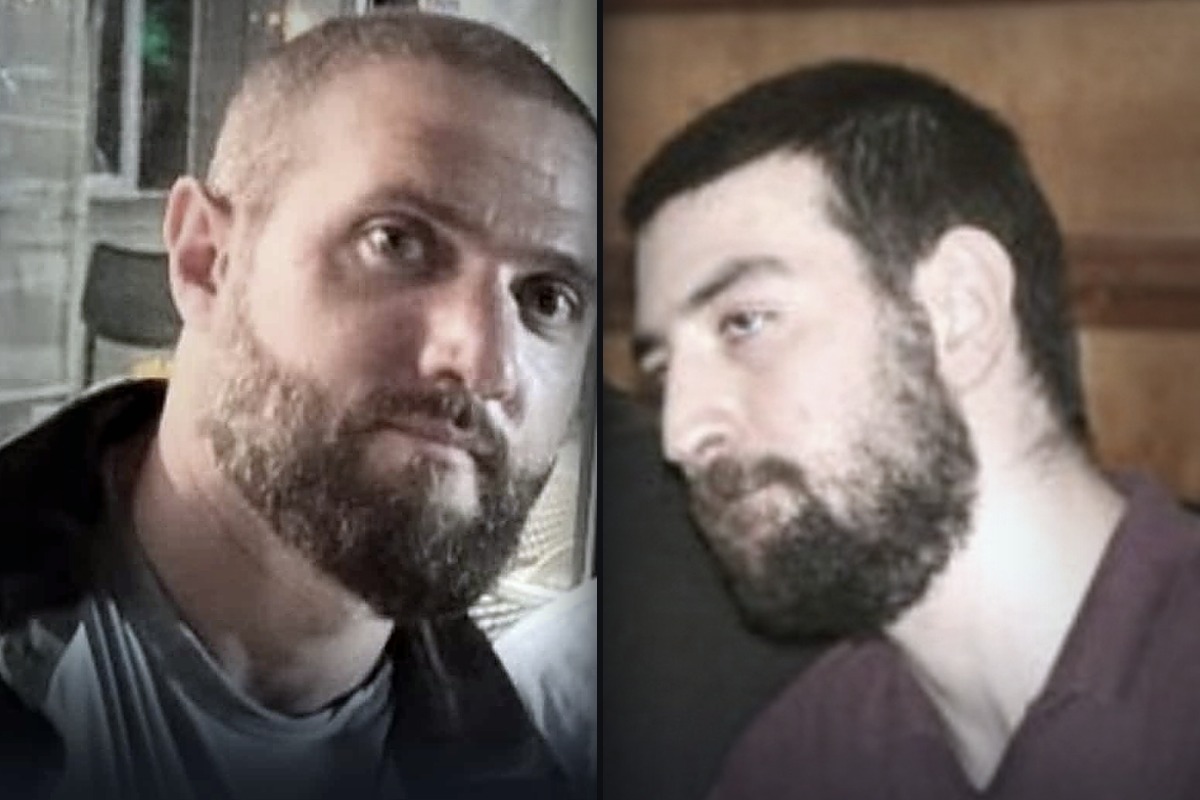
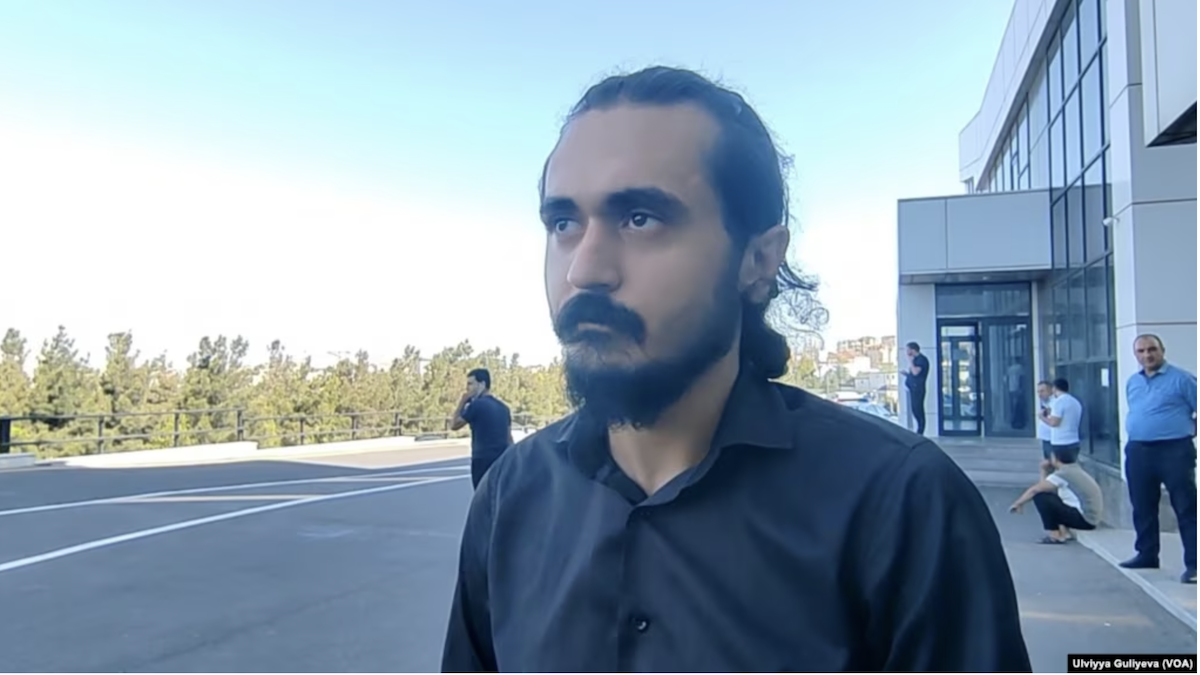
● Prominent activist Elvin Mustafayev (pictured), a member of the Workers’ Table Trade Unions Confederation, has been released after serving a three-year prison sentence. He was arrested in August 2023 on drug possession charges, which he denied, saying he was being punished for his activism and criticism of the authorities.
● The London-based human rights organization Human Rights Solidarity has called for medical care for jailed Meydan TV journalist Aytaj Tapdig. The group said she has long suffered from shortness of breath and that prison conditions are worsening her health. Her lawyer’s requests for a medical examination have reportedly gone unanswered.
Since November 2023, more than 30 journalists and civil society activists have been arrested in Azerbaijan on smuggling and other financial charges. Many are affiliated with Meydan TV, AbzasMedia and Toplum TV. Seven AbzasMedia journalists have received prison terms of between 7.5 and 9 years, while nine journalists and activists in the Toplum TV case were sentenced to between 12 and 15 years. The Meydan TV trial is ongoing. Those on trial deny the charges and say they are being prosecuted for exposing corruption and abuses of power.
● An Azerbaijani court has sentenced Azerbaijani blogger Huseyn Hasanov in absentia to four years in prison on charges of tax evasion and money laundering. A court also ordered the confiscation of his apartment in Moscow and fined him one million rubles (about $12,000). Hasanov moved to Azerbaijan after the criminal case was opened and is currently living in Baku.
-
Tuesday, 4 August, Azerbaijan. Swiss foreign minister, OSCE Chairperson, visits Baku
● OSCE Chairperson-in-Office and Swiss Foreign Minister Ignazio Cassis is visiting Azerbaijan. In a post on X, he said Switzerland “highly values its partnership with Azerbaijan” and that the visit marks the beginning of broader regional engagement. In an interview with the state news agency AZERTAC, Cassis said Switzerland is interested in developing the Middle Corridor as a diversified trade route. He also welcomed the opening of a Baku office by Swiss shipping company Mediterranean Shipping Company (MSC), calling it further proof of Azerbaijan’s role as a regional transport hub.
● Two Azerbaijani citizens were seriously injured in another landmine explosion in areas contaminated during the Armenian occupation, Azerbaijan’s Foreign Ministry said. According to the ministry, 433 people have been killed or injured by landmines since the 2020 war. It again called for stronger international support for humanitarian demining efforts in Azerbaijan.
● Estonia has opened an embassy in Azerbaijan. Foreign Minister Jeyhun Bayramov met with Estonia’s newly appointed ambassador, Tiina Nirk. The two sides highlighted the importance of expanding trade and economic cooperation through their intergovernmental commission, as well as increasing academic exchanges between universities. Ambassador Nirk said Estonia attaches great importance to strengthening cooperation with Azerbaijan.
● State oil company SOCAR has acquired Japanese corporation ITOCHU’s stake in Azerbaijan’s Azeri-Chirag-Gunashli oil field. As a result, SOCAR’s share has increased from 31.65% to 35.3%. SOCAR President Rovshan Najaf said the deal would help expand the country’s energy potential. ITOCHU Chief Operating Officer Tetsuya Yamada said the sale reflects the company’s commitment to deepening its partnership with SOCAR and does not mean it is leaving Azerbaijan, which remains an important investment market.
● Border crossing times for rail freight between Azerbaijan and Georgia are expected to be cut in half after the two countries’ state railway companies introduced electronic data exchange and simplified border and customs procedures. The announcement came during a meeting of railway officials and delegations at the Boyuk Kasik border station. They also discussed ways to strengthen the Middle Corridor’s transit capacity and improve its competitiveness by reducing overall transit times for customers.
● Azerbaijan has fewer low-cost airlines operating at its airports than neighboring countries and Europe because more open market conditions and fair competition are needed, IATA Vice President Rafael Schvartzman told the pro-government outlet Report. He said competitive airport fees, developed in consultation with budget airlines, as well as a simpler and more predictable regulatory environment, would help attract more low-cost carriers.
● Azerbaijan has adopted amendments to its aviation law that regulate the use of drones for the first time. Drone flights will now require official permission. Operators must keep records of their operations for at least six months and ensure the data is protected. Flights will only be allowed in designated geographic zones, and operators must submit flight information electronically at least three hours before takeoff.
● Two officials from Azerbaijan’s State Tax Service have been arrested on suspicion of taking bribes from business owners in exchange for avoiding tax inspections, fines and other penalties. The announcement was made jointly by the Prosecutor General’s Anti-Corruption Directorate and the State Tax Service. The suspects, Rustam Mirzayev and Kenan Mammadov, are accused of receiving a total of 200,000 manats (about $118,000) in bribes from numerous business owners at a shopping center in Baku.
● A group of Turkish journalists is visiting Karabakh and East Zangezur as part of a familiarization tour. According to the organizers, the delegation includes journalists who helped present Azerbaijan’s position to the international community during the 2020 war with Armenia. The visit is part of the interstate program “Geography of Peace: Karabakh – Creation, Stability and Regional Cooperation in the South Caucasus.”
● Since the beach season opened on June 15, emergency services have recovered the bodies of 40 people from unmonitored beaches, Azerbaijan’s Emergency Situations Ministry said. No deaths have been recorded at beaches supervised by the ministry. Officials again urged people to follow water safety rules.
● The Food Safety Agency has uncovered an unlicensed beer production facility operating in unsanitary conditions in the Yevlakh district. Among the violations, glass bottles used for filling beer were washed in a dirty open pool. Sales of the beer, marketed under the “Zhiguli” brand, have been banned.
● Road repairs are currently underway on more than 110 streets and avenues across Baku. The Azerbaijan State Agency of Automobile Roads said this is the largest road repair campaign ever carried out in the city, with more than 800,000 square meters of road surface set to be renovated. The work is being done during the summer holiday season, when traffic is lighter, to reduce disruption and speed up construction.

-
Tuesday, 4 August, Georgia. Georgia is marking three years since the Shovi disaster
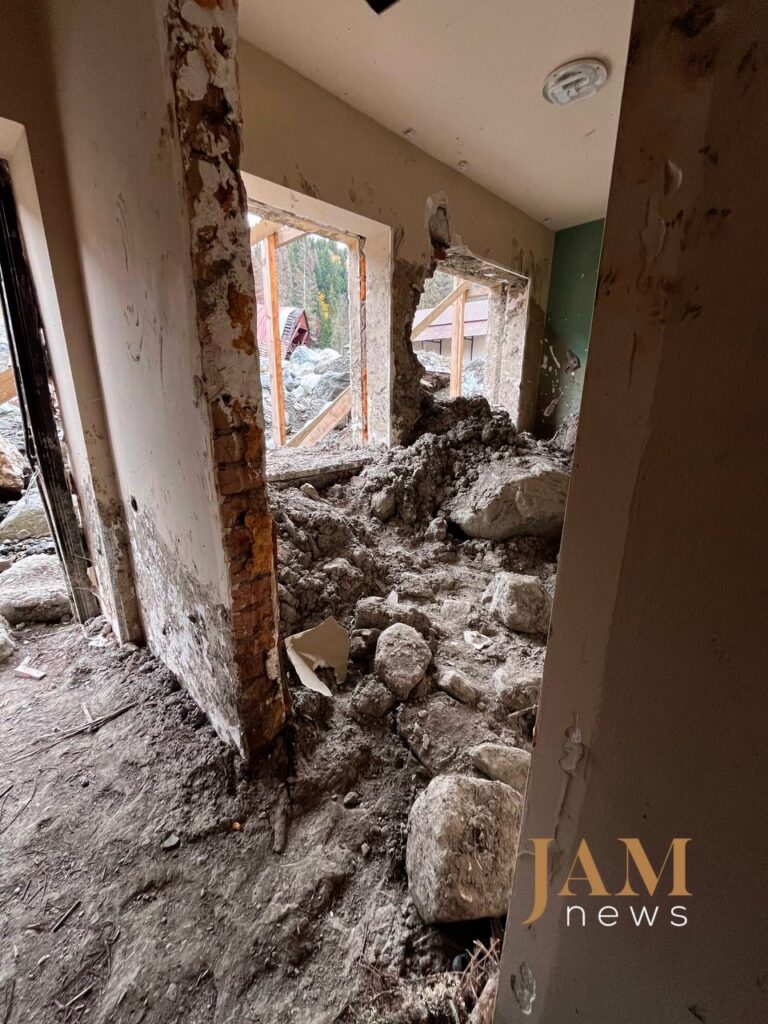
● Georgia is marking three years since the Shovi disaster. On August 3, 2023, a landslide at the mountain resort killed 33 people. The body of one teenager has still not been found. Read our report from Shovi here.
● Vano Zardiashvili, director general of Georgia’s State Electrosystem, has resigned. Giorgi Abramishvili, a member of the company’s advisory board, told journalists that Zardiashvili stepped down voluntarily and that his resignation is not related to the nationwide power outages on July 24 and 25.
● Prime Minister Irakli Kobakhidze says he does not rule out introducing a new law on “insulting national values.” He said the government is ready to consider such legislation in response to what he called “a coordinated attack on national identity.”
Over the past month, two initiative groups have been formed in Georgia calling for the protection of “national values.” One was founded by MMA fighter Giorgi Kartvelishvili, who said he is prepared to go to prison to defend those values. The groups emerged after stand-up comedian Onise Okriashvili was attacked following claims by pro-government media that he had insulted a classic of Georgian literature.
● Prime Minister Irakli Kobakhidze has accused Georgia’s opposition leaders of spreading “Russophobia” on orders from the “deep state,” while at the same time saying that Russia occupies Georgian territory. “Why weren’t they Russophobic after the August 2008 war, when there were the strongest possible reasons for it, but have become so now, when the victim of Russian aggression is not their own country, but another, albeit friendly, country – Ukraine?” Kobakhidze said. He argued that the opposition’s rhetoric toward Russia was much less critical before and after the 2008 war, despite the fact that Russia occupied 20% of Georgia’s territory. He said 412 people were killed, 2,232 were injured, around 30,000 were displaced, and more than 120 Georgian villages ended up beyond the occupation line as a result of the war. Kobakhidze also criticized former President Mikheil Saakashvili for later welcoming Russian tourists and abolishing visa requirements for Russian citizens. He claimed the opposition is now following the agenda of a “global war party” seeking to fuel anti-Russian sentiment and draw Europe into war.
-
Tuesday, 4 August, Armenia. The United States has doubled funding for the TRIPP+ fund
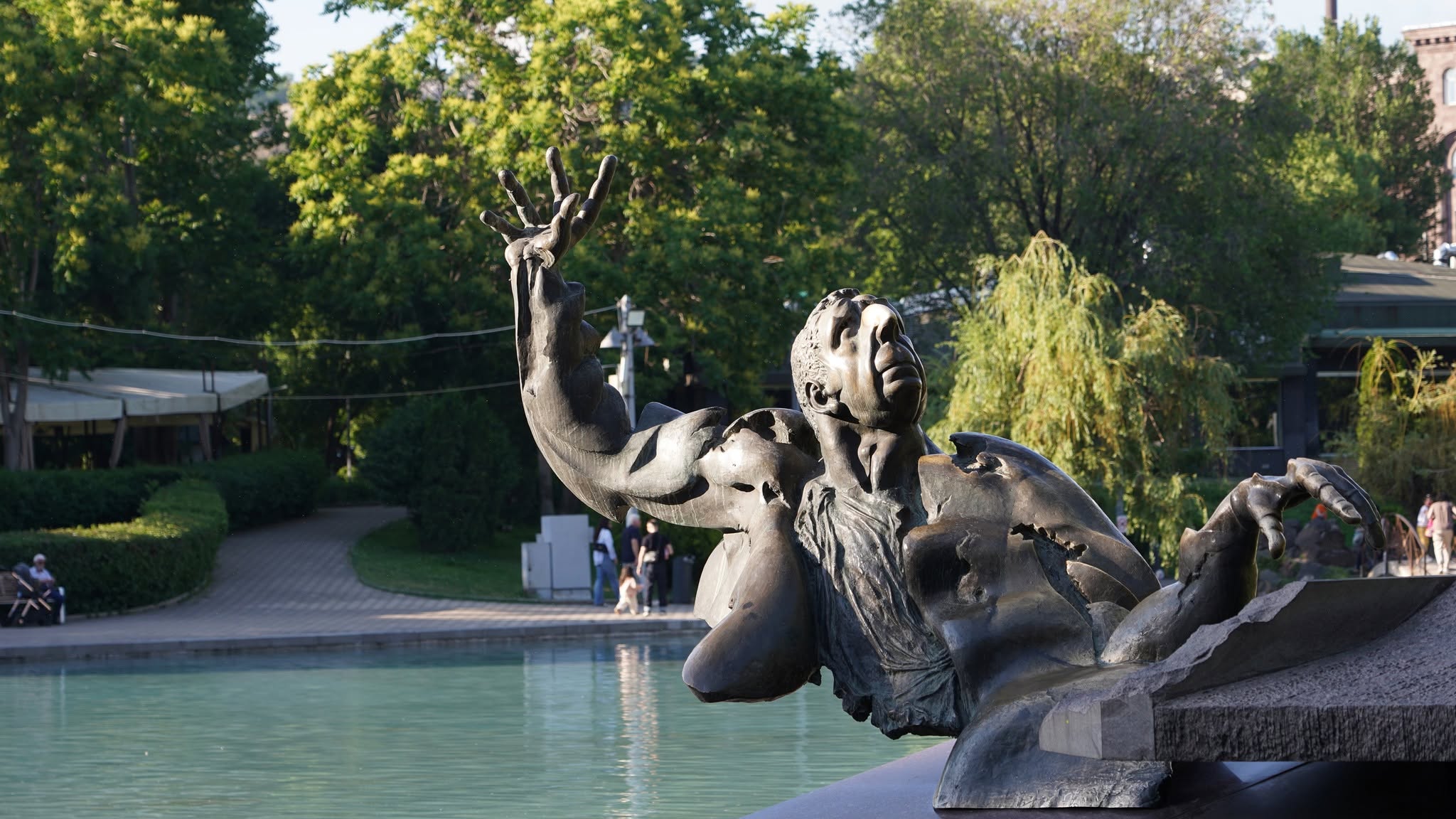
● Ruben Rubinyan, Armenia’s former special envoy for talks with Türkiye, has been elected speaker of parliament. He was the only candidate for the post. Rubinyan has already appointed four assistants and advisers. Read more here.
● President Vahagn Khachaturyan has approved the new cabinet. Nine ministers kept their positions. The only change is the appointment of Davit Tadevosyan as minister of high-tech industry. Mher Grigoryan and Tigran Khachatryan also remain deputy prime ministers.
● The United States has doubled funding for the TRIPP+ fund, also known as the “Trump Route,” from $201 million to $402 million. According to Hetq.am, most of the funding will be spent in Armenia. The planned route would connect Azerbaijan with its Nakhchivan exclave through Armenian territory.
● Armenia’s Investigative Committee says it will complete inspections of businesses owned by arrested businessman and leader of the pro-Russian Prosperous Armenia party Gagik Tsarukyan as quickly as possible. Meanwhile, employees of the affected businesses continue protesting in Yerevan, first outside the government building and then at the Investigative Committee. After meeting officials, Armine Davtyan, director of the restaurant at Multi Resort, told reporters: “Twelve thousand people have been left without jobs or income. People are hungry and will be ready to take any action.”
● Work is continuing on the reconstruction of the railway line at the Türkiye-Armenia border, Turkish media report.
● Narek Karapetyan, leader of the pro-Russian opposition Strong Armenia faction in parliament, has proposed a law that would prevent Azerbaijani citizens from staying in Armenia for more than 10 days and ban them from owning property or land in the country.
-
Monday, 3 August, Armenia. Nikol Pashinyan has been reappointed as Armenia's prime minister
● Nikol Pashinyan has been reappointed as Armenia’s prime minister. On the morning of August 2, the day the newly elected National Assembly held its first session, the government resigned as required by the Constitution. The ruling Civil Contract party, which holds a parliamentary majority, submitted the documents nominating Pashinyan for the post. Later that day, President Vahagn Khachaturyan signed the decree officially appointing him.
● The first session of Armenia’s 9th National Assembly was chaired, by tradition, by its oldest member, Knyaz Hasanov, who represents the Yazidi community, until a speaker is elected. The president and the Catholicos of All Armenians traditionally have the right to address the opening session. However, for the first time in history, the Catholicos was not invited and did not bless the parliament’s work. The move reflects the long-running conflict between the government and Catholicos Garegin II. For the past two years, Pashinyan has called for his removal, first accusing him of breaking his vow of celibacy by allegedly having a daughter, and later claiming he had ties to foreign intelligence services. Removing the Catholicos has also been included in Civil Contract’s election program. Read more here
● Lawmakers from the pro-Russian opposition factions Strong Armenia and Armenia refused to stand or recite the oath during the swearing-in ceremony in protest over the Catholicos’ absence. However, they signed the official oath documents, allowing them to legally take office. Anna Grigoryan, leader of the Armenia faction, said both opposition groups would personally visit the Catholicos to receive his blessing.
● Only one candidate was nominated for parliament speaker: Ruben Rubinyan of the ruling Civil Contract party. Rubinyan previously served as deputy speaker and as Armenia’s special envoy for the normalization of relations with Türkiye. Debate on his nomination began on August 2 and continues today.
● A court has dismissed former President Robert Kocharyan’s lawsuit against Prime Minister Nikol Pashinyan. Kocharyan had sought a retraction of statements he said damaged his reputation and demanded 6 million drams (about $16,500) in compensation after Pashinyan called him “a bribe-taker” during a government meeting. The court ruled that Pashinyan’s remarks were value judgments protected by freedom of expression, noting that in a democratic society this freedom also covers statements that may offend, shock or disturb.
● Veronika Zonabend, the wife of former Nagorno-Karabakh state minister Ruben Vardanyan, has again appealed to Azerbaijan’s Human Rights Commissioner Sabina Aliyeva and Armenian Prime Minister Nikol Pashinyan to help organize an international women’s humanitarian delegation to Baku. Vardanyan was sentenced by a military court in Baku to 20 years in prison on terrorism and other serious charges, while other Armenian detainees also received lengthy sentences on similar charges. Zonabend says her initiative is purely humanitarian and aims to visit Armenian prisoners in Azerbaijan, deliver letters, photographs and permitted personal items from their families, and help them stay connected with their loved ones.
● Nikol Pashinyan visited the Meridian Expo center, where preparations are underway for the 17th Conference of the Parties to the Convention on Biological Diversity (COP17). The event will take place in Armenia from October 19 to 30 under the slogan “Action for Nature.” Pashinyan personally inspected the construction work, with officials saying preparations for plenary halls, delegation areas and media facilities are on schedule.
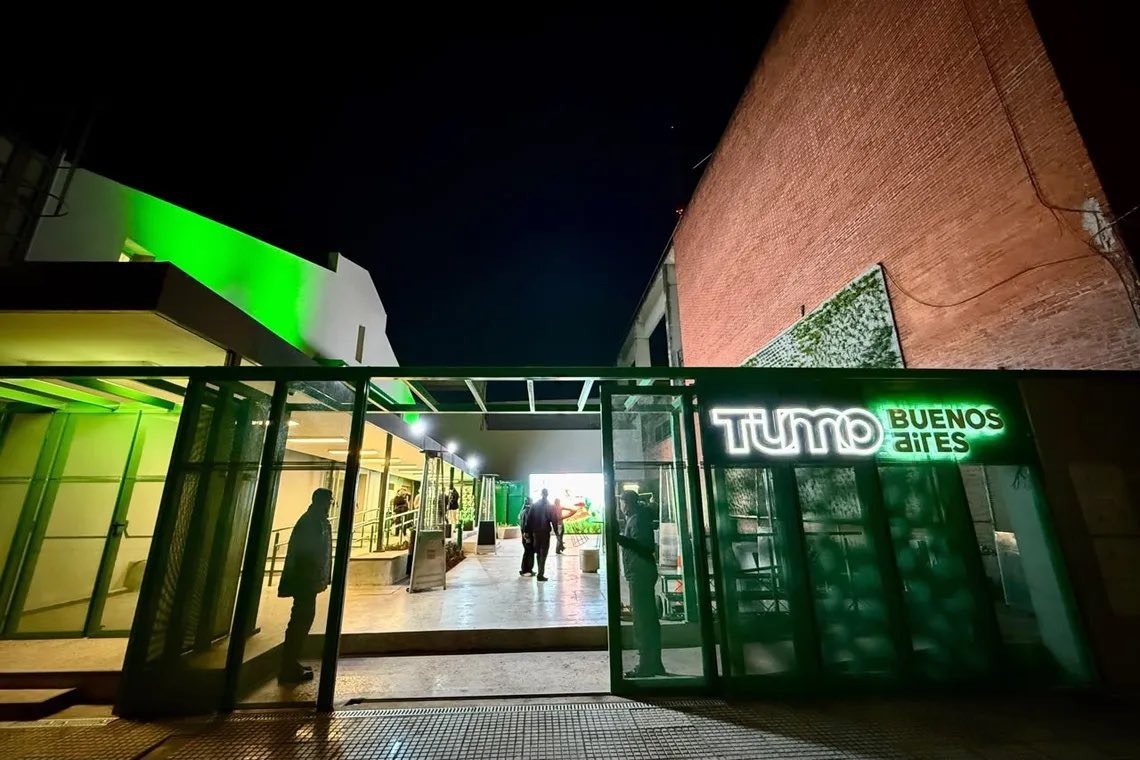
● A third branch of Armenia’s TUMO Center for Creative Technologies has opened in Buenos Aires, Armenian Ambassador Hovhannes Virabyan announced. The new center is expected to serve nearly 20,000 young people. TUMO was founded in Yerevan 15 years ago before expanding across Armenia and later internationally, with centers in France, Germany, Lebanon, Albania, Switzerland, Portugal and the United States. From September, TUMO will also begin full operations at its new branch in Kutaisi, Georgia. Read more about TUMO here.
-
Monday, 3 August, Georgia. New phase of Anaklia deep-water port construction begins with dredging works
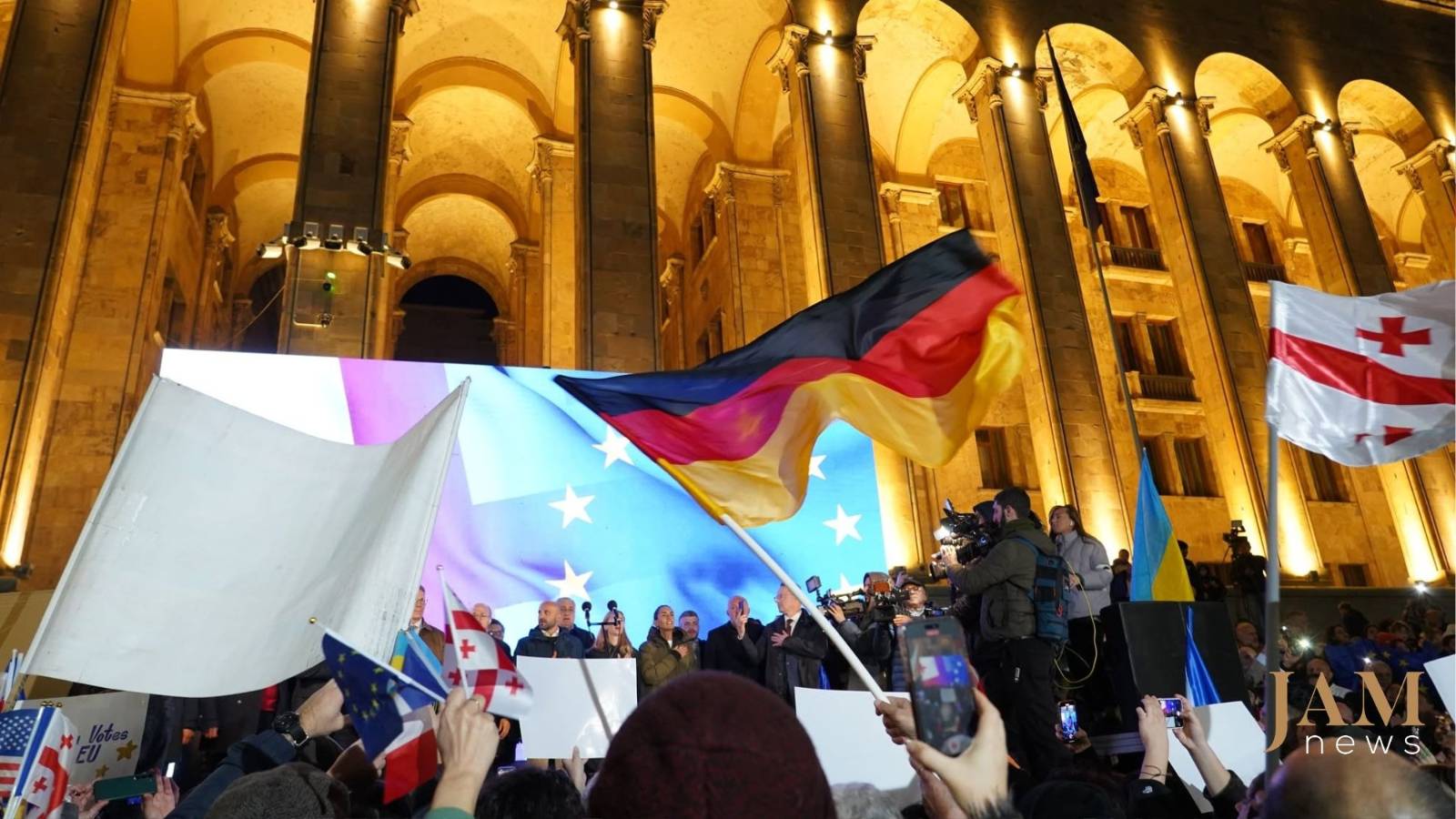
● A traditional pro-European Saturday march took place in Tbilisi under the slogan “For a Safe and Strong Georgia.” Protests calling for Georgia’s return to the path of EU integration and the release of all detained protesters have continued for nearly two years. Participants observed a minute of silence in memory of 17-year-old Nikoloz Gunashvili, who was killed in Tbilisi last week. Saturday would have been his birthday. Read more about the fatal shooting of the teenagers here.
● Prime Minister Irakli Kobakhidze said the Georgian government expects further steps from the United States that will help restore the strategic partnership between the two countries. “Tbilisi continues to communicate with its American partners and remains optimistic,” he said. The United States suspended its strategic partnership with Georgia in November 2024, citing the country’s democratic backsliding.
● Kobakhidze also accused former U.S. Ambassador to Georgia Ian Kelly and former U.S. Assistant Secretary of State David Kramer of being “agents of the deep state.” He claimed they were “taking orders to make statements against the national interests of Georgia and the Georgian people.” His comments came after media reported that Kelly and Kramer, in an article published by Just Security, urged the U.S. and the EU to increase targeted pressure on the ruling Georgian Dream party to prevent it from banning the opposition and arresting its leaders.
● The U.S. State Department has announced that visa application security deposits will become a permanent requirement. For Georgian citizens, the deposit may be as high as $20,000.
● Imprisoned former President Mikheil Saakashvili compared himself to Odysseus and Georgia’s leadership to Penelope in a lengthy social media post. He said Georgia’s opposition leaders resemble “Penelope’s suitors” because they oppose his political return and blame him for their own failures. Saakashvili said he is preparing for “major changes” and that his main goal is to put Georgia back on the path of development, restore state institutions and overcome the country’s challenges.
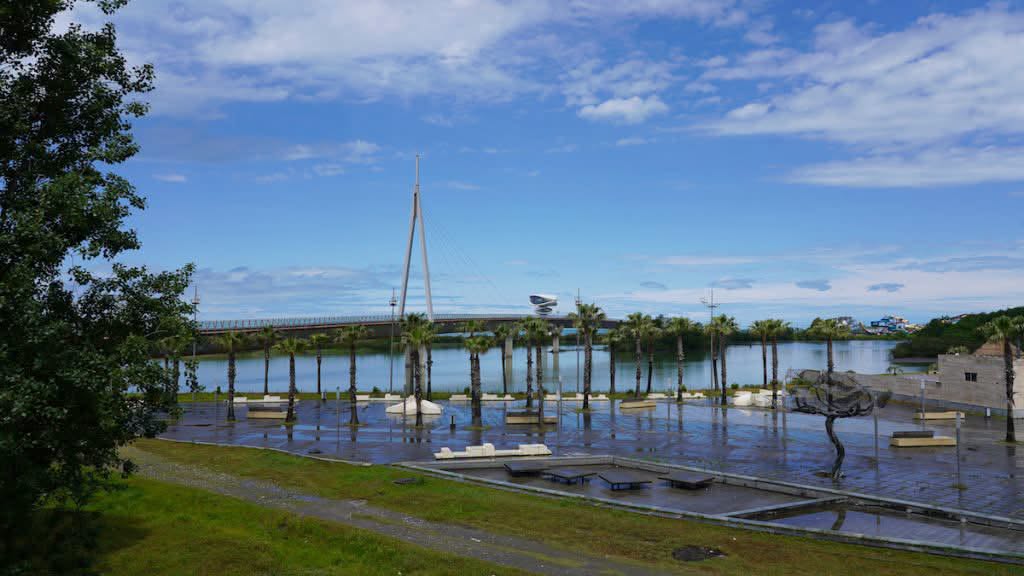
● Georgia’s Economy Ministry said dredging has begun at the deep-water port of Anaklia. The first dredging vessel, Tristão da Cunha, has arrived at the future port and will begin work on the breakwater after completing the required procedures. According to the ministry, the seabed will be deepened to 17.5 meters, followed by the construction of a 1,380-meter breakwater. The marine works are being carried out by Belgian company Jan De Nul together with Georgian partners. The government says road and railway infrastructure for the port will also be developed in parallel.
● Prime Minister Irakli Kobakhidze said eliminating corruption is one of the main reasons for Georgia’s strong economic growth. According to him, corruption “at the highest levels has been completely eliminated.” He said Georgia’s economy grew by 8.6% in June, while average growth for the first six months of 2026 reached 7.9%, significantly exceeding the International Monetary Fund’s initial forecast.
Photo: Anaklia/JAMnews
-
Monday, 3 August, Azerbaijan. Hearings continue in the "NGO case": Mehriban Rahimli testifies, denies wrongdoing
● An anti-personnel mine exploded in the Khojavend district of Karabakh, injuring an employee of a private company involved in humanitarian demining. Human Rights Commissioner Sabina Aliyeva urged people to strictly follow safety rules in areas recaptured by Azerbaijan during the 2020 Second Karabakh War. She also called on the international community and specialized organizations to increase technical, financial and expert support for humanitarian demining in Azerbaijan.
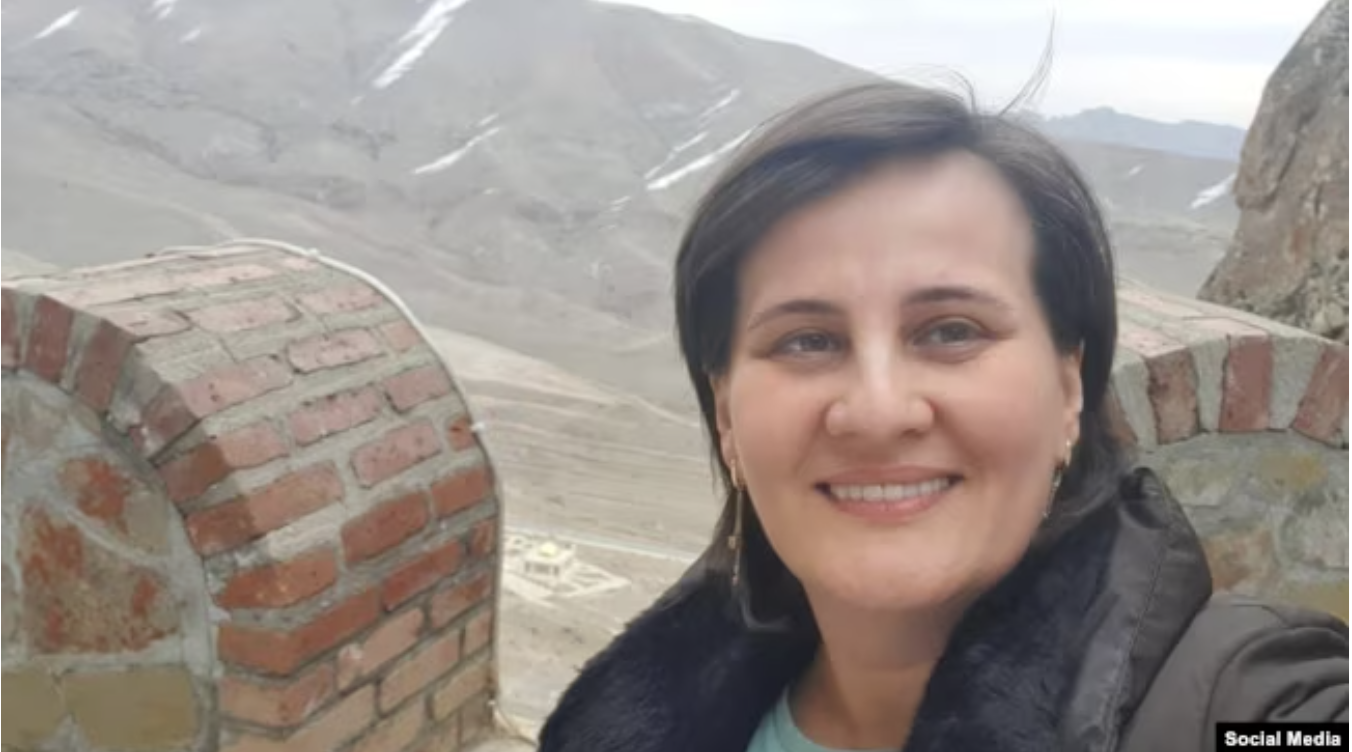
● Mehriban Rahimli (pictured below), the Azerbaijan adviser to the German Marshall Fund, who is under arrest, testified in court in the so-called “NGO case.” One of the main accusations against the civil society activists on trial is that they received funding through service contracts while implementing projects. The money was officially transferred to their organizations’ bank accounts and all required taxes were paid. However, prosecutors classified the funds as “criminal proceeds.” Rahimli said the German Marshall Fund provided grants until 2013. After restrictive amendments to Azerbaijan’s grant law were adopted, the organization stopped issuing grants and instead supported projects through service contracts. She said she repeatedly tried to register those contracts with Azerbaijan’s Justice Ministry but was officially told that service contracts did not require registration. “I have written proof of this,” Rahimli told the court.
Trials have already ended for several defendants in the case. Asaf Ahmadov, head of the Ganja Regional Community Center, was sentenced to eight years in prison. Zamin Zakiyev, head of the Civil Rights Institute, received seven years and six months. Activists Aygul Panjaliyeva, Nargiz Mukhtarova and Asiman Gojayev received suspended sentences. Trials for the remaining defendants are continuing. All of the arrested NGO representatives deny the charges and say they committed no crime.
● A new AI-powered legal platform in the Azerbaijani language, LIDA.ge, has been launched in Georgia. Created as part of the “Legal Assistance on Georgian Law” project, it is designed to help ethnic Azerbaijanis living in Georgia, Azerbaijani citizens and students understand Georgian legislation in their native language, receive legal advice and simulate possible court outcomes. The platform can also prepare applications to government agencies, automatically translating them from Azerbaijani into Georgian. Its creator, lawyer Sarkhan Mammadov, said users will be able to find lawyers who speak their native language anywhere in Georgia. The platform is integrated with Georgia’s official legal database and allows users to interact directly with government agencies. It was presented on Azerbaijani Alphabet and Language Day.
● Azerbaijani customs officers have stopped an attempt to smuggle more than 112 kilograms of heroin from Iran. The drugs were discovered during an X-ray inspection of a truck carrying a shipment of “ready-to-eat food” from Iran to Germany via Azerbaijan through the Nakhchivan Autonomous Republic. The heroin was hidden in the bottoms of 1,218 plastic containers of canned rice.
● Azerbaijan has introduced visa-free travel for tourists from Bosnia and Herzegovina and Singapore. Under the new rules, valid until August 1, 2027, citizens of both countries can enter Azerbaijan without a visa up to three times. Each stay may last up to 30 days.
-
Top stories in Azerbaijan, Armenia, and Georgia from 27-31 July, 2026