Relatives of missing Russian soldiers demand that the state search for them. In response, they are accused of working for Ukrainian intelligence






Missing Russian soldiers

The Russian state sends soldiers to fight in its war against Ukraine, but once they go missing, it effectively disclaims responsibility for their fate. Families spend months trying to determine whether their loved ones have been killed, taken prisoner or are being treated in hospitals, only to encounter a closed and dysfunctional system for tracing the missing.
When relatives band together and demand answers, the authorities respond not with assistance but with pressure and accusations that they are cooperating with Ukrainian intelligence services.
Based on reporting by Novaya Gazeta Europe
A grassroots initiative called The Missing Regiment is gaining traction on Russian social media. Launched in the Yaroslavl region in the spring of 2026, it brings together relatives of Russian servicemen who have gone missing in the war against Ukraine. They are demanding that the state make a genuine effort to find the soldiers it sent to the front and tell their families what happened to them.
Although Russian law provides a mechanism for tracing missing servicemen, in practice it barely functions. Relatives say the agency responsible has no website, telephone number or publicly accessible address where families can submit inquiries. They believe it exists largely on paper.
A reporter for Veter spoke with activists from The Missing Regiment. Their stories illustrate how the Russian state leaves the families of missing soldiers without information — and what happens to those who publicly speak out about the system’s failure to act.
Missing in action
Groups dedicated to finding missing soldiers have existed on social media since the start of Russia’s full-scale invasion of Ukraine. The information is typically posted by soldiers’ mothers, wives and sisters, who hope their messages will reach someone who knows what happened to their missing relatives.
Thousands of names and photographs have been posted in groups on VKontakte and Telegram. The images show former factory workers, security guards, prisoners, older men and men barely out of their teens.
Roman Artamonov, a 19-year-old from Saratov, began his compulsory military service on June 23, 2025. His unit was stationed in Borzya, a town near Russia’s borders with China and Mongolia. Two months later, he signed a military contract. After four months of training in Rostov, Roman was sent on a combat mission in the Donetsk region. Two days later, his family lost contact with him.
“Three months later, my son’s military unit declared him dead, citing Certificate No. 1421,” his mother, Elena Pisakina, said. “The document states that neither his body nor my son himself has been found. Searches among prisoners of war and in hospitals have yielded no results.”
Under Russian law, military commanders are required to declare a serviceman who has disappeared missing in action. The search must continue for six months. Only after that period can a court formally declare the person missing.
A serviceman can be declared dead immediately only if there is compelling evidence that the circumstances of his disappearance were life-threatening. The distinction also has financial consequences: during the six-month search period, the serviceman’s family continues to receive his military pay.
In practice, commanders therefore often seek to have missing soldiers declared dead as quickly as possible. Families do not always object. Once a serviceman is officially declared dead, relatives may be eligible for payments of about 10 million to 15 million rubles, depending on the region.
According to Mediazona, Russian courts received 90,000 such claims between 2023 and 2025, seeking to have servicemen legally declared missing or dead. Military unit commanders filed 26,000 of the claims, while agencies under the Defense Ministry filed another 20,000. In nearly 40,000 cases, information about the plaintiffs was withheld.
But having a soldier declared dead does not mean the search will continue, that the body will be returned or that a funeral will take place. Roman Artamonov’s family has still not been able to bury him.
Elena appealed to the military prosecutor’s office but received no explanation. She then took her story to social media. Her video was published by The Missing Regiment on its Telegram channel.
The movement emerged in April 2026 as an association of families of missing servicemen. Residents of other Russian regions soon joined the activists in Yaroslavl.
Members of the initiative help relatives draft appeals to Russia’s Investigative Committee, the presidential administration, the Red Cross and other organizations. Lawyers they know provide free consultations, and the activists also work with veterans’ groups.
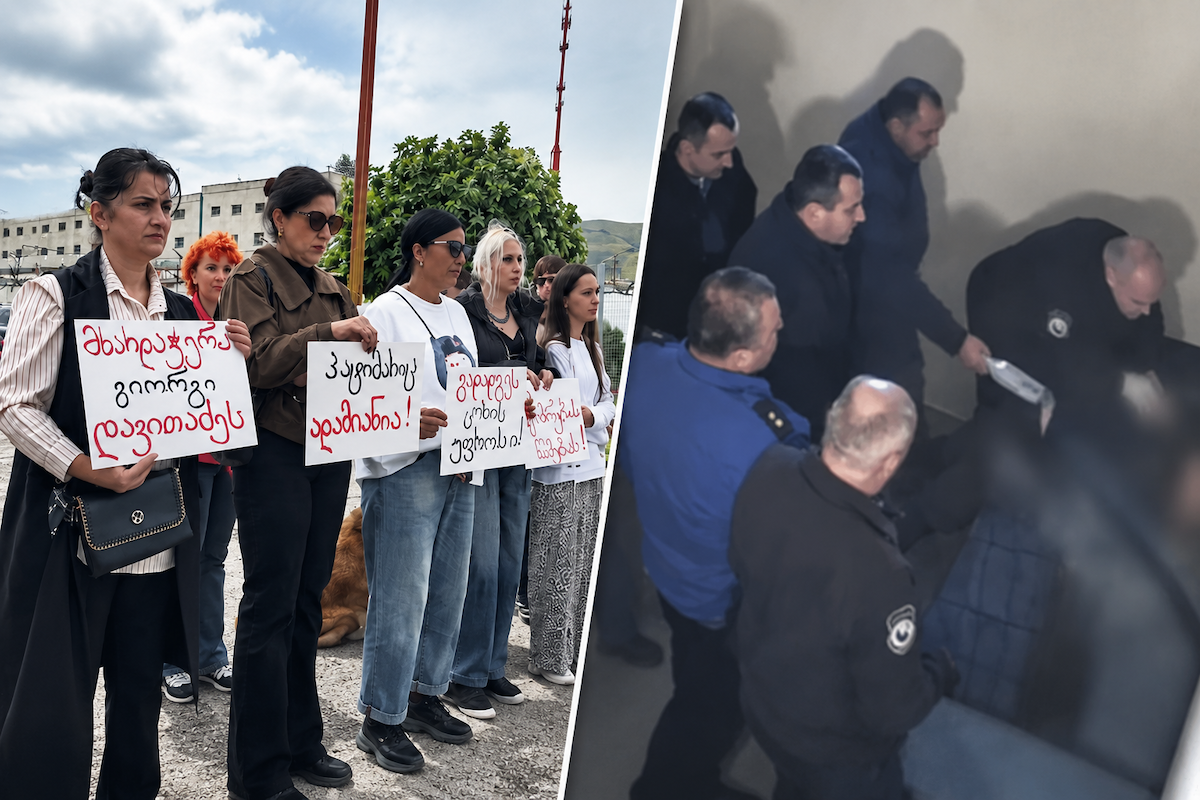
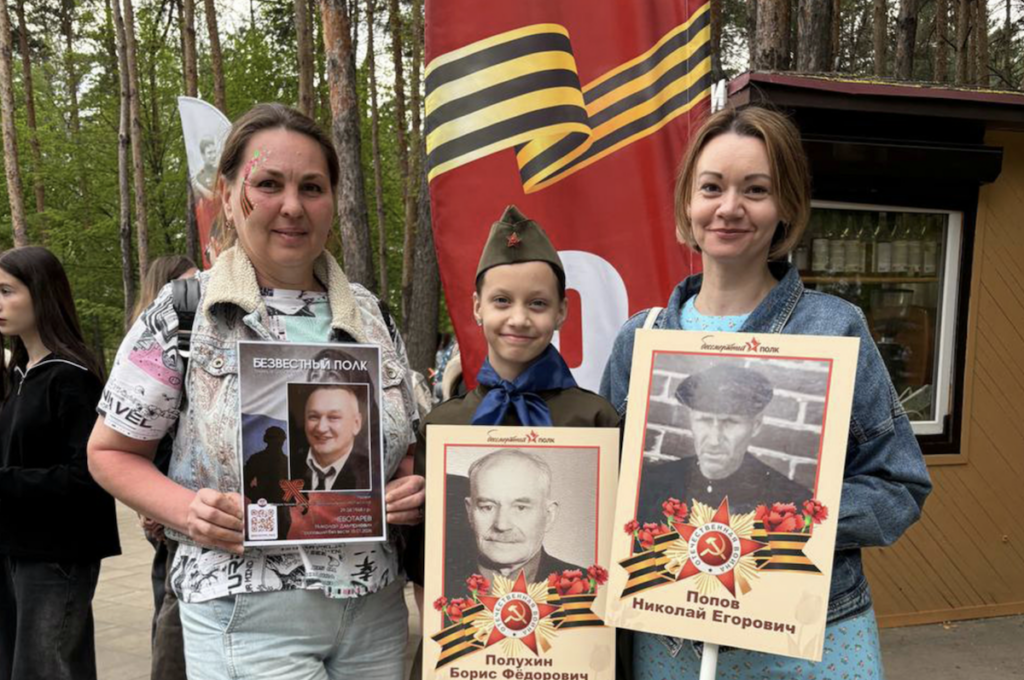
On May 9, the movement organized small demonstrations in several cities, where relatives gathered holding photographs of missing soldiers.
But a grassroots initiative cannot search for people in a combat zone. It lacks both the authority and the resources to do so. Instead, activists collect names and photographs, building a virtual database of the missing. They say more than 9,000 people have already contacted them.
“An assault soldier is just a number”
After a serviceman disappears, commanders are required to determine whether he went missing during a mission or left his unit without authorization. In the first case, the military must conduct an internal investigation. In the second, the soldier can be placed on a wanted list, face criminal charges and have his payments suspended.
But commanders have used this provision as a loophole. According to Important Stories, soldiers who disappear during combat missions are routinely classified as having left their units without authorization — even when there is evidence that they were killed in battle.
If a serviceman is officially declared missing in action, his information is entered into a centralized database, including the location where he disappeared and witness testimony. Special search teams are then supposed to work alongside civic and volunteer organizations to locate the missing.
Bodies that are recovered are evacuated and identified visually, through fingerprints or DNA testing. Military enlistment offices are then supposed to inform relatives of the results.
In practice, the system works differently. According to Verstka, soldiers are warned before being sent to the front that they may not be evacuated — whether they are wounded or killed.
The recovery of bodies depends on conditions on the battlefield and on commanders’ decisions. The speed of the search also depends on the dead soldier’s rank. Officers are searched for and evacuated more quickly.
“How do they treat some assault soldier who gets killed somewhere? He’s just a number. We report the number to the division and forget about him,” a military source told Verstka.
Relatives often have no way of finding out who is searching for their loved ones, where the searches are taking place or how they are being conducted. Their only options are to contact military enlistment offices and wait for news from volunteers.
In the fall of 2025, the Defense Ministry established a Main Coordination Center. Formally, it is responsible for coordinating the work of government agencies, civic organizations and volunteers.
Families are advised to contact military enlistment offices, the Defenders of the Fatherland Foundation, the human rights ombudsman or the military prosecutor’s office. They can also submit an electronic request through the Defense Ministry’s website. But there is no way to contact the coordination center directly.
Activists believe the center exists only on paper. It publishes no reports and has no dedicated website, telephone number, email address or public office where families can seek help.
Members of the movement say the Defense Ministry has effectively shifted responsibility for the searches to regional military enlistment offices, which lack the necessary equipment, specialists and access to up-to-date DNA databases.
Still, ombudsmen have reported some results. In 2025, they helped locate more than 300 servicemen, and about 100 more were found in the first half of 2026. Most were either prisoners of war or soldiers being treated in hospitals.
Vladimir Putin has claimed that the creation of the center improved the situation. In December 2025, he said the number of servicemen being sought had fallen by 50 percent and had dropped threefold since the beginning of the year. But the source of those figures is unclear. Russian authorities conceal the true scale of the country’s military losses, including the number of soldiers who are missing.
The Ukrainian project I Want to Find accepts inquiries from relatives of Russian servicemen and checks the information against its own database of prisoners of war and the dead. According to Verstka, the project received more than 84,000 requests over the course of a year.
Going It alone
Anna, whose name has been changed, joined the movement after her brother went missing. He was serving under contract with the 119th Guards Airborne Regiment.
In June 2026, Anna found The Missing Regiment on social media and became an activist. She stresses that the movement does not oppose the war or criticize the authorities. Its sole aim, she says, is to determine what happened to missing servicemen.
“Women come to memorials and say that their son, husband or brother is missing,” Anna said. “They want to know what happened to him. Government agencies should be doing this work instead of sending relatives from one office to another. On paper, there is a system in place, but in reality it either does not work or works poorly.”
Within a few months, activists had emerged in many regions across Russia. The movement has been particularly active in the Lipetsk, Yaroslavl and Rostov regions.
One of the movement’s organizers is believed to be Mikhail, a businessman from Yaroslavl whose name has also been changed. He describes himself simply as an active participant.
Mikhail’s friend Sergei went missing in the combat zone. Sergei’s elderly mother was left to navigate the bureaucracy on her own and was unable to do so.
Mikhail and Sergei’s mother repeatedly contacted his military unit but received no answers. Unit officials said Mikhail was not a relative of the missing soldier and therefore had no standing to seek information. The local military enlistment official avoided both Mikhail and Sergei’s mother. When Mikhail tried to stop the official to speak with him, he was threatened with police action and a fine.
There were many similar stories. What began as meetings with relatives eventually grew into a broader initiative. Activists started publishing video appeals, portraits of missing servicemen and announcements of public gatherings.
They sought support from political parties and state-affiliated organizations, but United Russia showed no interest in the initiative.
The activists also tried to work with the Defenders of the Fatherland Foundation, which is headed by Anna Tsivileva, a relative of Vladimir Putin. But according to Mikhail, the foundation is seeking to monopolize the issue without providing an effective system for finding the missing.
The movement then approached Communist Party branches in the Krasnodar region and the Chelyabinsk region. The party had previously provided meeting space to wives of mobilized soldiers from The Way Home movement.
But the authorities have cracked down hard on attempts by soldiers’ relatives to organize. The movement of mobilized soldiers’ wives initially supported both the war and Putin. Later, its most active members were designated “foreign agents” and faced criminal prosecution, while others were intimidated into silence.
Cooperation with the Communist Party also came to nothing. Its branch in the Chelyabinsk region said it had not worked with the organization, while the Krasnodar branch did not respond to a request for comment.
The party tried to involve the movement in its campaign against internet restrictions. But the issue had nothing to do with the search for missing soldiers, and the cooperation ended.
A local branch of the New People party in the city of Shakhty initially expressed interest in the initiative. Soon afterward, however, its representatives stopped responding. Some activists believe this happened after consultations with law enforcement agencies. The party did not respond to a request for comment from Veter.
“Give people hope”
Despite the stance taken by political parties and state-affiliated foundations, interest in the initiative continues to grow. Mikhail says the movement is receiving an enormous number of requests for help.
“We want the search effort to be taken to a new level and for officials to stop withholding information,” he said. “Commanders and military enlistment officials need to stop sending relatives from one office to another. Right now, if we want to find out what happened to someone close to us, we are treated as enemies of the state.”
Mikhail says the uncertainty is tearing families apart. Sergei’s mother begins to cry every time someone asks whether there has been any news.
The activists believe the system cannot be changed without the state’s involvement. Political parties, they say, could appeal directly to the president and the government, paving the way for legislative changes.
But military enlistment offices have little interest in conducting searches, while commanders are focused on the war. Without a clear legal obligation to act, the activists say, the system will not work.
A prank that spun out of control
Even these nonpolitical demands are treated by the Kremlin as a threat. Pro-government outlets quickly portrayed the movement as a project run by Ukrainian intelligence services.
In June 2026, War on Fakes, Lapsha Media and Southern News Service claimed that the initiative was part of an information operation. According to their account, Ukrainian intelligence services were collecting relatives’ personal information in order to hack their accounts and extort money from them.
Southern News Service claimed that those behind the effort were seeking to instill a sense of abandonment and helplessness among relatives. The supposed goal, it said, was to spread the idea that the state was not searching for the missing and that only grassroots organizing and public demonstrations could help.
Ahead of May 9, schools in several Russian regions held lessons titled “The Missing Regiment: Memory Cannot Be Blocked.” The classes focused on missing servicemen and contained no political appeals.
Several days later, schools began removing information about the lessons. The Sota project then reported, citing an anonymous source, that the campaign had supposedly been a prank.
None of Russia’s well-known pranksters claimed responsibility. Activists insist that the lessons had been organized by teachers through prior arrangements. They say educators began facing punishment after the events and that the initiative was subsequently portrayed as a prank in an effort to discredit it retroactively.
According to Mikhail, the movement faces pressure not only from pro-government media but also from law enforcement agencies.
On June 6, activist Irina Chebotareva in Lipetsk stopped responding to calls and messages. She had spent a long time searching for her missing husband and was regarded as the movement’s local coordinator. Members of the initiative believe she may have been in police custody. Veter was unable to determine what happened to her.
In Shakhty, in the Rostov region, members of the movement joined a May 9 motorcade carrying portraits of their missing relatives. On June 12, they organized a small demonstration of their own.
Shortly before the event, police summoned the movement’s local coordinator, Valeria Klyuchnikova, and questioned her over possible involvement in terrorist activity. Officers told her that the motorcade had to be approved by the city administration and law enforcement authorities.
Klyuchnikova was later detained while picking up a package containing the movement’s flag and several T-shirts. Police confiscated the flag and one T-shirt before releasing her.
This article was produced with the support of Media Network
exchange