NATO summit in Ankara: How the war in Ukraine is reshaping the alliance






NATO summit in Ankara
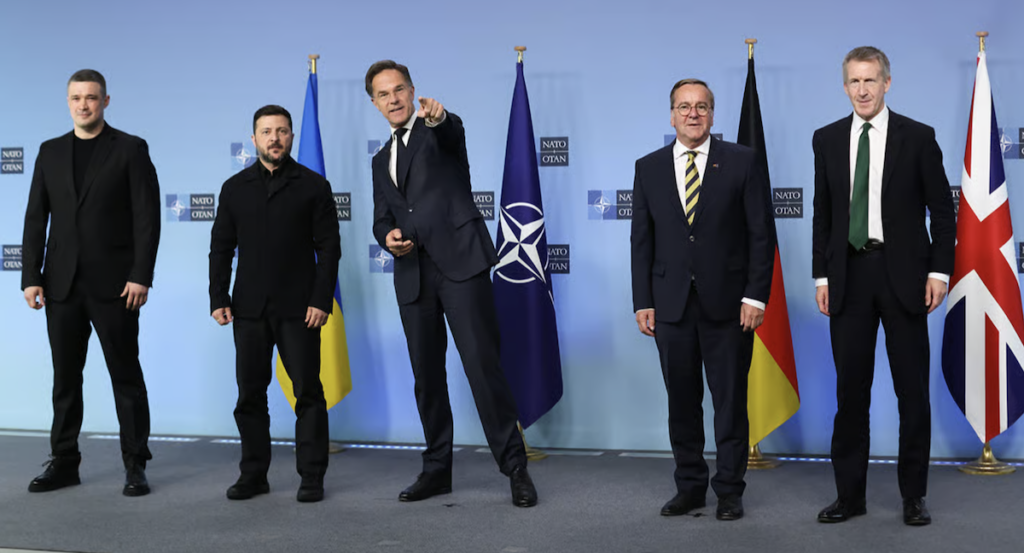
In July, NATO will hold a summit in Ankara aimed at defining the alliance’s next strategic direction. Ahead of the meeting, defense ministers from member states gathered in Brussels on June 18 to discuss three key issues: support for Ukraine, increases in defense spending, and the long-term deterrence of Russia.
NATO leadership argues that the war in Ukraine is reshaping not only European security but the alliance itself. Secretary General Mark Rutte said NATO is undergoing the most significant transformation in its history and must evolve into “NATO 3.0” so that it is no longer described as a “paper tiger.”
Based on reporting by Novaya Gazeta Europe
Preparations for the Summit
According to Rutte, the summit in Ankara will focus on increasing defense spending, strengthening the defense industry, and continuing long-term support for Ukraine. NATO officials emphasize that Ukraine’s security is now viewed as inseparable from the security of the Alliance itself.
At a meeting of the Ukraine Defense Contact Group, Kyiv and Berlin agreed to jointly produce ground-based robotic systems known as “Termit” in Germany. Germany will finance the production and delivery of thousands of such systems. The United Kingdom announced it would supply Ukraine with 150,000 drones and more than 350 air-defense missiles and radar systems by the end of 2026. The funding will be provided through revenues generated from frozen Russian assets.
Ukrainian Defense Minister Mykhailo Fedorov said that Ukraine’s military has improved its position on the battlefield and urged partners to accelerate the delivery of already promised weapons.
At the same time, U.S. Defense Secretary Pete Hegseth again did not participate in the meeting of the Ukraine Defense Contact Group. Since the arrival of the administration of President Donald Trump, Washington has shifted its approach to assistance for Ukraine: critical weapons continue to flow from the United States, but their procurement is increasingly financed by European allies and Canada through the PURL mechanism.
Europe Takes on More Responsibility
Since the beginning of 2025, the United States has steadily pressed its European allies to assume greater responsibility for the continent’s security. Washington continues to provide nuclear guarantees, but has gradually reduced its role in supplying conventional military capabilities to Europe.
Hegseth announced the start of a six-month review of the deployment of U.S. forces in Europe. The goal, according to the Pentagon chief, is to ensure that Europe takes the lead in its own defense.
NATO Secretary General Mark Rutte described the developments as part of a broader transformation of the alliance.
Following last year’s summit, allies agreed to raise defense spending to 5 percent of GDP by 2035, with 3.5 percent allocated to core military needs and an additional 1.5 percent directed toward infrastructure and resilience.
In 2025, European countries and Canada increased their defense budgets by more than $90 billion. Only the Czech Republic, Slovenia, and Albania have yet to reach the 2 percent of GDP target, though NATO expects them to do so in the near future.
At the same time, alliance officials acknowledge that, following reductions in certain U.S. commitments, Europe will need to address capability gaps in intelligence, command-and-control systems, aerial refueling, air defense, and long-range strike capabilities.
Ukrainian experience becomes part of NATO strategy
NATO officials view support for Ukraine as one of the central pillars of their policy of deterring Russia. At the same time, Ukraine’s armed forces are increasingly seen as a source of unique battlefield experience.
According to a senior alliance official, Ukrainian troops have developed extensive expertise in countering drones—experience that most NATO militaries still lack. As a result, Ukrainian specialists are now participating in NATO exercises, helping allies adapt their tactics and operational planning.

Military officials within NATO also warn that the war has become a global testing ground for the exchange of military technologies. Russia, China, Iran, and North Korea are not only cooperating more closely, but are also jointly adapting weapons systems and methods of warfare.
“The key question is whether we are able to learn faster than our adversaries,” a NATO official said.
Why Ukraine is holding the front
According to NATO Secretary General Mark Rutte, the Russian offensive has slowed significantly and the front line has become more stable.
NATO officials attribute this to more effective Ukrainian command and control, the large-scale use of drones, and successful strikes against Russian logistics networks. Ukrainian forces have repeatedly targeted ammunition depots, transport hubs, air defense systems, and energy infrastructure both in occupied territories and in border regions of Russia.
According to NATO estimates, Ukrainian drones destroyed more than 130 pieces of Russian equipment used for supplying frontline forces in May alone.
NATO Secretary General Mark Rutte also cited assessments of Russian losses. According to the alliance, Russia has lost between 1.3 and 1.5 million personnel since the start of the war, including around 500,000 killed. Monthly irrecoverable losses are estimated at 30,000 to 35,000 personnel.
To replenish its forces, Moscow is increasingly relying, according to NATO assessments, on prisoners, people with financial debts, and foreign nationals.
Russia remains the primary threat
At NATO headquarters, officials say Russia will remain the principal threat to European security for the foreseeable future. At the same time, the alliance says it sees no signs that Moscow is preparing for a direct attack on NATO member states in the near term.
Alliance officials argue that it is important to distinguish between Russia’s potential military capabilities and its actual intentions. NATO’s primary objective, they say, is to ensure that any potential aggression would carry unacceptable risks.
Particular attention is being paid to protecting the airspace of the Baltic states, where drones have repeatedly strayed off course because of Russian electronic warfare systems. NATO officials stress that any drone violating allied airspace will be intercepted and destroyed, regardless of its original destination.
The Latvian experience
Latvian Prime Minister Andris Kulbergs said that defending against drones has become one of his government’s top priorities.
Latvia has already signed an agreement with Ukraine on cooperation in counter-drone capabilities. Ukrainian specialists will help assess the country’s existing air defense system, train personnel, and implement solutions based on lessons learned from the war.
The country has also increased its military assistance to Ukraine to 0.3 percent of GDP and allocated an additional €7 million to the PURL mechanism.
According to Kulbergs, troops from 14 NATO member states are currently training together in Latvia, but the alliance’s eastern flank will require further reinforcement.
How Russia is changing
NATO officials believe Ukraine is steadily degrading Russia’s ability to supply Crimea and the occupied territories by disrupting key logistics routes.
The alliance also says the war is placing growing pressure on Russia’s leadership. Its consequences are increasingly being felt not only in the regions but also among the political and business elites in Moscow and St. Petersburg.
According to NATO officials, some members of those elites are beginning to view the conflict as “Putin’s war” rather than a national project.
At the same time, the alliance assesses that Russia is increasingly testing NATO’s defensive capabilities and probing for vulnerabilities among its members.
Addressing those weaknesses is expected to be one of the central themes of NATO’s summit in Ankara this July.
exchange