

How does Baku view Atlantic Council’s US-Azerbaijan ‘grand bargain’ proposal?






Proposed US-Azerbaijan deal
The US think tank Atlantic Council has urged President Donald Trump’s administration to lift restrictions on arms sales to Azerbaijan in exchange for the release of jailed civil society activists and journalists whom local and international rights groups regard as political prisoners.
In an article titled “It’s time for a US-Azerbaijan grand bargain”, published on 10 May, authors Andrew D’Anieri and Mercedes Sapuppo proposed the following framework.
The US Congress would repeal Section 907 of the Freedom Support Act, which restricts US government assistance to Azerbaijan, while Baku would release what the authors described as “wrongfully imprisoned” detainees.
Among those named were economist Gubad Ibadoghlu, who is under house arrest; Radio Free Europe/Radio Liberty journalist Farid Mehralizada, who was sentenced to nine years in prison; former Voice of America correspondent Ulviya Ali; and lawyer Alasgar Mammadli, whose cases are still ongoing.
All have officially been charged with financial crimes, but they deny the accusations and say they are being persecuted for criticism of the authorities.
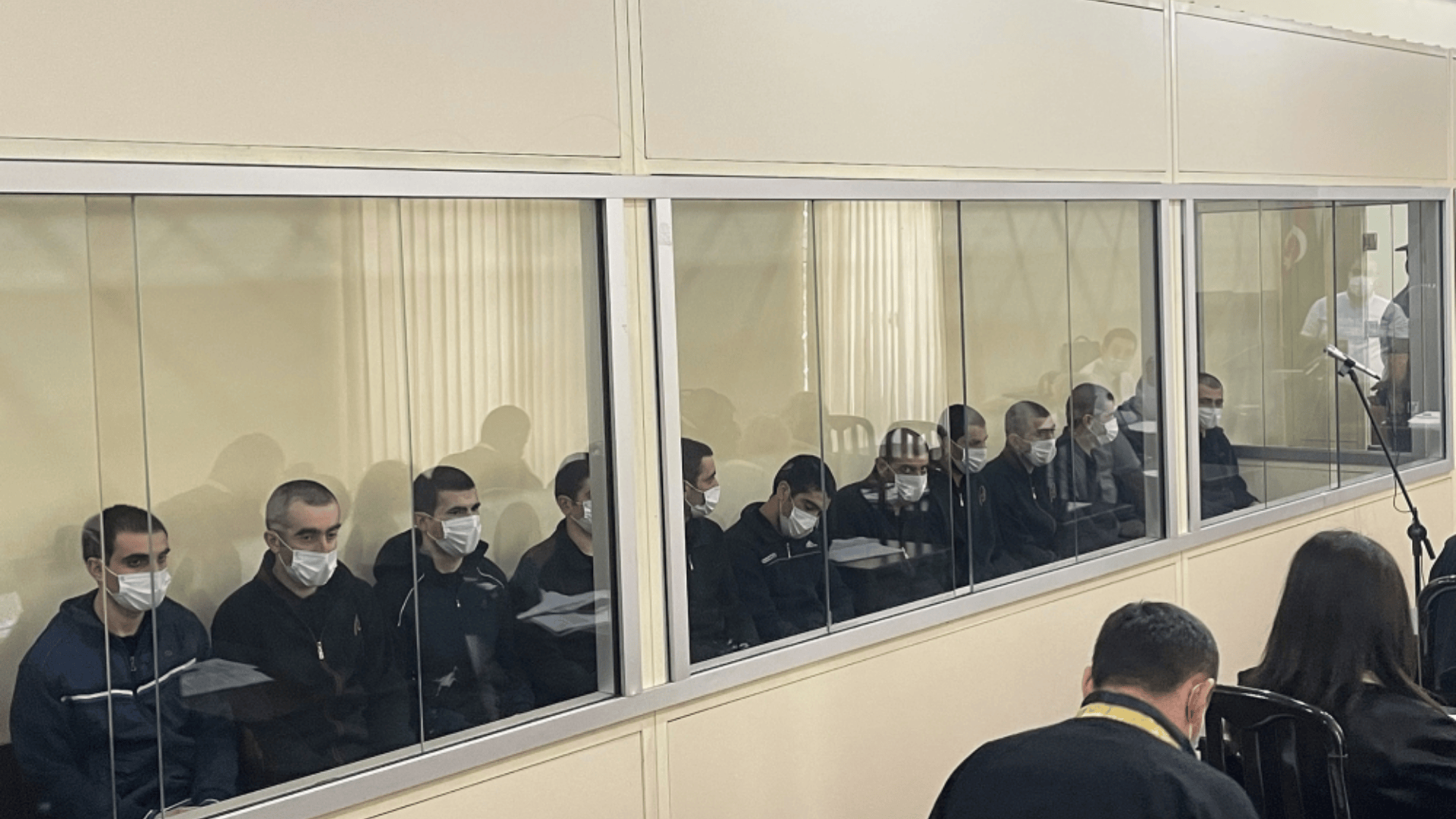
The article also suggested that some Armenian detainees held in Baku could be released as part of the arrangement.
The authors compared the proposal to a model previously used by the White House in dealings with Belarus, which they said resulted in the release and exile of more than 500 political prisoners.
They argued that shifting US policy in the South Caucasus, upcoming parliamentary elections in Armenia and the importance of signing a final peace agreement between Azerbaijan and Armenia increased the relevance of such a “grand bargain” between Washington and Baku.
According to the authors, the risks of the approach would be minimal, while the political gains could be substantial: deepening US-Azerbaijan relations, giving new momentum to the Armenia-Azerbaijan peace process and delivering a major foreign policy success for the White House.

The Atlantic Council largely frames Section 907 as a restriction on arms sales, although formally it limits all direct US government assistance to Azerbaijan, including military aid.
Since 2001, US presidents have routinely waived the restriction, and in August 2025 Donald Trump once again suspended its application.
A memorandum signed by Trump in 2025 stated that the decision was intended to support joint counterterrorism efforts and avoid harming the peace process between Azerbaijan and Armenia.
In practice, this means that under the proposed “grand bargain”, the US would be giving up one of its key remaining sources of leverage over Azerbaijan.
However, Andrew D’Anieri and Mercedes Sapuppo argue that, compared with the model previously used in Belarus, the strategic benefits in Azerbaijan’s case are greater while the risks are lower.
The timing of the proposal also appears deliberate.
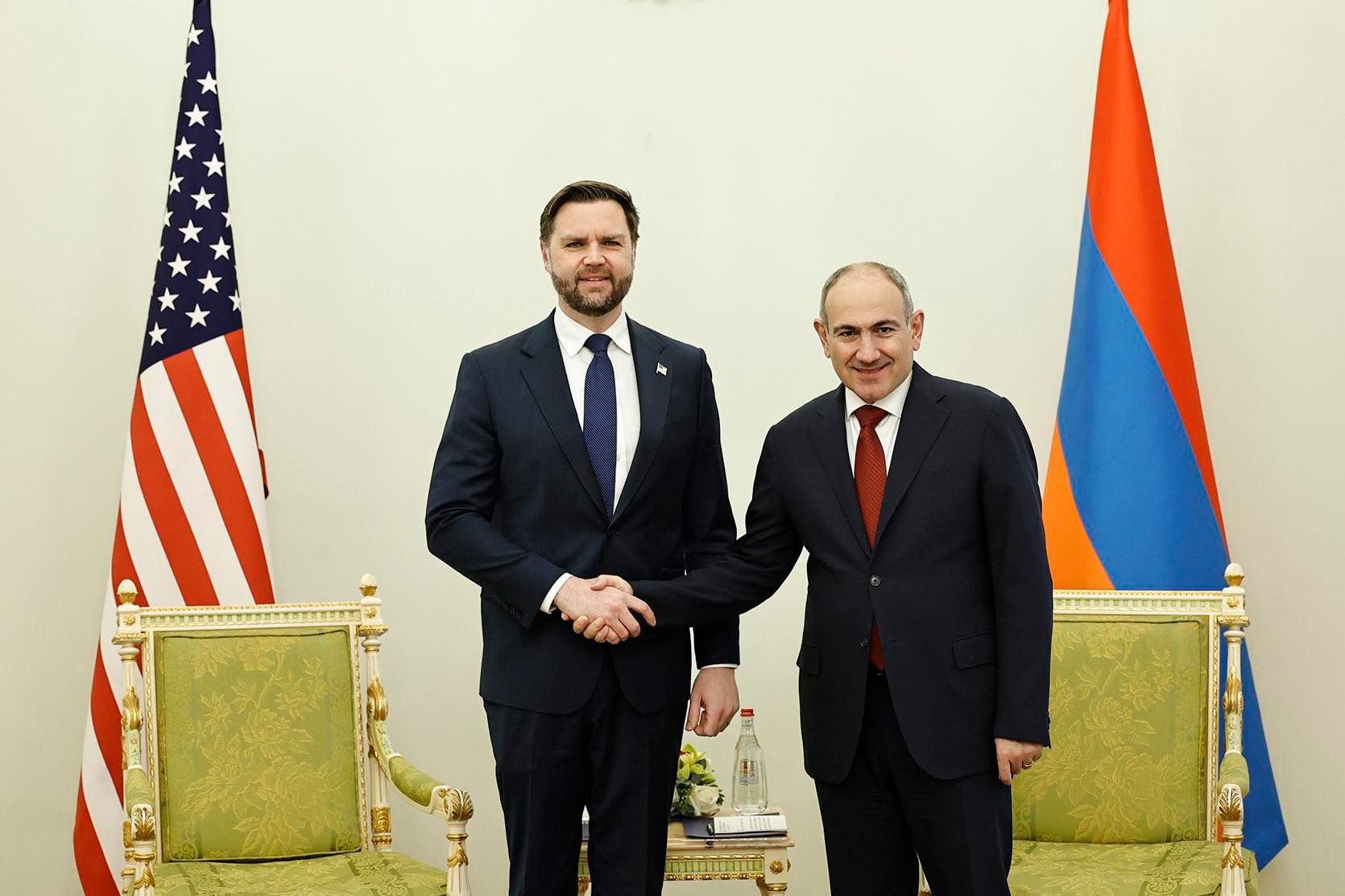
The Atlantic Council noted that Vice-President JD Vance’s visits to Armenia and Azerbaijan in February reflected an unprecedented level of US engagement in the region.
Vance’s trip to Baku was accompanied by the signing of a strategic partnership charter and expanded cooperation in defence and infrastructure projects.
The article also stressed that the outcome of Armenia’s parliamentary elections on 7 June could either accelerate or slow the peace process.
The Atlantic Council further argued that releasing some Armenian detainees held in Baku before the elections could strengthen Prime Minister Nikol Pashinyan’s position and help keep the path towards a peace agreement open.
Views from Azerbaijani analysts
Political analysts Arastun Orujlu and Rauf Mirqadirov argue that energy cooperation, the Middle Corridor transit route and security issues remain the key drivers of Azerbaijan’s relations with the West, while concerns over human rights and political prisoners are pushed into the background.
In that context, the Atlantic Council’s proposed “grand bargain” is seen in independent circles in Baku as a familiar formula: the West once again prioritising strategic interests while attaching the release of prisoners to the deal.
For some rights advocates, this represents an opportunity. For others, it risks turning human rights into a bargaining chip.
In one of his earlier statements, rights activist Arif Yunus said Armenian prisoners — including those sentenced to life imprisonment — could potentially be released in exchange for major political concessions.
At the same time, analyst Elkhan Shahinoglu, who is widely seen as close to the authorities, has argued the opposite. In his view, the continued detention of former Nagorno-Karabakh “state minister” Ruben Vardanyan may be politically advantageous primarily for Yerevan.
As a result, even within Azerbaijan’s expert community there is no single consensus. Independent analysts tend to see detainees as leverage in negotiations, while pro-government commentators view the issue through the prism of Armenia’s elections and Azerbaijan’s domestic politics.
Although pro-government media outlets have not directly responded to the Atlantic Council article, they have openly supported repealing Section 907 in recent months.
President Ilham Aliyev described the measure in January as “absolutely absurd”, while pro-government media portrayed it as the main obstacle in bilateral relations.
The overall message has remained unchanged: Section 907 should be repealed because both Baku and Washington increasingly see it as an outdated political burden.
At the same time, pro-government media support repealing Section 907 but show little willingness to tie the issue to demands involving political prisoners or Armenian detainees.

Expert commentary also reflects these divisions.
● Former US ambassador to Azerbaijan Matthew Bryza has described Section 907 as a “political anachronism” and sees its continued existence largely as a symbolic source of tension.
● Commentator Andrew Korybko argues that the process of repealing the amendment is already under way, although Armenian lobbying groups in Congress remain an obstacle.
● According to analyst Eldeniz Amirov, the amendment’s economic impact is limited, while its significance is mainly symbolic and political.
● Political analyst Matin Mammadli believes repealing the amendment would strengthen US influence in the South Caucasus.
At the same time, sources close to Azerbaijan’s human rights and media circles see the issue differently.
If the release of political prisoners becomes tied to a broader geopolitical package, would that legitimise a new form of transactional diplomacy in the future?
The practical side of the proposal is also not so simple.
Many political prisoners and ethnic Armenian detainees held in Azerbaijan face “serious” or “especially serious” charges, meaning they were excluded from the amnesty announced in 2025.
In such cases, release would generally require either a presidential pardon or a separate political decision.
That is an important detail for the Atlantic Council’s proposal: its implementation depends less on legal procedures than on political will.
As a result, the issue is not only whether the US Congress would agree to such a step, but whether Baku itself would be prepared to make a serious domestic political decision.
So far, the Atlantic Council’s proposed “grand bargain” has not sparked a major public debate in Azerbaijan. However, the main lines of reaction are already becoming clear.
If Washington does attempt to push forward with such a model, the central debate is likely to focus not on closer US-Azerbaijan ties themselves, but on their moral and political price.
Proposed US-Azerbaijan deal