Why did Azerbaijan suspend relations with European Parliament, and what does it actually change?






Azerbaijan and the European Parliament
Decision adopted by Azerbaijan’s Milli Majlis on May 1 envisages the suspension of all channels of cooperation with the European Parliament, termination of participation in the EU-Azerbaijan Parliamentary Cooperation Committee, and launch of a procedure to withdraw from Euronest.”
Azerbaijan’s parliament moved to halt cooperation with the European Parliament immediately after adoption on April 30, 2026, of a resolution titled ‘Supporting Democratic Resilience in Armenia.’
Baku says it views the document – particularly provisions concerning the ‘return’ of Karabakh Armenians and the release of detained Armenians – as ‘unfounded and biased.’
Details of the decision
According to the Milli Majlis, the May 1 document предусматривает three main steps:
- the suspension of cooperation with the European Parliament “in all areas,”
- the termination of participation in the EU-Azerbaijan Parliamentary Cooperation Committee,
- the initiation of procedures to suspend membership in the Euronest Parliamentary Assembly, with the Azerbaijani delegation refraining from participating in Euronest activities during this process.
The decision presents this move not as a one-time emotional reaction, but as a continuation of a long-term policy line.
The document states that the Milli Majlis had already suspended relations with the European Parliament in 2015 due to its stance, and later restored them based on “appeals and promises.”
An analytical briefing by the European Parliament itself from 2020 also notes that formal interparliamentary relations were resumed in 2016 after a prolonged pause.
This indicates that the roots of the current crisis are not new.
What was in the resolution that triggered the break
Although the resolution is devoted to Armenia, it contains provisions referring to Azerbaijan. Wording in those provisions triggered protests in Baku, particularly points 12 and 13:
12. Reiterates its support for the rights of Nagorno-Karabakh Armenians, including the protection of their identity, property and cultural heritage, and their right to a safe, unimpeded and dignified return under appropriate international guarantees; calls for those responsible for the destruction of Armenian cultural and religious heritage to be held accountable, and for an international assessment mission;
13. Condemns Azerbaijan’s unjust detention of Armenian prisoners of war, detainees and hostages; demands their immediate and unconditional release; notes the steps taken so far and calls for further confidence-building measures; calls for full respect for international humanitarian and human rights law.
Immediately after the resolution was adopted on April 30, EU Ambassador Marijana Kujundžić was summoned to Azerbaijan’s Foreign Ministry and handed a formal protest note.
Provisions protested by Baku
● Use in resolution of Armenian-language toponym for Azerbaijani region as “Nagorno-Karabakh”, while Baku insists such designation is invalid, stating existence of Karabakh Economic Region, a position it says is supported by multiple UN resolutions.
● Claims in Baku that no expulsion of Armenians from Karabakh took place; instead, authorities say ethnic Armenian residents were encouraged to remain in homes and accept Azerbaijani citizenship. Azerbaijani officials say local Armenian community left voluntarily despite reintegration plan presented in 2023.
● Objection to terms “prisoners of war” and “hostages”, which Baku describes as “legally unacceptable”. Azerbaijani authorities say ethnic Armenians held in Azerbaijan are war criminals convicted by military courts.
● Baku rejects claims of destruction of cultural and religious heritage. It also highlights international silence over damage to Azerbaijani heritage during period of occupation by Armenian forces.
Reactions from Azerbaijani officials and experts
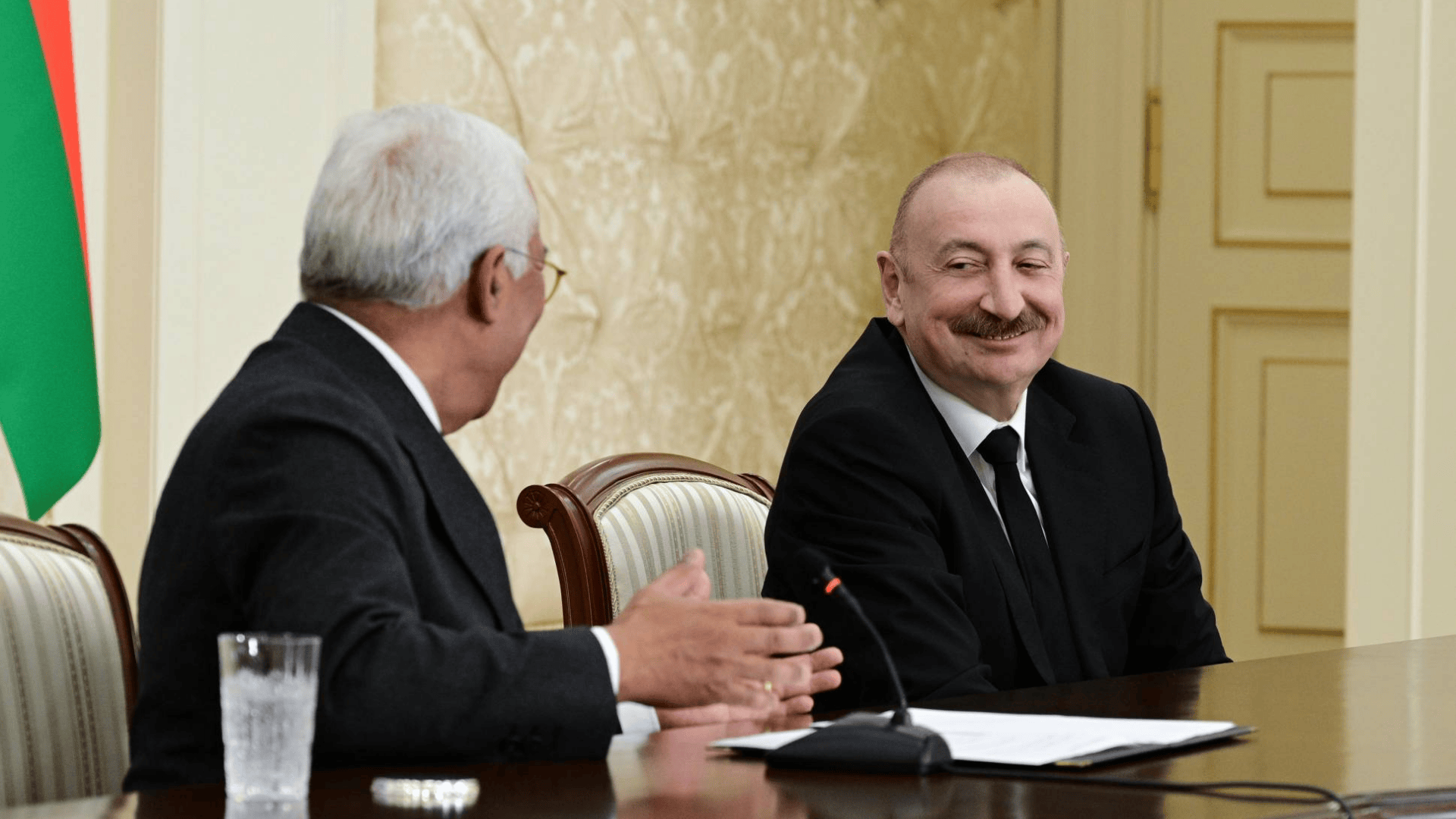
“In a period when economic steps are being taken to build peace between Azerbaijan and Armenia, adoption of such decision one day after visit of Azerbaijani deputy prime minister to Armenia is nothing but diplomatic disgrace,” presidential aide Hikmet Hajiyev told journalists.
In his view, resolution creates obstacles to peace process between Azerbaijan and Armenia.
Hajiyev said such steps can be seen as “destructive, provocative, and an attempt to drag region back into war.”
Speaker of the Milli Majlis, Sahiba Gafarova, stated during the parliamentary session that the past decade has shown that the European Parliament has no intention of abandoning what she described as its biased approach toward Azerbaijan.
Text of decision adopted by parliament notes that “after 44-day war (autumn 2020), European Parliament adopted more than 10 resolutions against Azerbaijan.”
MP Zahid Oruj, head of the Center for Social Research, said:
“The European Parliament is stating things that are not even said by the authorities in Yerevan themselves.”
“Brussels bureaucracy is striking a blow to peace in the region, undermining the key idea of PM Pashinyan’s election platform – normalisation of relations with Azerbaijan – and strengthening the ‘three-headed party of war’ in Armenia. The real enemies of Yerevan are those MEPs who voted for this resolution,” Oruj told pro-government outlet Report.
Analyst Azer Garayev told Trend that the Milli Majlis decision does not immediately sever all relations, but creates a “cold political distance.”
He said economic and technical cooperation between Azerbaijan and the EU will continue, but political dialogue is moving into a more cautious and less trusting phase.

What was the level of relations before the decision?
The concept of “EU–Azerbaijan relations” can be divided into two parts.
First, the European Parliament track itself.
The structure is as follows:
• The European Parliament Delegation for the South Caucasus oversees the EU–Azerbaijan Parliamentary Cooperation Committee. Under committee rules, it is normally required to meet once a year and discuss all aspects of the country’s relations with the EU.
• Euronest is a format bringing together the European Parliament and parliaments of Eastern Partnership countries, with each country represented by 10 members.
The parliamentary channel between Azerbaijan and the EU has formally remained in place, but has been fragile, intermittent and marked by high political tension.
Second, the broader EU-Azerbaijan relationship.
Here, the picture is quite different. The legal basis of relations is the Partnership and Cooperation Agreement in force since 1999, while negotiations on a new framework agreement have been ongoing since 2017.
On January 29 this year, the EU and Azerbaijan announced strengthened cooperation in connectivity, trade, energy, and transport. On March 11, Antonio Costa and Ilham Aliyev reaffirmed their commitment to deepening political dialogue and practical cooperation in security, energy, and transport.
In other words, strained relations with the European Parliament did not mean a complete freeze in relations with the EU as a whole.
Experts also emphasize this distinction.
Tengiz Pkhaladze, writing for the European Centre for International Political Economy (ECIPE), describes the EU’s policy in the South Caucasus as a combination of “strategic opportunity and persistent friction.”
In this view, Azerbaijan is an important energy partner for the EU, but relations remain tense on issues of governance and rights.
Murad Nasibov argues that in recent years EU-Azerbaijan relations have shifted “from normative divergence to strategic convergence.”
In other words, while the European Parliament tends to speak in the language of values and rights, Brussels and Baku have expanded pragmatic cooperation at the executive level.
Relations with PACE
Although the decision concerning the European Parliament is a separate legal and political step, tensions between Baku and European parliamentary institutions had been evident earlier as well.
In January 2024, the Parliamentary Assembly of the Council of Europe (PACE) did not ratify the credentials of the Azerbaijani delegation. PACE justified this by citing concerns over Azerbaijan’s commitments to the Council of Europe, including issues related to human rights, the electoral process, judicial independence, and cooperation with the Assembly.
Azerbaijani described that decision as biased and politically motivated, and subsequently suspended its participation in PACE.
Azerbaijan and the European Parliament