De-oligarchization in action: how Moldova dismantled a shadow ruler’s grip - and sent him to prison for 19 years






Plahotniuc vs. Ivanishvili
By Diana Petriashvili, Mediaset
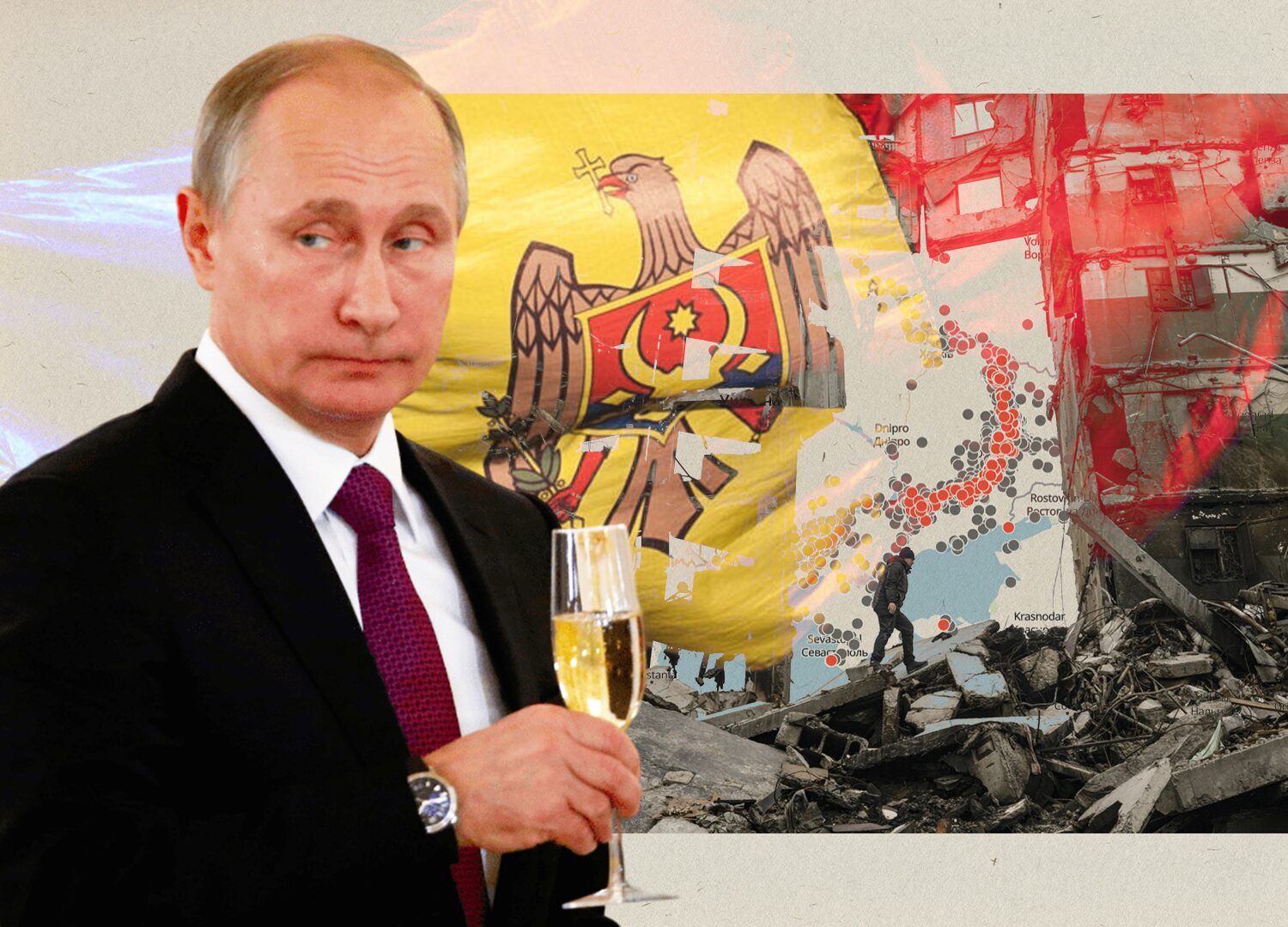
A court in Moldova has sentenced the oligarch Vladimir Plahotniuc to 19 years in prison, finding him guilty in the so-called “theft of the century” — the siphoning of €1 billion from the country’s banking system.
Just a few years ago, such a verdict would have seemed unthinkable. At the height of his power, Plahotniuc wielded vast influence over Moldova’s political and legal institutions. He was widely described as the country’s de facto ruler — its “owner,” even a “puppet master” pulling the strings behind the scenes.
Who is Vladimir Plahotniuc? How did such a conviction become possible? And how did Moldova manage to break free from oligarchic rule?
This report by Mediaset examines the rise and fall of one of the region’s most powerful figures — and what his downfall reveals about the fragile, hard-won process of de-oligarchization.
Plahotniuc vs. Ivanishvili: Parallels and Contrasts
The role that Vladimir Plahotniuc played in Moldovan politics may sound strikingly familiar to Georgian readers. From 2015 to 2019, Plahotniuc exercised control over virtually all state institutions without holding a formal government post. Officially, he served only as the head of the Democratic Party.
In practice, however, parliament, the courts, the government and the security services all answered to him. He was widely regarded as both the most powerful and the wealthiest man in the country — a figure whose influence extended far beyond any official title, shaping the political system from behind the scenes.

What sets Plahotniuc apart from Ivanishvili is that he never managed, even briefly, to formalize his power. When he sought the post of prime minister, the move drew sharp criticism from Moldova’s Western partners, and the country’s president at the time, Nicolae Timofti, refused to nominate him. He said plainly that Plahotniuc did not meet the standards of integrity and honesty required for the position.
Another similarity with Ivanishvili is that, for a long time, Plahotniuc was a deeply non-public figure. He avoided interviews and rarely spoke openly about his projects in Moldova. Yet he was highly effective in shaping a favorable information environment through his own media empire.
For years, he successfully promoted the image of a pro-European orientation and, for a time, persuaded Western partners that he was indispensable — presenting himself as the only viable option in the country’s political landscape.
There were similarities, too, in the methods used to sideline political opponents. In 2015, Plahotniuc saw the imprisonment of the former prime minister Vlad Filat, who was sentenced to nine years, and the businessman Veaceslav Platon, who received an 18-year term. Both men were widely regarded as rivals and outspoken critics of the oligarch.
How $1 Billion Was Stolen in Moldova
The so-called “theft of the century” remains the largest financial scandal in Moldova’s history. In 2014, roughly $1 billion — about 12 percent of the country’s gross domestic product — was siphoned out of three banks through a web of fraudulent loans and offshore companies.
https://www.facebook.com/ru.zdg.md/videos/739377109591291
The fallout was immediate and severe. The government was forced to cover the losses from the state budget, effectively shifting the burden onto taxpayers. The result was an economic crisis, a sharp currency devaluation and waves of mass protests.
Investigations into the scheme began soon after it was uncovered in late 2014 and early 2015, and they continue to this day. Prosecutors считают Vladimir Plahotniuc the primary beneficiary of the operation.
Another central figure in the scheme was the businessman and politician Ilan Shor, whose banks were used to move the funds. He is currently believed to be living in Moscow.
An Unlikely Coalition and an “Ambassadors’ Revolution”: How Plahotniuc Was Ousted
In June 2019, Moldova was plunged into a political crisis that produced a startling parliamentary alliance between the pro-European ACUM bloc and the pro-Russian Party of Socialists. Political adversaries and bitter rivals agreed to unite — temporarily — in an effort to dismantle oligarchic control and change the country’s leadership.
They accused Vladimir Plahotniuc and his Democratic Party of usurping power. The party initially refused to step aside, and a period of dual authority followed: two competing centers of power emerged, issuing contradictory decisions and declaring one another illegitimate.
In practice, the situation quickly turned into an institutional standoff. The Constitutional Court dissolved Parliament and endorsed the existing government, while the newly formed parliamentary majority rejected those rulings and continued to operate, effectively creating two competing centers of authority that declared each other illegitimate.
At the same time, unprecedented pressure was brought to bear by external actors. Ambassadors from the European Union, the United States and Russia — strikingly aligned — publicly recognized the new parliamentary majority and government, effectively stripping the Democratic Party of its international legitimacy. In Moldova, the episode came to be known as the “ambassadors’ revolution.”
A pivotal role was played by Russia’s deputy prime minister, Dmitry Kozak, who flew to Chisinau at the height of the crisis and sent a clear signal that Moscow would not back Plahotniuc’s party.
By mid-June 2019, Plahotniuc had lost control over state institutions and left the country. Around the same time, another prominent oligarch implicated in the bank fraud case, Ilan Shor, also departed Moldova.
Plahotniuc’s whereabouts then became the subject of prolonged uncertainty. He was initially reported to have left for the United States, and later believed to have stayed in Turkey and Northern Cyprus. For several years, he remained outside the reach of Moldovan authorities.
In recent years, however, he was reportedly located in Greece, where he was detained in connection with extradition proceedings. Moldovan authorities have pursued charges related to the banking fraud case, and he has been tried and sentenced in absentia, rather than as a result of a fully executed extradition and public trial in the country.
Alongside the prison sentence, the court also ordered him to pay damages to the state of approximately $60 million.
Plahotniuc denies all wrongdoing, and his lawyers have said they will appeal the verdict. Observers expect the appeals process to move through all judicial levels and take considerable time.
It is also worth noting that, so far, Plahotniuc has been convicted only of economic crimes. The political dimension of the allegations — including claims of “state capture” and the informal control he is said to have exercised over key public institutions — has not yet received a full legal adjudication.
exchange