

Opinion: 'ECHR ruling is indisputable historical fact'






Armenian lawyers on the ECHR ruling against Azerbaijan
“Any judicial decision, including a ruling by the European Court of Human Rights, is an indisputable historical fact. This judgment reveals the true face of the war,” lawyer Ara Ghazaryan said, commenting on the verdict in the case of V.T. and Others v. Azerbaijan.
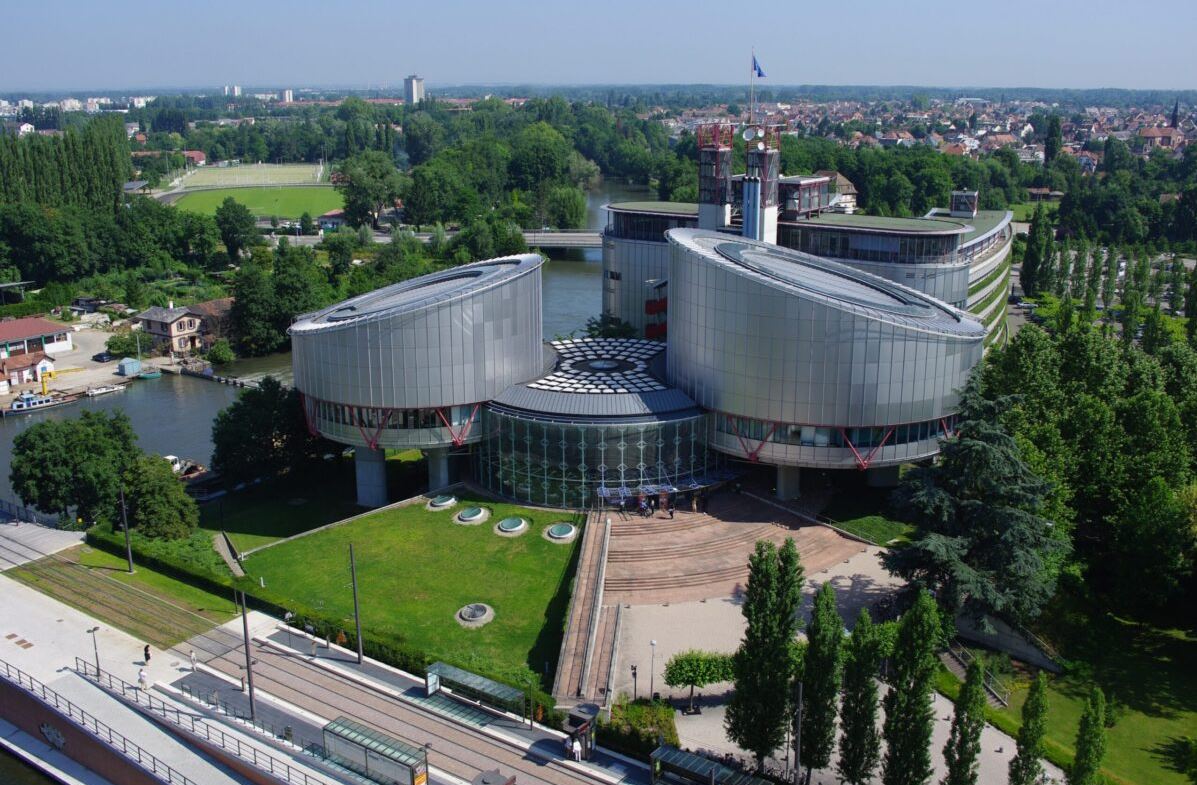
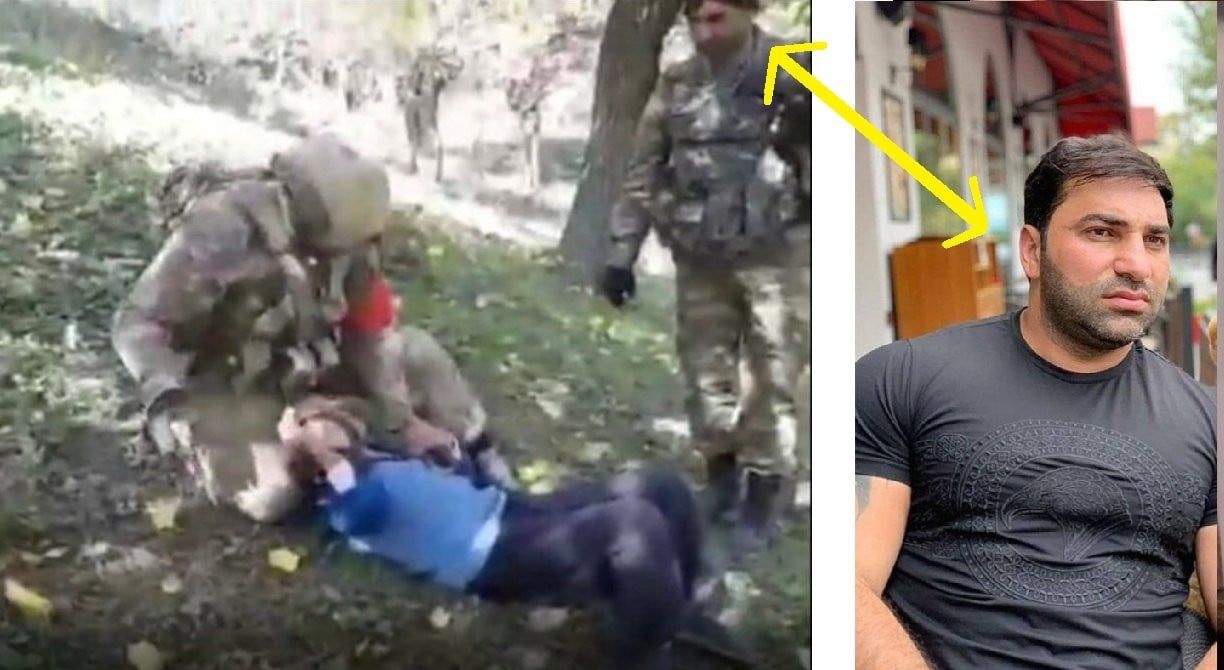
On 18 June, the European Court of Human Rights found Azerbaijan responsible for the torture and beheading of an Armenian serviceman during the April 2016 war. The court ordered Azerbaijan to pay the victim’s family a total of €104,210 in compensation.
The April War, also known as the Four-Day War, was the name given to clashes between Azerbaijani and Armenian forces that took place from 1 to 4 April 2016 along the line of contact in what was then the self-proclaimed Nagorno-Karabakh Republic.
The fighting marked the first large-scale military confrontation since the First Nagorno-Karabakh War and the ceasefire agreement that Armenia and Azerbaijan signed in 1994.
International law specialist and lawyer Ara Ghazaryan represented the family of the slain officer before the court. He argues that the ECHR ruling “debunks the myth promoted by Azerbaijan that it was the victim of an Armenian attack.” According to Ghazaryan, the court made it clear that “Azerbaijani armed forces committed these crimes.”
Ghazaryan also believes the judgment calls into question Azerbaijan’s claims of self-defence and the legitimacy of what it calls the “Patriotic War” — the name Azerbaijan uses for the 2020 44-day war. In his view, “by beheading and mutilating soldiers, Baku chose the path of aggressive war.”
“Azerbaijan sought to legitimise acts of terrorism and wars of aggression. Judicial rulings like this are meant to challenge that legitimacy. In my opinion, that is the ruling’s greatest legal significance,” the lawyer said.
Asked about the likelihood of compliance with the judgment, Ghazaryan said Azerbaijan “holds the record” for failing to implement ECHR rulings.
At a press conference, Ghazaryan discussed the ECHR judgment in V.T. and Others v. Azerbaijan alongside four other lawyers who represented the applicants: Siranush Sahakyan, Araks Melkonyan, Haikui Harutyunyan and Hasmik Harutyunyan.
- Armenia and Azerbaijan agree internet transit deal: opportunities and risks
- ‘Managing threat of war’: Pashinyan on Grigoryan-Hajiyev meeting
- No talks on return of 300,000 Azerbaijanis to Armenia, PM Pashinyan says
Armenian officer “was tortured and then beheaded”
According to lawyer Araks Melkonyan, applicants have filed a total of 22 cases with the European Court of Human Rights concerning crimes committed during the April 2016 war. This is the first judgment the court has delivered in those cases.
The family initially filed the case concerning the torture and beheading of the Armenian officer as an individual application. In 2017, however, the Armenian government joined the proceedings as a third party.
“A.T. came under attack from a sabotage group while transporting ammunition. He suffered a severe leg wound and could not even walk on his own. Azerbaijani forces tortured him and then beheaded him,” Melkonyan said.
She argues that the ruling is highly significant not only because it confirms human rights violations, but also because it establishes that war crimes took place.
Melkonyan said the ECHR accepted as credible the evidence and arguments presented by the Armenian side. She added that the court also recognised links between several crimes committed during the war. Those included the entry of Azerbaijani troops into the village of Talish, attacks on civilians, killings and the mutilation of bodies.
She noted that the court relied on photographs taken by Azerbaijanis themselves as evidence in the case. It also considered forensic findings and statements issued by Azerbaijan’s Ministry of Defence, including claims that Azerbaijani forces had “cleared Talish of Armenian forces.”
“The court established both the aggression and state endorsement”
According to lawyer Haikui Harutyunyan, the legal team proved that A.T.’s injuries did not result from combat but from the “deliberate mutilation of his body”. She added that they also presented evidence showing that the state encouraged such conduct.
“This was a matter of state policy that demonstrated intolerance towards a particular group, or an individual, on the basis of their ethnicity,” she said.
Harutyunyan argued that the ECHR established not only that the crime had taken place, but also how the Azerbaijani authorities treated the individual who carried it out.
“This is an exceptional judgment. It clearly establishes not only the fact of aggression, which the highest judicial authority has recognised. It also proves that the state officially protected the individual who directly carried out that policy.”
According to the lawyer, recognising these and other crimes is important because it helps reduce future risks and prevent similar violations from happening again.
“Azerbaijan understands there is no point in denying the crime”
Siranush Sahakyan, who represents Armenian prisoners of war before the European Court of Human Rights, says the ruling carries major legal and political significance.
In her view, Baku’s response amounts to “an acknowledgement of the crime”.
“They are not denying that the crime took place. They are expressing outrage at the court’s ruling because it recognised the existence of the Republic of Artsakh during that period. Any attempt to deny the violation is futile, and the Azerbaijani authorities understand that,” she said.
Following the ECHR judgment, Azerbaijani media reported that the country’s Foreign Ministry had summoned Peter Zih, head of the Council of Europe Office in Baku, and lodged what it described as a “strong protest” against a ruling it called “unfair, biased and contrary to international law”. The Azerbaijani authorities said they categorically rejected the judgment and would use all available means to protect what they described as their “legitimate interests”.
Baku also objected to the terminology used in the judgment. In particular, officials criticised references to the “NKR” and to the “line of contact between Azerbaijan and the NKR”. The Foreign Ministry argued that these terms contradicted Azerbaijan’s position as well as the country’s sovereignty and territorial integrity. Officials also criticised the court’s use of terms such as “army”, “authorities”, “prosecutor general” and “ombudsman”, describing them as an attempt to “legitimise the former separatist regime”.
Asked about the likelihood that Azerbaijan would comply with the judgment, Sahakyan said that any refusal to do so would “open the door to new political discussions”. She argued that the Committee of Ministers of the Council of Europe should take steps to ensure the ruling is implemented.
“Lasting peace requires acknowledging violations”
On 8 August 2025, Armenia and Azerbaijan initialled a peace agreement. The document also provides for the reciprocal withdrawal of interstate legal cases.
Under Article XV of the agreement, within one month of its entry into force, the parties will:
- withdraw, terminate or otherwise settle all interstate claims, complaints, protests, objections, proceedings and disputes arising from issues that existed between them;
- refrain from initiating new claims, complaints, protests, objections or legal proceedings;
- refrain from taking, encouraging or otherwise participating in hostile actions against one another.
Commenting on the agreement, lawyer Hasmik Harutyunyan said that “peace and justice do not exclude one another”.
She stressed that years after the April War, the 2020 44-day war revealed “the same Azerbaijani pattern”. According to Harutyunyan, the number of beheadings and cases of torture increased, affecting not only military personnel but also civilians.
During the 44-day war in 2020, around 30 cases of beheading involving Armenians were documented. The victims included soldiers as well as women and elderly people.
Harutyunyan argued that the recurrence of such crimes in 2020, 2022 and 2023 points to “a deliberate policy”. In her view, neither society nor governments can move forward by ignoring such events.
The lawyer believes that lasting peace requires:
- acknowledging such grave violations;
- recognising the victims’ rights were violated; and
- using legal mechanisms to restore those rights and provide compensation.
The Armenian lawyers also stressed that, regardless of the withdrawal of interstate cases, individual applicants will still be able to file complaints against Azerbaijan. They added that no statute of limitations applies to the investigation of war crimes.
Armenian lawyers on the ECHR ruling against Azerbaijan