

'My idea of happiness is 120 dead Russian soldiers a day': Ukrainian drone unit commander Saratsyn






Female drone company commander
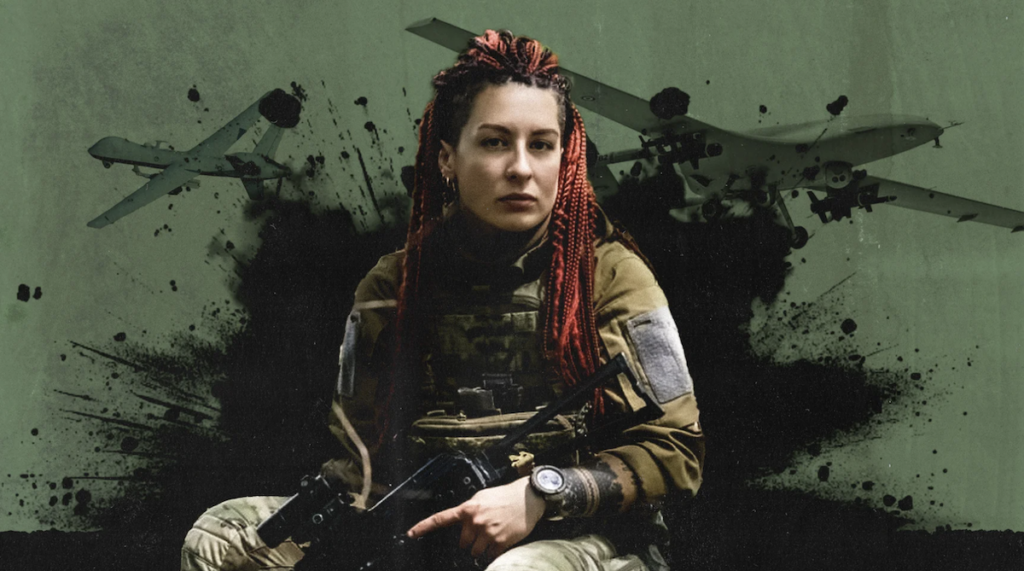
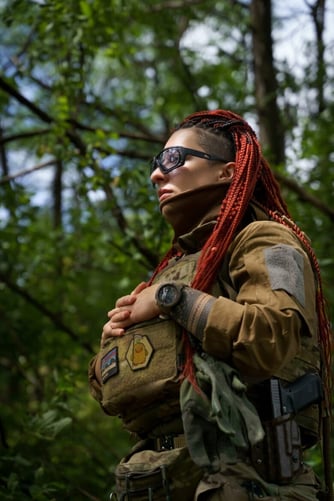
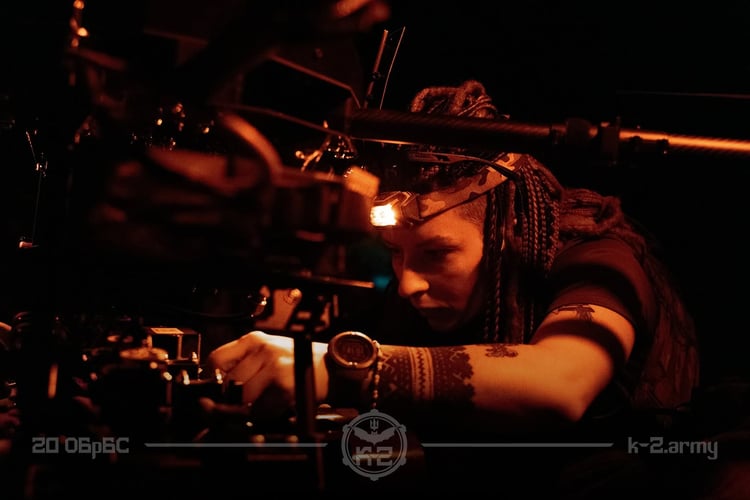
Thirty-six-year-old Leila Abdullayeva commands a strike drone company in the K-2 Brigade of Ukraine’s Unmanned Systems Forces. She became the first woman in the Ukrainian military to serve as acting battalion commander. Before joining the army, she worked in IT. She now leads more than 100 soldiers.
Abdullayeva, whose call sign is Saratsyn, spoke about how a military career resembles raising children, why people compare her to a Belgian shepherd, who the “sparrows” are, and what happiness means for a female commander.
Article by Hromadske
I have read a lot about your background. Before joining the army, you worked in IT. When the war began, you volunteered and knew you would fight if a full-scale war broke out. After Russia launched its invasion, you tried to enlist nine times. Recruiters turned you away because they had too many volunteers, because you were a woman, or because no positions were available. You eventually joined the army as a drone pilot. How did you become a company commander?
I started as a Mavic drone pilot. Later, I flew reconnaissance drones and heavy strike drones. Then I became a crew commander.
When someone shows initiative, opportunities appear. Drone warfare was developing rapidly in 2022 and 2023. I wanted to do more than what I was doing at the time. I am extremely stubborn and proactive. I suppose my commander decided I could handle the responsibility.
That is how I took charge of a newly formed platoon. We trained pilots ourselves, expanded the unit and delivered results. When we learned that the military would create a regiment, I asked whether I could try commanding a company. If I failed, they could always send me back. They told me: “Take it.”
When you decided to go to war, you said you wanted a combat role but not a medical one. Why?
I did not want to become a medic because I am an empathetic person. It would have been difficult for me to carry so many injuries and deaths with me. I would also have felt responsible if I failed to save someone or if I believed I could have done more.
Sooner or later, every soldier has to provide medical aid. But I was not ready then, and I am not ready now, to choose combat medicine as my profession. A combat medic probably faces the hardest job imaginable. Evacuating the wounded has become extremely difficult for us in 2026.
When did you realise you could lead people?
I was not a leader at school. I was quiet, shy and completely lacked confidence. I felt like an outsider.
Later, during my career in IT, I often had to organise people. I simply took responsibility when necessary. Not because I enjoyed it or wanted to do it, but because nobody else was willing to step forward.
The war strengthened that trait. Difficult times shape strong characters.
In general, the army works much like raising children. You can talk endlessly about philosophy or classical music. But if a child sees their parents sitting outside drinking beer, eating sunflower seeds and swearing, they will follow actions rather than words.
The same principle applies to any military unit. My commander taught me that way, and I try to teach younger generations the same lesson: always lead by example.
I have never given, and never will give, an order that I would not carry out myself.
My soldiers know that if we enter a new area or face a questionable mission, I go first. Then I move people into prepared positions, give them all the necessary information, and they do their job.
How many people serve under your command, and how well do you know them?
More than 100. I know every one of them because I interviewed and selected each person myself. We may not speak every day in the course of our work, but I know their names, surnames and call signs. I know what they do, what is happening in their families and what health issues they face.
Every soldier in my unit has my phone number and can call me at any time. I spend almost all my waking hours with my people. That is how we get to know each other. We know our children’s names and whether they prefer toy tractors or toy cars.
How much do you sleep?
If God is kind, four to six hours a day. Usually from dawn until 11am.
That is under a normal schedule, without emergencies or assaults. If something happens, people wake me two or three times a night. It is manageable.
Can people transfer from one role to another in your unit? Under what circumstances?
Of course.
For example, imagine a Mavic drone pilot who has spent more than a year close to the front line, near infantry positions. That person has survived hundreds of attacks. They may have suffered concussions and often injuries. Eventually they reach a point where they simply cannot continue. They feel exhausted and afraid. In that case, we move them to another role, perhaps operating a different drone from a safer location.
A soldier can come to us and say: “That’s it. I can’t do this anymore.” Sometimes we see the signs ourselves.
If someone is psychologically broken, sending them back to a position becomes dangerous. In an extreme situation, they may not react as they should.
Speaking specifically about my unit, I have little reason to complain. Operating drones is easier than many other jobs in the military. Being an infantry soldier, scout, sniper or artillery operator is harder.
Still, everyone has a limit. At some point, a person either copes or does not.
The same thing happens in civilian life when you realise you can no longer carry a certain burden.
The difference is that civilians can stop. They can take up meditation or move to Bali. In the army, excuse my language, you keep going until you drop. People cannot simply say they are burned out, resign and spend their days planting flowers.
That is why crisis management falls to commanders within each unit.
I should add that managing these issues is far easier in drone units than in mechanised brigades, where personnel shortages remain a serious problem.
Would you describe yourself as a good commander? Do you ever question your decisions or wonder whether you have made mistakes? Who do you learn from?
Of course I think about how to be a good commander.
But a good commander is someone who inflicts the greatest losses on the enemy while keeping losses among their own personnel and territory to a minimum.
My desire to be a good commander has nothing to do with publicity or looking good in the media.
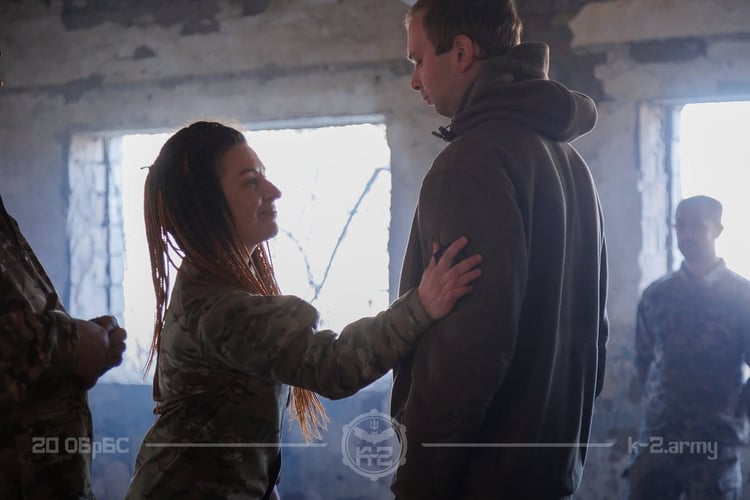
When people join my unit, I tell them: “You may hate me, and there will be moments when you do hate me. But my main task is to make sure you return home alive and unharmed.”
People do not need to be proud of me or love me. If I fail to communicate an order clearly, if I do not forbid something that should be forbidden, or if I fail to explain how to do something, my mistake can cost a life. That is probably why I am a strict and sometimes difficult commander.
I read a great deal about military history. When a topic interests me, I dive deep into it. At one point, I spent two years studying the Yugoslav wars. I have spent almost a year studying the Second World War. I read biographies of military and political leaders, including contemporary ones when I have time, because I want to learn from their experience.
I know several outstanding commanders personally. I always enjoy meeting drone operators from other units. With permission, I visit them, learn how they work and explain how we operate. I also watch interviews and reports about successful operations carried out by others. This war changes rapidly. If you stop learning, your results will show it immediately.
As a commander, do you fly less now?
Unfortunately, yes.
Administrative work takes up much more of my time, while combat duties take up much less. That transition was difficult for me. I still feel guilty that I am here rather than out there.
It is a difficult balance. I have to rely on rational thinking and understand where I can contribute the most.
Of course, I miss flying. Whenever I get the chance, I try to operate drones or help locate enemy positions. That is easier to fit into my schedule.
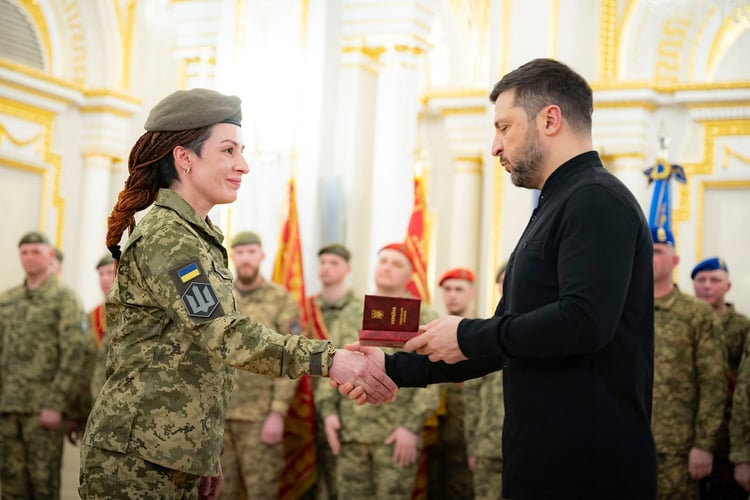
Why did the president award you the Order of Bohdan Khmelnytsky, Third Class, in February this year?
I honestly do not know. The fact that they did not award it to me posthumously is already a bonus.
People receive that award for carrying out their duties effectively, showing courage and setting a personal example. I think it may have coincided with the first anniversary of our regiment’s formation. At that time, our unit accounted for around 80% of the enemy losses attributed to the regiment. That included repelling mechanised assaults and destroying enemy infantry.
So I see it as a collective award rather than a personal one.
You once said that you wanted to train generations of drone pilots who would outperform you and carry out missions better than you do. How many such generations have you already trained?
It is difficult to count them in generations because units expand faster than the reproductive cycle of any mammal. It is a continuous process.
In fact, pilots who fly better than I do already emerged from the very first group, back when the regiment was not yet fully staffed.
Many of the pilots I trained, and many who trained alongside me, have already become officers. They are now training their own generations of young soldiers.
In general, it takes about six months to train a drone pilot properly. A person must complete basic training, develop the necessary skills and learn how to work effectively with ground units engaged in combat.
It is not enough to be a pilot who simply follows instructions like “two metres left, two metres right” on a map. A good crew functions as a proper combat unit. They identify targets themselves, report launches, select ammunition, deploy and achieve strong results independently.
What do you call your pilots?
I call them my children. I call them sparrows.
Some of those sparrows are twice my size. But they are still my children because they came to me and chose to trust me as their commander. That means a lot to me.
And what do they call you?
Either by my call sign or “Commander, ma’am.”
Do you ever sit in a meeting, hear about your pilots’ achievements and think: “Those are my best ones”?
No. I am a bad mother.
In reality, I always tell them that I believe in them more than their parents believed in them when they were children. I know what these people are capable of, and I know how much more we could achieve. There are always objective reasons why we fall short.
How do I know their potential? I watch how crews learn, how they work and how they progress through the early stages of teamwork and development. Experience allows you to see where people lack confidence and where they lack knowledge. If you analyse performance and gather statistics over a week, you can often calculate how much a crew’s effectiveness will improve if they correct certain weaknesses and learn new skills. Sometimes that improvement can be 11% or more.
The calculations are straightforward. That said, I do praise them when they perform well, and I am proud of them.
How has the war changed you? What has it taught you?
A midlife crisis is knocking pretty hard at my door. I have genuinely started feeling a sense of panic when I wake up and realise that much of the best part of life — when you are young, strong and full of energy — has already passed, yet you feel you have not done a damn thing worthwhile.
In the traditional sense, I mean. I did not build businesses, build a house, write a book or have three children. On the other hand, war teaches you not to dwell on things you cannot change. You have tasks in front of you, so you deal with them.
I also keep coming back to the fact that this war started in 2014. For eight years, I lived my life, built a career and travelled. At the same time, many people have been fighting this war since 2014 and continue to do so today. When I think about that, I realise I have no right to complain.
I cannot say the war has given me many good things. It has made me much tougher. As responsibility grows and more people depend on you, you inevitably become harsher and more direct. I have learned to cut out what is unnecessary, not to waste time on the wrong people, pointless events or needless worries.
You do not like talking about gender issues in the military. Let me ask one thing: what do people wish a woman on her birthday in the army? Do they say the same things as in civilian life — “women’s happiness” or “a strong shoulder to lean on”?
Most soldiers wish each other another birthday spent with their families. Before the war, and throughout the war, I always said I make a terrible feminist spokesperson. So I do not see anything wrong with wishing someone women’s happiness or a strong shoulder to lean on. Why not?
My idea of women’s happiness is simply different from someone else’s. Let’s say I want 120 dead Russians a day. That’s my version of women’s happiness. In general, happiness is the same for men, women and children.
Before the war, you were involved in extreme sports, particularly enduro motorcycling. How has that experience helped you during the war?
It gave me physical fitness and endurance. Any sport also teaches discipline. It teaches you to accept mistakes. If you fail the first time, then do it on the 150th attempt — but get it done. That applies to everything I do in the army.
I was not born holding a drone controller. I lost Mavics. Larger aircraft I operated were shot down. I did not learn to hit targets accurately on my first attempt, and I certainly did not destroy a tank on my first sortie. All of that comes from experience, observation and analysing mistakes.
I do not need the adrenaline that sport once gave me. To hell with that. These days, routine gives me a sense of control: going out to search for positions, walking 25 kilometres, finding dugouts, dodging FPV drones and making the journey back on foot.
Let me ask something personal that you rarely discuss. Is there room for love and relationships during wartime?
Maybe there is for some people. One of my close friends in the unit likes to say: “You have to remember that you only get one life.” So if people can find time for romance and relationships, and if it does not interfere with their work, that is wonderful.
I am not in a relationship. People are welcome to propose to me — that’s a joke. I could not, and would not want to, have a relationship within my own unit. It is difficult to combine professional cooperation and romance without people talking behind your back.
Could I end up in a relationship? I do not know. This is not a military operation — you cannot plan it. My grandmother had two sayings for situations like this. The first was: “Love will find you even if you’re sitting on the stove.” The second came out whenever she met an unmarried woman and learned her age: “You should pick a berry when it ripens. Leave it too long and it will fall into the dirt by itself.”
What do you do for yourself, not just for your soldiers and for victory?
I am a person, not only a soldier. At least I would like to believe that.
The truth is, I have realised I do not know how to rest. I cannot switch off. The idea of going on holiday and ignoring calls for a week simply does not work for me. That is why I do not take holidays. Seriously. My brain just does not function that way.
My commander once joked that I am like a Belgian Malinois. I need to work until I completely exhaust myself. That is when I feel comfortable.
A Malinois is happy when it gets a ball after completing a task. What makes you happy?
I do not even have a ball. I enjoy watching a film, reading a book or taking a motorcycle trip somewhere — when I have the time.
Female drone company commander