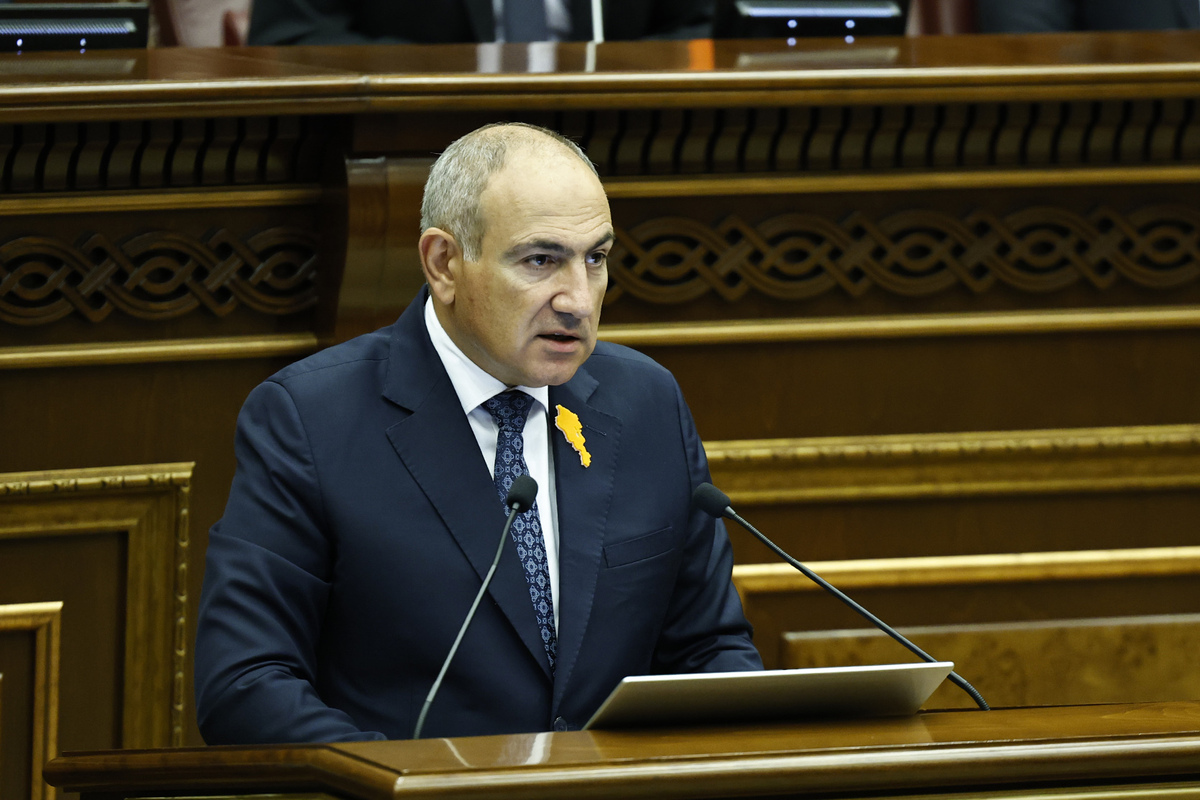
'There will be another revolution on 7 June' - Nikol Pashinyan confident of public support in election






Pashinyan’s pre-election briefing
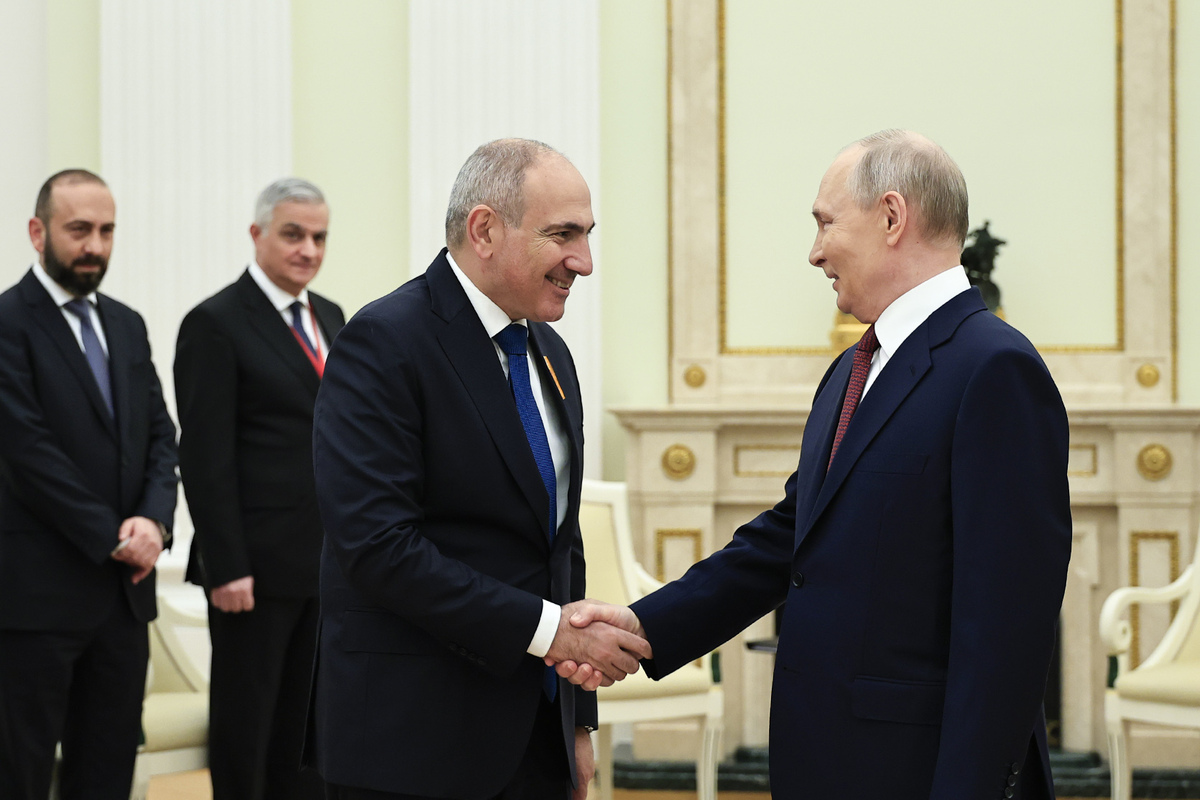
“I have a feeling that on 7 June there will not be elections, but another revolution,” Armenian Prime Minister Nikol Pashinyan said, pointing to what he described as the mood, emotions and remarks of voters.
Pashinyan is currently on holiday but remains actively involved in campaigning ahead of the parliamentary elections. However, he decided not to break with the tradition of weekly briefings and answered journalists’ questions — this time not inside the government building, but at an open-air café in Yerevan.
According to Pashinyan, his meetings with voters suggest that society is ready to support him once again, as it did in 2018. At that time, he came to power on the wave of the protest movement he initiated and led. The majority of the population backed the “Velvet Revolution”, which resulted in a change of government. Now, the prime minister hopes public support will allow his party not only to remain in power, but to secure a constitutional majority.
He described this scenario as “entirely realistic”. Pashinyan said he believed Armenia had reached a high level of civic awareness and argued that “it is no longer possible to resolve elections through vote-buying”. He made the comment in reference to recent allegations of voter bribery involving opposition participants in the upcoming elections.
Pashinyan acknowledged that his government still faced many unresolved problems, but said people welcomed the “peace and the enormous social, economic and political changes” that had already taken place.
During the briefing, the prime minister also answered questions on the geopolitical context of the June elections, Armenia’s relations with Russia and the West, plans for a construction of a new nuclear power plant and the possibility of opening the border with Turkey.
- What’s behind Russia’s hostile response to Armenia’s deepening ties with EU?
- Armenian political groups spend heavily on Meta ads ahead of election campaign
- Opinion: ‘Summit in Yerevan shows European leaders have confidence in Pashinyan’
“No geopolitical context” to upcoming elections
According to Nikol Pashinyan, outside forces and some Armenian politicians are attempting to give the upcoming elections a geopolitical dimension. Some argue that voters will effectively be choosing Armenia’s foreign policy direction — between Russia and the West.
“These elections do not have a geopolitical subtext or context. Nor can they, for the simple reason that Armenia is pursuing a balanced policy. There are no conspiracies in our policy, nor actions directed against anyone,” Pashinyan said.
At the same time, he stressed that Armenia and the Armenian people should always have alternatives.
“There is the European Union, and there is the Eurasian Economic Union. And our people should have the opportunity to decide which strategy is the most promising and beneficial for them.”
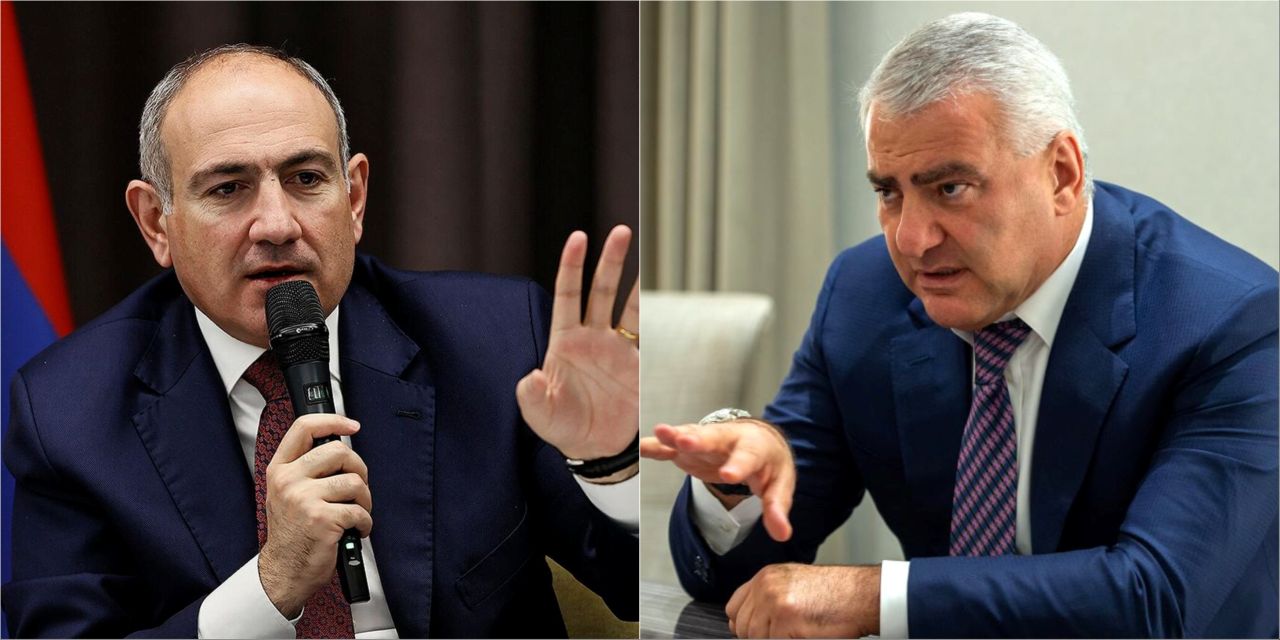
Russia and EU’s concerns – ‘We will not join sanctions’
Nikol Pashinyan told journalists details of one of his visits to Russia. During a meeting attended, as he put it, by “serious people”, one participant directly accused Armenia of damaging Russian interests through cooperation with the European Union.
Pashinyan said he replied that the Armenian authorities had no intention of harming Russia’s interests. He also asked for at least one concrete example demonstrating “specific damage” to Moscow’s interests.
“And do you know what followed? Silence,” the prime minister said.
He added that the EU had also expressed concerns regarding Armenia, particularly over the possible circumvention of sanctions imposed on Russia. According to Pashinyan, those concerns were eased through open dialogue.
“We explained that we do not want to do anything against Russia, but nor will we take steps that could result in Armenia itself coming under sanctions. If Russia can endure sanctions, Armenia cannot,” Pashinyan stressed.
He said the Armenian government had repeatedly invited EU representatives to Yerevan, where they were able to see for themselves that the country was not violating the sanctions regime.
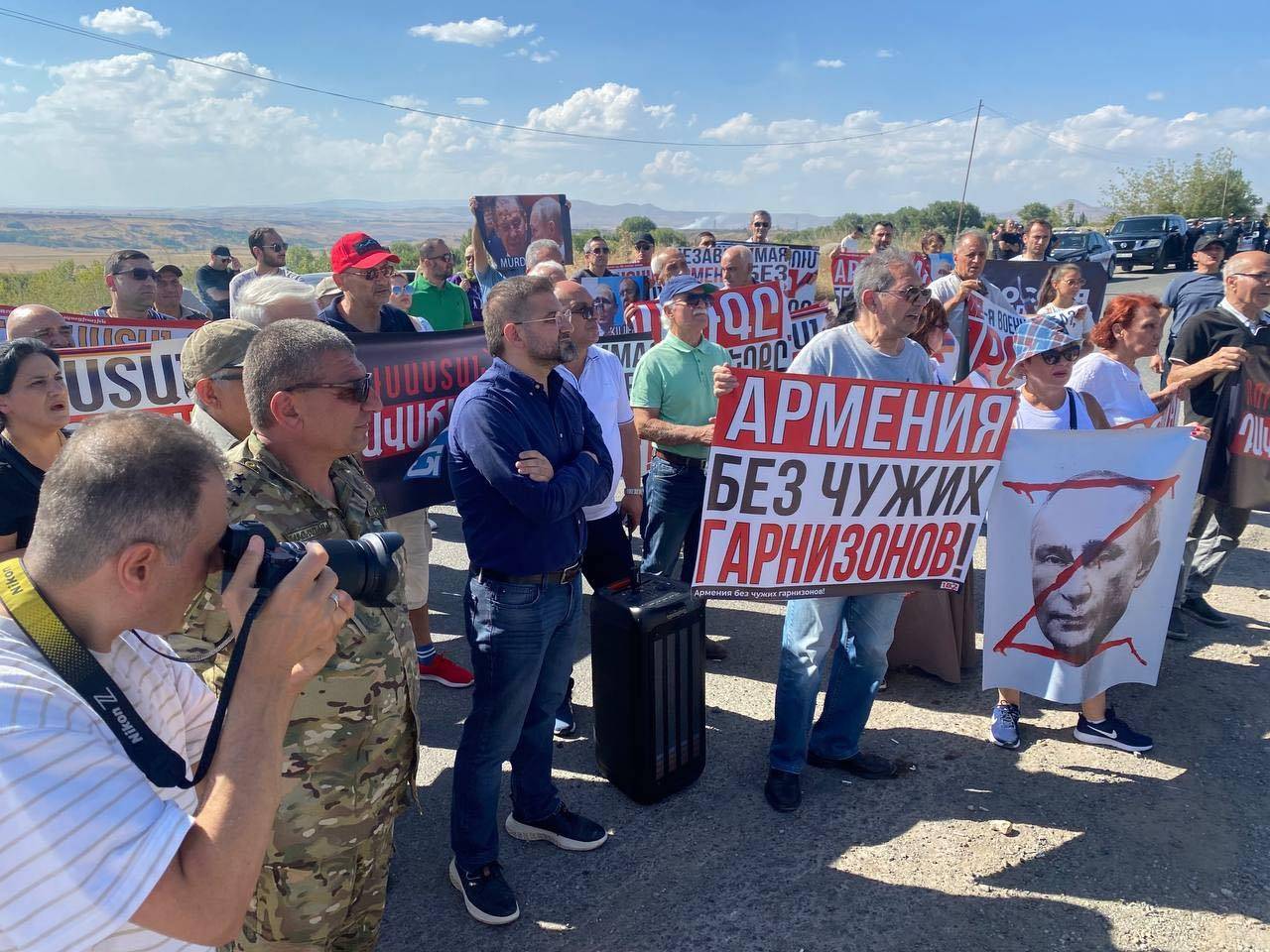
Nikol Pashinyan says ‘no concerns’ about possible actions by Russian servicemen in Gyumri
Nikol Pashinyan said he had no concerns that Russia’s 102nd military base stationed in Gyumri could “become involved in protecting Russian citizens” detained in Armenia.
The remarks came after Russia’s State Duma adopted a law granting the Russian president the right to use the Russian army to protect Russian citizens abroad in cases where they are arrested or prosecuted by foreign courts whose jurisdiction Moscow does not recognise.
“Regardless of what laws are in force in Russia, the 102nd military base must operate within Armenian legislation and under Armenia’s jurisdiction,” the prime minister stressed.
According to Pashinyan, there have been cases in which people in Armenia were arrested following requests submitted either by the United States or by Russia.
“There have been cases where the request was granted and the individuals were extradited. There have also been cases where the request was denied and extradition did not take place. We make decisions in accordance with our legislation and based on the specifics of each case,” he said.
Pashinyan added that when requests for the detention of the same individual are received simultaneously from several countries, decisions on extradition are made “within the framework of logic”.
Pashinyan accuses opposition of trying to provoke Armenia-Russia escalation
Nikol Pashinyan said leaders of several political forces were doing everything possible to provoke escalation and confrontation between Yerevan and Moscow. He named them directly, including former president Robert Kocharyan, Russian-Armenian businessman Samvel Karapetyan, who leads the Strong Armenia party, and businessman Gagik Tsarukyan, head of the Prosperous Armenia party.
“This will not happen. First of all, because arguing with Russia is not our scale. We are a small, modest country. This is not our problem, not our scale and not our goal. On the other hand, Armenia is a full member of the [Russia-led] Eurasian Economic Union. Let us not forget that either.”
Pashinyan recalled that Kocharyan had even expressed expectations that Russia would create problems for Armenia — remarks he made during a meeting with voters as part of the election campaign.
“These are cheap provocations. They will not succeed,” Pashinyan said.
Nikol Pashinyan says plans for new nuclear power plant ‘not a political choice’
Nikol Pashinyan once again said that Armenia had received proposals to build a new nuclear power plant not only from Russia, but also from South Korea, France and the United States.
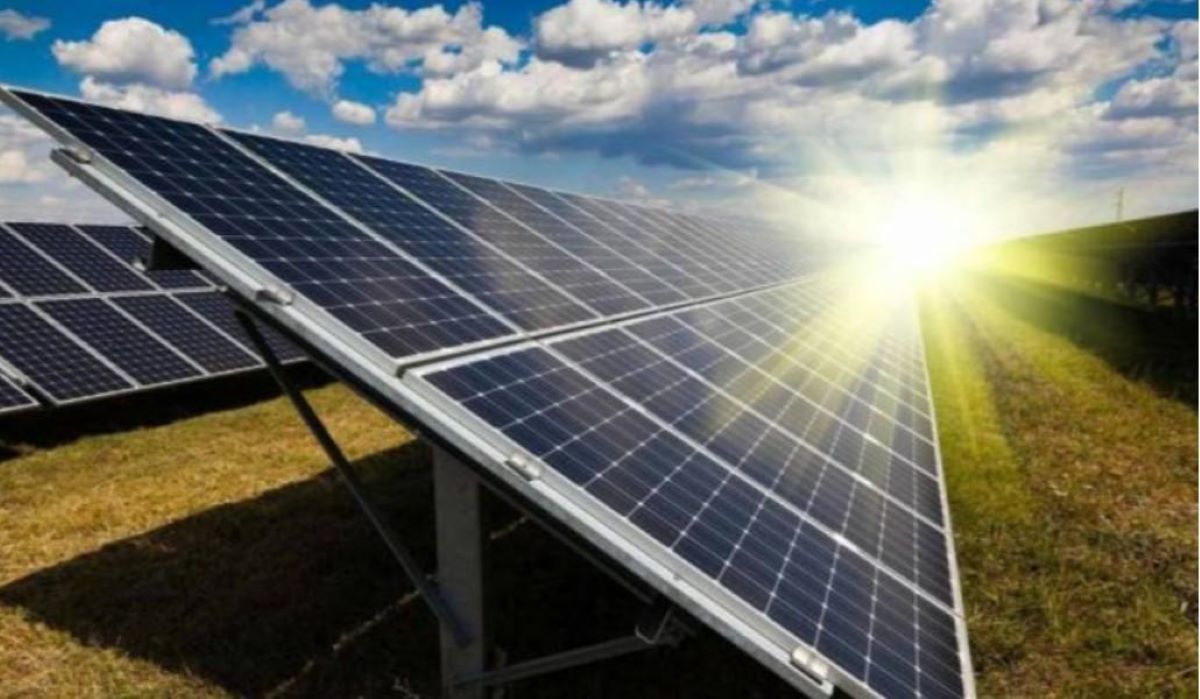
At the same time, he stressed that Armenia possesses its own natural resource — solar energy. For this reason, he argued, the country does not need a large-scale nuclear plant with a capacity of 1,000 or 1,600MW, but rather a smaller modular facility.
“We prefer the construction of a modular nuclear power plant because, if necessary, additional power units could be built in the future. Most importantly, a modular plant cannot lead to an accident on the scale of Chernobyl,” he said.
The prime minister explained that, in the event of an accident at a modular station, there would be no need to evacuate settlements located within a one-kilometre radius.
According to Pashinyan, the issue is not political, but one of economic practicality.
“We must study all proposals, both in terms of technology and price. We will continue working with the country that presents Armenia with the best offer.”
‘No information’ on possible opening of Armenia-Turkey border
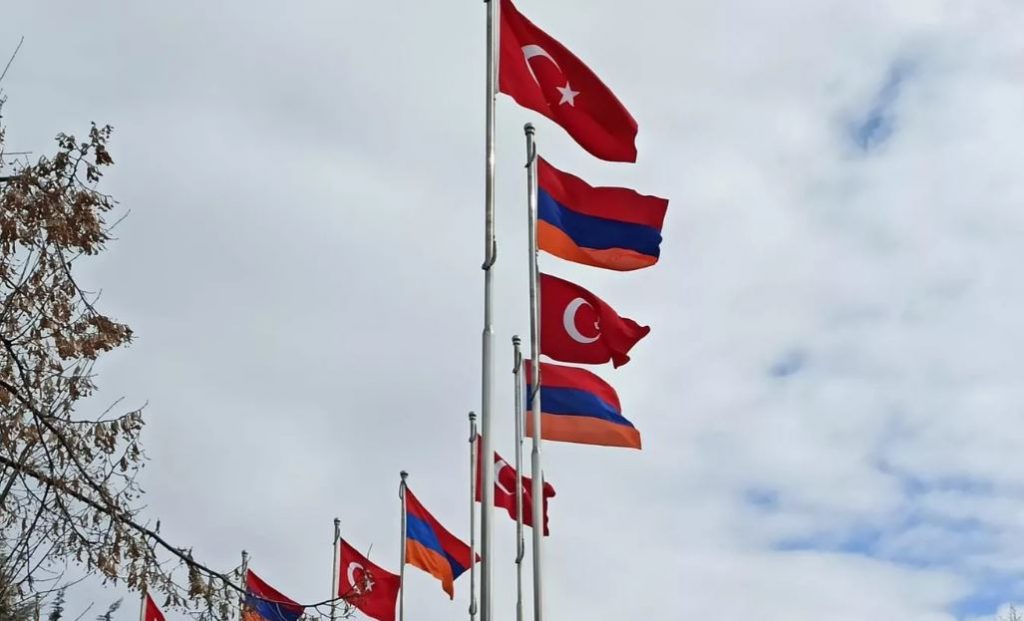
Prime Minister Nikol Pashinyan said he had no information on the possibility of Turkey opening its border with Armenia in the coming days. At the same time, he said he would be very pleased if reports in Turkish media proved accurate.
“We want this to happen. And it would be very good if it did happen. According to the logic of developments, it will happen. And when it does, I will welcome this step.”
Pashinyan stressed that opening the border would have only positive consequences for Armenia, but said some opposition figures were trying to create an atmosphere of fear around the issue.
“From what they are saying, it follows that Turkey and Azerbaijan actually did us a favour by closing the border. Meanwhile, for 30 years Armenia complained on international platforms that Turkey and Azerbaijan had blockaded it.”