

Top stories in Azerbaijan, Armenia, and Georgia from 9-13 February, 2026
 Live
Live




-
Friday, February 13, Azerbaijan. A statement by the State Security Service of Azerbaijan exposing the opposition in the case of former head of the presidential administration Ramiz Mehdiyev, arrested on charges of treason
-
Friday, February 13, Armenia. Russian billionaire Samvel Karapetyan has announced his bid to become Armenia’s prime minister
-
Friday, February 13, Georgia. The EU ambassador has warned the Foreign Ministry that the proposed amendments to the grants law are incompatible with Georgia’s obligations under its Association Agreement with the EU
-
Thursday, February 12, Armenia. Armenia will ban foreign radio and TV content deemed to interfere in its domestic political life
-
Thursday, February 12, Azerbaijan. The president declared digitalization, the introduction of artificial intelligence, and cybersecurity as priority areas
-
Thursday, February 12, Georgia. International experts have been invited to Georgia to assess the causes of the sharp rise in food prices
-
Wednesday, February 11, Azerbaijan. Strategic Partnership Charter has been signed between the United States and Azerbaijan
-
Wednesday, February 11, Georgia. The criminal “sabotage” case against eight opposition politicians, who face up to 15 years in prison
-
Wednesday, February 11, Armenia. Nikol Pashinyan: “Armenia is losing its competitive advantages because Russia operates the railway on Armenian territory”
-
Tuesday, February 10, Armenia. During James D. Vance’s visit to Armenia, a statement on the peaceful use of nuclear energy was signed
-
Tuesday, February 10, Azerbaijan. A high-level U.S. business delegation has arrived in Baku, consisting of 60 people and representing 31 leading companies
-
Tuesday, February 10, Georgia. The port of Kulevi may face EU sanctions due to “links to Russia and trade in Russian oil"
-
Monday, February 9, Azerbaijan. Armenia’s Foreign Intelligence Service: There have never been any ties with peace activist Bahruz Samadov, who was convicted in Azerbaijan
-
Monday, February 9, Armenia. U.S. Vice President J.D. Vance arrives in Yerevan today
-
Monday, February 9, Georgia. The leading pro-government TV channel Imedi has changed ownership
-
Top stories in Azerbaijan, Armenia, and Georgia from 2-6 February, 2026

-
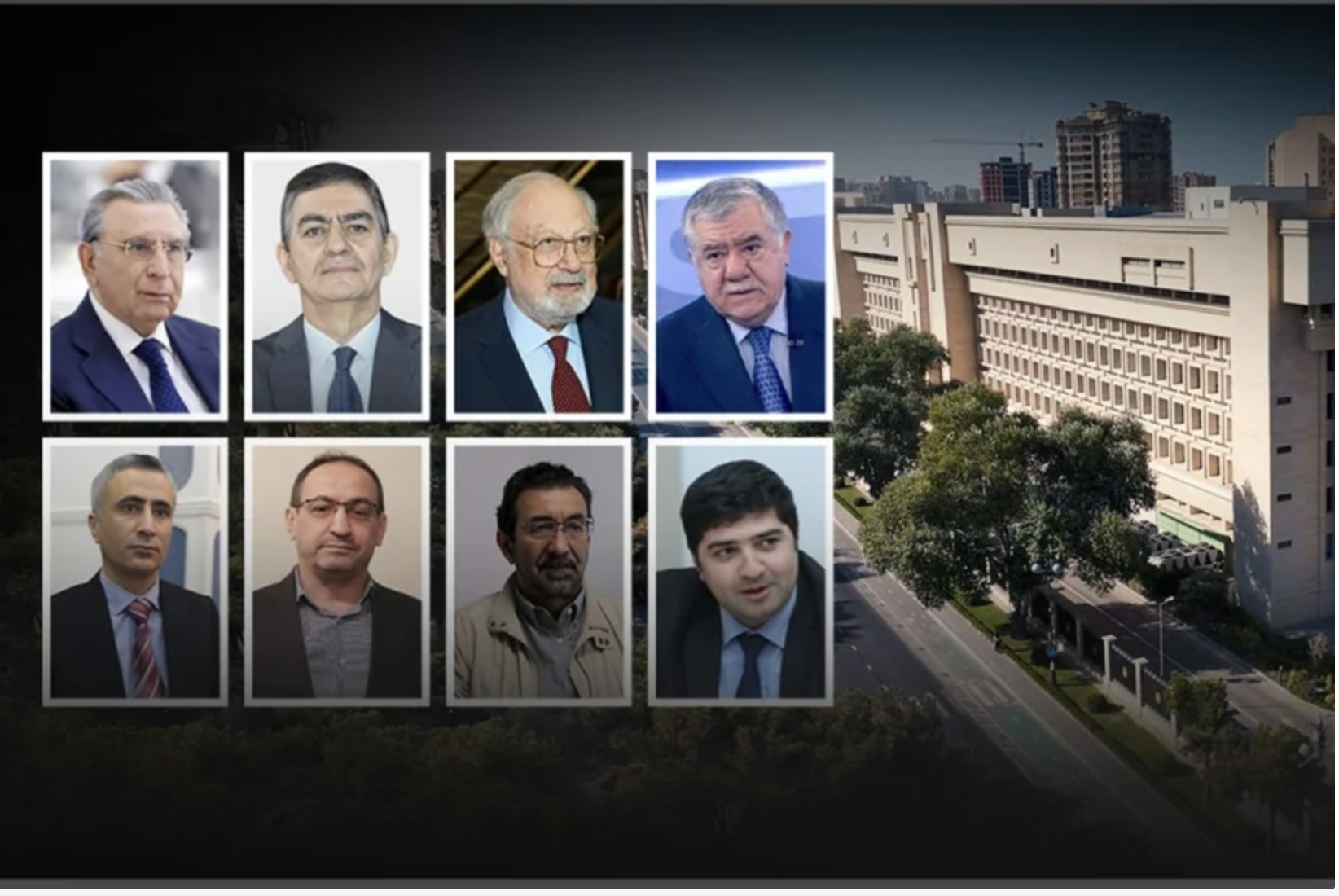
Friday, February 13, Azerbaijan. A statement by the State Security Service of Azerbaijan exposing the opposition in the case of former head of the presidential administration Ramiz Mehdiyev, arrested on charges of treason
● The State Security Service has published details of a high-profile criminal case centered on former presidential administration chief Ramiz Mehdiyev, former first deputy prime minister Abbas Abbasov, and opposition leader Ali Kerimli, chairman of the Azerbaijan Popular Front Party. All three have been arrested on charges of treason, actions aimed at violently seizing power and forcibly changing the constitutional order, as well as large-scale money laundering. According to the security service, they and other suspects acted with the assistance of foreign intelligence services (allegedly Russian).
According to the indictment, Abbasov and Rustam Ibragimbekov became co-founders and leaders of the organization “Union of Azerbaijani Organizations of Russia” (“Union of Billionaires”), registered on July 4, 2012. Mehdiyev, Kerimli, party members Fuad Gahramanli and Ganimat Zahid, and others allegedly conspired to violently seize power and change the constitutional system.
● The security service stated that the “Union of Billionaires” was created by foreign intelligence agencies specifically to interfere in Azerbaijan’s political processes.
● The service released an audio recording of a phone conversation between Mehdiyev and a female employee of a foreign intelligence agency (allegedly Russian). Speaking in Russian, Mehdiyev said he had proposals for reorganizing Azerbaijan’s state governance system that might interest the foreign side and promised to send them by email. The interlocutor replied: “That’s your personal matter.” Mehdiyev insisted the proposals should somehow be “passed on to friends.”
● The security service said Mehdiyev laundered more than 17 million manats (about $10 million) in illicit funds by October 13, 2025.
● It also published a video allegedly showing secret payments to opposition figures from representatives of the “Union of Billionaires.” According to the service, the organization was created in Russia by Mehdiyev and Abbasov. The video allegedly shows Gahramanli receiving money.
● Gahramanli and Zahid have been arrested in absentia, as both are abroad. Authorities claim Zahid established secret contacts with foreign intelligence in early 2013 at Kerimli’s request and promised to secure that country’s strategic interests if Kerimli came to power, including Azerbaijan’s gradual accession to the CSTO.
Authorities also allege that during the July 14–15, 2020 rally in Baku, Kerimli instructed Gahramanli and supporters to infiltrate the march, replace patriotic slogans with provocative calls, create chaos, and later attempt to seize the parliament and state broadcaster buildings. Kerimli, Gahramanli, and Zahid are charged with actions aimed at violently seizing or retaining power and changing the constitutional order.
● The security service said the “National Council of Democratic Forces,” with financial and organizational support from foreign intelligence, engaged in activities aimed at organizing mass unrest to seize power. It noted the council nominated Ibragimbekov, a Russian citizen, for president in 2013 and allegedly organized unrest with foreign support. Authorities say about 933,828 manats (around $550,000) were used to mobilize participants.
● Opposition figure Gultekin Hajiyeva was deported from Turkey to Baku after months of legal efforts to avoid it. A member of the National Council and former MP, she is accused of “activities threatening national security” and is linked to the Mehdiyev case. An Ankara court banned her from entering Turkey for five years. She has not been detained since her return.
● The visit of U.S. Vice President J. D. Vance to Azerbaijan laid a solid foundation for regional stability and economic growth, wrote U.S. economic affairs official Jacob Helberg after accompanying him to the South Caucasus. He said the Trump administration’s “TRIPP” approach would “transform the region.”
● The autonomous republic of Nakhchivan is strategically important within the Middle Corridor, said EU ambassador Marijana Kujundzic during a meeting with presidential representative Jeyhun Jalilov.
● Russia and Armenia will assess technical and financial conditions for restoring two railway sections in Armenia to connect with Azerbaijan and Turkey, said Russian Deputy Prime Minister Alexei Overchuk.
● Belgian ambassador Julien De Fraipont and Baku International Sea Trade Port director Eldar Salakhov discussed cooperation in the port sector.
● Deputy Economy Minister Elnur Aliyev discussed cooperation with U.S. and Israeli partners during a meeting with a delegation led by Betsy Berns Korn.
● The official launch of Google’s Gemini AI model in Azerbaijani reflects expanding U.S.–Azerbaijan technological cooperation, according to the U.S. Embassy. Azerbaijani became one of 23 newly added languages in the Gemini 3 rollout.
● A “Shusha Park” will be opened in Veliko Tarnovo, Bulgaria, covering 1.8 hectares. Plans include a monument to Nizami Ganjavi and installations reflecting Shusha’s cultural symbols.
-
Friday, February 13, Armenia. Russian billionaire Samvel Karapetyan has announced his bid to become Armenia’s prime minister
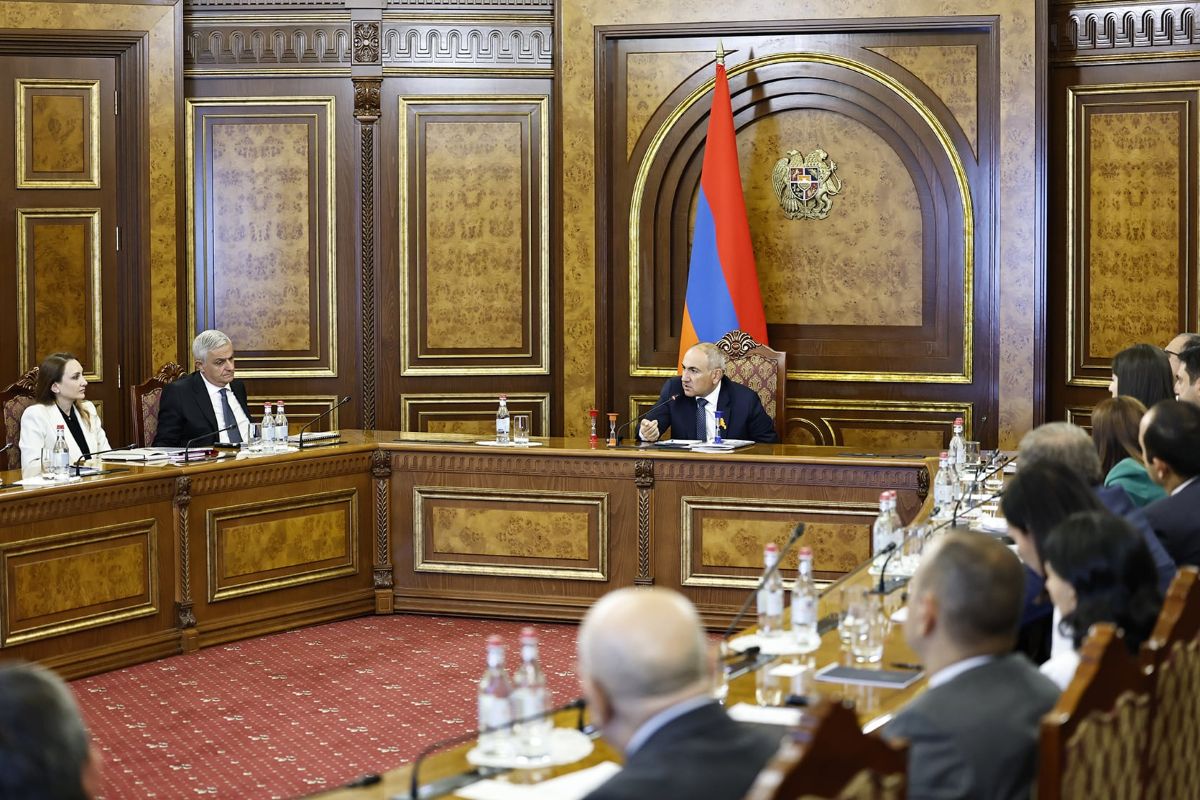
● Embassies in Armenia that in previous years regularly issued notices urging their citizens not to visit border areas (with Azerbaijan), particularly the Syunik region, should stop doing so, Prime Minister Nikol Pashinyan said at a government meeting. He instructed the foreign minister to “work with these embassies to end this inertia.” Economic development is an important factor for increasing tourism flows to Armenia, but so is the fact that Armenia is a safe country. In various international rankings, it is already presented as such in terms of internal security and crime levels, Pashinyan said.
● Russian dollar billionaire Samvel Karapetyan, who is under house arrest, announced that his party “Strong Armenia” has nominated him for prime minister in the upcoming parliamentary elections on June 7. Karapetyan is under investigation on charges of calling for the overthrow of power in Armenia and financial misconduct, and he is not allowed to publish video or audio messages. He used artificial intelligence to make his statement. “By detaining and arresting me, a small circle of people thought they could silence and isolate not only me, but also the voice of Armenia, the voice of our people, the voice of all of you. But they were mistaken and failed again,” Karapetyan said. Armenia’s opposition is widely seen as pro-Russian, and the “Strong Armenia” party is often described as “Russia’s outpost in Armenia.”
● Lawmakers from the ruling Civil Contract party said they do not understand why Karapetyan nominated himself for prime minister. They note that a candidate for the post cannot hold any citizenship other than Armenian and must have lived permanently in the country for at least the past four years. Karapetyan also holds Russian citizenship.
● However, his nephew Narek Karapetyan said this issue would be resolved if their party wins the parliamentary elections. “Twenty days after the elections, with the votes of two-thirds of deputies in the National Assembly, amendments will be made to Article 148 of the Constitution concerning the election of the prime minister. Then any Armenian citizen, including Samvel Karapetyan, will be able to hold this position,” he said.
● Russia has responded to Armenia’s request and is beginning negotiations to restore two railway sections on Armenian territory that would connect with railways in Azerbaijan and Turkey, Russian Deputy Prime Minister Alexei Overchuk said. Armenia’s railway system belongs to Russia under a 30-year concession agreement signed in 2008. Overchuk said the sections to be restored are about 1.6 km and 12.4 km long. Technical and financial details will be determined during negotiations.
● Armenia’s Anti-Corruption Committee has opened criminal proceedings against two more former officials in the “March 1 case.” On March 1, 2008, live ammunition was used in Yerevan during the dispersal of mass protests against presidential election results; 10 people were killed. Former president Robert Kocharyan is charged in the case with attempting to overthrow the constitutional order. Authorities said charges were also brought against former commanders of the Yerevan police patrol regiment. Local media suggest these are Valery Osipyan and Robert Melkonyan.
● Justice Minister Srbuhi Galyan said: “No one in our country is arrested for freedom of speech. People are arrested for criminally punishable actions.”
● Economy Minister Gevorg Papoyan commented on which Armenian goods could be exported to Azerbaijan: “We sent lists of goods to Armenian businesspeople; they passed similar lists to their businesspeople. Some of our companies are continuing discussions,” he said.
● “We highly value statements by Iran’s top leadership supporting Armenia’s territorial integrity and the inviolability of its borders, especially at a time when Armenia truly needed such support amid regional developments,” Deputy Prime Minister Mher Grigoryan said at a ceremony marking Iran’s National Day and the 47th anniversary of the Islamic Revolution.
● Pashinyan proposed that Public Television replace the old state anthem video: “Doesn’t our state, our TV channels, have the money to update the anthem clip every two years? We don’t wear the same clothes forever, yet we ‘dress’ our state in the same outfit. Then we say: so what, the clip airs at midnight, no one watches or listens. This attitude keeps appearing in other situations as well,” he said.
● The government approved ratification of the Council of Europe’s Saint-Denis Convention on an integrated approach to safety, security, and service at football matches and other sports events. “The parties accept that these issues should be integrated and function as a single system,” the explanatory note states.
-
Friday, February 13, Georgia. The EU ambassador has warned the Foreign Ministry that the proposed amendments to the grants law are incompatible with Georgia’s obligations under its Association Agreement with the EU
● Russia is considering the possibility of restoring railway traffic to Georgia via Abkhazia, Russian Deputy Prime Minister Alexei Overchuk said. There has been no comment from Tbilisi so far. Georgia considers Abkhazia part of its territory occupied by Russia — an assessment supported by Western countries and the vast majority of the international community.
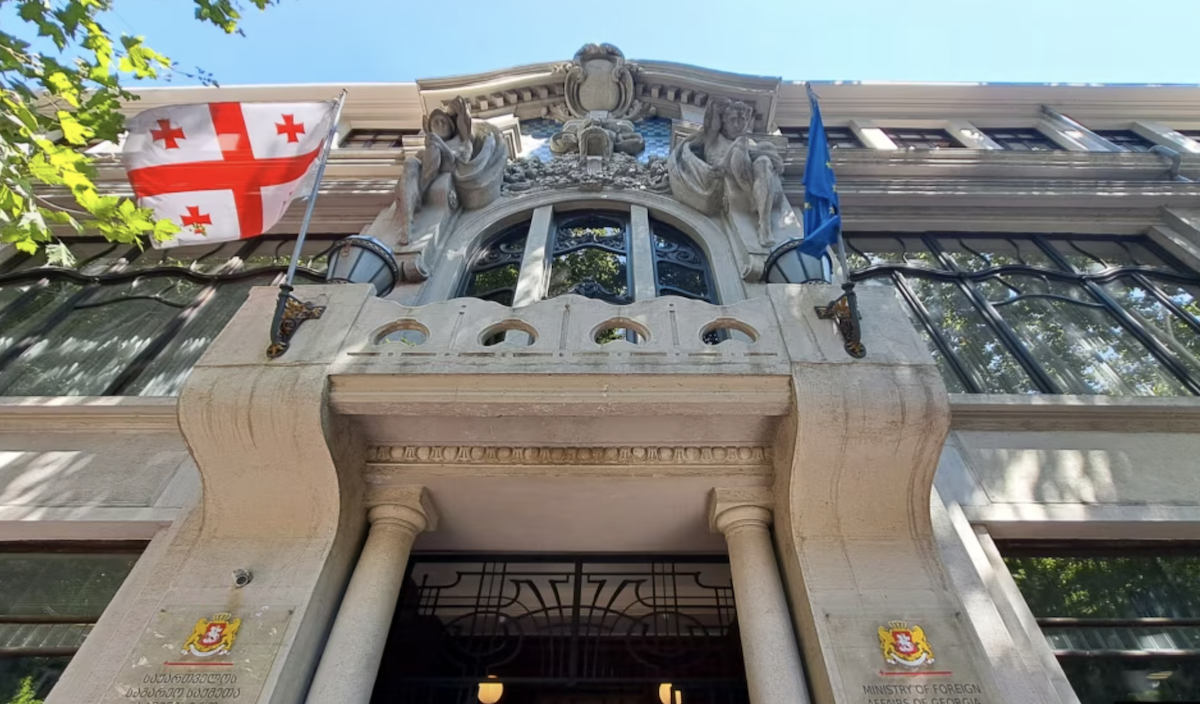
● EU Ambassador Pawel Herczynski met with First Deputy Foreign Minister Giorgi Zurabashvili and expressed “serious concern” over a package of amendments to the grants law that would require prior government approval for virtually any foreign funding, including for businesses. According to the EU delegation, the proposed amendments pose “another serious threat to civic space and political participation in Georgia” and are incompatible with Georgia’s obligations under its Association Agreement and its EU candidate status. Herczynski also warned the changes could negatively affect the work of diplomatic missions, contradicting the principles of the Vienna Convention on Diplomatic Relations.
The amendments предусматривают criminal liability of up to six years in prison for receiving foreign funding without government consent and for contracting foreign lobbyists on political issues related to Georgia. Additional changes to the law on political associations would bar party membership for employees of organizations receiving more than 20% of their income from abroad. Parliament has approved the package in its first reading. Authorities say the initiative aims to prevent “workarounds used to finance unrest,” while the opposition and parts of civil society call the bills repressive and unconstitutional. Read more here
● Herczynski also said that a proposed 20th EU sanctions package against Russia includes measures targeting Georgia’s Kulevi Port, where an oil refinery recently began operating. The port is accused of involvement in transporting Russian crude oil and petroleum products. Read more here
● The Tbilisi TV Tower was illuminated in the colors of the Iran flag to mark Iran’s National Day. The Embassy of Israel in Georgia issued a statement questioning the message this sends to the region and to Iranian citizens who have long fought for freedom and democracy.
● President Mikheil Kavelashvili, backed by the Georgian Dream, said during a meeting in Tbilisi with Zoran Milanovic that “Georgia firmly defends its sovereignty and national interests, and there are EU countries that objectively recognize this.”
● Education Minister Givi Mikanadze presented details of an education reform titled “One City — One Faculty,” under which student admission quotas at state universities would be allocated based on this concept and institutions’ “traditional profiles.”
● Governing bodies of Ilia State University said the reform violates university autonomy and academic freedom. Students announced a protest on February 15 at Dedaena Park demanding the reform’s withdrawal.
● Prime Minister Irakli Kobakhidze said the government intends to strictly enforce a law significantly restricting foreign citizens’ employment in Georgia, taking effect March 1, saying it will protect the country’s economy and citizens. He also emphasized protecting Georgia’s national and religious identity as a key state priority.
● Kobakhidze added that the Interior Ministry deported more undocumented migrants in the past year than in the previous decade combined. He announced plans to strengthen the migration department, aiming to eliminate illegal migration over the coming years; he said more than 20,000 undocumented migrants are currently in the country.
● A draft law has also been prepared to ban the import of cars older than six years. Kobakhidze said the number of vehicles in Georgia has surged from 864,000 in 2012 to over 2 million in 2026, contributing to traffic congestion and environmental deterioration.
-
Thursday, February 12, Armenia. Armenia will ban foreign radio and TV content deemed to interfere in its domestic political life
● Armenia will ban the broadcasting of content from foreign radio and TV channels that is deemed interference in the country’s domestic political life, High-Tech Industry Minister Mkhitar Hayrapetyan said during a parliamentary debate on amendments to the Law on Audiovisual Media. He noted that a new article has been added regulating the suspension and revocation of network operator licenses in such cases.
● Biometric passports will be introduced in Armenia from autumn 2027, Prime Minister Nikol Pashinyan said. “For this to work, the United States must share the relevant technologies, and our American partners have promised to do so,” he said.
● A strategic cooperation document between Iran and Armenia is expected to be signed during Prime Minister Nikol Pashinyan’s visit to Tehran this year, said Iran’s ambassador Mehdi Sobhani.
● Russian dollar billionaire Samvel Karapetyan, who is under house arrest, has been unanimously elected leader of the opposition party Strong Armenia. He is under investigation on charges of calling for the overthrow of the government and financial fraud. The party said he was elected at its founding congress and plans to announce its candidate for prime minister in the June 7 parliamentary elections. Much of Armenia’s opposition is widely seen as pro-Russian.
● As part of the investment program to develop the North–South transit corridor, 99 land plots in the villages of Tashtun and Lichk in Syunik’s Meghri community have been designated as priority. This means that during construction of the 32-km Kajaran–Agarak road section, the program’s interests will prevail over those of property owners subject to expropriation. Authorities say the project will create an efficient transit route, boost trade, reduce transport costs, improve access to services and markets, and create jobs.
● Funding for science in Armenia has increased by 180% compared to 2018, Education, Science, Culture and Sports Minister Zhanna Andreasyan said, adding that researchers’ salaries have risen by 105–300% over that period.
● YouTube monetization is likely to be activated in Armenia in late April–early May, High-Tech Industry Minister Mkhitar Hayrapetyan said.
● The Central Bank is issuing a silver commemorative coin marking the 350th anniversary of Mkhitar Sebastatsi and silver and gold commemorative coins dedicated to the Presentation of the Lord. Mkhitar Sebastatsi (1676–1749) was a vardapet of the Armenian Church, founder of the Mekhitarist Congregation, and a prominent religious, scholarly, and cultural figure.
● Defense Minister Suren Papikyan continues presenting military reforms. He published a video showcasing fortified defense structures, saying a fully strengthened area is equipped and ready to defend Armenia’s borders against all types of weapons.
-
Thursday, February 12, Azerbaijan. The president declared digitalization, the introduction of artificial intelligence, and cybersecurity as priority areas
● President Ilham Aliyev stated at a multi-sectoral meeting that priority status is being given to digitalization, the introduction of artificial intelligence, and cybersecurity. He announced the creation of a unified action plan titled the “New Digital Architecture of Azerbaijan.”
● In every state body, first of all in ministries, a deputy position for digitalization, artificial intelligence, and cybersecurity will be created and will be considered a priority, the president said at the meeting. Close coordination in this area between state structures will be carried out by the Ministry of Digital Development and Transport, which must prepare a plan of specific measures as soon as possible, he said.
● Ilham Aliyev: “Both students studying in the country and those sent abroad under state programs must improve their qualifications in digitalization and working with artificial intelligence. This is a long-term process that will only expand; in the future there will be great demand for personnel in this field. Appropriate changes must also be made to school curricula.”
● Ilham Aliyev: “Azerbaijan not only fully provides itself with all major energy sources but exports them to world markets. Over the past 20 years, generating capacity in Azerbaijan has almost doubled thanks to new power plants — gas, hydroelectric, solar, and wind — and today amounts to 10,000 megawatts. The creation of data centers, AI centers, and digitalization require large energy resources. Right now, the country has at least 2,000 megawatts of unused generating capacity for this.”
● Ilham Aliyev: “The Strategic Partnership Charter signed in the United States includes support for creating data centers in Azerbaijan and close ties with American companies in this field. The country has strategic partnership documents with ten EU member states. Naturally, European companies in this area cannot compete with American ones — they lag behind, possibly by at least one generation. But work is also under way there, and effective cooperation with companies from these countries must be ensured.”
● Digital Development and Transport Minister Rashad Nabiyev reported a significant increase in average internet speed in the country. “A year ago it was about 12 megabits per second; today it has reached 90 megabits per second. In state companies it is already 150 megabits per second. By the end of this year it is planned to bring it to 200 megabits per second. Today there is not a single remote settlement in Azerbaijan where broadband internet services are not provided,” Nabiyev said.
● The creation of a Center of Digital Competencies to introduce digital technologies in the industrial and public sectors was discussed at a meeting in Baku between Deputy Economy Minister Elnur Aliyev and Microsoft regional president for Central Europe and Central Asia Barbora Paulovic Dekkerova.
● The laying of a fiber-optic cable in the Caspian Sea may be completed as early as this year, President Ilham Aliyev said. This will ensure communications in the eastern direction. Azerbaijan will export part of this electricity, and relevant documents have already been signed with foreign partners on laying green energy cables, the president said.
● Azerbaijan and the UAE discussed in Baku issues of increasing mutual investments and developing cooperation in transport, infrastructure, green energy, digitalization, trade, and business, Economy Minister Mikayil Jabbarov wrote on X.
● The trial has begun of Mehriban Rahimli, who for many years worked as an advisor to the U.S. Marshall Fund on the South Caucasus and Azerbaijan. She is one of about 15 civil society representatives in a criminal case with charges of money laundering, abuse of office, and document forgery. Her lawyer filed a motion to terminate the case, challenging the classification of her salary as a grant. “But this was a salary; taxes and social insurance were paid on it. And even if it were a grant, this would be an administrative offense, not a criminal one,” the lawyer said. The motion was rejected.
Rahimli herself also called the case unfounded. She said she had worked for the Marshall Fund since 2008 and never received grants. She was paid under an employment contract and paid all taxes. Her work involved providing preliminary expert assessments of projects from organizations and municipalities in Georgia and Azerbaijan. The next hearing in Rahimli’s case is scheduled for February 25.
Dozens of employees of local and international NGOs are involved in the broader “civil society case.” Several activists are under arrest, while arrest warrants have been issued for others abroad. All deny the charges.
● “Azerbaijani courts continue to issue politically motivated in-absentia sentences against journalists, bloggers, and other government critics living abroad, expanding the government’s campaign of transnational repression,” wrote Giorgi Gogia, deputy director of Human Rights Watch’s Europe and Central Asia division. He recalled January verdicts against critics living in the U.S. and noted other cases. Gogia also said Azerbaijani authorities engage in “outright abductions of people beyond their borders.” He urged the authorities to “immediately drop all politically motivated charges against critics in exile.”
Rights groups say there are currently about 340 political prisoners in Azerbaijan. The authorities deny political motives and say those listed committed specific crimes.
● A delegation of the Arab Parliament led by its president Mohammed Ahmed Al-Yamahi is visiting Baku and has held meetings with Azerbaijan’s president and foreign minister.
● The public organization “Western Azerbaijan Community” has sharply criticized Council of Europe Human Rights Commissioner Michael O’Flaherty. In early February, during a visit to Armenia, he issued a statement on the right of Karabakh Armenians to voluntarily, safely, and with dignity return to their homes. O’Flaherty also called on the Azerbaijani authorities to “ensure their full access to information and the necessary support to enable them to make free decisions about their future.”
“We have repeatedly appealed to various Council of Europe institutions, urging them to support the rights of Azerbaijanis to return to their homes in Armenia, from where they were expelled in the 1990s. However, for unknown reasons, no one has expressed a position on this issue. We call on the Council of Europe Human Rights Commissioner not to repeat the mistakes of his predecessors and of the Parliamentary Assembly of the Council of Europe, to abandon discriminatory policies, and to issue a public statement supporting our right to return to Armenia,” the statement by the Western Azerbaijan Community said.
● Baku and Abu Dhabi signed a memorandum of understanding on establishing sister-city relations.
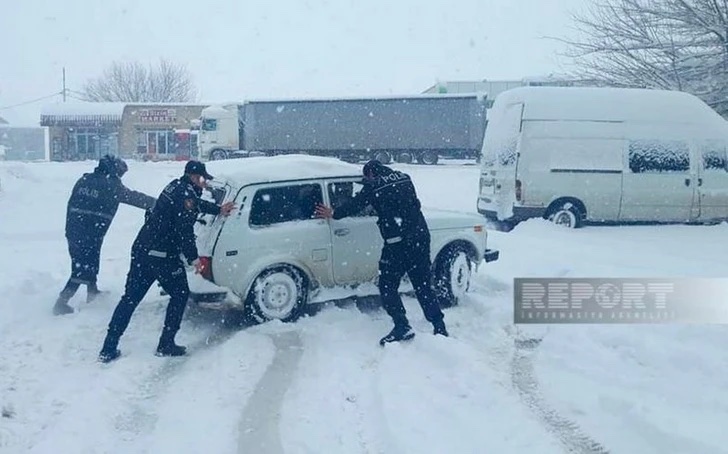
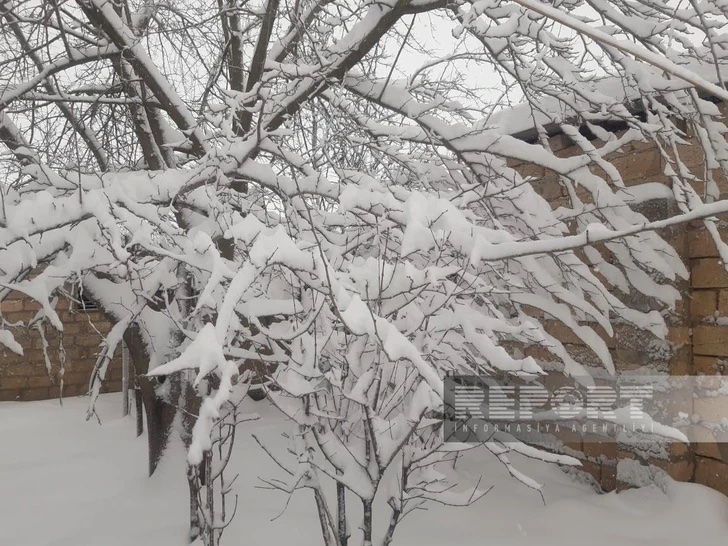
● Heavy snowfall caused serious consequences in the Jalilabad and Bilasuvar districts. Dozens of trees were broken, and in some places power lines and internet communications were damaged. Snow depth exceeded 40 cm, and in mountainous areas reached over 60 cm.
-
Thursday, February 12, Georgia. International experts have been invited to Georgia to assess the causes of the sharp rise in food prices
● The OSCE said on its X page that its expert mission to Georgia under the “Moscow Mechanism” began work today. This tool is used when there are concerns about a serious deterioration of the human rights situation in a country. Twenty-four OSCE member states activated it against Georgia on January 29. “Any relevant information can be sent by February 24 to: [email protected],” today’s statement said.
The decision provides for sending an independent fact-finding expert mission to assess Georgia’s compliance with its OSCE commitments, with a special focus on political and civil processes since spring 2024. The consent of the state concerned is not required in cases involving serious human rights allegations. Read more here
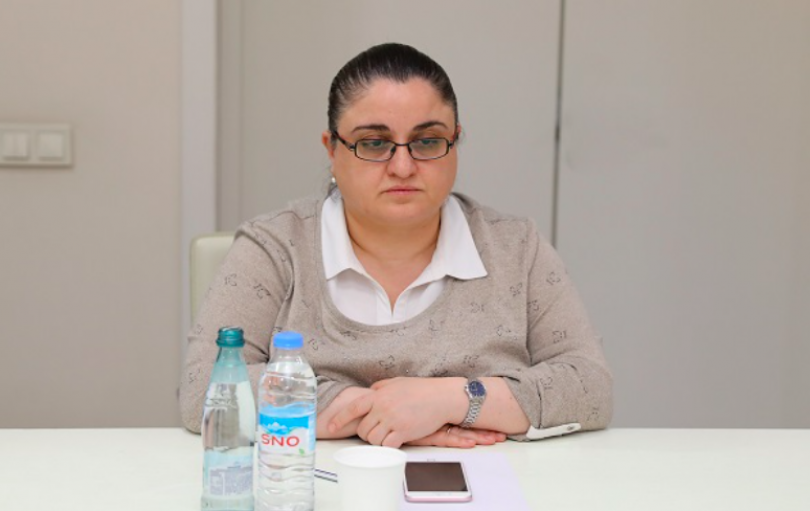
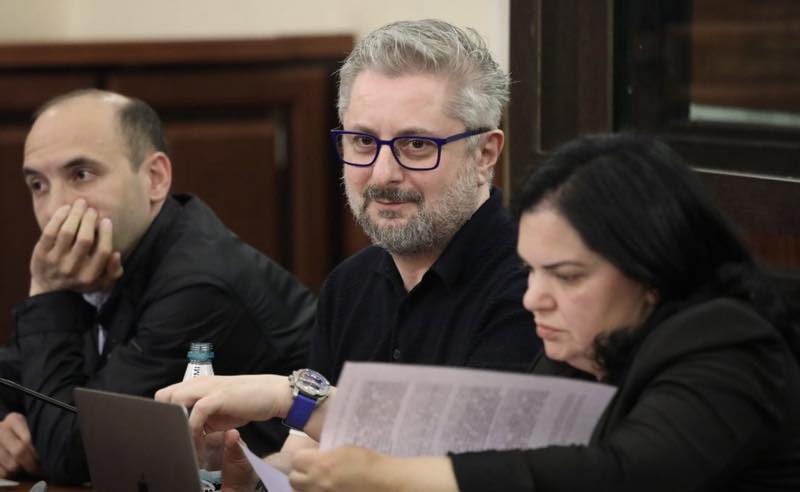
● Nika Gvaramia, leader of the Coalition for Change (pictured), will be released from Rustavi prison today. His eight-month sentence is expiring. He was convicted for refusing to cooperate with a temporary parliamentary investigative commission examining the activities of the previous government during Mikheil Saakashvili’s presidency.
● The EU has suspended visa-free travel for holders of Georgian diplomatic and service passports, according to Rikard Jozwiak, head of Radio Free Europe/Radio Liberty’s Europe bureau. Hungary and Slovakia opposed the move, but the decision was adopted at the EU level and will be binding for all 27 member states. It will take effect in early March.
● Croatian President Zoran Milanović is on an official visit to Georgia together with his wife Sanja Musić Milanović and an accompanying delegation.
● International experts have been invited to Georgia to assess the entire retail and food production chain and provide an objective conclusion on the factors behind sharply rising prices, said Shota Berekashvili, head of the parliamentary price commission. “It is always good and useful to have a parallel process that offers an alternative assessment,” he said. Meanwhile, local producers of milk, poultry meat, and eggs gave explanations at a commission meeting.
● The suspects accused of murdering young teacher Giga Avaliani — who were recently charged with participation in multiple cases of organized violence — have been kept in pre-trial detention for the duration of the investigation.
● Legendary American musician Moby will give a concert at the Rustavi racetrack at the end of July. Ticket sales will begin on February 17.
-
Wednesday, February 11, Azerbaijan. Strategic Partnership Charter has been signed between the United States and Azerbaijan
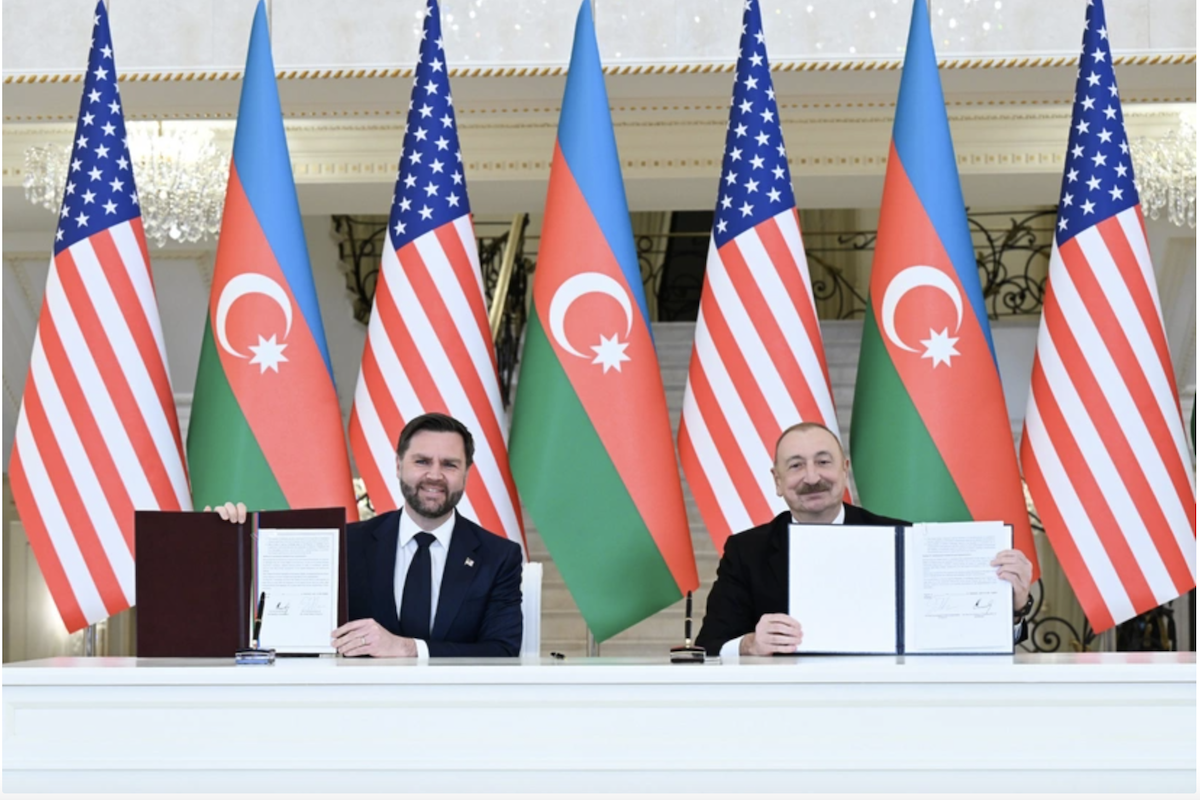
● U.S. Vice President James David Vance is concluding his visit to Azerbaijan today. He arrived after visiting Armenia and is now returning to Washington. Read more here
● During talks in Baku, J.D. Vance and Azerbaijani President Ilham Aliyev signed the U.S.–Azerbaijan Strategic Partnership Charter. A memorandum of understanding on preparing the Charter had previously been signed by Donald Trump and Ilham Aliyev at the Washington summit on August 8 last year. The document reaffirms mutual support for sovereignty, independence, territorial integrity, and the inviolability of borders. It outlines several priority areas:
- • Regional connectivity, including energy, trade, and transit, with a focus on the Trans-Caspian Transport Corridor (the Middle Corridor). The section also recognizes the importance of the “Trump Route” (TRIPP), which is intended to ensure uninterrupted links between mainland Azerbaijan and its Nakhchivan autonomous republic, benefiting both international and domestic connectivity.
- • Energy cooperation, including oil, gas, and electricity, as well as diversification of supply routes.
- • Civil nuclear energy cooperation and transit of critical minerals via the Middle Corridor to global markets.
- • Economic investment, including in artificial intelligence and digital infrastructure. The U.S. welcomed Azerbaijan’s efforts to further integrate into the global economy and strengthen its role as an energy, trade, information, financial, transport, and logistics hub in the Caspian region.
- • Security cooperation. The U.S. praised Azerbaijan’s contribution to international peacekeeping and the sides plan to expand defense cooperation, including arms sales.
- • Counterterrorism, cybersecurity, and protection of critical infrastructure.
- • Humanitarian demining, including financial support and technology transfer.
Within three months of signing, working groups are expected to identify projects and implementation roadmaps. Regular meetings will be held at least once a year, with additional dialogue platforms possible.
● “The Strategic Partnership Charter will further strengthen relations between the two countries. The United States remains committed to close cooperation with Azerbaijan to realize the full potential of the South Caucasus,” the U.S. Embassy in Azerbaijan said.
● J.D. Vance: “The leaders of Azerbaijan, Armenia, and the United States — Ilham Aliyev, Nikol Pashinyan, and Donald Trump — have made peace in the South Caucasus possible.”
● J.D. Vance: “I know President Trump admires both Azerbaijan and Armenia. Unfortunately, the previous U.S. administration made many mistakes, including a short-sighted policy toward Azerbaijan. Under the president’s leadership, we have corrected this.”
● The first-ever U.S. business delegation visit to Azerbaijan organized by the U.S. Chamber of Commerce is part of efforts to expand economic cooperation envisioned in the August 2025 memorandum signed by Trump and Aliyev, according to U.S. Chargé d’Affaires Amy Carlson. “American companies are the most innovative in the world and will help us realize the full potential of the August 8 agreements,” she said.
● The house arrest of former presidential administration head Ramiz Mehdiyev has been extended by four months. He is accused of treason, attempting to seize state power, and money laundering. In the same case, opposition Popular Front Party chairman Ali Kerimli, his adviser Mamed Ibrahim, and former presidential administration official Eldar Amirov remain under arrest; their pretrial detention was also extended. Read more here
● Judges have begun deliberations in the criminal case against Ruben Vardanyan, the former “prime minister” of the former self-proclaimed “Nagorno-Karabakh Republic.” He is charged with crimes against peace and humanity, war crimes, terrorism, and financing terrorism. The charges cover more than 40 episodes across 422 volumes of case materials. Prosecutors have requested a life sentence.
● Ukraine’s State Emergency Service confirmed it received generators and other equipment from Azerbaijan and expressed deep gratitude.
● The head of the Caucasus Muslim Board, Allahshukur Pashazade, met Pope Leo XIV at the Vatican and invited him to visit Azerbaijan.
● Several Karabakh monuments — including the Imarat historical-architectural complex in Aghdam and the Shusha State Historical Reserve — were added to the List of Islamic World Heritage at an ICESCO session in Tashkent.
-
Wednesday, February 11, Georgia. The criminal “sabotage” case against eight opposition politicians, who face up to 15 years in prison
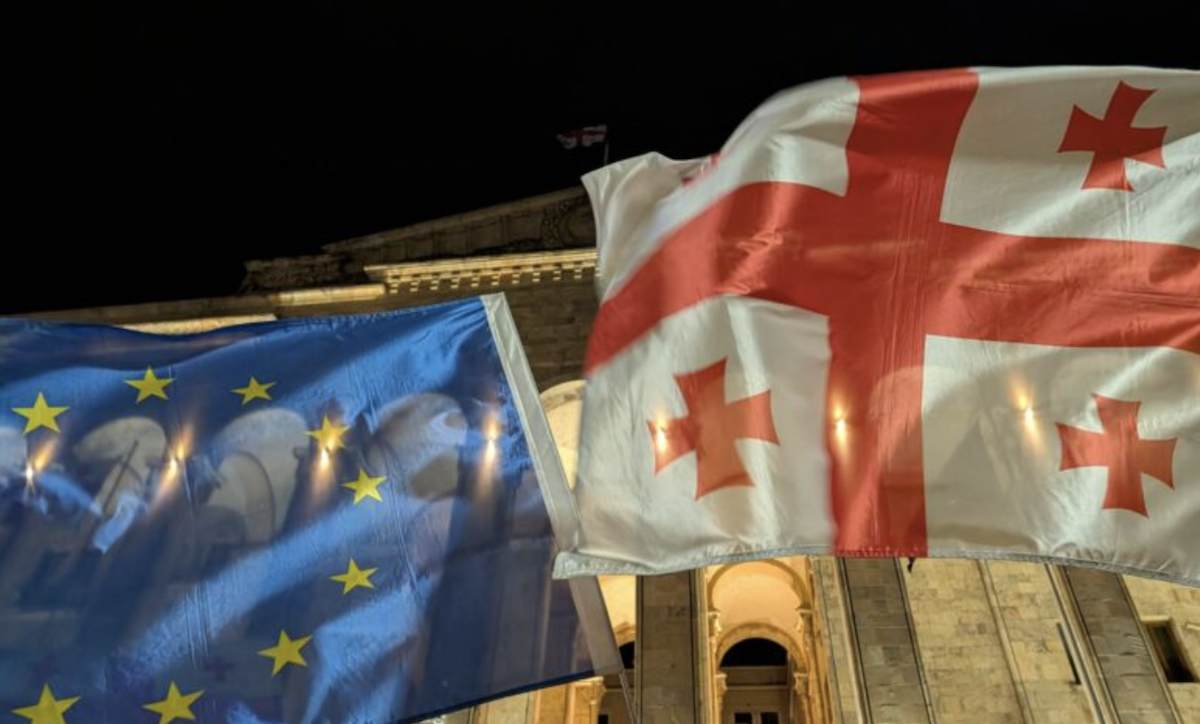
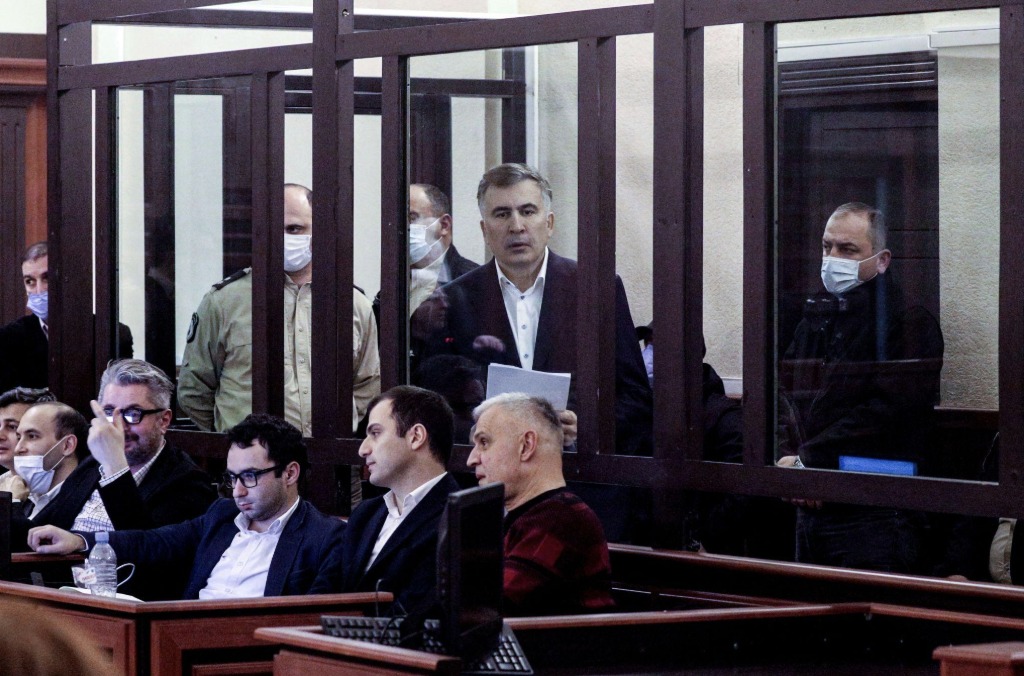
● The so-called “sabotage” case against eight opposition politicians has moved to the trial stage (pictured). After a preliminary hearing at Tbilisi City Court, the judge ruled all prosecution evidence admissible and transferred the case to substantive hearings. Among the defendants are former president Mikheil Saakashvili; leader of the Strategy Aghmashenebeli party Giorgi Vashadze; leaders of the Coalition for Change — Nika Gvaramia, Nika Melia, Zurab Girchi Japaridze, and Elene Khoshtaria; as well as leaders of Lelo – Strong Georgia, Mamuka Khazaradze and Badri Japaridze. According to the indictment, they provided foreign states with information on the country’s security, petroleum imports, and other issues “to the detriment of Georgia’s state interests, with the aim of creating artificial grounds for the introduction of international sanctions.” Zurab Japaridze and Giorgi Vashadze face the most serious charges — up to 15 years in prison.
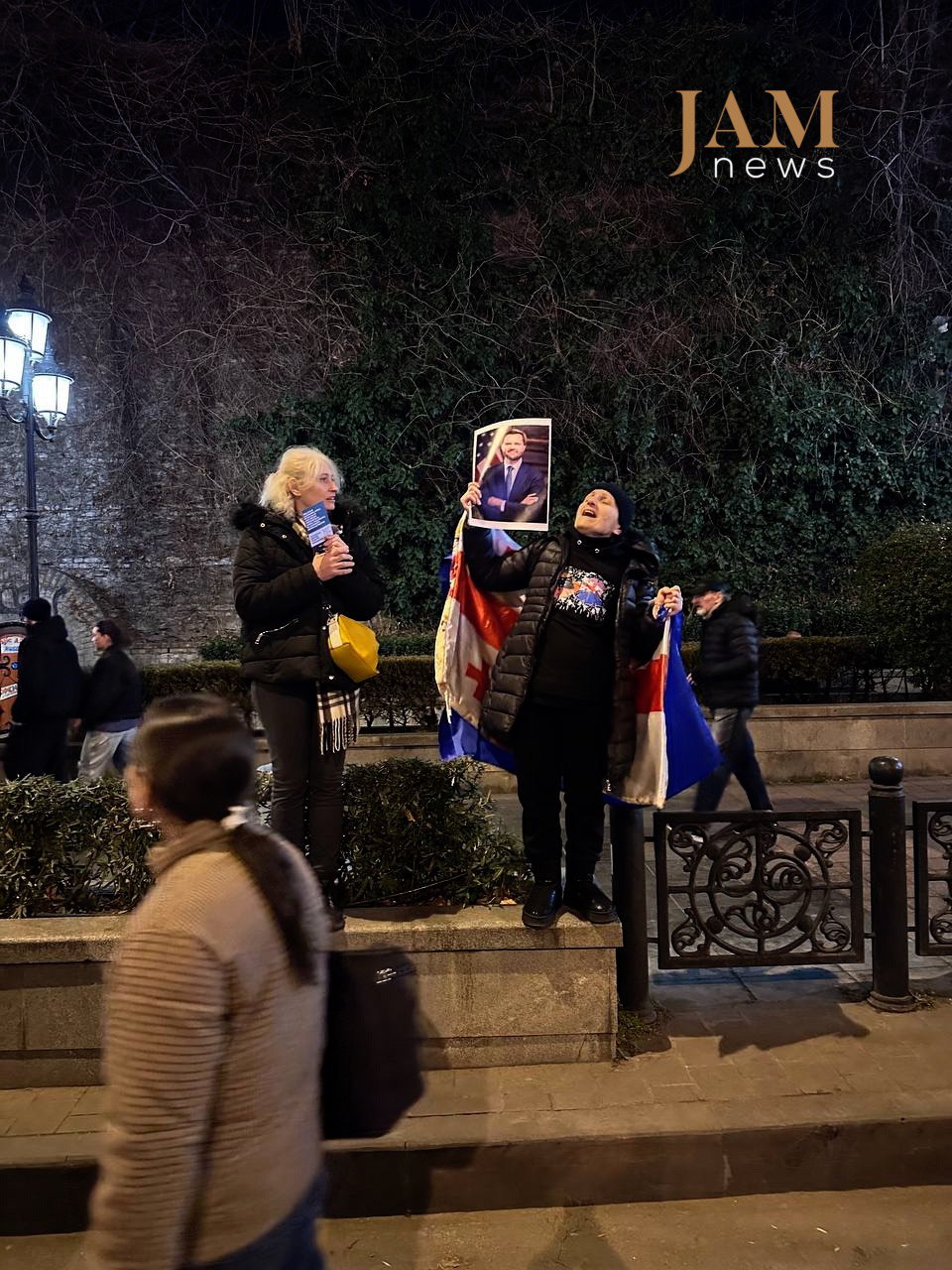
● Prime Minister Irakli Kobakhidze commented on why U.S. Vice President J.D. Vance, who made historic visits to Armenia and Azerbaijan, did not visit Georgia. “We have stated our position toward the United States: we are ready to resume our strategic partnership. This is our very clear position, and we are waiting for corresponding steps. However long it takes, we will wait,” Kobakhidze said.
● Croatian President Zoran Milanović will pay an official visit to Georgia on February 11–13 together with his wife, Sanja Musić Milanović, and an accompanying delegation.
● The Prosecutor’s Office has toughened the charges against those detained in the case of the murder of young teacher Giga Avaliani in Tbilisi. They have been charged in four additional episodes of gang-related violence. The prosecution has released video materials illustrating the violence. More details about the case are available here.
-
Wednesday, February 11, Armenia. Nikol Pashinyan: “Armenia is losing its competitive advantages because Russia operates the railway on Armenian territory”
● Prime Minister Nikol Pashinyan stated that Armenia is losing its competitive advantages because Russia operates the railway on Armenian territory. “Turkey and Azerbaijan have announced a project to build a new railway from Kars to Nakhchivan (an autonomous region of Azerbaijan). It will run along the Yeraskh–Akhurik route, where a railway already exists. But this section is under Russian jurisdiction, which makes the Kars–Dilijan route more attractive. This is a problem for us because we are losing our competitive advantages. We deeply respect our Russian partners, but the fact that our railway — which is our property — is under Russian control amid a tense international environment means we are losing competitiveness. We need to think about what to do next. We need to find a solution, and find it in a friendly logic,” Pashinyan said.
● At the same time, Pashinyan stated that “no force will be able to drag Yerevan into confrontation with Moscow.” “We have not had, do not have, and will not have any agenda to harm Russia and its interests. That is out of the question,” he said, responding to remarks by Russian Deputy Prime Minister Alexey Overchuk that the EU — which Armenia seeks to join — is turning from an economic into a military-political alliance acting against Russia.
● The governments of the United States and Armenia have completed negotiations on an agreement on cooperation in the peaceful use of nuclear energy, according to the U.S. Embassy. “This agreement will expand bilateral cooperation in energy security, strengthen long-standing diplomatic and economic ties between the two countries, and provide a comprehensive legal framework for cooperation in nuclear energy,” the statement said.
● The visit of U.S. Vice President J.D. Vance to Armenia represents an overall increase in the country’s security not just for a year or two, but for decades, Parliament Speaker Alen Simonyan told journalists. “If we continue moving along this path, our countries [Armenia and Azerbaijan] will have no problems in the future,” he said.
● A post by Vice President J.D. Vance about his visit to the Armenian Genocide Memorial in Yerevan was deleted from his X page. The original post mentioned the term “Armenian genocide” twice. It was replaced with a repost from his press secretary Taylor Van Kirk stating: “On the last day of our visit to Armenia, we laid flowers at the Eternal Flame and signed the guest book.” Vance’s office said the original post had been published by mistake by staff who were not part of the trip.
● Former U.S. House Speaker Nancy Pelosi commented on the situation: “Erasing history is an act of disrespect toward the victims and weakens our commitment to human rights worldwide.”
● The release of 15 Armenians held in Azerbaijan would be another important step toward lasting peace in the South Caucasus, members of the European Parliament said in a joint statement. “On February 5, a Baku military court sentenced 15 Armenian defendants to long prison terms out of 19 Armenians still detained in Azerbaijan in connection with the former Nagorno-Karabakh conflict. We deeply regret this decision, which includes five life sentences,” the statement said.
● Human rights defender Siranush Sahakyan said: “The likelihood of Armenian prisoners being released with U.S. mediation is quite real.”
● Pashinyan also issued new accusations against leaders of the Armenian Apostolic Church: “Shadow funds are entering the country for political purposes, including through the Church. The Church cannot be a state within a state,” he said.
● Businessman Gagik Tsarukyan will participate in parliamentary elections with the opposition Prosperous Armenia party he leads and will not join any alliances, his spokesperson said. Much of Armenia’s opposition is widely viewed as pro-Russian.
● Armenia is ready at any moment to ensure full operation of the Margara checkpoint on the Armenian-Turkish border, said State Revenue Committee Chairman Eduard Hakobyan.
● After officials submit asset declarations upon assuming office, Armenia’s Corruption Prevention Commission will review their integrity within a month, said Deputy Justice Minister Gevorg Kocharyan. Family members’ declarations will also be analyzed and compared with previous filings.
● Hakobyan said Armenia’s most significant international cooperation project is a joint customs checkpoint with Georgia. He also noted progress with Iran on a simplified customs corridor and advance information exchange systems, as well as a loan agreement for the Yerevan foreign economic activity center and expanding cooperation with the United States.
● Armenia will become an associate member of the International Bureau of Weights and Measures, which will help ensure Armenian laboratory certifications are recognized worldwide, Economy Minister Gevorg Papoyan said.
● Yerevan City Hall has purchased a modern device to assess tree viability. Mayor Tigran Avinyan said this is important because “a tree’s appearance does not always reflect its biological condition.”
-
Tuesday, February 10, Armenia. During James D. Vance’s visit to Armenia, a statement on the peaceful use of nuclear energy was signed
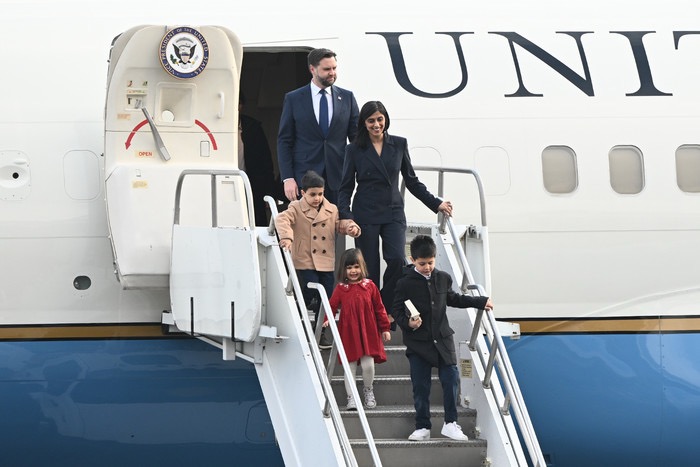
● U.S. Vice President James D. Vance is paying a visit to Armenia, which he himself called “historic.” He arrived in Yerevan together with his wife, Usha Vance, and their three children. “I am truly proud to have become the first U.S. vice president to visit this country,” Vance said. He held a bilateral meeting with Armenian Prime Minister Nikol Pashinyan, after which the talks continued in an expanded format. The discussions covered details of implementing the regional transit project known as the “Trump Route” (TRIPP), Firebird company’s program to build an artificial intelligence data center in Armenia, as well as the capabilities of the V-BAT unmanned aerial vehicle purchased by Armenia from the United States. A joint statement on the peaceful use of nuclear energy was also signed. More details here.
● Armenia has purchased V-BAT unmanned aerial vehicles from the United States as part of the Armenian-American military and defense partnership, with significant progress recorded in this area. This was stated by Prime Minister Nikol Pashinyan after his meeting with J.D. Vance. He also recalled the “Eagle Partner” joint military exercises, which have been ongoing for three consecutive years. “The effectiveness of V-BAT drones has been confirmed by extensive operational experience, and they will make a substantial contribution to strengthening our defense capabilities. I expressed hope that this deal, implemented under the U.S. Foreign Military Sales program, will serve as a basis for further expansion of cooperation,” the prime minister said.
● The U.S. vice president expressed support for Nikol Pashinyan ahead of Armenia’s upcoming parliamentary elections during a joint press conference in Yerevan. “Pashinyan is someone capable of building a long-term partnership for the successful implementation of programs. I think we’ve made significant progress in just a few months since August 8 (the date of the Washington summit). The question is how to successfully move the peace agreement [between Armenia and Azerbaijan] to the next stage and how to keep the prime minister in good shape so he can focus on the future. I know parliamentary elections are approaching (scheduled for June 7 – JAMnews). If my support means anything, he certainly has it,” James D. Vance said.
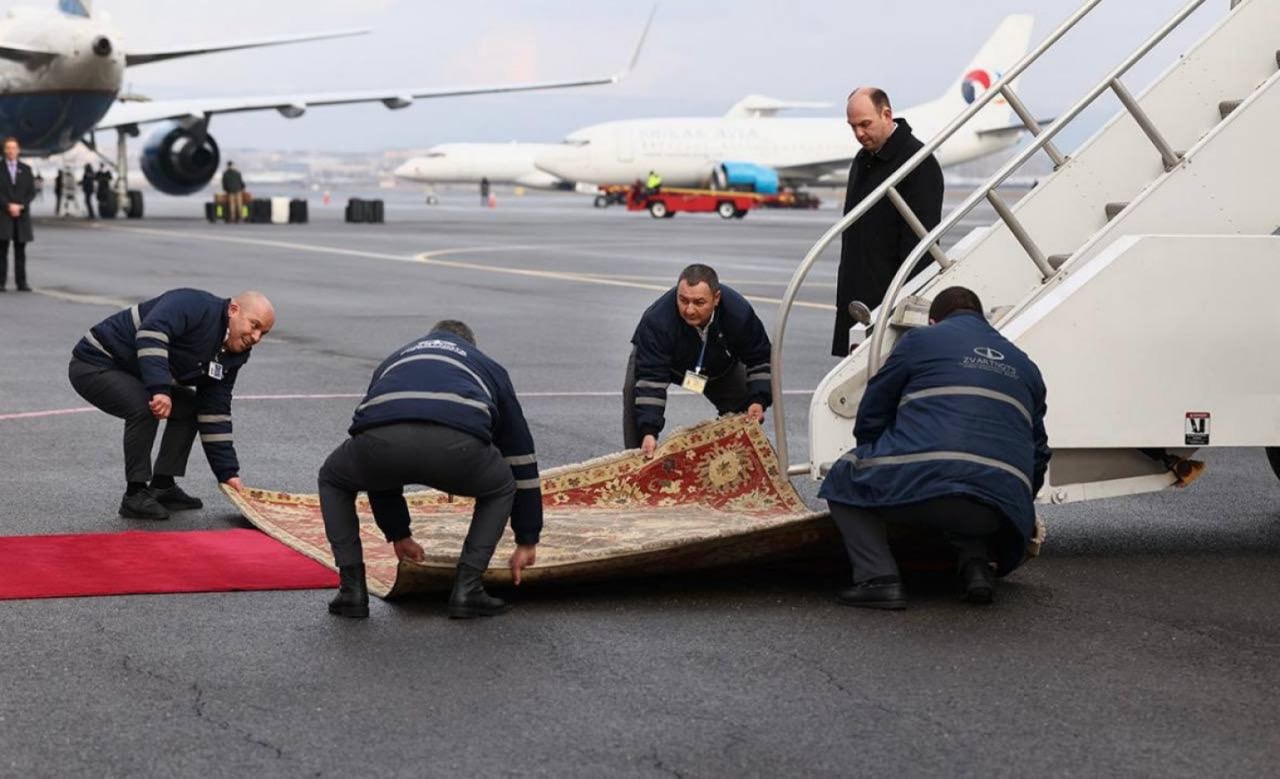
● The carpet laid out at Yerevan airport in honor of the U.S. vice president impressed a correspondent from The Guardian, Jakub Krupa, who wrote a short online piece about it. “Take a look at this stunning carpet laid out for Vance upon his arrival at Armenia’s airport. Unfortunately, I don’t know its full history (please share if you do), but just look at this beauty,” he wrote.
● A protest demanding the release of Armenian prisoners held in Azerbaijan took place in Yerevan amid Vance’s visit. “The U.S. vice president came to Armenia, but it would have been much better if he had first gone to Baku and brought all our compatriots back with him,” said one protest participant, Artak Beglaryan, former state minister of the former unrecognized Nagorno-Karabakh republic.
● The number of Armenian citizens applying for asylum in the EU has dropped by more than one-third. This was reported on Facebook by Arman Yeghoyan, chairman of the Standing Committee on European Integration of the National Assembly. “According to Eurostat, in 2025 the number of Armenian citizens applying for asylum in EU member states amounted to 2,850 people, which is more than 34% lower than during the same period in 2024. This is also more than 46% lower than the annual average during the years of President Serzh Sargsyan’s rule (2009–2017). Overall, fewer applications were submitted only during the COVID-19 pandemic years of 2020 and 2021, clearly due to lockdowns and the sharp reduction in passenger air travel. I am convinced that with the introduction of a universal health insurance system, this number will decline even further,” he said.
● YouTube monetization will be launched in Armenia. “This is an important step toward strengthening Armenia’s digital economy, as well as increasing the global visibility of Armenian content, culture, and innovation,” said Minister of High-Tech Industry Mkhitar Hayrapetyan.
● The government plans to invite up to two or more global stars to Armenia each year, in line with its tourism development strategy, Economy Minister Gevorg Papoyan told journalists. “For example, our neighboring Georgia has developed its tourism sector very successfully thanks to such events,” the minister noted. He added that a visit by a world-famous star is planned in the near future but declined to name who it will be.
-
Tuesday, February 10, Azerbaijan. A high-level U.S. business delegation has arrived in Baku, consisting of 60 people and representing 31 leading companies
● U.S. Vice President J.D. Vance will visit Azerbaijan on February 10–11. He has been in Armenia since yesterday. He is accompanied on the trip by U.S. Deputy Secretary of State for Economic Affairs Jacob Helberg. Both visits are reported to be aimed at advancing the U.S. administration’s peace efforts as well as the regional transit project “Trump Route for International Peace and Prosperity” (TRIPP).
● The U.S. Embassy published a post on X ahead of the visit, stating: “This week, U.S. Vice President J.D. Vance will visit Azerbaijan, marking the highest-level visit to Azerbaijan in many years. The Vice President’s visit reflects the strength of the U.S.-Azerbaijan relationship and our shared commitment to expanding cooperation and advancing peace and stability in the South Caucasus.”
● Two Democratic U.S. senators urged Vice President Vance to demand the release of imprisoned journalists during his visit to Baku. Senator Jeanne Shaheen, a member of the Senate Foreign Relations Committee, wrote to Vance on X, naming economist Professor Gubad Ibadoglu, Radio Free Europe/Radio Liberty journalist Farid Mehralizade, former Voice of America employee Ulviya Ali, and media expert Alasgar Mammadli. “Their release must be a priority for U.S. efforts in the region,” the senator wrote.
Senator Chris Van Hollen, a member of the Senate Budget and Foreign Relations committees, also called for the immediate release of Ulviya Ali and Farid Mehralizade, noting that “these journalists committed no wrongdoing and were punished solely for working with U.S.-supported media.” He added that Azerbaijan’s treatment of the journalists and their families “undermines trust, violates human dignity, and directly contradicts efforts to build peace and prosperity in the region.”
● Forbes reported that Vance’s visits to Yerevan and Baku are intended to accelerate the development of the Trump Route, a strategic transit corridor that would connect Azerbaijan with its exclave Nakhchivan via Armenia. The tour follows recent visits by Kazakhstan’s President Kassym-Jomart Tokayev (February 3–4) and Uzbekistan’s President Shavkat Mirziyoyev (February 5–6) to Pakistan aimed at strengthening strategic ties and transit routes. The article notes that coordinated initiatives involving Turkey, Azerbaijan, Kazakhstan, Uzbekistan, and Pakistan, amid Russia’s retreat, China’s expansion, and Iran’s instability, are reshaping Eurasia’s power dynamics and reinforcing a U.S. strategy of burden-sharing. Within this emerging framework, Azerbaijan serves as a key link between the South Caucasus, Central Asia, and the broader Indo-Pacific region.
● A 60-member U.S. business delegation is currently working in Azerbaijan, led by Khush Choksi, Vice President for International Affairs at the U.S. Chamber of Commerce. He said the mission’s goal is not to sign agreements, but to study Azerbaijan’s market and identify its needs. The delegation represents 31 U.S. companies in energy, technology, food production, and transportation, including Apple, Ericsson, ExxonMobil, Meta, Visa, Boeing Global, Honeywell, JPMorgan, Mastercard, Shell, bp, Motorola Solutions, and others.
● “The South Caucasus and Central Asia are in the focus of heightened interest for U.S. companies,” Khush Choksi told journalists in Baku.
● During a meeting with the delegation, President Ilham Aliyev said the visit was especially significant as it precedes Vice President Vance’s arrival in Baku. He expressed confidence that the mission would lead to more active cooperation across various areas: “Today, Azerbaijan’s relations with the United States are entering a new, truly fantastic era. We are very encouraged and want to use this opportunity to establish direct contacts between companies.”
● Aliyev also said: “We have attracted massive investments. Considering the country’s size and population, $350 billion in investments over the past two decades is a very large figure. Azerbaijan is open to foreign investment.”
● He added that Azerbaijan plays a key role in ensuring the energy security of many countries, including 10 EU member states and 11 NATO members, noting new power transmission lines being laid under the Black Sea to Europe.
● Aliyev stated: “Despite being subjected to Armenian aggression and occupation for 30 years, Azerbaijan took the first step toward peace after liberating its territories and fully restoring its territorial integrity—by force and political means. We offered peace to Armenia, and peace was achieved with the mediation of President Trump on August 8, 2025. Azerbaijan lifted all restrictions on cargo transit to Armenia and began supplying petroleum products to lay the foundations for cooperation.”
● Khush Choksi invited President Aliyev to Washington for meetings with an even broader delegation representing the U.S. business community.
● Foreign Minister Jeyhun Bayramov met with a delegation from the Conference of Presidents of Major American Jewish Organizations, currently visiting Baku. Discussions focused on Armenia–Azerbaijan normalization, regional communications, and efforts to implement the TRIPP project. It was emphasized that the centuries-long peaceful coexistence of Azerbaijan’s Jewish community strengthens partnerships between Baku and Tel Aviv.
● The pretrial detention of Ali Kerimli, chairman of the Azerbaijan Popular Front Party, has been extended by four months. He is charged in a criminal case involving an alleged coup attempt, alongside former presidential administration head Ramiz Mehdiyev, who is also under arrest.
-
Tuesday, February 10, Georgia. The port of Kulevi may face EU sanctions due to “links to Russia and trade in Russian oil"
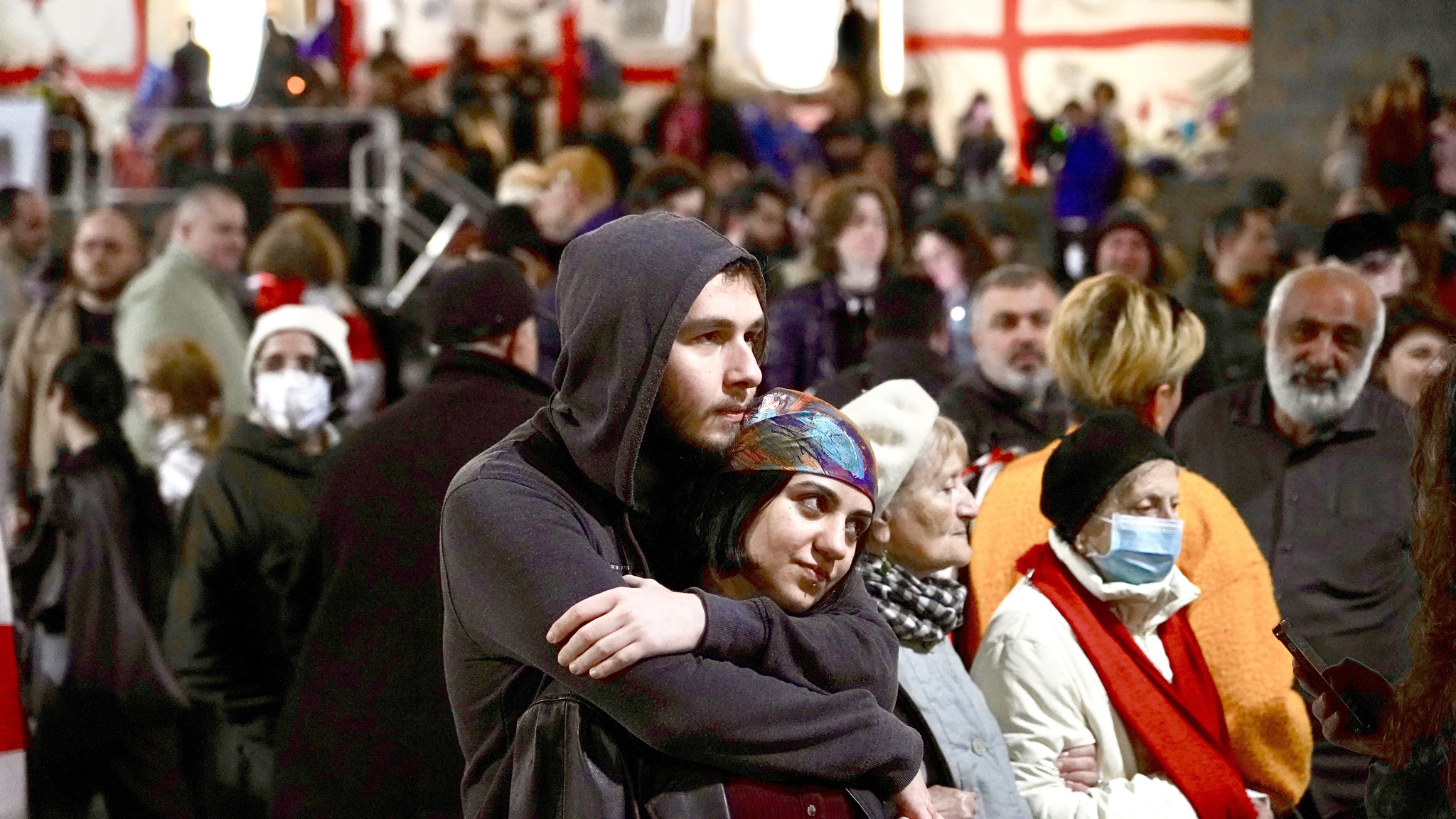
● Prime Minister of Georgian Dream Irakli Kobakhidze announced the cancellation of the previously announced plan to merge Tbilisi State University and the Georgian Technical University. The statement followed a meeting between the head of government and university faculty. Students and professors at both institutions had strongly protested against the decision.
● The Prosecutor’s Office has launched a new case against opposition politician Nika Melia. This time, he is accused of contempt of court. According to prosecutors, Melia verbally insulted a judge.
● According to media reports, the port of Kulevi may face EU sanctions, and its operations could be suspended due to “links to Russia and trade in Russian oil.”
● Georgia hopes the United States will take concrete steps to normalize relations between the two countries in the near future, said Georgian Dream’s Foreign Minister Maka Bochorishvili. “I had the opportunity to speak with U.S. Secretary of State Marco Rubio and Vice President J.D. Vance during the opening of the Olympic Games in Milan. One thing is clear: the new administration has inherited a very negative legacy in relations with Georgia. The Secretary of State stated unequivocally that all of this needs to be reviewed. We hope to see concrete steps taken by the U.S. in the near future. We want a strategic partnership starting from a clean slate, taking into account the interests of both countries,” Bochorishvili said.
● Georgia has become a member of the international association ‘Eurasian Transport Route.’ According to a press release, the decision was reached following a meeting in Tashkent of the heads of the state railway companies of Azerbaijan, Uzbekistan, and Georgia. It was noted that once construction of the China–Kyrgyzstan–Uzbekistan railway line is completed, this route could become even more attractive for East–West cargo transportation.
● A worker has died in a mine in Tkibuli. An investigation has reportedly been launched into possible violations of safety regulations during mining, construction, or other works.
● The road to the Russian border has been completely closed due to the risk of avalanches.
-
Monday, February 9, Azerbaijan. Armenia’s Foreign Intelligence Service: There have never been any ties with peace activist Bahruz Samadov, who was convicted in Azerbaijan
● U.S. Vice President J.D. Vance will visit Azerbaijan on February 10–11, his press secretary told Radio Free Europe/Radio Liberty. Prior to that, on February 9–10, Vance will visit Armenia. He will be accompanied by U.S. Deputy Secretary of State for Economic Affairs Jacob Helberg. It is reported that both visits are aimed at promoting the U.S. administration’s peace efforts, as well as the regional transit project “Trump Route for International Peace and Prosperity” (TRIPP).
● U.S. Democratic Congressman Jim McGovern has written a letter to U.S. Vice President J.D. Vance, urging him to raise the issue of the release of political prisoners during his visit to Azerbaijan. The letter states that in recent years, the Azerbaijani authorities have intensified pressure on journalists, opposition activists, and representatives of civil society. McGovern names economist and professor Gubad Ibadoglu, his brother Galib Bayramov, who is charged in the so-called “NGO case,” imprisoned opposition figure Tofig Yagublu, Ali Karimli, leader of the Azerbaijan Popular Front Party, Mamed Ibrahim from the same party, civic activist Bakhtiyar Hajiyev, Radio Free Europe/Radio Liberty journalist Farid Mehralizadeh and his wife Nargiz Mukhtarova, Shamshad Agha, Aynur Elgunesh, and Ulviya Guliyeva, who were arrested as part of a criminal case against MeydanTV, as well as human rights defenders Rufat Safarov and Anar Mammadli.
● Azerbaijan and other countries in the region have made serious efforts to resume negotiations between Tehran and Washington on the nuclear program, according to Azerbaijani media quoting Iranian Foreign Minister Abbas Araghchi. “If previously Europeans were involved in the negotiations, this time regional countries have joined in. They intend to help, and we respect their good intentions,” the minister said, local media reported, citing Iran’s Tasnim News Agency.
● Armenia’s Foreign Intelligence Service has stated that it has never had any ties with Azerbaijani researcher and peace activist Bahruz Samadov (pictured), who was sentenced to 15 years in prison on charges of treason. Armenian journalist Zhirayr Voskanyan reported this on his Telegram channel. According to Voskanyan, he received this response after contacting the Foreign Intelligence Service with a request to officially confirm or deny the accusations brought against Samadov, which allege cooperation with Armenian special services. Samadov continues to deny any wrongdoing. In April of last year, Samadov wrote an open letter to Armenian Prime Minister Nikol Pashinyan, asking him to publicly state that Samadov does not cooperate with Armenian intelligence services. The statement by Armenia’s Foreign Intelligence Service, reported by Zhirayr Voskanyan, is the first public comment from Yerevan on this issue.
Bahruz Samadov is a doctoral PhD candidate at Charles University in the Czech Republic. He was detained on August 21, 2024, when he arrived in Baku. More details here
● A tenth-grade student accused of shooting a female teacher at İdrak Lyceum in Baku has been arrested for four months. He has been charged with attempted premeditated murder. The hunting rifle used in the shooting belonged to his father.
● The international badminton tournament Azerbaijan International 2026 has concluded in Baku. 347 athletes from 33 countries took part. The awards ceremony was attended by the Minister of Youth and Sports and the President of the Azerbaijan Badminton Federation.

-
Monday, February 9, Armenia. U.S. Vice President J.D. Vance arrives in Yerevan today
● U.S. Vice President J.D. Vance arrives in Yerevan today. His secretary told Radio Free Europe/Radio Liberty that the visit will last two days. On February 10, Vance will travel from Yerevan to Baku. The U.S. State Department previously said that Vance will be accompanied on the trip by U.S. Deputy Secretary of State for Economic Affairs Jacob Helberg. The statement also noted that the visit is intended to support President Donald Trump’s peace efforts and promote the regional transit project “Trump Route for International Peace and Prosperity” (TRIPP).
● Armenia’s Ministry of Foreign Affairs has confirmed the visit of the U.S. vice president but did not comment on its agenda. A press release said that there would be “events that will deepen relations with Washington and open new avenues of cooperation.”
● The parliamentary opposition faction of the Armenia bloc has sent a letter to J.D. Vance urging him to “actively engage in the return of at least 19 of our compatriots, including the military-political leadership of Nagorno-Karabakh, who are being illegally held in Baku.”
“These individuals are deprived of protection of their fundamental human rights and are subjected to torture solely because of their national and religious identity,” the letter says. Armenia’s opposition is largely regarded as pro-Russian.● Russia’s state corporation Rosatom has offered Armenian partners comprehensive cooperation in the construction of large-, medium-, or small-capacity nuclear power plants in Armenia, as well as the implementation of related projects, including non-nuclear ones. This was stated by Rosatom CEO Alexey Likhachev during a meeting in Moscow with Armenian National Assembly Speaker Alen Simonyan.
● During a visit to Armenia, Chief of the General Staff of the Indian Armed Forces Anil Chauhan was shown samples of weapons produced in both countries, Armenian Defense Minister Suren Papikyan reported (video belo).
● Former Foreign Minister Ara Ayvazyan criticized the conditions of the evolving peace process between Armenia, Azerbaijan, and Turkey. “These two countries are not seeking peaceful coexistence with Armenia; their strategic goals remain unchanged. Armenia may lose the ability to make independent decisions, deepen its dependence on the Turkic world, and, under favorable conditions for them, may be absorbed within the framework of the Greater Turan project. The backbone of this strategy is the so-called Zangezur Corridor (a transit route from Azerbaijan through Armenia, referred to as the ‘Trump Route,’ or TRIPP – JAMnews). This project is aimed at undermining Armenia’s territorial integrity and shifting the regional balance of power in favor of Baku and Ankara,” Ayvazyan said.
● Belarusian blogger Alexander Lapshin has issued an open letter demanding that persecution against him in Armenia based on requests from Belarus be stopped. “For the purpose of legal terror, the Belarusian authorities have placed me on a CIS wanted list for criticizing human rights violations in Belarus. As a result, every time I enter or leave Armenia, I am detained and held at a police station for hours,” Lapshin wrote. He says the charges brought against him by Belarusian authorities are entirely fabricated and violate international law.
● Residents of the Komitas Park residential complex in Yerevan are holding a protest, demanding that the developer fulfill its obligations. They say the apartments were supposed to be handed over in December 2023 and that gas supply was to be connected.
-
Monday, February 9, Georgia. The leading pro-government TV channel Imedi has changed ownership
● The leading pro-government TV channel Imedi has changed ownership. Businessman Irakli Rukhadze said that he and his partners representing Honeywell Partners sold the company for a “symbolic price” of 1,000 lari (about $400). The GDS television company, also owned by the group, was sold as well. Rukhadze said the buyer will be Prime Media Global, a company that has worked with Imedi for many years in advertising sales. Prime Media Global will acquire 50% of the channel, while the remaining 50% will go to Imedi CEO Maka Lomidze and her four deputies.
● The Ministry of Foreign Affairs released information about a meeting in Washington between Deputy Foreign Minister Lasha Darsalia and U.S. State Department official Brendan Hanrahan. According to the statement, Georgia expressed its readiness to “reset” strategic relations with the United States. Earlier information from the State Department said the discussion covered issues of mutual interest and opportunities for cooperation in the South Caucasus, including the situation following the peace agreement between Armenia and Azerbaijan, initialed by the leaders of both countries with the participation of Donald Trump in Washington in August last year.
● By the end of 2030, construction of nearly all sections of Georgia’s East–West Highway—part of the Middle Corridor connecting Asia and Europe, from the Turkish border to the borders with Azerbaijan and Armenia—will be completed, Prime Minister Irakli Kobakhidze said. He stressed that “the government is taking consistent steps to fully utilize the country’s strategic location, with significant investments being directed into major infrastructure projects.”
● Opposition groups Freedom Square and the Georgian Public Assembly have organized a joint forum titled “A New Social Contract for Georgia.” According to the organizers, the forum brings together civic leaders and public figures to discuss the future and is aimed not only at resolving the country’s political crisis but also at forming a viable alternative, a shared direction, and new civic opportunities.
● A protest rally continues outside the first building of Tbilisi State University against the government’s decision to merge the university with the Georgian Technical University. Both students and faculty members are taking part in the protest.
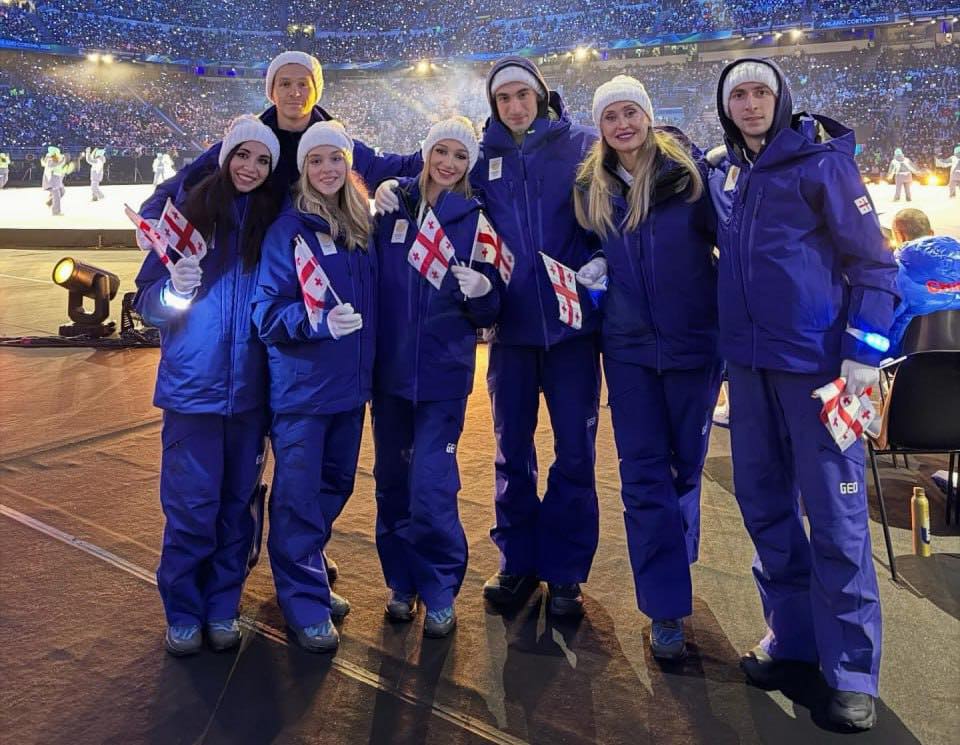
● Georgia’s national figure skating team achieved a historic fourth place at the Winter Olympic Games, finishing behind the United States, Japan, and Italy.
● Georgian Olympic medalists will receive cash awards from the government. It is reported that, following the model used at the Summer Olympics, the reward will be 1 million lari (about $400,000) for a gold medal, 500,000 lari (about $190,000) for silver, and 300,000 lari (about $190,000) for bronze. Georgian athletes are competing at the Winter Olympics in figure skating and alpine skiing.
-
Top stories in Azerbaijan, Armenia, and Georgia from 2-6 February, 2026