Moscow's new man in Tskhinvali: what Kambolov's appointment means - views from Tbilisi






Russia–Georgia: Kambolov in Tskhinvali
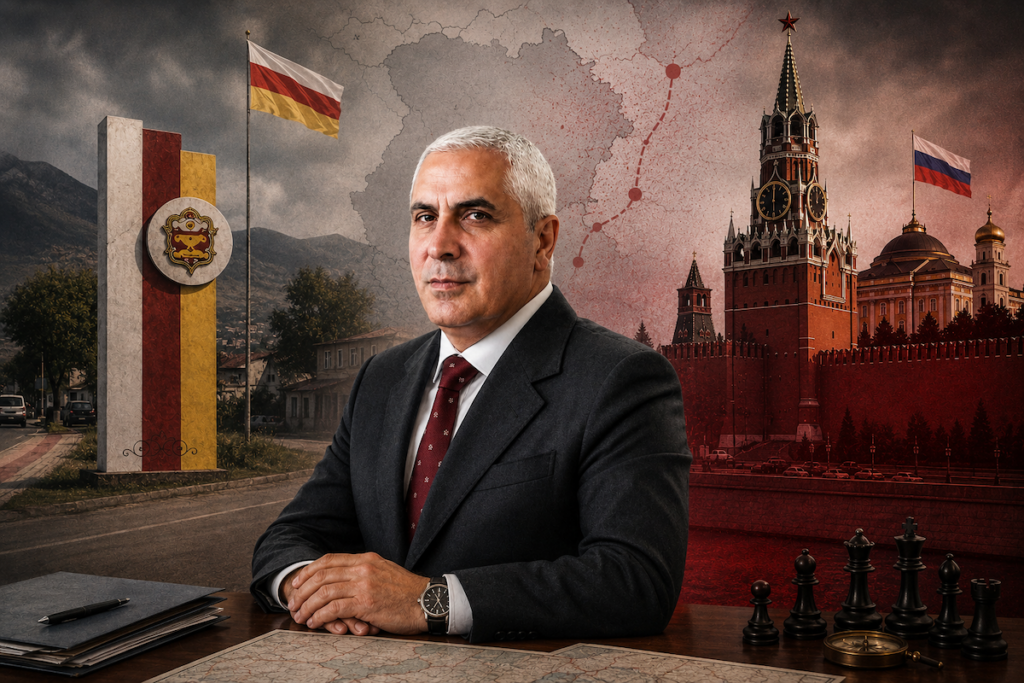
Most experts in Georgia agree that the sudden change of power in the Tskhinvali region (South Ossetia) and the early resignation of de facto president Alan Gagloev mark a fundamental shift in the Kremlin’s policy toward the region.
The appointment of Marat Kambolov, a Russian official sent by Moscow to serve as the region’s acting leader, is seen as far more than a routine personnel change. Analysts believe it is linked to broader geopolitical developments in the South Caucasus.
The Tskhinvali region, also known as South Ossetia, has been outside Tbilisi’s control since the early 1990s, when it declared independence from Georgia. Following the August 2008 Russia–Georgia war, Moscow recognized South Ossetia as an independent state and stationed its troops there. The United Nations and most countries continue to recognize the region as part of Georgia and consider it to be under Russian occupation.
Analysts are discussing three main theories about Kambolov’s mission, each pointing to long-term strategic objectives pursued by Moscow:
- Russia has entered a new phase of annexation;
- Moscow and Tbilisi are preparing a behind-the-scenes agreement;
- The Kremlin has decided to tackle the massive corruption that has taken root in South Ossetia.
These theories differ, but they are not necessarily mutually exclusive.
What happened?
De facto president Alan Gagloev resigned on 23 June. According to the official explanation, he is moving to Moscow to become an adviser in the Russian presidential administration.
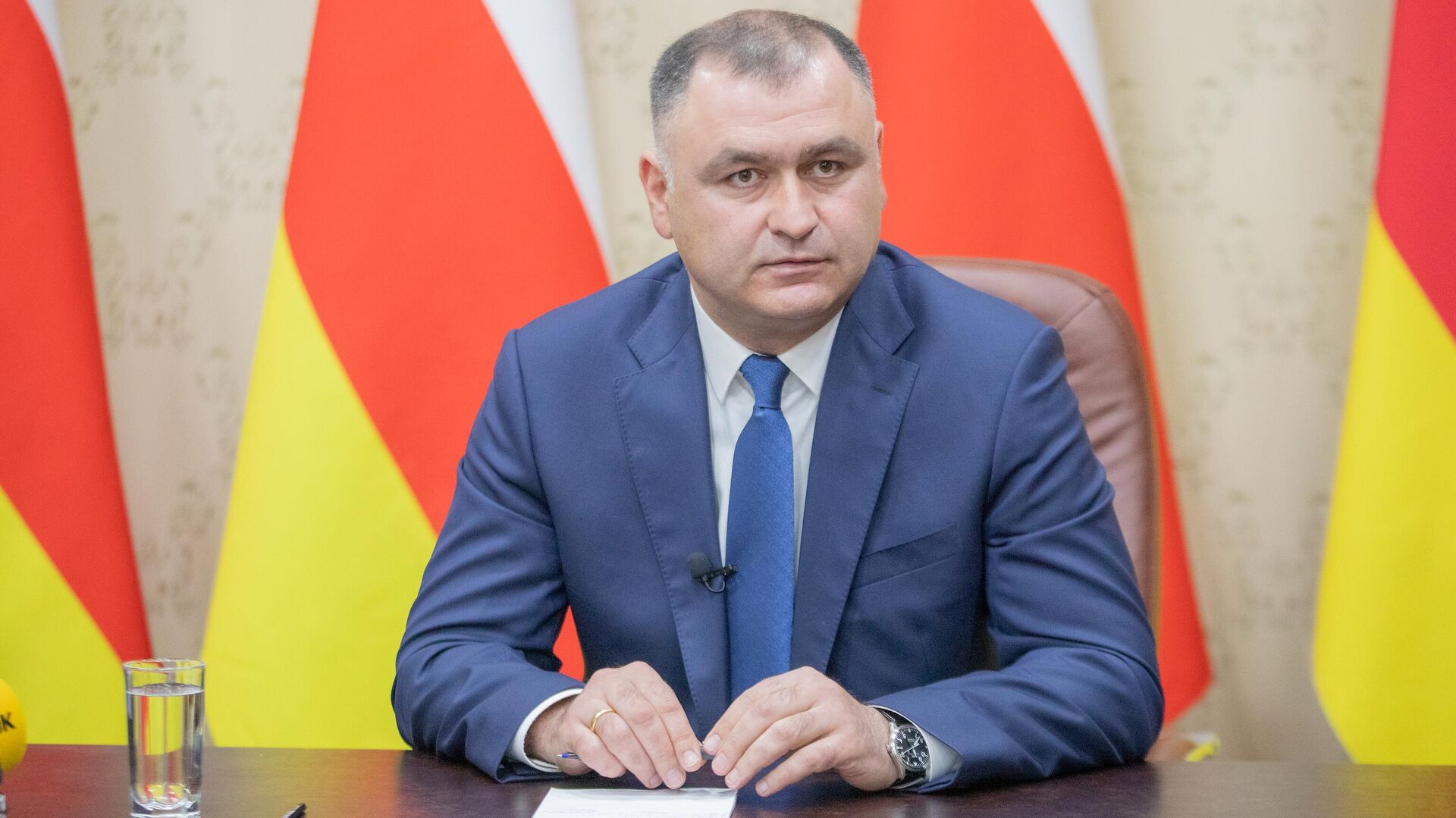
Many observers, however, dismissed this as a formal explanation. Just weeks before Gagloev’s resignation, Marat Kambolov – a senior Russian official with no previous ties to local political factions – had been appointed prime minister in Tskhinvali.
Following Gagloev’s departure, Kambolov effectively became the region’s acting leader, and local analysts believe his promotion to the top post is now virtually guaranteed.
Who is Marat Kambolov?
Marat Kambolov is a Russian official of Ossetian origin who built his career in Russia’s federal government. He served as Russia’s deputy education minister before becoming head of the prestigious Kurchatov Institute, one of the country’s leading scientific institutions specializing in nuclear research and energy development.
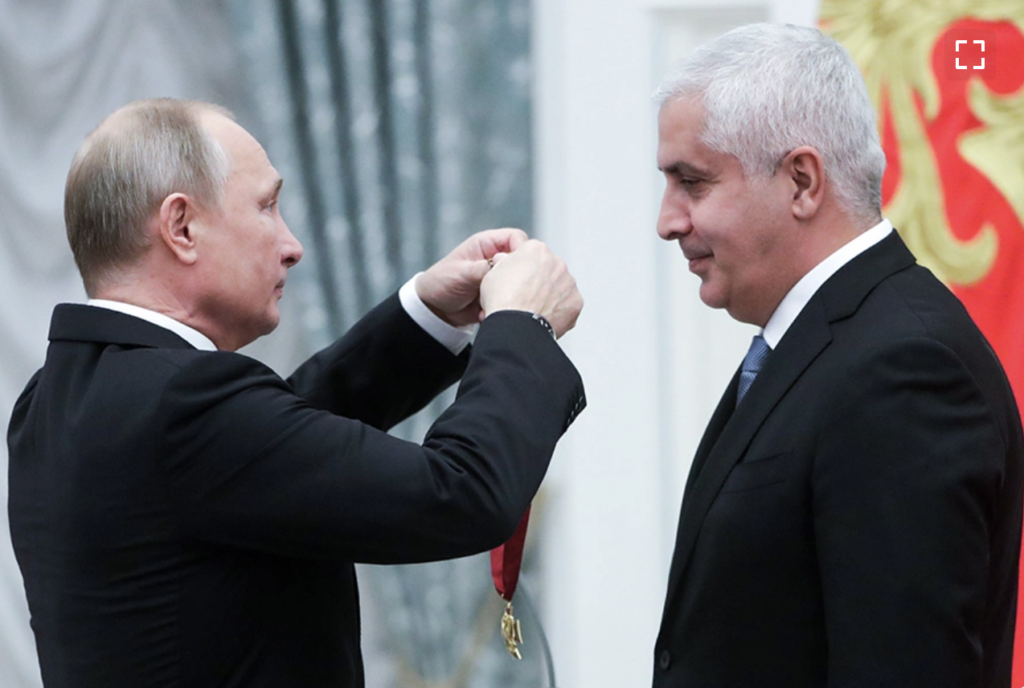
On 9 May 2026, Moscow and Tskhinvali signed a new agreement on “deepening allied cooperation.” Among other provisions, it allows citizens of one side to be appointed to government positions on the other.
The agreement became the legal basis for the appointment of Marat Kambolov as the de facto prime minister of South Ossetia.
Shortly afterward, Alan Gagloev “resigned,” and Kambolov assumed the duties of de facto president.
According to most analysts, however, the key issue is not Kambolov himself but the mission he has been sent to carry out. Experts in Georgia have put forward several theories, which are not necessarily mutually exclusive.
Theory one: Russia is preparing for the full annexation of the region
The most widely discussed theory in Georgian expert circles and the media is that Moscow is preparing to formally annex South Ossetia and incorporate it into the Russian Federation.
This view is supported by the influential Georgian NGO, the Social Justice Center.
According to the organization, the 9 May agreement and Kambolov’s appointment are part of the same process. It argues that Moscow is gradually reducing the role of local elites and replacing them with officials sent directly from Russia to run the de facto government.
The Center sees this as the next stage of the integration policy launched after 2008, when Russia recognized South Ossetia (and Abkhazia) as independent states. After years of military and economic integration, Moscow has now moved to the direct absorption of the region’s governing institutions, proponents of this theory argue.
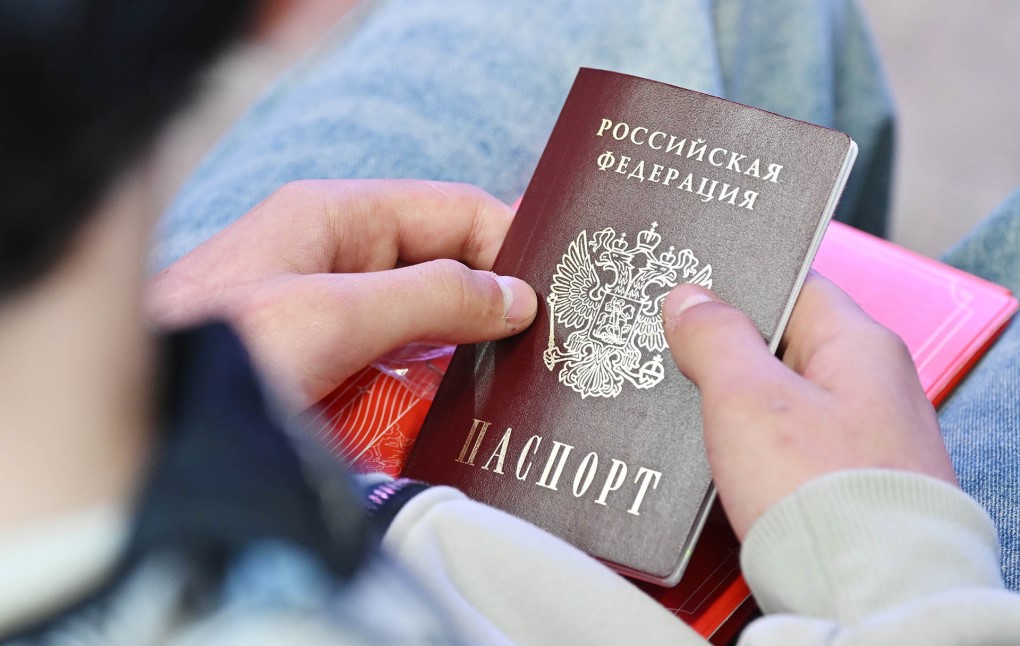
This assessment is shared by political scientist Kornely Kakachia, who spoke to JAMnews. According to him, Kambolov’s appointment is further proof that the Tskhinvali region’s so-called independence no longer has any real meaning:
“This is yet another confirmation that there is no longer even a theoretical remnant of sovereignty in the Tskhinvali region. The Kremlin is no longer pretending otherwise—it is openly pursuing its policy of annexation.“
Kakachia argues that Moscow has already built the legal, economic, and administrative framework needed for annexation. However, he believes the Kremlin is deliberately delaying the formal completion of the process because the region’s unresolved status remains an effective tool for pressuring Georgia.
“Russia could complete the process within a few months and formally declare its new border with Georgia. But it has no incentive to do so, because it would lose an important lever of influence over Tbilisi.”
According to Kakachia, Moscow is now closely watching developments in Georgia:
“The domestic and foreign policies of the Georgian Dream government give the Kremlin reason to believe it still has leverage over Georgia.”
In his view, Georgian Dream’s current course is gradually steering the country toward a Eurasian model of governance. The Kremlin therefore prefers not to make a final decision on South Ossetia until it becomes clear whether Georgia’s ruling elite will succeed in moving the country in that direction.
Theory two: Moscow is preparing a deal with Tbilisi
Georgian conflict analyst Paata Zakareishvili offers a different interpretation.
In his view, Kambolov has been sent to Tskhinvali not simply to run the region, but to act as Moscow’s behind-the-scenes negotiator with Tbilisi.
“For the first time, Russia has abandoned its long-standing model of governing the occupied region through local political elites. For years, the Kremlin relied on local leaders in South Ossetia – Eduard Kokoity, Leonid Tibilov, Anatoly Bibilov and Alan Gagloev.
Kambolov’s appointment shows that Moscow no longer considers this model effective. Instead, it has sent an ethnic Ossetian from Russia’s own state bureaucracy who has no ties to local clans.”
Zakareishvili points out that Kambolov is an experienced senior Russian official with a strong administrative background. Before arriving in Tskhinvali, he worked at the Kurchatov Institute and previously served as Russia’s deputy education minister.
“Kambolov is a far more significant figure than Tskhinvali itself. That is why I believe his mission goes well beyond managing the region’s internal affairs.”
The analyst argues that Russia’s influence across the South Caucasus has weakened considerably in recent years.
“Azerbaijan is pursuing an increasingly independent policy toward Russia. Armenia has adopted a multi-vector foreign policy and is deepening ties with the West.
As for Georgia, Russia has almost no institutional leverage left – there are no diplomatic relations and no shared political or military platforms. In this situation, the occupied regions of Abkhazia and South Ossetia remain Moscow’s only real bargaining chips in its dealings with Tbilisi.”
According to Zakareishvili, Russia is also trying to secure a place in the South Caucasus’s emerging transport and economic landscape.
Global interest in the Middle Corridor is growing, new transport routes are being developed, and improving relations between Armenia and Azerbaijan are creating new opportunities. Moscow wants to preserve its role in these processes.
One possible option, he says, is to reopen the route through South Ossetia, connecting Russia with Georgia and onward to the South Caucasus and Turkey. Although the road exists, it is currently not used for regular transit.
Against this backdrop, Zakareishvili believes Kambolov may have been tasked with exploring a new framework for relations with Tbilisi.
“I think Russia will begin looking for common ground with Georgia on specific projects – whether in transport, infrastructure, trade, or even some form of the Georgian–Ossetian market in Ergneti (on the dividing line in the conflict zone, as it was in the 1990s — JAMnews),” the expert says
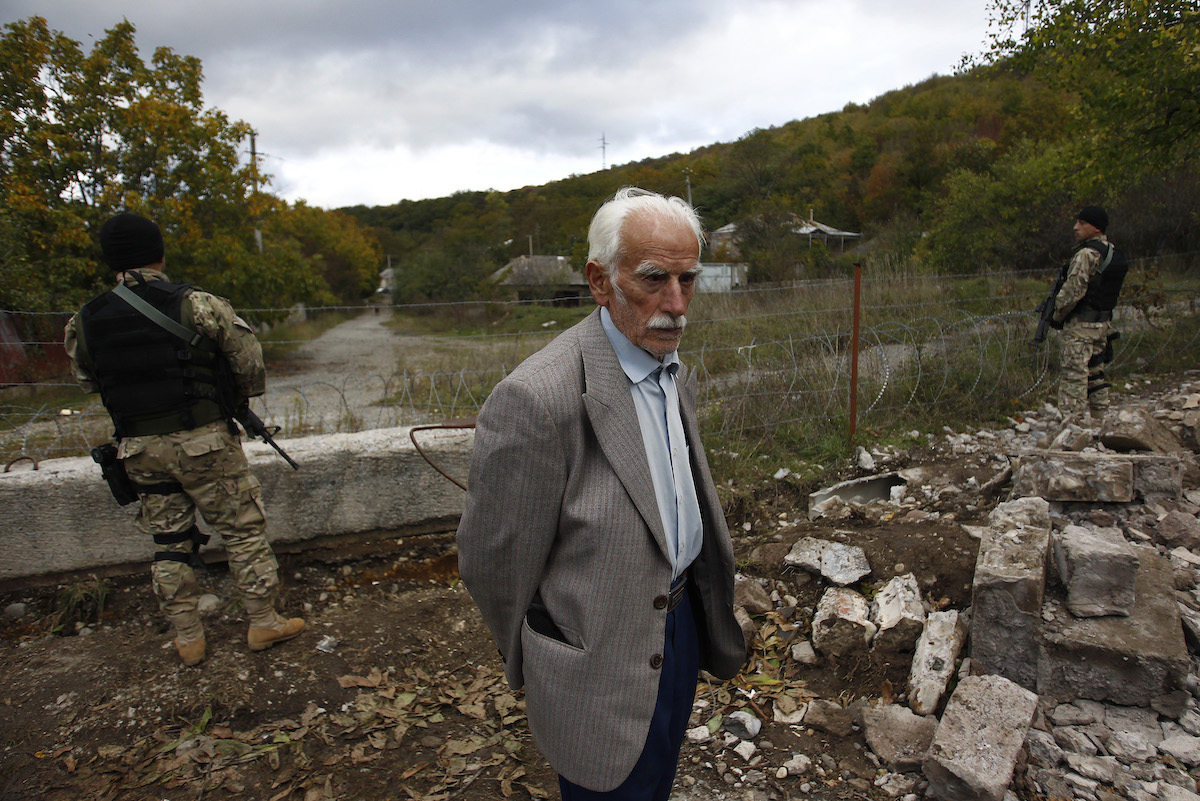
Based on this logic, Zakareishvili is skeptical that Russia’s main goal at this stage is the formal annexation of South Ossetia.
“Tskhinvali has already been annexed by Russia both de facto and de jure. Formal annexation would provoke a strong public backlash against Russia in Georgia, which is exactly what Moscow wants to avoid.
Instead, Russia may choose the opposite approach – not escalating tensions, but taking limited steps toward easing them.
Kambolov may make it easier to cross the administrative boundary line at Akhalgori, where most residents are ethnic Georgians. He could also expand humanitarian contacts or introduce other symbolic measures that would create the impression in Georgian society that relations with Russia are beginning to improve.”
Zakareishvili believes such a process could also benefit Georgia’s authorities by helping to calm the domestic political situation. In his view, the ruling party would then be able to point to tangible results from its cooperation with Moscow, which could in turn reshape the country’s political agenda.
The third version: Moscow decided to fight corruption
This interpretation is mainly put forward by local Ossetian experts and sources.
According to their assessment, the final months of Gagloev’s rule were marked by corruption scandals and accusations of financial inefficiency. This involved millions of dollars spent under Russian-funded investment programs. The way this money was used has increasingly raised concerns in the Kremlin.
Under this version, Moscow’s main goal was not to gain control, since the Kremlin already fully controls the region, but rather to regulate the distribution of allocated funds among local elites and tighten oversight of how they are spent.
In this context, Kambolov is seen not as a political leader, but as a Kremlin-appointed manager tasked with reducing the influence of local clans, monitoring financial flows, and auditing the performance of the previous administration.
The official reaction from Tbilisi has been silence. Is this incompetence or a hidden agreement with Moscow?
Analysts sharply criticize the Georgian government’s passive stance.
Experts say that a statement by Nikoloz Samkharadze, the chair of the parliamentary foreign affairs committee, in which he merely mocked Gagloev’s resignation and did not mention Kambolov at all, represents a failure.
Paata Zakareishvili believes that the ruling team’s silence may indicate the existence of a prior agreement with Moscow.
“Georgian Dream is either extremely incompetent, or they know something and are deliberately staying silent, shifting all attention to Gagloev. I think the second option is correct – there is already some kind of agreement with Tbilisi,” Zakareishvili said.
Korneli Kakachia notes that the anti-Western declarations of Georgian Dream and its concessions to Russia (including apologies for the 2008 war) have not led to any meaningful reciprocal steps from the Kremlin toward rapprochement.
“This inaction has put Georgia in a difficult position. The only way out is through major international security frameworks where Moldova and Georgia are discussed together. Given the historically existing asymmetry in Georgian-Russian relations, Georgia will never be able to restore this balance on its own,” Kakachia said.
The terminology, place names and views expressed in this article are those of the author and do not necessarily reflect the editorial position of this website.
News in Georgia