Giga Avaliani case: Two more arrested 10 months after Georgian teacher's murder






Two more arrested in Giga Avaliani murder case
Two more suspects have been identified in the high-profile murder case of a 28-year-old teacher in Georgia. On 5 August 2026, two teenage girls – Nia Imnadze and Anastasia Beruashvili – were arrested.
Giga Avaliani, a mathematics teacher, was killed in October 2025. Five people have already been convicted over his murder, while the trial of a sixth defendant is still under way. With the arrest of the two girls, the total number of suspects in the case has risen to eight – all of them minors.
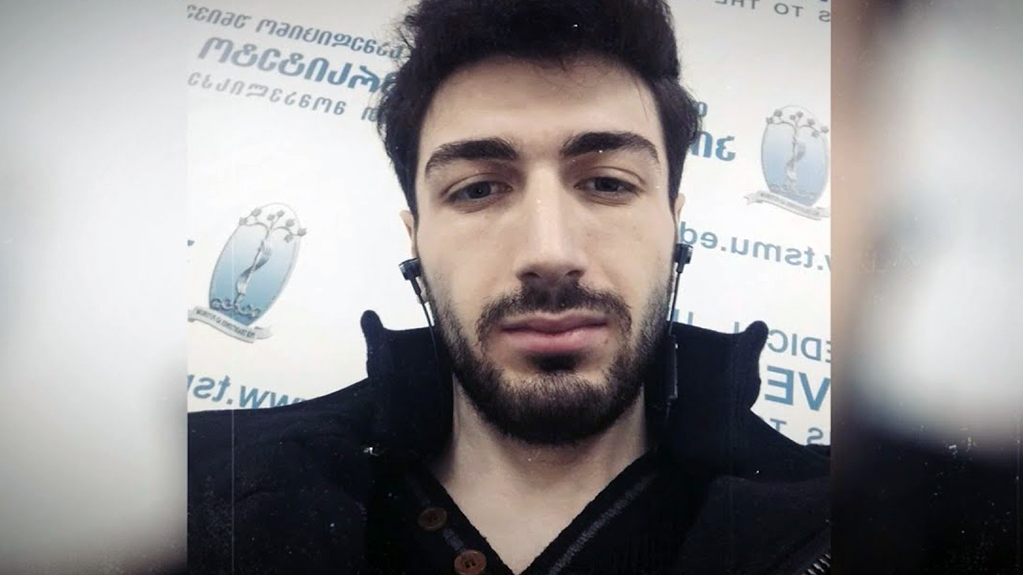
The arrests of Nia Imnadze and Anastasia Beruashvili, after several convictions had already been secured, mark an unexpected and significant development in the Giga Avaliani case.
Nia Imnadze was one of Giga Avaliani’s former students and the girlfriend of the principal defendant, Aleksandre Gabashvili. Prosecutors accuse her of incitement to commit the crime.
According to local media, Anastasia Beruashvili is a friend of both Nia Imnadze and another convicted defendant, Giorgi Rikadze. She has been charged with failing to report the crime.
Giga Avaliani, a 28-year-old mathematics tutor, was returning home late on 1 October 2025 when he was attacked outside his apartment building. He fell into a coma following the assault and died on 24 October without regaining consciousness.
Investigators say the attack was motivated by jealousy and what they describe as “unwanted communication with a girl”. The defendants have given a similar account. According to their version of events, Avaliani sent sexually explicit messages to his student Nia Imnadze, who told her boyfriend, prompting him to confront the teacher.
Avaliani’s mother, Eka Kupatadze, rejects that account. She says Nia had been skipping lessons and that Avaliani informed the girl’s mother, angering the student. According to Kupatadze, the attack was planned afterwards.
The Giga Avaliani case has become one of Georgia’s most high-profile criminal cases in recent years. Much of the public attention surrounding it has been driven by Avaliani’s mother, Eka Kupatadze, who campaigned for what she said should be a thorough and impartial investigation. Her efforts also helped generate significant public pressure over the handling of the case.
From the outset, Kupatadze maintained that Nia Imnadze bore primary responsibility for what had happened and repeatedly called for her arrest. The recent detention of the two girls has therefore raised new questions.
But the key question remains: if prosecutors had sufficient evidence, why were the two girls not arrested earlier? Was their detention the result of new evidence, or did it come only after sustained public pressure and Eka Kupatadze’s campaign?
Detention of two girls
Both girls were arrested late on the night of 5 August, in what appeared to be coordinated operations. News of the arrests first emerged through a video of Nia Imnadze’s detention, which was released by her lawyer, Giorgi Lekishvili.
The footage is deeply distressing. It shows a large number of police officers arriving at Nia’s home. Her mother, visibly distressed, pounds on the front door, shouting: “Come in, all of you!”, “Maniacs!”, “Murderers!”, “Do you know that Niako is innocent?!”
The girl’s father, meanwhile, tells the police: “You are going to make me do something the whole of Georgia will be talking about. If you treat my child so unjustly, I will do it.”
Police officers try to calm the distraught parents.
“Why are you taking my child? On what grounds? What does the court order say?!” the mother asks.
“The lawyer has reviewed the court order,” one of the officers replies.
“Giorgi, on what grounds are they arresting her?” the mother asks the lawyer.
“On the basis of a court order containing only formal wording, nothing specific,” the lawyer replies.
Nia sits in the hallway on a sofa, curled up with her face buried in her hands. The video is being filmed by her lawyer, who occasionally strokes her hair.

Shortly after the video was released, reports began circulating on social media that the second girl, Anastasia Beruashvili, had also been detained. No footage of her arrest was made public, but the Ministry of Internal Affairs later confirmed that she had been taken into custody.
During her arrest, Nia Imnadze became unwell and was taken to hospital, where she spent the night. On 6 August, she was transferred to a pre-trial detention centre. Anastasia Beruashvili was also taken there.
-
Minors charged in Giga Avaliani's murder case in Georgia – read more

Five people have already been convicted in connection with Giga Avaliani’s murder:
Aleksandre Gabashvili – sentenced to 10 years and five months’ imprisonment. He was the principal defendant in the case and was found guilty of organising a group assault and intentionally inflicting grievous bodily harm as part of a group, resulting in the victim’s death.
Giorgi Rikadze – sentenced to 10 years and five months’ imprisonment. A friend of Aleksandre Gabashvili, he was convicted on the same charges.
Demetere Chikovani – sentenced to six years and nine months’ imprisonment. He was convicted of attempted intentional infliction of grievous bodily harm in the Avaliani case, as well as organising group violence in connection with the case and four other incidents.
Ani Naskidashvili – sentenced to five years and three months’ imprisonment. She was found guilty of failing to report a particularly serious crime.
Another minor – sentenced to three years’ imprisonment. He was convicted of giving false testimony. The nature of the false statements has not been disclosed. His case was heard behind closed doors, lawyers involved in the proceedings are bound by a non-disclosure order, and the teenager’s parents have declined to speak to the media. According to TV Pirveli, the boy is named Luka Klatkin.
Giorgi Malania – arrested in July 2026 and charged with aiding and abetting the intentional infliction of grievous bodily harm committed by a group. Malania is the son of a former senior Interior Ministry official, who served as deputy interior minister between 2016 and 2019. His trial is still under way and no verdict has yet been delivered.
Eka Kupatadze’s reaction
“Georgia has won another battle against the killers of a healthy, innocent and talented young man – Giga Avaliani!” Eka Kupatadze said in response to the girls’ arrests.
Giga Avaliani’s family has always maintained that those who carried out the attack were not the only people involved. They have consistently called on investigators to identify and prosecute all those who may have played a role in the crime.
The family has paid particular attention to the alleged role of the two girls. Eka Kupatadze has repeatedly said that they knew the attack was being planned.
Until recently, however, prosecutors had taken no apparent action against additional suspects, prompting repeated criticism of the investigation from Avaliani’s family.
Kupatadze even appealed for help to Ekaterine Khvedelidze, the wife of Bidzina Ivanishvili, the founder of the ruling party and widely regarded as Georgia’s “informal ruler”. Khvedelidze replied to her letter, expressing sympathy and support for the mother who had lost her son.
“As far as I am aware, the investigation has not yet been completed. I am confident that the relevant state authorities will see it through to the end and that all the circumstances will be thoroughly examined, so that no question surrounding the terrible tragedy that has befallen you remains unanswered,” Ekaterine Khvedelidze wrote in her reply.
Formal charges
On the evening of 6 August, both girls were formally charged.

Nia Imnadze has been charged with incitement to intentionally inflict grievous bodily harm committed by a group. The offence carries a maximum sentence of 13 years’ imprisonment.
Anastasia Beruashvili has been charged with failing to report a particularly serious crime, an offence punishable by up to seven years’ imprisonment.
Under Georgian law, sentences imposed on minors are reduced by one quarter.
“The investigation conducted by the Ministry of Internal Affairs under the supervision of the Prosecutor’s Office established that, in September 2025, Nia Imnadze began taking mathematics lessons with Giga Avaliani. The accused, Nia Imnadze, told her friends Aleksandre Gabashvili and Giorgi Malania that her teacher, Giga Avaliani, had allegedly shown her excessive attention. By doing so, the accused incited Aleksandre Gabashvili to attack Giga Avaliani together with his accomplices,” the Prosecutor’s Office said in a statement.
According to the statement, Aleksandre Gabashvili, together with Giorgi Rikadze, Giorgi Malania and Demetere Chikovani, “decided to act on that incitement.”
- Sixteen neo-Nazi group members arrested in Georgia
- Opinion: New law on offenders under 14 could violate children’s rights in Georgia
What defence says
The defence has denied all the charges.
According to Nia Imnadze’s lawyer, Giorgi Lekishvili, there is no evidence in the case to support the allegation that she incited the attack.
The lawyer also rejected reports that prosecutors had obtained data and messages from Meta, and that the arrests followed an examination of those materials.
“Criminal proceedings cannot be based on suspicion. They must be based on lawfully obtained evidence, and no other standard can override that principle,” Lekishvili told reporters.
Ketevan Vardanashvili, the lawyer representing Anastasia Beruashvili, made similar arguments. She said Anastasia had not witnessed any crime and that she and Nia Imnadze had seen each other only once, for a few minutes.
“They had no friendship and no contact,” the lawyer said.
As for Anastasia’s relationship with the convicted defendant Giorgi Rikadze, Vardanashvili said that “even if she was his girlfriend, that does not mean she had any knowledge of the crime.”

Complaint or incitement?
The arrests of the two girls have sparked intense debate on social media. Many commentators agree that everyone responsible for Giga Avaliani’s death should be held accountable and that justice should be served. Many have also expressed sympathy for Eka Kupatadze.
At the same time, some have questioned the actions of the law enforcement authorities. They have asked whether prosecutors have sufficiently strong evidence against the two girls, particularly Nia Imnadze, who faces a lengthy prison sentence if convicted.
The Prosecutor’s Office statement says only that Nia Imnadze told her friends that Giga Avaliani had allegedly shown her excessive attention. It does not explain whether she knew an attack was being planned or whether she urged her boyfriend to take any specific action.
“Does complaining to friends amount to incitement?” some social media users have asked.
Others have also questioned why, if prosecutors had sufficient evidence, the girls were arrested only 10 months after the murder. Some have asked whether the arrests were prompted by Eka Kupatadze’s campaign, and whether political influence may have played a role.
Those questions also remain unanswered.
-
Timeline of Giga Avaliani's case – read more
1 October 2025 – The attack
Giga Avaliani, a 28-year-old mathematics teacher, was attacked outside his home in Tbilisi.24 October 2025 – Death
After spending 23 days in a coma, Giga Avaliani died.November–December 2025 – First arrests
Four minors were arrested: Aleksandre Gabashvili, Giorgi Rikadze, Demetere Chikovani and Ani Naskidashvili.April 2026 – First convictions
Tbilisi City Court found Aleksandre Gabashvili and Giorgi Rikadze guilty and sentenced each to 10 years and six months’ imprisonment.Demetere Chikovani was sentenced to six years and nine months’ imprisonment. He was later convicted over separate violent offences committed at a different time, increasing his total sentence to nine years and nine months.
June 2026 – Another conviction
The court sentenced Ani Naskidashvili to five years and three months’ imprisonment for failing to report the crime.July 2026 – Another arrest
Giorgi Malania was arrested. According to prosecutors, he was charged with aiding and abetting the intentional infliction of grievous bodily harm committed by a group. His trial is still under way and no verdict has yet been delivered.August 2026 – Two more arrests
Two more minor girls were arrested: Nia Imnadze, Giga Avaliani’s former student and the girlfriend of the principal convicted defendant, and Anastasia Beruashvili, described as a friend of Nia Imnadze and the girlfriend of the second convicted defendant.
Broader picture
From the outset, the Giga Avaliani case came to represent more than a single criminal investigation.
It exposed a range of systemic problems, most notably a lack of public trust in investigative authorities. The case also highlighted shortcomings in Georgia’s juvenile justice system, as well as concerns over the protection of the rights of both victims and defendants.
Many observers questioned the release of footage showing Nia Imnadze’s arrest, particularly as it was made public by her lawyer. Some argued that the video was intended to generate public sympathy for his client.
“Unfortunately, public trust in the justice system – the police, the Prosecutor’s Office, the courts and other institutions – is now so low that victims, defendants and lawyers increasingly see shaping public opinion as the only way to obtain justice. They then seek to use public pressure to their advantage,” lawyer Londa Toloraia wrote.
In her view, this reflects a profound crisis affecting both citizens and the justice system itself.
“You no longer trust the state, even when it may actually be making a lawful decision.”
Toloraia also raised a number of questions about the arrests of the two girls: What evidence were they based on? Why did they take place 10 months after the murder? And why were they carried out at night, when Georgian law restricts procedural actions during nighttime hours, particularly in cases involving minors?
“How much influence does public opinion have over the justice system? A great deal. It is extremely difficult to withstand public pressure. And where institutions are fully politicised, it becomes virtually impossible to make a decision that is unpopular with the public,” she argued.
She stressed that legal standards must be upheld even when dealing with those accused of serious crimes – especially when the defendants are minors.
The Avaliani case has also exposed a darker side of public reaction. Following Nia Imnadze’s arrest, social media was flooded with hostile comments directed at both her and her family. Many users described her as the main culprit and called for severe punishment. Others went further, posting comments about the suffering they believed awaited her in prison.
A second group of social media users expressed concern about the tone of those comments. Toloraia addressed the debate in a lengthy social media post.
“Children are not born criminals. Before demanding that they be lynched, we should first ask why they became who they are,” she wrote, adding that juvenile crime in Georgia has reached one of its highest levels in recent years. She argued that the state’s response has focused on opening a “special prison” for children rather than preventing youth crime. A state in which parents who have lost a child must seek justice through public mobilisation, while institutions make decisions according to fluctuations in public pressure, is a broken state,” Toloraia concluded.