Religion in Soviet Azerbaijan: 'We must find Hazrati Abbas' — fourth article by Azerbaijani historian






An article by Azerbaijani historian Jamil Hasanli
In the autumn of 1959, Moscow was forced to replace the head of the Azerbaijan SSR. He was sent to the Belgorod region as deputy head of the regional KGB directorate. Fyodor Kopylov, who had overseen the republic since September 1956, was replaced in August 1959 by Alexander Kardashov, an aide to the head of the Ukrainian KGB. He arrived in Baku in September 1959.
Kardashov had spent many years working as a mechanic in the Urals. He completed a correspondence course at the Higher Party School under the Central Committee of the Communist Party of Ukraine, and also graduated from a factory technical school after seven years of formal education. He had little knowledge of Azerbaijan.
Soon after taking up his post, KGB officers arrested the chairman of a collective farm in connection with a fatal incident in one of the republic’s border regions, the Nakhchivan ASSR. During questioning, the man swore that only Hazrati Abbas — a sacred figure in the Shia Muslim tradition — knew he had nothing to do with the case. When his testimony was translated into Russian and passed to Kardashov, he wrote a note on the document: “Hazrati Abbas must be found immediately.”
Jamil Hasanli is a well-known Azerbaijani historian, Doctor of Historical Sciences and a professor.
He is publishing a series of articles, “Religion in Soviet Azerbaijan: between Allah and the KGB”, on his Facebook page.
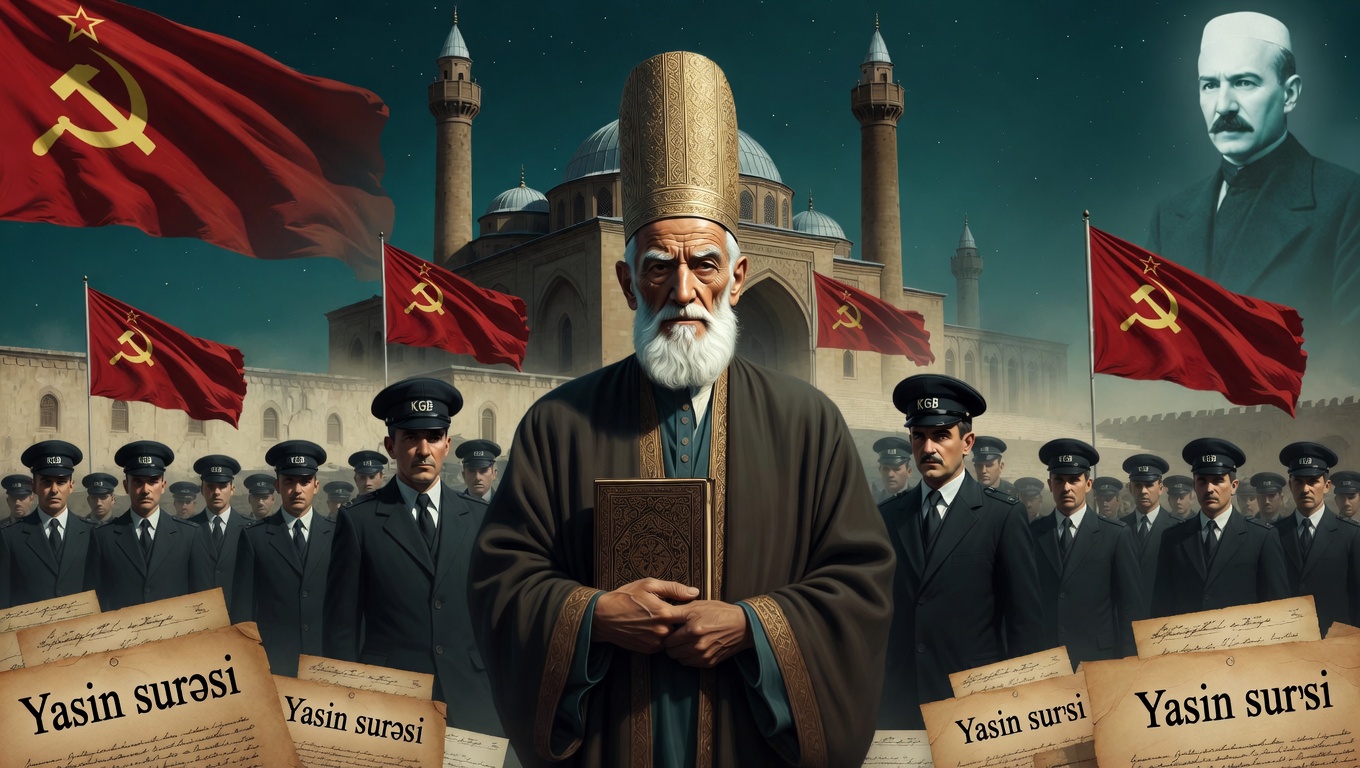
The first major initiative by Alexander Kardashov as chairman of the KGB in Azerbaijan was a republic-wide meeting of KGB operational staff, special departments of the Baku Air Defence District, intelligence officers of the 4th Army stationed in Azerbaijan, and representatives of the Azerbaijani Border District. The meeting lasted three days, from 21 to 23 June 1960.
On 25 May, Kardashov informed the Central Committee of the Communist Party of Azerbaijan about the meeting’s agenda in a letter. The document bore a note from Vladimir Semichastny, the second secretary of the Central Committee.
At the meeting, which focused mainly on strengthening efforts to counter Western “ideological subversion” in line with KGB Order No. 00225, as well as on personnel matters and structural changes, Kardashov stressed the need for the security services to be ready to confront phenomena such as the stilyagi subculture and jazz music, which were seen as expressions of Western cultural expansion, alongside what was described as a religious threat.
The stilyagi — a subculture associated with imitating American styles of dress — and what officials described as a “jazz expansion” were treated by the security services as emerging threats. While the KGB continued its uncompromising struggle against nationalism, foreign intelligence services and anti-Soviet activity, by the early 1960s it faced a dual challenge: a growing “religious threat” on the one hand, and Western cultural “expansion” on the other, manifested in the stilyagi subculture and jazz. At the same meeting, the KGB sought effective ways to counter both religion and these cultural trends.
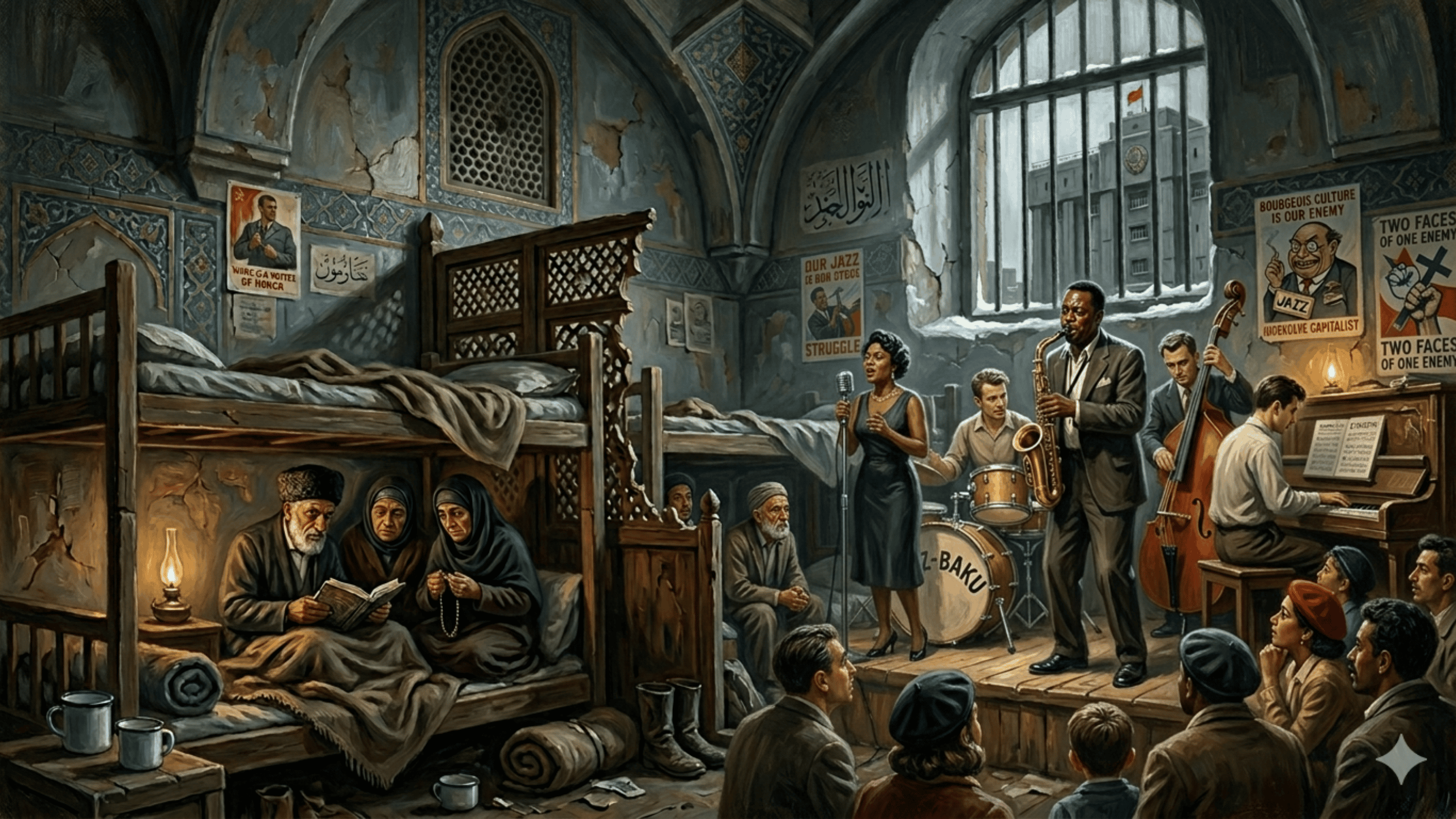
In Baku, the number of stilyagi had grown to such an extent that even at republican KGB meetings it was acknowledged as a serious problem. A significant share of young people, drawn to the subculture, were said to be falling under the influence of the Western way of life. A detailed report on the issue was delivered by Mamed Avdiyev, a senior operative in the 4th department of the republican KGB. He noted that the security services needed to take urgent measures to prevent the influence of the stilyagi on young people, who stood out for their appearance and behaviour as they followed the latest Western fashions.
In his view, bourgeois ideology and the Western way of life were manifesting themselves among young people in their most distorted form, expressed through the stilyagi subculture, which in turn promoted the American way of life as an example of what he described as “spiritual poverty”.
Citing Nikita Khrushchev, Avdiyev said:
“Stilyagi culture represents complete moral decay and a harmful fascination with the American way of life. It draws part of the younger generation away from broader state goals and sows the seeds of parasitism in relation to productive labour. Ultimately, it is an expression of servility and subservience to all things foreign. In the words of Comrade Khrushchev, stilyagi culture is a form of struggle against the dictatorship of the proletariat. Khrushchev’s assessment of this phenomenon as a form of worship of foreign ways further mobilises us in the fight against it, which manifests itself among young people as a harmful phenomenon.”
Avdiyev noted that efforts to combat the stilyagi should not be limited to the methods of the security services, but should also involve strengthening political and educational work among young people through the Komsomol and other public organisations. He stressed:
“We must do what public organisations cannot. We can and must identify the most active stilyagi, their overt and covert meeting places, as well as the initiators and organisers of these gatherings, and expose them. With the help of the press, the Komsomol and other public organisations, it is necessary to shape public opinion around them in order to prevent the spread of this harmful phenomenon.”
At the time, the newspaper Komsomolskaya Pravda published an extensive article targeting the stilyagi.
Avdiyev said that over the previous two years the KGB had already taken certain preparatory steps to combat the stilyagi, but these efforts had not received support from a number of senior officials.
At the same time, he argued that preventing a crime was more effective than punishing those responsible, adding that “if we succeed in combating the stilyagi, this will constitute the very preventive work expected of us by the party and the government” (Transcript of the republican meeting of operational staff of the State Security Committee under the Council of Ministers of the Azerbaijan SSR, special departments of the Baku Air Defence District of the 4th Army, and intelligence officers of the Azerbaijani Border District, 21–23 June 1960).
Checks carried out by the state security bodies in this area showed that most stilyagi were the children of officials. Notably, the overwhelming majority were not Russians, Armenians or Jews living in Baku, but Russian-speaking Azerbaijanis. The subculture soon began to spread to regional towns and rural areas.
According to Avdiyev, the fact that young people who had gone through the Soviet education system and were members of the Komsomol had become involved in the stilyagi subculture and fallen under the influence of American jazz came as a surprise to the KGB. Despite these efforts, it proved impossible to halt the spread of stilyagi culture and jazz.
According to the American historian Eleanor Gilburd, in the 1950s and 1960s the Soviet way of life was significantly influenced by American culture. “Americanism” spread in the Soviet Union through the stilyagi subculture, the popularity of jeans, Hollywood films, jazz and rock music (Eleanor Gilburd, To See Paris and Die: The Soviet Lives of Western Culture, Harvard University Press, 2019, pp. 8–9).
At the meeting, the issue was framed in such a way that, alongside the stilyagi, jazz music was also regarded as a form of US cultural expansion aimed at undermining the Soviet system.

Speakers at the meeting warned that “if we do not put an end to them, they will destroy our system.” The KGB kept lists of jazz performers, their followers and stilyagi, along with information on their home addresses and meeting places. They most often gathered on Nizami Street (Fountains Square) and in private apartments. The KGB placed these apartments under surveillance and infiltrated them with agents.
As early as 1957, when American jazz had only just begun to spread in Azerbaijan, the first secretary of the Central Committee of the Communist Party of Azerbaijan, Imam Mustafayev, told the chairman of the republic’s Union of Composers, Kara Karayev, that “music from Indian films appeals to all peoples because it has a national form and is based on folk motifs. If it were built on American jazz, no one would listen to it.”
Yet even three years after that meeting, at a republican gathering of the Azerbaijani intelligentsia in March 1963, the “notorious American jazz” remained one of the main targets.
Khasay Vezhirov, secretary of the Central Committee for ideological affairs, said in his report:
“Azerbaijani composers are not paying sufficient attention to creating modern, optimistic popular music. As a result, certain conditions have emerged that allow Western bourgeois jazz to influence young people. Some young people have become fascinated by examples of American jazz, which have an exclusively negative impact on their tastes and upbringing. Western propaganda, especially foreign radio stations, is actively promoting its jazz output.
To protect young people from the ideological influence of jazz, which is a symbol of the notorious ‘American way of life’, our composers must create modern popular music that reflects the spirit of the times and resonates with the younger generation.”

Despite a number of administrative bans, it proved impossible to halt the spread of jazz in Azerbaijan, and after Moscow and Leningrad, Baku emerged as the Soviet Union’s third centre of jazz.
Jazz enthusiasts and stilyagi were regularly summoned by KGB officers for “preventive conversations” in an attempt to “re-educate” them. The KGB also kept lists of those who travelled from Baku to Moscow to attend concerts by American jazz musicians. Some former Komsomol vigilantes, active in public, political and “cultural” life both in Azerbaijan and beyond, monitored jazz enthusiasts and stilyagi, passing information about them to central authorities and the KGB. Notably, some of these Komsomol “vigilantes” are still alive.
A significant part of Mamed Avdiyev’s report was devoted to the fight against religion. He noted that one of the KGB’s key tasks was to counter anti-Soviet manifestations in the activities of what he described as the reactionary clergy.
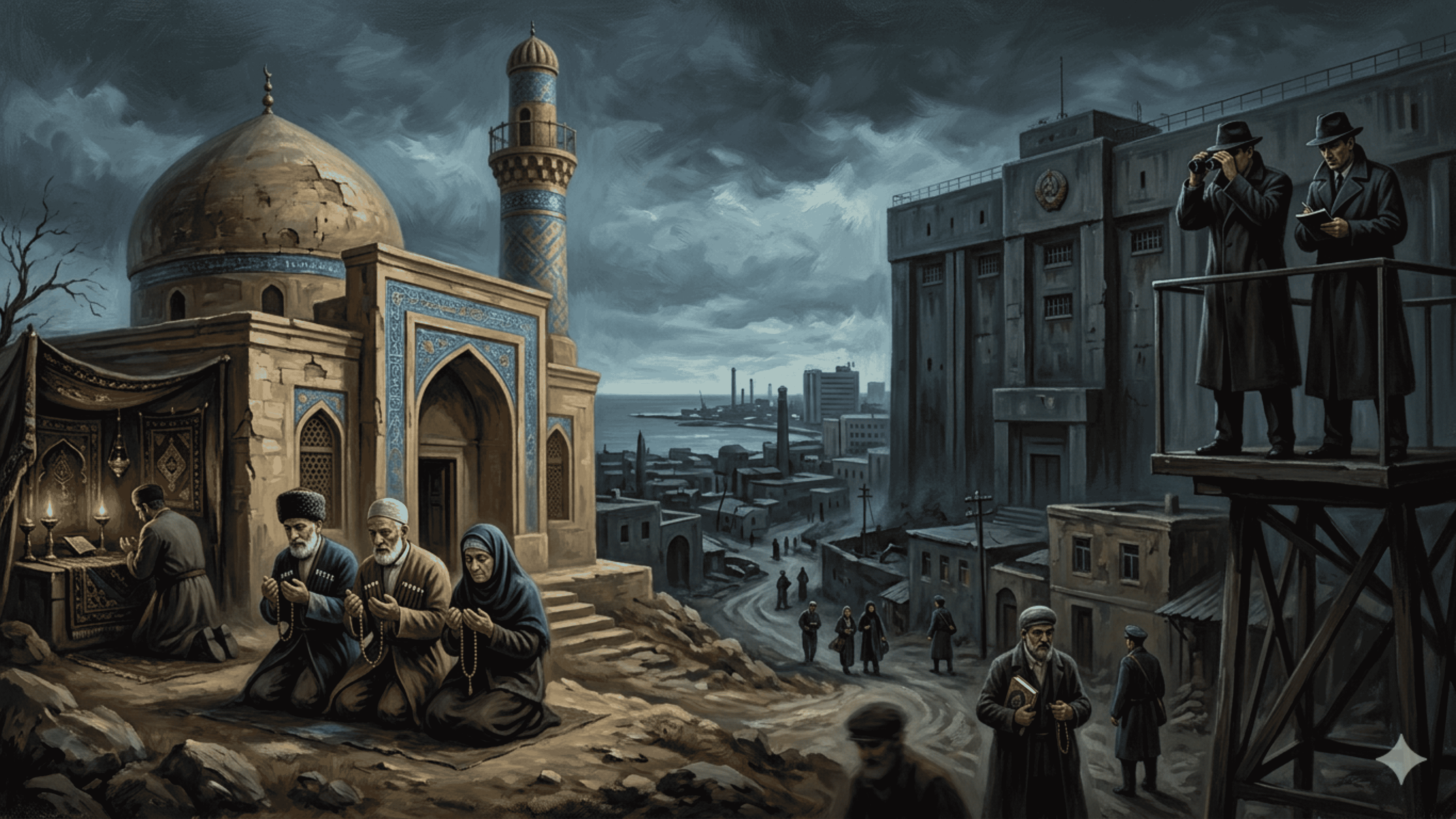
Avdiyev stated that in recent years the reactionary segment of the Muslim clergy had been exerting influence over socially vulnerable groups, instilling religious fanaticism. According to him, alongside the officially operating mosques in Baku, numerous illegal mosques were being opened in the regions of the republic, where religious rituals were conducted.
In his view, the Muslim clergy became particularly active during the mourning ceremonies of the month of Muharram, which were attended not only by the elderly but also by young people. He also noted an increase in the number of believers inflicting bodily harm on themselves during these rituals.
Avdiyev criticised the inaction of the relevant authorities in dealing with illegal mullahs, adding that within the next two years it was necessary to put an end to religious sectarian groups, “holy sites” that had become objects of pilgrimage, and illegal mullahs. However, this goal was not achieved.

An article by Azerbaijani historian Jamil Hasanli