'Operation Surah Yasin' — third article by Azerbaijani historian Jamil Hasanli






Religion in Azerbaijan: Operation Surah Yasin
In connection with Operation “Surah Yasin”, the KGB documented all the details. In the first days of January 1960, it sent detailed reports on the “successful” operation carried out on 26 December 1959 to the Central Committee and the KGB of the USSR.
The materials included photographs from the scene, showing the publication, distribution and sale of “Surah Yasin” during the operation. The annual report of the KGB of Azerbaijan for 1959 also covered the operation extensively.
In effect, a republican meeting of the KGB of Azerbaijan on 30 May 1959 also addressed the issue of religion. Alongside the republic’s first secretary Imam Mustafayev, Deputy Chairman of the USSR KGB, Major General Pyotr Grigoryev, took part in the session. Fyodor Kopylov delivered a detailed report, presenting the results of a recent all-Union KGB meeting held in Moscow and analysing the situation in Azerbaijan.
Jamil Hasanli is a well-known Azerbaijani historian, a Doctor of Historical Sciences and a professor.
He publishes a series titled “Religion in Soviet Azerbaijan: Between Allah and the KGB” on his Facebook page.
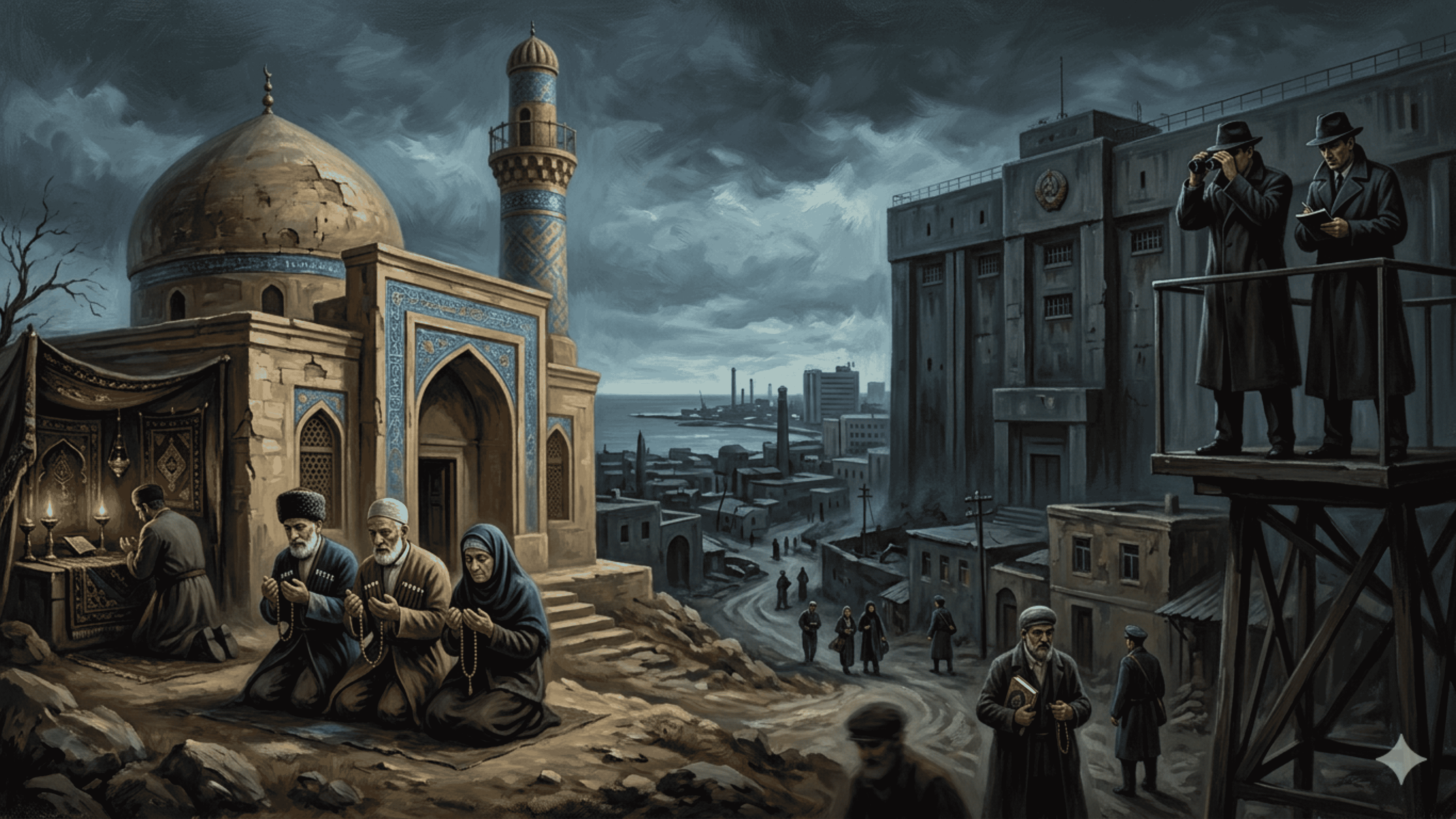
Fyodor Kopylov said that the activity of the Muslim clergy in the republic had increased significantly over the previous two to three years. He added that the KGB had intensified its operational and intelligence work in religious circles to curb what it described as the “hostile activity” of the most reactionary elements of the clergy.
In his report, Kopylov said that in the city of Kirovabad, the KGB arrested Molla Fathi Fatiyev for illegal religious activity and sentenced him to 10 years in prison. He was one of the Iranian democrats.
On the KGB’s “recommendation”, authorities published a brochure about Fatiyev and distributed it to mosques, including outside Azerbaijan. Newspapers also ran articles against him. At the KGB’s request, the Azerbaijani film studio produced an “exposé” film about Molla Fathi Fatiyev. Kopylov also stressed the need to combat the stilyagi youth subculture.
KGB department heads who spoke at the meeting provided further details about Fatiyev’s case. They said that the KGB in Kirovabad (now Ganja) had established through informants that Fatiyev carried out agitation among Iranian democrats and urged them to return to Iran. In practice, his 10-year sentence, formally linked to religious activity, related to these calls for southern democrats to go back to Iran.
Despite this, liberal reforms that began in the second half of the 1950s coincided with a strengthening of religion in the republic. In the summer of 1959, after the formation of a new leadership, the Fifth Congress of the Spiritual Administration of Muslims of Transcaucasia took place in October. Of the seven members elected to its supreme council, four represented Shia Muslims and three Sunnis.
The Shia representation included the head of the religious administration, Sheikh-ul-Islam Mirmohsun Hakimzade, Akhund of the Teze Pir Mosque Molla Aliaga Suleymanzade, Akhund of the Mashtaga mosque Mir Abdul Khalig Mir Abdul Bagizade, and Baku-based religious figure Haji Shykhali Yakhshybayov.
The Sunni representation included Deputy Chairman of the Spiritual Administration of Muslims of Transcaucasia, Mufti Sharif Efendi Velizade, Imam of the Batumi mosque Hasan Efendi Tarieladze, and Imam of the Tbilisi mosque Nurulla Efendi Bekyashev.
This composition reflected the confessional balance in Azerbaijan and neighbouring Transcaucasian republics. Research by the republic’s commissioner for religious affairs shows that in the mid-1960s, about three-fifths of the Muslim population in eastern, southern and western regions of Azerbaijan followed the Shia branch.
Followers of the Sunni branch mainly lived in northern areas near the border with the Dagestan ASSR. According to the commissioner, levels of religious observance in the western regions remained low. There were no registered or unregistered mosques in districts such as Kazakh, Tovuz, Shamkhor (now Shamkir District), Gedabek, Khanlar (now Goygol District) and Kasum-Ismailov (now Goranboy District).
The document noted that religious observance remained high in the southern regions of the republic. It linked this to the influence of Iran and identified Masally, Lankaran and Ordubad as key centres for training mullahs, reciters of mourning texts and rozakhans, both historically and at the time.
At the same time, it said that despite the numerical predominance of Shia Muslims, Sunni communities showed higher levels of religious practice. Mosques in Balakan, Zagatala and Nukha (now Sheki District), as well as in Goychay, Khachmaz and Baku’s mixed Ajdarbey Mosque, drew more worshippers than Shia mosques.
According to the commissioner’s observations, 80–90% of believers in the republic were over the age of 50, and about 60% of them were women. During mourning events in the month of Muharram, especially on the days of Ashura, women also made up the majority of mosque visitors.
The report added that members of the intelligentsia largely kept their distance from religious practices. Among visitors to the Teze Pir Mosque, it listed only one doctor and one petroleum engineer, both over 70 (see: a report by the commissioner for religious affairs under the Council of Ministers of the Azerbaijan SSR, Musa Shamseddinsky, titled “Characteristics of Religious Observance”).
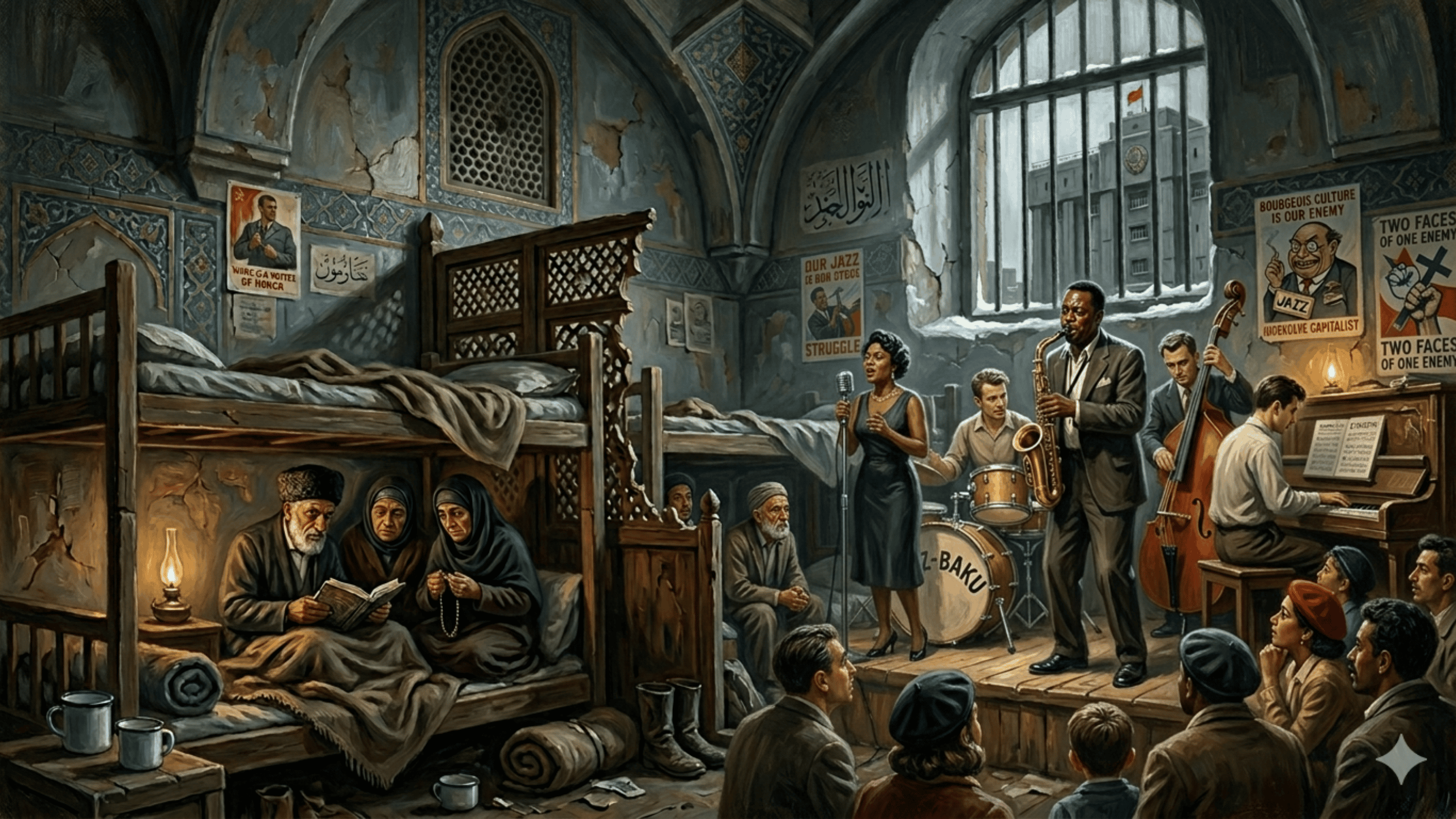
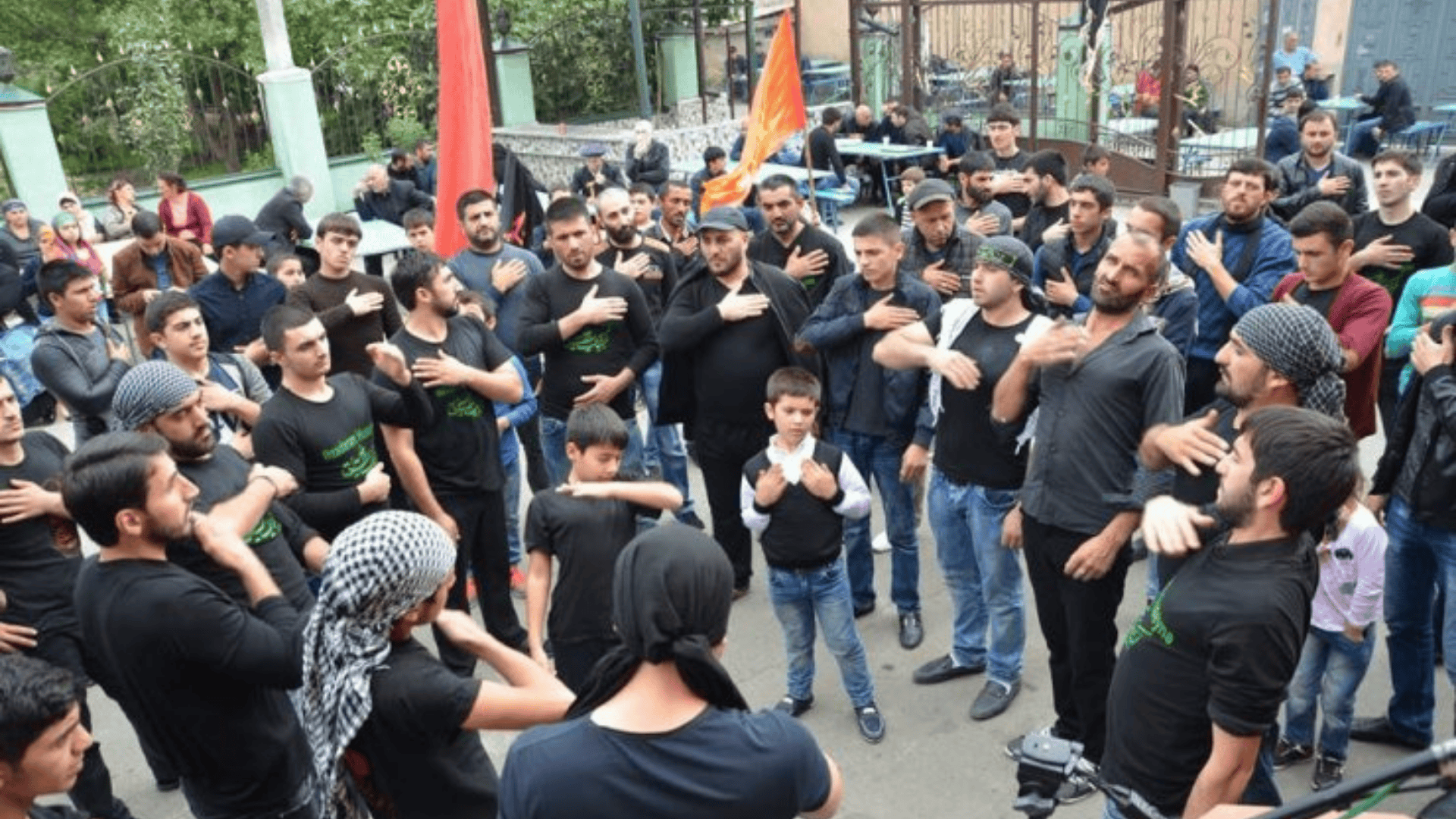
After the 20th Congress of the Communist Party of the Soviet Union, authorities eased restrictions on religious practices, and interest in religion grew. Veli Akhundov linked the rise in religiosity in the republic to the passive role of the intelligentsia in atheist propaganda. After years of bans, communities in several regions and Baku suburbs began to hold Muharram mourning events openly. In some places, up to 5,000 people gathered for Ashura ceremonies.
Such cases most often occurred in settlements in Nakhchivan, Norashen (now Sharur District), Ordubad and Julfa, as well as in Baku suburbs. During Ashura events in 1962, reports also recorded communists and Komsomol members among those who inflicted injuries on themselves, including striking their heads.
In May 1962, ahead of the Muharram mourning period, the Spiritual Administration of Muslims of Transcaucasia discussed the organisation of these events and issued instructions to akhunds, rozakhans and mosque committees.
The guidance stressed that “mourning for the martyrdom of Imam Hussein (peace be upon him) must take place only inside mosque buildings, in an orderly, calm and respectful setting, without violating religious or state laws; practices such as self-harm, chain flagellation and striking the bare chest must not be allowed; people who are not officially recognised clergy must not perform religious duties or recite mourning texts in mosques or elsewhere; believers must not face pressure to make large donations, and organisers must explain that such offerings are not obligatory; children, school pupils and young people must not attend mosques during mourning days or at other times.”
After the events of 1945–1946 in South Azerbaijan (a region of Iran populated by Azerbaijanis), Iran’s religious and political circles sought, despite closed borders, to strengthen Shia influence in Azerbaijan by all available means.
This became particularly visible during the liberalisation of the 1960s, both in the messaging of delegations arriving from Iran and in official correspondence. They aimed to keep Azerbaijan within Iran’s religious and ideological sphere of influence, relying on confessional solidarity.
A congratulatory telegram from Iran’s ambassador in Moscow to Sheikh-ul-Islam Mirmohsun Hakimzade on the occasion of the birth of Imam Ali read:
“To His Eminence, the pillar of Islam and the peoples, Sheikh-ul-Islam Sheikh Mohsun Hakimzade. I congratulate you, in your sacred presence, on the birth of the Commander of the Faithful and leader of the Shia, Ali (peace be upon him). I wish you continued health, long life and enduring dignity…”
Religion in Azerbaijan: Operation Surah Yasin