Armenia, Azerbaijan, and Georgia, top stories this morning
 Live


-
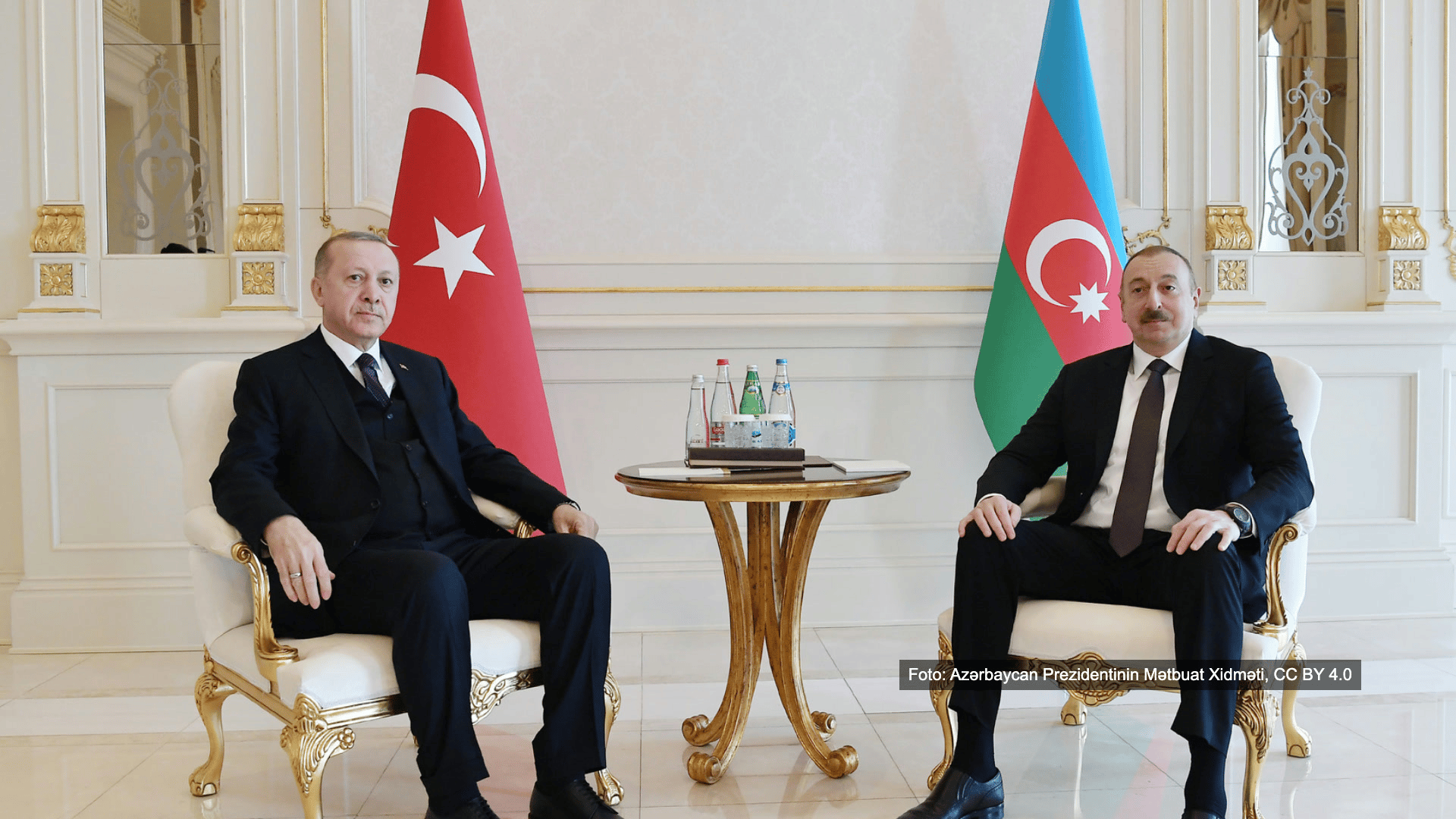
Friday, November 6, Azerbaijan. Turkish president to visit Baku on 8 November for Victory Day celebrations
-
Friday, November 6, Armenia. Nikol Pashinyan: "Armenia no longer has any interests in the [Russia-led] CSTO"
-
Friday, November 6, Georgia. Irakli Kobakhidze: The government would not repeal the Law on Transparency of Foreign Influence
-
Thursday, November 5, Armenia. Samvel Karapetyan, leader of the opposition Strong Armenia party, has been detained in Armenia.
-
Thursday, November 5, Georgia. European Commission: Georgia’s EU integration process remains stalled, situation worsens over past year
-
Wednesday, November 4, Azerbaijan. Three detained Meydan TV journalists in Baku have publicly harshly criticised the Berlin-based outlet’s management
-
Wednesday, November 4, Georgia.
-
Wednesday, November 4, Armenia. Nikol Pashinyan: "Armenia could realistically apply for European Union membership in 2027"
-
Tuesday, November 3, Azerbaijan. A series of incidents on the border with Iran, including the fatal shooting of a man attempting to cross illegally
-
Tuesday, November 3, Armenia. Nikol Pashinyan to attend 2026 EU Enlargement Summit organised by Euronews in Brussels
-
Tuesday, November 3, Georgia. The main hearing in the bribery case against convicted former Georgian Prime Minister Irakli Gharibashvili has begun
-
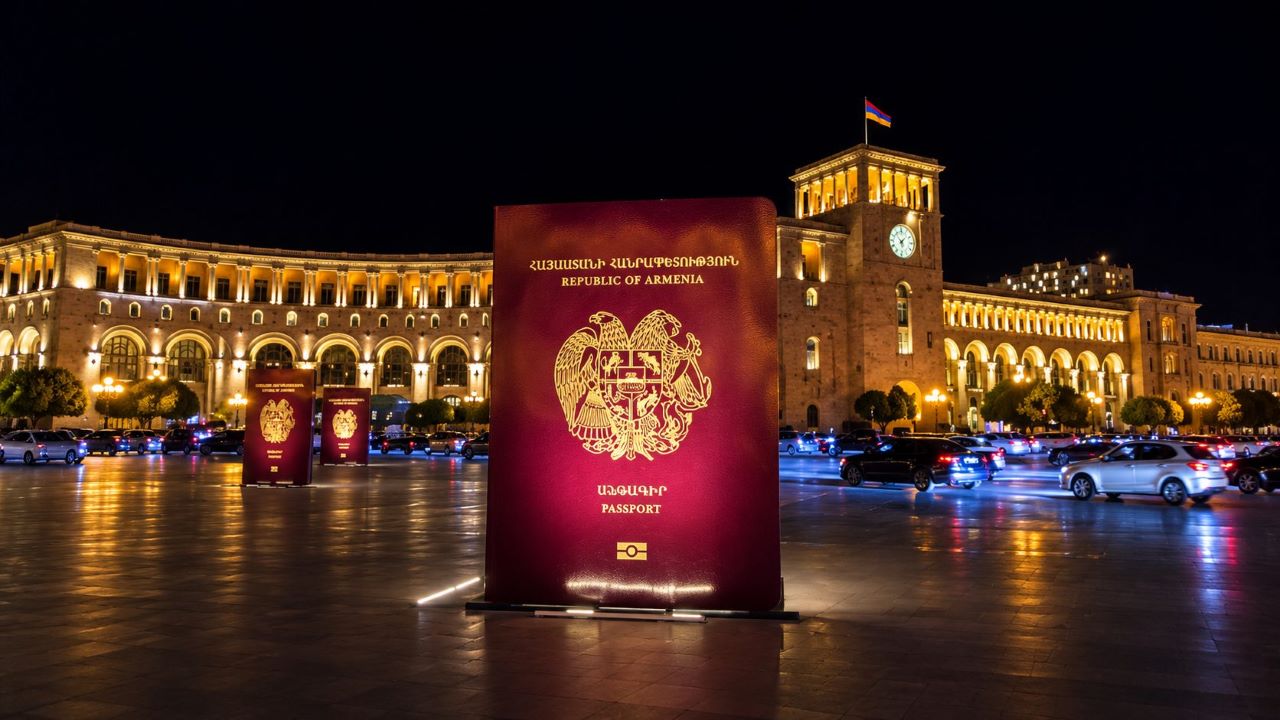
Monday, November 2, Armenia. Armenia launches new biometric passport system
-
Monday, November 2, Georgia. Protests erupt after TV footage shows mass burial of stray dogs; criminal investigation launched
-
Monday, November 2, Azerbaijan. Azerbaijan marked the first anniversary of the country’s first donor heart transplant, the first in the region
-
Top stories in Azerbaijan, Armenia, and Georgia from 26-30 October, 2026

-
Friday, November 6, Azerbaijan. Turkish president to visit Baku on 8 November for Victory Day celebrations
● Turkish President Recep Tayyip Erdoğan said he plans to visit Azerbaijan on 8 November to attend celebrations marking Victory Day, commemorating Azerbaijan’s victory in the 2020 Second Karabakh War. Erdoğan said relations between the two countries were rooted in shared history and culture, and that no obstacles could undermine their brotherhood.
Context: The statement comes amid continuing tensions between the two countries. Several Turkish politicians, including members of the ruling party, have strongly criticised restrictions on wearing hijabs in Azerbaijani schools. Many Turkish media outlets and social media users have also criticised Azerbaijan’s partnership with Israel. Azerbaijani officials have responded by asserting the country’s right to determine its domestic policies without external pressure. One of the latest signs of continuing tensions was President Ilham Aliyev’s absence from the Organisation of Turkic States summit in Ankara, despite a personal invitation from the Turkish president.
● Azerbaijan’s state oil company SOCAR has signed a definitive agreement with US-based Comstock Resources to acquire stakes in US natural gas assets for a total of $1.65 billion. SOCAR will acquire a 20% stake in the Legacy Haynesville project, 15% in Western Haynesville and a 15% stake in Pinnacle Gas Services, a gas infrastructure company partly owned by Comstock. Operational management will remain with the US company. After five years, SOCAR’s stake in Western Haynesville is due to fall to 7.5%, once its investment has achieved a 15% return. The deal is expected to close by the end of the year, subject to the necessary approvals.
● Ali Karimli, the detained chairman of Azerbaijan’s Popular Front Party, has received the 2026 Magnitsky Human Rights Award in the Outstanding Opposition Politician category. The organisers recognised his longstanding work in support of democratic reforms, anti-corruption efforts and civil liberties in Azerbaijan. Karimli was arrested in November 2025 on charges of attempting to overthrow the government.
● Prosecutors have requested a nine-year prison sentence for Bashir Suleymanli, head of the Institute for Civil Rights, in the NGO case. Like others involved in the case, he is charged with official forgery, money laundering and abuse of office. The prosecution alleges that the case involves a foreign grant worth 148,000 manats (approximately $87,000). Suleymanli says the funds were legally obtained, all taxes were paid to the state budget, and the money was spent on providing legal assistance to citizens, including internally displaced people, and monitoring elections. The next hearing is scheduled for 19 November.
Context: Bashir Suleymanli is one of nearly 20 civil society representatives prosecuted since the NGO case, concerning cooperation with international donors, was reopened in 2025. Several people have already received prison sentences, including suspended terms, while trials of others are ongoing. All defendants deny the charges and say they have committed no crimes.
● Relatives of investigative journalist Hafiz Babali, who was sentenced to nine years in prison in the AbzasMedia case, say he has not received essential medication for a month and a half. The 55-year-old journalist has vascular disease and a third-degree visual disability. He has also been unable to obtain medication prescribed by his doctor to reduce eye pressure. Babali informed his lawyer, while the head of the prison medical unit attributed the shortage to an ongoing procurement process, Meydan TV reports.
● A Finnish court has sentenced an Azerbaijani crew member of the Russian cargo ship Fitburg to two years and ten months in prison for damaging undersea cables in the Baltic Sea. The ship’s Russian captain received a three-year-and-six-month sentence. The court found that the Fitburg’s anchor had been dragged approximately 130 kilometres along the seabed, damaging two telecommunications cables between Finland and Estonia on 31 December 2025. Both defendants were also ordered to pay approximately €1.9 million in compensation.
● Armenia’s Investigative Committee Chairman Artur Poghosyan said the Azerbaijani serviceman who illegally crossed into Armenia on 1 October and wounded a woman in her home had no intention of killing anyone. According to Poghosyan, Musayev gave testimony about the route he took to enter Armenian territory, the terrain and the circumstances of the incident. The head of the committee declined to disclose further details of the questioning, citing the confidentiality of the preliminary investigation.
● Azerbaijan’s service of Radio Free Europe/Radio Liberty examines a new dispute along the Armenian-Azerbaijani border. Some Armenian media outlets claim Azerbaijani troops are building roads on strategic heights, damaging forests in the Shikahogh nature reserve and near the village of Nerkin Hand, in the vicinity of the Armenian town of Kapan. Local media reports say residents are leaving the village over security concerns. Azerbaijani military experts, meanwhile, argue that the work does not involve large-scale deforestation but the construction of logistical roads needed to supply military positions during winter, Azadliq Radiosu reports.
● Azerbaijani blogger Turab Zeynalov, who lives in Moscow, has told the state news agency APA about his visit to Armenia in September. He travelled to Yerevan to attend the wedding of an Armenian friend and spent 10 days in the country. He said he was questioned at the airport for about three hours before being allowed to enter. According to Zeynalov, he was treated well in Yerevan. However, he said he could not guarantee the safety of Armenian friends if they wanted to visit Baku.
● Trade between Azerbaijan and the UK increased 3.9-fold in the first months of this year compared with the same period last year. Azerbaijani exports to the UK rose approximately 14.4-fold, while imports fell by 66.7%. The UK became Azerbaijan’s third-largest trading partner during this period.
● Financing for Azerbaijan from international financial institutions increased 4.4-fold year on year in the third quarter, reaching $185 million. The growth was driven by guarantee operations involving the European Bank for Reconstruction and Development, the Asian Infrastructure Investment Bank, the OPEC Fund and the Black Sea Trade and Development Bank.
● A meeting of the Azerbaijan-Ukraine intergovernmental commission and an Azerbaijan-Ukraine business forum were held in Uzhhorod, western Ukraine. Ukrainian Energy Minister Denys Shmyhal invited Azerbaijani companies to participate in Ukraine’s reconstruction projects. He proposed preparing logistics routes from Azerbaijan through Ukraine to Europe and across the Black Sea in advance, so they could be launched once the war ends. Azerbaijan’s Energy Minister Parviz Shahbazov said bilateral trade had grown by 10.5% in the first eight months of the year, with Azerbaijani exports to Ukraine up 17%. Total investment between the two countries had reached $513.5 million.
● The first UN international summit on innovation in public administration was held in Baku. The event was jointly organised by the UN Department of Economic and Social Affairs and Azerbaijan’s State Agency for Public Service and Social Innovations under the President.
● A delegation from Georgia’s National Defence Academy visited Baku under the bilateral military cooperation plan for 2026. The two sides discussed opportunities to expand cooperation in military training.
● Azerbaijan’s parliament, the Milli Majlis, has passed a bill at first reading proposing fines for servicemen who leave their military units without authorisation or report late for duty. For unauthorised absence lasting between one and 10 days, the proposed penalty is a fine of 200–300 manats (approximately $120–180) or up to 15 days of administrative detention. Repeat offences within a year would carry fines of 300–500 manats (approximately $180–300) or detention ranging from 10 days to one month. Military experts are divided: some see fines as an alternative to detention, while others warn that they could weaken military discipline.
● The categories of people eligible for internally displaced person (IDP) status have been expanded. Men who married women from districts previously occupied by Armenia will now also qualify, provided the marriage took place before the occupation and the men had local registration. Their children will also be eligible. Previously, this right applied only to women and their children. Other amendments concern adopted children and children born after the occupation of the relevant districts.
● Azerbaijan has begun work on establishing its first marine national park. According to the Biodiversity Conservation Service, the planned protected area in the Caspian Sea will be monitored through patrols aimed at preventing illegal fishing.
● Azerbaijan’s parliament is considering amendments to the Labour Code. The proposals include introducing hourly pay for workers on short-term employment contracts and those working no more than 20 hours a week. The Cabinet of Ministers will determine which sectors are covered, with agriculture and catering among the possible areas. Other proposed amendments include a ban on replacing the minimum annual paid leave entitlement with financial compensation.
● Azerbaijan’s draft state budget for next year provides for increases in several social benefits. Payments under the compulsory state social insurance system are set to rise by 38% overall. The one-off childbirth allowance is expected to increase from 600 to 1,500 manats (approximately $353 to $882), while the monthly childcare allowance for children under three would rise from 37 to 100 manats (approximately $22 to $59).
● In 2027, the government plans to provide 600 apartments free of charge to families of fallen servicemen and people with war-related disabilities. More than 30 million manats (over $17.6 million) is also earmarked for vehicles for disabled veterans and the purchase of rehabilitation equipment.
● Sales of a batch of Ukrainian Luks Golden Ratne spread have been suspended after laboratory tests found the product did not meet the required standards. The spread was manufactured by Ratnivskyi Molokozavod and imported by Qədiroğlu. Azerbaijan’s Food Safety Agency ordered the batch to be withdrawn from sale and notified Ukrainian authorities of a temporary restriction on all exports from the manufacturer.
-
Friday, November 6, Armenia. Nikol Pashinyan: "Armenia no longer has any interests in the [Russia-led] CSTO"
● The government has approved a proposal to sign an agreement with the European Union allowing Armenia to participate in the Customs and Fiscalis cooperation programmes. It said that aligning the country’s tax and customs systems with European standards would strengthen economic sovereignty and signal that Armenia is pursuing transparent economic policies in line with Western standards.
● Foreign Minister and Minister of Economy Ararat Mirzoyan said: “I believe it is entirely realistic that in 2027–2028 we will be in a position to apply for EU membership.”
● Armenia has moved a step closer to visa-free travel to the European Union, European Commissioner for Enlargement Marta Kos wrote on Facebook. She said that, with EU support, Armenians would now be able to obtain new biometric passports, making border checks faster and travel easier.
● Prime Minister Nikol Pashinyan said he plans to travel to Antalya, Turkey, to attend the UN-backed COP international climate conference.
● Nikol Pashinyan commented on Armenia’s future participation in the Russia-led Collective Security Treaty Organisation (CSTO). “I want to state once and for all: our interests related to the CSTO have been exhausted. We no longer have any interests related to the CSTO,” he said.
Context: Armenia froze its participation in the CSTO two years ago. It has since stopped taking part in the organisation’s activities and paying membership fees. The move was a response to the alliance’s failure to provide assistance when Azerbaijani forces entered Armenia’s sovereign territory. Several such incidents took place in 2021–2022. The CSTO justified its failure to intervene by saying that the border with Azerbaijan had not been delimited.
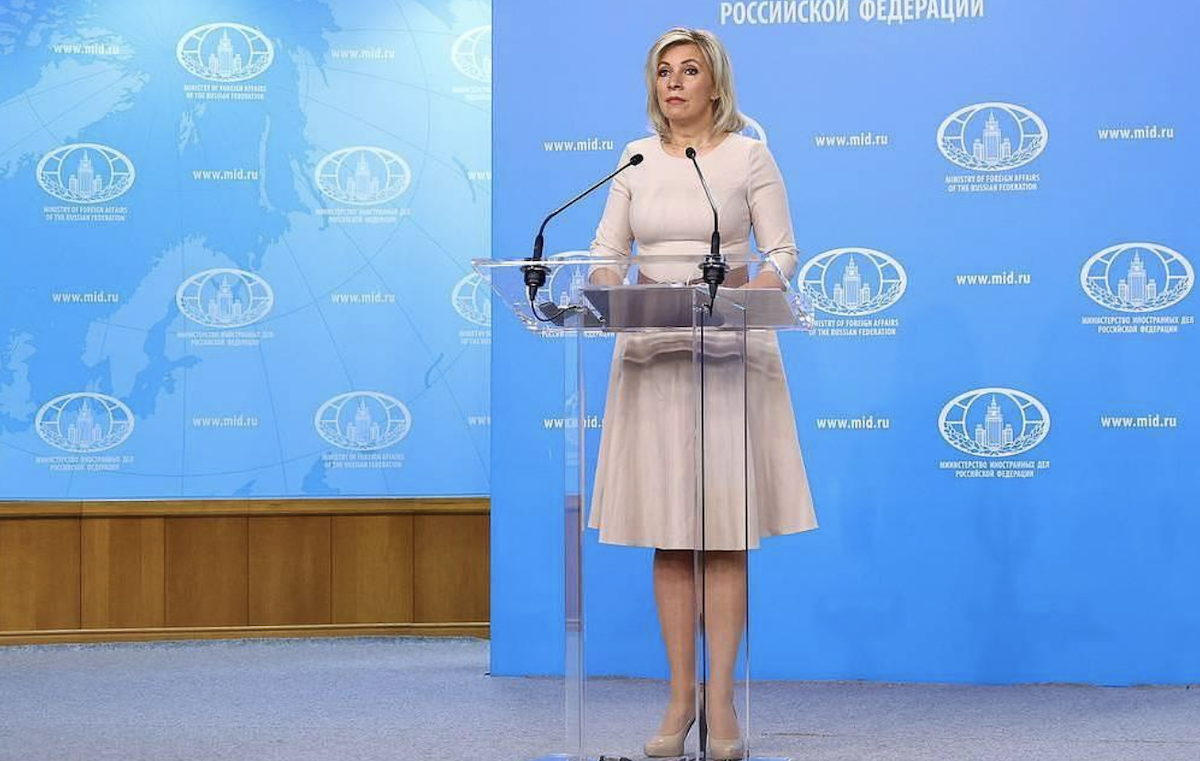
● Russian Foreign Ministry spokeswoman Maria Zakharova has again criticised Nikol Pashinyan. “We have heard another set of verbal acrobatics, another series of fabrications by the Armenian prime minister claiming that Yerevan supposedly does not have to choose between EU membership and the Eurasian Economic Union (EAEU), the Russia-led economic bloc. We still do not understand the reasoning of the official Yerevan. Even ordinary common sense suggests that one should first ask the population’s opinion and only then take action, not the other way around,” Zakharova said.
● “We should have gained even greater benefits from the EAEU, but that has not happened. Armenia should not be giving 450 and receiving 250. It would be fair for Armenia to receive 900 while contributing 450,” Economy Minister Gevorg Papoyan told journalists. He said Armenia had joined the EAEU on “shameful terms”. “Certain circles trampled on the interests of the people and the state for decades just to have someone pat them on the back somewhere. When negotiations to join the union were under way, negotiators had the opportunity to set conditions. Once we joined on certain terms, however, the scope for changing them became significantly narrower, because all five countries must reach consensus. For example, our EAEU partners do not agree to increasing Armenia’s share,” Papoyan said.
● A closed-door meeting discussing the border incident in which an Azerbaijani serviceman illegally crossed into Armenia, entered a residential home and shot a local woman has concluded. Vilen Gabrielyan, head of the National Assembly’s Standing Committee on Defence and Security, said law enforcement officials had provided information about the incident. “Essentially, this is an ordinary criminal incident involving an illegal border crossing and the use of firearms. What makes it unusual is that the perpetrator is a citizen of another country,” Gabrielyan said.
● MPs from the opposition, pro-Russian Strong Armenia bloc, refused to attend the meeting. Bloc MP Vahagn Vardanov said there was “no need for a meeting with a terrorist’s lawyer”, referring to the head of the Investigative Committee.
● Samvel Karapetyan, a pro-Russian businessman and leader of the Strong Armenia party, has been remanded in custody for one month (video below). Reports say his actions caused damage of 64.5 billion drams to Electric Networks of Armenia, a strategically important company. Public criminal proceedings have been launched against Karapetyan and 35 other people in connection with the case.
● A court has extended the detention of businessman Gagik Tsarukyan, leader of the pro-Russian opposition Prosperous Armenia party, by three months. He was arrested on 7 July on charges of large-scale fraud and money laundering. A separate public criminal case was subsequently opened against him on charges of tax evasion. More details here.
● Nikol Pashinyan said: “In the draft of the new Constitution, we are paying particular attention to the goal of relations between Armenia and the Diaspora.”
● Foreign Minister Ararat Mirzoyan said there were currently no concrete agreements on reciprocal visits by the foreign ministers of Armenia and Azerbaijan.
● Turkey has launched a tender for the restoration of the historic Ani Bridge near the Armenian border, and an Armenian company will sign a contract with the winning bidder, Prime Minister Nikol Pashinyan said at a briefing.
Context: The bridge was built in the 10th century over the Akhuryan River in Turkey’s Kars province, along the Great Silk Road, and served as an important trade crossing. On 4 May this year, Armenian and Turkish representatives signed an agreement in Yerevan to jointly restore the bridge as an important symbolic step towards normalising relations between the two countries.
● FLYONE ARMENIA will launch flights on the Yerevan–Berlin–Yerevan route in June 2027.
● Reports have once again circulated on social media and in the media claiming that a minor was given a sweet and subsequently became unwell. It was suspected that the sweet contained drugs. Ministry of Internal Affairs spokesperson Narek Sargsyan said the suspicions had not been confirmed, but it emerged that the teenager had consumed alcohol.
View this post on Instagram -
Friday, November 6, Georgia. Irakli Kobakhidze: The government would not repeal the Law on Transparency of Foreign Influence
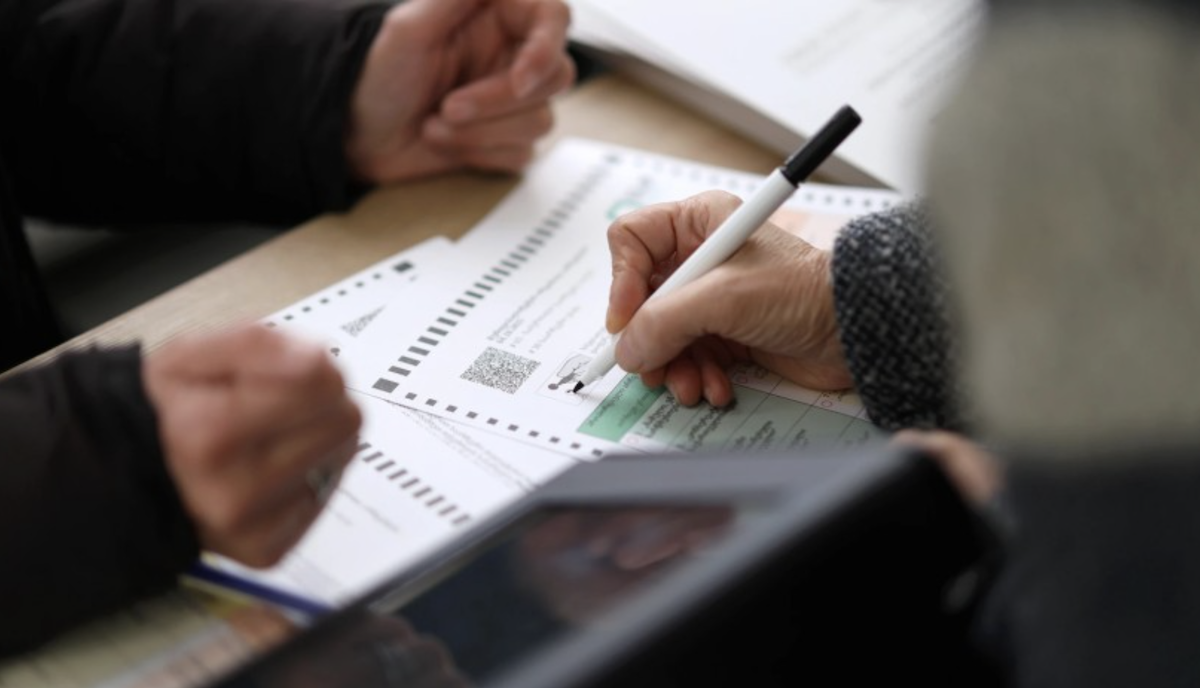
● Six MPs from the ruling party have submitted draft amendments to the Election Code. Under the proposed changes, the Central Election Commission’s (CEC) final election results protocol could only be challenged if it fails to reflect, or incorrectly reflects, data from polling station records or court rulings. The bill would abolish the mandatory recount of votes at five polling stations, transfer responsibility for determining the final results from district election commissions to the CEC, and shorten the deadline for announcing results from 26 to 15 days. According to NGOs ISFED, GYLA and Transparency International Georgia, the ruling party is effectively banning challenges to election results. Prime Minister Irakli Kobakhidze responded: “Nothing is prohibited. All polling station protocols can be challenged.” The parliamentary committees on legal affairs and regional policy are scheduled to discuss the bill on 6 November. Read more here
● Prime Minister Irakli Kobakhidze said after an international conference marking the 30th anniversary of Georgia’s Constitutional Court that he had information about two European ambassadors who had separately visited the court and requested reports on specific ongoing cases. He did not identify the ambassadors.
● Irakli Kobakhidze criticised the European Commission’s enlargement report, saying it was not based on facts and “is a problem for its authors”.
● Irakli Kobakhidze said the government would not repeal the Law on Transparency of Foreign Influence, which has drawn strong criticism from both the opposition and Western partners. Western governments and the EU have repeatedly said the law undermines independent media, civil society and citizens’ political rights more broadly.
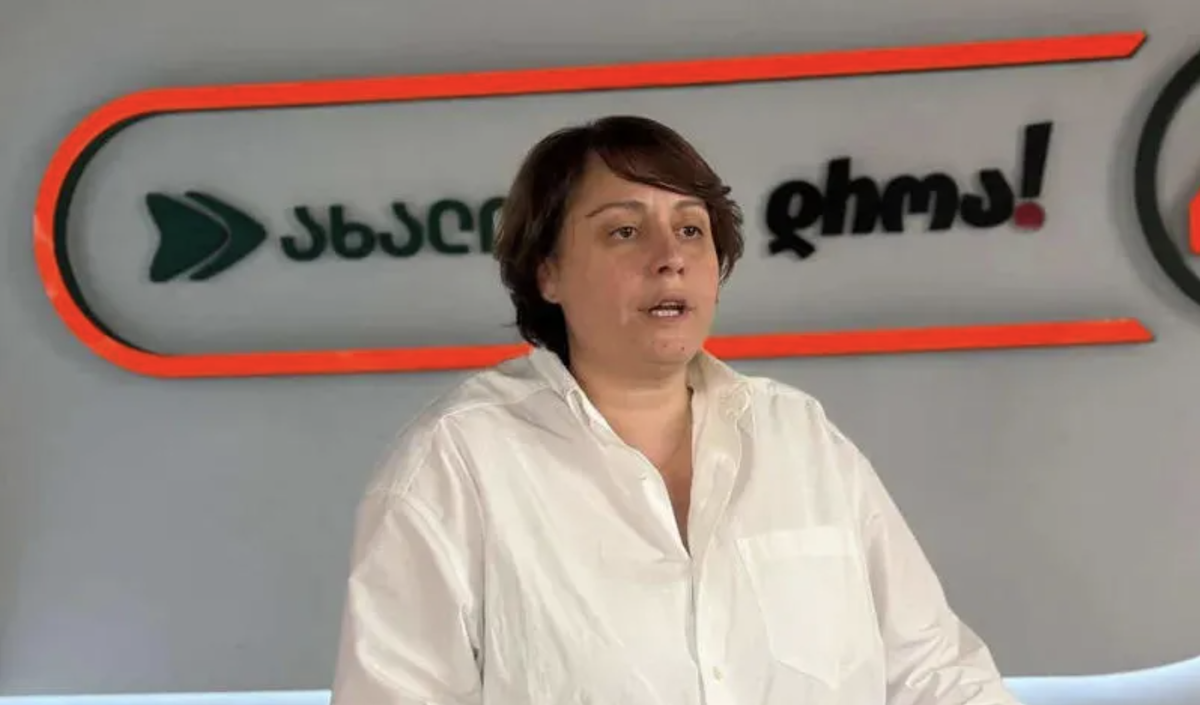
● Russia’s Prosecutor General’s Office has designated Georgia’s Droa party an “undesirable organisation”. Moscow said the party promotes Russophobic views, calls for the restoration of visa requirements for Russian citizens and an end to direct flights, and accuses Russia of occupying Abkhazia and the Tskhinvali region (South Ossetia). Droa responded that it was glad to have another opportunity to repeat that “Abkhazia and Samachablo (South Ossetia) are Georgia” and that “the billionaire Ivanishvili’s regime is Russian”. The party’s leader, Elene Khoshtaria, is in prison over allegations that she wrote an inscription on an election poster of Tbilisi’s mayor. Read more here
● Parliamentary Speaker Shalva Papuashvili has sharply criticised EU Ambassador to Georgia Paweł Herczyński over his remarks that “if Georgia wants to join the European Union, it must adopt European laws. It is the EU that assesses the progress made by a candidate country, not the other way around.” Herczyński made the comments following the publication of a critical European Commission report on democratic backsliding in Georgia. Papuashvili advised the ambassador to “lower his tone” and address the government in a manner befitting a diplomat. He added that as long as he remained parliamentary speaker, he would not allow “a foreigner to become Georgia’s judge”.
● The government has returned a revised version of the 2027 state budget draft to parliament. The parliamentary bureau reviewed the document within the deadlines set by the Budget Code and forwarded it to the Finance and Budget Committee. According to First Deputy Speaker Gia Volski, parliamentary committees had made “certain comments and proposals” regarding the draft.
● Senior Russian official Dmitry Gladsky has been appointed so-called deputy prime minister of the de facto government of the Tskhinvali region (South Ossetia). Local media report that he was appointed by the region’s de facto president, Marat Kambolov. Gladsky has worked in Russia’s Belgorod region since 2021, most recently as first deputy governor.
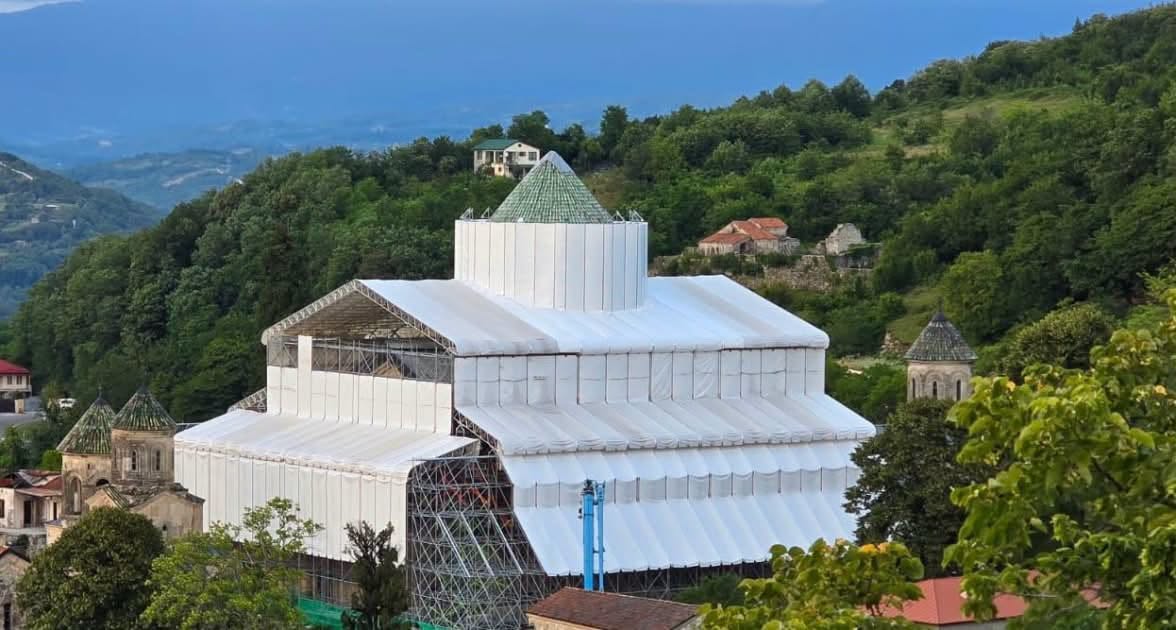
● Culture Minister Maia Bitadze said the condition of the historic Gelati Monastery (pictured below) in Georgia’s Imereti region was stable. She said the church, which had suffered from moisture damage for years, was now protected by a single temporary roof and a temporary drainage system. Critical sections of the wall paintings had been reinforced, while the mosaics remained in good condition. Restoration of the monastery complex is continuing in stages with state funding.
● All motor vehicle traffic has been temporarily banned on the Tsana–Lasdili and Ushguli–Lasdili road sections due to heavy snowfall and dense fog. According to the Roads Department, the restrictions affect kilometres 141–151 of the Kutaisi–Tskaltubo–Tsageri–Lentekhi–Lasdili road and kilometres 181–189 of the Zugdidi–Jvari–Mestia–Lasdili road
-
Thursday, November 5, Armenia. Samvel Karapetyan, leader of the opposition Strong Armenia party, has been detained in Armenia.
● Armenian businessman Samvel Karapetyan, founder of the Tashir Group and leader of the opposition Strong Armenia party, has been arrested. Criminal proceedings have been launched against him and 35 other people over alleged large-scale financial crimes involving Electric Networks of Armenia (ENA), including causing substantial financial damage to the company, misappropriating entrusted property and large-scale money laundering.
The alleged damage to ENA is said to exceed 64.585 billion drams (more than $180 million).
On November 4, the Investigative Committee had carried out searches at 65 addresses across the country, including the homes of Karapetyan and his nephew Narek Karapetyan, who leads the Strong Armenia parliamentary faction.
● Prosecutors asked the court to remand nine people in custody, including Samvel Karapetyan. His supporters and party colleagues gathered outside the courthouse, chanting his name and even dancing.
The judge has since ruled that Karapetyan should be held in pre-trial detention for one month.
● “Samvel Karapetyan owned Electric Networks of Armenia. A person cannot commit abuses in their own company,” Narek Karapetyan told reporters.
He compared the case to a newspaper owned by the family of Prime Minister Nikol Pashinyan, arguing that its owner could not be accused of abusing the publication simply because they controlled it.
“How can anyone question people’s ability to think logically? It is his own company; he owns 100% of it. What abuses by the owner are we talking about?” he said.
● Opposition figures have described Karapetyan’s arrest as political persecution and an attempt to put pressure on the wider opposition, which opposes the adoption of a new constitution.
“They are trying to push through Aliyev’s constitution by detaining and arresting people. That is a fact,” said Mesrop Manukyan, an MP from the Armenia Alliance.
Narek Karapetyan, head of the Strong Armenia parliamentary faction, also linked his uncle’s arrest to the party’s position on the proposed constitution. He claimed that Prime Minister Nikol Pashinyan was trying to force the party into a deal. According to Karapetyan, the prime minister could offer to secure his uncle’s release in exchange for the party agreeing to a referendum on the new constitution.
***Pashinyan has said that a draft of the new constitution is ready and will be published in November. A referendum would require the support of two-thirds of MPs, a threshold the ruling party cannot reach on its own. The government is therefore looking for support from opposition lawmakers.
The prime minister has repeatedly argued that constitutional changes are in Armenia’s own interests. The opposition, however, believes the initiative is driven by demands from Azerbaijan, which has called for changes to Armenia’s constitution as a precondition for signing a peace agreement. Baku argues that the current constitution contains territorial claims against Azerbaijan.
The constitution itself does not explicitly make such claims, but it refers to Armenia’s Declaration of Independence, which speaks of the reunification of Armenia and Nagorno-Karabakh. It is already known that this reference will not be included in the new constitution.
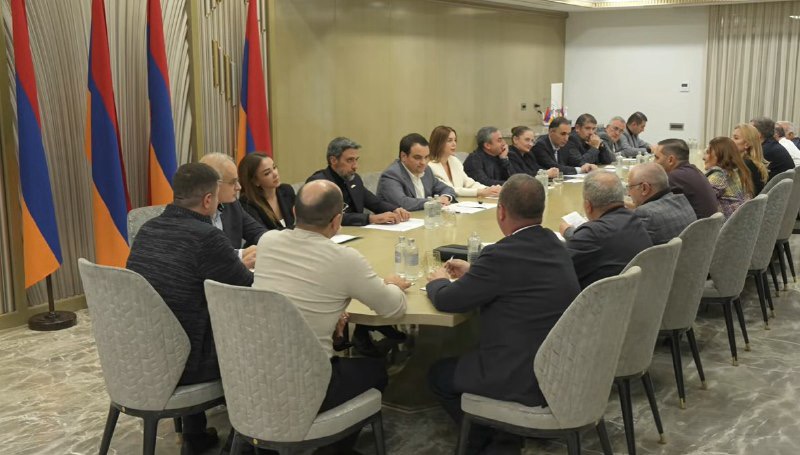
● The previous evening, representatives of ten opposition political forces met at Samvel Karapetyan’s home. They subsequently issued a joint statement calling for nationwide unity.
Their declared goals include rejecting what they call “Aliyev’s constitution” and opposing plans to put it to a referendum; achieving peace without unilateral concessions or territorial losses; protecting national identity and the Armenian Apostolic Church; and restoring democratic freedoms and rights.
The signatories include both opposition parliamentary factions – Strong Armenia and the Armenia Alliance, led by former president Robert Kocharyan – as well as the Republican Party of Armenia, headed by former president Serzh Sargsyan, and Prosperous Armenia, founded by businessman Gagik Tsarukyan.
Tsarukyan is under arrest on charges of large-scale fraud, money laundering and extortion. The opposition forces that signed the statement are generally regarded as pro-Russian.
● “Armenia, too, is to be turned into an anti-Russia. Nobody is interested in Armenia itself. What interests everyone is confrontation with Russia and China. What matters to them are geopolitical balances and geopolitical interests,” said Dmitry Kiselyov, director general of the Russian state media group Rossiya Segodnya.
● “Europe continues stubbornly to dream of expansion. It intends to use Ukraine and Moldova to the very end, draw Armenia into its orbit and take unfriendly steps towards a number of other countries,” said Alexander Venediktov, deputy secretary of Russia’s Security Council
He also accused NATO of expanding eastwards by admitting Finland and Sweden, despite what he described as earlier promises not to do so. Venediktov said that in Brussels the remaining combat-capable population of Ukraine was being viewed as a “penal battalion” for future European armed forces.
He was speaking at a session on national security concepts and doctrines in Greater Eurasia, held in Minsk.
● Prime Minister Nikol Pashinyan has presented Armenia’s State Award for Global Contribution to High Technology to Cam Ghaffarian, executive chairman of X-energy, Intuitive Machines, Axiom Space and Quantum Space.
Pashinyan recalled that Ghaffarian had watched the first Moon landing as a child in 1969, an experience that inspired him to pursue science and space technology.
“More than five decades later, in 2024, the Odysseus spacecraft, developed by Intuitive Machines, which you co-founded, landed on the Moon, becoming the first American spacecraft to do so in 52 years,” Pashinyan said. “This is a remarkable story of how a childhood dream can become a scientific and technological achievement of global significance.”
● A ruling by the European Court of Human Rights (ECHR) in the case of V.T. and Others v. Azerbaijan, concerning the killing and torture of Armenian Major Aik Toroyan during the April 2016 war, has become final.
The court found violations of Article 2 of the European Convention on Human Rights, which protects the right to life, and Article 3, which prohibits torture.
It also found that the rights of the victim’s relatives — his parents and sister — had been violated because of the severe mental suffering caused by the killing, the abuse of his body and the refusal to hand over his remains.
● Armenia has begun issuing biometric passports and identity cards to its citizens, the EU Delegation to Armenia has announced.
“The introduction of this system is a cornerstone of the comprehensive reform of Armenia’s passport and identity document system, bringing Armenia and the European Union even closer,” the delegation said.
-
Thursday, November 5, Georgia. European Commission: Georgia’s EU integration process remains stalled, situation worsens over past year
● The European Commission has presented its 2026 Enlargement Package. According to its report on Georgia, the country’s EU accession process remains suspended and the situation has deteriorated compared with last year. The authorities have failed to meet the nine steps set out for progress towards membership. The Commission maintains its assessment that Georgia is a candidate country in name only. Attempts to ban opposition parties are described as a threat to the foundations of democracy, while judicial independence is said to have been seriously undermined. The report also calls for the release of all people detained arbitrarily. EU Ambassador to Georgia Pawel Herczynski, who formally handed the report to the authorities, said that banning all opposition parties that crossed the parliamentary election threshold would be “unprecedented in the history of the Council of Europe”. Read more
● EU Enlargement Commissioner Marta Kos and the EU’s foreign policy chief Kaja Kallas have commented on Georgia’s prospects. Speaking in the European Parliament, Kos said the country’s accession process was de facto suspended, but its European path remained open if the government changed course. Kallas said Georgia’s leadership was on a “collision course” with the EU. She added that EU foreign ministers would discuss the situation in Georgia in depth in January. Asked about possible sanctions, Kallas said all options were currently being considered. Kos noted, however, that sanctions were a matter for member states and that there was not enough support among the 27 countries to impose them.
● The European Commission says Georgia has made almost no progress on recommendations linked to maintaining visa-free travel to the EU, and that the situation has worsened. Since 6 March 2026, holders of Georgian diplomatic, service and official passports have been subject to a 12-month suspension of visa-free travel under the EU’s visa suspension mechanism. An enhanced dialogue held in June produced no progress. The report also says Georgia’s alignment with EU foreign policy statements and restrictive measures has fallen from 40% to 38%.
● Georgia’s ruling team has rejected the European Commission’s report as unacceptable. Nikoloz Samkharadze, chairman of parliament’s Foreign Relations Committee, said it could not be considered realistic or impartial because the Commission had no understanding of what the Georgian state was doing. Foreign Minister Maka Bochorishvili said Georgia had provided the Commission with the necessary information, but that the lack of dialogue prevented a proper assessment.
● Murtaz Zodelava and Lasha Beridze, convicted over the events of 4 October 2025, have been released from prison under plea agreements with the prosecution. Tbilisi City Court had initially sentenced both men to seven years in prison. Under the agreements, their sentences were reduced to three years and one month: one year and one month to be served in prison, with the remaining two years suspended. Two other defendants have reached similar agreements and are due to be released on 6 and 16 November.
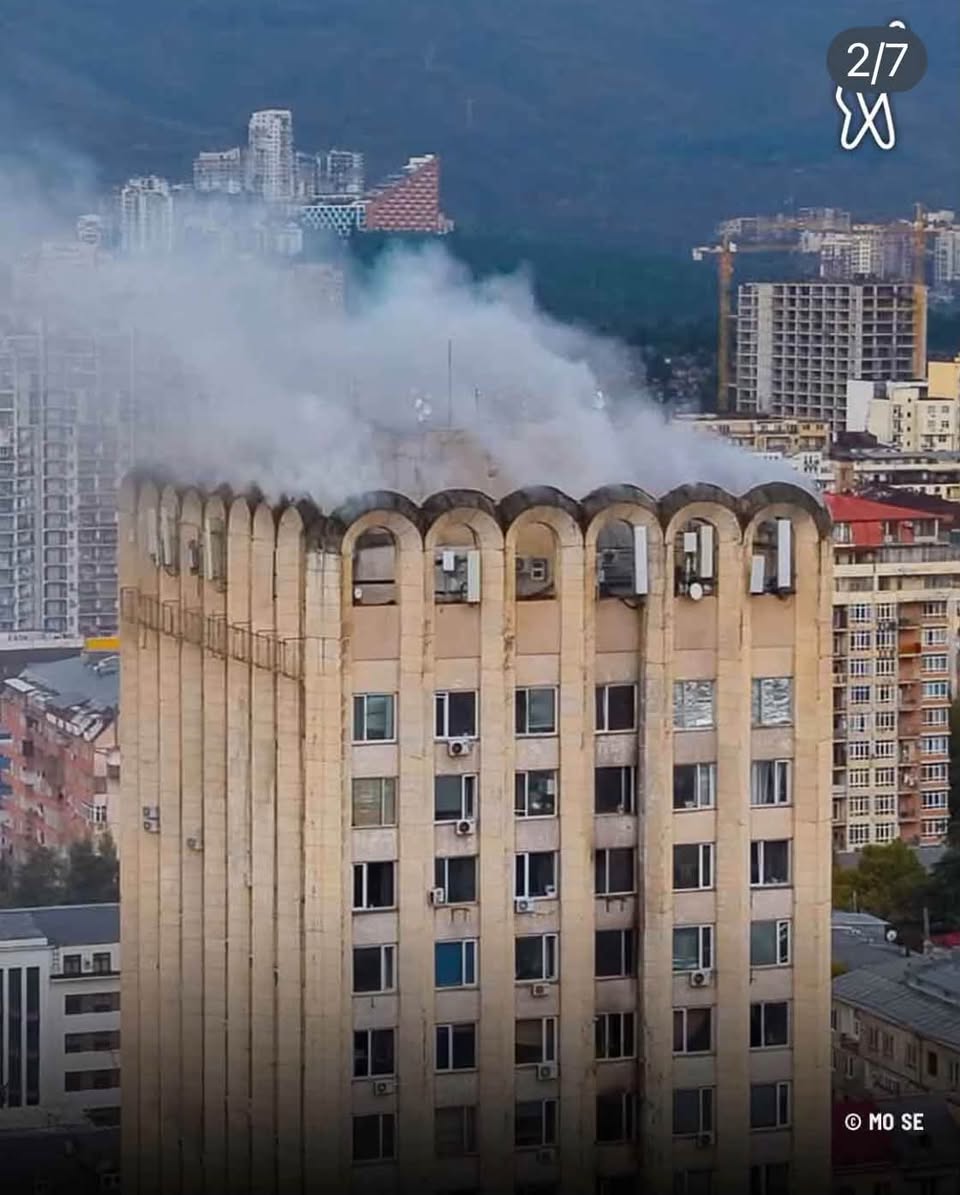
● A fire broke out at the Delisi business centre in Tbilisi, which houses the office of opposition television channel Formula. Smoke initially prevented some staff from leaving the building, and they were evacuated in stages. Teimuraz Mgebrishvili, head of the Emergency Management Service, said 25 fire engines and around 150 firefighters and rescuers had been deployed. No one was injured. The fire has been extinguished.
● The government will submit proposed amendments to the 2026 state budget to parliament. Deputy Finance Minister Giorgi Kakauridze said budget revenues had exceeded projections by about 800 million lari. The overall budget will therefore be increased, with savings and unspent funds redirected to projects where implementation rates are higher.
● Chinese Vice-President Han Zheng will visit Georgia, according to Chinese Foreign Ministry spokesman Mao Ning. During the visit, he is expected to discuss bilateral relations with Georgian leaders. Han will be in Turkey from 6 to 12 November, but no date has yet been announced for his visit to Georgia.
● Rain is forecast across most of Georgia on 5 November, with heavy rainfall possible in some areas. The National Environmental Agency says thunderstorms, hail and strong winds are also possible in western parts of the country. Storm conditions of 4–5 on the Beaufort scale are expected at sea. The agency has warned of a risk of significant rises in river levels in western Georgia, flooding, landslides and mudslides.
Screenshot 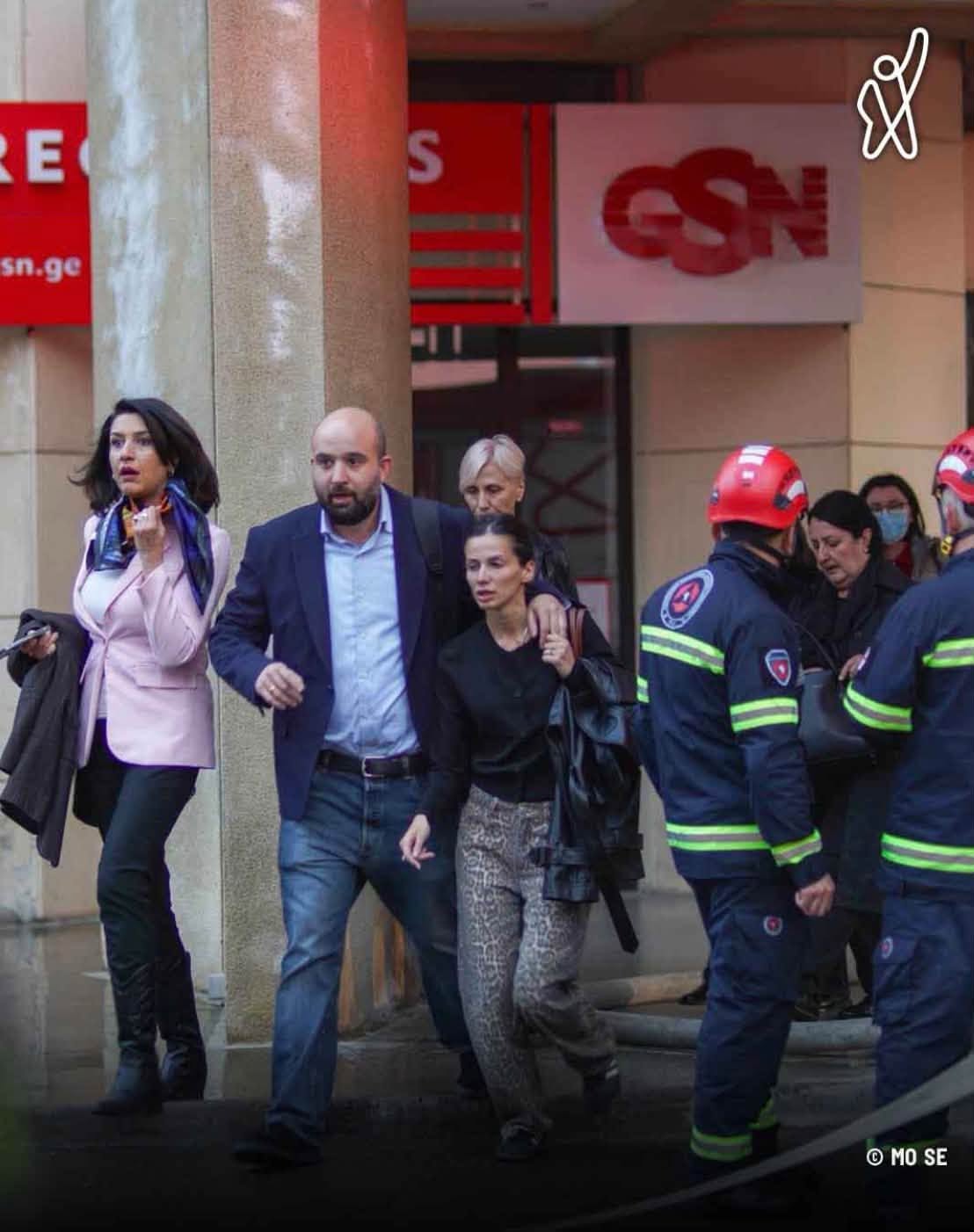
-
Wednesday, November 4, Azerbaijan. Three detained Meydan TV journalists in Baku have publicly harshly criticised the Berlin-based outlet’s management
● Reporters Without Borders (RSF) has once again included Azerbaijani President Ilham Aliyev on its list of “Predators of Press Freedom”. The organisation says the authorities suppress independent media through arrests and censorship. Azerbaijan ranks 171st out of 180 countries in the 2026 World Press Freedom Index.
● Three Meydan TV journalists detained in Baku – Aytaj Tapdyg, Khayala Aghayeva and Aysel Umudova – have issued a public statement sharply criticising the management of the Berlin-based media outlet. The statement was published on Facebook by journalist Afgan Mukhtarli. The journalists accuse the management of running the newsroom in an opaque and undemocratic manner, making decisions unilaterally and attempting to impose its will on staff. They also allege that managers subject employees to severe psychological pressure and deny them their labour rights. The statement says this atmosphere has driven experienced journalists out of the newsroom and suppressed creative freedom. The three journalists also accuse the management of failing to provide adequate support during their 23 months in detention: their requests went unanswered, articles written in prison were published with delays, and their court proceedings received insufficient coverage. They said they no longer support the current management and would seek its removal and the establishment of a democratic system of newsroom governance.
● Farid Ismayilov, a journalist convicted in the Toplum TV case, has accused the Azerbaijan Press Council and pro-government media of applying double standards. In a statement published by Meydan TV, Ismayilov said the organisation condemns attacks on pro-government journalists but remains silent about violence and persecution targeting independent journalists.
Context: Those arrested in the Toplum TV case were initially charged with smuggling, but the charges were later upgraded. All the activists and journalists deny any wrongdoing and say their arrests were politically motivated. In July 2026, nine defendants were convicted in the case and sentenced to between 12 and 15 years in prison.
● The preliminary hearing has begun in the case against Ali Karimli, chairman of the opposition Azerbaijan Popular Front Party, and his deputy, Mammad Ibrahim, who are both in detention. They are accused of attempting to violently seize power and overthrow the country’s constitutional order. The charges carry a possible sentence of life imprisonment. Both opposition figures reject the accusations, while Karimli describes the case as political persecution. At the hearing on 3 November, the court rejected defence motions to dismiss the case and change the defendants’ pre-trial detention measures. The hearing was held behind closed doors, with party supporters and other members of the public barred from entering the courthouse. Karimli said he would refuse to participate in the proceedings if hearings continued to be held in private. The trial on the merits is scheduled to begin on 13 November.
● Cybercriminals wanted internationally have been detained in Ukraine and extradited to Azerbaijan. The operation was carried out jointly by the interior ministries of the two countries.
● Murad Fatiyev, who had been internationally wanted since 2025 on charges of organising separatist activities, has been extradited to Azerbaijan and arrested. The State Security Service said Fatiyev had acted on instructions from radical groups operating under the direction of foreign-based centres, setting up social media groups and recruiting members of a small ethnic community living both in Azerbaijan and abroad. According to investigators, the groups were used to collect information about strategic facilities in Azerbaijan and publish calls for terrorism. The State Security Service said other members of the group had previously been arrested over preparations for an attack on a state-owned enterprise and a hostage-taking operation. Court proceedings against Fatiyev have already begun.
● Azerbaijan has declared 14 Iranian citizens persona non grata and banned them from entering the country. The authorities said the decision was prompted by public statements and calls that Baku considers hostile to Azerbaijan and aimed at inciting hatred.
● Parliament has begun discussions on the draft state budget for 2027.
● Another round of negotiations on avoiding double taxation between Azerbaijan and the United Kingdom has been held in Baku. Representatives of the tax and customs authorities of both countries took part.
● Parliament has re-elected Sabina Aliyeva as Azerbaijan’s Human Rights Commissioner (Ombudsperson) for another seven-year term.
● Three senior tax officials have been detained on suspicion of accepting bribes totalling 200,000 manats (approximately $118,000) from business owners at a shopping centre in Baku. According to investigators, the payments were made in exchange for avoiding tax inspections and fines. The case has been referred to the Baku Court for Serious Crimes.
● Separately, tax official Rufat Aliyev has been arrested on suspicion of accepting a bribe from a business owner in exchange for reducing a fine imposed following a tax inspection. The Prosecutor’s Office said the investigation could identify additional accomplices.
● Parliament is considering amendments to the Migration Code that would introduce preferential conditions for foreign agronomists and veterinarians. The proposed changes would simplify their residence and employment requirements to attract specialists to the agricultural sector.
● The Milli Majlis is discussing a proposal to tighten disciplinary and legal liability for military personnel for certain offences and introduce alternative forms of punishment. The amendments would also strengthen prosecutorial oversight of administrative violations related to military service.
● An attempt to smuggle 433 mobile phones from Georgia into Azerbaijan has been prevented. The phones were concealed in the tractor unit of a lorry and had not been declared. An investigation has been launched.
-
Wednesday, November 4, Georgia.
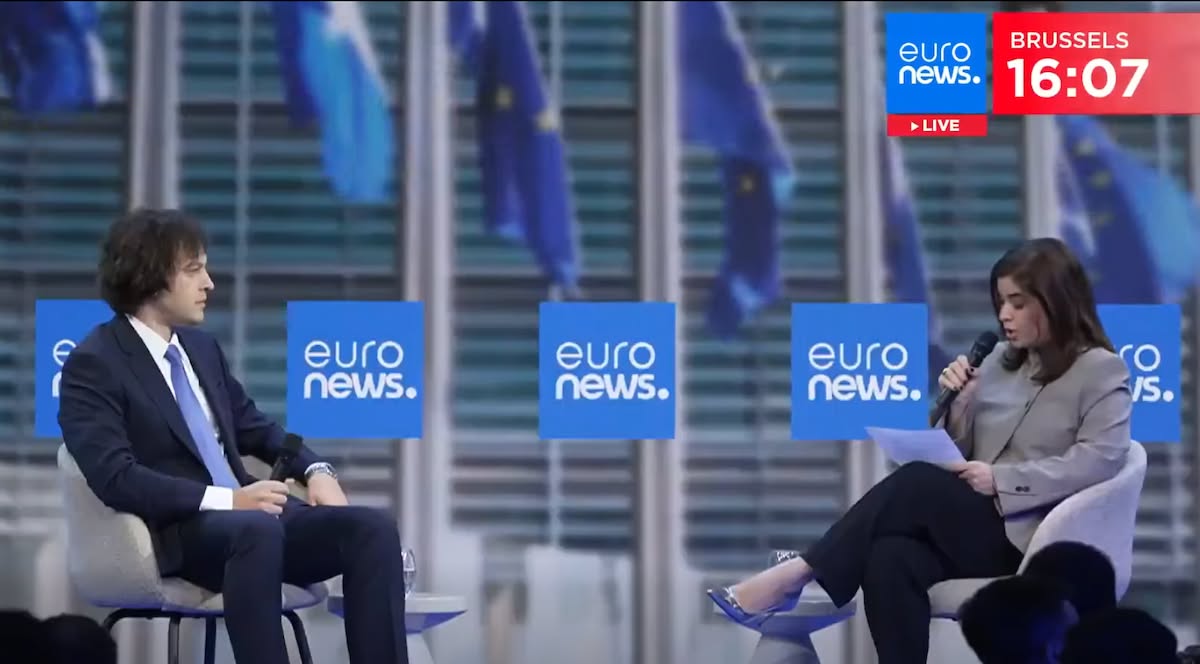
● The European Commission will present its 2026 EU Enlargement Package today, which includes an assessment of Georgia as an EU candidate country. The report’s main findings will be presented in Tbilisi by EU Ambassador Pavel Herchinsky. Speaking at the Euronews Enlargement Summit in Brussels, Georgian Prime Minister Irakli Kobakhidze proposed holding a public debate with European Commission representatives on democracy, the rule of law and transparency. He said the suspension of political dialogue with Georgia in June 2024 had been “a decision taken by the European Commission, not by the Georgian authorities”.
● Euronews interviewed Georgian Prime Minister Irakli Kobakhidze following its Enlargement Summit in Brussels. Asked about the court proceedings concerning the ruling party’s initiative to ban five opposition parties, Kobakhidze pointed to Ukraine and Moldova as examples. “They have already banned political parties and are significantly ahead of us in this process. We intend to catch up with them,” he said. Ukraine suspended the activities of pro-Russian parties in 2022, following Russia’s full-scale invasion and under martial law. The interviewer also asked Kobakhidze whether he knew that some European leaders did not want to be photographed with him, saying they did not share the same values. “I have taken photographs with every one of these leaders,” he replied.
● MPs from the ruling Georgian Dream party have proposed amendments to the Election Code that have drawn criticism from independent legal experts. Nona Kurdovanidze, head of the Georgian Young Lawyers’ Association (GYLA), said the amendments would effectively eliminate the possibility of challenging election results, allowing appeals only on two grounds: if data from precinct election commission protocols are missing or incorrectly recorded; or if the results of legally binding court rulings concerning electoral violations are missing, incomplete or incorrectly recorded. Courts would reject complaints submitted on any other grounds. The draft amendments also require political advertisements to display the name and identification number of the political entity at the end. Broadcasters would be prohibited from airing advertisements that fail to meet this requirement. A detailed analysis is available here.
● Reporters Without Borders (RSF) has included Georgian billionaire Bidzina Ivanishvili, founder of the ruling Georgian Dream party, in the economic category of its 2026 list of 33 “Predators of Press Freedom”. “Ivanishvili remains the real power behind the Georgian government, and his business empire and network of influence allow him to exercise tight control over the media landscape,” RSF said. Ivanishvili was first included in the list in 2025. Irakli Kirtskhalia, leader of the parliamentary majority, dismissed the publication as absurd. Read more here
● Opposition leaders met representatives of diplomatic missions and international organisations accredited in Georgia. The main topic was the ongoing Constitutional Court case in which the ruling Georgian Dream party is seeking to ban five opposition parties. Nika Gvaramia, leader of the Coalition for Change, said at the meeting that “free and fair elections are impossible when political parties are banned, and the chances of Georgia moving closer to the European Union are zero”.
● Giorgi Baramidze, one of the leaders of the opposition United National Movement (UNM), has been remanded in custody as a preventive measure while the investigation continues. Baramidze is charged with treason, specifically sabotage, over a statement in which he said that Georgian military personnel had shot Abkhaz prisoners of war during the 1992-1993 armed conflict in Abkhazia. The Prosecutor’s Office said his remarks had tarnished the reputation of the armed forces and the dignity of war veterans and fallen soldiers. Baramidze rejected the accusation in court, calling it false and saying: “If I have offended anyone, I apologise.” The charge carries a prison sentence of up to four years.
● The Prosecutor’s Office has declined to open an investigation into allegations of psychological and emotional torture raised in court by former Prime Minister Irakli Garibashvili, who has been convicted of corruption. It said there were no indications of a criminal offence. In several recent letters published on social media, Garibashvili claimed that he had been subjected to blackmail and pressure to plead guilty, including an implied threat to arrest his father. His lawyer said the Prosecutor’s Office was “not trying to establish the truth”. More on the case and Garibashvili’s latest allegations is available here.
● Public outrage has followed Tbilisi Mayor Kakha Kaladze’s remarks about animal rights activists demanding an investigation into the mass burial of dogs discovered on the outskirts of the capital. “Five or six of them should have been put down, given the state they are in,” Kaladze said, referring to the protesters. He also warned that those who had dug up the dogs’ burial site would be held accountable. Transparency International Georgia has described the authorities’ policy on stray animals as inhumane, unlawful and ineffective. The organisation is calling for an independent investigation into how and why the buried dogs died, as well as an independent inspection of animal shelters. More on the story is available here.
● Bera Ivanishvili, son of Georgian billionaire Bidzina Ivanishvili, has filed a lawsuit against TV Pirveli and Formula, demanding that the broadcasters retract reports alleging his links to criminal circles and involvement in criminal activities. His lawyer said the reports contained unverified information and should be recognised as defamatory.
● The Prosecutor General’s Office has charged the mother of an 11-year-old child and her friend with labour exploitation linked to the activities of criminal groups. According to the indictment, the child was forced to beg on the streets of Tbilisi, subjected to psychological and physical abuse, and prevented from attending school. The charges carry a maximum prison sentence of 17 years. Prosecutors have requested that both defendants be remanded in custody pending trial.
● A car plunged into the Rioni River near a hydroelectric power station in Kutaisi. Divers located the vehicle and found the bodies of two young people inside. An investigation has been launched.
-
Wednesday, November 4, Armenia. Nikol Pashinyan: "Armenia could realistically apply for European Union membership in 2027"
● Armenia could realistically apply for European Union membership in 2027, Prime Minister Nikol Pashinyan said in an interview with Euronews on the sidelines of the EU Enlargement Summit in Brussels. Asked about a possible timeline, he said: “Next year could be realistic. 2028 could be as well.”
● Armenia will do everything it can to support Georgia’s aspirations for European integration, Nikol Pashinyan said in an interview with Euronews. He added that Georgia’s determination to become a full member of the European Union had been one of the factors inspiring Yerevan’s decision to launch its own EU accession process.
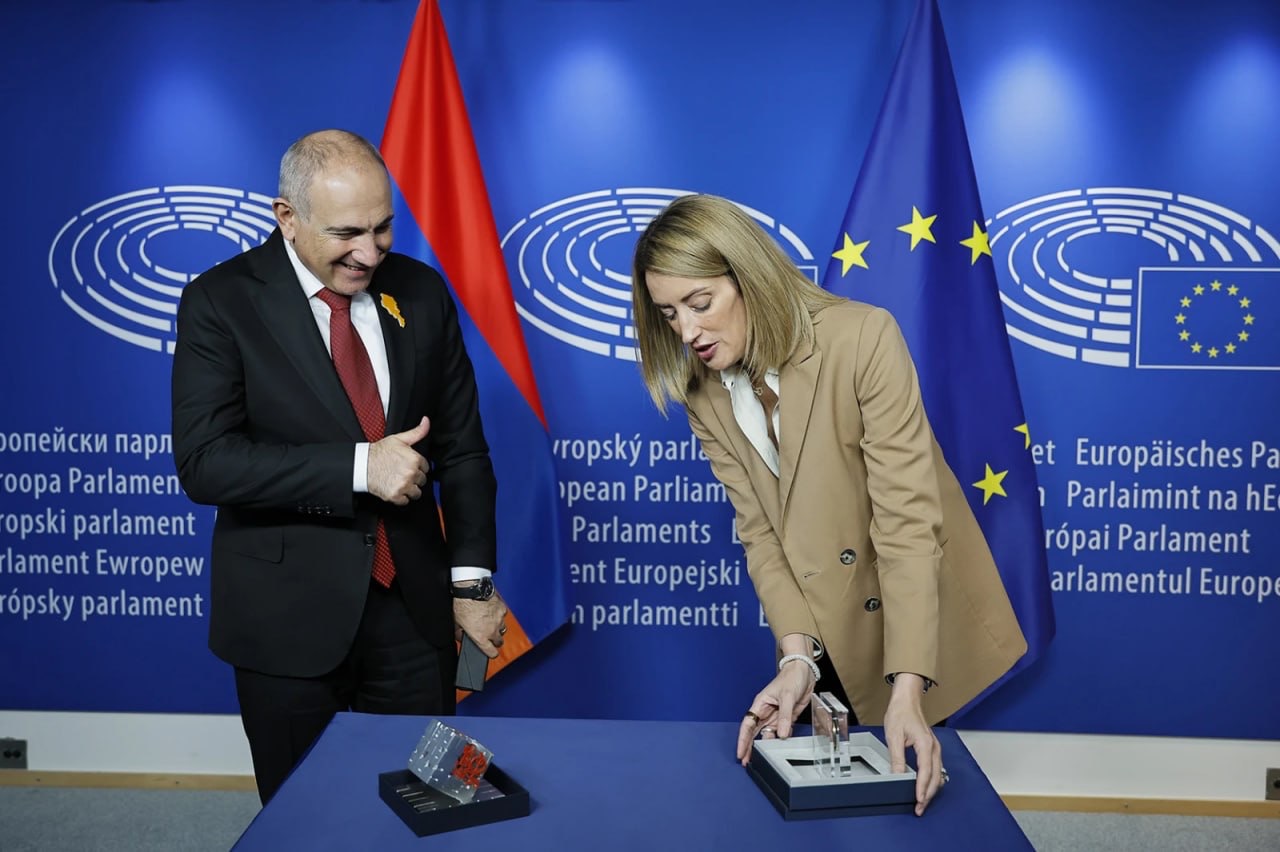
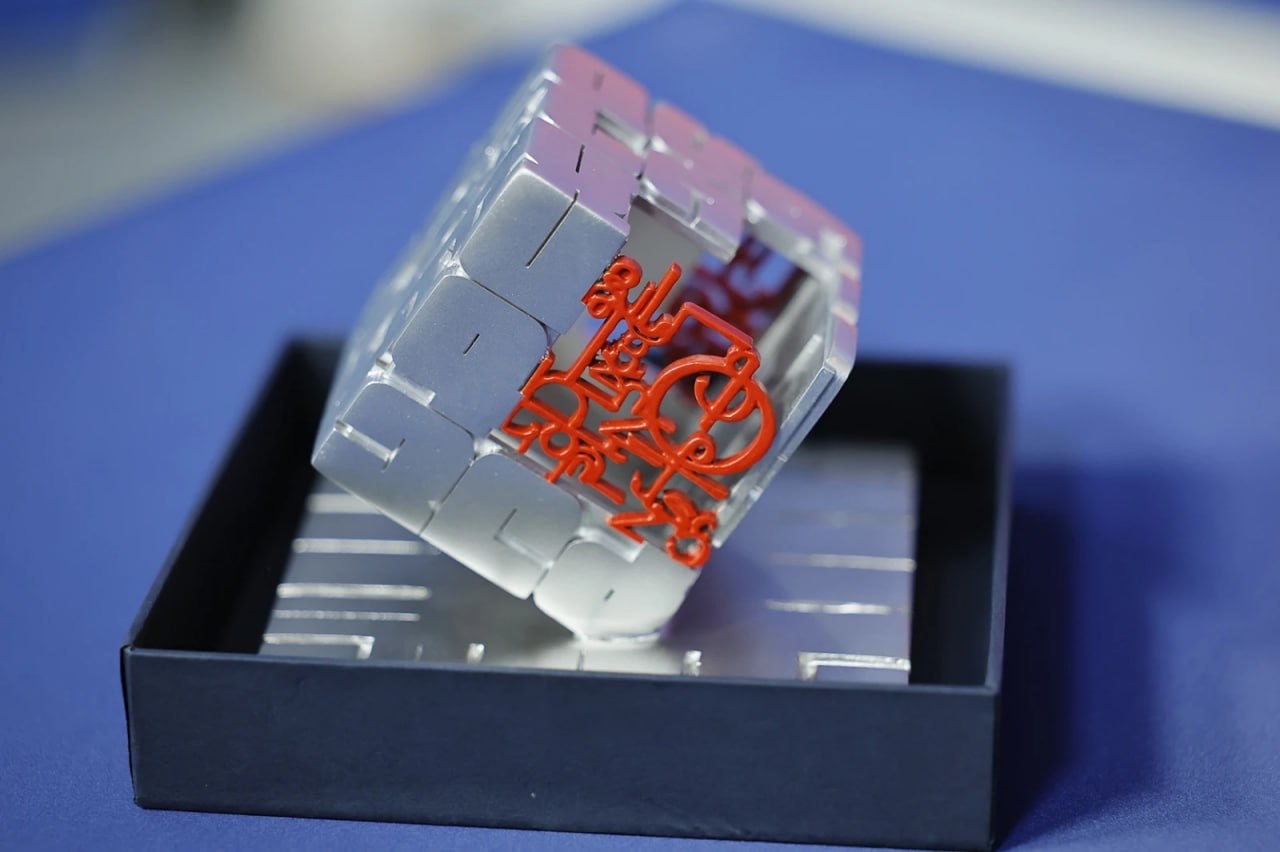
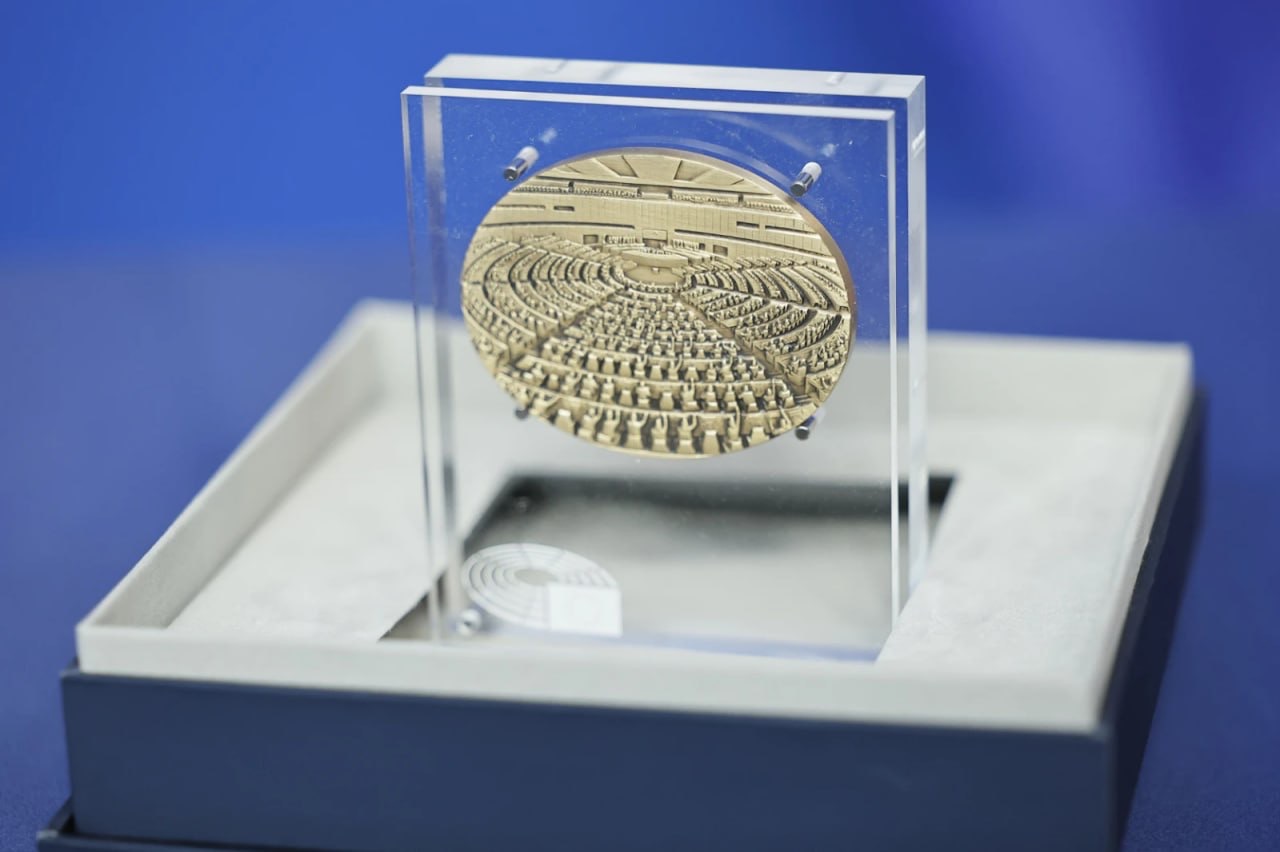
● Nikol Pashinyan met European Parliament President Roberta Metsola in Brussels. They discussed the development of bilateral relations, including the granting of EU trade preferences to Armenia for a two-year period. Metsola reaffirmed the European Parliament’s readiness to maintain close cooperation with Yerevan. Pashinyan presented her with a model of the Armenian alphabet monument, “Armatagir – The Power of Dialogue”, while Metsola gave the prime minister a commemorative bronze medal of the European Parliament.
● The prime ministers of Armenia and Croatia discussed ways to deepen trade and economic ties during a meeting in Brussels.
● Armenian goods will receive full access to EU trade preferences from 3 November, the Ministry of Foreign Affairs and International Trade announced. It had previously emerged that the preferences had not been technically incorporated into the EU’s TARIC customs system, preventing Belgian importers from benefiting from them. Customs duties paid by exporters after 10 October, when the EU’s autonomous trade measures for Armenia came into force, are to be refunded.
● If the opposition opposes a referendum on the new Constitution, it means it is against democracy, Justice Minister Srbui Galyan said. “What does the opposition have to fear if it believes and is confident that the people will vote against the new Constitution?” she asked.
Context: The opposition, which is widely regarded as predominantly pro-Russian, opposes constitutional amendments, arguing that they are being dictated by Azerbaijan. The Armenian government strongly denies this. The main point of contention is the preamble, which states that the Constitution is based on the 1990 Declaration of Independence. That declaration, in turn, endorses a 1989 decision by the authorities of Soviet Armenia to unite Armenia and Nagorno-Karabakh. Azerbaijan regards this as a territorial claim against it and has made removing the reference from the preamble a condition for signing a peace agreement.
● Armenia will withdraw its lawsuits against Azerbaijan before international courts only after a final peace agreement between the two countries has been signed, Lilit Makunts, head of the prime minister’s office, said. She stressed that Armenia was not abandoning its right to defend its interests in international courts. The possibility of both countries withdrawing their lawsuits is provided for in Article 15 of the framework agreement signed by the two leaders at a summit in Washington in August 2025, attended by US President Donald Trump.
● US drug enforcement specialists are expected to arrive in Armenia soon, Investigative Committee Chairman Artur Poghosyan said. Their main task will be to prevent drug smuggling across the border and stop narcotics from reaching the domestic market.
● The Collective Security Treaty Organisation (CSTO), a military alliance led by Russia, hopes that Armenia and Azerbaijan will soon sign a comprehensive peace agreement, Secretary General Taalatbek Masadykov said. “Sustained dialogue between these countries helps reduce the potential for conflict and build an infrastructure for cooperation,” he said at the fourth Minsk International Conference on Eurasian Security.
● Armenia’s ambassador to Russia, Gurgen Arsenyan, has received an award from the Russian Foreign Ministry for strengthening bilateral relations. The award comes amid reports that Arsenyan is to be replaced, although no successor has yet been announced.
● Moscow hopes that another meeting of the regional 3+3 platform will take place soon, Russian Foreign Minister Sergey Lavrov said. The format is intended to bring together Armenia, Azerbaijan and Georgia, alongside Russia, Iran and Turkey. Georgia refuses to participate, saying official cooperation with Russia is impossible while Moscow occupies Georgian territories.
● Georgian Defence Forces Commander Giorgi Matiashvili is visiting Armenia. On Tuesday, he visited the Armenian Genocide Memorial Complex in Yerevan and paid tribute to the victims.
● Protesters in Yerevan called for the resignation of the leadership of the Council of Armenia’s Public Television. The demonstration was prompted by the broadcaster’s failure to cover events at the Yerablur military pantheon on 27 September, the anniversary of the outbreak of the Second Karabakh War in 2020. Instead of reporting on the commemorations, the channel aired a concert.
-
Tuesday, November 3, Azerbaijan. A series of incidents on the border with Iran, including the fatal shooting of a man attempting to cross illegally
● Border guards shot dead a man who attempted to cross the border illegally from Iran and opened fire on border service personnel. The incident took place in the area covered by the Geytepe border guard unit. After spotting a group of people moving from Iran, guards ordered them to stop and fired warning shots. Tehran has been notified, and an investigation is under way.
● Drones have been detected and neutralised on Azerbaijan’s border with Iran.
● In separate operations carried out around the same time, border guards prevented three attempts to smuggle goods from Iran. They seized a total of 136.6 kg of drugs and 5,500 methadone tablets. The State Border Service said investigations were under way into all the incidents.
● Foreign Minister Jeyhun Bayramov met Japan’s newly appointed ambassador, Tokuro Furuya. They discussed expanding political dialogue and cooperation in various fields. Bayramov highlighted opportunities for Japanese companies in the Alat Free Economic Zone and Azerbaijan’s role in developing the East-West and North-South transport corridors.
● The trial in the Meydan TV case has moved on to witness questioning. Twelve journalists are standing trial, accused of currency smuggling and other offences. All deny the charges and say the case is retaliation for their critical reporting on the authorities. At the 2 November hearing, a witness said she rented premises to Baku School of Journalism but knew nothing about its activities. Defendant Ulvi Tahirov challenged the rental documents as evidence, pointing out that they were photocopies rather than originals. Journalist Shamshad Agha clashed with the judge, saying he considered the proceedings a “farce” rather than a trial and asking whether the judge could regard himself as a real judge, since that would mean actually investigating something. The judge told him not to turn the courtroom into a show. A defence lawyer again asked for Aynur Elgunesh, editor-in-chief of Meydan TV, to be transferred to house arrest because her kidney condition had deteriorated. The court also ordered that video footage from the pre-trial detention centre be requested after journalist Nurlan Libre reported being beaten. The next hearing is scheduled for 30 November.
● Imprisoned Masma Zeynalova has appealed to First Vice-President Mehriban Aliyeva, asking her to intervene in her case. She says she has been in detention for more than a year on fraud and hooliganism charges, which she denies. According to Zeynalova, her health has seriously deteriorated in detention. She says she has repeatedly harmed herself, but the facility’s administration has failed to provide the necessary medical care and refuses to arrange a medical examination.
● Deputy Minister of Science and Education Firudin Gurbanov has clarified how the new school uniform rules will be enforced. The rules have effectively banned the wearing of hijabs in schools, prompting protests in Baku and other cities, sharp criticism in Türkiye and a deterioration in relations between the two countries. Gurbanov said the uniform requirements are compulsory in state schools, while private schools can set their own dress codes. There are currently no plans to introduce a standard uniform in vocational schools, colleges or universities. He also warned that pupils in their final two years of secondary school who have not been assessed because of frequent absences will not receive school-leaving certificates. The ministry will continue monitoring compliance and has urged parents not to let disagreements over school uniforms interfere with their children’s education.
● Turkish President Recep Tayyip Erdogan has congratulated Ilham Aliyev and the people of Azerbaijan ahead of Victory Day, celebrated on 8 November. He sent his message through the pilot of his aircraft while flying over Azerbaijani territory on his way to South Korea.
● A total of 979 mines and 3,070 unexploded ordnance items were discovered in October in Azerbaijani territories retaken from Armenian occupation following the 2020 Second Karabakh War. The Azerbaijan National Agency for Mine Action (ANAMA) said 4,898.3 hectares of land had been cleared of mines and unexploded ordnance during the month. The operation also involved the defence and emergency situations ministries, five local organisations and one NGO.
● Undeclared goods were discovered in two trucks at the Red Bridge checkpoint on the border with Georgia. The documents stated that the trucks were carrying gypsum, but a second inspection uncovered 24 kg of hookah tobacco, 1,119 car parts and 40 tonnes of diesel fuel. An investigation is under way.
● Expanding military cooperation, including joint exercises and partnerships in military education, was discussed at a meeting in Baku between Defence Minister Zakir Hasanov and a Kyrgyz delegation led by First Deputy Defence Minister Taalaibek Sharsheev.
● The possibility of establishing an Azerbaijani-Chinese industrial park was discussed at a meeting in Baku between Economy Minister Mikayil Jabbarov and Gao Bo, head of Chinese company CSCEC International. They also explored cooperation in infrastructure, urban development, energy and industry. Azerbaijan’s trade turnover with China has grown by 1.7% since the beginning of the year, and China has become Azerbaijan’s largest supplier of goods.
● Two businessmen, Ramiz Huseynov and Abasat Pashayev, have been arrested in connection with the deaths of two people in September at a zipline attraction in a family recreation centre in Shaki district. They had been contracted to build the tower for the cable ride. According to investigators, neither man had the required licence or specialised education. The preliminary investigation is continuing.
-
Tuesday, November 3, Armenia. Nikol Pashinyan to attend 2026 EU Enlargement Summit organised by Euronews in Brussels
● Prime Minister Nikol Pashinyan has travelled to Brussels to attend the 2026 EU Enlargement Summit, organised by Euronews under the slogan “The future of Europe”. Bilateral meetings with Western partners are also scheduled.
● Armenia will gradually take full control of its borders, transferring responsibility to its own border service. This will require further reforms, Prime Minister Nikol Pashinyan said.
Context: Under an intergovernmental agreement signed in 1992, Russian border guards have been responsible for protecting Armenia’s borders with Turkey and Iran. The border with Georgia is guarded exclusively by Armenian forces. The transfer of individual sections to Armenian control began in 2024. Armenian border guards now independently protect several sections of the border with Azerbaijan, Zvartnots International Airport in Yerevan, the Agarak checkpoint on the Iranian border, and two checkpoints on the Turkish border – Margara and Akhurik. Russian border guards remain stationed along the other sections of Armenia’s borders with Turkey and Iran.
● The opposition, which is widely regarded as pro-Russian, has criticised Pashinyan’s warning that blocking a parliamentary decision to hold a referendum on constitutional amendments would be seen as “a rejection of lasting peace”. “In that case, a wave of public discontent against the opposition will inevitably emerge. I am convinced that the ruling majority should lead this pressure,” the prime minister said. Opposition MP and Deputy Parliament Speaker Aram Vardevanyan dismissed the remarks as “something to smile about”, claiming that political persecution and repression of the opposition were already under way. Opposition MP Ishkhan Saghatelyan said no pressure would make them “support a process that will lead to the adoption of Aliyev’s Constitution [referring to Azerbaijani President Ilham Aliyev] in Armenia”.
● Armenia has not yet agreed on a timetable for the next stage of border delimitation with Azerbaijan, but an agreement could be reached soon, Deputy Prime Minister Mher Grigoryan said. He added that the two countries were discussing the possibility of bringing forward the delimitation of sections linked to the TRIPP project, which envisages a road connecting Azerbaijan with its Nakhchivan exclave through Armenian territory. “Without waiting for TRIPP to be established, to which we will eventually hand everything over, we are starting design work on electricity transmission lines, roads and railways. All three infrastructures must be built in Syunik province. We need to find the most optimal option to ensure that investments are effective and that the infrastructure is competitive both regionally and in international logistics,” Grigoryan said.
● Russian State Duma MP Konstantin Zatulin has commented on the 2020 Second Karabakh War, saying he had “repeatedly criticised Russia’s actions – or inaction – towards Armenia”. “We did not use all the opportunities available to prevent a war that led to a national tragedy – the loss of Nagorno-Karabakh and the mass exodus of the Armenian population from their historic homeland,” Zatulin said.
● MPs from Strong Armenia, a pro-Russian opposition bloc, met Czech Ambassador Petr Pirunčík. Discussions focused on Armenia’s cooperation with the European Union, the peace process between Armenia and Azerbaijan, and the regional transit project known as the Trump Route for International Peace and Prosperity (TRIPP).
● Parliament Speaker Ruben Rubinyan met newly appointed Canadian Ambassador Julia Crowley. They discussed expanding bilateral relations and strengthening ties between the two countries’ parliaments.
● Parliament is discussing the draft state budget for 2027. One of its largest allocations will be for the universal health insurance programme, which is set to receive around 6.8% of the total budget. Discussions will continue until 11 November, after which the draft will be submitted to a parliamentary session beginning on 17 November.
● Armenia’s re-export volume has fallen to its lowest level since 2022, reflecting a broader decline in imports into the country, Finance Minister Vahe Hovhannisyan said. Total exports fell by 6.5% in January-August this year, while exports of Armenian-origin goods increased by 28.6%, he added.
● Pensions will be increased for 680,000 people, Labour and Social Affairs Minister Arsen Torosyan said. According to the minister, pensions have been raised eight times during the eight years the ruling Civil Contract party has been in power. From 2028, the government plans to introduce inflation-linked adjustments, either through a cashback system or direct increases in payments. The aim is to ensure that the average pension does not fall below the cost of the minimum consumer basket.
● The NGO Informed and Protected Consumer has launched a study of imported dairy products. In the next stage, it will examine meat products, both locally produced and imported. “Our aim is not to harm producers or importers. The purpose of the study is to identify risks to consumers and develop a culture of proactive consumer engagement, in which people themselves determine what needs to be checked,” the organisation said.
● A commemorative silver coin marking the 100th anniversary of the birth of Grigor Khanjyan is being issued. Khanjyan was a prominent Armenian painter, graphic artist and creator of monumental and decorative works.
-
Tuesday, November 3, Georgia. The main hearing in the bribery case against convicted former Georgian Prime Minister Irakli Gharibashvili has begun
● The main hearing in the bribery case against convicted former Georgian Prime Minister Irakli Gharibashvili has begun at Tbilisi City Court. Gharibashvili appeared in court for the first time since the new charges were brought, pleaded not guilty and described the case as politically motivated. The charges carry a prison sentence of 11 to 15 years. He has already been sentenced to five years in prison for money laundering under a plea deal. Read more here
● Nana Sander, sentenced to seven years in prison over the alleged attempt to storm the presidential administration on 4 October 2025, has signed a plea agreement with the court, admitting guilt and expressing remorse. She is due to be released on 6 November. The prosecution has also reached plea agreements with two other defendants in the same case, Zurab Chavchanidze and Anton Vardanidze. The court is expected to announce its decision on 3 November. Several other people involved in the case have already been released following plea deals. Prime Minister Irakli Kobakhidze has said that all those detained over the 4 October events who admit guilt and express remorse will be released from prison.
● The Georgian Young Lawyers’ Association (GYLA) will appeal the seven-year prison sentence handed down to prominent opposition politician Paata Manjgaladze. He is one of the defendants in the case concerning the storming of Georgia’s presidential palace on 4 October 2025. His lawyers say there is no evidence linking him to the events. They argue that his political statements and verbal support for the protests do not prove involvement in organising violence. Read more here
● Deputy Interior Minister Gela Geladze has resigned and been appointed to the supervisory board of the Georgian Oil and Gas Corporation. Geladze previously served as interior minister and head of the State Security Service before being appointed deputy interior minister in September.
● Ruling party MPs have submitted draft amendments to the Election Code to parliament. The bill would shorten the deadline for establishing final election results from 26 to 15 days. District election commissions would no longer be required to recount votes if discrepancies caused by random factors affect no more than five polling stations. The Central Election Commission, rather than district commissions, would be responsible for determining the final results of municipal elections.
● Ramaz Pirtskhalava has been dismissed as director of Gldani Prison No. 8, where a controversial incident took place involving the beating of inmate Davit Peikrishvili, a prominent figure in the criminal underworld, in his cell. The victim’s family had demanded the director’s dismissal, while the Special Penitentiary Service had denied that physical violence took place. Nodar Kinkladze has been appointed as the new director.
● Tbilisi Mayor Kakha Kaladze has dismissed as slander and disinformation allegations that the state Animal Monitoring Agency is killing stray animals. The accusations emerged after a television channel broadcast footage of a mass grave containing dead dogs. Kaladze said the agency buries dead animals in designated graves in accordance with the law, adding that attempts by groups of citizens to dig them up risk biological contamination. Animal rights activists are demanding that the Prosecutor’s Office exhume the remains, conduct an independent veterinary pathology examination and check the animals’ microchips. More on the situation here
● A bill proposing free school meals for all pupils in public schools, regardless of their financial circumstances, has been submitted to parliament. The initiative was put forward by a group of civil society activists with the support of at least 25,000 voters and referred to the parliamentary committees on education and on finance and budget. Parliament has previously sent the proposal back for revision twice, citing the lack of a financial assessment.
● Tbilisi Mayor Kakha Kaladze has commented on protests by residents of Lilo, a suburb of Tbilisi, demanding the relocation of a nearby landfill. He said a report by German company ICP had concluded that relocating the landfill was not advisable at this stage. The study assessed 12 potential sites and identified expansion of the existing landfill as the best option. Kaladze promised residents that an alternative location would be found. He also said a €6.5 million waste treatment facility was under construction at the site and was expected to be completed in September 2027.
● The Prosecutor’s Office has charged 19 people, including foreign nationals, with causing large-scale damage to the state budget and producing and using forged documents as part of an organised group. According to the indictment, 138 vehicles imported from abroad were falsely registered for re-export using forged documents but were never taken out of the country and were instead used for personal purposes. The alleged damage to the state budget amounts to 545,165 lari (approximately $200,000).
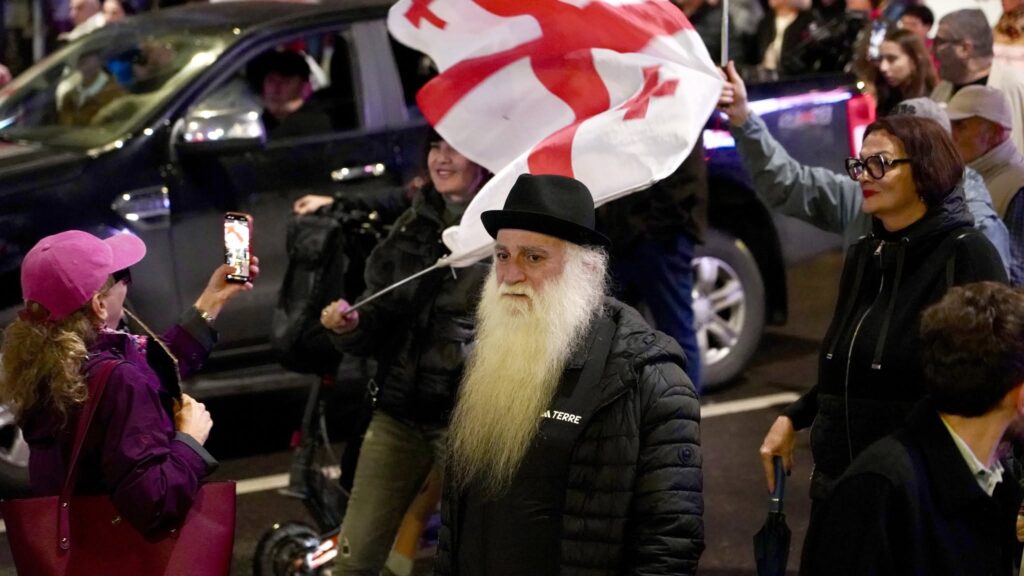
-
Monday, November 2, Armenia. Armenia launches new biometric passport system
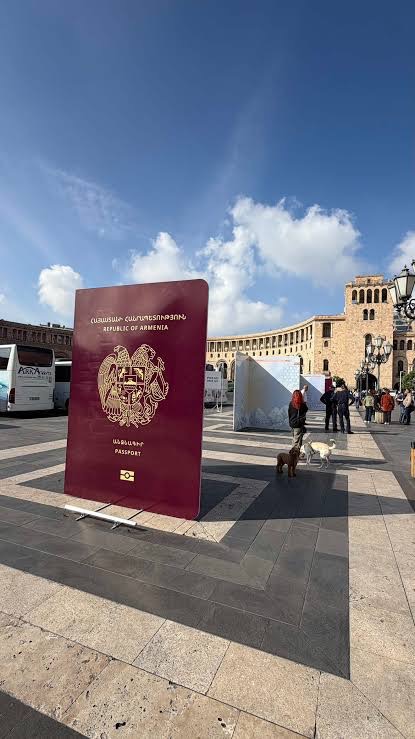
● Armenia has officially launched its new biometric passport system at a ceremony in Yerevan. Prime Minister Nikol Pashinyan said the passports meet all modern international standards and cannot be forged. “This is a very important innovation in terms of increasing international trust in our citizens and our state. But most importantly, this biometric passport system should make life easier for the people of Armenia,” he said.
● More than 1,300 people have already registered to obtain the new biometric passports, Interior Minister Arpine Sargsyan said. She noted that Armenia can now join the system of the International Civil Aviation Organization (ICAO).
● Prime Minister Nikol Pashinyan met in Yerevan with executives from major international companies in the passenger transport sector. Those attending included IN Groupe head Yan Hage, IN Groupe representative and HayPass board member Isabelle Loiseau, and Corporación América Airports director Martin Eurnekian. They discussed the introduction of biometric passports in Armenia. Pashinyan described the new passports as a strategic step towards improving public services and advancing Armenia’s visa liberalisation process with the EU.
● Armenia is among 29 countries where Russia allows information and advisory centres providing assistance with consular matters to operate.
● Russia’s Foreign Ministry has denied reports that Moscow refused to approve Samvel Mkrtchyan’s appointment as Armenia’s new ambassador to Russia. The Armenian newspaper Hraparak had previously reported the alleged refusal, suggesting it might be linked to Mkrtchyan’s long diplomatic career in European countries. The paper also wrote that Armenia’s current ambassador to Russia, Gurgen Arsenyan, had said goodbye to representatives of various Russian circles in the summer and returned to Armenia in August. He later travelled back to Moscow and resumed his duties.
Samvel Mkrtchyan was appointed Armenia’s ambassador to Poland in November 2018. Before that, he headed Armenia’s diplomatic mission in Lebanon, represented the country at NATO and led the Foreign Ministry’s Department for Arms Control and International Security.
● The Mother See of Holy Etchmiadzin marked the 27th anniversary of the enthronement of Karekin II, Supreme Patriarch and Catholicos of All Armenians. A festive liturgy and patriarchal service were held, and the Skevra reliquary containing the relics of saints was brought out for veneration. Heads of dioceses and pilgrims attended the service, which was led by Bishop Mushegh Babayan. In his sermon, he called Karekin II “one of the outstanding patriarchs” and said he had assumed the throne at a time when Armenia and the Armenian people were just beginning the difficult path of independence.
● Nearly 1,000 lorries are waiting to cross from Russia into Georgia along one of the key transit routes for Armenia, which has no common border with Russia. North Ossetian head Sergey Menyailo said the road was open to traffic but did not explain what had caused the build-up.
● Prime Minister Nikol Pashinyan and his associates gathered in a courtyard in Yerevan for a traditional khash meal – a traditional soup made from beef trotters. Tables were set up under tents and served by specially hired waiters.
● Halloween was marked by noisy and conflicting celebrations in central Yerevan. Hundreds of people took to the streets in costumes, while others held anti-Halloween placards and sang songs in praise of Jesus.
PHOTO: An exhibition in central Yerevan marking the launch of the biometric passport system.
-
Monday, November 2, Georgia. Protests erupt after TV footage shows mass burial of stray dogs; criminal investigation launched
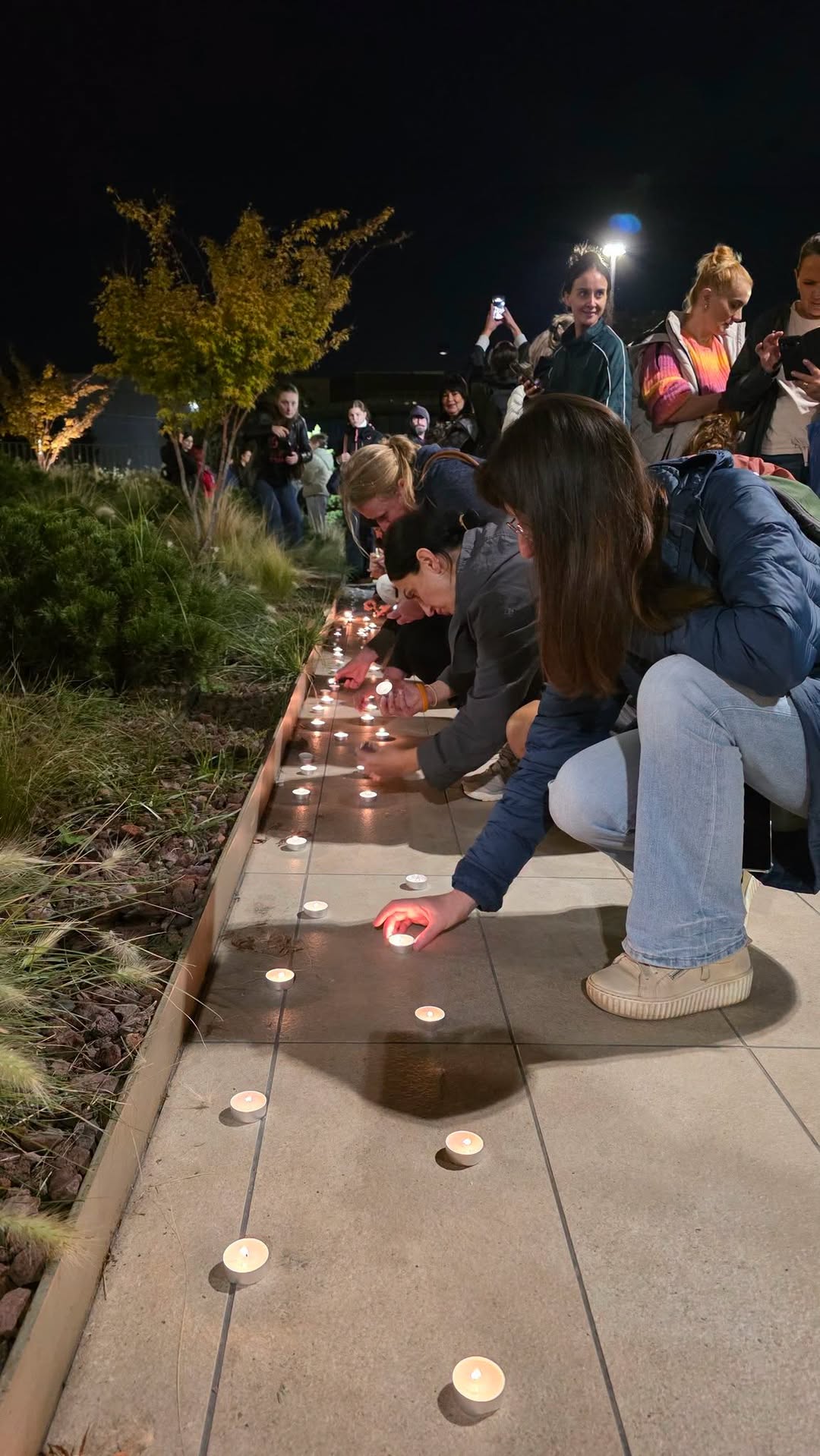
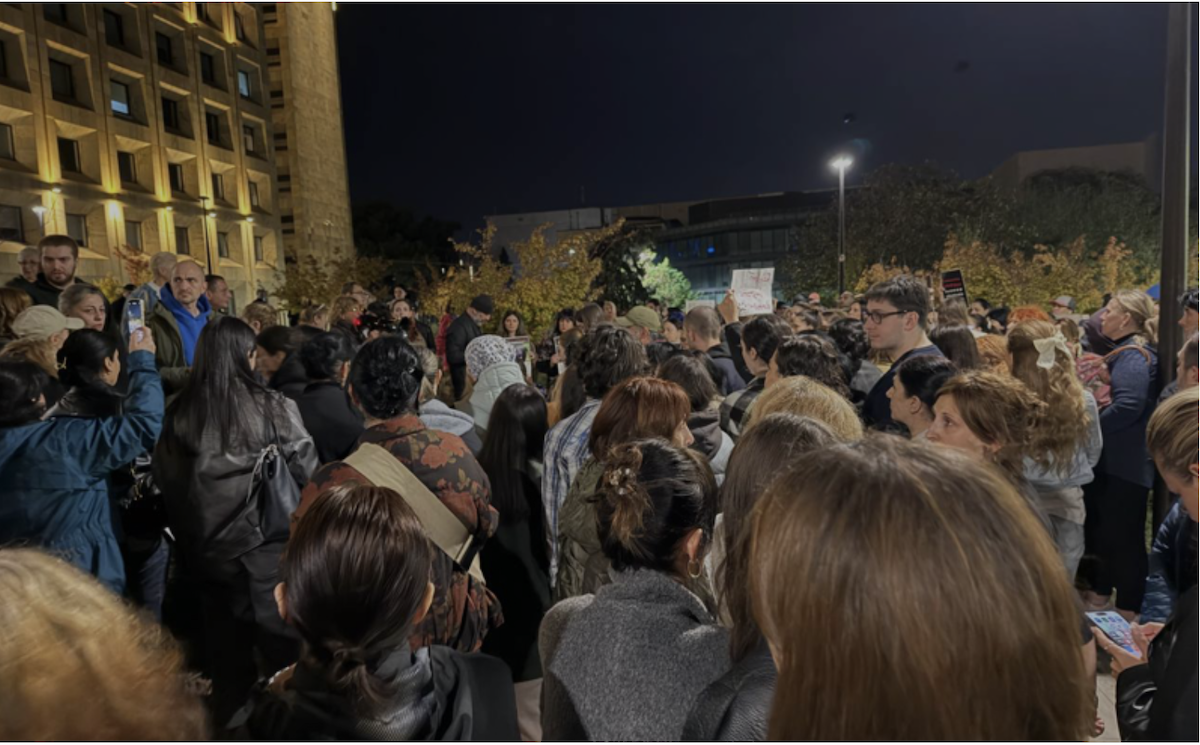
● A new controversy has erupted in Georgia over stray dogs. TV Pirveli has broadcast disturbing footage which, according to the programme, shows dog remains being buried at night in a cemetery in Tbilisi. Animal rights activists are demanding that the Prosecutor’s Office investigate, exhume the remains and conduct an independent examination, including checks for microchips and comparisons with reports of missing dogs from across Georgia. They also want investigators to establish how many animals were euthanised, which drugs were used, and who authorised the procedures and on what grounds.
Tbilisi’s Animal Monitoring Agency denies allegations of mass, deliberate killing, saying the site is designated for animals that have died from illness, accidents or natural causes. On 1 November, the Interior Ministry announced an investigation under Article 259 of the Criminal Code, which covers cruelty to animals.
● The Constitutional Court of Georgia concluded the oral submissions phase on 30 October in a case brought by ruling party MPs seeking to ban five opposition parties. Hearings will resume on 9 November with the questioning phase. Court President Revaz Nadaraia said the parties would be questioned first, followed by the respondents. Public Defender Levan Ioseliani said he would submit his own opinion to the court, setting out international standards.
● The ruling party’s lawsuit seeking to ban opposition parties has drawn criticism from several international organisations. The Alliance of Liberals and Democrats for Europe (ALDE) called for the lawsuit to be withdrawn and urged the EU to “impose targeted sanctions on those responsible for repression”. The Norwegian Helsinki Committee condemned the move, while OSCE Parliamentary Assembly President Mykyta Poturaiev expressed concern. Prime Minister Irakli Kobakhidze responded to ALDE’s statement, saying: “Such statements constitute a gross interference in the independence of Georgia’s judiciary.”
● The 11th meeting of the Georgia-Azerbaijan Intergovernmental Commission on Economic Cooperation was held in Georgia, co-chaired by Prime Ministers Irakli Kobakhidze and Ali Asadov. Following the meeting, Kobakhidze said the two countries had agreed to accelerate the delimitation and demarcation of their shared border. He noted that there had been no progress in recent years and that 15 sections remained unresolved. The disputed areas include the David Gareji monastery complex and its surrounding territory.
● Prime Minister Irakli Kobakhidze said renowned opera singer Paata Burchuladze, convicted in connection with the 4 October attempt to seize the presidential administration, could “get out of prison very easily if he expresses remorse and admits his guilt”. Kobakhidze said public calls for Burchuladze’s unconditional release ran counter to the rule of law. Several activists convicted in the same case have already been released after reaching plea agreements with the Prosecutor’s Office.
● Georgia’s State Security Service said a Georgian citizen illegally detained by Russian occupation forces near the village of Bershueti in Gori Municipality, in the Georgian-Ossetian conflict zone, was released on 31 October. The EU Monitoring Mission’s hotline was used to secure his release.
● Tbilisi held its 46th Saturday march. The slogan of the most recent demonstrations has been “Georgia against [oligarch] Ivanishvili”. Continuous pro-European protests have been taking place in Georgia since 28 November 2024, when the ruling Georgian Dream party announced that it was suspending the country’s EU accession talks until the end of 2028.
Podcast “Protests in Georgia” – video and photos.
● Parliament has passed in its third reading a law allowing the national energy regulator to set household natural gas tariffs based on consumption levels. Currently, the price per cubic metre is the same regardless of how much gas a household uses. The existing tariff expires in December.
Photo: Animal rights activists are staging a protest outside the Government administration building.
-
Monday, November 2, Azerbaijan. Azerbaijan marked the first anniversary of the country’s first donor heart transplant, the first in the region
● APA TV reporter Sanan Bahramli was assaulted while covering a major fire at the site of a former meat-processing plant in Baku. The attacker, who identified himself as a security guard, insulted the journalist, physically assaulted him and damaged the news crew’s equipment. He was later identified as Heydar Sardarov. Police detained him and opened a criminal case. Azerbaijan’s Media Council condemned the attack and called for an objective investigation.
● A suspected mass food poisoning incident occurred at the Qizil Qaya restaurant in Baku’s Nizami district. Fourteen people reported symptoms of food poisoning and five were hospitalised. The Food Safety Agency is investigating.
● Azerbaijan’s Foreign Ministry welcomed the nomination of OSCE Secretary General Feridun Sinirlioğlu for the post of UN Secretary General.
● President Ilham Aliyev congratulated Algerian President Abdelmadjid Tebboune on Revolution Day, describing the Algerian people’s struggle for independence as a symbol of heroism, national unity and the pursuit of freedom. He expressed confidence that bilateral cooperation would continue to expand.
● The 11th meeting of the Azerbaijan-Georgia Intergovernmental Commission on Economic Cooperation was held in Georgia, co-chaired by the two prime ministers, Ali Asadov and Irakli Kobakhidze. They discussed trade, energy, transport, investment and the development of the Middle Corridor. The meeting concluded with the signing of cooperation documents in customs and agriculture. Asadov said Azerbaijan was Georgia’s largest investor, with nearly $4 billion invested in its economy. Kobakhidze said Georgia intended to accelerate the process of delimiting and demarcating the shared border.
● The total value of Azerbaijan’s environmental start-up ecosystem has approached $600 million. Vusal Gasimli, head of the Centre for Analysis of Economic Reforms and Communication, said the country had 161 start-ups in the sector and that the ecosystem’s value had grown by more than 7% over the past year. Azerbaijan ranks 81st worldwide by this measure.
● Azerbaijan marked the first anniversary of the country’s first-ever heart transplant, also the first in the South Caucasus. A conference in Baku heard that more than 1,500 people in the country are currently waiting for organ transplants, including over 50 who need a heart transplant. Around 1,800 people have registered as posthumous organ donors. Specialists say that despite growing interest in donation, demand for transplants still exceeds available capacity.
● Baku will host the World Fire and Rescue Sport Championships for men and women from 2 to 8 November. More than 400 athletes from over 20 countries are expected to take part. Competitors will compete in four events: climbing a training tower using an assault ladder, a 100-metre obstacle course, a 4×100-metre fire relay and a combat deployment event.
● The sixth Victory Run charity race was held in Baku to mark the anniversary of Azerbaijan’s victory in the Second Karabakh War. More than 2,000 people took part in the 10-kilometre race, the highest turnout since the event was first held in 2021. Bakhtiyar Asgarli and Anna Yusupova won the race. All registration fees will go to the YASHAT Foundation, which supports families of military personnel killed or wounded in wars.
● Azerbaijan topped the overall team standings in the individual events at the European Judo Championships for athletes under 23 in Naples. Aydar Baghirov won gold in the under-100kg category, while Kenan Nasibov took gold in the over-100kg category. Nasibov became European U-23 champion for the second consecutive year.
● Around 70 animals of various species have been released into the Jabrayil, Lachin and Kalbajar districts as part of efforts to restore biodiversity. They include 40 gazelles, five falcons, four East Caucasian tur, ten partridges and three bezoar goats, the Ministry of Ecology and Natural Resources said. Authorities have also announced the restoration of nature reserves and the creation of a Karabakh National Park covering more than 88,000 hectares.
● Statistics: More than 8.4 tonnes of drugs and psychotropic substances, with an estimated value of 246.3 million manats (around $145 million), were seized from illegal circulation in Azerbaijan between January and September. A total of 4,352 people, including 117 women and 50 foreign nationals, were held criminally liable for drug-related offences.
PHOTO: Two projects by Azerbaijani artists Orkhan and Elvin Nabizade were presented at Baku’s Stone Chronicle Museum. The first, “Ancient Stone, Modern Memory”, draws on the Gobustan rock carvings and depicts Azerbaijan’s wildlife, including the Caucasian leopard, gazelle, grey wolf and brown bear. The second, “Radius of Responsibility”, explores the relationship between humans and wildlife through an interactive format. The presentation was attended by Leyla Aliyeva, vice-president of the Heydar Aliyev Foundation, and Arzu Aliyeva, head of the Baku Media Centre and daughters of the president.
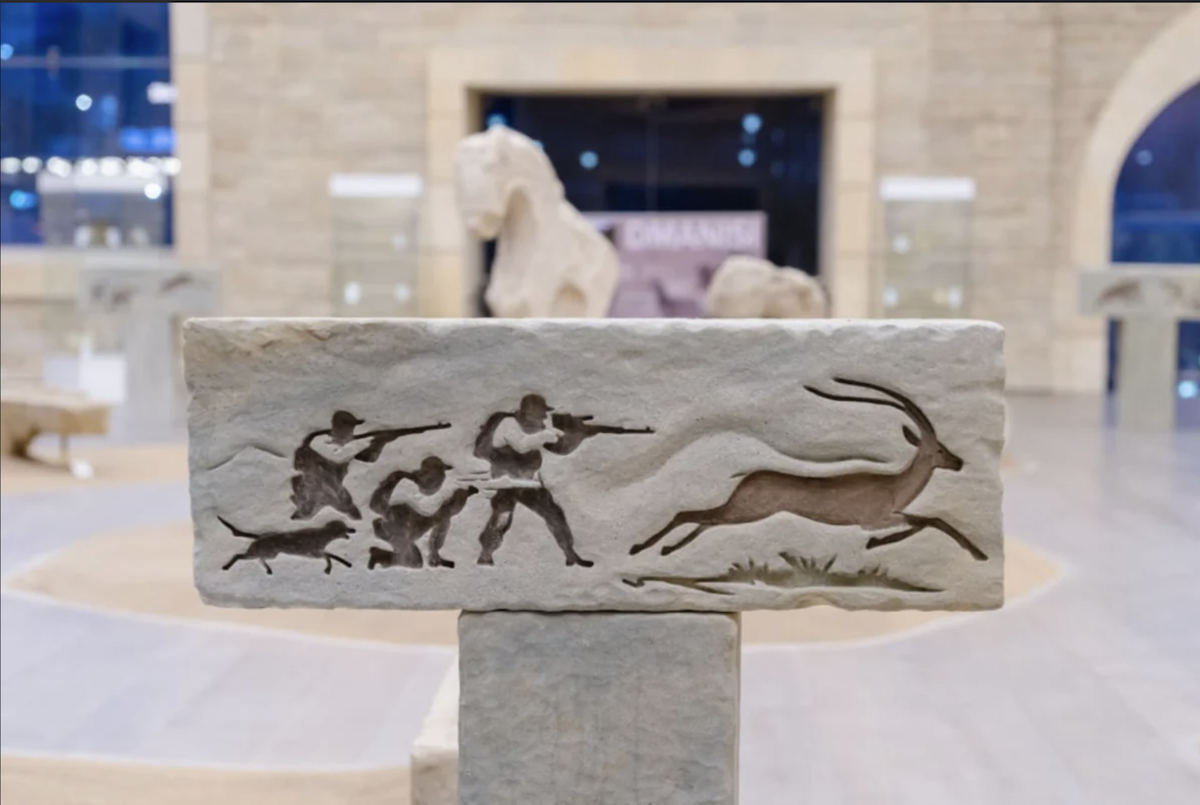
-
Top stories in Azerbaijan, Armenia, and Georgia from 26-30 October, 2026