European Commission: Georgia’s EU integration process remains stalled, situation worsens over past year


T
EU’s negative assessment of Georgia
The European Commission published its 2026 enlargement report on 4 November. It says Georgia’s EU integration process remains stalled and the situation in the country has deteriorated further over the past year.
According to the Commission, the Georgian authorities took no steps during the reporting period to meet the nine recommendations set for the country as an EU candidate to allow the accession process to move forward.
The recommendations included:
- Combating disinformation: countering information manipulation targeting the EU and its values.
- Alignment with EU foreign policy: bringing Georgia’s foreign and security policy closer to the EU’s positions and decisions.
- Overcoming political polarisation, including ensuring inclusive cooperation between political parties in parliament.
- Ensuring free and fair elections in line with international standards.
- Strengthening parliament’s role and oversight of state institutions and ensuring their independence.
- Carrying out comprehensive judicial reform to guarantee the full independence and impartiality of the courts.
- Fighting corruption, including strengthening the effectiveness and independence of anti-corruption bodies.
- De-oligarchisation: ending the excessive influence of private interests over the country’s economic, political and public life.
- Improving the protection of fundamental rights and the rights of vulnerable groups.
The Commission’s report points to the opposite trends:
- Weakening of democratic institutions;
- Restrictions on political and civil freedoms;
- Problems with judicial independence;
- Attempts to ban opposition parties;
- No progress in fighting corruption.
The Commission also highlights Georgia’s failure to fully align with EU sanctions against Russia, the growing number of direct flights between Georgia and Russia, and the inclusion of Georgian companies on EU sanctions lists.
Because of the continued democratic backsliding, the European Commission will no longer issue new recommendations on accession negotiation chapters for Georgia, except in areas requiring fundamental reforms.
On 4 November, EU Ambassador to Georgia Pawel Herczynski formally handed over the report to Georgian authorities. It was received by Deputy Foreign Minister Giorgi Zurabashvili, who was appointed in November as the prime minister’s special representative for relations with Russia.
- ‘Some European leaders don’t want to be photographed with you’ – Georgian PM’s visit to Brussels: what happened
- Council of Europe chief: Ban on opposition parties in Georgia could be challenged in Strasbourg court
Attempt to ban opposition parties
One of the strongest criticisms in the European Commission’s report concerns proceedings in the Constitutional Court following a lawsuit filed by the ruling party seeking to ban five opposition parties.
Georgian Dream claims the parties violated Article 23 of the Constitution, which prohibits political parties whose aim is to overthrow or forcibly change the country’s constitutional order. One of the arguments cited by the ruling party is the opposition groups’ refusal to recognise the legitimacy of the current government. The lawsuit also accuses them of organising attempts to overthrow the government.
The European Commission says the proceedings pose a threat to the foundations of democracy in Georgia. It also expresses serious concern over the possible use of the judicial system for political purposes.
Concerns over October 2025 municipal elections
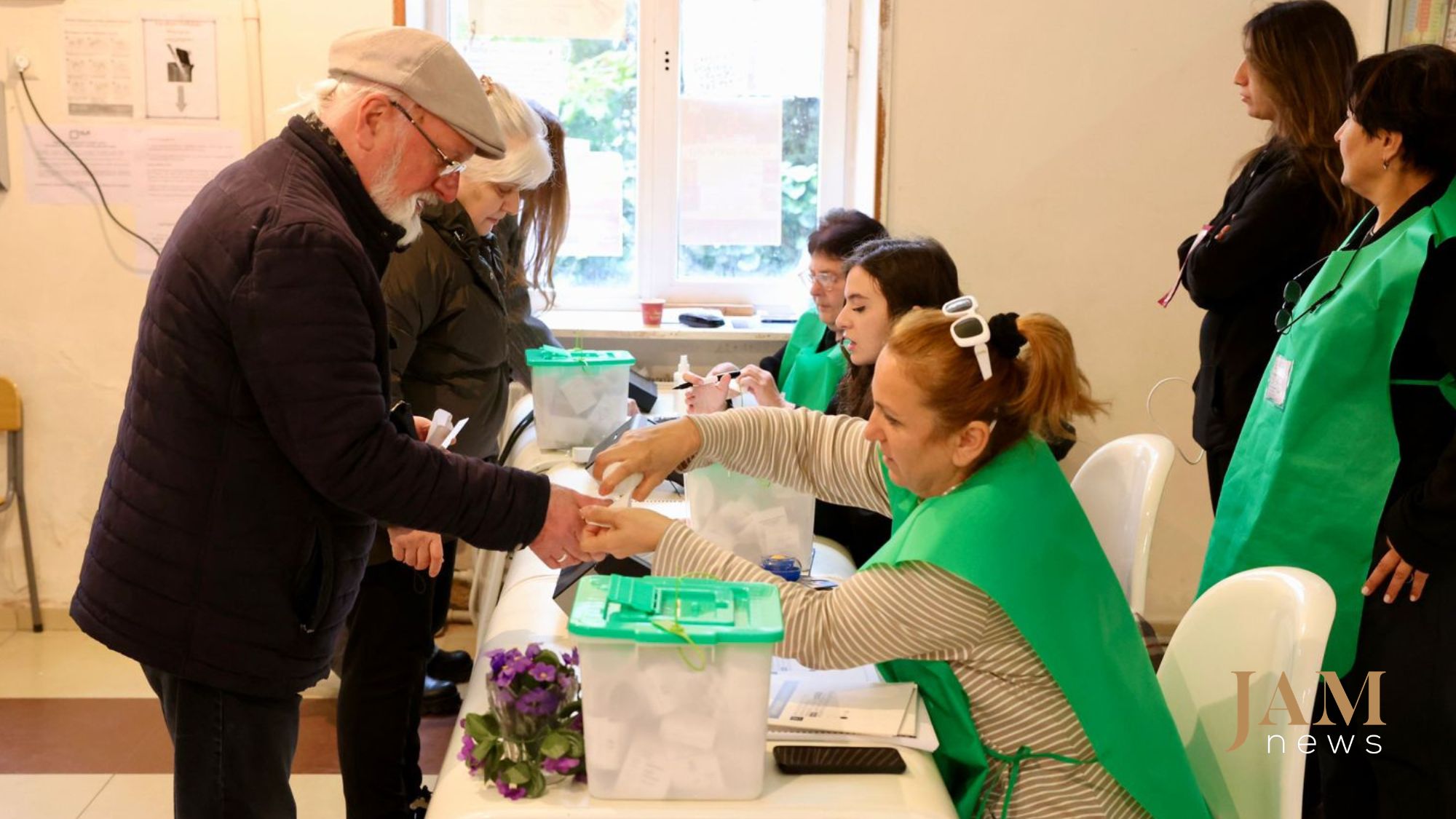
The European Commission notes that the authorities have failed to carry out fundamental electoral reform, despite recommendations made over several years.
According to the report, the October 2025 municipal elections took place in a highly polarised and repressive environment, significantly undermining the competitiveness and transparency of the electoral process.
The Commission points to legislative changes that favoured the ruling party, a boycott by most opposition parties, the lack of an impartial election administration, and pressure and intimidation of voters.
Neither the OSCE Office for Democratic Institutions and Human Rights (ODIHR) nor reputable domestic election-monitoring organisations were present to observe the vote.
Prosecution of civil society representatives and concerns over judicial independence
The report also highlights new legislative restrictions on citizens’ participation in political life. The Commission says these changes run counter to international standards of pluralism and democracy.
The European Commission expresses concern over the use of criminal law against civil society representatives.
The report refers to criminal investigations launched on charges including “sabotage”, “assisting foreign organisations in hostile activities”, “financing activities directed against the constitutional order” and “harming state interests”.
The Commission says such actions undermine the principles of democratic pluralism.
The report explicitly states that this approach is incompatible with Georgia’s EU integration process.
According to the report, the independence, impartiality and integrity of the judicial system remain seriously undermined.
The Commission also points to harsh and disproportionate sentences handed down to protesters. It says this raises concerns that the judiciary is being used as an instrument of repression.
Amendments to the legal framework governing the judiciary, introduced in December 2025, further weakened its independence and increased the risk of the judiciary being brought under government control, the report says.
- ‘Sabotage case’ in Georgia: Eight opposition figures appear in court
- TV host gets 30-day detention in Georgia over Facebook post: reactions
No progress in fighting corruption
According to the European Commission, Georgia had previously reached a certain level of preparedness in the fight against corruption, but made no progress during the reporting period.
The report notes that the country has had neither an anti-corruption strategy nor an action plan since 2020.
The legal framework also makes no provision for an independent advisory body, while whistleblower protection laws need to be brought further into line with EU standards.
The Anti-Corruption Bureau was abolished, with its preventive functions transferred to the State Audit Office. The Commission says the changes failed to take into account recommendations from GRECO and the Venice Commission on the effectiveness of these functions and institutional independence.
The Commission warns that the new model risks making these functions ineffective.
On a positive note, the report says monitoring of asset declarations by public officials was significantly expanded during the reporting period, while the number of corruption-related cases also increased.
However, the European Commission expresses concern over the selective approach to tackling corruption.
Recommendations made over several years on safeguards for the autonomy of the Prosecutor’s Office and judicial independence also remain unimplemented.
De-oligarchisation
According to the report, no steps have been taken towards de-oligarchisation.
The European Commission says a deeply entrenched system of oligarchic influence contributes to state capture and undermines democratic consolidation.
- Mayor and entrepreneur: Transparency International calls for dismissal of Georgian officials over business ties
- Brussels discusses possible suspension of EU visa-free travel for Georgia
Visa-free travel: recommendations remain unfulfilled
One of the key sections of the European Commission’s report concerns visa-free travel for Georgian citizens.
According to the Commission, Georgia has failed to implement almost all the recommendations made in its previous report under the visa suspension mechanism.
The recommendations focused mainly on protecting fundamental rights and tackling discrimination and corruption.
Following an official assessment in July 2025, the Commission found that the Georgian authorities had failed to take the necessary corrective measures. Instead, they introduced further restrictive laws that run counter to Georgia’s commitments to protecting fundamental freedoms.
In response, the European Commission activated an updated visa suspension mechanism for Georgia, initially for 12 months from 6 March 2026.
The first stage affected holders of diplomatic, service and official passports.
An enhanced dialogue with Georgia was held in June 2026. However, according to the report, it brought no progress on the issues that had prompted the EU’s concerns and led to the activation of the suspension mechanism.
Russia, sanctions and Georgia’s foreign policy
According to the European Commission’s report, Georgia’s alignment rate with EU foreign policy statements and restrictive measures fell from 40% to 38%.
Georgia has not joined most EU sanctions against Russia, Belarus and Iran. The report also highlights a significant increase in direct flights between Georgia and Russia.
Under the EU’s 21st sanctions package, transactions involving the Kulevi oil refinery linked to the trade and processing of Russian oil were banned.
The refinery was granted a six-month transition period to wind down these activities. An exemption may be possible if it switches to alternative oil supplies, subject to appropriate monitoring.
The report notes that Russian crude has become the refinery’s largest source of imported feedstock.
Three cryptocurrency service providers registered in Georgia or recently operating in the country were also added to the EU sanctions list.
- Why has Georgia’s government revived debate over Treaty of Georgievsk?
- EU’s 21st sanctions package targets Kulevi oil terminal and cryptocurrency platforms in Georgia
- German foundations leave Georgia: what the crisis in Berlin-Tbilisi relations means
EU financial assistance and programmes
The European Union has also reduced financial assistance to Georgia in response to democratic backsliding.
Since 2024, €121.3 million in bilateral funding earmarked directly for the Georgian authorities under the EU’s 2021–2027 Neighbourhood, Development and International Cooperation Instrument has been suspended.
Georgia’s participation in new EU programmes has also been put on hold since 2024.
Georgia has taken part in various EU programmes since 2014. It remains involved in Horizon Europe, Creative Europe, EU4Youth, the Customs programme, Fiscalis and the Interreg Black Sea Basin programme for transnational cooperation.
However, Georgian organisations and individuals can still access certain opportunities under Erasmus+ and the European Solidarity Corps.
Anaklia port: state ownership and funding cuts
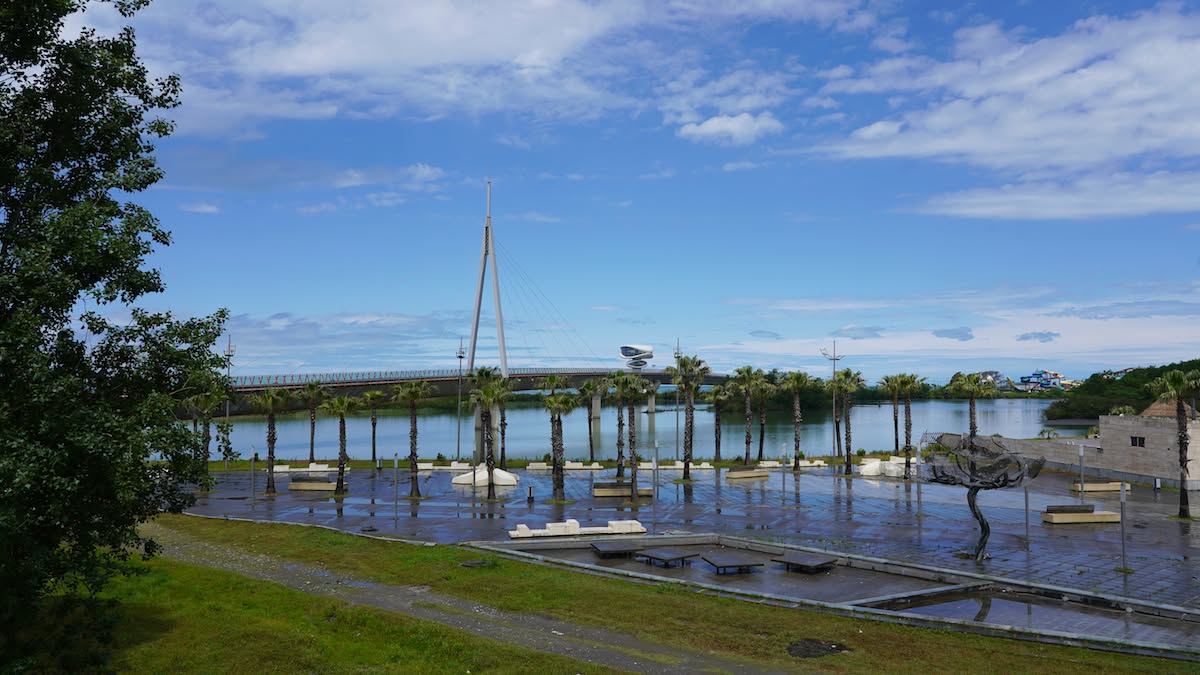
The European Commission’s report also addresses the Anaklia deep-sea port project.
According to the document, the project’s development model was changed in July 2026, with the port moving to a so-called landlord port model, which involves full state ownership of the port.
The report notes that construction work was suspended for several months and that state budget funding for the project was cut by 60% during the reporting period.
Georgian authorities respond to European Commission report
Nikoloz Samkharadze, chairman of parliament’s Foreign Relations Committee, said the report was neither realistic nor impartial.
He said the European Commission had no clear understanding of the work being done by the Georgian state or the reforms carried out by government ministries and agencies to bring the country closer to the EU.
Samkharadze attributed this to a lack of proper contacts between the Commission and Georgian government institutions.
Foreign Minister Maka Bochorishvili said the Georgian authorities had provided the EU with all the information needed to prepare the report, but it was unclear how that information would be reflected in the final document.
Bochorishvili said the lack of dialogue with the EU, including at technical and political levels, made it impossible to properly analyse and assess developments in the country.
- EU prepares to expand without Georgia: what ‘candidate status on paper’ means
- Opinion: ‘Georgia government’s anti-European rhetoric enters new phase’
How Georgia’s EU accession process came to a halt
Georgia applied to join the European Union in March 2022. In June that year, unlike Ukraine and Moldova, which were granted candidate status, Georgia was given a European perspective. To obtain candidate status, the country was asked to meet 12 priorities, mainly related to democracy, the rule of law and human rights.
In December 2023, Georgia was granted EU candidate status.
However, in June 2024, following the adoption of the “foreign agents” law and other decisions by the authorities, the EU effectively put Georgia’s accession process on hold. On 27 June, the European Council said the actions of the Georgian authorities were jeopardising the country’s European path and had effectively halted the accession process.
The situation deteriorated further on 28 November 2024, when Prime Minister Irakli Kobakhidze announced that the government would not put the opening of EU accession talks on its agenda before the end of 2028 and would refuse EU budget grants.
The announcement triggered mass protests.
The authorities used force and special equipment against demonstrators, and hundreds of people were detained. The use of force against protesters, ill-treatment of detainees and restrictions on the right to peaceful assembly drew criticism from international organisations and human rights groups.
Further legislative changes followed, placing additional restrictions on civic space.
The European Commission’s 2026 report reflects the continuation of these trends: Georgia’s accession process remains stalled, the recommendations have not been implemented, and democratic backsliding, weakening judicial independence and restrictions on fundamental rights continue.
News in Georgia