Top stories in Azerbaijan, Armenia, and Georgia from 9-13 November, 2026
 Live


-
Friday, November 13, Azerbaijan. Volodymyr Zelensky: Ukraine and Azerbaijan sign drone supply contracts
-
Friday, November 13, Armenia. Nikol Pashinyan and Ilham Aliyev, as well as the two countries’ foreign ministers, meet in Dublin
-
Friday, November 13, Georgia. Irakli Kobakhidze: “The Party of Global War exists. Behind this term are real people whose names it is dangerous to mention openly”
-
Thursday, November 12, Armenia. Armenia to lose voting rights in Russia-led CSTO over unpaid membership fees
-
Thursday, November 12, Azerbaijan. SOCAR plans to increase its total investment in Turkey to $20 billion
-
Thursday, November 12, Georgia. Irakli Kobakhidze urges Europe to “preserve traditional values”
-
Wednesday, November 11, Azerbaijan. Ilham Aliyev has arrived in Antalya, Turkey, to attend the COP31 leaders’ summit
-
Wednesday, November 11, Georgia. Constitutional Court continues hearing ruling party’s lawsuit seeking to ban five opposition parties
-
Wednesday, November 11, Armenia. Nikol Pashinyan ends Paris visit and arrives in Turkey for COP31 summit
-
Tuesday, November 10, Armenia. Russia again urges Armenia to hold a referendum on EU or EAEU membership
-
Tuesday, November 10, Azerbaijan. Turkish president: “Attempts to sow discord between Ankara and Baku are doomed to fail”
-
Tuesday, November 10, Georgia. Georgia not invited to EU enlargement forum; Russia’s Security Council again backs Georgian government’s policies
-
Monday, November 9, Georgia. Chinese Vice-President Han Zheng makes first official visit to Georgia
-
Monday, November 9, Azerbaijan. Victory Day marking the 2020 44-day war with Armenia and the visit of the Turkish president
-
Monday, November 9, Armenia. Nikol Pashinyan: “Using ‘Artsakh’ in Armenia lets Azerbaijan use its own names for Armenian territories, too”
-
Top stories in Azerbaijan, Armenia, and Georgia from 2-6 November, 2026

-
Friday, November 13, Azerbaijan. Volodymyr Zelensky: Ukraine and Azerbaijan sign drone supply contracts
● President Ilham Aliyev and UK Prime Minister Andy Burnham signed a joint declaration on strategic partnership at a meeting in Dublin. The document provides for expanded trade and investment, and cooperation in renewable energy, infrastructure, artificial intelligence, digital governance, education and science. Aliyev noted that the UK is Azerbaijan’s largest European investor. Read more here
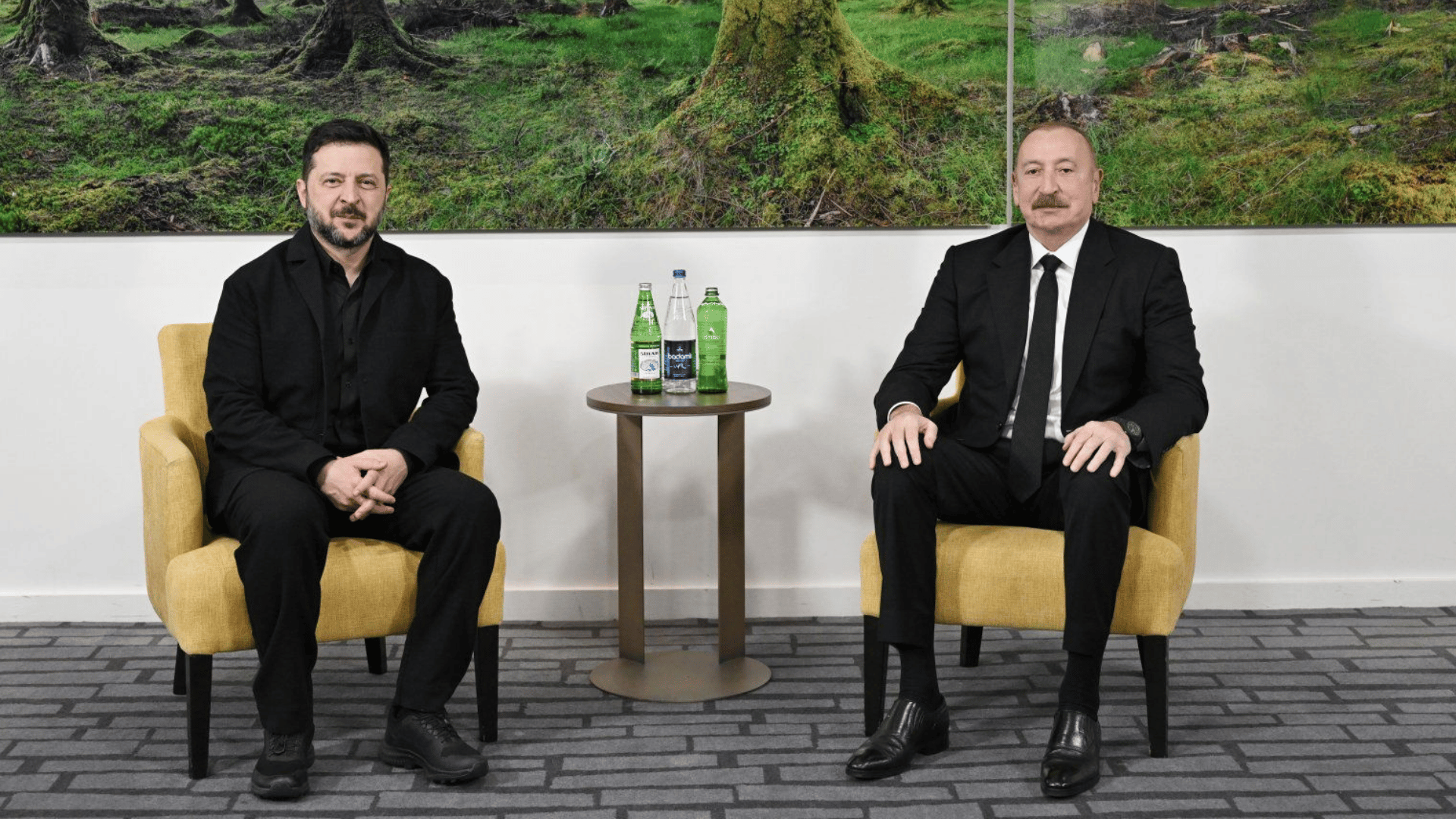
● Ukrainian President Volodymyr Zelensky said after meeting Ilham Aliyev in Dublin that Azerbaijan and Ukraine had already signed contracts for drone supplies under the Drone Deal programme and were working to expand orders. Baku’s official statement made no mention of military cooperation, focusing instead on economic ties and humanitarian assistance. Read more here
● Ilham Aliyev met Armenian Prime Minister Nikol Pashinyan in Dublin on the sidelines of the ninth European Political Community summit. They discussed further steps to consolidate peace, border delimitation, trade and transport links, including the TRIPP project. The leaders noted that 105,000 tonnes of cargo had been transported to Armenia through Azerbaijani territory since November 2025 and welcomed the establishment of working groups on the management of transboundary rivers. They also discussed the possibility of linking the two countries’ electricity grids.
● On the sidelines of the European Political Community summit in Dublin, Ilham Aliyev held separate meetings with European Council President António Costa, the presidents of Romania, Lithuania and Moldova, and the prime minister of the Czech Republic. Discussions covered Azerbaijani gas and oil supplies to EU countries, energy and transport projects linking the Caspian and Black seas, renewable energy, the Middle Corridor and broader cooperation between Azerbaijan and the EU.
● During her meeting with Ilham Aliyev, Moldovan President Maia Sandu said Chisinau was interested in developing energy cooperation with Azerbaijan. Sandu thanked Baku for supporting Moldova’s energy security. The presidents also discussed trade and agricultural cooperation.
● Ilham Aliyev said Azerbaijan planned to increase its gas exports to Europe, speaking at a roundtable in Dublin. He said that since the signing of an energy memorandum with the EU in 2022, supplies had risen from 8 billion to 13 billion cubic metres a year and now accounted for almost half of Azerbaijan’s exports. The pipeline carrying gas to Italy through seven countries is operating at full capacity. The capacity of the section running through Greece and Italy has been increased from 10 billion to 11.2 billion cubic metres, Aliyev said.
● The European Union will soon complete its assessment of a railway project linking mainland Azerbaijan with its Nakhchivan exclave. This was stated in a press release following Ilham Aliyev’s meeting with European Council President António Costa in Dublin.
● Iraq is exploring the possibility of importing natural gas from Azerbaijan via Turkey. The issue was discussed at a meeting between Iraqi Deputy Oil Minister Izzat Saber Ismail and SOCAR Vice-President Zaur Gahramanov. They reviewed the technical and logistical requirements for possible transit, and consultations will continue.
● Irish Prime Minister Micheál Martin said Azerbaijan’s participation in the European Political Community had helped advance energy supply issues and created additional opportunities to strengthen Europe’s economic security. He also recalled that talks on normalising relations between Azerbaijan and Armenia had taken place at one of the first European Political Community summits.
● Bulgaria and the Czech Republic have expressed interest in increasing gas supplies from Azerbaijan. Bulgarian Prime Minister Rumen Radev said Sofia would welcome additional volumes of Azerbaijani gas and recalled the green energy corridor project running through Georgia and Turkey. Czech Prime Minister Andrej Babiš described Azerbaijani gas as one possible source for diversifying supplies.
● New prison sentences for activists and journalists. Imran Aliyev, head of the Meclis.info platform, was sentenced to 10 years in prison, while public activist Elgiz Gahraman received a nine-year sentence. Tamella Musayeva was given a seven-year suspended sentence with a four-year probation period. All three were charged with illegal entrepreneurship, money laundering, smuggling, tax evasion, and the forgery and use of forged documents. Gahraman was taken into custody directly from the courtroom. None of the convicted individuals admitted guilt; they say they are being persecuted for criticising the authorities.
● Bahruz Samadov, a researcher and peace activist who is currently in detention, made his final statement at the Supreme Court. He said the treason charge against him was supported neither by witness testimony nor by correspondence with Armenian colleagues, and described his criminal case as fabricated. Samadov also said the trial contradicted the peace agenda between Azerbaijan and Armenia.
● Azerbaijani religious organisations have condemned an event organised on 9 November by the cultural centre of the Iranian embassy at Yerevan’s Blue Mosque. The event featured an Armenian translation of the Persian poet Ferdowsi’s epic poem Shahnameh. The mosque’s ceremonial hall was also named after Armenian poet Yeghishe Charents, and plans to install his bust there were announced. Iranian Vice-President Hamid Pourmohammadi attended the ceremony. Following restoration in the 1990s funded by Iran, the mosque was placed under the care of the Iranian embassy. The Caucasus Muslims Board and Azerbaijan’s State Committee for Work with Religious Organisations said the mosque was built in the 18th century during the period of the Iravan Khanate and forms part of Azerbaijan’s religious and architectural heritage. They described naming the hall after Charents as an attempt to distort the monument’s historical affiliation.
-
Friday, November 13, Armenia. Nikol Pashinyan and Ilham Aliyev, as well as the two countries’ foreign ministers, meet in Dublin
● Prime Minister Nikol Pashinyan met Azerbaijani President Ilham Aliyev on the sidelines of the ninth European Political Community summit in Dublin. They discussed progress on the peace agenda between the two countries, including practical steps such as the planned connection of their electricity grids, the development of transport and transit links, economic and trade relations, border delimitation and confidence-building measures. In this context, the leaders discussed progress on the Trump Route for International Peace and Prosperity (TRIPP) transit project, including planning and design work for its railway and road components.
● Pashinyan and Aliyev described the transit of goods through Azerbaijani territory to Armenia as a positive development. A total of 105,000 tonnes of cargo had been transported along this route since November last year. The leaders also welcomed the establishment of working groups on the management of transboundary rivers.
● The foreign ministers of the two countries, Ararat Mirzoyan and Jeyhun Bayramov, also held a brief conversation in Dublin. Armenian Security Council Secretary Armen Grigoryan and Azerbaijani presidential aide Hikmet Hajiyev also spoke on the sidelines of the summit.
● Ararat Mirzoyan held a brief conversation in Dublin with EU foreign policy chief Kaja Kallas. They discussed the development of the Armenia-EU partnership.
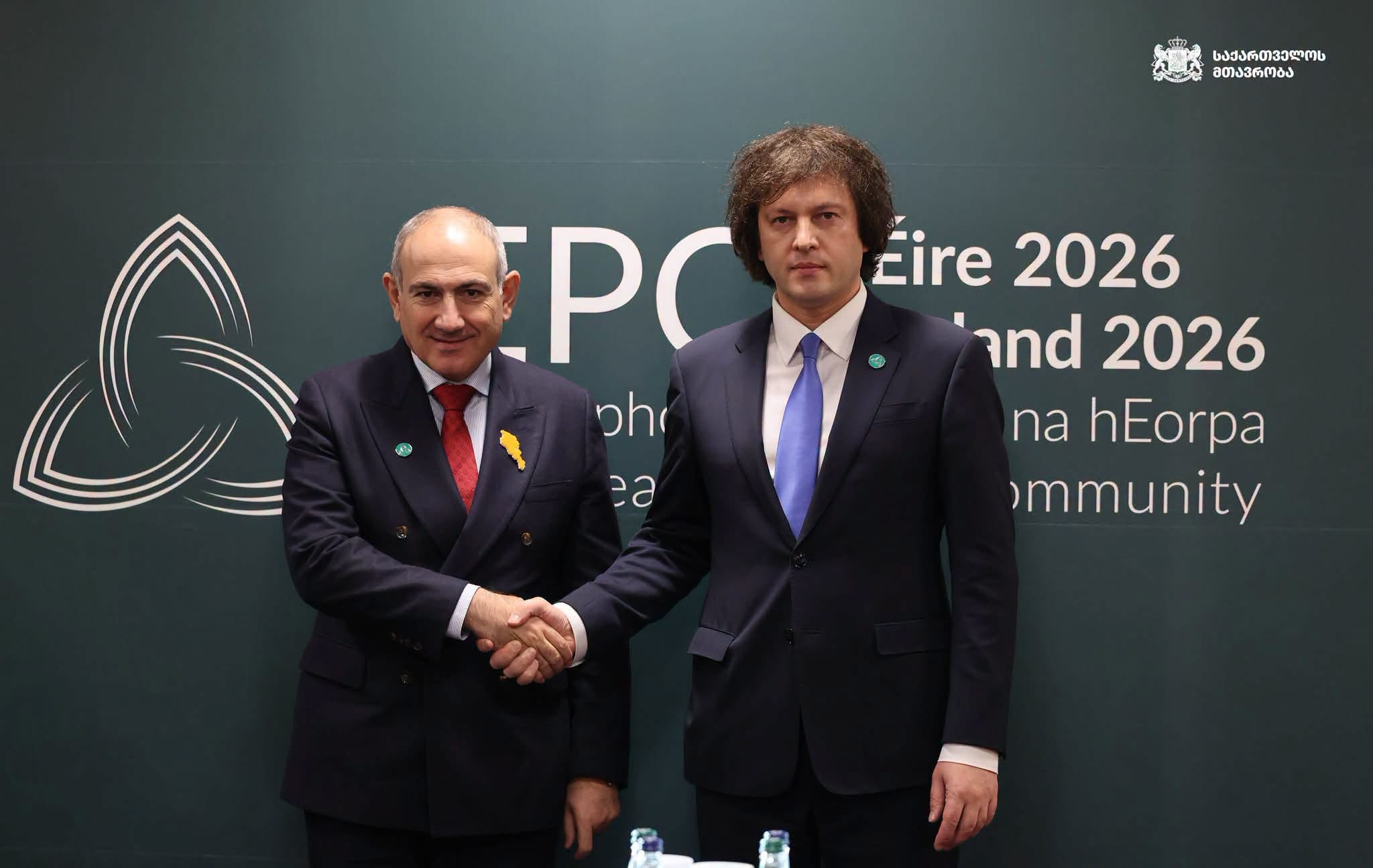
● In Dublin, Nikol Pashinyan met Georgian Prime Minister Irakli Kobakhidze. They stressed the importance of intensive bilateral discussions for further developing cooperation.
● Nikol Pashinyan also met Estonian Prime Minister Kristen Michal on the sidelines of the summit. They discussed Armenia’s relations with the European Union and ways to deepen them further.
● Nikol Pashinyan commented to journalists on his meeting with Turkish President Recep Tayyip Erdoğan, held in Antalya on 11 November on the sidelines of COP31. “It was a very constructive and positive dialogue. We look forward to further developing our relations,” he said. According to the prime minister, the two sides now need to repair and reopen the railway between their countries.
● Parliament unanimously approved, in its second and final reading, a package of bills introducing amendments to the Law on Joint-Stock Companies and related legislation. The parliamentary opposition did not attend the session or take part in the vote.
● Russian Foreign Ministry spokeswoman Maria Zakharova dismissed as a “tall tale” Armenian Security Council Secretary Armen Grigoryan’s statement that the Collective Security Treaty Organisation (CSTO), a military alliance led by Russia, had failed to respond to Yerevan’s requests. “In fact, it is a four-line poem. The last line goes: ‘Grigoryan made up a tall tale’,” Zakharova said.
Context: Armenia has frozen its participation in the CSTO, has not taken part in its activities and has not paid membership fees for the past two years. Yerevan took this step in response to the alliance’s failure to assist when Azerbaijani forces entered Armenia’s sovereign territory. Several such incidents took place in 2021-2022. The CSTO explained its failure to intervene by saying that the border with Azerbaijan had not been delimited. Prime Minister Nikol Pashinyan said: “I want to state once and for all: our interests related to the CSTO have been exhausted. We no longer have any interests connected with the CSTO.”
On 11 November, Russian presidential spokesperson Dmitry Peskov said Armenia had been stripped of its voting rights in the CSTO for failing to fulfil its obligations over several years. In response, Armenian Security Council Secretary Armen Grigoryan posted the following three-line poem on his Telegram channel: “They silenced us where everyone remained loudly silent, while we were being killed together.”
📌 Unresolved humanitarian issues should be addressed as part of the process of normalising relations between the two countries, while the issue of Armenians held in Azerbaijani prisons is a precondition. French Minister Delegate for Foreign Trade and Economic Attractiveness Nicolas Forissier said this in response to a question from Senator Marie-Arlette Carlotti. He also said France had unequivocally condemned Azerbaijan’s military operation in Karabakh and expressed regret over the departure of almost the entire Armenian population from the region. “We provided the greatest humanitarian support in receiving these people in Armenia. France attaches great importance to the implementation of the interim measures prescribed by the UN International Court of Justice on 17 November 2023. Everyone wishing to return to their places of residence must be able to do so freely and in safe conditions,” the minister said.
📌 Armenia’s Public Television has received an additional 20.6 million drams (approximately $56,000) to complete infrastructure work at its new television studio.
📌 The authorities want to allow MPs who are on official business trips to vote online. The draft legislation has been approved by parliament.
📌 Armenia has joined the process of increasing the capital of the Black Sea Trade and Development Bank. As one of the bank’s founding members, Armenia is subscribing to an additional 7,136 shares worth €8,206,400, representing 1.01% of the total shares. This will bring Armenia’s total number of shares to 27,136 and its subscribed capital to €31,206,400.
📌 Armenia will complete the construction of 300 schools and 500 kindergartens by the end of the year. An additional 6.9 billion drams has been allocated for the work.
VIDEO. A video of Nikol Pashinyan speaking to a Turkish journalist in Antalya on the sidelines of COP31 has gone viral online. The journalist asks Pashinyan to make his signature heart gesture to the music of famous Turkish singer Tarkan. Pashinyan first asks what song is playing and whether it has a political meaning. “No, no, it’s Tarkan, a Turkish megastar. It’s his song ‘Kiss Kiss’. You don’t know Tarkan?” the journalist replies. Pashinyan says he does, and the two make the heart gesture together. “You know, you could say that we are now brothers — Turkey and Armenia. We are building good relations and are very happy about it. I hope that in the future Armenia, Azerbaijan and Turkey will cooperate in the region. I think that would be better for all our peoples. What do you think?” the journalist asks. “Yes, we must work towards cooperation, peace and prosperity, and I think we are now on that path,” the Armenian prime minister replies.
-
Friday, November 13, Georgia. Irakli Kobakhidze: “The Party of Global War exists. Behind this term are real people whose names it is dangerous to mention openly”
● On the 11th day of the Constitutional Court hearings on the ruling party’s lawsuit seeking to ban five opposition parties, judges questioned representatives of the United National Movement (UNM). The court rejected the party’s request to include imprisoned former president Mikheil Saakashvili in the proceedings.
Context: Georgian Dream claims the parties violated Article 23 of the Constitution, which prohibits political parties whose aims include overthrowing or forcibly changing the country’s constitutional order. One of the arguments is that the parties refuse to recognise the legitimacy of the current authorities. The lawsuit also accuses them of organising attempts to overthrow the government. This week, the hearings moved from the parties’ opening statements to the question-and-answer stage. Read more here
● Asked about Georgia in Dublin ahead of the European Political Community summit, Council of Europe Secretary General Alain Berset said the organisation was following the ongoing discussions at Georgia’s Constitutional Court. “Membership of the Council of Europe implies a commitment to its values,” he said. Berset also stressed the importance of continuing dialogue, including with Georgia.
● Tbilisi City Court sentenced special forces officer Guram (Goga) Kirkitadze to five years in prison for attacking journalist Guram Rogava. The incident took place on 29 November 2024 during a protest in Tbilisi, when Rogava was reporting live for Formula TV. The journalist suffered serious injuries. Rogava said he had not been questioned before the verdict was delivered and that, in his words, “the real attacker is still at large”. Read more here
● Prime Minister Irakli Kobakhidze met Armenian Prime Minister Nikol Pashinyan in Dublin on the sidelines of the European Political Community summit and took part in a roundtable on security and defence. Speaking at the Institute of International and European Affairs (IIEA) ahead of the summit, he said: “Russia has no instruments of influence over Georgia.” Kobakhidze also repeated his claims about a global “Party of Global War”. He said it was neither the EU nor the US, but could influence them. “Behind this term are specific, real people whose names it is dangerous to mention openly,” he said.
● Luka Ekhvaia, head of the presidential administration, has left his post two months after being appointed. Two independent sources confirmed this to Radio Free Europe/Radio Liberty, while the administration said he “no longer works here”. The reason for his departure is unknown.
● Georgian singer Sopho Batilashvili has been fined 3,000 lari (approximately $1,150) for posting a video on social media of herself performing “Ole Ola”, a song containing profanity directed at the ruling party. After the court hearing, Batilashvili told journalists that restrictions on forms of protest were becoming increasingly widespread in the country and that the issue had now reached music censorship. Read more here
● Tbilisi Mayor Kakha Kaladze has outlined possible measures to reduce traffic congestion: restricting vehicle access on certain days according to whether number plates are odd or even, and introducing fees for entering certain camera-controlled zones. He said the biggest problem was “dependence on cars and the number of vehicles”. No specific decision has been made yet
-
Thursday, November 12, Armenia. Armenia to lose voting rights in Russia-led CSTO over unpaid membership fees
● Armenia will lose its voting rights in the Collective Security Treaty Organisation (CSTO), a military alliance led by Russia, because of unpaid membership fees. The decision was made at the organisation’s summit in Moscow. Russian presidential spokesman Dmitry Peskov said Armenia had also lost the right to appoint its representatives to senior CSTO positions.
Context: Armenia froze its participation in the CSTO two years ago, stopped taking part in its activities and stopped paying membership fees. Yerevan took this step in response to the failure of its allies to provide assistance when Azerbaijani forces entered Armenia’s sovereign territory. Several such incidents occurred in 2021–2022. The CSTO justified its failure to intervene by saying that the border with Azerbaijan had not been delimited. A few days ago, Prime Minister Nikol Pashinyan said: “I want to state once and for all: our interests in the CSTO have been exhausted. We no longer have any interests related to the CSTO.”
● Armenia could regain its participation rights in the CSTO once it settles its outstanding membership fees, the organisation’s Secretary General Taalatbek Masadykov said. According to Masadykov, the question of expelling Armenia from the organisation was not raised at the CSTO summit.
● Armenia’s prime minister did not attend the CSTO summit, where the country was stripped of its voting rights. Instead, he took part in COP31 in Turkey, travelling there directly after meeting the president of France.
● Nikol Pashinyan and Turkish President Recep Tayyip Erdoğan met in Antalya, Turkey, on the sidelines of the COP31 climate summit. They discussed the process of normalising relations between Armenia and Turkey and stressed the importance of bringing it to a successful conclusion. They also highlighted the need to further develop trade and economic ties. The two leaders noted that peace had been established between Armenia and Azerbaijan, giving fresh impetus to regional cooperation. They also discussed the unblocking of transport links, including steps to implement the TRIPP project – a land route connecting Azerbaijan with its exclave of Nakhchivan through Armenian territory.
● On the sidelines of COP31, Nikol Pashinyan held a brief conversation with Georgian President Mikheil Kavelashvili and met Iranian President Masoud Pezeshkian.
● Opportunities to expand trade and economic cooperation between Armenia and Finland were discussed at a meeting in Antalya between Armenian Foreign Minister Ararat Mirzoyan and Finnish Minister for Foreign Trade and Development Ville Tavio.
● Opportunities for cooperation between Armenia and the European Union in digital security and high-performance computing were discussed at a meeting between Armenian Minister of High-Tech Industry and Artificial Intelligence David Tadevosyan and European Commissioner for Enlargement Marta Kos. The meeting took place on the sidelines of the first summit of EU member states’ ministers responsible for digital affairs, held under the Interconnectedness Agenda Platform, in Chisinau, Moldova.
● Economy Minister Gevorg Papoyan met representatives of MSC Group, one of the world’s largest maritime shipping and logistics operators, in Geneva. They discussed prospects for unblocking transport links in the South Caucasus and the potential to establish a regional logistics hub in Armenia.
● President Vahagn Khachaturyan signed into law the ratification of the framework agreement on strategic cooperation between Armenia and the United States concerning the Trump Route for International Peace and Prosperity (TRIPP). Earlier, parliament approved the ratification by 63 votes to 32.
● Nikol Pashinyan will make a working visit to Ireland on 12–13 November and attend the ninth European Political Community summit in Dublin. Bilateral meetings are also planned.
● Russian Foreign Ministry spokeswoman Maria Zakharova: “A number of Western countries have literally declared a hunt for Russian citizens around the world. Armenia is no exception: since the beginning of 2026, five Russian citizens have been detained in the country in response to relevant requests from foreign states.” She added that “the charges brought against those detained often have nothing whatsoever to do with reality”.
● The team of opposition figure Arsen Gevorkyan, who died of a heart attack in a detention centre, held a protest outside the EU office in Armenia. They said his death was “the result of political persecution”. Gevorkyan was a candidate for mayor of the Stepanavan community, representing the pro-Russian opposition bloc Strong Armenia. He was arrested four days before the vote on charges of vote-buying, which he denied. “There is a human rights and democracy crisis in Armenia. […] We believe EU institutions can no longer remain silent, because what is happening in Armenia today is a clear manifestation of a dictatorial regime,” said bloc MP Marianna Kagramanyan.
● People aged 63–72 can apply for state support to start or run a business, Economy Ministry representative David Barsегyan said. Applications can be submitted until 15 December. Those selected will receive training and certificates allowing them to apply to a bank for financial support.
-
Thursday, November 12, Azerbaijan. SOCAR plans to increase its total investment in Turkey to $20 billion
● Azerbaijan marks Constitution Day today. The Constitution was adopted 31 years ago, on 12 November 1995, in a nationwide referendum.
● Twenty-two imprisoned Azerbaijani activists and journalists have called for joint efforts to defend political prisoners. Their statement backs an appeal by Akif Gurbanov, who was sentenced to 15 years in the Toplum TV case. The signatories say there are more than 300 political prisoners in the country and that persecution also targets activists, journalists and civil society representatives abroad. They include Meydan TV editor-in-chief Aynur Elgunesh, journalists Natig Javadli, Ramin Deko, Shamshad Agha, Aytaj Tapdyg and Khayala Aghayeva, human rights defender Rufat Safarov and political scientist Bahruz Samadov. All detained journalists face charges of currency smuggling and other crimes. They deny the charges and link the cases to their critical reporting on the authorities. The Azerbaijani authorities deny that there are political prisoners in the country.
● State oil company SOCAR is expanding its investments in Turkey. It plans to invest around $120 million in a new production unit at the STAR refinery, which would increase annual diesel output by approximately 600,000 tonnes. The project also includes a polyethylene production complex with an annual capacity of 850,000 tonnes; $70 million has been allocated for its design. In addition, SOCAR Türkiye has secured $1.6 billion in financing from an international consortium of 22 banks to refinance existing debt. The company says it aims to increase its total investment in Turkey to $20 billion.
● Alexander Alden, the nominee for US ambassador to Azerbaijan, has come under scrutiny over his alleged ties to Bosnian Serb leader Milorad Dodik, who was previously under US sanctions. According to Semafor, Alden played a key role in promoting Dodik’s interests and bringing the Trump administration closer to the authorities of Republika Srpska. Jim O’Brien, a former US assistant secretary of state, said that, if confirmed, the reports would raise serious questions about the nominee’s professional judgement.
● Azerbaijan plans to introduce a minimum hourly wage from 2027. It will apply to employment contracts lasting less than a month and to workers employed for no more than 20 hours a week. The system will initially cover agriculture and catering, with the possibility of extending it to other sectors later. Deputy Labour Minister Zaur Aliyev said the minimum hourly rate would be higher than the current hourly equivalent of the minimum monthly wage. However, experts have also raised concerns about the programme.
● Another mine explosion has occurred in territories retaken by Azerbaijan from Armenian occupation during the 2020 Second Karabakh War. A tractor struck an anti-tank mine near the village of Gyrmyzybazar in the Khojavend district. A 42-year-old local man was seriously injured and is undergoing emergency surgery in hospital. According to the State Agency for Mine Action (ANAMA), 275 mine-related incidents have been recorded in the retaken territories since November 2020. A total of 440 people have been injured, 73 of them fatally. Since 1991, mines have claimed more than 3,500 lives in Azerbaijan. Baku has repeatedly demanded that Armenia provide complete and accurate minefield maps.
● A UN General Assembly committee has adopted by consensus a resolution on missing persons initiated by Azerbaijan. Sixty-three countries joined as co-sponsors. The resolution calls on states involved in armed conflicts to take measures to prevent people from going missing and establish the fate of those who have disappeared. Azerbaijan first put forward the initiative in 2002.
● On the sidelines of the COP31 international climate summit in Antalya, Turkey, Azerbaijani Energy Minister Parviz Shahbazov discussed with his Bulgarian counterpart, Iva Petrova, the creation of a joint venture and preparation of a feasibility study for a green energy corridor linking Azerbaijan, Georgia, Turkey and Bulgaria. The project is intended to enable electricity generated from renewable sources in Azerbaijan to be exported to Turkey and Europe.
● Parviz Shahbazov also held talks with International Energy Agency Executive Director Fatih Birol on cooperation in electrification and energy security.
● Energy Minister Parviz Shahbazov also met executives of Saudi company ACWA Power. They discussed new wind and solar energy projects, connecting them to Azerbaijan’s power grid and the possibility of exporting electricity to Turkey and Europe.
● At a meeting between Parviz Shahbazov and representatives of Denmark’s Vestas, the sides discussed the company’s involvement in Azerbaijan’s wind energy projects and the use of its technologies.
● Meydan TV reports that nearly 100 lecturers at the Azerbaijan State Oil and Industry University have been dismissed or had their teaching hours cut. The lecturers accuse the university management and rector Rufat Azizov of allocating teaching workloads without transparency, reducing the number of departments and replacing experienced staff with new employees. They also claim that student assessments are being used to put pressure on lecturers. According to sources quoted by the outlet, around 30 staff members of Sumgayit State University have been transferred to the university in Baku.
-
Thursday, November 12, Georgia. Irakli Kobakhidze urges Europe to “preserve traditional values”
● Prime Minister Irakli Kobakhidze is attending the ninth European Political Community summit in Dublin. On 12 November, he is scheduled to attend the summit’s opening plenary session and a roundtable on security and defence in democratic Europe. His delegation includes Deputy Prime Minister and Foreign Minister Maka Bochorishvili and Head of the Government Administration Levan Zhorzholiani.
● Speaking at the Institute of International and European Affairs in Dublin, Irakli Kobakhidze said the Georgian government was concerned about developments in Europe related to migration and ethnic or religious identity. He described what he called “negative trends” in Europe and said it was important for the continent to preserve traditional values. Kobakhidze linked Georgia’s European identity to its Christian traditions and culture, saying the country remained committed to these values.
● Metropolitan Iove (Akiashvili) of Mroveli-Urbnisi described the government as “unfaithful and unchurched” during a sermon at Urbnisi Cathedral, saying it had exhausted its capacity to govern. “We must sound the alarm. Things cannot go on like this,” he said. Earlier, Metropolitan Ilarion of Mestia and Upper Svaneti called on the government in a written statement to “stop illegal surveillance of citizens and clergy”. Ruling party MP Levan Machavariani and parliamentary Culture Committee Chairman Giorgi Gabunia dismissed the metropolitan’s remarks as unfounded, while opposition representatives welcomed his criticism. Read more here.
● Parliament has approved amendments to the Election Code in the first reading, with 79 votes in favour and 10 against. Under the draft law, the Central Election Commission (CEC), rather than district commissions, would determine election results, and the deadline for doing so would be reduced from 26 to 15 days. Recounts to correct random errors would be abolished if they affected no more than five polling stations. CEC protocols could be challenged in court only under conditions specified by law. Decisions on registering election observers would be made by the CEC chairperson rather than the commission itself.
● Finance Minister Lasha Khutsishvili has presented the main parameters of the 2027 state budget to parliament. The government forecasts real economic growth of 5% in 2027, nominal GDP of 126.4 billion lari and a budget deficit of 2.5% of GDP. Pension spending will increase: people aged 70 and over will receive 555 lari (approximately $215) a month, while those under 70 will receive 415 lari (approximately $160).
● Davit Sturua, Davit Zhgenti, Konstantin Kokaia and Kakhaber Mzhavanadze, convicted in the 4 October case involving an alleged attempt to storm the presidential administration, have signed plea agreements. A first-instance court had sentenced each of them to five years in prison. Under the agreements, their sentences have been reduced to one year and two months in prison and two years of probation. They are expected to be released in December.
● A man has been arrested in Tbilisi on suspicion of murdering a married couple in a residential building. According to the Interior Ministry, he shot them with an automatic rifle as they were waiting for the lift, then fled the scene. Both died at the scene. Investigators say the murder was preceded by a property dispute, including the suspect’s failure to meet financial obligations. The offence carries a sentence of up to 20 years in prison or life imprisonment.
● Former journalist Lalo Beria, wife of Nodar Chachua, also a former journalist who was arrested on drug-related charges, has reached a plea agreement with the prosecution. She was sentenced to six months in prison, three years of probation and a fine of 3,000 lari (approximately $1,150). According to the Interior Ministry, cocaine, methadone, MDMA, alpha-PVP and ketamine were found at her home. Chachua claims his wife was arrested to put pressure on him and force him to testify against others. The ministry denies this and says it has audio and video evidence of Chachua allegedly selling drugs. Beria worked for the pro-government outlet POSTV, while Chachua worked for Georgia’s Public Broadcaster.
● According to Geostat figures recalculated following the 2024 population census, Georgia’s population grew by 5.6% between 2015 and 2025, reaching 3,930,400. The increase was mainly driven by immigration, as natural population growth has been negative in recent years. The number of people aged 65 and over rose by almost 30% over the decade and now accounts for around 18% of the population. The share of people living in urban areas increased from 57% to 62%. Read more here
● Georgian MMA fighter Merab Dvalishvili says he and fellow fighter Saba Lazishvili were attacked by Russian MMA fighter Usman Nurmagomedov and members of his entourage in a hotel lobby in Abu Dhabi. Dvalishvili said the incident took place while they were recording an interview and that the attackers approached them from behind. Footage of the incident has since circulated on social media. Georgian fighter Ilia Topuria wrote that, according to information available to him, Nurmagomedov and his entourage had been detained. There has been no official confirmation of the reported detentions.
Georgian MMA fighter Merab Dvalishvili says he and a friend were attacked by Russian fighter Usman Nurmagomedov and members of his entourage while he was giving an interview in a hotel lobby in Abu Dhabi. Video footage circulating on social media shows Nurmagomedov approaching Dvalishvili from behind before a physical confrontation breaks out.
Dvalishvili said the group included around 20 people and that he and his friend were punched and kicked while on the ground. In a post accompanying the video, he claimed hotel security was holding him back as the attack continued. The full circumstances of the incident have not yet been independently established.
The confrontation comes amid a long-running rivalry between Dvalishvili and the Nurmagomedov family. In January 2025, Dvalishvili defeated Usman’s brother, Umar Nurmagomedov, by unanimous decision at UFC 311, successfully defending his UFC bantamweight title. Their fight had been preceded by months of heated exchanges.
Tensions have flared up again in recent months. Dvalishvili was involved in a scuffle with one of Umar’s associates ahead of UFC Georgia, after which the two fighters traded insults in the media.
Dvalishvili is in Abu Dhabi for the RAF event, where he is scheduled to wrestle Marlon Moraes on Saturday. The reported attack took place during a promotional interview ahead of the event.
— JAMnews (@JAMnewsCaucasus) November 11, 2026
-
Wednesday, November 11, Azerbaijan. Ilham Aliyev has arrived in Antalya, Turkey, to attend the COP31 leaders’ summit
● President Ilham Aliyev has arrived in Antalya, Turkey, to attend the COP31 leaders’ summit, an annual international climate summit held under the auspices of the United Nations. Aliyev and First Lady Mehriban Aliyeva travelled to Turkey at the invitation of the Turkish president.
Context: The visit follows Aliyev’s absence from the October summit of the Organisation of Turkic States in Ankara, amid disagreements between Baku and Ankara. Experts cite criticism in Turkey of Azerbaijan’s ban on wearing the hijab in schools and its partnership with Israel among the sources of tension. President Recep Tayyip Erdoğan’s visit to Baku on 8 November, and the strong joint statements by the two presidents about the strength of bilateral relations, signalled an improvement in ties. Read more here.
● Azerbaijan, Georgia, Turkey and Bulgaria have signed a strategic partnership agreement on clean energy in Antalya. The agreement provides for the creation of a green energy corridor through the four countries, the supply of renewable electricity to Europe, uninterrupted transmission and the modernisation of fibre-optic infrastructure.
● At COP31, Energy Minister Parviz Shahbazov presented investment opportunities in Caspian wind power. Azerbaijan’s wind energy potential is estimated at 135 GW onshore and 157 GW in its sector of the Caspian Sea.
● An exhibition featuring portraits of ten journalists representing more than 30 staff members of Meydan TV, Toplum TV and Abzas Media currently in prison in Azerbaijan has opened as part of Berlin Freedom Week, marking the anniversary of the fall of the Berlin Wall. Visitors can also write letters to the imprisoned journalists. The exhibition was organised by Mikroskop Media and Exile Team. All the detained journalists face charges of currency smuggling and other offences. They deny the charges and link the criminal case to their critical reporting on the authorities.
● Turkish environmental group Polen Ekoloji has called on COP31 participants in Antalya to support the detained Meydan TV journalists Aytaj Tapdyg and Khayala Aghayeva, who reported on environmental issues and animal protection in Azerbaijan.
● Speaking at the exhibition opening, German Bundestag member Frank Schwabe said economic ties with Azerbaijan should not prevent European countries from speaking openly about human rights violations. He called for continued international pressure on Baku, demanding the release of political prisoners and implementation of European Court of Human Rights rulings.
● Sevinj Vagifgizi, the imprisoned editor-in-chief of Abzas Media, has published a letter describing poor conditions in the prison building and alleged misconduct by the administration. She says floors are sinking in the women’s unit, complaints by inmates have not led to repairs, and prison staff accept food and other goods from prisoners as bribes. Vagifgizi also writes that, despite an annual penitentiary service budget of around 200 million manats (approximately $118 million), the facility lacks even the equipment and resources needed to set up a kitchen.
● Azerbaijan’s state oil company SOCAR is launching construction of a new polyethylene production complex in Aliaga, Turkey. The project will use US technology developed by Univation Technologies. It is part of SOCAR’s petrochemical programme in Turkey, worth around $7 billion. A total of $70 million has already been allocated for engineering design, which is expected to be completed by the end of 2027. The plant will have an annual capacity of 850,000 tonnes.
● The Central Bank has tightened lending requirements for companies and individual entrepreneurs selling goods on instalment plans. They must now report to banks the total value of such sales and the number of customers, with banks checking the data against information from credit bureaus. If the match rate for either indicator is below 90%, the loan will be classified as a non-performing asset. One possible reason for the tighter rules is the rise in overdue bank loans. As of 1 October, these totalled 754.3 million manats (approximately $444 million), up more than 42% year on year.
● From 1 January 2027, tax benefits for agricultural producers will be reduced from 100% to 90% for five years, meaning that 10% of their income or profits will be taxable. A full exemption from simplified tax is to be extended for another five years, while imports of animals for fattening will be exempt from VAT for three years. Small farmers fear higher costs and increased bureaucracy.
● An Azerbaijani-Turkish forestry education centre and tree nursery have opened in Jabrayil. The nursery has an annual production capacity of two million saplings. The centre plans to provide theoretical and practical forestry training to 400 people every year.
● Women in Azerbaijan earn an average of 30.8% less than men. According to 2025 data, the average monthly salary was 1,264 manats for men (approximately $744) and 874 manats for women (approximately $514). Economists explain the gap by pointing out that men are more likely to work in the highly paid oil extraction sector, while women are more often employed in education and healthcare, where salaries are lower.
-
Wednesday, November 11, Georgia. Constitutional Court continues hearing ruling party’s lawsuit seeking to ban five opposition parties
● The Constitutional Court will continue hearings today on a lawsuit filed by 88 MPs from the ruling party seeking to ban five opposition parties. Georgian Dream argues that the parties violated Article 23 of the Constitution, which prohibits political parties whose aim is to overthrow or violently change the country’s constitutional order. One of the grounds cited is their refusal to recognise the legitimacy of the current authorities. The lawsuit also accuses them of organising attempts to seize power. This week, the hearings moved from statements by the plaintiffs and defendants to a question-and-answer stage. Read more here
● Giga Parulava, an MP from the opposition party Gakharia for Georgia, has described amendments to the Election Code prepared by the ruling parliamentary majority as an attempt to monopolise the electoral process. He says the draft effectively abolishes the practice of appealing decisions by district election commissions. Under the proposed amendments, the Central Election Commission would consider appeals against such decisions only on a limited list of grounds. David Matikashvili, chair of parliament’s Procedural Issues Committee, said there had been no systematic consultations with the CEC while the amendments were being drafted.
● Former prime minister Irakli Garibashvili, convicted of bribery and corruption, has sent his tenth letter from prison, demanding that court proceedings against him be held in public. He says closing the hearings is a clear example of “shadow justice”. The Public Defender has begun examining the allegations made by Garibashvili concerning pressure, blackmail and coercion, as well as the grounds for holding closed hearings and restricting access to case materials. According to the prosecutor’s office, Garibashvili received 750,000 lari (approximately $290,000) through procurement contracts involving the defence ministry. The former prime minister denies guilt. Read more here
● During meetings on his visit to the Czech Republic, Parliament Speaker Shalva Papuashvili claimed that “direct instructions are being sent from Brussels to the capitals of EU member states not to hold meetings with Georgian delegations”. He did not identify the source of the alleged instructions or name any countries. The statement came after Georgia was not invited to the EU enlargement forum.
● Georgia remains heavily dependent on the Russian market in some sectors, although its overall economic reliance has declined, according to a study by BM.ge. Revenue from exports to Russia, remittances from Russia and Russian tourists visiting Georgia accounted for 14.4% of Georgia’s GDP in 2022, but had fallen to around 5% by 2025. However, Russia accounted for about 64% of Georgian wine exports in 2025. Gas imports from Russia increased 2.2-fold compared with 2021, reaching 886 million cubic metres, while 62.4% of imported electricity came from Russia. Read more here
● Shota Berekashvili, chair of parliament’s Economic Policy Committee, presented a bill amending the laws on commercial banks and microbanks at a plenary session. He said the two types of institutions account for around 75-80% of the financial sector and that the aim of the amendments is to allow new banks to enter the market and increase competition. Among other changes, the bill simplifies the procedure for foreign banks to enter the Georgian market.
● Parliament has passed in its third reading an amendment to the Law on Enforcement Proceedings. Under the amendment, financial assistance from the state budget during paid maternity and parental leave will no longer be subject to seizure. Under a government decree, this assistance will not exceed 2,000 lari (approximately $900).
● A man suspected of a premeditated murder involving an explosive device has been arrested in Tbilisi. The crime took place on 5 November 2024 in the village of Tsitsamuri, in Mtskheta district. According to the Interior Ministry, he is accused of planting an illegally acquired hand grenade near a road and luring two people to the scene. The explosion killed one person instantly and seriously injured the other.
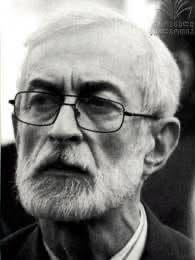
Photo: Nemo Burchuladze, former deputy chairman of Georgia’s Supreme Council and one of the signatories of the Act of Restoration of Independence on 9 April 1991, following the collapse of the Soviet Union, has died aged 80.
-
Wednesday, November 11, Armenia. Nikol Pashinyan ends Paris visit and arrives in Turkey for COP31 summit
● Prime Minister Nikol Pashinyan has arrived in Turkey on a working visit. He will attend the leaders’ summit in Antalya as part of the 31st UN Climate Change Conference, COP31. Bilateral meetings with foreign counterparts are also planned. It is not known whether Pashinyan will meet with the presidents of Turkey or Azerbaijan, who has also arrived in Antalya for the forum.
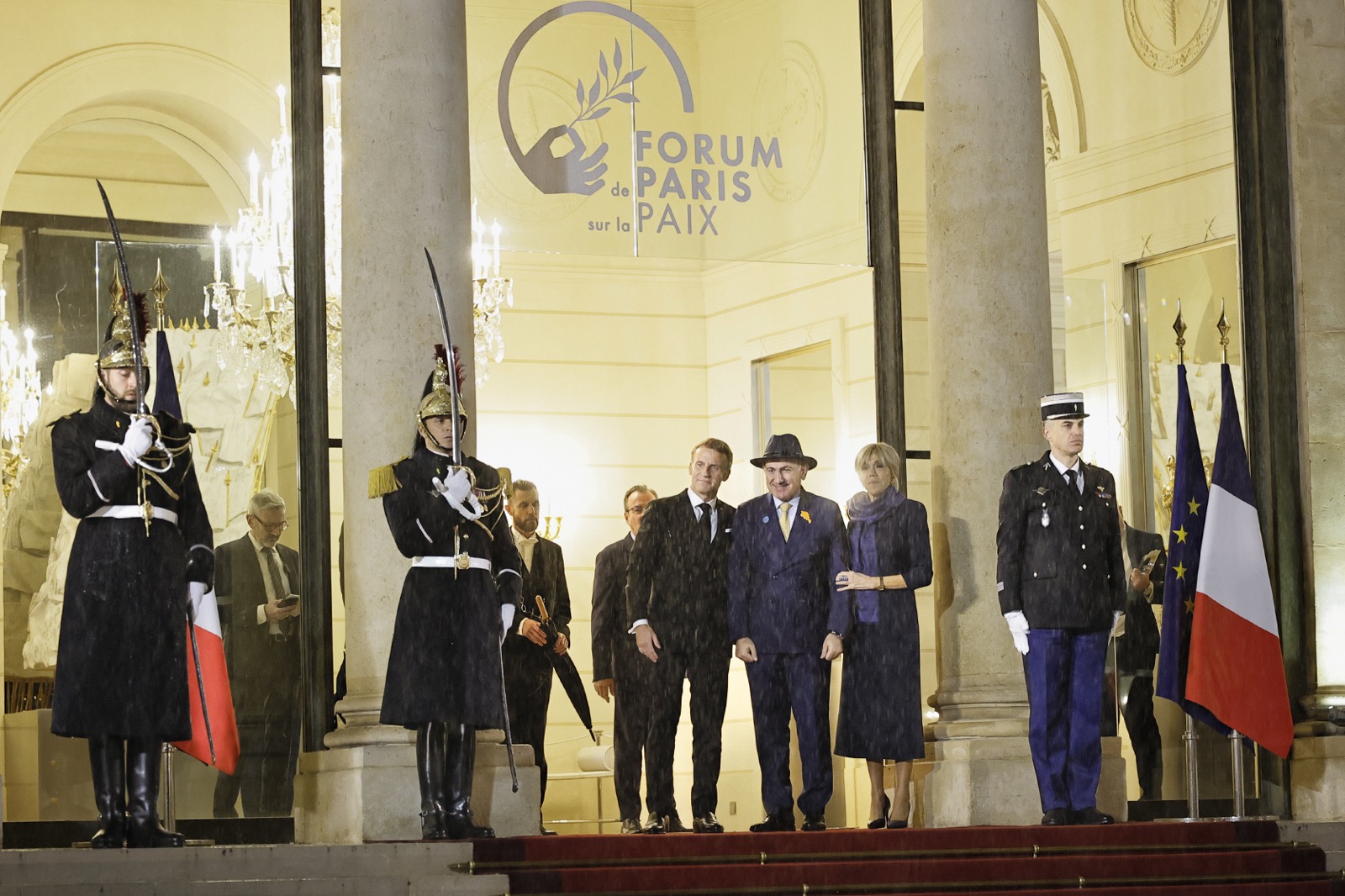
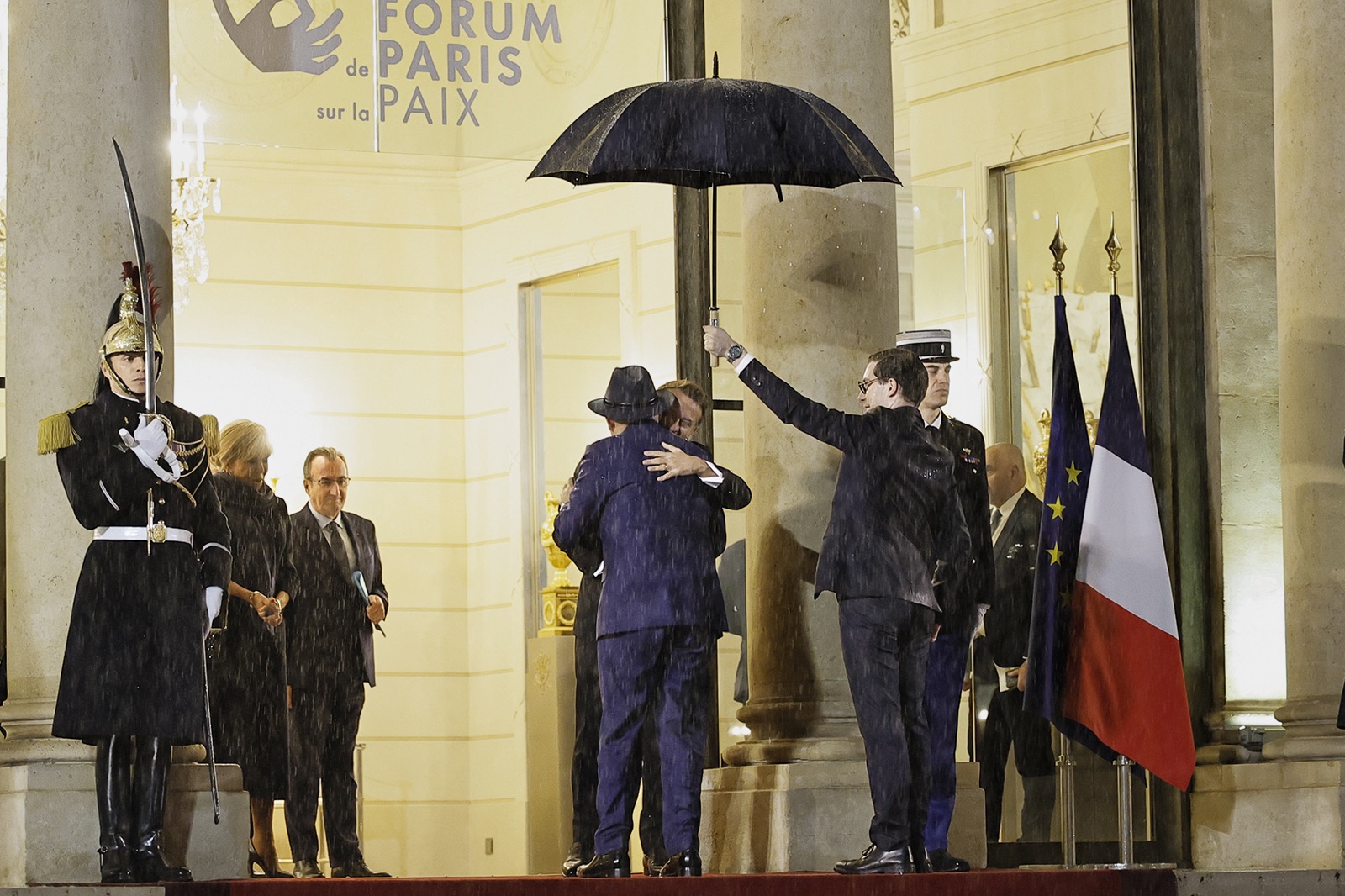
● Nikol Pashinyan travelled to Antalya from Paris, where he attended an official dinner at the Élysée Palace hosted by French President Emmanuel Macron in honour of participants in the 9th Paris Peace Forum.
● Nikol Pashinyan and Emmanuel Macron discussed progress on joint programmes in infrastructure and other areas during their meeting in Paris. They also discussed the development of cooperation between Armenia and the European Union, including the visa liberalisation process and reforms being implemented with EU support.
● Turkish Transport and Infrastructure Minister Abdulkadir Uraloglu said preparations had been completed for the opening of railway and road border crossings with Armenia. He told journalists that he had discussed the issue with his Armenian counterpart. Uraloglu said that “if an agreement is reached, taking into account issues important to Azerbaijan, the process will not take long”. He expressed hope that the border crossings would open soon.
● Russian Foreign Minister Sergei Lavrov said Moscow had no intention of expelling Armenia from the Collective Security Treaty Organisation (CSTO), the Russian-led military alliance. “If [Yerevan] wants us to expel Armenia [from the CSTO], we will not do that. But we have had to discuss Armenia’s failure to meet its obligations to pay annual contributions to the budget of our common organisation. Yerevan has not paid its membership fees since 2024,” Lavrov said.
Context: Armenia has frozen its participation in the CSTO, stopped taking part in its activities and has not paid membership fees for the past two years. This is Yerevan’s response to the alliance’s failure to act on Armenia’s requests for assistance when Azerbaijani forces entered Armenia’s sovereign territory. Several such incidents took place in 2021-2022. The CSTO explained its failure to intervene by saying that the border with Azerbaijan had not been delimited. A few days ago, Prime Minister Nikol Pashinyan said: “I want to state once and for all: our interests related to the CSTO have been exhausted. We no longer have any interests related to the CSTO.”
● Iranian Vice-President Seyed Hamid Pourmohammadi told journalists in Yerevan that his visit to Armenia had included discussions on long-term energy cooperation between the two countries. He said a working group had been established and a bilateral document signed covering cooperation in electricity, gas, diesel and aviation fuel. Pourmohammadi noted that Iran has the world’s largest gas reserves. “If Iran has the opportunity to export gas, there is no better partner for this than Armenia,” he said.
● Opposition politician Arsen Gevorgyan has died of a heart attack in prison. He was a candidate for head of the Stepanavan community in local elections, representing the opposition pro-Russian Strong Armenia party. He was arrested several days before the election on charges of vote-buying. A criminal investigation has been launched following his death. Gevorgyan’s team blamed the authorities, saying his arrest on “groundless charges” was part of a “smear campaign”. Read more here
● Commenting on Arsen Gevorgyan’s death, Justice Minister Srbuhi Galyan said that “people with health problems also end up in prison”. Sisak Gabrielyan, an MP from the ruling party, told journalists: “Unfortunately, around 1,200-1,400 people die of heart attacks in Armenia every year, an average of three to four people a day. Such cases also occur in places of detention. According to statistics for the past ten years, there have been 10-20 deaths from heart attacks in prison.”
● Justice Minister Srbuhi Galyan told journalists that public consultations on the draft of the new Constitution would not be completed by the end of this year.
● Anna Hakobyan, the wife of Nikol Pashinyan, has published a Facebook post expressing outrage over the volume of traffic congestion in Yerevan. “The city is rapidly becoming the most hostile place for everyday life. To get anywhere, a person needs the health of an astronaut,” she wrote. Local media suggested the criticism was directed at Yerevan Mayor Tigran Avinyan. Journalists report that his removal from office is being considered and that there is serious competition within the ruling party for the post. The name of Security Council Secretary Armen Grigoryan is reportedly among those being discussed. He shared Anna Hakobyan’s comment on his Facebook page. Grigoryan later said: “Yerevan has its own mayor, his name is Tigran Avinyan, and I am neither conducting nor leading such discussions.”
-
Tuesday, November 10, Armenia. Russia again urges Armenia to hold a referendum on EU or EAEU membership
● The government has responded to an official letter from Russia concerning a possible increase in the price of gas supplied to Armenia, Territorial Administration and Infrastructure Minister David Khudatyan told journalists. He noted that the letter had been sent before Armenia’s 2026 parliamentary elections, in which the ruling party retained its parliamentary majority. Khudatyan stressed that gas prices for consumers had not changed and said he would refrain from commenting on details of working-level matters.
● Russia’s Foreign Ministry has again called on Armenia to hold a referendum on whether its population prefers EU membership or remaining in the Eurasian Economic Union (EAEU), which Armenia currently belongs to alongside Russia. Deputy Foreign Minister Alexander Pankin said the authorities should first establish public opinion on joining the EU and only then submit a formal application to Brussels. He again stressed that Yerevan was using the economic benefits it enjoys through EAEU membership to promote the idea of joining another bloc.
● Two Russian servicemen have been arrested for assaulting Ukrainian citizen Dmytro Samuilenko on a street in Gyumri. An investigation has been launched and a forensic medical examination ordered. Armenia’s Investigative Committee confirmed the incident but provided no further details. The command of the Russian military base stationed in Gyumri and the Russian embassy in Armenia have not commented.
● The sixth anniversary has been marked of the trilateral ceasefire statement signed in Moscow by the leaders of Armenia, Azerbaijan and Russia on 9 November 2020, which brought the Second Karabakh War to an end. On this occasion, the Public Council of Displaced Persons from Karabakh issued a statement demanding that the Armenian government clearly define and publicly present its commitments to protecting the rights of displaced people. The council recalled that the trilateral statement provided for the return of displaced persons and refugees to Karabakh and adjacent districts under the supervision of the UN High Commissioner for Refugees. “The anniversary of 9 November is not only a day of remembrance of defeat. It is also a day to recall unfulfilled commitments and demand accountability for them,” the statement said.
● Foreign Minister Ararat Mirzoyan is on a visit to Estonia, where he met his Estonian counterpart, Margus Tsahkna. They discussed opportunities to increase exports of Armenian products to Estonia and other European markets, as well as joint initiatives to raise the visibility and recognition of Armenian products. In this context, they welcomed the Made in Armenia exhibition held in Tallinn in July and Minister Tsahkna’s personal participation in the event.
● Prime Minister Nikol Pashinyan has arrived in France on a working visit to attend the ninth Paris Peace Forum.
● Human Rights Defender Anahit Manasyan has explained why she considers the opposition’s demand that she travel to Baku and visit Armenians held in Azerbaijani prisons inappropriate. She recalled that her mandate as human rights defender covers Armenia only and that she can exercise her powers exclusively within the country. Manasyan also said: “It is to be expected that if such a visit takes place, everything will be presented in the best possible light. If you go somewhere where you have no authority and are shown only the best, what is the point? I do not think this is a rational approach. Actions must be effective. I raise the issue of detained Armenians at every possible international platform,” she stressed.
● The possibility of establishing a separate military ombudsman institution was discussed by MPs and Human Rights Defender Anahit Manasyan. She questioned whether such a move was appropriate when the existing Office of the Human Rights Defender was already facing insufficient funding.
● Inflation in Armenia remained at 4.3% in October, unchanged from September. Food inflation continued to slow, falling to 5.6% from 6.2%. However, price growth for non-food goods and services accelerated, according to a review by the Eurasian Development Bank.
● Iranian Vice-President Seyed Hamid Pourmohammadi has arrived in Armenia to attend the 19th session of the bilateral intergovernmental commission. He met Prime Minister Nikol Pashinyan, and the discussions included the unblocking of regional transport links.
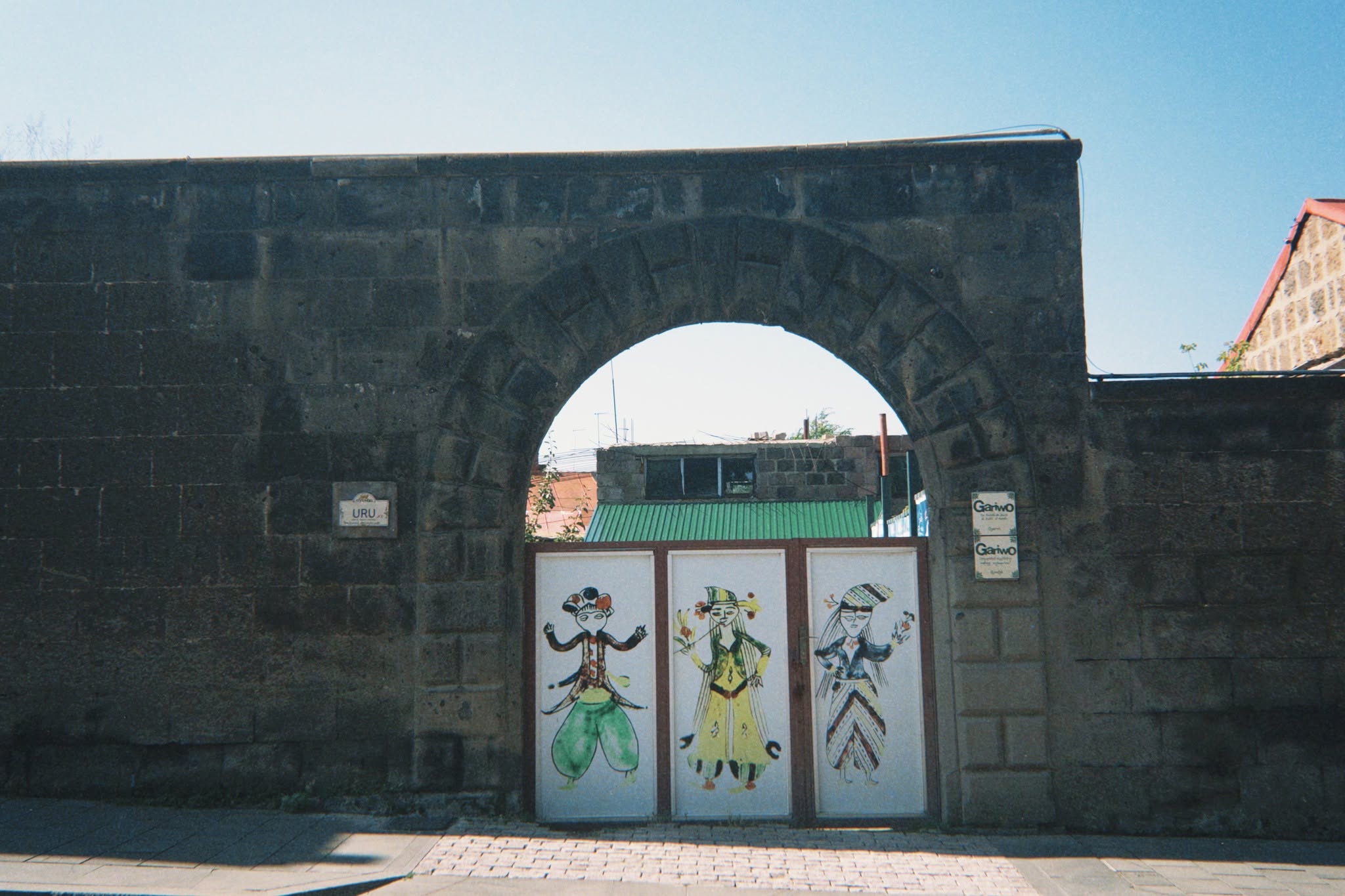
● A joint exhibition by Armenian and Turkish artists, NORARALIK, has opened in Yerevan. The title combines the Armenian word “nor” (new) and the Turkish word “aralık” (space or interval), symbolising the idea of creating new connections between the two languages, cultures and societies. The artworks explore historical memory, cultural differences between the two peoples, mutual perceptions and coexistence. Experts say the artists are also seeking to demonstrate the potential for building new ties between the two societies.
● A 37-year-old Armenian citizen wanted on suspicion of murder in connection with a killing committed in Yerevan in February 2026 has been detained in Tbilisi and subsequently transferred to Yerevan.
● An ambulance in Yerevan struck and killed a pedestrian who was crossing the street in an unauthorised place. The driver called for another ambulance because the vehicle was transporting a stroke patient to a specialised hospital. The medical team that arrived attempted to take the injured pedestrian to hospital, but he died on the way.
-
Tuesday, November 10, Azerbaijan. Turkish president: “Attempts to sow discord between Ankara and Baku are doomed to fail”
● Today marks six years since the leaders of Azerbaijan, Armenia and Russia signed a trilateral statement on a ceasefire that brought the Second Karabakh War to an end. Signed on 10 November 2020, the document provided for a cessation of hostilities, the return to Azerbaijan of the Aghdam, Kalbajar and Lachin districts, which had been under Armenian control for more than 30 years, the deployment of Russian peacekeepers and the unblocking of transport links in the region. Read and watch more here.
● Iran has summoned Azerbaijan’s ambassador in Tehran to protest the inclusion of 14 Iranian citizens on Azerbaijan’s list of undesirable persons. Pro-government media in Baku reported that the individuals had used social media to make statements against Azerbaijan, question its sovereignty and security, promote religious radicalism, incite religious hatred and call for the violent overthrow of the government. Iranian Foreign Ministry spokesperson Esmaeil Baghaei described the decision as an unfriendly and meaningless move, stressing that the individuals were not diplomats and had never been to Azerbaijan. Reports say the list includes current and former Iranian MPs, religious figures, analysts and media representatives. Azerbaijan’s Foreign Ministry has not officially confirmed the existence of such a list.
● Turkish President Recep Tayyip Erdogan said after returning from his official visit to Azerbaijan that relations between the two countries were bound by “unbreakable ties” and that no one could undermine their brotherhood. Answering journalists’ questions aboard his plane, he said Turkey shared both Azerbaijan’s joys and sorrows. He also stressed that attempts to sow discord between Ankara and Baku were doomed to fail. His remarks came amid recent public disagreements between the two countries, triggered by criticism in Turkey of restrictions on wearing hijabs in Azerbaijani schools and Azerbaijan’s partnership with Israel.
● Recep Tayyip Erdogan said at a cabinet meeting that Turkey was providing and would continue to provide comprehensive support for the large-scale reconstruction of Azerbaijan’s liberated territories. He stressed that Azerbaijan’s liberation of Karabakh had been a turning point for the South Caucasus and the establishment of peace in the region.
● Turkey and Azerbaijan plan to expand cooperation in training specialists for the defence industry, including through joint doctoral programmes. This was announced by Erol Özvar, head of Turkey’s Council of Higher Education.
● Twenty-two activists and journalists recognised as political prisoners by international human rights organisations have called for joint efforts to defend political prisoners in Azerbaijan. Their statement was published on the website of Toplum TV, an outlet operating in exile. The signatories say persecution also affects activists, journalists and civil society representatives living abroad and call for stronger international pressure. They include Meydan TV editor-in-chief Aynur Elgunash, and journalists Natig Javadli, Ramin Deko and Shamshad Agha. The Azerbaijani authorities deny that there are political prisoners in the country.
● Azerbaijan’s state oil company SOCAR and China Petroleum & Chemical Corporation (Sinopec) have signed a memorandum of strategic cooperation in Shanghai.
● The government has outlined ambitious plans in its new long-term low-carbon development strategy. These include:
• Increasing the volume of freight transported by rail instead of by road.
• Gradually phasing out vehicles with internal combustion engines and switching to an electric vehicle fleet.
• Focusing on the development of public transport.
• Greenhouse gas emissions from the transport sector are to be reduced by 40% by 2035, with the sector aiming to achieve net-zero emissions by 2060.
• The strategy also envisages completely phasing out gas heating in residential and commercial buildings by 2060 and replacing it with heat pumps.
• By 2035, the government plans to build plants that convert organic waste into biogas. These will be located near municipal solid waste landfills.
• By 2060, the authorities aim to ensure that 100% of collected waste is recycled and to modernise wastewater treatment facilities by equipping them with methane capture systems.
● Green Energy Corridor Power Company has applied to the European Commission to have its Green Energy Corridor project granted the status of an EU Project of Mutual Interest. The project envisages transmitting renewable electricity from the Caspian region to Europe via an underwater cable across the Black Sea. The route is planned to connect Azerbaijan, Georgia, Romania and Hungary. The status would make the project eligible for EU support, simplify permitting procedures and increase investor confidence.
● Trade between Azerbaijan and the UK has increased 3.9 times since the beginning of the year, with the UK accounting for 10% of Azerbaijan’s foreign trade and becoming its third-largest trading partner. Azerbaijani exports to the UK rose 14.4 times, mainly driven by petroleum products, while imports from the UK fell by 66.7%.
● Trade between Azerbaijan and the US has fallen by 24.8% since the beginning of the year. Azerbaijani exports to the US increased 1.7 times, while imports of American goods declined by 29.4%. The US ranked ninth among Azerbaijan’s trading partners.
● Prominent Azerbaijani businessman Emin Agalarov, a former son-in-law of the president, has announced plans to invest $99 million in the economy of Eswatini. In May, the country’s king visited Azerbaijan and toured Sea Breeze, a large entertainment complex owned by Agalarov. During the visit, the two sides discussed projects in the energy and oil sectors and signed a memorandum of cooperation in mineral extraction.
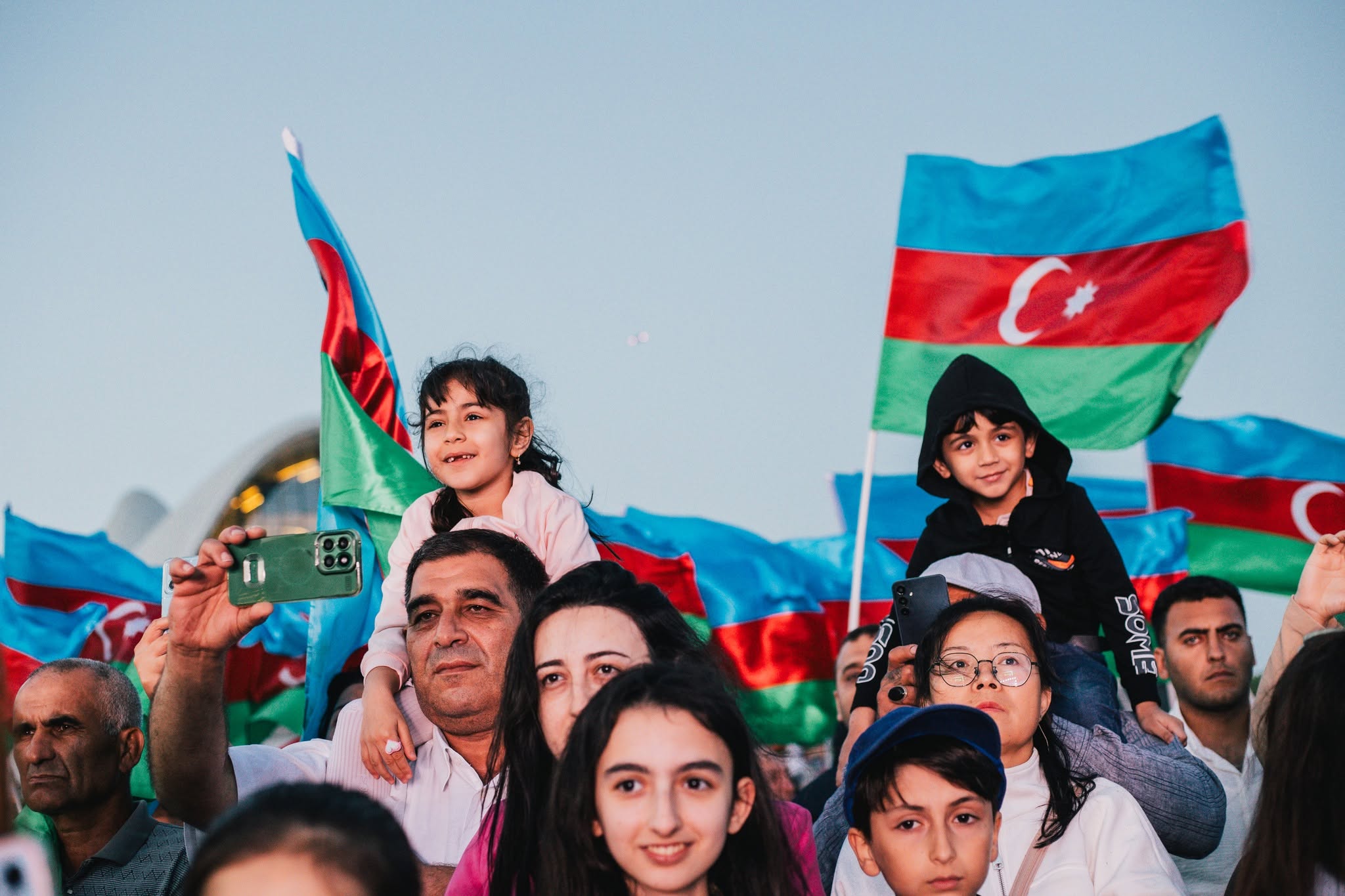
Photo: Military marches were held in Baku to mark State Flag Day, featuring servicemen and military bands. Similar marches took place in Nakhchivan and Ganja. Celebrations were also held in Tehran, Munich, Vienna, Luxembourg and Brussels. Niagara Falls was illuminated in the colours of Azerbaijan’s national flag.
-
Tuesday, November 10, Georgia. Georgia not invited to EU enlargement forum; Russia’s Security Council again backs Georgian government’s policies
● The Constitutional Court today resumes hearings on the merits of a lawsuit filed by 88 MPs from the ruling party seeking to ban five opposition parties. Georgian Dream argues that the parties violated Article 23 of the Constitution, which prohibits political parties whose aim is to overthrow or violently change the country’s constitutional order. One of the grounds cited is their refusal to recognise the legitimacy of the current authorities. The lawsuit also accuses them of organising attempts to seize power. Hearings will continue throughout the week. Read more here.
● Georgia was not invited to a planned EU enlargement forum, a European Commission representative told Georgian media. The Georgian government was invited to take part in a ministerial meeting on transport infrastructure, but “at a lower level”.
● A meeting between business representatives from China and Georgia was held during Chinese Vice-President Han Zheng’s visit to Georgia. Prime Minister Irakli Kobakhidze said Georgia was ready to help attract Chinese investment. Han focused on the free trade agreement and opportunities to increase exports of Georgian products to the Chinese market.
● A mission from the International Monetary Fund has begun work in Georgia. Finance Minister Lasha Khutsishvili discussed with the delegation the economic situation, medium-term macroeconomic and fiscal parameters, key indicators for the 2027 budget, and preparations for the 2027 Article IV consultations.
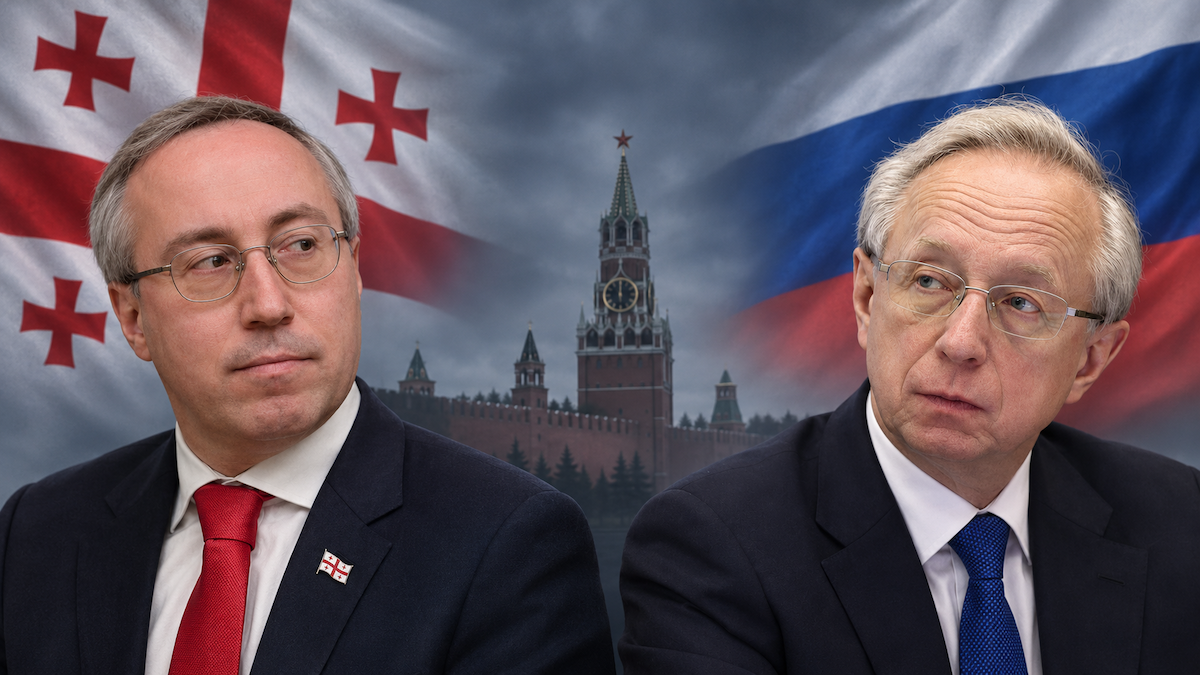
● Russian Security Council Secretary Sergei Shoigu said the Georgian authorities had prevented “a coup initiated by the pro-Western opposition in 2024”. He made the statement at a meeting of security council secretaries from CIS countries. Shoigu praised the Georgian government’s political course and the development of trade and economic ties with Russia. He also backed the resumption of the South Caucasus regional 3+3 platform, which Georgia has so far refused to join, citing Russia’s occupation of its territories. Shoigu’s claims about an attempted coup in 2024 are not supported by evidence. Read more here.
● Former prime minister Irakli Garibashvili, who was convicted of corruption, has described the legal proceedings against him as political persecution and “shadow justice” in another letter from prison. He says the authorities are trying to conceal evidence of blackmail and psychological pressure against him. Garibashvili claims the court denied the defence the right to submit a letter containing elements of blackmail as evidence and restricted access to some case materials. The former prime minister says he publicly spoke about the pressure as early as August, but no investigation has been launched. His claims have not been independently verified.
● During his visit to the Czech Republic, Georgian Parliament Speaker Shalva Papuashvili met with Tomio Okamura, speaker of the Czech Chamber of Deputies. According to the parliamentary press office, they discussed parliamentary cooperation and the development of the Middle Corridor. They also addressed regulation of political activities funded from abroad. The press release said Czech representatives had expressed interest in Georgia’s experience with transparency legislation.
● The parliamentary committee on economic issues has backed a legislative package proposed by ruling-party MPs that lifts the restriction requiring microbanks to issue loans only in lari. The package also raises the maximum total debt per borrower or group of related borrowers from 1 million to 2 million lari.
● A court in Russian-occupied Donetsk, Ukraine, has sentenced Georgian citizen Guram Chichinadze to 12 years and six months in prison for fighting on Ukraine’s side, Russian media report. The 43-year-old reportedly joined the Ukrainian armed forces in October 2022 and was captured by Russian troops in February 2024.
● A teacher has been accused of sexually abusing a minor nearly 30 years ago. According to the Sapari organisation, the victim was seven at the time and the abuse continued for several years. The woman contacted the organisation a year ago and then began collecting evidence with the help of a lawyer. Sapari says the accused still works with children and offers private tuition. On 10 November, the court will consider whether to impose preventive measures against him. The investigation is ongoing.
● A Georgian citizen wanted in Armenia on charges of attempted aggravated murder of eight people, hooliganism and illegal acquisition, possession and carrying of firearms has been arrested in Georgia and extradited to Armenia.
● The Zugdidi District Court has found a resident of Senaki guilty of the intentional murder of his partner and sentenced him to 18 years in prison. According to the prosecutor’s office, he shot the woman on 1 June; she later died in hospital. The prosecution says the murder was motivated by intolerance of gender equality.
-
Monday, November 9, Georgia. Chinese Vice-President Han Zheng makes first official visit to Georgia
● Georgia’s Constitutional Court will resume hearings on a lawsuit filed by MPs from the ruling Georgian Dream party seeking to ban five opposition parties tomorrow, 10 November, instead of holding the session scheduled for today. The hearing was postponed due to one of the judges being unwell. According to the court, the stage for the parties’ explanations has been completed and the proceedings will now move to questioning: the plaintiffs will be questioned first, followed by the defendants. Read more about the case here.
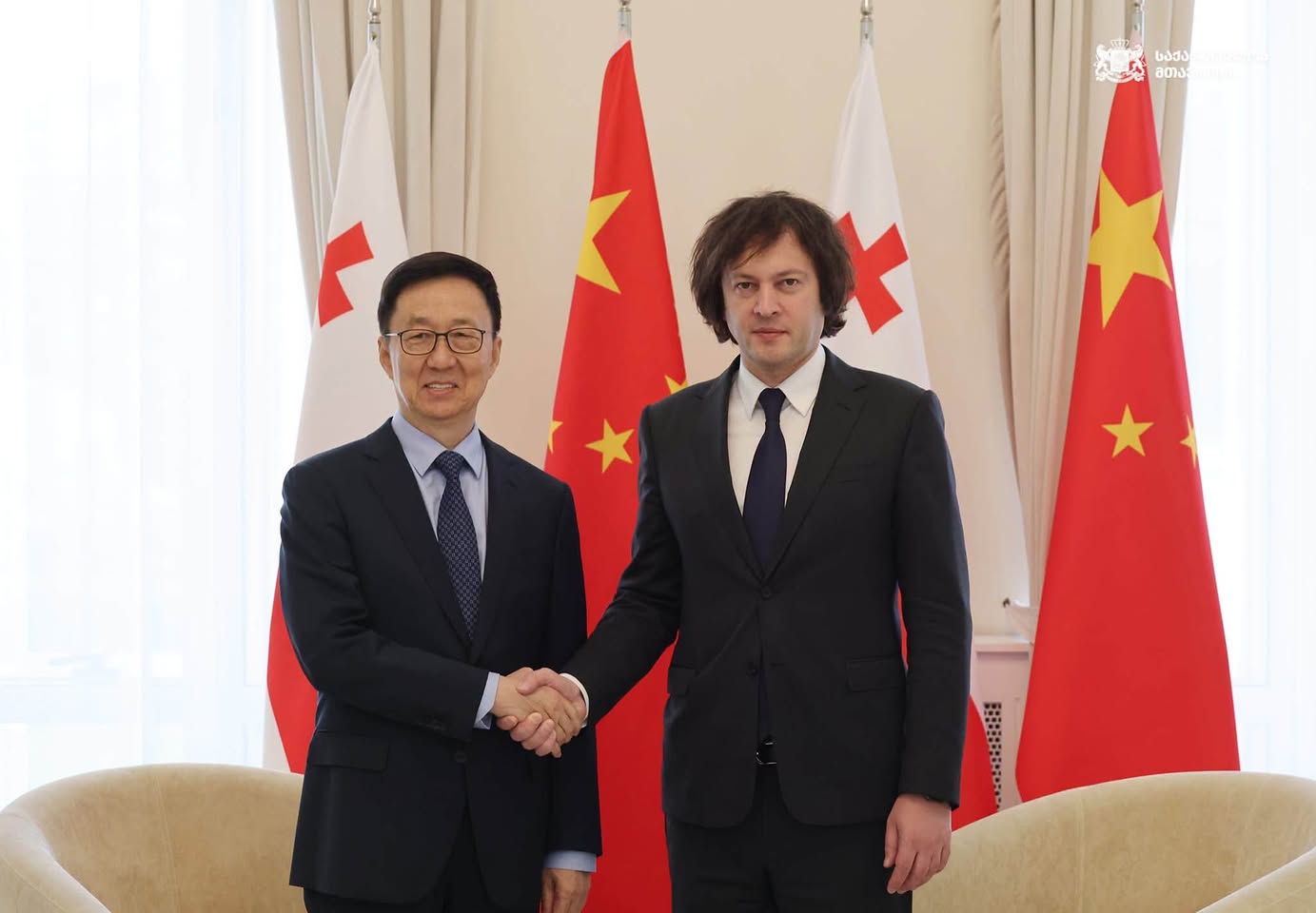
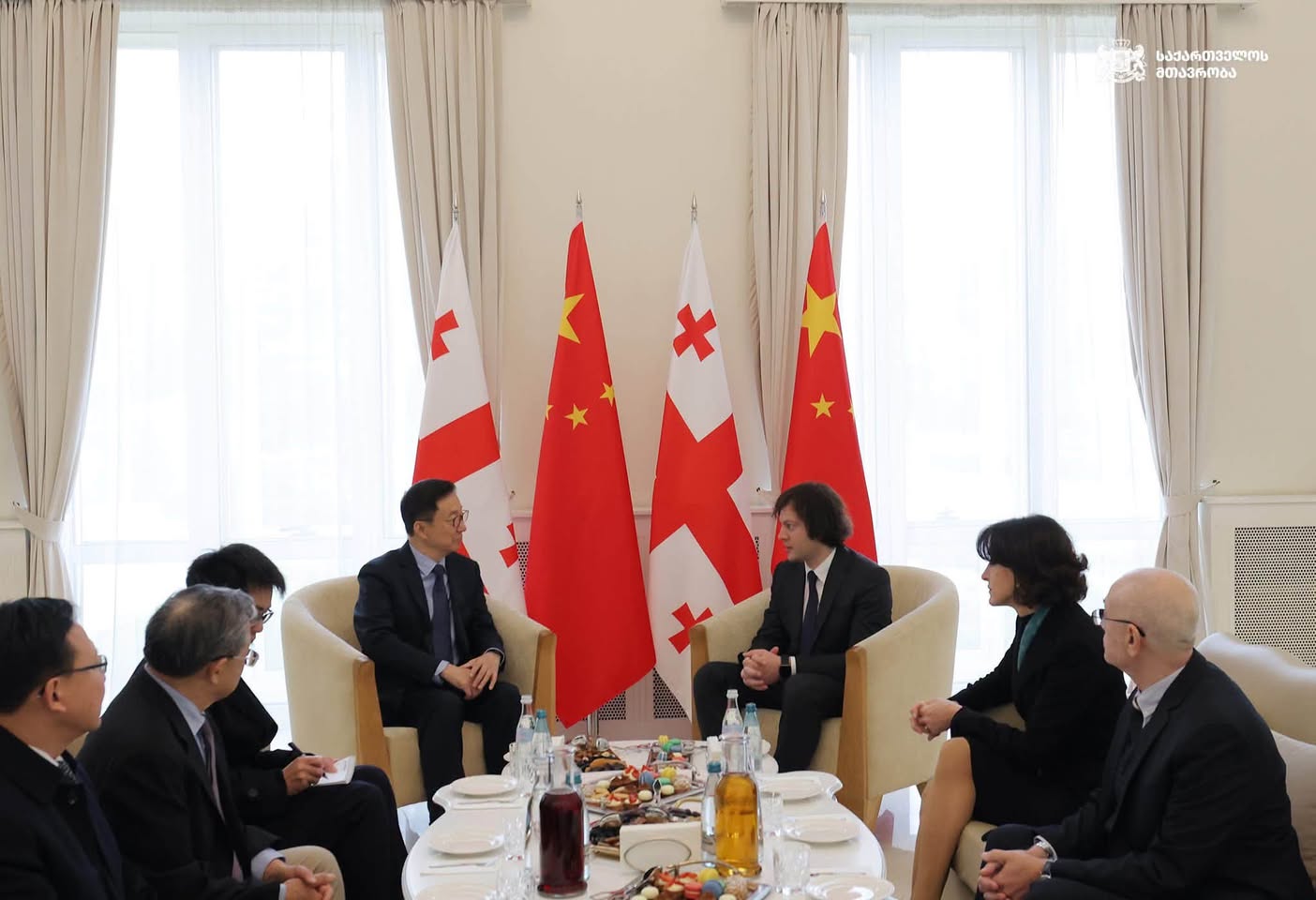
● Chinese Vice-President Han Zheng paid an official visit to Tbilisi over the weekend. According to the presidential administration, this was his first visit to Georgia. He met President Mikheil Kavelashvili and Prime Minister Irakli Kobakhidze. Economy Minister Mariam Kvrivishvili said bilateral trade reached $2.3 billion in January–September 2026, up 41% year on year. China was also Georgia’s largest investor in the first two quarters of the year, with $236 million in investments.
● Activists Irakli Chkhvirkia, Nana Sander and Zurab Chavchanidze have been released from prison after reaching plea agreements. They were convicted over their involvement in an attempt to seize the presidential administration building on 4 October 2025.
● The Ministry of Finance has published the revised parameters of the draft 2027 state budget. Tax revenues are projected at GEL 29.875 billion, GEL 355 million more than in the initial draft. Monthly pensions will rise to GEL 555 for people aged over 70 and GEL 415 for those under 70. The draft budget forecasts economic growth of 5% and a budget deficit of 2.5% of GDP in 2027.
● The Special Penitentiary Service has rejected a complaint by lawyers representing former Prime Minister Irakli Gharibashvili, who claimed that an approved family visit had been cancelled because of his public letters criticising the authorities. According to the service, Gharibashvili has already used his monthly allowance of two long visits and one short visit. Any additional visit is at the director’s discretion and is considered a privilege rather than an entitlement, it said.
● Russian Foreign Ministry spokesperson Maria Zakharova said Moscow was ready to support initiatives aimed at deepening Russian-Georgian cooperation, including a foundation established by Mamuka Pipia, a businessman living in Russia. She also said: “Of course, I would also like to support [the opening of] an embassy.” Georgia severed diplomatic relations with Russia after the August 2008 war, when Moscow recognised the independence of Abkhazia and South Ossetia, territories considered part of Georgia by Tbilisi, the UN and most of the international community.
● Former Georgian Prosecutor General Otar Partskhaladze has given an extensive interview in Moscow to pro-Russian journalist Valery Kvaratskhelia. Partskhaladze is wanted by Georgian authorities over allegations that he commissioned a murder. He has also been sanctioned by the US and UK. In the interview, he said he no longer had any ties with Bidzina Ivanishvili, the billionaire founder of the ruling Georgian Dream party. He also claimed that the case concerning the murder of Levan Dzhangveladze, which he is accused of orchestrating, was “closed”. Partskhaladze called on Georgia to normalise relations with Russia.
● The Georgian Orthodox Church Patriarchate said it had been taken by surprise by proposed amendments to the Law on Gambling that would allow casinos to host international tournaments if at least 80% of participants were foreign nationals. Archpriest Andria Jagmaidze, head of the Patriarchate’s public relations service, said: “Events unfolded so quickly that we did not even have time to ask questions.” The Patriarchate plans to examine the issue and discuss it with the authorities. It also called for measures to reduce the potential negative impact and establish rehabilitation centres.
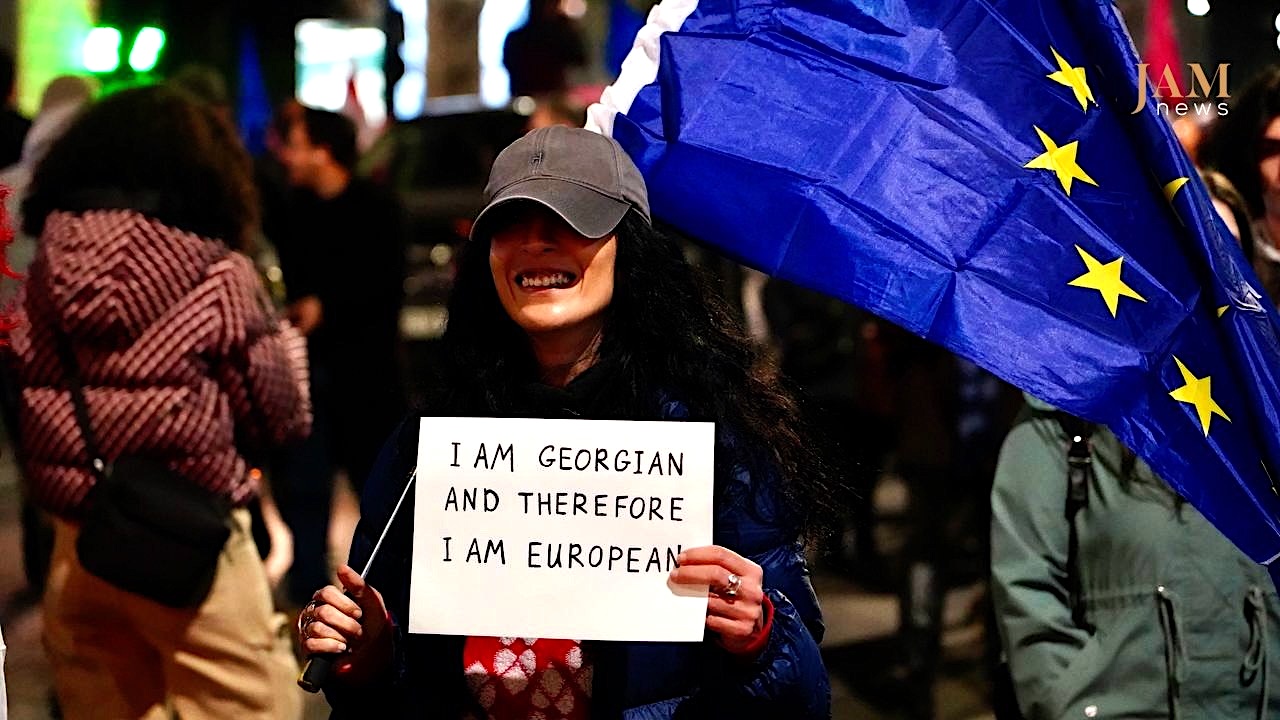
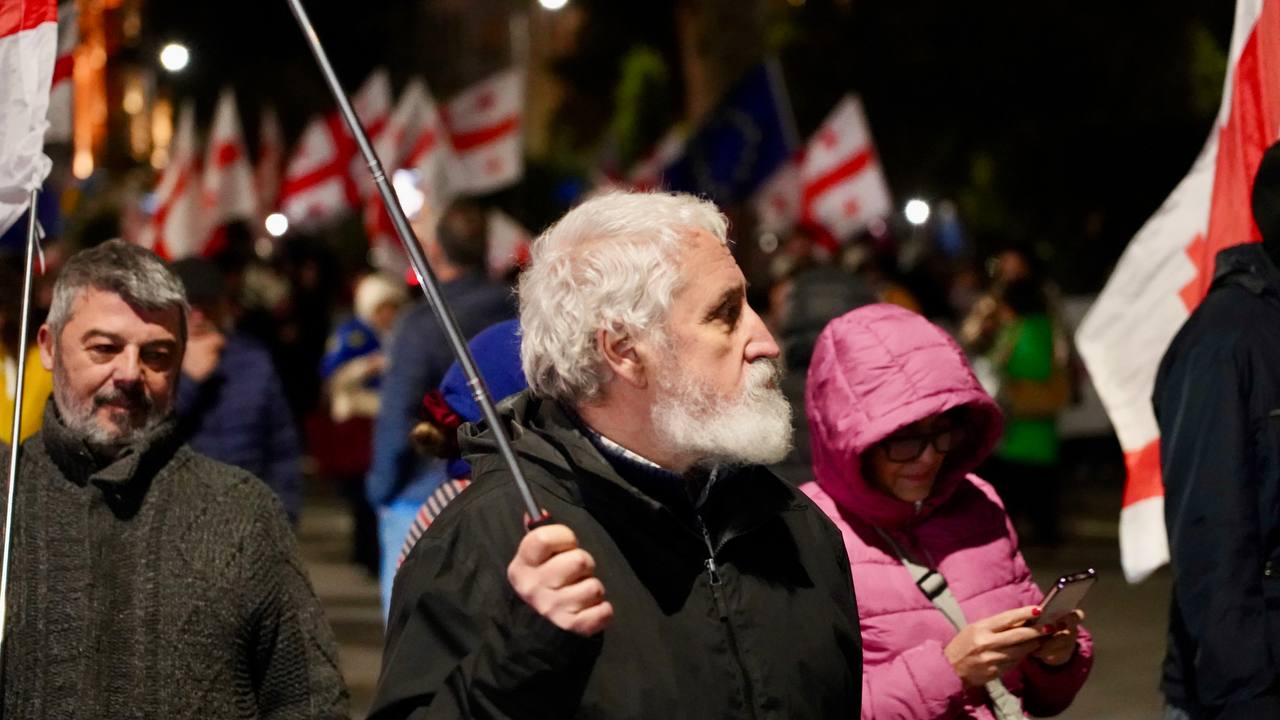
● Tbilisi held its 47th Saturday March on 7 November as part of the ongoing pro-European protests, which have continued for more than two years. Participants called for the release of all political prisoners, new parliamentary elections and the repeal of anti-democratic laws adopted over the past two years.
● Three brothers attending a relative’s wedding were shot in the village of Lambalo, in Sagarejo municipality, on 5 November. Two died at the scene, while the third survived. The suspect was arrested at the scene. He has been charged with premeditated murder motivated by revenge. Prosecutors are seeking pre-trial detention. The charge carries a possible life sentence.
● Animal rights activists held a protest outside Tbilisi City Hall on Sunday, demanding an end to the alleged inhumane treatment of stray dogs and the punishment of those responsible. The demonstration followed videos published on 31 October showing the burial of dogs’ remains. Tbilisi City Hall has dismissed allegations that stray dogs were deliberately killed as defamatory.
-
Monday, November 9, Azerbaijan. Victory Day marking the 2020 44-day war with Armenia and the visit of the Turkish president
● Azerbaijan marks State Flag Day today. The holiday was established by President Ilham Aliyev in November 2009. The three-colour flag was first adopted by the government of the Azerbaijan Democratic Republic on 9 November 1918. It was restored after the collapse of the Soviet Union and Azerbaijan’s regaining of independence.
● Victory Day was celebrated across Azerbaijan on Sunday, 8 November, marking the country’s victory in the 44-day war with Armenia in 2020 and what the Azerbaijani authorities describe as the liberation of Azerbaijani territories from occupation.
● In his Victory Day address to the nation, Ilham Aliyev said the Azerbaijani army had liberated more than 300 cities and villages during the 44-day war. He said the capture of Shusha in Karabakh on 8 November 2020 had determined the outcome of the war, and that Armenia had been forced to sign a joint statement ending hostilities on the night of 9–10 November. Aliyev also said that Azerbaijan’s one-day military operation in Khankendi on 20 September 2023 had paralysed an Armenian military corps of 15,000 troops. The video address was recorded in Khankendi, in front of the Triumphal Arch.
● Ilham Aliyev announced that the Victory Museum in Khankendi, Karabakh, is nearing completion. It will be housed in the former building of the city executive authority.
● Turkish President Recep Tayyip Erdogan paid an official visit to Azerbaijan on Sunday to mark the sixth anniversary of the victory in the Second Karabakh War. He was welcomed by President Ilham Aliyev at Fuzuli International Airport. In Shusha, Karabakh, the two leaders held an official welcoming ceremony and one-on-one talks before making statements to the press. They later visited the memorial to the victims of the Khojaly genocide during the First Karabakh War, laid wreaths at the Victory Monument in Khankendi and met military personnel who had received awards. An official dinner hosted by Aliyev brought the visit to a close.
● At a joint press conference in Shusha, Ilham Aliyev and Recep Tayyip Erdogan stressed the strength of relations between Azerbaijan and Turkey despite recent disagreements. Aliyev said no one could interfere in the relations between the two countries or weaken their unity. Erdogan said ties between Ankara and Baku had withstood historical challenges and were based on shared history, language and culture. Aliyev also highlighted Turkey’s support during the 44-day war in 2020.
Context: Relations between the two countries have been marked by tensions in recent months. Turkish politicians and social media users have criticised restrictions on wearing hijabs in Azerbaijani schools. There has also been criticism in Turkey of Baku’s partnership with Israel. Azerbaijani officials have said that interference in the country’s domestic affairs is unacceptable. One sign of the disagreements was Aliyev’s absence from the Organisation of Turkic States summit in Ankara, despite a personal invitation from Erdogan.
● Ilham Aliyev said at the press conference that he hoped the process of normalising relations between Azerbaijan and Armenia would produce concrete results. He noted that the two countries had initialled the text of a peace agreement more than a year ago, but had yet to sign the final document.
● Turkey is building a 14,500-square-metre school with 40 classrooms in Aghdam. Recep Tayyip Erdogan announced the project at the press conference in Shusha. He said construction was expected to be completed next year and that the two presidents would attend the opening ceremony together. Erdogan also mentioned the joint Azerbaijani-Turkish International Forest Training Centre and seedling-growing complex opened in Jabrayil.
● Euronews has published an extensive report on the sixth anniversary of Azerbaijan’s victory in the 44-day war and Turkish President Recep Tayyip Erdogan’s visit to the celebrations. The broadcaster highlighted the participation of Erdogan and President Ilham Aliyev in events in Karabakh, describing it as a demonstration of the strength of the two countries’ alliance.
● A large group of Azerbaijani doctors marked the sixth anniversary of Victory Day at Berlin’s Brandenburg Gate. The group included doctors who had travelled from Azerbaijan and Azerbaijani medical professionals working in Germany. The gathering took place as part of the 20th Azerbaijani-German Medical Days, held in Berlin on 7–8 November.
● Twenty-seven general education schools and 13 kindergartens have opened in territories that Azerbaijan says were liberated from Armenian occupation. A total of 6,576 children are now studying at these institutions. The figures were released by the ministry of science and education in a report on the results of the large-scale Great Return programme, which aims to resettle Azerbaijani families who were previously internally displaced.
● Mukhtar Babayev, the president’s representative for climate issues, said Azerbaijan was ready to work with partners to support Turkey’s presidency of the UN climate conference COP31 and continue implementing decisions made at COP29, held in Baku. Babayev made the remarks after arriving in Antalya to attend COP31. He identified climate finance, carbon markets and adaptation to climate change as key priorities.
● State-owned company AzerGold has warned of scams involving the names and photographs of its employees. According to the company, unidentified individuals are creating fake WhatsApp profiles, posing as AzerGold staff and attempting to obtain citizens’ personal and banking details or steal their money. The company urged the public not to respond to suspicious messages, open unknown links or trust requests without verifying them through official communication channels.
Photo: Victory Day celebrations took place in Baku and Karabakh, including in Khankendi and Shusha. A concert was held at Baku’s Seaside National Park, ending with a fireworks display.
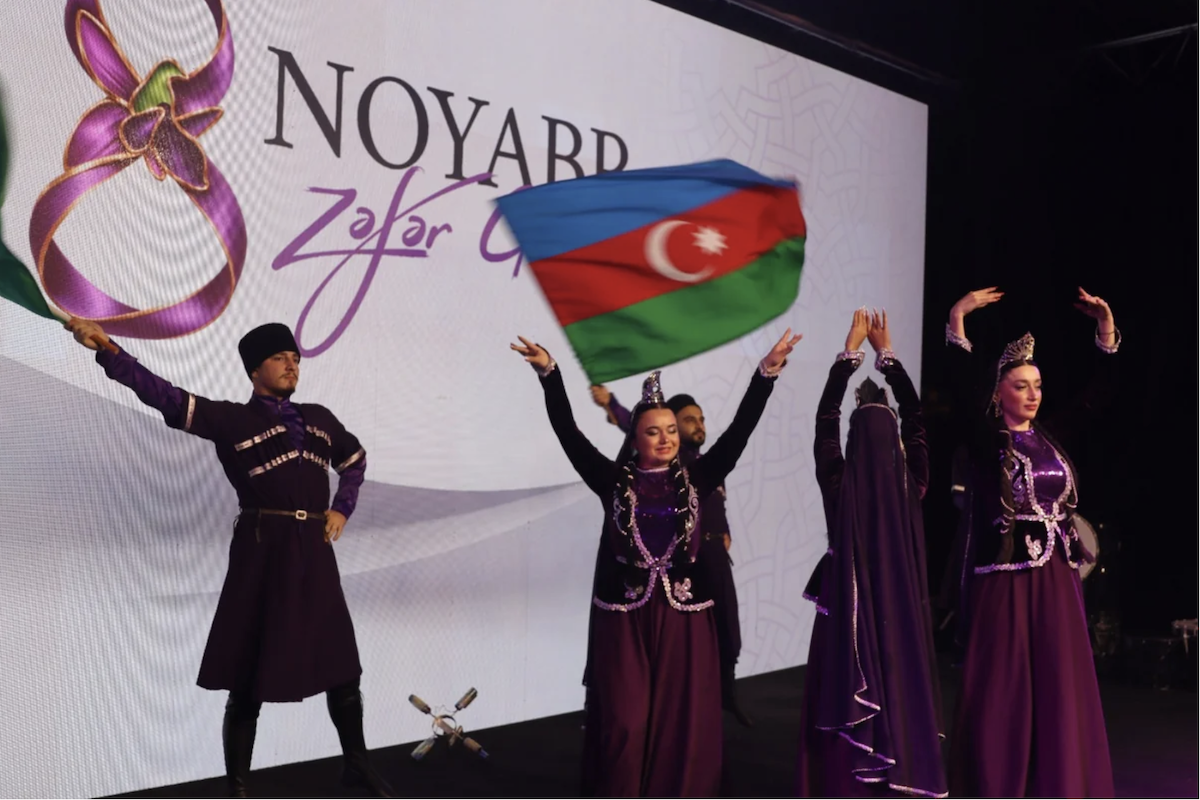
-
Monday, November 9, Armenia. Nikol Pashinyan: “Using ‘Artsakh’ in Armenia lets Azerbaijan use its own names for Armenian territories, too”
● The US, Armenia and Azerbaijan have begun technical work on TRIPP, a route that will connect Azerbaijan with its Nakhchivan exclave through Armenian territory. The three countries have agreed to establish the first two trilateral working groups, focusing on transport and electricity transmission. One of the next key steps will be to connect the route to other regional infrastructure. All three countries reaffirmed their commitment to launching the mechanisms envisaged under the project as soon as possible.
● Armenian Prime Minister Nikol Pashinyan said that using the name ‘Artsakh’ for Karabakh in Armenia allows Azerbaijan to use its own names for Armenian cities and regions. He was speaking at a panel discussion organised by the Restart Foundation as part of its MaskOFF event. ‘We can say “Artsakh” and “Republic of Artsakh” as much as we like. We can wake up in the morning and say “Artsakh”, say it again at noon, in the evening, and even wake up at night to say it once more. Fine. But they will also keep saying “Basarkechar” [the Azerbaijani name for the Armenian town of Vardenis], morning, noon and evening. We can say “Artsakh” as much as we want, but they will also keep saying “Western Azerbaijan” [a term used in Azerbaijan to refer to parts of present-day Armenia where Azerbaijanis lived before leaving during the first Karabakh war in the early 1990s]. The solution is to sign a peace agreement and put these issues behind us,’ Pashinyan said.
● Armenian Security Council Secretary Alen Simonyan spoke out against the idea, discussed by some in Armenian society, of joining a Union State with Russia and Belarus. Speaking at the Second World Armenian Summit, he questioned Russia’s role during the 2020 war and the events that led to the exodus of Armenians from Nagorno-Karabakh. ‘I still have questions for our Russian colleagues: how did the war between Armenia and Azerbaijan start in 2020? Why did it last 44 days? How was the Lachin Corridor closed, and how were our compatriots forced out of Karabakh and into Armenia? I believe anyone who thinks Armenia should join the Union State of Russia and Belarus should be ashamed. I am against this idea. It must not happen,’ Simonyan said.
● Alen Simonyan also questioned why Armenia should become involved in Russia’s war against Ukraine. ‘Why should I put Armenia on the altar of Russia’s war with Ukraine? I disagree with that. I do not think there is anyone here who would agree that we should go and commit national self-immolation because Russia and Ukraine are at war,’ he said.
● Russian Foreign Ministry spokesperson Maria Zakharova responded to Simonyan’s remarks, saying that ‘it was Moscow, and no one else’, that stopped the bloodshed in Karabakh in autumn 2020. She recalled that on the night of 9-10 November 2020, the leaders of Russia, Azerbaijan and Armenia signed a trilateral statement on a complete ceasefire in the conflict zone.
● TRIPP is attracting interest not only from US and international businesses but also from companies already operating in Armenia, said Armen Grigoryan, former secretary of Armenia’s Security Council and senior consultant at Policy and Management Consulting Group (PMCG). Speaking at the Second World Armenian Summit, he said that work on the project had intensified following the political agreements reached at the 8 August 2025 summit of the three leaders in Washington, prompting businesses to explore opportunities to take part in its implementation.
● Azerbaijani President Ilham Aliyev said he hoped the normalisation process with Armenia would produce ‘concrete results’. Speaking at a joint press briefing with Turkish President Recep Tayyip Erdogan in Baku, Aliyev said that he had been working towards signing a peace agreement between Armenia and Azerbaijan for more than a year, but that it had still not been signed.
● Iranian Vice-President Seyed Hamid Pourmohammadi, co-chair of the Armenian-Iranian intergovernmental commission, has arrived in Armenia on a working visit.
● Two opposition parliamentary groups and several extra-parliamentary parties, all with pro-Russian reputations, have announced an information campaign ‘in defence of Armenia’s independence’. They oppose the process of amending the Constitution, arguing that the proposed changes are dictated by Azerbaijan’s demands. They also claim that the recent arrest in Yerevan of Russian billionaire and pro-Russian politician Samvel Karapetyan on corruption charges is politically motivated and amounts to pressure on the opposition for supporting the constitutional amendments.
Context: The preamble to the Constitution refers to the 1990 Declaration of Independence, which endorses the Armenian authorities’ 1989 decision to unite Soviet Armenia with Nagorno-Karabakh. Baku considers this reference a territorial claim against Azerbaijan and has made its removal a condition for signing a peace agreement. The Armenian authorities reject this interpretation, saying the constitutional amendments are needed by Armenia itself, cover a range of issues and are not being imposed by any external actors.
● Levon Zurabyan, deputy chairman of the opposition Armenian National Congress party, said Nikol Pashinyan had managed to unite the entire opposition through his policies. ‘Nikol Pashinyan has achieved something unprecedented: through his destructive policies, he has united the entire opposition. Even those who refused to join forces during the June parliamentary elections have now come together to oppose constitutional changes and what they see as a loss of Armenia’s sovereignty,’ Zurabyan said.
● Nikol Pashinyan: ‘Criminal elements are leaving Armenia for Europe and telling people there that they are gay and are being persecuted in Armenia. Do you know why? Simply to obtain the right to reside there.’
-
Top stories in Azerbaijan, Armenia, and Georgia from 2-6 November, 2026