Top stories in Azerbaijan, Armenia, and Georgia from 26-30 October, 2026
 Live


-
Friday, October 30, Azerbaijan. Ilham Aliyev will not attend the Organisation of Turkic States summit in Ankara, despite a personal invitation from the Turkish president
-
Friday, October 30, Armenia. The fight between MPs has been described as the most serious scandal in the history of Armenia’s parliament
-
Friday, October 30, Georgia.
-
Thursday, October 29, Armenia. Armenia’s parliament has ratified a framework agreement with the United States on the Trump Route for International Peace and Prosperity (TRIPP)
-
Thursday, October 29, Georgia. Activists convicted over attempted seizure of presidential administration sign plea agreements with court
-
Thursday, October 29, Azerbaijan. Norwegian Helsinki Committee calls for release of Meydan TV editor-in-chief Aygun Elgunesh, who urgently needs surgery
-
Wednesday, October 28, Armenia. The Netherlands will provide financial assistance to Armenia and Azerbaijan to help search for people missing from the First and Second Karabakh Wars
-
Wednesday, October 28, Azerbaijan. Former presidential administration chief Ramiz Mehdiyev sentenced to 14 years in prison, suspended, on treason charges
-
Wednesday, October 28, Georgia. Myth Detector has uncovered a new, large network of fake social media accounts supporting the Georgian government
-
Tuesday, October 27, Azerbaijan. Azerbaijan and Iran trade fresh accusations amid hijab ban in Azerbaijani schools; critic of the ban detained in Turkey
-
Tuesday, October 27, Georgia. Georgia’s Constitutional Court continues hearings on ruling party’s bid to ban five opposition parties
-
Tuesday, October 27, Armenia. Nikol Pashinyan on local elections: “Ruling party won, foreign-controlled spy forces have been eliminated”
-
Monday, October 26, Georgia. An opposition alliance held a major protest rally and launched a campaign set to culminate on 28 November
-
Monday, October 26, Azerbaijan. The first FIFA U-15 World Cup and football festival is taking place in Baku
-
Monday, October 26, Armenia. Local elections were held in 21 communities across 10 regions of Armenia
-
Top stories in Azerbaijan, Armenia, and Georgia from 19-23 October, 2026

-
Friday, October 30, Azerbaijan. Ilham Aliyev will not attend the Organisation of Turkic States summit in Ankara, despite a personal invitation from the Turkish president
● President Ilham Aliyev will not attend the Organisation of Turkic States summit in Ankara today, despite a personal invitation from Turkish President Recep Tayyip Erdoğan. Azerbaijan will be represented by Foreign Minister Jeyhun Bayramov. The official explanation is that Aliyev has a busy schedule, but his absence has attracted attention amid growing tensions between the two countries. The latest dispute was triggered by criticism in Türkiye of Azerbaijan’s effective restrictions on wearing hijabs in schools. Experts, however, also point to Azerbaijan’s close cooperation with Israel as a factor. Baku has accused Turkish politicians and public figures of interfering in its internal affairs, banned 31 Turkish citizens from entering the country and launched criminal proceedings against several others.
● Azerbaijani Foreign Minister Jeyhun Bayramov and his Turkish counterpart Hakan Fidan held a one-to-one meeting on the sidelines of the summit in Ankara. They discussed bilateral relations and regional and international issues. On the same day, Bayramov attended a meeting of the Organisation of Turkic States’ Council of Foreign Ministers, where he spoke about expanding political dialogue, security cooperation, economic and transport links, and joint production of defence equipment.
● Armenian Prime Minister Nikol Pashinyan said he saw no alternative to peace with Azerbaijan and would like to secure it for 400 years. He stressed the need to establish lasting, institutional ties between the two countries.
● Farhad Mammadov of Azerbaijan’s Centre for Analysis of International Relations has criticised Armenian Foreign Minister Ararat Mirzoyan over his remarks that “some statements made by Azerbaijani officials, to put it mildly, do not contribute to peace”. Mammadov said Armenia had no right to tell Azerbaijan what to say or how to speak about the conflict. He also accused Armenia of trying to present the conflict as if it had begun with the 2020 Second Karabakh War, while ignoring the preceding 30 years of Armenian occupation of Azerbaijani territories.
● Azerbaijan has again raised at the UN the issue of more than 4,000 of its citizens who went missing during the First Karabakh War in the early 1990s. Its representative called on the international community to help establish their whereabouts and once again urged Armenia to provide information about possible burial sites, open its archives and hand over any records that could assist the search.
● Azerbaijani Prime Minister Ali Asadov has arrived in Georgia to attend a meeting of the intergovernmental commission on economic cooperation. The agenda includes the economy, trade, transport and energy.
● Azerbaijan has sent Ukraine another shipment of humanitarian aid worth more than $1.47 million to help restore its energy infrastructure. The shipment includes nine power transformers, 186 kilometres of electrical cable and distribution equipment. This is the 159th humanitarian aid shipment from Azerbaijan. Previous deliveries have also included equipment needed to restore electricity supplies disrupted by ongoing Russian attacks on Ukrainian energy facilities.
● Amnesty International has called for the immediate release of researcher and activist Bahruz Samadov. He is serving a 15-year prison sentence on treason charges, with prosecutors alleging that he collaborated with Armenian intelligence services. Samadov denies the charges. According to Amnesty International, he was held in solitary confinement for two months, was denied medication prescribed by a doctor for more than a month, and repeatedly had his requests for medical examinations ignored despite deteriorating eyesight.
● A meeting of the CIS Interstate Council on Antimonopoly Policy was held in Khankendi, Karabakh. Discussions focused on competition issues and cooperation between the anti-monopoly authorities of member states.
● Participants in the Baku World Forum on Intercultural Dialogue visited the Karabakh cities of Shusha and Aghdam. The visit was organised to show them the results of large-scale reconstruction programmes in towns and villages in territories that had been under Armenian occupation for more than 30 years.
● NATO has completed its assessment of two Azerbaijani Mi-17-1V military helicopters under the Operational Capabilities Concept programme. The assessment team reportedly awarded them the highest possible scores.
● Eight people have been sentenced to prison terms ranging from eight years and six months to 13 years in a case involving terrorist financing, membership of a criminal organisation and participation in armed groups and religiously motivated conflicts abroad. Investigators say four of the defendants received combat training in 2024 in mountainous areas of Pakistan near the Afghan border.
● The Interior Minister has instructed all departments to step up efforts to combat the online distribution of drugs. In the first nine months of the year, authorities seized 6 tonnes and 443 kg of drugs — 1 tonne and 780 kg more than during the same period last year.
● Azerbaijan increased its oil exports to Switzerland 3.6 times in the first nine months of the year. Switzerland accounted for 1.72% of Azerbaijan’s total oil exports.
● New restrictions on public officials are being considered under a draft law on conflicts of interest. The proposals would limit officials’ activities and income where their personal or family interests could affect their public duties. One proposal would restrict officials from earning additional income by renting out property, as the tenant could be a company doing business with government agencies.
● Eight schoolchildren fell ill during classes in the settlement of Jeyranbatan in the Absheron district and received medical attention. The Food Safety Agency has launched an investigation. The cause of the suspected food poisoning has not yet been established.
● Azerbaijan’s state news agency APA reports that preparations are under way to elect a new human rights ombudsman.
● The first-ever FIFA U-15 World Cup and football festival for players aged 15 and under concludes in Baku today. Six final matches will be played, followed by the closing ceremony and awards presentation. President Ilham Aliyev will present awards to the finalists. The tournament began on 24 October and brought together more than 3,000 young footballers and team representatives from 189 national football associations.
Over 180 teams and 900 matches ⚽
The FIFA U-15 World Cup & Festival all kicks off tomorrow in Baku 🙌🇦🇿 https://t.co/hWomeTLjGz
— FIFA (@FIFAcom) October 23, 2026
-
Friday, October 30, Armenia. The fight between MPs has been described as the most serious scandal in the history of Armenia’s parliament
● The fight between MPs during the 29 October parliamentary session has been described as the most serious scandal in the history of Armenia’s parliament. This time, opposition and ruling-party lawmakers not only traded punches but also threw bottles and even a chair. The incident caused further controversy when Prime Minister Nikol Pashinyan backed his party colleagues and openly approved their use of violence. “I welcome the actions of the Civil Contract faction MPs and support them. Whether they used a chair or something else, it was proportionate and right,” Pashinyan said. Social media users have also pointed out that just days earlier, the same parliament had passed the first reading of a bill on preventing domestic violence, initiated by Pashinyan’s wife, Anna Hakobyan. Read more here
● Armenia’s Human Rights Defender’s Office said that any acts of violence by senior officials, including MPs, help legitimise violence by making it appear to society as an acceptable way of resolving disagreements. “The incident in parliament must be properly investigated,” Human Rights Defender Anahit Manasyan said.
● “If someone tries to hit one of our MPs, they will get a response. Whether it is proportionate or not is irrelevant,” ruling-party Deputy Speaker Vahe Aleksanyan told journalists. Aleksanyan, who threw a chair towards the opposition benches, said he had seen the memes circulating online showing him throwing it and that he took them in good humour.
● Armenian Deputy Foreign Minister Mnatsakan Safaryan is visiting India, where he has held meetings with the Confederation of Indian Industry, investment promotion agency Invest India and the Pharmaceuticals Export Promotion Council of India (Pharmexcil). The discussions focused on expanding bilateral trade, economic and investment ties in information technology, advanced technologies, healthcare, pharmaceuticals, infrastructure and transport.
● Prime Minister Nikol Pashinyan met Slovenian Foreign Minister Tanja Fajon in Yerevan. They stressed the importance of stepping up political dialogue and expanding cooperation in various fields, as well as arranging reciprocal high-level visits.
● Finance Minister Vahe Hovhannisyan met a Saudi delegation in Yerevan led by Prince Abdulaziz bin Talal Al Saud, chairman of the Arab Gulf Programme for Development (AGFUND) and the Prince Talal International Prize Committee. They discussed cooperation in education and support for small and medium-sized businesses. The meeting also highlighted the principle that “development cannot wait for peace to be established in the world” and that cooperation and investment in people can help create the conditions for lasting peace.
● The authorities have rejected a request by Karabakh civil society organisations to have a pavilion in the Green Zone at the COP17 conference. Artak Beglaryan, former state minister and former human rights ombudsman of the former unrecognised Nagorno-Karabakh Republic, said no reason had been given for the decision. He said the organisations had planned to raise the issue of restoring the rights of Karabakh Armenians and what he described as Azerbaijan’s “genocidal actions” against Karabakh’s natural and cultural landscape during the occupation.
● The government has approved a list of products that will be subject to labelling under a pilot scheme covering confectionery, semi-finished and frozen foods. “Absolutely everything must be sold with proper labelling,” Prime Minister Pashinyan said at a Cabinet meeting, setting out the requirement.
● Georgian authorities have foiled an attempt to smuggle undeclared gold worth around $225,000 into the country across the Armenian-Georgian border, Georgia’s Finance Ministry said. Gold bars of various sizes had been hidden in socks and shoes.
● One person was killed and another taken to hospital after the ground collapsed in a trench during sewer pipe installation work in Yerevan.
-
Friday, October 30, Georgia.
● Georgia’s Constitutional Court continued hearing the ruling party’s lawsuit seeking to ban five major opposition parties. At Thursday’s seventh hearing, the court heard arguments from Nika Gvaramia, representing the Coalition for Change, and Tornike Artkmeladze, representing Strong Georgia–Lelo. Gvaramia said that, based on the criteria set out in the lawsuit, the ruling Georgian Dream party itself should be the first to be banned. Artkmeladze urged the court to dismiss the case. The hearing will continue today. The proceedings are due to move to a question-and-answer stage on 9 November.
● Council of Europe Secretary General Alain Berset warned that the possible ban on opposition parties in Georgia could eventually be brought before the European Court of Human Rights. Speaking on 27 October at a meeting of the Council of Europe’s Congress of Local and Regional Authorities in Strasbourg, he stressed that dissolving a political party requires compelling legal grounds and must meet the principles of necessity and proportionality. The Council of Europe is an international organisation dedicated to protecting human rights, democracy and the rule of law. It is separate from the European Union. More details here.
● Georgian Prime Minister Irakli Kobakhidze met Courtney Austrian, the US chargé d’affaires in Georgia, and congratulated her on her appointment. According to the government administration, Kobakhidze said Tbilisi was ready to restore the strategic partnership with Washington “from a clean slate”. Relations between the two countries have deteriorated sharply in recent years amid disagreements over democratic reforms, political freedoms and the Georgian government’s policies.
● Imprisoned opposition leader Elene Khoshtaria was taken from the women’s prison to Todua Clinic in Tbilisi in a wheelchair for a routine medical examination. She is serving an 18-month prison sentence for writing on an election campaign banner belonging to Tbilisi Mayor Kakha Kaladze. After footage of her transfer was published, Transparency International Georgia and European Parliament member Rasa Juknevičienė held the authorities responsible for her health. Transparency International called for Khoshtaria’s immediate release.
● The Court of Appeals replaced pre-trial detention for Dito Chubinidze, a journalist with the Asaval-Dasavali newspaper, with bail of 4,000 lari (approximately $1,500). Prosecutors accuse him of treason and sabotage. According to the prosecution, he had systematically spread false information and disinformation since February 2026. Chubinidze said he had not reached a plea bargain with the prosecution.
● Twenty-four serving Georgian public officials simultaneously hold director positions in 30 private companies, Transparency International Georgia reports. They include mayors, deputy mayors, municipal officials, local council members and employees of other government agencies. Georgia’s anti-corruption legislation allows public officials to own shares in private companies but prohibits them from holding director positions. The organisation is calling for officials who violate the law to be dismissed.
● Former Georgian chief prosecutor Otar Partskhaladze, who is wanted in Georgia over alleged involvement in a contract killing and is living in Moscow, has established a public foundation in Russia together with Moscow-based businessman Mamuka Pipia. The foundation says its main goal is to help restore diplomatic relations between Russia and Georgia, severed after the 2008 Russo-Georgian war. A document published following their meeting proposes establishing a Russian-Georgian university and resuming religious services at Lomisi Church in the Georgian-Ossetian conflict zone, in territory controlled by Russian forces. Partskhaladze is under US and UK sanctions.
● Azerbaijani Prime Minister Ali Asadov arrived in Georgia to attend a meeting of the bilateral intergovernmental commission on economic cooperation. According to Georgian Deputy Economy Minister Mariam Kvrivishvili, the talks cover energy, transport, investment, trade and regional projects, with particular focus on developing the Middle Corridor — a transport route connecting China and Central Asia with Europe via the South Caucasus.
● Georgia’s Interior Ministry has arrested seven people accused of organising group violence, robbery and extortion. According to investigators, they created fake female profiles on social media, arranged meetings with men, then attacked and robbed them of money and belongings. Videos of the assaults were subsequently posted online. According to Radio Free Europe/Radio Liberty’s Georgian service, one of the suspects described the activity as “hunting paedophiles”. The Interior Ministry said it had already questioned more than ten victims.
● The Tbilisi City Court has begun hearing the case on its merits over the alleged organisation of the murder of 21-year-old programmer Nika Kvaratskhelia (pictured below), who was shot dead in Tbilisi in 2021. The defendants are brothers Davit and Guram Kakulia, and Besarion Zhvania, who is currently wanted. According to the prosecution, revenge was the motive for the killing. The defence maintains that the charges are unfounded. The next hearing is scheduled for 11 November.

-
Thursday, October 29, Armenia. Armenia’s parliament has ratified a framework agreement with the United States on the Trump Route for International Peace and Prosperity (TRIPP)
● Armenia’s parliament has ratified a framework agreement with the United States on the Trump Route for International Peace and Prosperity (TRIPP), a transit project envisaging a road linking Azerbaijan with its Nakhchivan exclave through Armenian territory. Only MPs from the ruling party supported the agreement. Two pro-Russian opposition factions voted against it, arguing that the document serves US and Azerbaijani interests but not Armenia’s. “The US gains a direct presence in the region, particularly along the Iranian border, in a strategically crucial area. Azerbaijan secures a link between Nakhchivan and the rest of Azerbaijan — a long-standing goal for both Azerbaijan and Türkiye,” MP Anna Grigoryan said. Read more here
● Armenian Deputy Prime Minister Mher Grigoryan has outlined the infrastructure planned under TRIPP. The project will involve five or six infrastructure facilities transferred to concession management. These could eventually include gas and oil pipelines, although their locations would vary considerably. The railway will follow the Soviet-era line between Armenia and Azerbaijan and will be single-track, Grigoryan said. The route will run for approximately 42 km through Armenia, with no privately owned land along the section, he added. He stressed that the railway must serve a regional purpose to remain competitive.
● Armenian Foreign Minister Ararat Mirzoyan has defended the TRIPP transit project against opposition criticism. “The railway section on Armenian territory has a beginning and an end, with movement in both directions, because it has to come from somewhere and lead somewhere,” he said.
● Armenian Prime Minister Nikol Pashinyan has reiterated that he has repeatedly told international partners, as well as Azerbaijan during bilateral talks, that Armenia’s authorities will not discuss the country’s Constitution with foreign parties. “The impression is that claims that constitutional amendments are being made at Azerbaijan’s demand are intended to destabilise the situation in Armenia. These assertions feed the opposition’s agenda,” Pashinyan said. Adopting a new Constitution is part of the government’s programme, and the authorities will proceed with the process. “We tell Azerbaijan that the Constitution is our internal affair, and we will discuss it exclusively with the people of Armenia. The text will be published soon, and discussions will begin,” he said.
● “Armenia will remain isolated until it has normal relations with its neighbours — Iran, Georgia, Azerbaijan and Türkiye,” Pashinyan said. He accused the opposition of seeking a peace agreement under which Armenia would gain everything while Azerbaijan gained nothing. He alleged that opposition figures were protecting their financial interests after being warned they would be left destitute unless they returned Armenia to isolation. Pashinyan said trains had been running from Azerbaijan to Armenia for a year and questioned whether the opposition wanted this traffic stopped. He said the government was pursuing normalisation with Azerbaijan and Türkiye to overcome Armenia’s isolation, adding that its actions were public and transparent.
● Russian Foreign Ministry spokeswoman Maria Zakharova has described Pashinyan’s response to a Eurasian Economic Union (EAEU) report as “aggressive”. The Russian-led bloc’s report warned of substantial losses for Armenia if it left the union. Responding to the report, Pashinyan said: “For the first time in our history, the metropole is not pulling us towards itself but indirectly telling us, ‘We will expel you.’” Zakharova said his “aggressive and emotional rhetoric” did not reflect reality and misled Armenian society.
● Armenian Foreign Minister Ararat Mirzoyan has challenged the opposition to remove the government through elections. “You want to remove us from power? Yes, you do. You tried to stage a military coup, you tried to organise a clerical-feudal movement, you attempted an assassination, and some tried to kill me. But the only way for you to remove us from power is to win the elections,” he said.
● Armenian Deputy Parliament Speaker Vahe Aleksanyan has urged restraint in response to remarks by Azerbaijani presidential aide Hikmet Hajiyev that Armenia and Armenian society should apologise to Azerbaijanis. Aleksanyan said the conflict had ended only recently and wounds remained fresh. “Our task is to respond diplomatically to such statements, or not to respond at all — that is also part of diplomacy. Some statements can often be described as attempts to torpedo the peace process. Should we respond with equally destructive statements? That would be the worst thing to do. We need to work calmly and diplomatically,” he said. He added that Azerbaijani officials could, in turn, quote statements made by Armenian officials aligned with the opposition.
● Slovenian Foreign Minister Tomaž Kajezer is visiting Armenia. During talks with his Armenian counterpart, Ararat Mirzoyan, the two sides signed a memorandum of understanding on expanding political dialogue. An Armenia–Slovenia business forum is scheduled for today.
● Progress towards visa liberalisation with the EU now depends more on Armenia, Mirzoyan said at a joint press conference with his Slovenian counterpart, Tomaž Kajezer. He said the process had advanced relatively quickly so far, but further progress depended on legislative reforms and technical measures.
● Mirzoyan has cited a Parliamentary Assembly of the Council of Europe (PACE) report stating that Armenia’s parliamentary elections in June met high European standards. “The violations mentioned in the report concern law enforcement agencies’ responses to attempts to bribe voters, and we are pleased that law enforcement officials are taking action in this area,” the minister said.
● Armenian Prime Minister Nikol Pashinyan received a delegation led by Saudi Prince Abdulaziz bin Talal Al Saud. Pashinyan highlighted the importance of the ceremony held in Yerevan on Wednesday evening to present the Prince Talal International Prize for Human Development.
● Armenia’s National Assembly has approved in its first reading a legislative initiative by the prime minister’s wife, Anna Hakobyan, on preventing domestic violence and protecting victims, along with related amendments. The initiative was supported by 62 MPs from the ruling party.
● Pashinyan has congratulated Czech Prime Minister Andrej Babiš on Czech Independence Day and invited him to visit Armenia.
● A residential building partially collapsed in Yerevan, injuring an elderly couple. Both are in hospital. The cause of the collapse is not yet known.
● Grape procurement in Armenia is 99% complete, with 201,000 tonnes purchased and another 1,500–2,000 tonnes remaining, Economy Minister Gevorg Papoyan said. A similar amount of table grapes remains to be purchased. “I have not noticed any complaints, at least publicly,” he said, adding that the remaining harvest would be purchased within three to four days.
-
Thursday, October 29, Georgia. Activists convicted over attempted seizure of presidential administration sign plea agreements with court
● Georgia’s Constitutional Court held the sixth day of hearings on a lawsuit filed by the ruling Georgian Dream party seeking to ban five opposition parties. The court is currently hearing arguments from the parties involved. On Wednesday, 28 October, representatives of the Coalition for Change presented their case. Maia Kopaleishvili asked the court to reject the lawsuit and not treat as established facts the findings of a special parliamentary commission that investigated the actions of former Georgian president Mikheil Saakashvili and his United National Movement party, which is also among those targeted by the ban. The commission’s findings form the basis of the lawsuit. Gigi Lemonjava said the case echoed Russia’s foreign policy and security doctrine. The court president called his remarks unethical and interrupted him. Hearings continue today, with Coalition for Change representative Nika Gvaramia expected to present arguments. More details here.
● Four activists convicted over the 4 October 2025 case, involving an attempt to seize the presidential administration building, have signed plea agreements with the court. Murtaz Zodelava and Lasha Beridze had each been sentenced to seven years in prison, while Guri Zhvania and Irakli Chkhvirkvia received five-year sentences. Their sentences have been reduced to three years and one month in prison, with two years suspended. They are expected to be released between 4 and 16 November. Three other people convicted in the case — Konstantin Kokaia, Kakha Mzhavanadze and Davit Sturua — have also requested plea agreements.
● Parliament has passed in its third and final reading, under an expedited procedure, a bill allowing casinos to organise international gambling tournaments. During discussions, the required share of foreign participants was raised from 70% to 80%, while a proposed fine of 150,000 lari (approximately $60,000) for holding an unauthorised tournament was removed. Foreign participants will be exempt from tax on winnings from tournaments with prize pools exceeding 3 million lari (approximately $1.1 million). The Public Defender has opposed the bill, while the Georgian Orthodox Church Patriarchate is preparing to state its position. More details here.
● Parliament has passed amendments in their third and final reading allowing the national energy regulator to set tiered tariffs for household water and natural gas consumption, based on the volume used. The water tariff system will remain in place until 2036 and the gas system until 2038. Ruling party MP Shota Berekashvili said the aim was to ensure that households consuming less pay less. Opposition member Lasha Parulava has called for the tariff changes to be suspended.
● Nana Kainishvili, a member of the National Bank of Georgia’s council, has submitted her resignation to parliament. The Prosecutor’s Office is investigating her suspected involvement in illegal business activities following an investigation by the Georgian service of Radio Free Europe/Radio Liberty. National Bank President Natia Turnava said the bank had referred the matter to prosecutors in a timely manner. Kainishvili denies the allegations.
● The mother and former wife of imprisoned underworld figure Davit Peikrishvili have been summoned by the Prosecutor’s Office for questioning over an alleged assault on him in his prison cell. He has been hospitalised twice following the incident. His family is demanding that the case be reclassified as a gang assault and that the prison director be dismissed.
● The European Court of Human Rights has begun examining the case of Georgian activist Nino Datashvili, concerning her pre-trial detention and compulsory psychiatric assessment, the organisation Partnership for Human Rights reports. She was accused of assaulting a court bailiff in June 2025 at Tbilisi City Court, where activists who had been arrested were on trial and she had come to support them. Datashvili was remanded in custody after her arrest but was later released on health grounds while the investigation continued. More details about her case here.
● Parliament has passed amendments in their third and final reading stipulating that the grounds for compulsory psychiatric treatment must be reviewed by a psychiatric institution’s commission every two months, while a court must review the case every six months. Ruling party MPs said the amendments were introduced in line with a Constitutional Court ruling.
● South African authorities have halted the transportation of at least five baobab trees reportedly destined for a landscaping project in Georgia, investigative outlet Daily Maverick reports. According to South Africa’s environmental protection agency, there was no valid permit authorising the trees’ removal and export, and a criminal investigation is under way. The buyer has not been officially identified. Local media have named billionaire Bidzina Ivanishvili, founder and honorary chairman of the ruling Georgian Dream party, as the alleged buyer. More details here.
-
Thursday, October 29, Azerbaijan. Norwegian Helsinki Committee calls for release of Meydan TV editor-in-chief Aygun Elgunesh, who urgently needs surgery
● A seventh-grade girl died in Baku after falling from a fourth-floor window at her school. Local media report that her mother died in a car accident three years ago and that the girl had been living with her aunt in Baku. Classmates reportedly heard her make suicidal remarks. This has not been officially confirmed, and an investigation is under way.
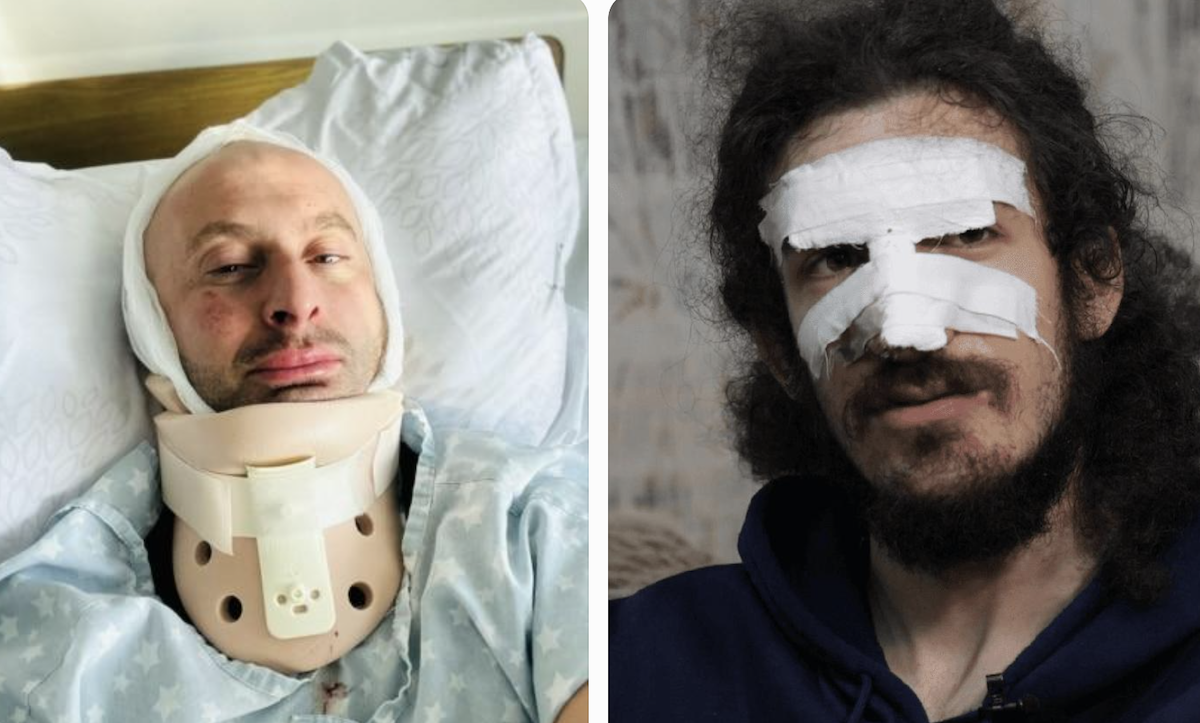
● A crew from Real TV was assaulted outside the school, local media report. The confrontation reportedly began after a provocation by a school security guard, after which unidentified people attacked the journalists. The camera operator sustained injuries. Suspects were detained following a complaint by the broadcaster, and an investigation is under way.
● The Norwegian Helsinki Committee has called for the immediate release on medical and humanitarian grounds of Aygun Elgunesh, editor-in-chief of Meydan TV, who is in detention. According to the organisation, the 51-year-old journalist has undergone multiple surgeries and needs specialised medical care. Her lawyers and relatives report that her condition has deteriorated in recent weeks and that she urgently needs surgery for a serious kidney problem.
Twelve journalists are on trial in the Meydan TV case, accused of currency smuggling and other crimes. All deny the charges and say the case is linked to their critical reporting on the Azerbaijani authorities.
● Ramiz Mehdiyev, the former head of Azerbaijan’s presidential administration who was sentenced to 14 years in prison, has been expelled from the National Academy of Sciences. He was convicted of treason and other crimes. More details here.
● The seventh World Forum on Intercultural Dialogue has concluded in Baku. Participants are travelling to Karabakh on a familiarisation visit today. The closing ceremony was attended by Miguel Ángel Moratinos, the UN High Representative for the Alliance of Civilizations, and Azerbaijan’s Culture Minister Adil Karimli.
● Azerbaijan has joined the Mecca Convention on cooperation between law enforcement agencies of the Organisation of Islamic Cooperation (OIC) in combating corruption. The convention was signed at a meeting of OIC anti-corruption agency heads in Baku. Tajikistan also signed the agreement. More than 250 people from 46 countries and eight international organisations attended the forum. The convention establishes a legal framework for exchanging information and evidence in corruption investigations and prosecuting suspects.
● During the meeting, Azerbaijan’s Prosecutor General also signed bilateral cooperation memorandums with anti-corruption agencies in Morocco and Iraq.
● Military cooperation between Azerbaijan and NATO was discussed in Baku at a meeting between Zaur Rustamov, deputy commander of the Azerbaijani Air Force, and Brigadier General Theodoros Stefos of NATO’s Allied Joint Force Command in Europe. The meeting followed an assessment of two Azerbaijani Mi-17-1V helicopters to determine whether they meet alliance requirements under NATO’s Operational Capabilities Concept programme. The programme also aims to improve interoperability for peacekeeping operations.
● Armenia’s parliament has ratified a framework agreement on strategic partnership with the United States covering the Trump Route for International Peace and Prosperity (TRIPP) transit project. The project is important for Azerbaijan because it would establish a land connection between the country and its Nakhchivan exclave through Armenian territory.
● Turkish authorities detained and later released Muhammed Emin Yıldırım, a staff member of Köklü Değişim Medya. He said he was being targeted over social media posts criticising new school uniform rules in Azerbaijan that effectively ban the wearing of hijabs in schools. Yıldırım is among 31 Turkish citizens banned from entering Azerbaijan over publications allegedly directed against the country’s sovereignty, national security and constitutional order. Activist Fatih Erşahin, who is also on the list, reported that he had been summoned for police questioning.
Context: The detentions come amid worsening relations between Azerbaijan and Türkiye. Turkish media and social media users have sharply criticised not only Azerbaijan’s restrictions on hijabs in schools but also its cooperation with Israel. Azerbaijani officials and media have responded with strong statements rejecting what they describe as interference in the country’s internal affairs.
● Azerbaijani President Ilham Aliyev has offered condolences to Spain following a railway disaster that killed dozens of people.
● Wizz Air has launched a direct flight between Bratislava and Baku, operating twice a week.
-
Wednesday, October 28, Armenia. The Netherlands will provide financial assistance to Armenia and Azerbaijan to help search for people missing from the First and Second Karabakh Wars
● A delegation led by Dutch Foreign Minister Tom Berendsen is visiting Yerevan, where he met Armenian Prime Minister Nikol Pashinyan. Both sides stressed the importance of their strategic partnership and further developing Armenia-EU relations. Berendsen said the Netherlands welcomed the Armenian government’s ambitious democratic reform agenda and was ready to continue supporting its implementation. Read more here
● The Netherlands will provide financial assistance to Armenia and Azerbaijan to help search for people missing from the First and Second Karabakh Wars, fought in the early 1990s and in 2020. Dutch Foreign Minister Tom Berendsen announced this at a press conference in Yerevan. He welcomed steps taken by both countries towards normalising relations and said it was very important for the process to culminate in a peace agreement.
● Debate has intensified in Armenia over the foreign minister’s statement that the TRIPP transit project, which would connect Azerbaijan with its Nakhchivan exclave through Armenian territory, could begin operating before Armenia and Azerbaijan sign a peace treaty. “Where are the guarantees of peace?” asked Narek Karapetyan, a pro-Russian opposition MP. Parliamentary Speaker Ruben Rubinyan, meanwhile, said he welcomed the prospect of TRIPP going ahead regardless of whether a peace treaty had been signed. He added that border delimitation and demarcation between Armenia and Azerbaijan were also proceeding independently of the treaty. “The explanation is simple: there is currently an obstacle to signing the peace treaty. Azerbaijan has made a demand that is preventing it from signing the agreement,” Rubinyan said.
Context: Azerbaijan argues that Armenia’s constitution contains territorial claims against Azerbaijan and demands that they be removed as a condition for signing a peace treaty.
● The parliamentary faction of the pro-Russian opposition Armenia bloc will vote against ratifying the strategic cooperation agreement between Armenia and the United States concerning the TRIPP project. Faction leader Anna Grigoryan said that although the agreement was formally bilateral, “Azerbaijan’s interests are reflected in it more directly than Armenia’s”.
● Four employees of Yerevan State University have been detained in a criminal investigation launched by Armenia’s Anti-Corruption Committee. The head of the Constitutional Law Department at the university’s Faculty of Law is accused of accepting a bribe, while the head of the Armenian History Department at the Faculty of History is accused of facilitating bribery. The committee has not released further details.
● Queen Sofía of Spain has arrived in Armenia for a visit scheduled to continue until 29 October. She will attend the presentation ceremony for the Prince Talal International Prize for Human Development, visit Armenia’s historical and cultural sites and take part in events celebrating cultural and friendly ties between Armenia and Spain.
● Saudi Prince Abdulaziz bin Talal Al Saud has arrived in Armenia. Local media have noted that the two countries had no diplomatic relations for many years. They established diplomatic ties only in November 2023.
● The ambassadors of Armenia, Azerbaijan and Georgia to Italy took part in a discussion titled “The Caucasus at a Crossroads: Peace, Corridors and a New Era of Cooperation”. The event was held as part of the Festival della Diplomazia. Discussions focused on strengthening regional peace, expanding cooperation between the three South Caucasus countries and developing transport routes linking Central Asia and the South Caucasus with Europe.
● Armenia has commemorated the victims of the 27 October 1999 attack on its parliament. Five gunmen stormed the parliamentary chamber and shot dead Prime Minister Vazgen Sargsyan, Speaker Karen Demirchyan, Deputy Speakers Yuri Bakhshyan and Ruben Miroyan, and four other MPs. The investigation was reopened in December 2019. Almost seven years later, the Prosecutor General’s Office said that more than a dozen additional witness interviews had been conducted and requests for information had been sent to relevant parties. The group’s leader, Nairi Hunanyan, his brother Karen Hunanyan, their uncle Vram Galstyan, as well as Derenik Bejanyan, Edik Grigoryan and Ashot Knyazyan were sentenced to life imprisonment. Hamlet Stepanyan received a 14-year sentence. Despite the convictions, key questions remain unanswered, including who was behind the attack and why it was carried out.
● A prisoner who escaped from a courthouse the previous day has been recaptured. After a search lasting around 24 hours, he was found at a house in the settlement of Jrvezh and arrested.
PHOTO: Environmental patrol officers in Armenia have found an injured jungle cat. An examination revealed a broken leg and an injury to the animal’s face. Surgery is planned. The preliminary assessment is that the injuries may have been caused by a vehicle striking the animal.

-
Wednesday, October 28, Azerbaijan. Former presidential administration chief Ramiz Mehdiyev sentenced to 14 years in prison, suspended, on treason charges
● The seventh World Forum for Intercultural Dialogue has opened in Baku, with President Ilham Aliyev addressing the opening session. He said the forum had become a major international platform over the past 15 years, with more than 2,000 participants from over 100 countries attending this year. Aliyev focused on the outcome of the 2020 Second Karabakh War, saying Azerbaijan had restored its territorial integrity and subsequently offered peace to Armenia. He accused the international community of applying double standards, arguing that UN Security Council resolutions recognising Karabakh as part of Azerbaijan had gone unimplemented for 30 years and that Armenia had faced no sanctions as an occupying power. Aliyev also warned of external threats, criticised other countries for trying to dictate terms to Baku and presented Azerbaijan as an independent actor, reliable energy supplier and transport hub.
● Hikmat Hajiyev, an aide to the Azerbaijani president, said at the forum that Armenia and Armenian society should apologise to the Azerbaijani people for depriving hundreds of thousands of Azerbaijanis of the opportunity to return to their homes for decades. He said Azerbaijan was not seeking revenge but considered recognition of historical responsibility necessary for lasting peace.
● Azerbaijani Foreign Minister Jeyhun Bayramov held talks on the sidelines of the forum with the head of the UN’s tourism agency, UN Tourism, and the head of the Islamic World Educational, Scientific and Cultural Organization (ICESCO). They discussed expanding cooperation in tourism, including developing new destinations in territories Azerbaijan regained control of after the 2020 Second Karabakh War. Preserving cultural heritage and restoring cultural and religious monuments were also highlighted as areas for cooperation. The importance of ICESCO’s regional office in Baku was also discussed.
● Azerbaijan, Iran, Kazakhstan, Russia and Turkmenistan must urgently work together to address the Caspian Sea’s falling water levels, Shahin Mustafayev, president of the International Turkic Academy, said at the forum. He warned that the decline threatened biodiversity and the livelihoods of communities across all five coastal countries. He called for the countries to share scientific data and coordinate their policies.
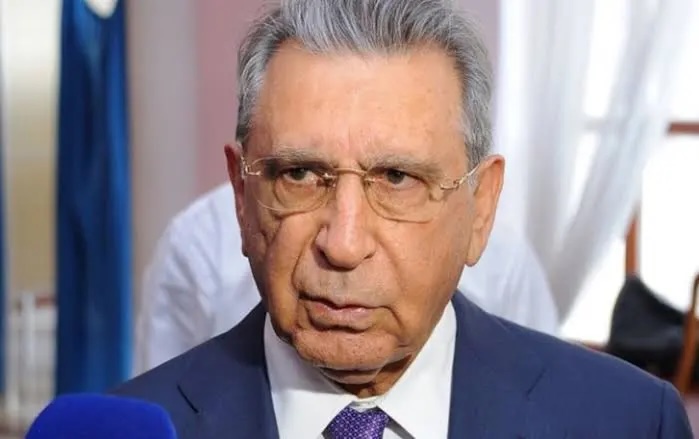
● Ramiz Mehdiyev (pictured below), a former head of the Azerbaijani presidential administration, has been sentenced to 14 years in prison, but the sentence has been suspended because of his age and health. The court also ordered his property confiscated by the state and stripped him of his state awards.
Mehdiyev headed the presidential administration from 1995 to 2019 and was widely regarded as Azerbaijan’s powerful behind-the-scenes political figure. He was found guilty of treason, attempting to seize power by force and money laundering. He has also been reported to face bribery allegations. The criminal case against him was opened in October 2025. Investigators alleged that he had taken part in plans to seize power with the help of foreign intelligence services. The authorities did not identify the services, but Russia was mentioned in case-related materials and local media discussions.
● Nurlan Libre (Gahramanly), a journalist with Meydan TV who is in pre-trial detention, said prison officers took his notes for preparing witness questioning during a search of his cell and then physically assaulted him in the detention centre director’s office. He said he was subsequently placed in a punishment cell for three days. Libre rejected the official explanation that he had obstructed the search, claiming the punishment was linked to his reporting on restrictions on wearing the hijab in Azerbaijani schools. His lawyers said his right to mount a defence had been violated. A court hearing at which witnesses were due to be questioned was postponed.
Twelve journalists are on trial in the Meydan TV case, facing charges including currency smuggling and other offences. All deny wrongdoing and say the case is linked to their critical reporting on the authorities.
● Mirsaleh Seyidov, head of Azerbaijan’s Penitentiary Service and a deputy justice minister, has been dismissed. No official reason has been given. Azerbaijan’s service of Radio Free Europe/Radio Liberty reported repeated complaints during his tenure about torture and ill-treatment of prisoners, inadequate access to medical care and poor detention conditions, particularly from political prisoners. The Penitentiary Service rejected the criticism.
● The first Azerbaijan-EU think tank forum has been held in Brussels, jointly organised by Azerbaijan’s Centre of Analysis of International Relations (AIR Center) and Belgium’s Egmont Institute. Discussions covered regional security, energy cooperation and the development of transport routes, including the Trump Route for International Peace and Prosperity (TRIPP) and the Middle Corridor. Speakers highlighted the growing importance of trade routes across the Caspian Sea linking Europe with Central Asia following Russia’s invasion of Ukraine.
● Bart Ouvry, head of the Egmont Institute, said the EU should develop ties with Azerbaijan through concrete economic projects that could make bilateral relations more sustainable. Addressing tensions between Azerbaijan and some European institutions, particularly the European Parliament, he said continued dialogue could help both sides better understand each other’s positions.
● Farid Shafiyev, head of the AIR Center, said Azerbaijan and the EU needed a new agreement reflecting deeper cooperation in energy, transport and the reconstruction of territories affected by conflict. He also said Armenia’s constitution needed to be amended before a peace treaty could be signed, arguing that it contained territorial claims against Azerbaijan. Shafiyev said Baku and Yerevan could negotiate directly without mediators. He expressed hope that opponents of the peace process, including members of the Armenian diaspora in Europe, would not derail the current opportunity to normalise relations.
● Devlet Bahçeli, leader of Turkey’s Nationalist Movement Party (MHP), said the brotherhood between Azerbaijan and Turkey was rooted in deep historical ties. He added that unity among Turkic peoples should be based on equality and mutual respect.
Context: His remarks come amid tensions between the two countries. In Turkey, there has been sharp criticism of Azerbaijan’s new secular school uniform rules, which effectively ban the hijab in schools. Turkish media and social media users have also criticised Azerbaijan’s cooperation with Israel. Baku has responded with strong statements against what it sees as attempts to interfere in the country’s internal affairs.
● An international symposium titled “From Kars to Nakhchivan: Turkey-Azerbaijan Diplomacy and the Future of the Turkic World” was held in Ankara. Participants included officials, diplomats, academics and journalists from Turkey, Azerbaijan, Kazakhstan, Kyrgyzstan and Uzbekistan. Discussions focused on strengthening ties between Turkic states, combating disinformation, media cooperation and developing regional transport routes. Speakers highlighted the role of the partnership between Baku and Ankara in promoting unity across the Turkic world.
● Azerbaijani Energy Minister Parviz Shahbazov held separate meetings in Moscow with Russia’s energy minister and Iran’s acting oil minister. The talks focused on developing bilateral energy cooperation.
● Algeria has invited Azerbaijani oil and gas companies to take part in an international tender for exploration in seven areas of the country. The issue was discussed at a Moscow meeting between Shahbazov and Algeria’s hydrocarbons minister. Particular attention was given to potential cooperation between Azerbaijan’s state oil company SOCAR and Algeria’s Sonatrach, including field development, well services, raw material transport, oil refining and petrochemicals. The first meeting of a joint working group between the two countries is planned for November in Baku.
● Azerbaijan’s Economy Ministry and Spain’s IE University have signed an agreement to establish an Economic Observatory. It will analyse economic trends, examine ways to improve Azerbaijan’s competitiveness and prepare recommendations for the country’s economic policy.
● Baku is hosting the third meeting of heads of law enforcement agencies from member states of the Organisation of Islamic Cooperation (OIC). More than 250 representatives from 48 countries are taking part. During the meeting, Azerbaijan’s Prosecutor General’s Office signed cooperation memorandums with Morocco and Iraq on exchanging information and methods for preventing and investigating corruption offences.
● Azerbaijan has backed the candidacy of UAE Minister of State Lana Zaki Nusseibeh for the post of UN secretary-general.
● Azerbaijan’s National Cybersecurity Agency has warned of a rise in WhatsApp account hacks. Scammers may gain access to users’ messages through linked devices. The agency advises users to check WhatsApp’s “Linked Devices” section and log out any unfamiliar devices, enable two-step verification, and never share SMS verification codes or their PIN. Users should also avoid suspicious links and fake messages claiming to come from WhatsApp support.
-
Wednesday, October 28, Georgia. Myth Detector has uncovered a new, large network of fake social media accounts supporting the Georgian government
● Georgia’s Constitutional Court will continue hearing a case brought by the ruling Georgian Dream party seeking to ban five opposition parties. Georgian Dream accuses them of attempting to overthrow the constitutional order, citing, among other things, their refusal to recognise the legitimacy of the current government. At Tuesday’s fifth hearing, representatives of one of the parties targeted, the United National Movement (UNM), presented their arguments. Ana Tsitlidze called the case a political manipulation, while Levan Bezhashvili warned that it could give Russia grounds to hold Georgia responsible for the 2008 August War. More details here.
● Parliament has fast-tracked a bill allowing casinos to host international gambling tournaments, passing it at first reading. Seventy-nine MPs voted in favour and eight against. At least 70% of tournament participants must be foreign nationals. Organisers will be exempt from gambling business fees if the prize fund exceeds 3 million lari (about $1.2 million). The Public Defender has urged parliament not to pass the bill, saying its potential negative impact on public health has not been assessed. Second and third readings are scheduled for today, 28 October.
● Parliament will fast-track a bill allowing the Georgian National Energy and Water Supply Regulatory Commission to introduce tiered gas and water tariffs for households based on consumption. The rules would remain in force for water until 1 January 2036 and for gas until 1 January 2038. The explanatory note says the aim is to protect the social interests of vulnerable groups. A similar tiered tariff system for electricity has been in place since 2003.
● Tbilisi City Court judge Nino Enukidze fined activist Tornike Razmadze 3,000 lari (about $1,200) for petty hooliganism. Razmadze had posted a social media comment containing profanity directed at Margarita Simonyan, a Russian propagandist.
● Justice Minister Paata Salia said the possible dismissal of the director of Gldani Prison No. 8 was under discussion, but no decision had been made. The prison has been at the centre of a controversy after criminal underworld figure Davit Peikrishvili was reportedly severely beaten in his cell. The Penitentiary Service denies that the incident took place. According to Peikrishvili’s mother, prosecutors questioned her son for six hours. Following a recommendation from the Prosecutor’s Office, Penitentiary Service head Giorgi Pataridze resigned.
● Amnesty International and the Georgian Young Lawyers’ Association (GYLA) say reports of violence in Georgian prisons are increasing and are calling for independent investigations. In a joint statement, the organisations cited several recent incidents, including the case of Davit Peikrishvili and that of prisoner Giorgi Davitadze, who alleges that prison staff sexually assaulted him at Rustavi Prison No. 6. Other reports of beatings were also mentioned. The Penitentiary Service denies the allegations, but its head, Giorgi Pataridze, resigned following a recommendation from the Prosecutor’s Office. The organisations said Georgian authorities must “break the vicious cycle of impunity”.
● The EU Delegation to Georgia has announced €38 million in assistance for the Georgian population, stressing that the money will not be transferred to the state budget. The funding will be channelled through agencies of EU member states and UN organisations. The new projects, part of the EUwithYou programme, will support farmers, small and medium-sized businesses, vocational skills development and women who have experienced gender-based violence. EU Ambassador Paweł Herczyński first announced the funding on 10 October at a Europe Day event, saying the delegation hoped to sign the projects by the end of the year “despite the existing difficulties”. In a statement on 16 October, the delegation explained that, due to democratic backsliding in Georgia, the EU was no longer providing funding to the Georgian government, while continuing to support the population.
● Fact-checking organisation Myth Detector has uncovered a new, large network of fake social media accounts supporting the Georgian government. In an earlier investigation, it identified 434 such profiles; its latest findings add another 445. Most of the new accounts were created on 25–26 August 2026, and many used AI-generated profile pictures. Some images contain obvious errors: one supposed government supporter appears to be holding a glass with a six-fingered hand. The accounts actively posted positive comments on the Facebook pages of pro-government television channels Imedi and Rustavi 2, praising statements by the prime minister, parliamentary speaker, Tbilisi mayor and philosopher Zaza Shatirishvili. The posts supported banning opposition parties and condemned what they described as Western “interference”.
● Thirteen of the 15 shareholders of Lilo Mall have donated to political parties, contributing a total of around 3.88 million lari (about $1.5 million) between 2017 and 2026, according to Transparency International Georgia. Of that amount, 3.512 million lari (about $1.3 million) went to the ruling Georgian Dream party. The organisation also reported that companies linked to the shareholders had won public procurement contracts worth more than 50 million lari (about $19 million).
● Students and parents at Tbilisi Public School No. 10 blocked a road to demand that construction of their school building be completed. Infrastructure Minister Revaz Sokhadze met them and guaranteed that classes would begin at the school in September next year. He also said the contractor would resume construction within days.
● The Georgian government is purchasing 70 new buses for the Rustavi–Tbilisi route. According to the business news outlet BPN, each bus is expected to cost around 521,300 lari (about $200,000).
● A young man was stabbed to death at his brother’s wedding in Tbilisi. The Interior Ministry has opened a murder investigation. According to Radio Free Europe/Radio Liberty, the suspected killer was a guest at the wedding.

-
Tuesday, October 27, Azerbaijan. Azerbaijan and Iran trade fresh accusations amid hijab ban in Azerbaijani schools; critic of the ban detained in Turkey
● Azerbaijan and Iran have exchanged fresh accusations amid public anger in parts of Azerbaijani society over new secular school-uniform rules that effectively ban the wearing of hijabs in schools. Iran has offered to admit Azerbaijani girls to its universities. Azerbaijan’s Ministry of Science and Education called the remarks inappropriate and an attempt to interfere in the country’s education policy. The ministry also pointed out that Iran has no schools or universities where teaching is conducted in Azerbaijani, despite an estimated 40 million ethnic Azerbaijanis living in Iran. “For decades, they have been deprived of the opportunity to receive education in their mother tongue,” the ministry said.
● Representatives of 55 Azerbaijani NGOs have sent an open letter to Iranian President Masoud Pezeshkian, urging him to ensure that millions of ethnic Azerbaijanis in Iran can receive education in their mother tongue. They called for Azerbaijani to be taught in schools, for secondary schools and universities offering instruction in the language to be established, and for teachers, textbooks and curricula to be developed. The signatories described this as a matter of historical justice and offered to support educational, scientific and cultural cooperation. The letter also referred to Pezeshkian’s commitment to the Azerbaijani language and his visits to Karabakh during trips to Azerbaijan.
● Muhammed Emin Yıldırım, a representative of Turkish magazine Köklü Değişim who was previously barred from entering Azerbaijan, has been detained in Istanbul. He is among 31 Turkish citizens whom Baku accused of publishing material targeting Azerbaijan’s sovereignty and national security and inciting religious hostility. The publications supported public anger over the new secular school-uniform rules, which effectively ban hijabs in schools. The reasons for Yıldırım’s detention in Turkey and details of the investigation have not yet been disclosed.
● Oktay Saral, an adviser to Turkish President Recep Tayyip Erdoğan, has stepped down after publicly criticising restrictions on wearing hijabs in Azerbaijani schools. His comments prompted sharp reactions in Baku and contributed to tensions between the two countries, Azerbaijan’s service of Radio Free Europe/Radio Liberty reported. According to the outlet, Saral resigned at Baku’s request in an effort to ease tensions, but this claim has not been independently confirmed.
● The need to address what he described as pro-Armenian disinformation published by Vatican News was raised by Allahshukur Pashazadeh, chairman of the Caucasus Muslims Board, during a meeting at the Vatican with Cardinal George Jacob Koovakad. Pashazadeh said the outlet had recently published false or one-sided reports based exclusively on Armenian sources. Koovakad said he would immediately inform the relevant Holy See bodies. The specific reports in question and any measures to be taken have not been disclosed.
● The Caucasus Muslims Board and the Holy See signed a memorandum of understanding on interfaith dialogue during the same meeting. It is the Vatican’s first such memorandum with the board; similar documents had previously been concluded mainly with state institutions. A permanent joint committee is planned to implement the agreement. The meeting also addressed cooperation between the two institutions, construction of a Catholic church in Baku — due to be completed in 2027 — and the opening of a Vatican apostolic nunciature in Azerbaijan.
● Eleven people have been arrested in Baku in connection with a fatal stabbing at a restaurant, with investigators linking them to an alleged criminal group. The incident took place on the night of 23 October, when 43-year-old local resident J. Miragaev died from stab wounds. According to Azerbaijan’s Interior Ministry, seven of the 11 detainees had previous convictions. Investigators allege that the group extorted money through threats, conducted criminal disputes and used firearms and bladed weapons against people who refused to comply with its demands. One of those arrested is Ahmed Alizade, the son of a member of Azerbaijan’s parliament, the Milli Majlis.
● Armenia has handed over Azerbaijani citizen Yashar Ali oglu Gasimov, who reportedly lost his way and accidentally crossed the state border, to Azerbaijani authorities. Armenia’s National Security Service said he was found on Armenian territory at around 5.50 pm on 19 October. The Azerbaijani state news agency APA reported his return to Baku.
● The peace agreement between Azerbaijan and Armenia must deliver tangible benefits to the population rather than remain a document on paper, Azerbaijani presidential aide Hikmat Hajiyev said at a special session of the Baku Platform for Cultural and Media Dialogue. He identified rebuilding trust and reconciliation between the two peoples as priorities. Citing the Balkans, where mutual distrust persists decades after conflicts ended, Hajiyev said the past must be acknowledged honestly but should not prevent progress towards peace.
● Artificial intelligence and social media are making it harder to verify information and are accelerating the spread of disinformation, Azerbaijani presidential aide Hikmat Hajiyev said. He described disinformation as a tool of hybrid interference in countries’ internal affairs and warned that distorted reporting by international media could undermine the South Caucasus peace process. Hajiyev said Azerbaijan had established its own system to counter disinformation.
● Dutch Foreign Minister Tom Berendsen is visiting Baku, where he has met President Ilham Aliyev and Azerbaijani Foreign Minister Jeyhun Bayramov. Discussions covered Azerbaijan’s relations with the European Union, trade, investment and cooperation in energy, transport and agriculture. The sides agreed on a roadmap for developing bilateral relations in 2026–2028. Berendsen described Azerbaijan as an important regional partner and praised its role in the process of normalising relations with Armenia.
● Austria wants to expand the presence of its companies in Azerbaijan, including in railway infrastructure and technology, Austrian Ambassador Etienne Berchtold said at a reception in Baku marking Austria’s National Day. He noted that Austria began buying Azerbaijani gas earlier this year. Azerbaijan’s Foreign Ministry representative Nargiz Gurbanova said Austrian expertise in industry and high technology could complement Azerbaijan’s transport and logistics capabilities.
● The American Chamber of Commerce in Azerbaijan (AmCham) and the Azerbaijan Insurers Association have identified five areas for strategic cooperation. These include proposals to improve insurance legislation, training seminars for companies, the development of agricultural and health insurance, and a survey of AmCham members to identify insurance needs and problems with claims payments.
● NATO has begun a Level 2 Evaluation (NEL-2) exercise involving two Azerbaijani Mi-17-1V helicopters. The exercise is being held under NATO’s Operational Capabilities Concept programme to assess the helicopter pair’s operational readiness against NATO standards and certify its capabilities.
● Azerbaijan intends to simplify visa procedures for citizens of African countries and expand cooperation with states across the continent, presidential aide Hikmat Hajiyev said at a special session of the Baku Platform for Cultural and Media Dialogue, titled “The Language of Peace and the Fight Against Disinformation”.
● President Ilham Aliyev met in Baku with Shaikha Al Nowais, secretary-general of UN Tourism. They discussed expanding cooperation, including the development of modern tourism infrastructure in Azerbaijan’s regions.
● Cooperation between Azerbaijan and UNESCO was discussed in Baku by Azerbaijani Deputy Foreign Minister Elnur Mammadov and UNESCO Deputy Director-General Asha-Rose Migiro during the 7th World Forum on Intercultural Dialogue.
● Azerbaijan’s Press Council has published an updated Code of Ethical Conduct for Journalists. The amendments focus in part on the use of artificial intelligence, requiring editorial oversight of AI-generated material and respect for copyright. New provisions also strengthen privacy protections: information about a person’s private life should not be published without consent unless it is in the public interest.
● An international scientific conference titled “Uzbekistan and Azerbaijan: Common Historical Heritage, Islamic Civilisation and Modern Scientific Cooperation” was held in Tashkent. Plans were announced to expand cooperation between universities, museums and research centres in the two countries.
-
Tuesday, October 27, Georgia. Georgia’s Constitutional Court continues hearings on ruling party’s bid to ban five opposition parties
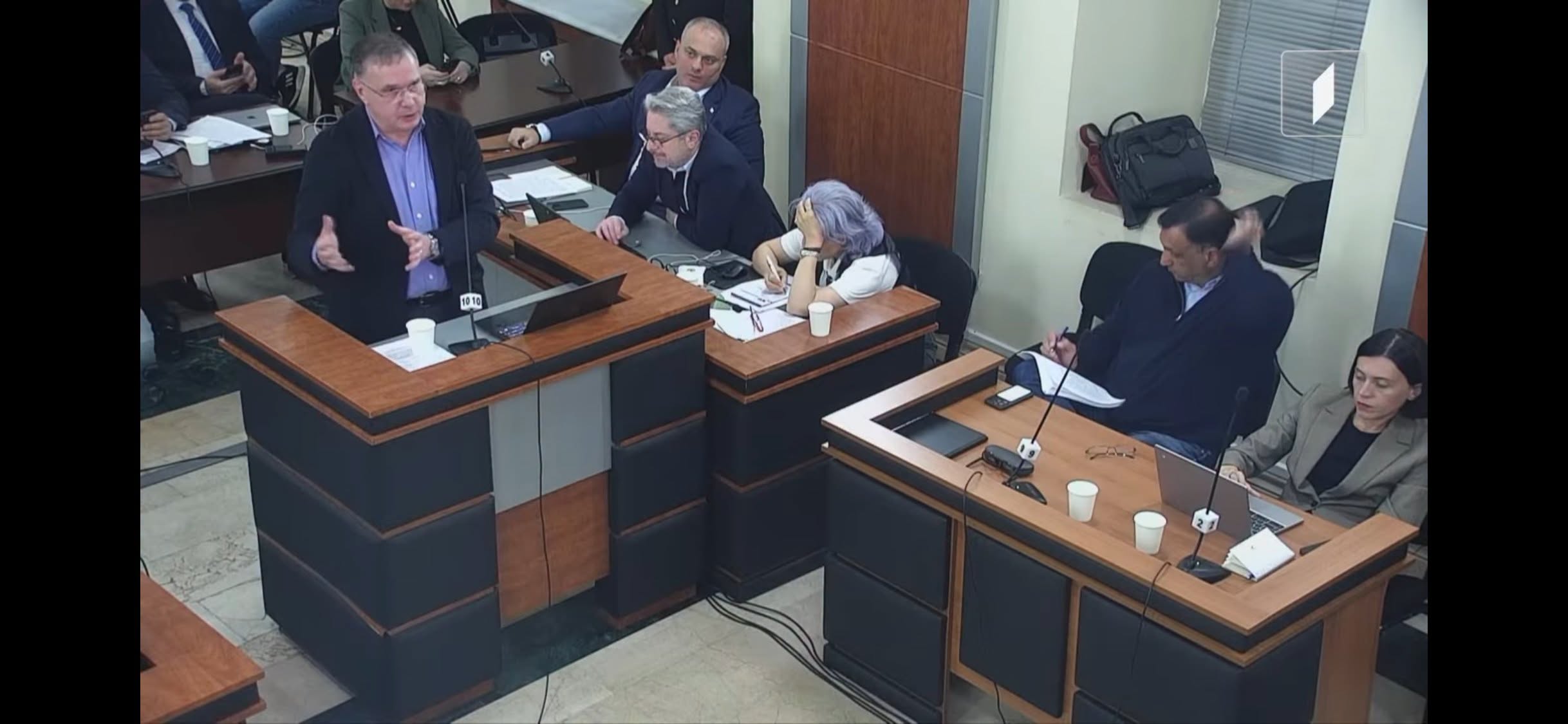
● Georgia’s Constitutional Court continues substantive hearings on a lawsuit filed by 88 MPs from the ruling Georgian Dream party seeking to ban five opposition parties. Georgian Dream argues that the parties violated Article 23 of the Constitution, which prohibits parties seeking to overthrow or forcibly change the country’s constitutional order. One of the arguments is that the parties refuse to recognise the legitimacy of the current authorities. The lawsuit also accuses them of organising attempts to overthrow the government. At the start of the hearings, the court refused to question Georgian Dream founder and honorary chairman, billionaire Bidzina Ivanishvili, and other current and former ruling party leaders as witnesses. The opposition parties and their politicians have faced accusations during the proceedings. Zaza Bibileishvili, representing the Unity – National Movement party, delivered a 2.5-hour counterstatement, presenting arguments against the lawsuit and urging judges to “act in a way they would want to be remembered by history”. He argued that the case was based solely on the findings of a parliamentary investigative commission, likening this to “a fox bringing its own tail as a witness”. The court must issue its ruling by 24 June 2027. More details here.
● The opposition party For Georgia, led by former prime minister Giorgi Gakharia, will lose its parliamentary seats if the Constitutional Court bans the party, MP Shalva Kereselidze said at a briefing in parliament. The party won 12 seats in the election, and 11 of its MPs currently serve in parliament.
● Giorgi Pataridze has resigned as head of Georgia’s Special Penitentiary Service after the Prosecutor’s Office recommended that the Ministry of Justice suspend his powers. Ramaz Tatarashvili has been appointed as his successor. The resignation comes amid a scandal involving Davit Peikrishvili, an imprisoned criminal underworld figure. His lawyer and family say he was beaten by other crime bosses in prison, while the Penitentiary Service has denied the allegation. The investigation has been transferred from the Justice Ministry’s General Inspection to the Prosecutor’s Office.
● Georgian Parliament Speaker Shalva Papuashvili accused the European Commission of using Soviet methods against Georgia. He was responding to reports about the European Commission’s annual enlargement report, due to be published on 4 November. On the anniversary of Georgia’s 2024 parliamentary election, whose results remain disputed by the opposition and part of the public, Papuashvili said: “26 October is the day the European Union deceived the Georgian people.”
● Georgia’s State Audit Office has referred an audit report on the state-owned Asset Management and Development Company for 2023–2024 to the Prosecutor’s Office. According to the report, the company spent more than 1.58 million lari (about $610,000) on employee bonuses and paid more than 913,000 lari (about $350,000) to directors’ advisers whose activities were not specified. The Ministry of Economy is considering whether to liquidate, merge or reorganise the company.
● Georgia’s Competition and Consumer Agency says fuel prices are reasonable and there are currently no grounds for a market investigation. According to the agency, all types of fuel have risen significantly in price in recent months, in line with international market trends.
● The government has submitted a bill to parliament allowing the duties of the prime minister’s special representative to be added to the responsibilities of a first deputy minister or deputy minister without additional pay. The bill is being fast-tracked. Giorgi Zurabashvili, the first deputy foreign minister, was recently appointed the prime minister’s special representative for relations with Russia.
Photo: Screenshot from a video of the Constitutional Court hearing, showing Zaza Bibileishvili representing the National Movement.
Screenshot -
Tuesday, October 27, Armenia. Nikol Pashinyan on local elections: “Ruling party won, foreign-controlled spy forces have been eliminated”
● Armenia’s ruling Civil Contract party and candidates and teams affiliated with it won a convincing victory in local elections, Prime Minister Nikol Pashinyan said in a Facebook livestream. Local elections were held in 21 communities on 25 October. Voting took place under a proportional system in 19 communities and a majoritarian system in two. Civil Contract ran unopposed in five communities: Armavir, Vardenis, Garni, Akhuryan and Vayk. More details here.
● The fifth meeting of the Armenia–EU Joint Working Group was held in Yerevan, co-chaired by Deputy Prime Minister Mher Grigoryan and Gert Jan Koopman, Director-General of the European Commission’s Directorate-General for Enlargement and Eastern Neighbourhood. Discussions focused on ongoing economic and energy reforms under Armenia’s 2024–2027 Resilience and Growth Plan, which forms part of the EU’s multi-sector budget support programme. The participants also discussed initiatives to strengthen regional transport and communications connectivity.
● Armenia’s Security Council Secretary Alen Simonyan met a delegation led by Gert Jan Koopman, Director-General of the European Commission’s Directorate-General for Enlargement and Eastern Neighbourhood. They stressed the importance of consistently developing Armenia–EU relations, with particular attention to diversifying Armenia’s economy, strengthening its resilience and advancing democratic reforms.
● Finnish President Alexander Stubb said the prospects for Turkey, Armenia, Azerbaijan and Georgia joining the EU depended on how the countries develop. He described EU enlargement as one of the bloc’s most important foreign policy tasks. “My vision is that in 30 years, the European Union will have around 40 member states. That is 20% of all countries in the world. Not all of them will use the euro as their currency, but the EU will be significantly larger than it is today,” Stubb said. He said he would like to see all Western Balkan countries, Ukraine and Moldova join the bloc, as well as Iceland, Norway, Switzerland and the UK. Canada, he added, would be at least an associated member.
● Armenia hopes to launch joint environmental projects with Azerbaijan and other neighbouring countries once border delimitation with Azerbaijan is complete, Environment Minister and COP17 President Hambardzum Matevosyan said. He noted that international funds allow countries to submit joint project proposals as a single package. “We will try to restore all the environmental losses we have suffered over the past decades,” the minister said.
● Russia’s embassy in Armenia sharply criticised a social media post by the governor of Shirak Province, where the Russian military base in Gyumri is located. Governor Davit Arushanyan had written: “They [Russian representatives] made a few loud statements on camera about ‘our Gyumri’ — and now another political performance of theirs is complete. But there is a problem. Gyumri is not your ‘Nizhny Tabour’, and the people of Gyumri are not your ‘Ivans’. We are a hospitable people and value our guests highly. But do not try to reach above our heads — the fall from such a height is painful. Performers on tour, be careful.” In response, the Russian embassy said it did not want to believe that a regional official overseeing an area where Russia’s 102nd military base and Russian border guards are stationed would make public statements that could incite national hostility towards Russians, which it said would fundamentally contradict the centuries-old friendship between the two peoples.
● Azerbaijani citizen Yashar Ali oglu Gasimov, who reportedly lost his way and crossed into Armenia, where he was found in Tavush Province, was returned to Azerbaijan on 24 October and handed over to the relevant authorities, Azerbaijan’s State Security Service said.
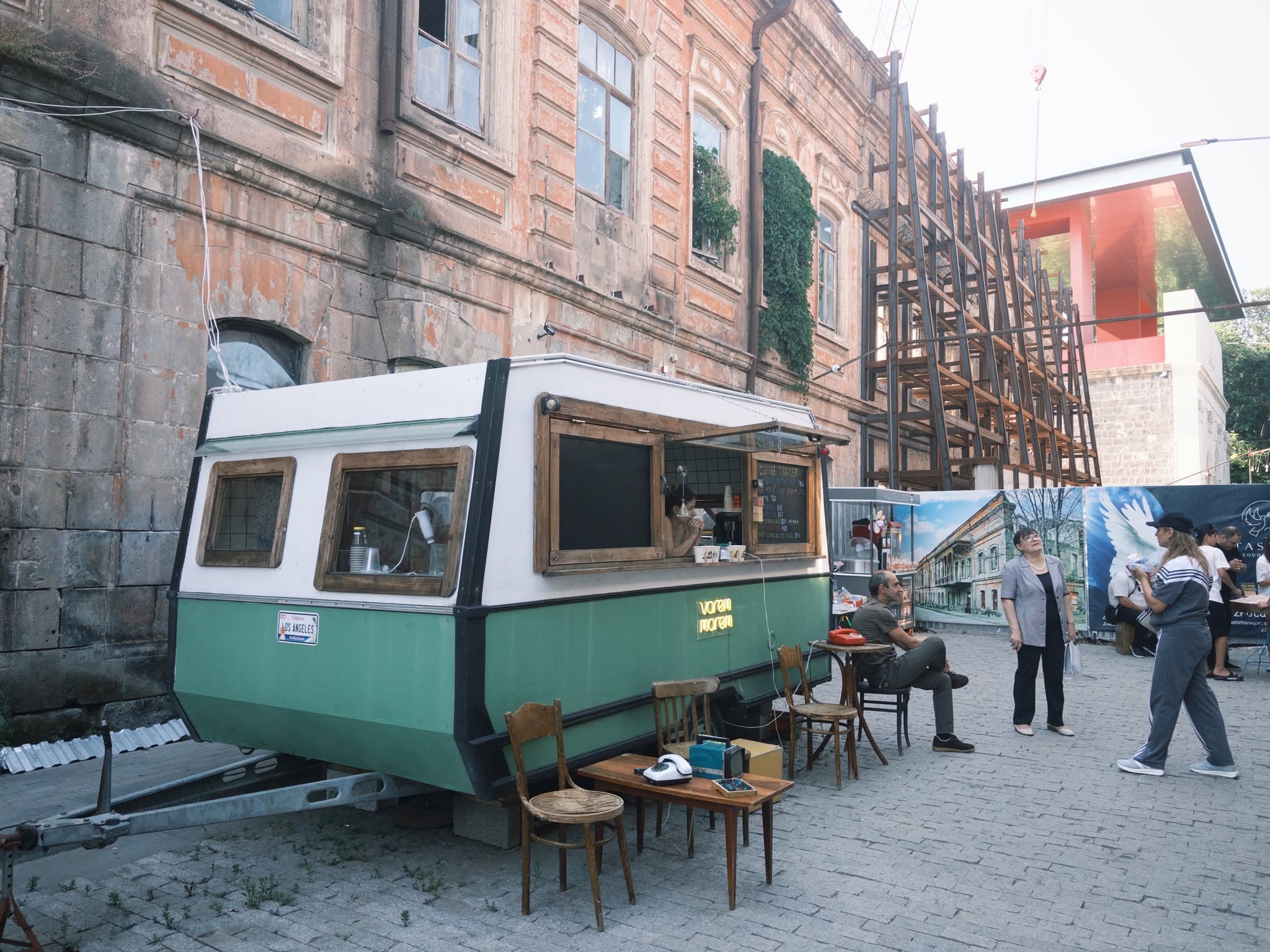
● Police halted the renovation of a children’s playground in the settlement of Tigranashen, undertaken at the initiative of the pro-Russian opposition party Strong Armenia. Officers said permission from the local community administration was required. The party said three local administration officials arrived and “aggressively demanded that the new playground equipment be dismantled and the old equipment restored”, but the demand was rejected. During a meeting with party representatives, the community head said permission should have been obtained before work began. The party launched the project amid growing debate in Armenia about the possible transfer of Tigranashen to Azerbaijan as part of the border delimitation process between the two countries.
● Armenian Interior Minister Arpine Sargsyan commented on the recent increase in administrative fines and the work of the Patrol Service. The main aim of raising fines was not to increase state revenue but to prevent offences and change people’s behaviour, she said.
● Armenian media are discussing the cancellation of performances by ensembles of Karabakh Armenians at the Vienna International Festival in March 2027. Reports say that, following discussions, the World Festival Association (WOFA) informed the NGO Centre for the Preservation of Artsakh Culture that the ensembles would receive new invitations to participate. WOFA had previously explained the cancellation by citing concerns over the NGO’s alleged “separatist activities”. It was reported that the festival organisers had received this information from diplomatic sources, but no sources were identified.
● A prisoner escaped from a courthouse in the city of Armavir. Police launched an operation to find him and are checking all vehicles leaving the city.
-
Monday, October 26, Georgia. An opposition alliance held a major protest rally and launched a campaign set to culminate on 28 November
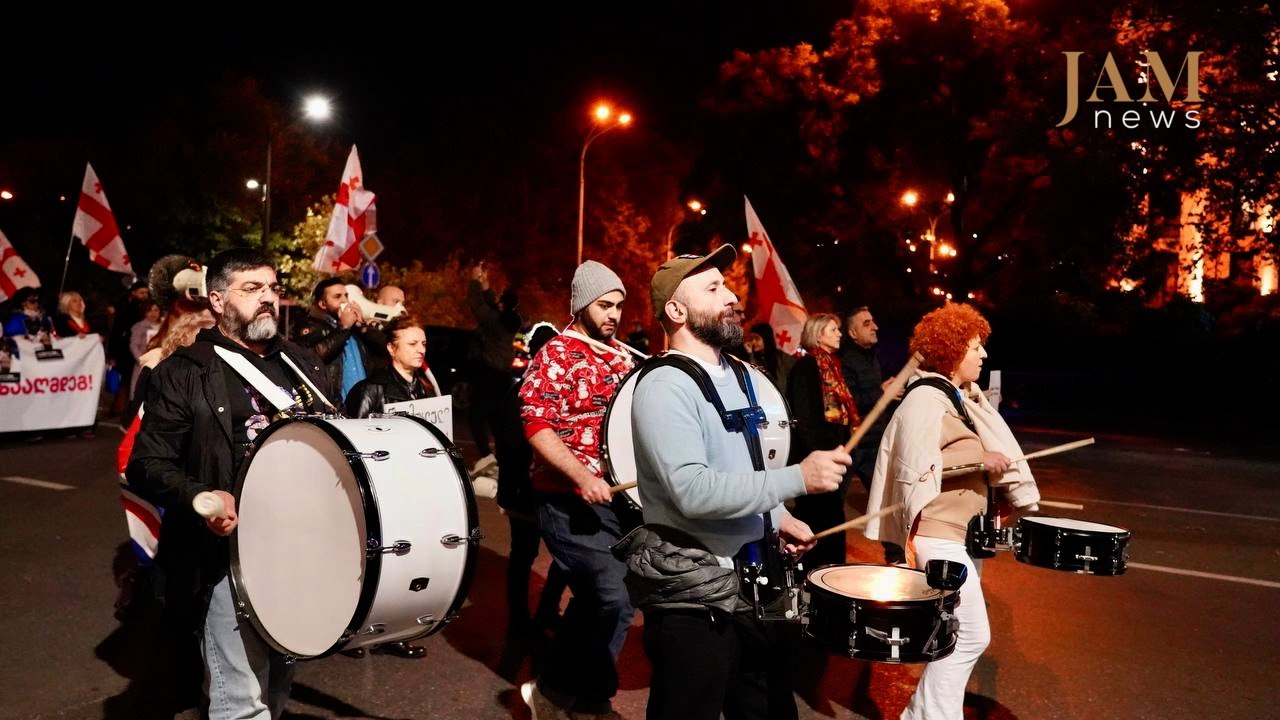
● A large protest march took place in central Tbilisi on Sunday evening under the slogan “Georgia without [oligarch] Ivanishvili!”. The rally was organised by an alliance of nine opposition parties. Organisers said the march marked the start of a protest campaign that will culminate in a mass demonstration on 28 November. The campaign centres on two key dates. The first is 26 October 2024, when parliamentary elections kept the ruling Georgian Dream party in power. Much of the opposition and many members of the public alleged that the results were rigged and refused to recognise them. The second is 28 November 2024, when Prime Minister Irakli Kobakhidze announced the suspension of Georgia’s EU integration process, triggering pro-European protests and marches that have continued ever since.
The campaign is taking place as Georgia’s Constitutional Court hears a case brought by Georgian Dream seeking to ban five opposition parties. Hearings began last week.
● The traditional Saturday march took place in Tbilisi, with hundreds of people carrying Georgian and EU flags and marching under the slogan “Georgia Against Ivanishvili’s One-Party Rule!”
● Georgia’s Constitutional Court is continuing hearings in a case seeking to ban five opposition parties. Georgian Dream argues that the parties violated Article 23 of the Constitution, which prohibits parties seeking to overthrow or forcibly change the country’s constitutional order. One of the arguments cited is their refusal to recognise the legitimacy of the current authorities. The lawsuit also accuses them of organising attempts to overthrow the government. Read more about the first three hearings in the case herehere.
● Two teenagers have been arrested in Tbilisi on suspicion of planning an attack on a school. According to the Prosecutor’s Office, they intended to leave a fake explosive device outside the school to divert attention, then enter the building and injure people inside using weapons. A starter pistol, ammunition, pepper spray and a knife were seized during searches. The teenagers have been charged with preparing to organise group violence, and one has already been remanded in custody.
● Dito Chubinidze, a journalist with the newspaper Asaval-Dasavali, has been remanded in custody on charges of treason and sabotage. The Prosecutor’s Office alleges that since February 2026 he has repeatedly spread false information through the media and social networks, claiming that the prime minister secretly handed part of the ancient David Gareji monastery complex over to Azerbaijan. Chubinidze denies the charges. His lawyer says he was simply carrying out his journalistic work.
● The mother of imprisoned crime bosses, the Peikrisvili brothers, has spoken out over the controversial case involving the alleged beating of one of them, Davit, in prison. He was hospitalised with multiple bruises and fractures. She said a source had told her that Vato Kipiani, a crime boss who has been in a long-running conflict with the brothers, managed to enter the cell of Davit’s brother, Giorgi. The Special Penitentiary Service denies this, saying Giorgi Peikrisvili is held alone under round-the-clock video surveillance. It also denies that Davit Peikrisvili was assaulted.
● A representative of Georgia’s Public Defender visited Giorgi Peikrisvili in prison. According to the ombudsman’s office, he has no complaints about his safety at this stage.
● Tbilisi Court of Appeal has approved a plea deal with former Deputy Economy Minister Romeo Mikautadze, who was accused of abuse of office, illegal involvement in business activities and laundering proceeds of crime on a particularly large scale. Mikautadze pleaded guilty and was sentenced to three years in prison, two years of probation and a fine of 1 million lari (around $400,000). His assets were also confiscated in favour of the state, including an apartment in Madrid and a 15% stake in the Nakhiduri Hydropower Plant company.
● Transparency International Georgia has published a study alleging that three water supply tenders in Samtskhe-Javakheti, worth a total of 121.3 million lari (around $47 million), were awarded without competition to companies whose owners or executives had donated to the ruling Georgian Dream party’s fund. One of the companies was Gza LLC, previously owned by Georgian Dream MP Giorgi Chkonia.
● Prime Minister Irakli Kobakhidze attended events in Budapest marking the 70th anniversary of the 1956 Hungarian Revolution, at the invitation of Hungarian Prime Minister Péter Magyar. Kobakhidze last visited Budapest in March 2026, ahead of Hungary’s parliamentary elections, when he openly backed Magyar’s rival, Viktor Orbán.
● On 23 October, Georgia’s Foreign Minister Maka Botchorishvili hosted the first meeting in Batumi with the foreign ministers of five Central Asian countries: Turkmenistan, Kazakhstan, Kyrgyzstan, Tajikistan and Uzbekistan. Discussions focused on the potential of the Middle Corridor, trade, transport and tourism. Participants expressed their willingness to continue cooperation in this format.
● Georgia’s banking sector recorded a 20% increase in net profit in the first nine months of the year compared with the same period last year, according to the National Bank. Of the country’s 19 banks, 15 were profitable and four reported losses. Bank of Georgia posted the highest profit, at 1.445 billion lari (around $600 million), followed by TBC Bank with 1.063 billion lari (around $400 million).
● Russian authorities have announced that restrictions on imports into Russia will be lifted from 1 November for two Georgian dairy-processing companies. Russian agencies have also said they are ready to inspect six Georgian fish and seafood producers that were previously included in a wider list of Georgian products banned from the Russian market.
● Georgia’s National Food Agency has found banned dyes in four spices and seasonings. The products include red pepper made by Beyza Gida San Tic Ltd., Svan salt produced by Igoeti Ltd. and NTK 2016 Ltd., and a minced-meat seasoning made by Dabi Ltd. Sales of the products have been banned and they are being withdrawn from the market. The agency has strongly urged consumers not to use any of the affected products they have already purchased.
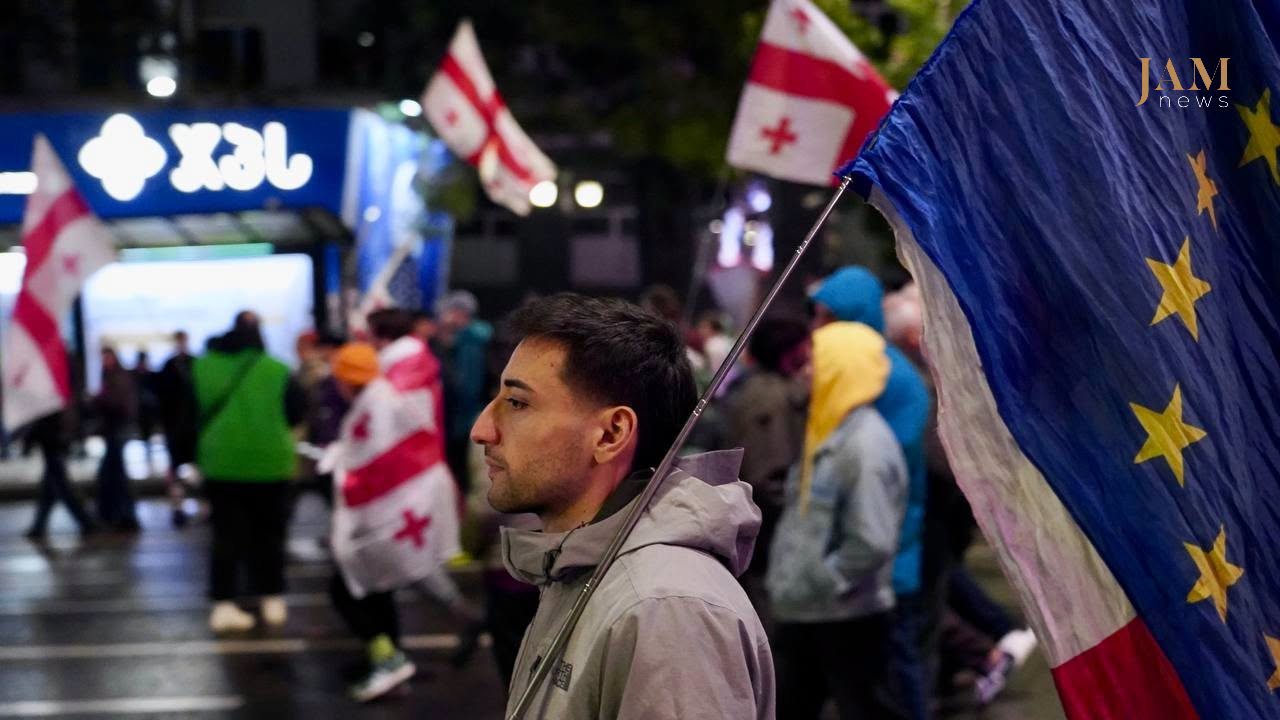
-
Monday, October 26, Azerbaijan. The first FIFA U-15 World Cup and football festival is taking place in Baku
● Ahmed Alizade, the son of MP Arzukhan Alizade, has been remanded in custody for four months in connection with a mass brawl at a cafe in Baku that left one person dead from stab wounds and several others injured. He faces charges including forming a criminal organisation and large-scale drug trafficking. The case was initially due to be heard by Khatai District Court, but the judges recused themselves because Ahmed’s brother, Orkhan Alizade, is a judge at the same court. The case was then transferred to Nizami District Court, which ordered Ahmed’s pre-trial detention.
● Azerbaijani citizen Ibad Huseynov, who was detained in Georgia, has been released with the help of Azerbaijan’s embassy and has returned home. Speaking to journalists at the airport, he said he had not been given a reason for his detention despite asking for an explanation. He thanked Azerbaijani diplomats for their swift assistance.
● Azerbaijan’s parliament has accused France and European institutions of applying double standards on human rights and called on the UN to set up an independent commission to investigate police violence during ongoing protests in France. Azerbaijani MPs said minors had been injured during police crackdowns and thousands of people detained, including around 2,400 on 17 October. The statement accused the EU and the Council of Europe of strongly criticising human rights violations in Azerbaijan while failing to show the same resolve over France.
Context: Azerbaijan and France have long been at odds. Baku criticises Paris for supplying weapons to Armenia and says France focuses on the rights of Armenians who left Karabakh while overlooking Armenia’s more than 30-year occupation of Azerbaijani territories, missing Azerbaijanis and the destruction of cultural heritage. France, meanwhile, accuses groups linked to Azerbaijan of supporting independence movements in French overseas territories and spreading disinformation on social media about French police actions. Baku denies the allegations.
● The first FIFA U-15 World Cup and football festival opened at Baku Crystal Hall. Teams from 189 national associations are taking part, with more than 3,000 young players and team representatives gathering in Baku. FIFA President Gianni Infantino opened the event, attended by Azerbaijani President Ilham Aliyev and First Lady Mehriban Aliyeva. The tournament runs until 30 October.
● A rally was held in Baku in support of young footballers from Kanaky (New Caledonia) and French Polynesia, who are taking part in the FIFA U-15 World Cup and football festival. Fans gathered outside the Athletes’ Village to welcome the players ahead of their matches. Participants expressed solidarity with the peoples of the Pacific and stressed the importance of preserving their national identity, culture and traditions.
● Azerbaijani Greco-Roman wrestlers Eldaniz Azizli and Sanan Suleymanov won gold at the World Championships in Astana, Kazakhstan. Azizli claimed his fifth world title, while Suleymanov became world champion for the first time.
● The Azerbaijan State Academic Opera and Ballet Theatre has staged Giacomo Puccini’s Turandot for the first time in 98 years. Italian conductor Beatrice Venezi led the orchestra. Azerbaijani tenor Yusif Eyvazov sang Calaf, while Italian soprano Carmen Giannattasio performed the role of Turandot. Eyvazov called the premiere a historic event, saying that although Calaf is one of his signature roles, this was the first time he had performed it in Azerbaijan.
 View this post on Instagram
-
Monday, October 26, Armenia. Local elections were held in 21 communities across 10 regions of Armenia
● Local government elections were held in 21 communities across 10 regions of Armenia. A total of 517 polling stations were set up. Elections in 19 communities were held under the proportional representation system, while two communities, Fioletovo and Shamiram, used the majoritarian system.
● The Interior Ministry received 35 reports of alleged violations during the elections, all of which are being investigated. Throughout the day, videos and posts from polling stations circulated in the media, alleging breaches of ballot secrecy, unlawful monitoring of voters and campaigning. Some footage reportedly showed voters photographing their ballots inside voting booths.
● Voter turnout was highest in Yeghegnadzor, in Vayots Dzor Region, at 62.56%. However, turnout failed to reach 50% at 11 of the 21 polling stations. The lowest figure was recorded in Fioletovo, in Lori Region, at 25.39%.
● Around 20,000 residents of the town of Martuni were unable to vote in local elections because of a new law barring citizens who have not been in the country for a specified period from taking part. Opposition MP Gegham Manukyan, from the pro-Russian Armenia parliamentary faction, accused the authorities of discrimination. He said the issue was particularly serious in Martuni, where many residents travel abroad for work.
● Turkey has completed the tender for the restoration of the historic Ani Bridge on the border with Armenia, the Turkish Ministry of Transport and Infrastructure said. Built in the 10th century on the Silk Road over the Akhuryan River in Kars Province, the bridge once served as an important trade crossing. On 4 May, Armenian and Turkish representatives agreed in Yerevan to restore it jointly, describing the project as a symbolic step towards normalising relations between the two countries.
● Prime Minister Nikol Pashinyan condemned a terrorist attack in the French towns of Trappes and La Verrière and expressed solidarity with France in its fight against racism and hatred.
● Armenian gymnast Artur Davtyan, an Olympic silver and bronze medallist and world and European champion, won gold at the World Artistic Gymnastics Championships in Rotterdam. He scored 14.850 points across two vaults in the final, claiming the world title for the second time in his career.
● Thirteen-year-old Armenian singer Naré won the 2026 Junior Eurovision Song Contest in Malta. Performing her song BOO!, she scored a total of 202 points.
● Prime Minister Nikol Pashinyan shared a clip from Naré’s music video on his official Instagram page, writing: “Armenia has won Junior Eurovision. Bravo, Naré!”
Naré is the daughter of former Economy Minister Vahan Kerobyan, who was detained in February 2024 under Pashinyan’s government. He was charged with alleged abuse of office in connection with a ministry procurement tender.
● Prime Minister Nikol Pashinyan and his wife, Anna Hakobyan, attended the opening of a special exhibition at the National Gallery as part of the “We Will No Longer Tolerate” campaign against domestic violence. Hakobyan, who heads the My Step Foundation, leads the campaign. The exhibition features international initiatives to combat domestic violence, including stories from Australia, New Zealand, Italy, Chile, Finland and other countries.
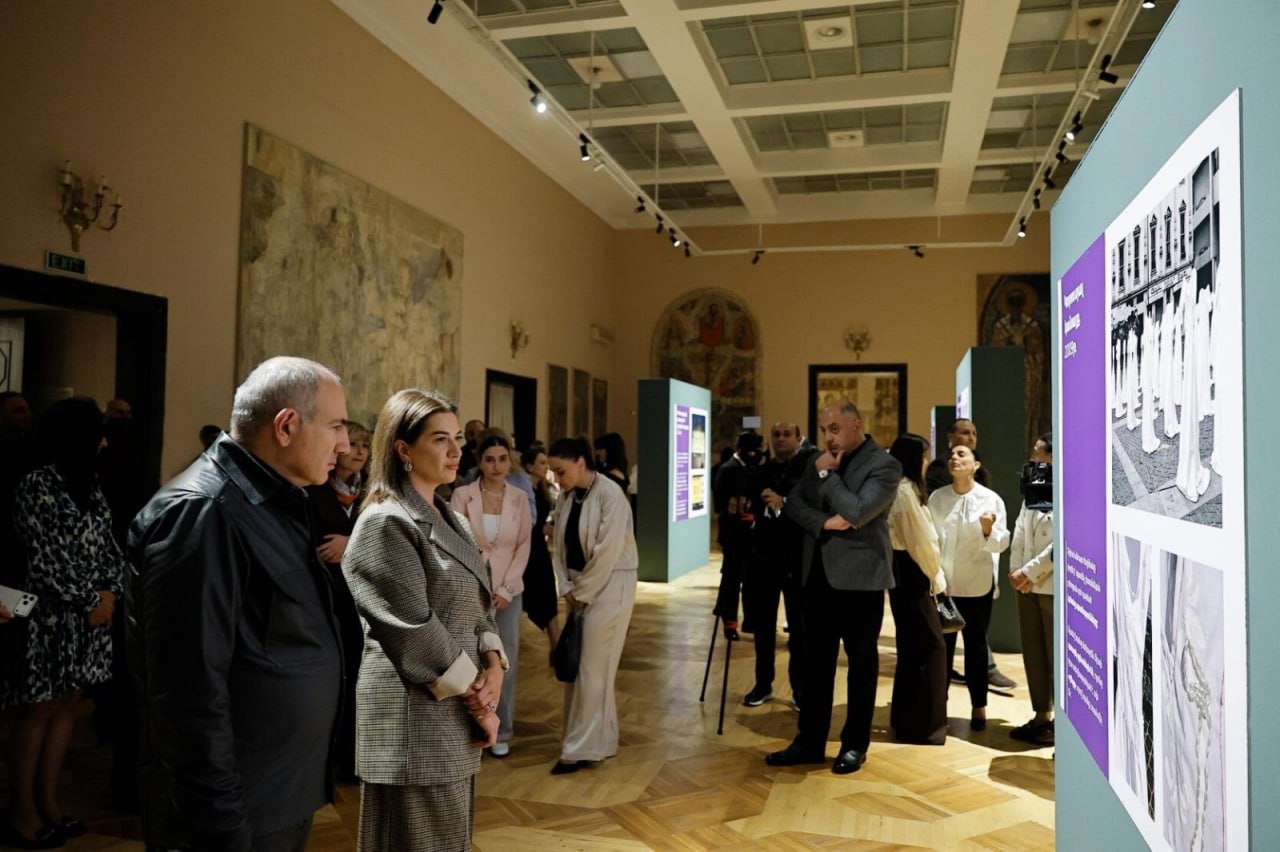
-
Top stories in Azerbaijan, Armenia, and Georgia from 19-23 October, 2026