More Armenian women embrace entrepreneurship: Which industries are they entering?






Armenian women embrace entrepreneurship
Women in Armenia are increasingly entering the business sector, primarily through small and medium-sized enterprises, most often in services. According to official statistics, women-founded businesses have been particularly successful in retail, tourism, education, healthcare and light industry.
Women are also encouraged to participate in small-scale, low-risk business initiatives through government programmes and projects run by international organisations, which often provide small grants to support new ventures.
Experts attribute women’s growing economic activity primarily to their knowledge and qualifications, noting that many female entrepreneurs have received a high-quality higher education. They also point to women’s desire for financial independence and a stronger role in society as key drivers of the trend.
- Women-only factory tackles unemployment in vulnerable Armenian families
- Armenia: Three women saving their businesses from coronavirus
- Dutch entrepreneurs come to Armenia to teach, stay to live
‘When you start a business, your environment and resilience matter more than money’
Ani Yeghiazaryan lives in the town of Vayk. At one point, she decided it was time to use her skills and knowledge to start her own business and earn a living. She opened a bakery, employing women who moved to Armenia from Nagorno-Karabakh after the 2023 exodus. Together they bake zhingyalov hats, a traditional flatbread filled with herbs from the Karabakh region.
While building her business, Ani also hopes to help women who have struggled to find work after relocating to Armenia.
“My family supported me and helped turn this idea into reality. I think the support of those closest to them is what women in business need most. The right words can give a woman wings and encourage her to pursue her ideas,” she says.
Ani believes women from Armenia’s regions tend to be more creative and willing to take risks, and are not afraid of making mistakes. She says many are motivated not only by the need to support their families but also by a desire to fulfil their own ambitions.
“When you start a business, the environment you’re trying to succeed in and your psychological resilience are more important than money. Today, thanks to various support programmes and loan schemes, it’s entirely possible to turn an idea into reality. What matters is having people around you who believe in you.”
Ani says she has drawn particular inspiration from women who have already turned their ideas into successful businesses.
“We sometimes help each other by sharing contacts and useful information. Thanks to one such tip, I applied for a small grants competition run by the United Nations Development Programme and the Global Environment Facility. The grant allowed us to buy a freezer, which lets us store seasonal herbs and use them in our baking throughout the year.“
The founder of the young business says her employees are dedicated to their work and complete orders quickly.
If this first venture proves successful, Ani hopes to launch more ambitious projects.
“I think I need to test my abilities, my resilience and my capacity to find solutions in difficult situations. In the future, I want to take on larger and riskier projects. It’s important for me to understand the limits of what I can achieve.”
Data points to growing economic activity among women
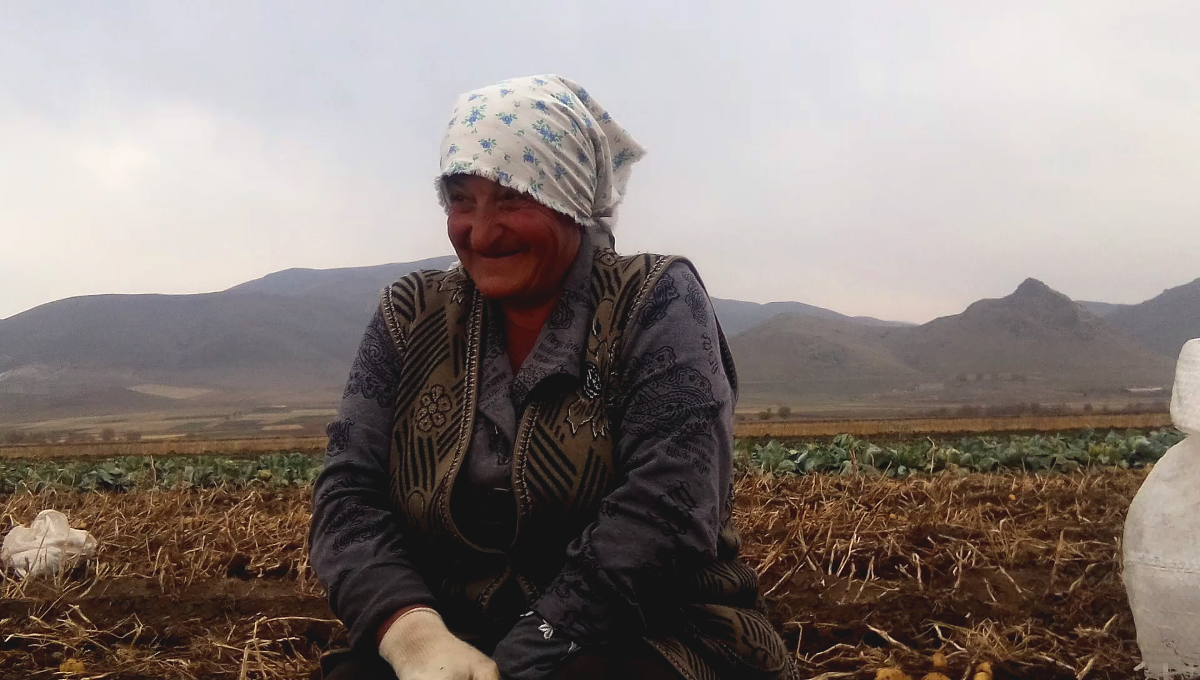
According to the 2024 World Bank data, women own or co-own 28% of companies in Armenia, meaning roughly one in three businesses has at least one female owner.
The 2024/2025 Global Entrepreneurship Monitor (GEM) report also shows that women’s entrepreneurial activity is increasing, although it continues to lag behind that of men.
Figures from Armenia’s Central Bank, based on data from banks and credit organisations, show that as of 30 April 2026, 939,551 people had outstanding loans. Of those:
- 474,000 (50.5%) were women
- 466,000 (49.5%) were men
Women account for a slightly larger share of borrowers, often because they seek loans for social or household needs. However, lending specialists say women are increasingly applying for credit to start their own businesses.
Women entrepreneurs return for repeat business loans
Haykanush Sargsyan, a lending specialist at one of Armenia’s leading banks, provides business loans to both established companies and start-ups.
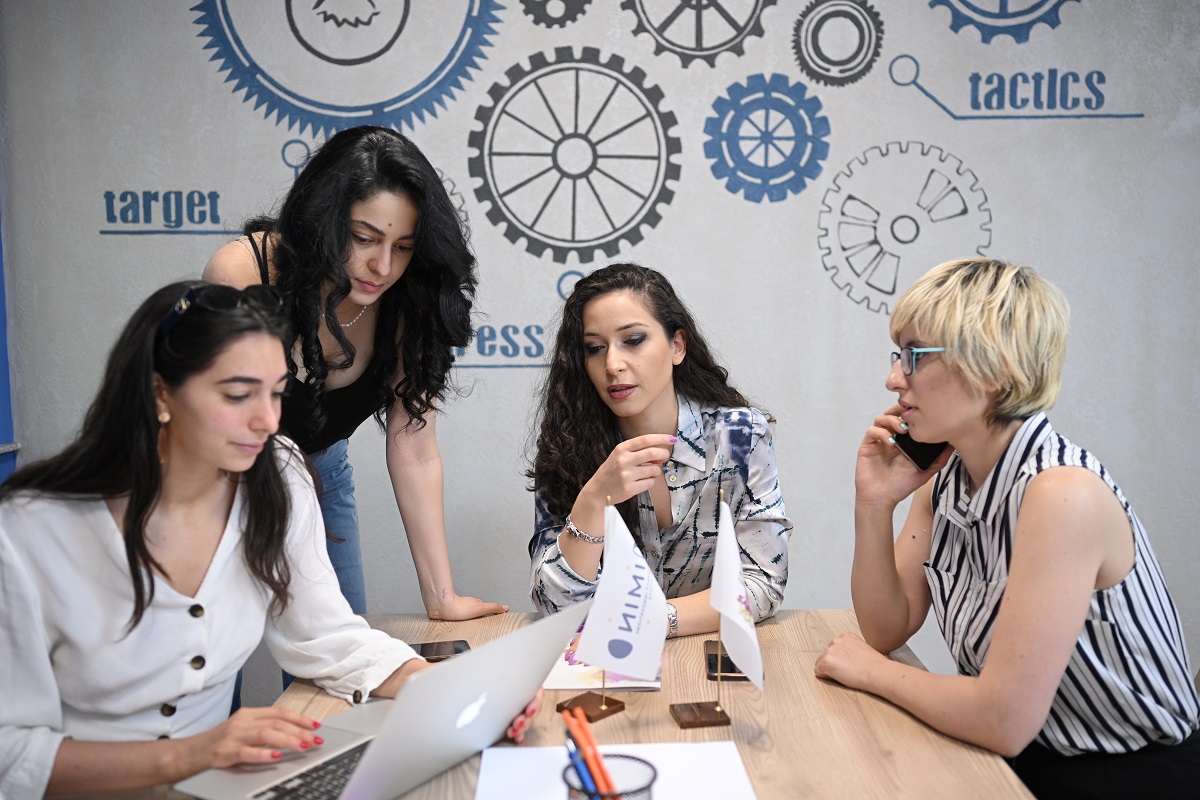
She says the number of loan applications from businesses founded or co-owned by women in her portfolio has nearly tripled over the past three years.
“A significant proportion of the women applying for new loans are returning clients. They come back because they have successfully repaid previous loans and their businesses have grown.“
According to Sargsyan, these women not only return for additional financing but also encourage others to do the same.
“They are generally more responsible borrowers. When assessing applications, we look at the progress they have already made, and their projects are often considered lower risk.“
An analysis of the bank’s lending shows that women-owned businesses are typically small or medium-sized enterprises operating in the services sector. These include confectionery production, education centres, clothing manufacturing, as well as advertising and marketing services.
Sargsyan says women also tend to have a clearer understanding of what they need from a business loan.
“Women applying for loans usually have more clearly defined goals and expectations. They tend to have a better idea of how long it will take to repay the loan and how much funding they actually need. Men, by contrast, often give broader answers and see more risks to their business plans. Women seem to rely more on instinct in business.“
She says the amount of financing sought by women entrepreneurs varies widely, with loan requests typically ranging from 5 million to 50 million drams (around $13,700 to $136,600).
“Although banks already offer preferential lending products to support women’s entrepreneurship, lower-interest loans would provide even greater encouragement, particularly for women starting their first business.“