Opinion from Yerevan: Baku steps up pressure on Armenia with new tools






Opinion on Baku’s tougher rhetoric
Statements by Azerbaijani President Ilham Aliyev should be seen as a “public expression of dissatisfaction with Nikol Pashinyan’s government”, according to political analyst Suren Surenyants.
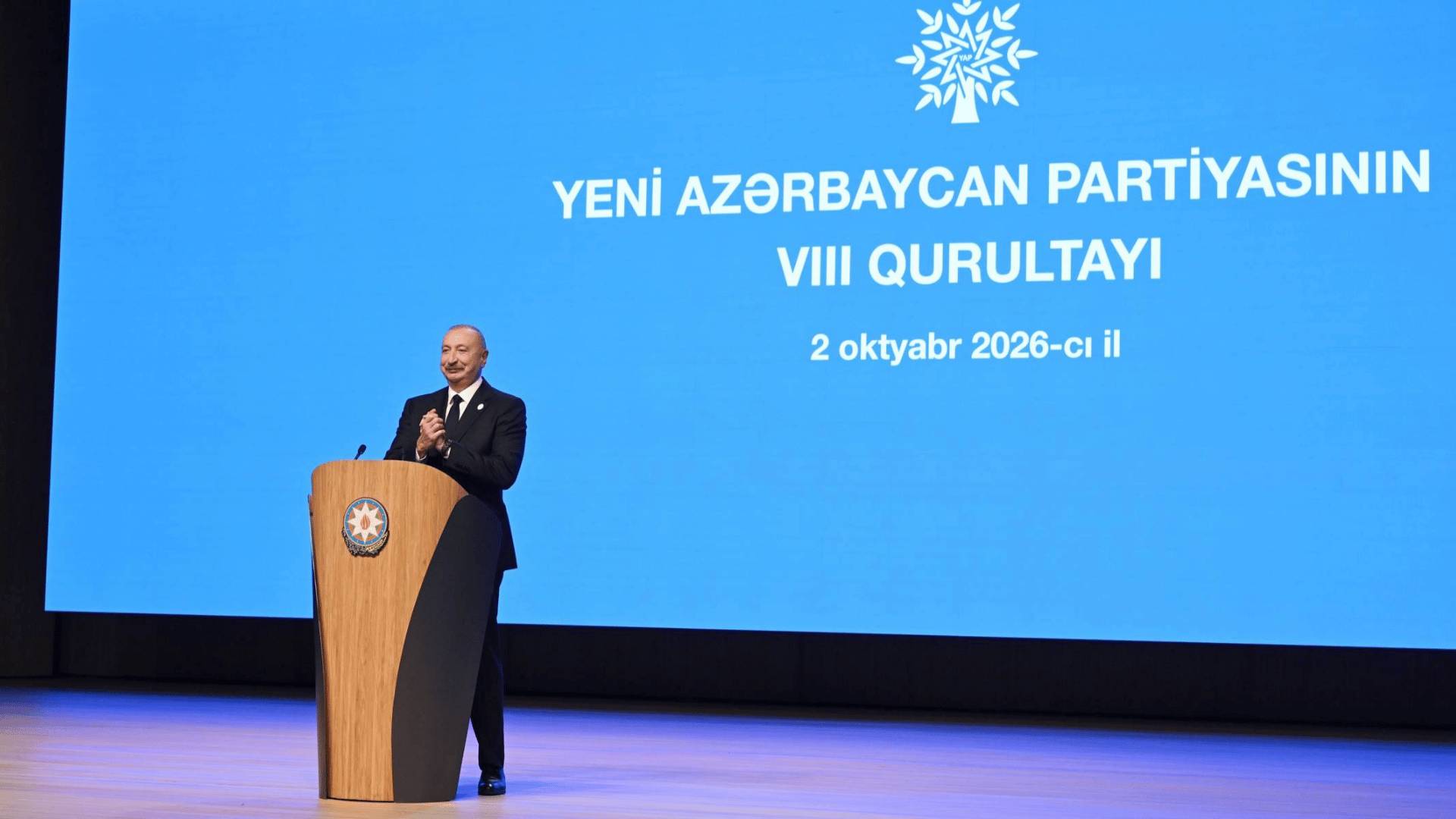
Speaking at the eighth congress of the ruling New Azerbaijan Party, Aliyev said, among other things, that the blame should not be placed solely on Armenia’s former leadership.
“It is true that Armenia’s former leaders are war criminals and must be punished, but it was Armenia’s current government that made territorial claims against us and insulted the dignity of the Azerbaijani people with inappropriate and uncivilised statements. We must never forget this,” the president stressed.
Political analyst Suren Surenyants analysed what prompted the recent statements by Aliyev and his aide Hikmet Hajiyev, as well as Azerbaijan’s tougher rhetoric more broadly.
“Baku is effectively signalling that it is dissatisfied with the way Pashinyan is fulfilling his commitments and, if necessary, could use his previous positions and statements as an additional means of exerting pressure,” he said.
- Azerbaijani soldier who entered Armenia fired at local residents
- ‘Unresolved issues and conflicting narratives remain’ — Pashinyan on relations with Azerbaijan
- ‘Helping Baku justify ethnic cleansing’: Yerevan views on diplomats’ trip to Karabakh
‘We would like to make peace not only with the Armenian government, but with the Armenian people’
Against the backdrop of Aliyev’s tough statements, the head of the foreign policy department of the Azerbaijani presidential administration also addressed the peace agenda with Armenia. Speaking at the CAMCA Regional Forum in Baku, he said Azerbaijan intended to build a long-term architecture for peace:
“That is why we always say that we want to make this peace not only with the Armenian government and the country’s prime minister. We want to make peace with the Armenian people. And that is why we continue to expect changes to Armenia’s Constitution. Of course, this is an internal matter, and we fully refrain from interfering in this process.
“We are waiting for just one final step – amendments to Armenia’s Constitution concerning territorial claims against Azerbaijan. After that, I think the final peace agreement will become a reality.”
Baku is demanding amendments to Armenia’s Constitution as a precondition for signing a peace treaty. Azerbaijan argues that the document contains territorial claims. The Constitution itself contains no wording that could give rise to such concerns. However, it refers to the Declaration of Independence, which mentions the reunification of Armenia and Nagorno-Karabakh.
A draft of Armenia’s new Constitution is currently under discussion. Prime Minister Nikol Pashinyan has repeatedly said that it should not contain a reference to the Declaration of Independence. At the same time, he insists that constitutional change is something Armenia itself needs.
Expert commentary
Political analyst Suren Surenyants notes that Armenia is building its entire policy around the peace agenda with Azerbaijan, while Azerbaijan, far from softening its rhetoric, has been toughening it in recent months:
“One possible explanation is that Azerbaijan is seeking to consolidate as quickly as possible the political gains resulting from the military advantage it achieved through the war, recognising that the current balance of power will not last forever.”
In his view, this interpretation is also supported by statements from the Azerbaijani president’s aide. In particular, he points to Hikmet Hajiyev’s remarks that a peace treaty will only be signed after Armenia changes its Constitution, despite peace having already been established:
“This is not a contradiction, but a division of labour. One formulation is intended for an international audience, while the other is addressed to Yerevan, reminding it of the need to fulfil its commitments.”
Surenyants also considers the statement about seeking peace not only with the Armenian government but also with the Armenian people noteworthy.
According to him, this means Azerbaijan wants changes in Armenia to acquire “legitimacy enshrined through a referendum and to be made as irreversible as possible”.
The political analyst suggests Baku is in a hurry because the regional balance of power could change, primarily due to the growing Iranian factor:
“If Iran is able to capitalise on its regional influence, a shift in the balance of power in the South Caucasus could limit Baku’s ability to exert pressure on Armenia.”
Surenyants notes that:
- Tehran has repeatedly said that any violation of Armenia’s territorial integrity, changes to international borders or alteration of the geopolitical status quo in the region constitute “red lines” for Iran;
- Iran is particularly sensitive to the development of transport links through Armenia, viewing them through the prism of its own security and regional influence.

Surenyants argues that the demand for changes to Armenia’s Constitution is taking on additional significance and cannot be seen simply as a “mechanical precondition” for signing a peace treaty.
“Azerbaijan is seeking to achieve its desired outcome within Armenia at both the legal and political levels. And that outcome will not be limited to removing the reference to the Declaration of Independence,” he argues.
The analyst notes that discussions have intensified again in Baku, in particular about the return of Azerbaijanis to “Western Azerbaijan”, by which they mean virtually the entire territory of Armenia. He believes these developments will not end with changes to Armenia’s Constitution and is convinced that Azerbaijan will then present Armenia with a new list of demands:
“Does all this mean that Azerbaijan is preparing for a new military escalation? At present, there is not enough publicly available evidence to draw such a definitive conclusion.”
The political analyst believes Baku has not yet obtained everything it wants from Armenia and is therefore stepping up political pressure. In his assessment, this is driven by concerns that it may become more difficult to secure all its demands in the future:
“And Baku is rushing to get everything it wants while there is a government in Yerevan that regards Baku’s demand for constitutional amendments as part of its own agenda, and before regional developments close the ‘window of opportunity’ for exerting unilateral pressure on Armenia.”