'Сake will be divided without us': Analyst on Georgia’s foreign policy


According to analyst Paata Zakareishvili, the appointment of Giorgi Zurabashvili, first deputy foreign minister, as the Georgian prime minister’s special representative for relations with Russia gives the Kremlin a new channel for direct political communication with Georgia’s foreign ministry. This could pave the way for existing negotiation formats to be weakened.
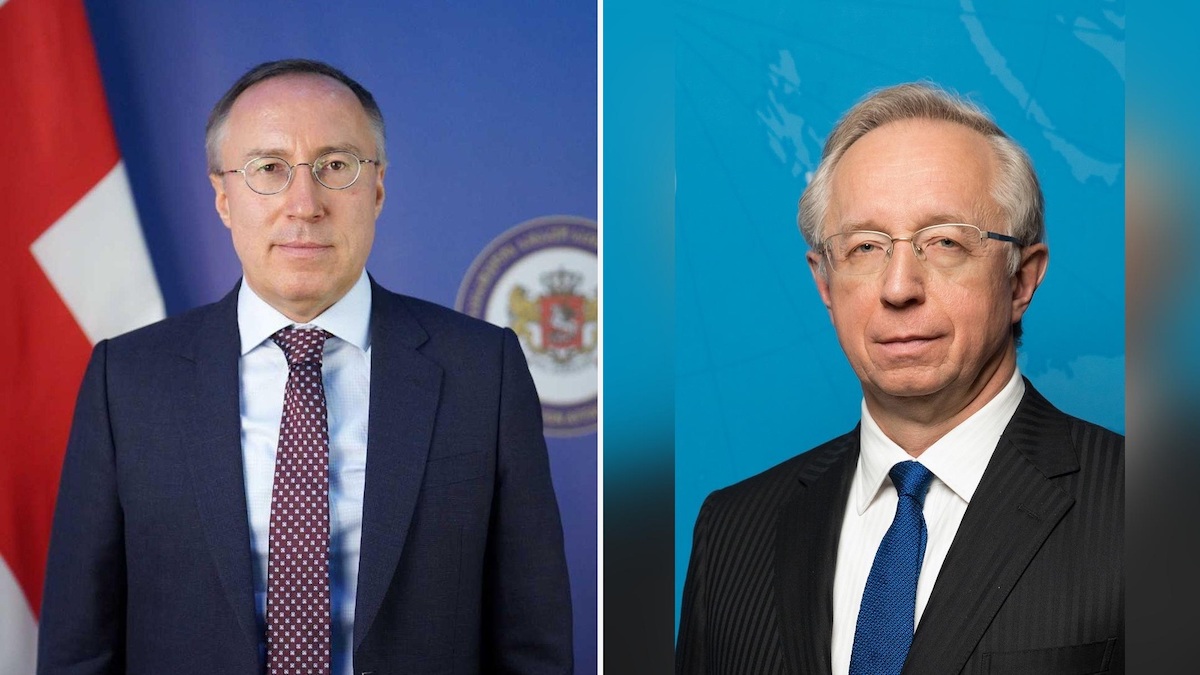
Russia has already established contact with the new special representative, Giorgi Zurabashvili. His Russian counterpart will be Mikhail Galuzin, Russia’s deputy foreign minister. According to the Russian side, the main topics for discussion will include increasing trade and tourism, expanding transport links and promoting cultural exchanges between the two countries.
Paata Zakareishvili believes that placing the special representative’s post within the Ministry of Foreign Affairs is a dangerous decision. In his view, the prime minister’s special representative for relations with Russia should be an independent figure, rather than a serving senior official in the foreign ministry.
“Georgia and Russia have not maintained diplomatic relations since the August 2008 war. At the same time, Russia’s occupation of Georgian territories and the political confrontation between the two countries require a special format for relations.
“It was precisely for these reasons that the Karasin-Abashidze format was established. Under this arrangement, Georgia’s former special representative, Zurab Abashidze, met with Russia’s deputy foreign minister, Grigory Karasin,” the analyst says.
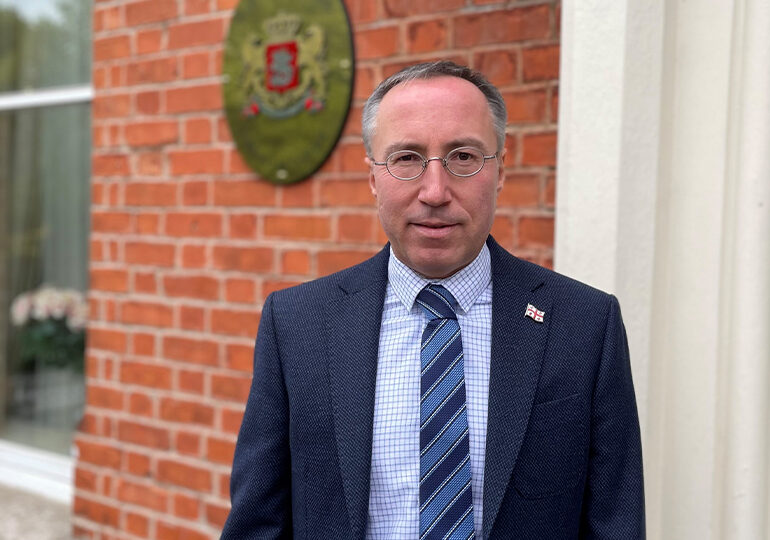
According to Zakareishvili, the format was important because it kept talks with Russia on practical issues separate from discussions about the conflicts. It also allowed Georgia’s foreign ministry to make its position clear during international negotiations.
“Russia constantly says that diplomatic relations with Georgia should be restored. The Georgian authorities remain silent on this issue. Against this background, they have suddenly taken a step in Russia’s favour. Russia needs to ‘get its foot in the door’ of Georgia’s foreign ministry and hold talks with the first deputy minister,” Zakareishvili says.
He is particularly concerned about the possible weakening of the Geneva International Discussions. Established after the 2008 war, the talks involve representatives of Georgia, Russia and the United States, as well as the European Union and the OSCE. Zakareishvili believes the Georgian authorities’ latest moves could eventually be aimed at reducing the importance of this international format in favour of direct bilateral contacts.
According to the analyst, the replacement of Lasha Darsalia as Georgia’s representative at the Geneva talks also carries symbolic significance. Zakareishvili says Darsalia clearly articulated Georgia’s position during the negotiations and regularly used the term “occupation” when referring to Russia’s actions.
“The time will come when they start singing a new tune: ‘Georgia’s foreign ministry is already dealing with Russia, so why do we need Geneva?’ Their primary aim is to weaken the Geneva format, which is visibly losing ground,” Zakareishvili predicts.
He also believes that the location of the first meeting between Giorgi Zurabashvili and Mikhail Galuzin will be particularly important. He considers holding the meeting in Moscow a disastrous political move, as it would give Russia an opportunity to symbolically demonstrate that it controls the process.
In Zakareishvili’s view, Prague would be the most logical venue, as it hosted meetings between Karasin and Abashidze for years.
“Russia needs symbolic victories. If the meeting takes place in Moscow, the message will be that Russia is in control of the process. That must not be allowed under any circumstances,” the analyst says.
Zakareishvili also links the Georgian authorities’ new approach to relations with Russia to a shift in the country’s foreign policy. In his assessment, the government is gradually moving away from the European Union and NATO, while seeking to build closer ties with Russia without making any formal commitments to direct integration or cooperation with Moscow.
In this context, the analyst also points to the possibility of Article 78 of Georgia’s Constitution being repealed. It obliges state authorities to take all necessary measures to ensure the country’s full integration into the European Union and NATO.
According to Zakareishvili, the initiative to ban opposition parties and the Georgian authorities’ efforts to secure a constitutional majority are part of a broader political process that could undermine the institutional foundations of Georgia’s commitment to Western integration.
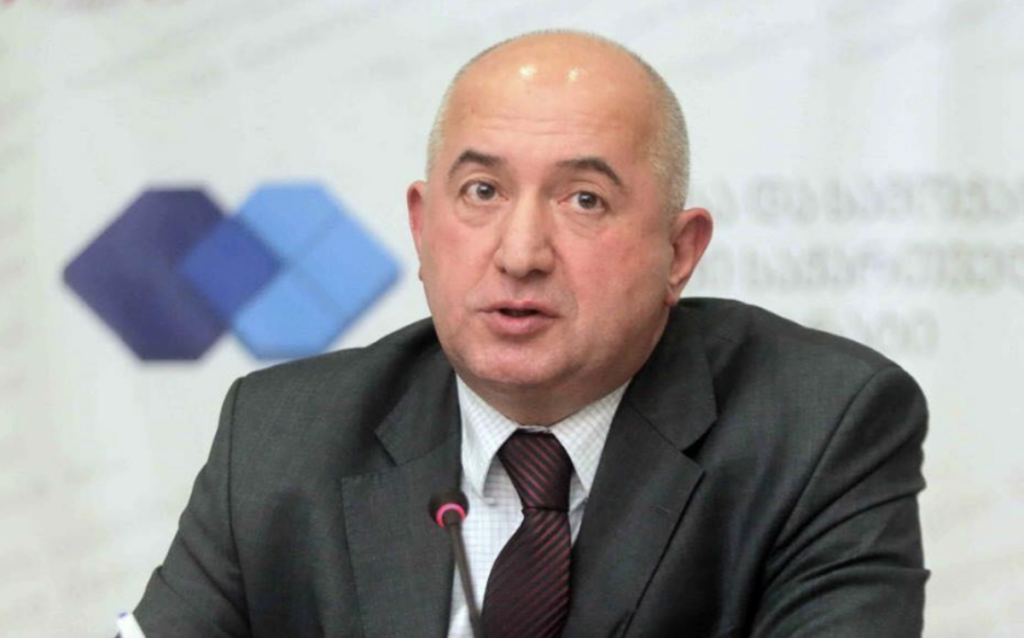
“It is not Bidzina Ivanishvili who is Russia’s project, but Russia that is Ivanishvili’s project. For now, however, this suits Russia. Russia has other priorities at the moment, and it is not Russia that is working on Georgia – it is Ivanishvili who is working for Russia,” Zakareishvili says.
In his assessment, the message the Georgian authorities are sending to the Kremlin is this: Georgia no longer intends to move towards the European Union and NATO, but it also has no plans to join the political and economic blocs established by Russia. Zakareishvili believes the authorities are using this approach to preserve room for political manoeuvre while avoiding public discontent that an overt shift towards Russia could trigger.
The analyst believes that if the authorities continue with their current policy, by the time Bidzina Ivanishvili’s political influence comes to an end, support for Georgia joining the EU and NATO could be significantly weakened, leaving the political space open to groups advocating neutrality.
Turning away from Brussels and the threat to Georgia’s role as a transit hub
Another key focus of Zakareishvili’s criticism is Georgia’s absence from a ministerial meeting in Brussels dedicated to security and connectivity.
The meeting brought together representatives of the European Union, Central Asian countries, Armenia and Azerbaijan. Zakareishvili sees Georgia’s absence not simply as a diplomatic mistake, but as a significant loss for the country’s long-term economic and geopolitical interests.
He says the connectivity ministerial was not about EU enlargement. Its main focus was the development of transport, energy and economic links across the region – an area in which Georgia could play an important role because of its geographical position.
According to the European Commission’s 2026 enlargement report, Georgia’s EU integration process remains suspended, and the country’s position has deteriorated further compared with the previous year. The Commission says the Georgian authorities took no steps during the reporting period to implement the nine recommendations set out as conditions for advancing the country’s EU accession process.
Zakareishvili stresses that international transport and trade routes are constantly changing. A country that does not take part in the relevant negotiations may eventually lose the opportunity to benefit even from its own geographical advantages.
“If Georgia does not take part, someone else will take its place and share the spoils! If you do not show up to a party, the party will go on without you – and someone else will eat the slice of cake that was meant for you,” he says.
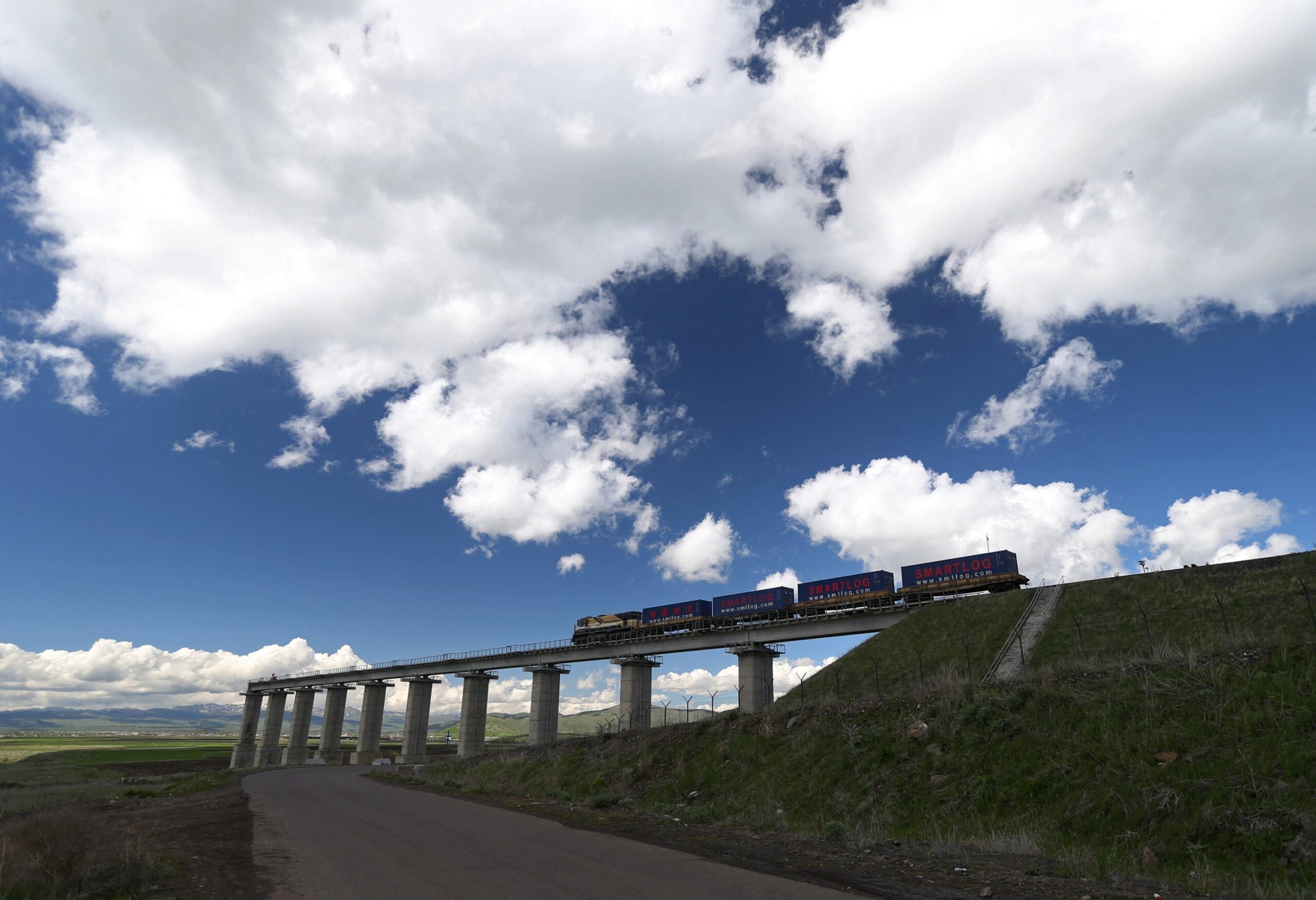
In the analyst’s view, Georgia should pay particular attention to the development of a new transport corridor through Armenia, including the so-called “Trump Route”, which could significantly reshape the transport geography of the South Caucasus.
Zakareishvili fears that if Georgia does not actively participate in regional connectivity projects, a significant share of international freight could bypass the country. Georgia would then lose the economic and political advantages built up over decades through its Black Sea ports, railway, pipelines and East-West transit corridor.
The analyst draws a historical parallel with the Baku-Tbilisi-Ceyhan oil pipeline and the Baku-Tbilisi-Erzurum gas pipeline. He says that, as a result of political decisions made at the time, these projects were routed through Georgia rather than Armenia. But the situation could now change: new transport routes in the region could allow Armenia to become a transit country at Georgia’s expense.
Zakareishvili believes Turkey will play a particularly important role in this process. The development of new routes and the redistribution of transport flows could increase the importance of Turkish ports and Mediterranean routes, affecting the competitiveness of Georgia’s Black Sea ports.
“As long as Georgia has pipelines and ports, and still has a chance to take part somewhere, to get a foot in the door and claim a share – if not a piece of the cake, then at least a seat at the table – it should do so. Otherwise, these processes will move forward without Georgia,” Zakareishvili says.
In his view, the authorities’ refusal to attend international meetings, justified on the grounds of protecting the country’s dignity and sovereignty, could in reality damage Georgia’s economic interests.
“EU candidate status is becoming little more than a formality”
Zakareishvili identifies the Georgian authorities’ decision to suspend political dialogue with the European Union as one of the main reasons for the country’s growing distance from Brussels.
In November 2024, Prime Minister Irakli Kobakhidze announced that Georgia would not put the opening of EU accession talks on the agenda until the end of 2028. The announcement came after the EU had effectively suspended Georgia’s accession process and stepped up its criticism of the government’s policies.
Zakareishvili believes that instead of meeting the conditions set by the European Union, the Georgian authorities chose political confrontation. He says candidate status alone does not mean progress towards membership: the country must fulfil specific commitments.
The analyst points to Ukraine, Moldova, Albania and Montenegro as examples of countries that continue to implement reforms as part of their efforts to move closer to the EU.
“The European Union did not write an application saying, ‘I want Georgia to join.’ It was Georgia that said it wanted to join the European Union. It is all very well to want to join the EU, but you need to look at its standards, its economy and its relations. The EU’s conditions include judicial reform, de-oligarchisation and many other things that the ruling Georgian Dream party does not like,” Zakareishvili says.
In his assessment, the EU’s declining political attention to Georgia is not limited to deteriorating diplomatic relations. The country could also gradually be left out of regional developments in which its geographical position and transit potential once gave it a significant advantage.
The analyst warns that Georgia’s international role is not determined by geography alone. A country may lie on a transit corridor on the map, but to gain real economic and political benefits, it must take part in the processes shaping the region’s future transport, energy and security architecture. Otherwise, Georgia risks finding itself surrounded by new political and economic partnerships while remaining on the sidelines.
Paata Zakareishvili on Georgia-Russia relations