

Azerbaijan’s Meydan TV case: ‘We are Ilham Aliyev’s personal prisoners – treat us with respect’






Defendants make statements in Meydan TV trial
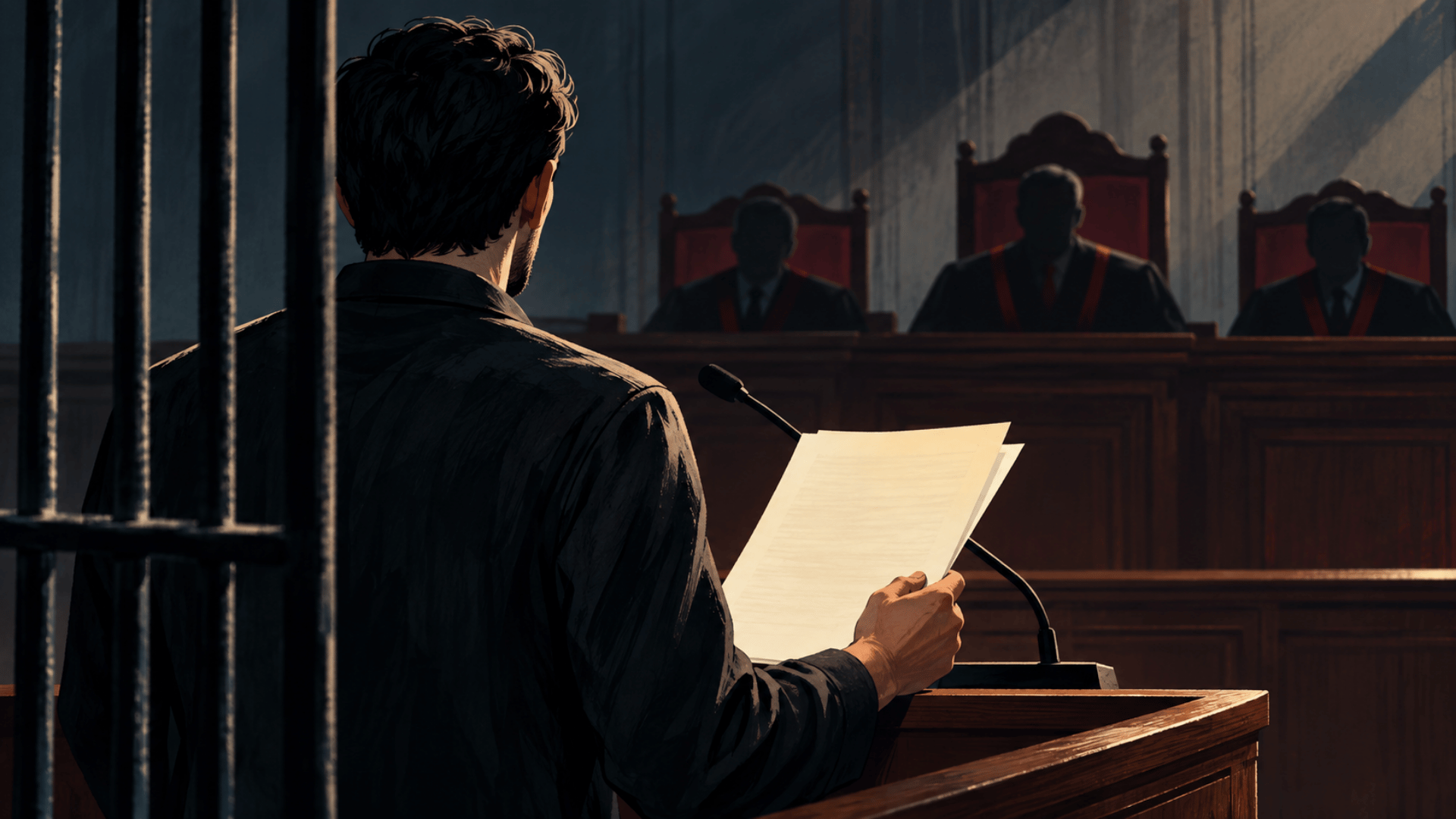
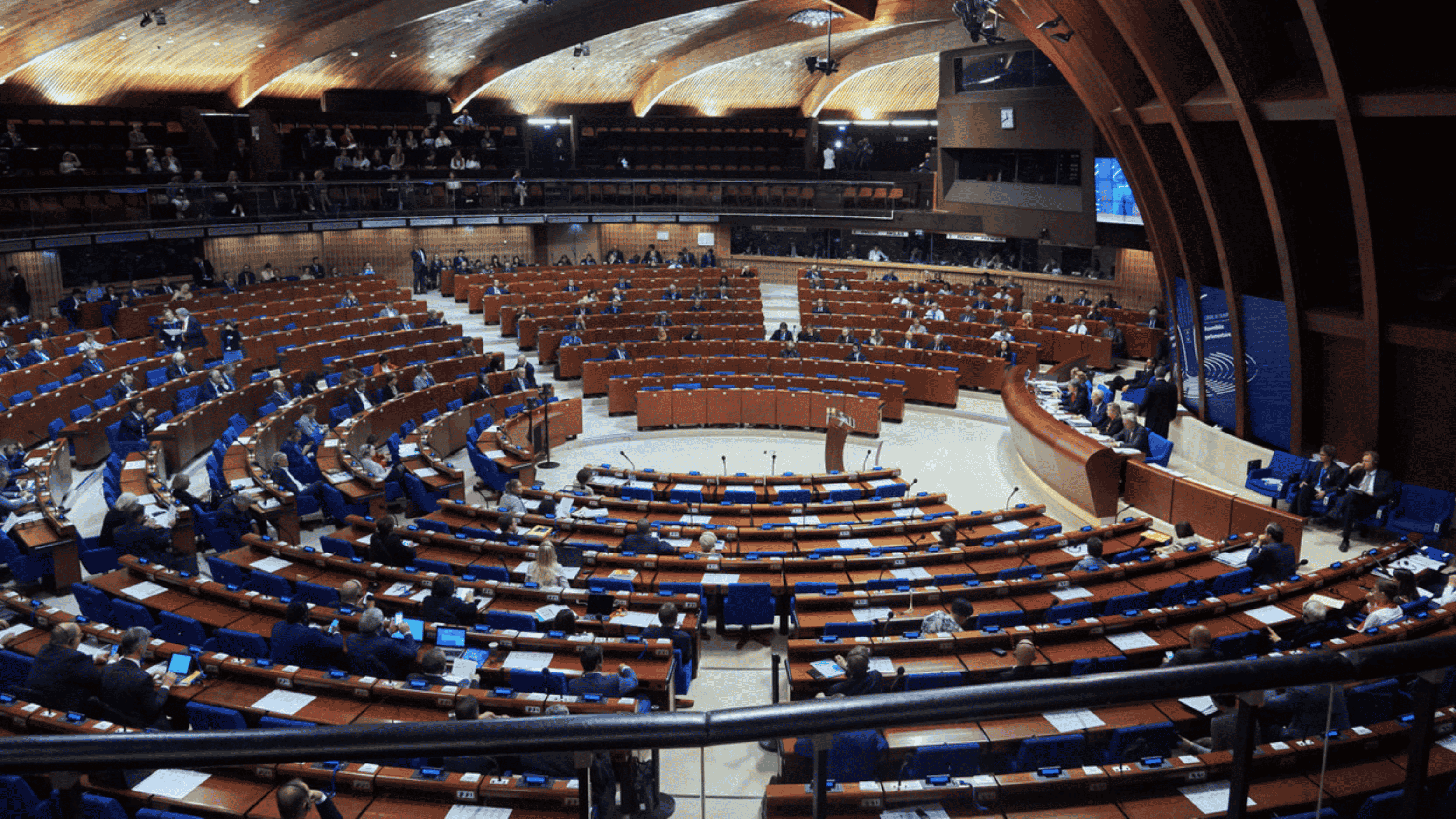
The trial in the Meydan TV case is continuing in Baku after resuming following a three-month break, with a new panel of judges and a new state prosecutor.
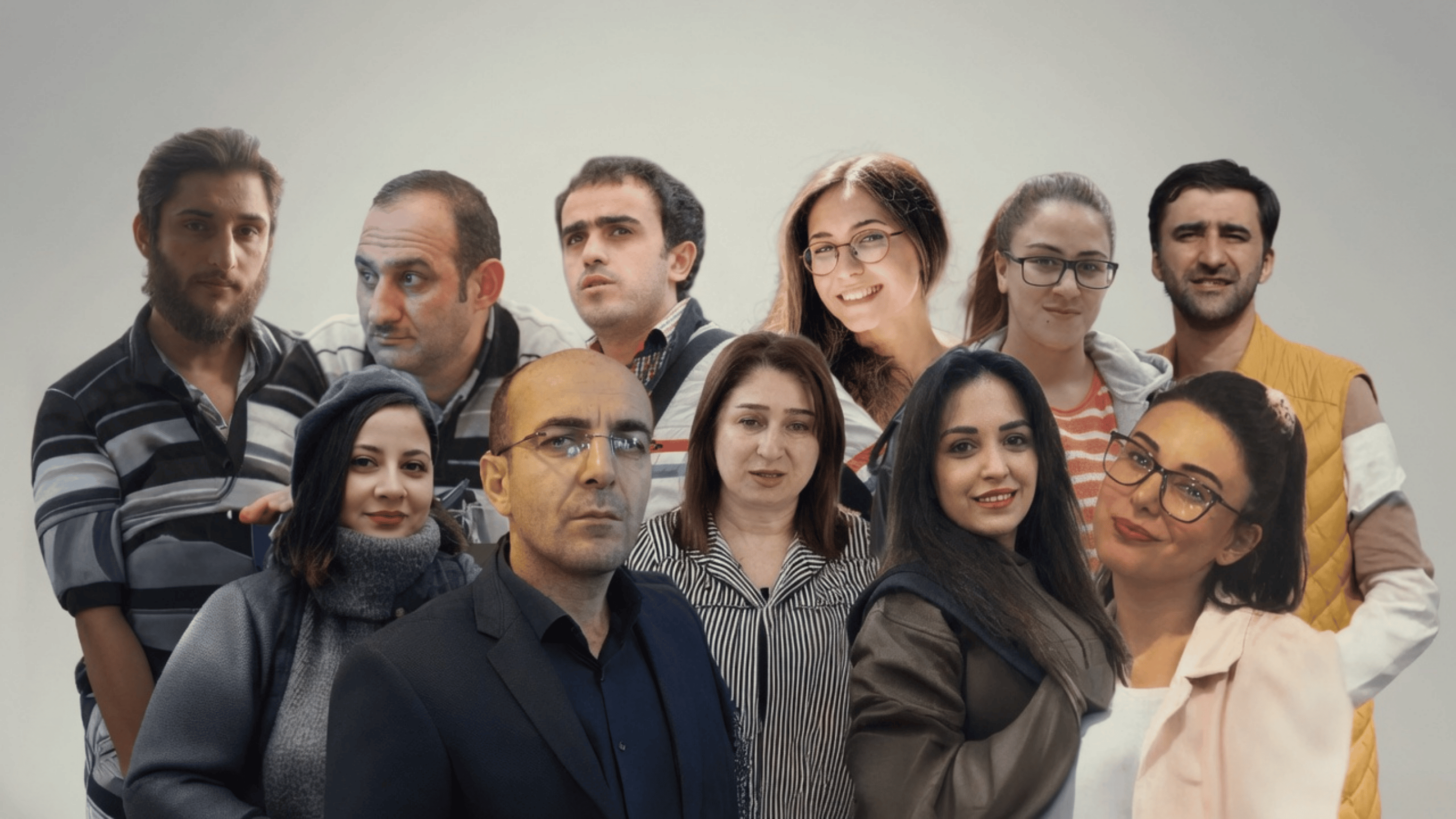
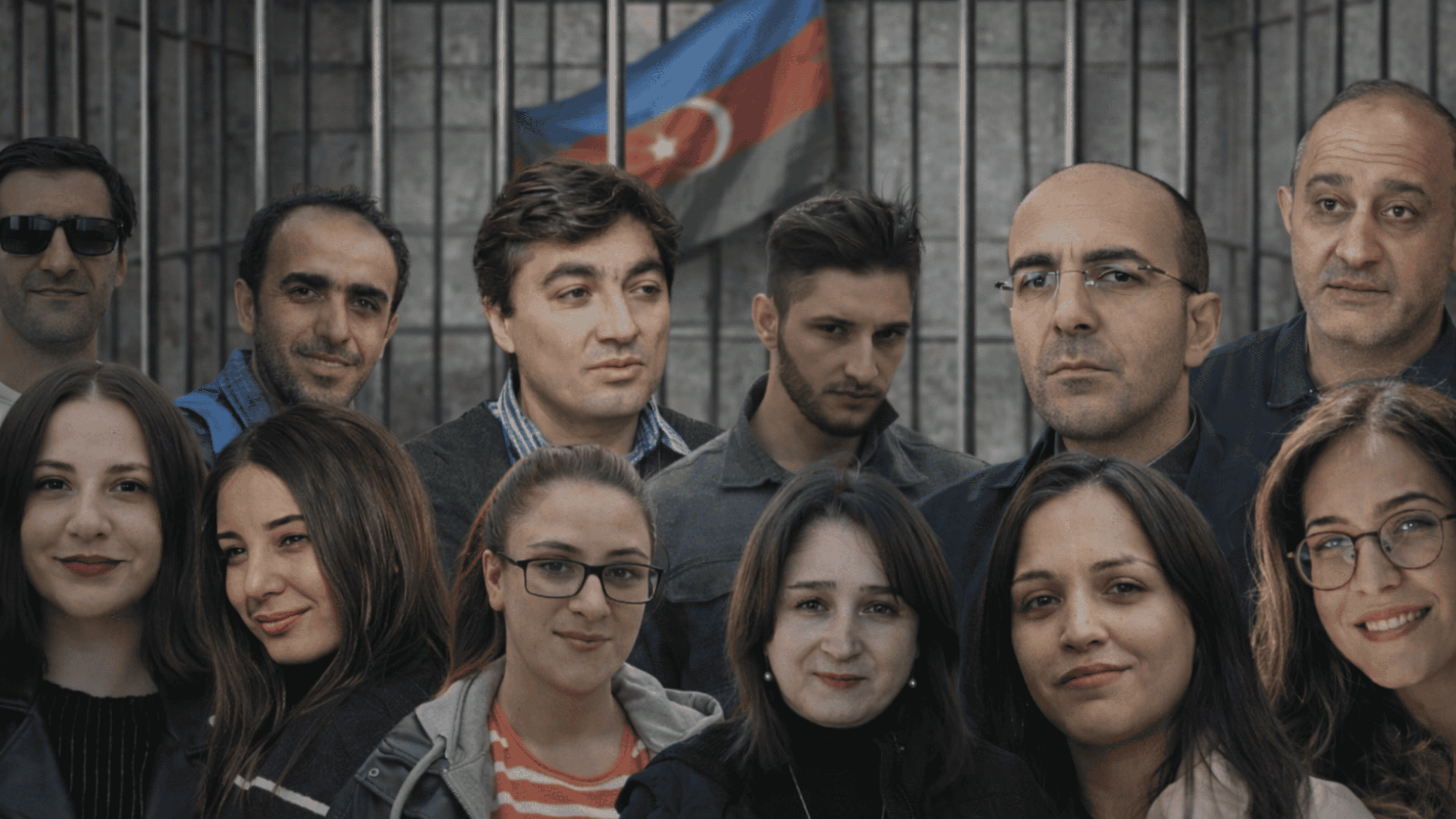
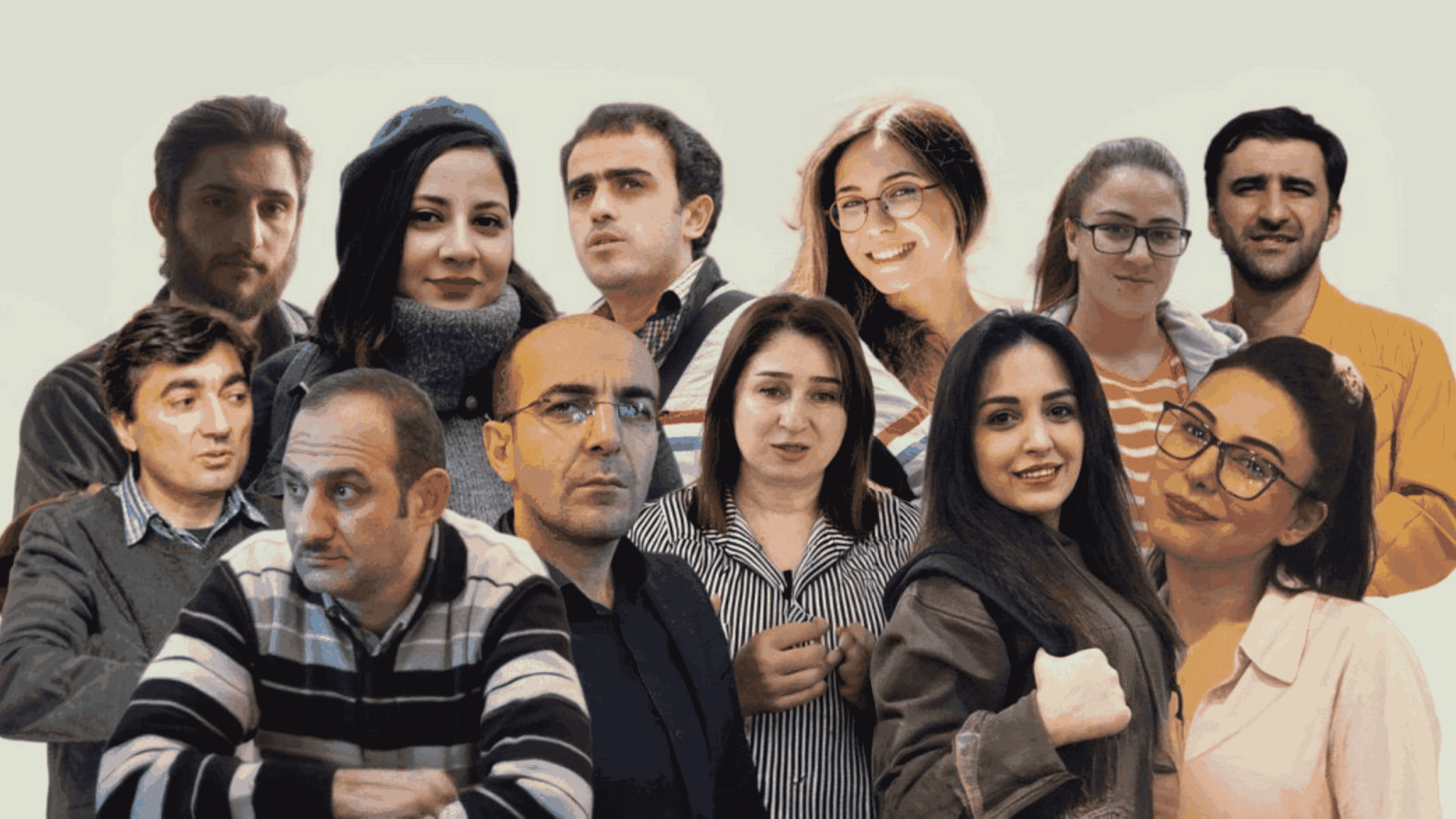
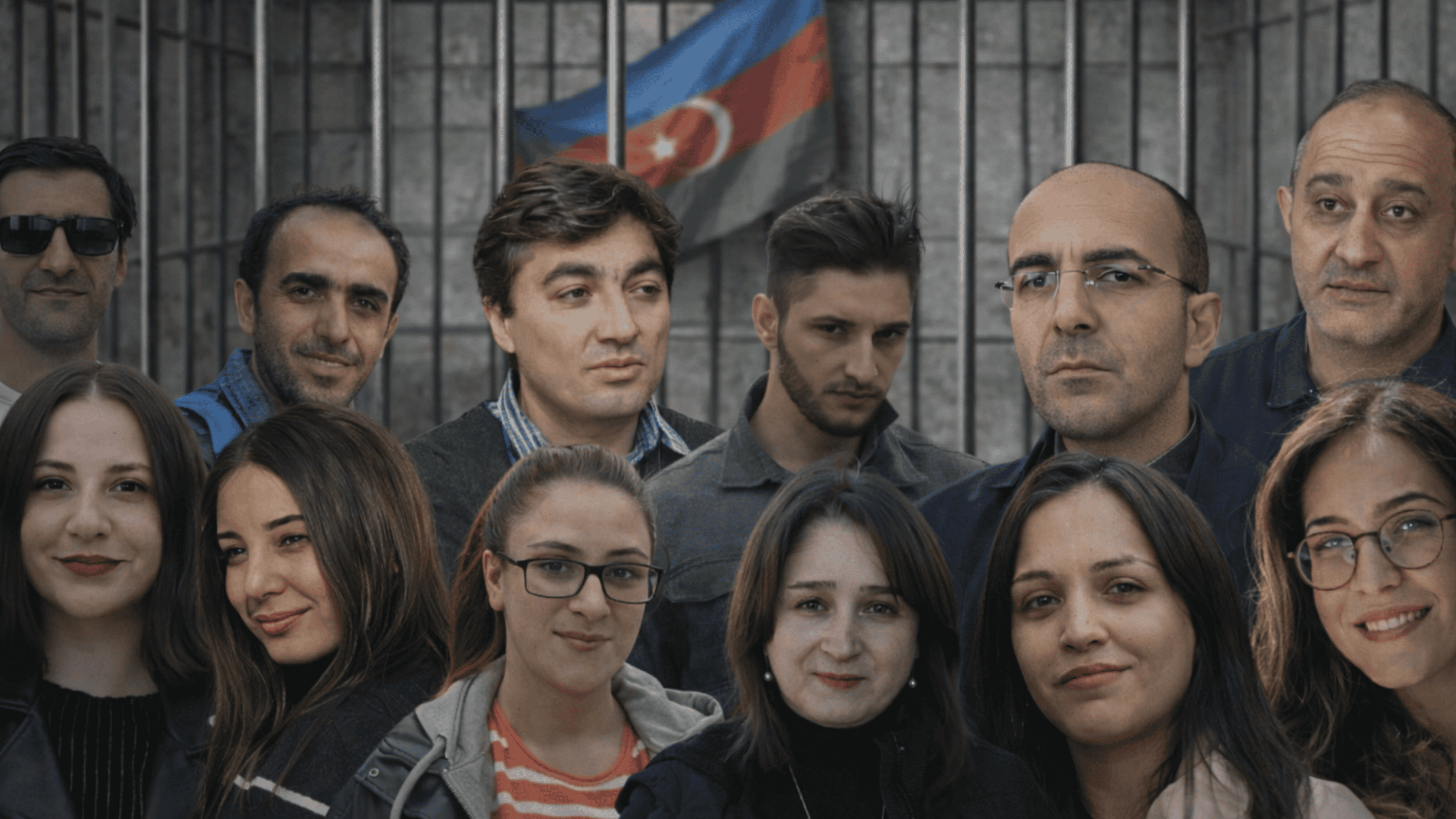
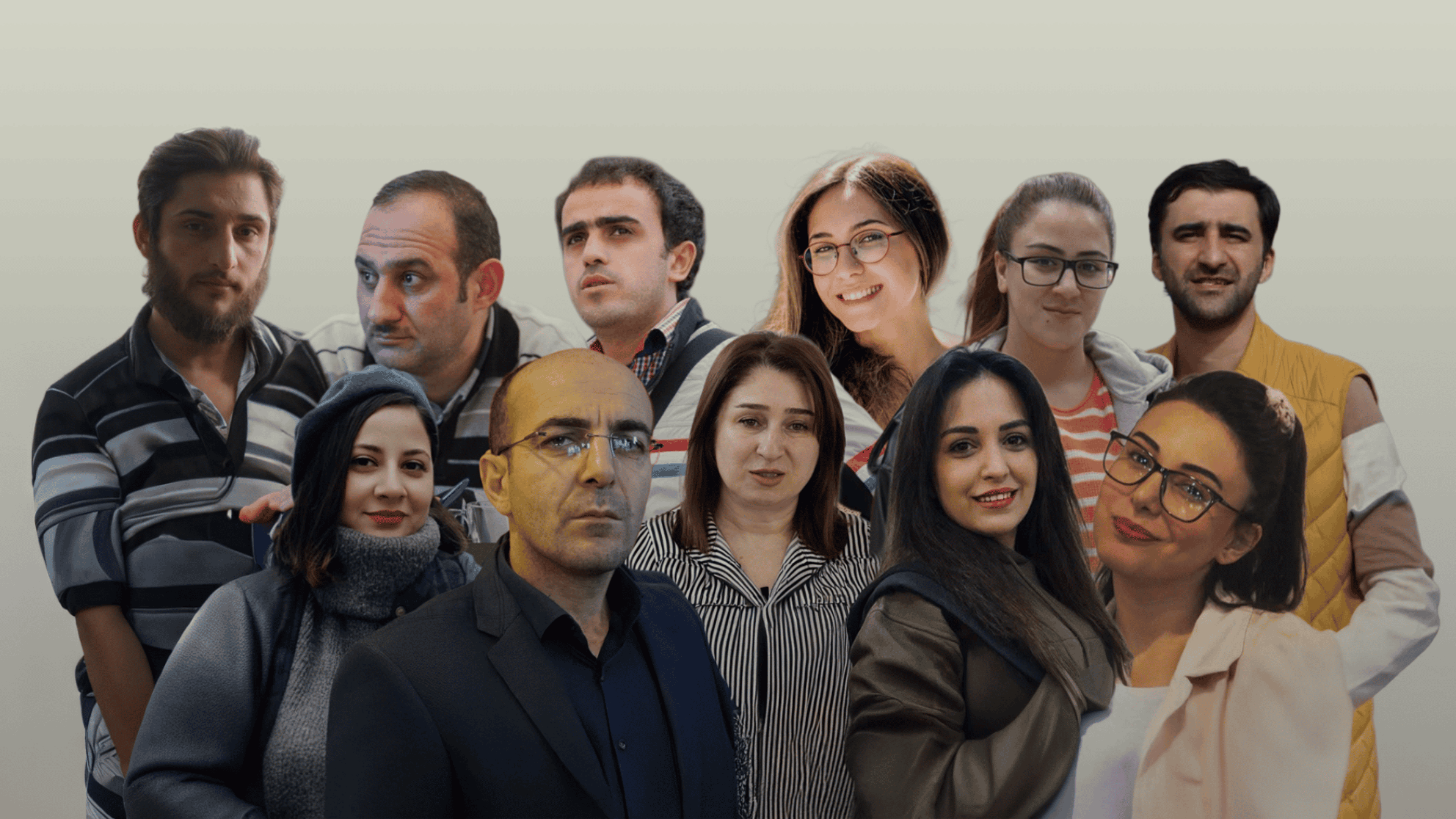
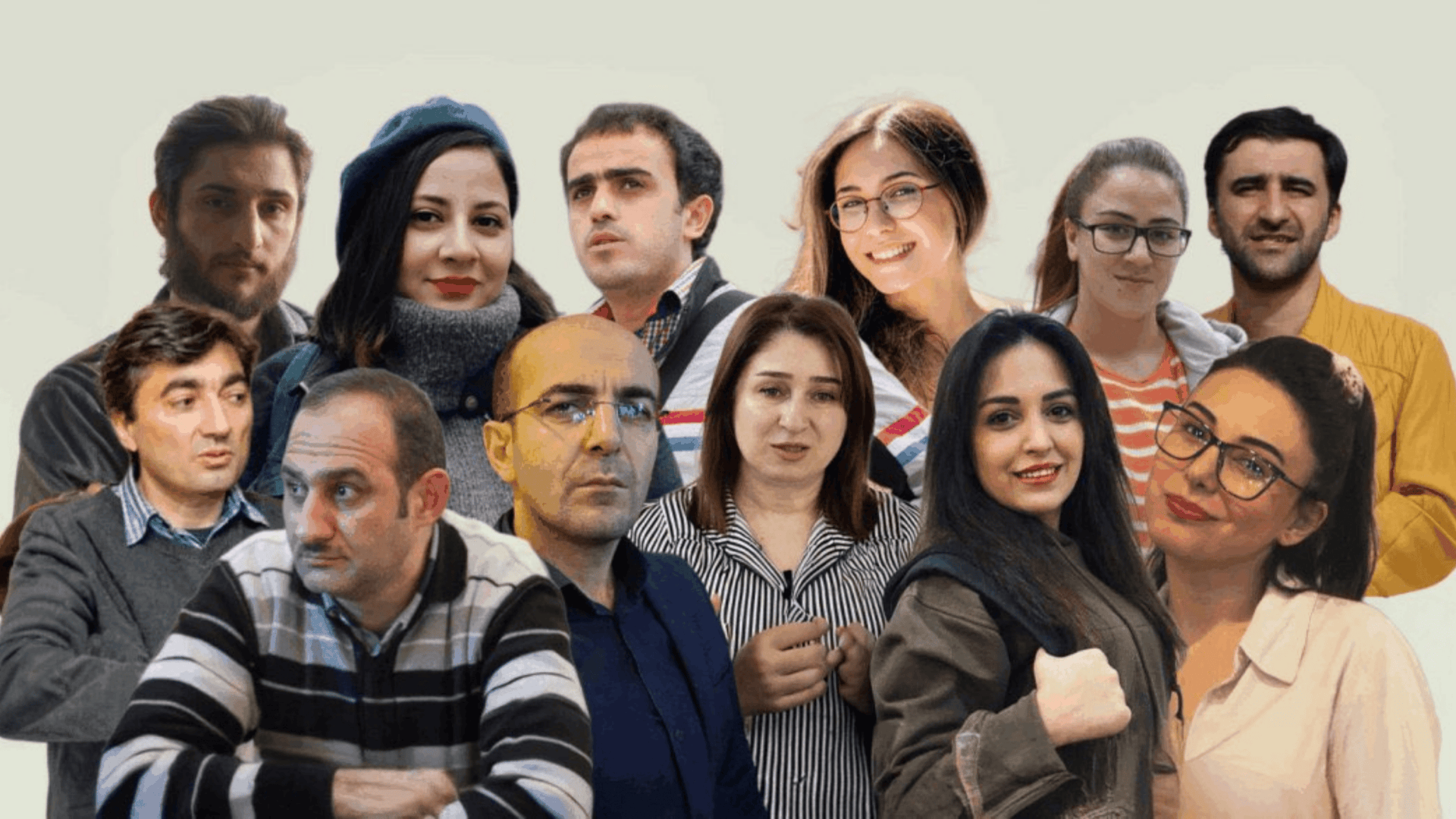
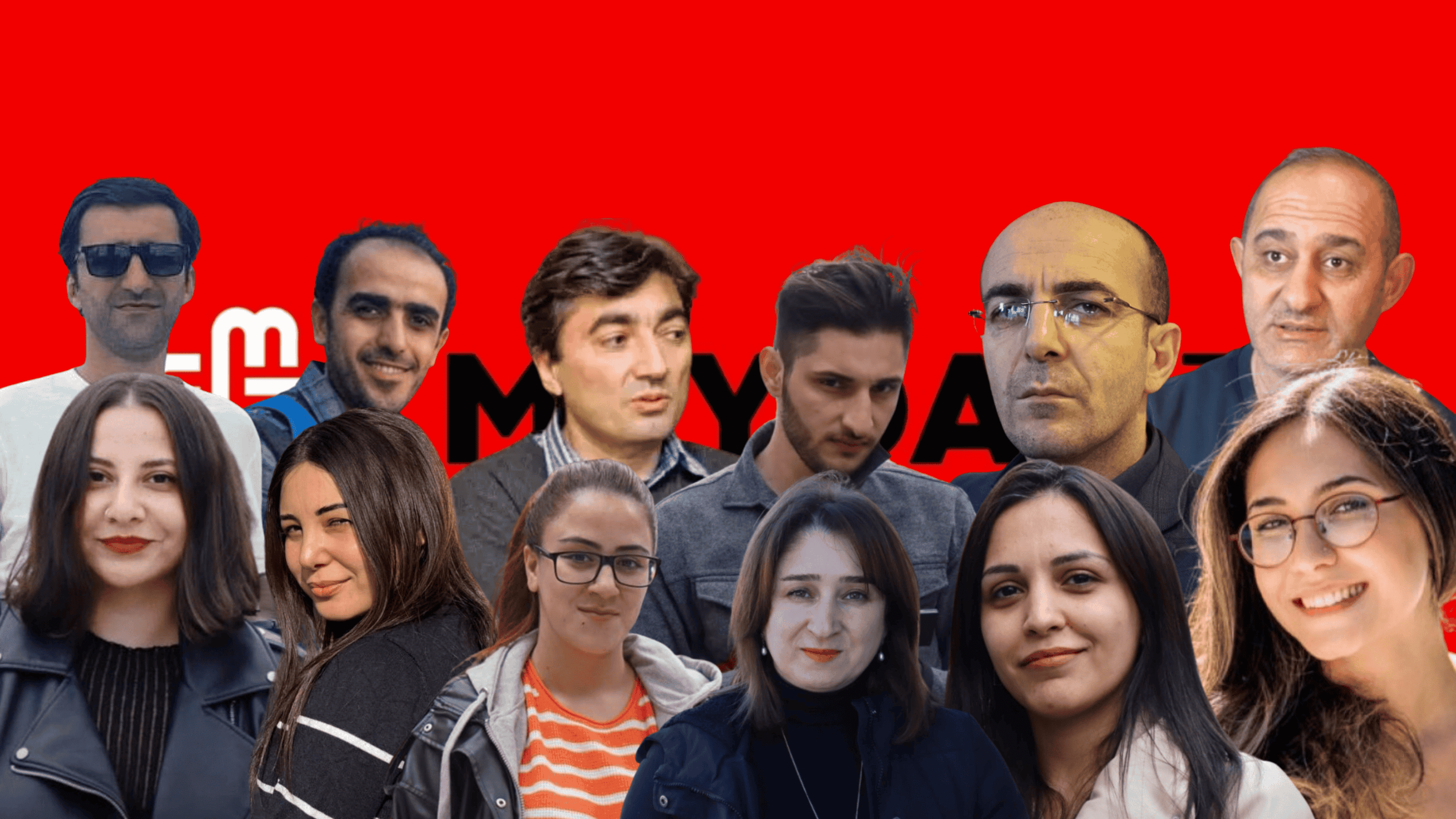
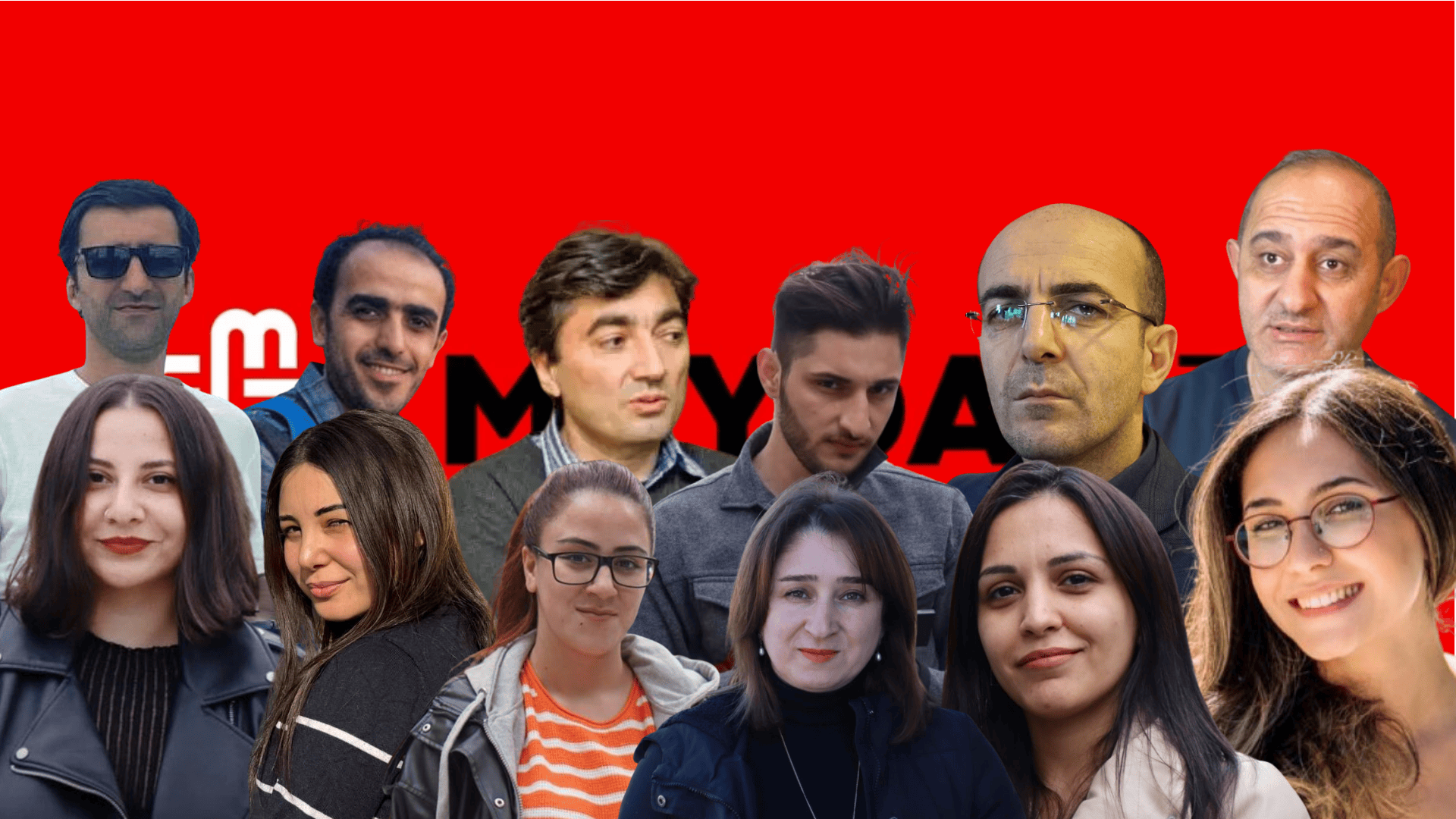
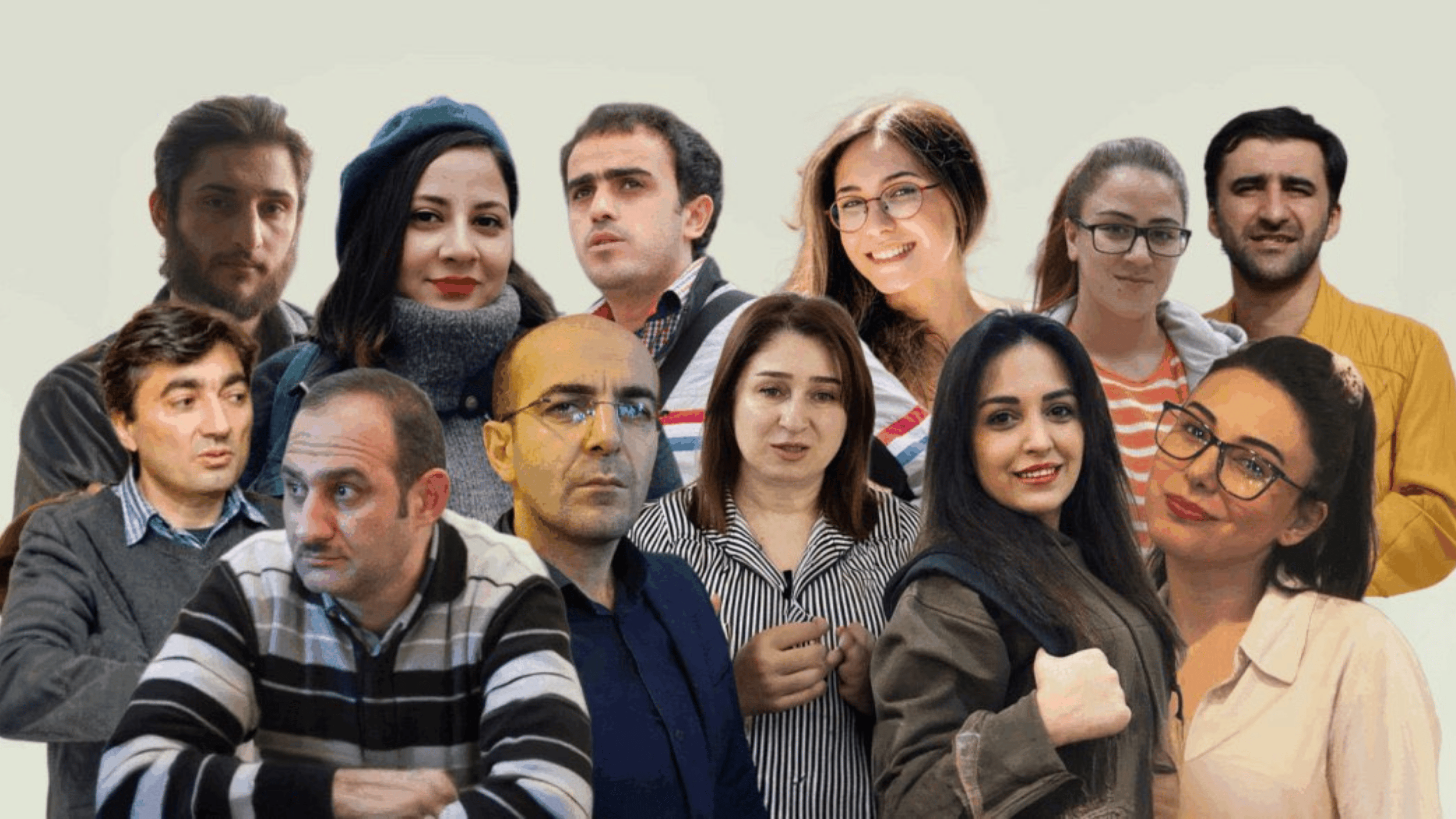
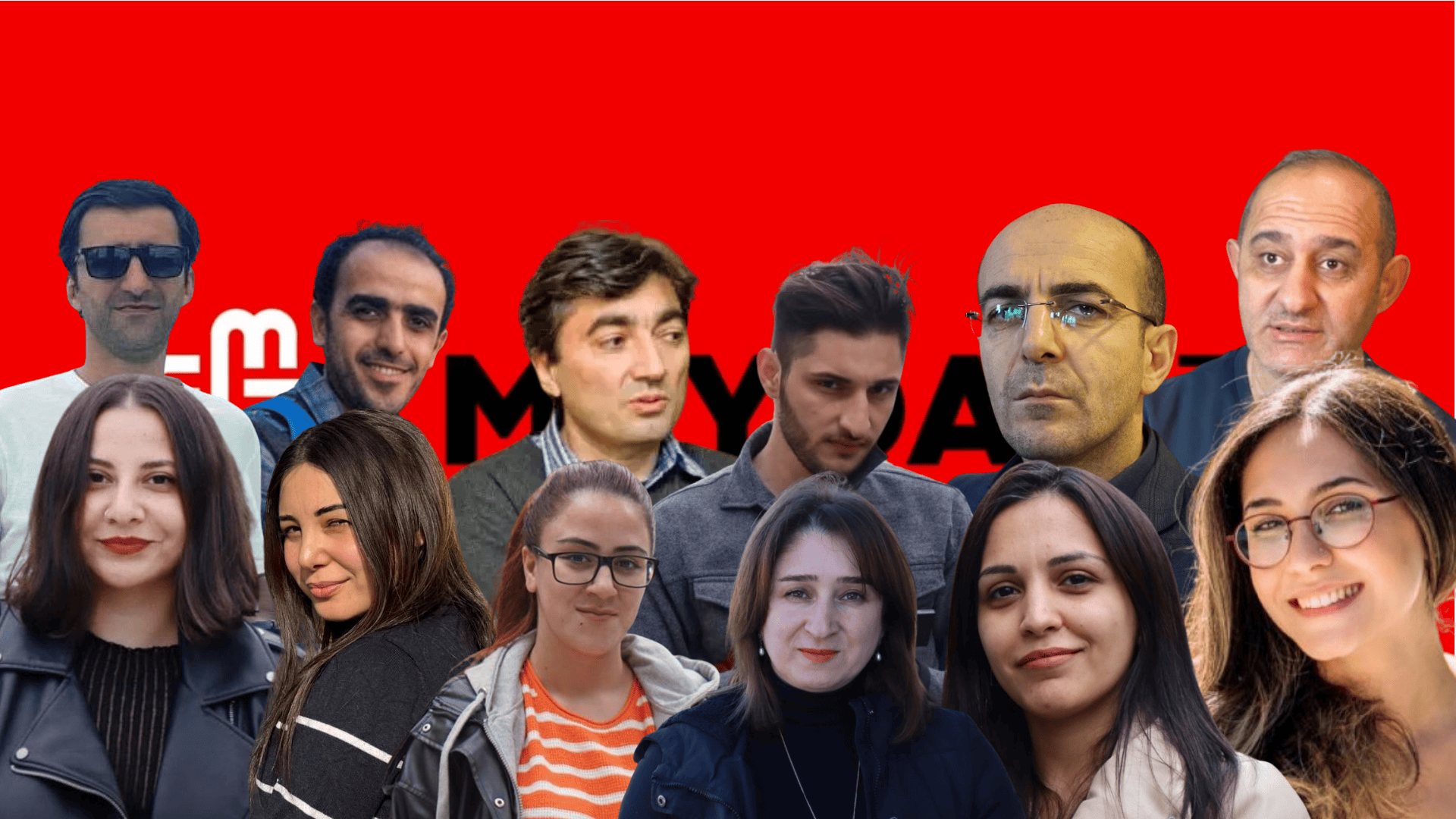
Twelve journalists are in detention in connection with the criminal case. They face charges including smuggling committed by a group acting in prior conspiracy, as well as other serious offences. All those detained deny the charges and say they are being prosecuted over publications critical of the authorities.
Key developments at the 24 July hearing, presided over by Zaur Hajiyev, with Roman Alakbarli and Azer Taghiyev also sitting on the panel:
● Three of the accused journalists – Khayala Aghayeva, Fatima Movlamli and Ramin Deko – made statements. During the hearing, the judges objected to references to President Ilham Aliyev by name.
● Lawyer Javad Javadov received a verbal warning over a question concerning footballer Lionel Messi.
● A lawyer filed a motion seeking permission to meet simultaneously with five of her clients – two men and three women – at the Baku pre-trial detention centre. She said she had so far been denied such a meeting “without any legal grounds”. The court ruled that a letter should be sent to the detention centre stating that it had no objection to the meeting.
● Detained journalist Nurlan Libre said that letters sent to him by friends were not reaching him. The judge replied that the issue was outside the court’s jurisdiction.
● Detained journalist Ulviya Ali said she had requested an MRI scan, but the issue had still not been resolved. “I have a brain microadenoma. When we contacted the Main Medical Department, we were told that the examination could be carried out with the court’s permission,” Ali said. The court granted her request to send a letter stating that it had no objection to the examination.
● Detained journalist Ramin Deko told the court that police officers had planted €30,000 on him during a search at the airport on the day of his arrest and called for CCTV footage to be made public. His lawyers had previously requested the footage, but the airport said it could not provide it for technical reasons.
The lawyers said the response was unsubstantiated and asked for the request to be submitted again. The judge did not consider the motion, saying the issue could be revisited at subsequent hearings.
● Detained journalist Khayala Aghayeva said her right to make phone calls had been violated at the Baku pre-trial detention centre the previous day.
“On 23 July, while I was speaking to a friend on the phone, the call was suddenly cut off and was not restored. Despite my repeated requests to the officers responsible, I was given no explanation. Each time, they try to avoid answering, saying: ‘Don’t you know yourself why the call was cut off?’ Why are our phone calls being interrupted and why are we not allowed to resume them?”
Judge Zaur Hajiyev said the issue would not be considered.
Lawyer Rovshana Rahimli filed a motion seeking permission for her client, Ulviya Ali, to issue a power of attorney authorising representation in court. The lawyer said this would require a notary to be given access to the pre-trial detention centre. The court said it had no objection.
Shamshad Agha said five or six motions had been uploaded to the electronic system while the case was being heard by the previous panel of judges: “We were told they would be considered during the proceedings, but this has still not happened.”
Aynur Elgunesh also filed a motion concerning surveillance that she said the State Security Service had placed her under six months before her arrest.
“Six months before my arrest, the State Security Service obtained permission from the Sabail District Court to carry out operational-search measures against me. I have this document and previously submitted it to the court. At the time, I was told that details of the State Security Service’s surveillance would be disclosed later. I demand that all information obtained through the surveillance of me be added to the case materials.”
The judge said the motion had not been considered: “The issue can be revisited when the documents are examined.”
‘I congratulate my colleagues in the courtroom on National Press Day’
During the hearing, Khayala Aghayeva, Fatima Movlamli and Ramin Deko made statements to the court.
Khayala Aghayeva was the first to take the stand, continuing a statement that had been interrupted at one of the previous hearings. Once again, the judge repeatedly admonished the journalist when she mentioned Ilham Aliyev by name.
She began by congratulating colleagues in the courtroom on National Press Day, marked on 22 July, and on the 151st anniversary of the Azerbaijani press. Those present responded with applause. The judge warned that if the applause was repeated, members of the public would be removed from the courtroom.
“We are free people and decide for ourselves how to act,” Khayala Aghayeva said in response to the judge.
Below are excerpts from the journalist’s statement.
“The final issue of the newspaper Ekinchi carried the following announcement: ‘Because of our illness, the remaining issues this year will not be published on time, and it is not known when they will appear.’
“Ekinchi was shut down after that issue. For 151 years since then, the national press has been fighting this illness, resisting the epidemic of silence spread by despotism. We know that no despot’s attacks can destroy the press. Ilham Aliyev is no exception.”
At this point, the judge interrupted Khayala Aghayeva. When she tried to continue by repeating her final sentence, the judge stopped her again.
“Until I finish my statement, I will not allow this trial to conclude,” Aghayeva said.
‘The president himself needs the media’
She then continued her statement:
“On the contrary, he himself needs the media. For four consecutive years, he has held an International Media Forum in Shusha. When it suits him, he gathers journalists around him and uses the press to convey his views to the international community. Yet he recognises no one else’s right to do the same.
“The security agencies have turned into grim millstones grinding down free thought.”
At this point, the judge again interrupted the journalist’s statement.
This time, her microphone was switched off…
“Even the slightest expression of protest against the system on social media can lead to arrest. In a report published by Meydan TV this month, a man said his father had been killed in a road accident caused by an officer of the State Border Service and that police had tried to cover up the case.
“After the story appeared in the media, the authorities immediately responded: the man was taken to a police station and threatened in an attempt to force him to delete the video. When they failed to make him do so, he was jailed for 15 days. This case alone demonstrates two things. First, by arresting us journalists, the authorities sought to silence all critical voices. Second, they failed to achieve that goal and are now targeting citizens who speak to the media.”
At this point, Khayala Aghayeva’s microphone was switched off. She waited for some time for an opportunity to continue her statement.
Judge: ‘I have to intervene’
“Harsh repression has been unleashed in an attempt to undermine the work of independent media. Yet none of these measures has extinguished my determination to practise journalism. Piece by piece, often in secret, we gathered fragments of the truth, while the head of state, losing patience with the picture that was emerging, confined our work within prison walls.
“He deprived more than 10 million citizens whom he had sworn to serve of access to free media and freedom of expression. By expanding the list of restrictions, he has trapped the public within the confines of laws of his own making. An English thinker once said that depriving a person of the freedom to express their thoughts is a crime against humanity. In effect, Meydan TV was subjected to a violent attack on 6 December 2024. The authorities now want the courts to finish the job and give their actions a veneer of legality. But no one, including the system’s lackeys bought by Aliyev, believes this spectacle has any credibility. Behind all his grandiose speeches, the truth emerges: he himself is a smuggler.”
Judge Zaur Hajiyev again interrupted the statement, saying: “I have to intervene because you are accusing another person.”
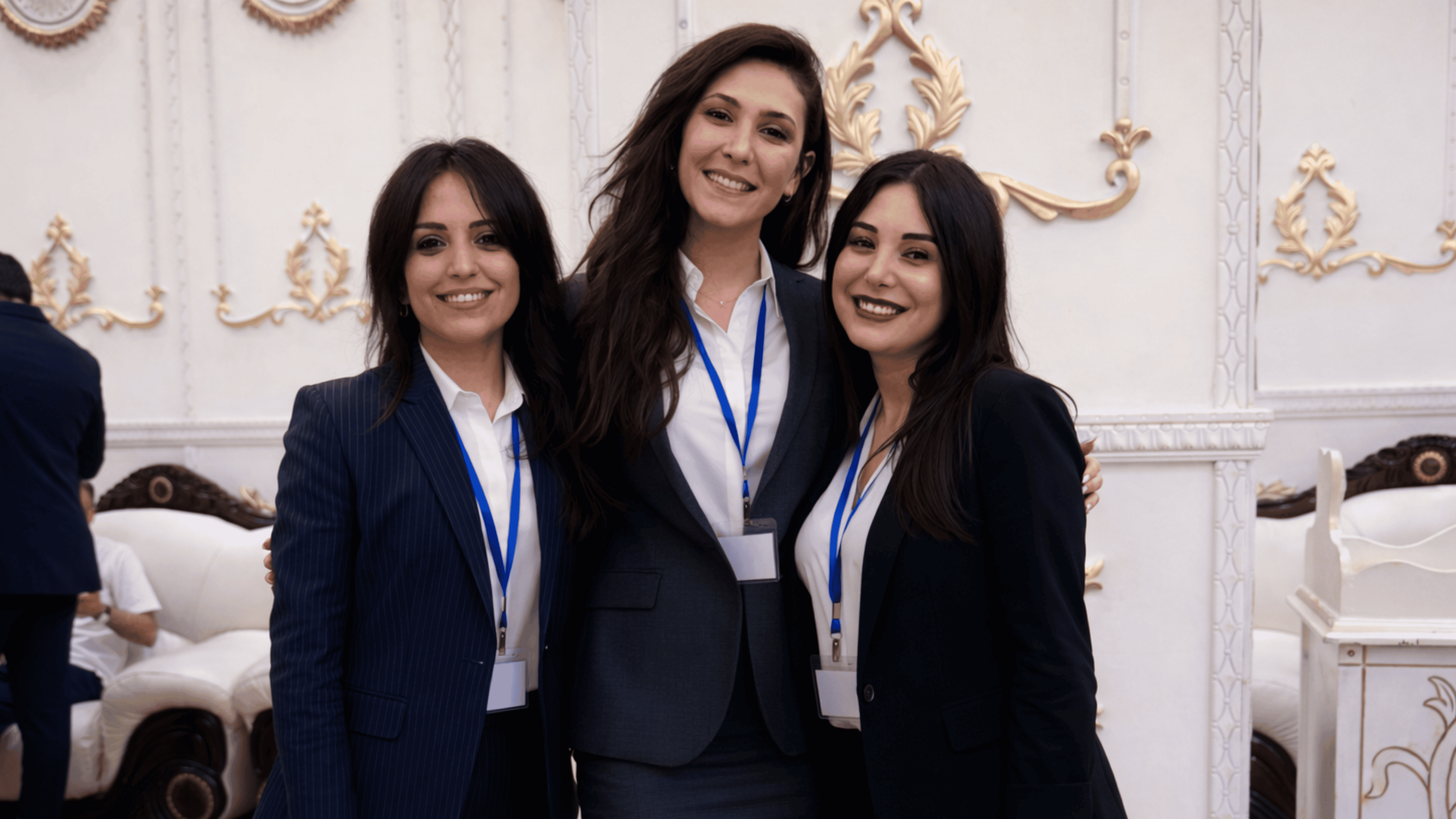
The journalist continued her statement
“In psychology, this phenomenon is known as ‘projection’. It is a defence mechanism in which a person attributes their own negative qualities, desires or mistakes to others. But this mechanism has long been familiar to us. Since its inception, the national press has struggled against those in power.
“The struggle for independence lies at the heart of Azerbaijani journalism, and the history of our press was shaped by professionals who conscientiously overcame immense obstacles. It was they who preserved the legacy of a free press in this country and placed on our shoulders a responsibility to the public. We, too, hold firmly to our profession and defend it with determination.
“The Ekinchi newspaper was forced to cease publication because of the circumstances of its time. But the realities of a new era have prevented the authorities from pushing independent media out of the public sphere. Azerbaijan’s free press has survived as an island in a sea of lies and manipulation. Independent media continue to operate, and no force will be able to stop them!”
After Khayala Aghayeva finished her statement, state prosecutor Vusal Abdullayev questioned her. The journalist said she would refuse to answer any of the state prosecutor’s questions.
His questions included: “Where did you work before your arrest?”, “You say you worked as a journalist. Were you registered with the state media register?”, “Did Meydan TV receive any foreign grants?”, “Did the European Endowment for Democracy provide funding to Meydan TV?”, “Did you take part in international events, and how were they funded?”, and “Were you previously engaged in business activities, and were you registered as an entrepreneur?” He also asked other questions of a similar nature.
After the state prosecutor finished questioning her, Aghayeva’s lawyer, Gunay Ismayilova, objected, saying the defence lawyers should have been allowed to ask questions first, followed by the state prosecutor. The judge rejected the objection.
‘Unfortunately, in Azerbaijan, arrest has become a sign of a journalist’s professionalism’
Another of Khayala Aghayeva’s lawyers, Nazim Musayev, asked her: “Why were you arrested?”
“I was arrested for my journalistic work. Unfortunately, in Azerbaijan, arrest has become a sign of a journalist’s professionalism. If I was arrested, it means I was doing my job properly, and this is how the authorities ‘rewarded’ me,” Aghayeva replied.
Nazim Musayev then asked whether she had investigated corruption-related offences.
The judge ruled that the question should be withdrawn.
Asked by her lawyer Gunay Ismayilova whether she had ever been detained at an airport before her arrest, the journalist said she had not.
Bahruz Bayramov, a lawyer representing Ulvi Tahirov, asked: “You and Ulvi Tahirov are facing serious charges. Were you connected in any way?”
“Even the authorities know there was no connection between us,” Aghayeva replied.
“Once, when we were on our way to an interview, you were late. I spoke harshly to you then. I want to apologise for that. Do you accept my apology?” Natig Javadli asked Khayala Aghayeva.
“Dear Natig muallim, it is I who should apologise for being late,” Aghayeva replied.
That was when I first asked myself: “How can I help?”’
Fatima Movlamli then took the stand to make a statement. Below are excerpts from her speech.
“My life has always been shaped by the answers to one question: ‘How can I help?’ As a teenager, I realised that not everything was right in the country where I lived. Everywhere I looked, I saw people whose rights had been violated and fear deeply rooted in their eyes. Citizens who faced injustice were afraid to protest openly because they understood that wherever discontent was voiced, threats from the police would follow.
“That was when I first asked myself: ‘How can I help?’ That was how I became involved in public and political life: I regularly posted on social media, criticised unlawful actions by the authorities, spoke on behalf of my fellow citizens and demanded that their rights be respected.
“Of course, such public activity did not come easily. I spent days in police stations listening to threats. But the effect was quite different from what the authorities had intended: every new injustice only strengthened my determination to protest, and I left each police station even more convinced that I was right.
“As I entered my 18th year, I realised something important about our society: people who wanted to speak out and express their discontent were held back not only by fear, but also by the question: ‘Who can I tell?’ Indeed, who could they speak to when there were so many journalists and media outlets around them that sold their pens for handouts from the authorities, reported protesting citizens to the police, misled them and failed to publish interviews containing complaints or political criticism?
“The public needed honest journalists to make its voice heard. And honest journalists, remaining true to their work and putting principles above their own wellbeing, had to be prepared for various forms of pressure, up to and including imprisonment. So I asked myself again: ‘All right, how can I help?’ The answer to that question prompted me to buy my first camera and my first microphone.”
‘Every day brought news of new arrests’
“Today, you are hearing me from the defendants’ dock not because of any crime, but because of the decision I made back then. It was after making that decision that I began working as an independent journalist in 2018. Throughout my career, I mainly covered social and political developments and protests, while also providing people with an independent platform where they could make their voices heard. In return, I long ago lost count of how many times my freedom was unlawfully restricted, how many times police threatened me and how many times they subjected me to physical violence.
“Working in independent media has always meant having to endure hardship. But by the end of 2023, the situation for independent journalists had become even more difficult. When neither the repressive media law nor police pressure succeeded in stopping independent journalists, the authorities resorted to mass arrests. A sweeping wave of repression that began with the arrest of the entire Abzas Media team was followed by the detention of individual journalists, as well as staff from Toplum TV and Meydan TV.
“Every day brought news of new arrests. A colleague you had stood beside and interviewed just the day before would be branded a ‘smuggler’ the next day on fabricated charges. The aim was not only to silence independent voices, but also to prevent journalists from carrying those voices to the wider public and the world. How could I help in such a situation? By continuing to do my job, of course.
“I did not follow the advice of those close to me who, out of genuine concern, urged me to leave the country or temporarily stop working as a journalist to avoid unlawful arrest. Instead, I became even more committed to my profession. I continued to report the truth and offer a microphone to anyone who wanted to speak out. That is precisely what made my arrest inevitable. As a result, I have now been in detention for more than a year as a defendant in the criminal proceedings known as the ‘Meydan TV case’.”
After Fatima Movlamli finished her statement, state prosecutor Vusal Abdullayev began asking her questions. The journalist said she would not answer them. The prosecutor then said he had changed his mind and would not ask the questions. The defence lawyers objected. The prosecutor eventually proceeded with the questions, which were similar to those he had earlier put to Khayala Aghayeva.
‘Police entered rooms before we did’
Fatima Movlamli’s lawyer, Azer Rasulov, asked what she had been doing in the days leading up to her arrest.
“On 26 February, I filmed an event at the Mother’s Cry monument commemorating the Khojaly massacre. I then went to the trial of Tofig Yagublu, where I also filmed the proceedings. In other words, in the days before my arrest, I continued carrying out my professional work,” Movlamli said.
Azer Rasulov then asked who had been at home during the search.
“My sister and her young child were at home. The police took her phone and kept her in a separate room. In effect, the phone was taken without any record of it, as the search report did not state that it had been seized. It was returned only a month and a half later, after repeated demands,” the journalist replied.
Asked by Rasulov how many police officers were in the house during the search, Movlamli said there had initially been six or seven, but their number continued to increase.
“Police officers entered rooms before we did. A particularly large number of officers gathered in my bedroom. I was then taken there. They lifted my pillow, showed me money lying underneath it and asked: ‘What is this, madam?’ They then told me to count the money. I replied that I would not touch it.”
‘Add illegal border crossing to the smuggling charge’
Lawyer Elchin Sadigov asked whether she had noticed anything suggesting that the witnesses to the search already knew the police officers.
“It takes about 30 minutes to get from Azadlig Prospekt metro station, where I was detained, to my home. But the police could not find a second witness, so we waited for an hour and a half in a black minibus near the place where I was detained. The first witness was in another police vehicle at the time. The officers told the second witness to wait for us at a location in the city centre that was on our way.
“We picked him up on the way and headed to my home. The police officer spoke to the second witness in a very friendly manner on the phone, and when they met, they greeted each other warmly. I therefore concluded that both witnesses co-operate with the police and take part in similar cases,” Fatima Movlamli said.
Answering another question from the lawyer, Movlamli said she had been banned from leaving the country between the ages of 17 and 21.
“I have travelled abroad only once. When I turned 21, I was told the travel ban had been lifted, and I went to Tbilisi. It was a two-day trip with one overnight stay. I just wanted to go abroad at least once. Add illegal border crossing to the smuggling charge as well. After all, if I could not leave the country, how could I have been involved in smuggling from abroad?”
‘I was kept in handcuffs for eight or nine hours’
Answering another question from a lawyer, she said she had not been questioned as a witness in the case before her arrest.
“It was reported that you were subjected to inhuman treatment during your detention. What exactly did this involve?” lawyer Rovshana Rahimli asked.
“The ill-treatment consisted of keeping me in handcuffs everywhere I was taken, from the time I was detained at 11am until around 7pm or 8pm. I tucked my shirt sleeves under the handcuffs to stop the metal digging into my wrists.
“I was handcuffed when I was taken to the temporary detention centre and then from there to court. The handcuffs were not removed before I was transferred from the court to the Baku pre-trial detention centre either. In other words, this continued into the day after my detention,” the journalist replied.
‘My great-great-great-grandfather is to blame’
Ramin Deko then took the stand to make a statement. Although he had already spoken at an earlier hearing, the journalist said he wanted to address the court again.
“I went to a school left over from the Soviet era, with cramped, dilapidated classrooms that looked like tiny storerooms. After first grade, we did not have a ‘Farewell to the Alphabet’ celebration, but we were made to learn a poem called ‘Teacher’. Its first stanza went: ‘Oh, respected teacher! You have a place in every heart. In every village, in every city, there are the fruits of your labour.’ Well, now those fruits of the teachers’ labour – that is, us – are not in villages and cities, but in pre-trial detention centres, prisons and behind market stalls selling beans and aubergines. That’s how we live.
“I do not regret my arrest. But I do not blame anyone for it either. If anyone is to blame, it is a distant ancestor of mine – my great-great-great-grandfather. Our family came from the distant Altai. And where did they go? They rode all the way to Lankaran. You scoundrel! All you had to do was turn the reins slightly to the right and you could have ended up in Sweden, Belgium or, at worst, Latvia. What did you need in Lankaran? Fine, if you had to come here, you could at least have stopped your horses in Icherisheher, Baku’s historic old town, settled there and built a house on a 400-500 sq m plot. It would be worth 700,000-800,000 today, and I would say to you: ‘May you rest in peace.’ I could have sold the house, for example, and come to an arrangement with the prosecutor and the honourable court. But unfortunately, you suffered for nothing yourself and dragged me into this story as well.”
‘I thank the president for my arrest’
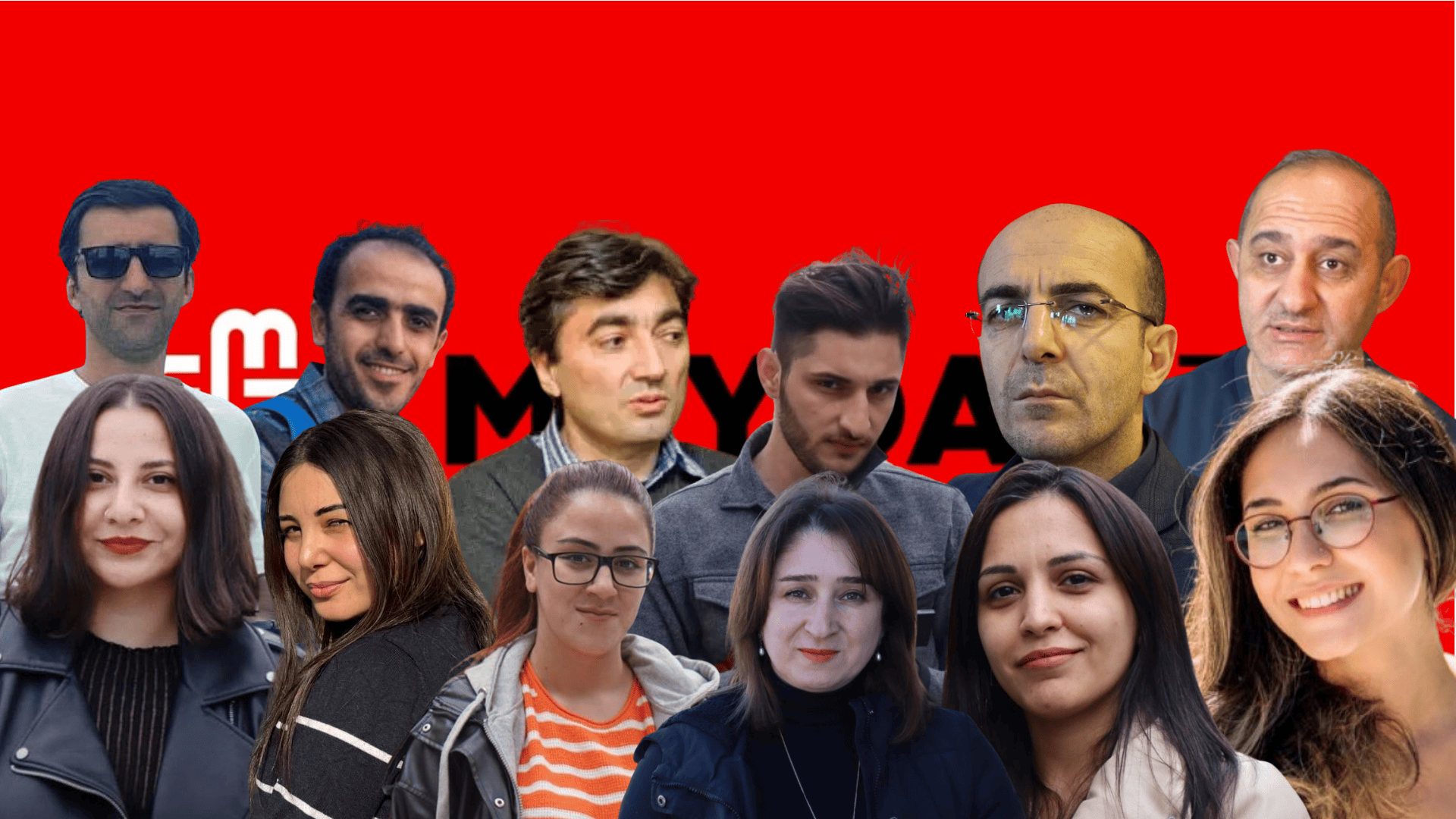
“No, I do not regret being born in Azerbaijan, living here or working as a journalist. Not at all! On the contrary, the 12 of us make a fine ‘criminal group’. Yes, I admit that perhaps I simply failed to understand where I was living and what I was doing. I did not know that in Azerbaijan, speaking and writing about corruption, nepotism and dictatorship, or producing reports on these issues, was considered a crime.
“Books, television and even the Constitution say that our country is independent and its citizens are free. They also emphasise that everyone has the right to express their views freely. At least, that is what I have read and heard. But when I tried to exercise those rights, I was arrested. That was how I learnt that telling the truth is considered a crime in our country.
“I do not blame anyone for my arrest. Under the current circumstances, prison is perhaps the best place to be. I graduated from university but was unable to pursue a master’s degree. Prison, however, turned out to be the best educational institution. So I thank those who arrested me, those who devised this plan, those who sought and granted permission to carry it out, and those who implemented it. In 15 years of journalism, I had neither seen nor experienced what I have seen in prison: the true face of my country, its entire underbelly. Mr President, thank you for ordering my arrest. I’m so glad you did!”
‘We are the president’s personal prisoners – treat us with respect’
“I do not have particularly high hopes for this court. You will not be the ones making the decision. Since I understand that, whatever sentence you announce at the end of the trial, I will not curse you. Once you have sentenced me, you can sleep peacefully. I hope whatever reward you receive for that verdict serves you well. But try to obtain the forgiveness of the other 11 people who are here with me too. It is important to be forgiven.
“I have just one request. You may dislike us or even hate us – that is your right – but you are obliged to treat us with respect. We may have grown up on the streets, but we are not just random people. We were arrested with the personal consent, approval and authorisation of the head of state, Ilham Aliyev. Do not look down on the president’s personal prisoners. Treat us with respect!”
After the journalist finished his statement, the state prosecutor sought to question him. The journalist said he would not answer.
One of the prosecutor’s questions was: “Why did you admit that the €38,000 belonged to you while the police were filming you?” The journalist replied: “To save my colleagues.” The prosecutor’s remaining questions were similar to those he had asked earlier.
The prosecutor’s question about whether the journalist had financial links with BJM prompted an objection from lawyer Bahruz Bayramov. He said that when bringing such serious charges, the prosecution itself should provide the relevant evidence.
“There is no evidence. You arrested these people and now you are asking them whether they had financial links?” the lawyer said.
The journalist then answered questions from the defence lawyers about the videos mentioned by the state prosecutor
“Two videos were recorded during my detention. In the first, police officers open the boot of the taxi and show the money. I say that the €30,000 does not belong to me because they had opened my suitcase themselves and placed the money among my clothes.
“I then overheard them talking. They said: ‘If he doesn’t take the blame, go and arrest the others.’ To prevent my colleagues from being arrested, I said that the money the police had planted in my suitcase belonged to me. This was recorded in the second video.
“Later, when I was taken to the Baku Main Police Department, I saw Aynur Elgunesh and Natig Javadli in the corridor. That was when I realised that everyone had already been arrested and that I would not be able to save anyone.
“I was then taken to an investigator’s office to give a statement. In my testimony, I said that I had only €8,000 of my own money with me. This amount did not exceed the legal limit for bringing money into the country. I said the other €30,000 had been planted in my suitcase by the police.”
Answering a lawyer’s question, Ramin Deko also said he had passed through airport checks, waited for a taxi for about 20 minutes after leaving the airport and was detained around five minutes after the journey began.
Discussion about Messi
Lawyer Javad Javadov asked Ramin Deko: “You support Messi. Argentina and Messi lost. What can you say about that?”
“Spain won,” Deko replied.
State prosecutor Vusal Abdullayev asked for the question to be struck from the record and for the lawyer to receive a written warning. He also said that if the lawyer asked another similar question, he would file a complaint with the Bar Association.
The accused journalists objected, saying they regarded this as a threat against the lawyer.
“So the judge is acting on the prosecutor’s instructions,” Aynur Elgunesh and Shamshad Agha said.
“Javad Javadov is my lawyer. If even one hair falls from his head, I will set myself on fire right here,” Nurlan Libre said rhetorically from the glass enclosure. The lawyer applauded his remark.
“When we go to weddings in the regions, we see people recording gifts of three or five manats in the names of Messi and other footballers. It is just a common, good-natured joke. What is wrong with that?” lawyer Bahruz Bayramov said.
Judge Zaur Hajiyev then announced that Javad Javadov had been given a verbal warning.
The final question to Ramin Deko came from Ulviya Ali.
“At previous hearings, several motions were filed asking for journalists to be allowed to attend the proceedings. Although those motions were not granted, thank you at least for ensuring our participation. My question is this: were you subjected to physical or psychological violence or any other form of ill-treatment during your detention?”
Ramin Deko said he had not been subjected to such treatment.
The next hearing is scheduled for 7 August.