Сost of childhood: why Azerbaijan has no universal child benefit






Child benefits in Azerbaijan

Azerbaijan has no monthly child benefit paid for every child regardless of their family’s income. For nearly 20 years, the government has followed a different model: it provides support to low-income families and specific social groups instead of making universal payments.
Against a backdrop of persistently falling birth rates, the debate over so-called “child benefits” has returned to the public agenda. The discussion is no longer just about where to find the money. Other questions have also come to the fore: how much a universal child benefit would cost the state budget, how much it would actually help families, and what the long-term social cost of refusing such support might be.
In May 2026, a statement by Gunay Agamali, a member of Azerbaijan’s parliament, sparked a new wave of debate. Speaking on ARB TV, she said that child benefits could make parents “dependent and lazy”. In her view, such payments could reduce some people’s willingness to work.
However, the issue of child benefits is far from new in Azerbaijan. It returns to the public agenda almost every year, and the same questions arise each time. Should the state pay benefits for every child or only for families that genuinely need support? Can the state budget afford such payments? And could child benefits reverse the decline in birth rates?
To answer these questions, it is worth first examining how the current system came about. Read the full article by Meydan TV.
What changed in 2006?
Monthly payments commonly referred to as “child benefits” existed in Azerbaijan before 2006. However, contrary to a widespread misconception, they were not universal either.
● Birth rates decline year by year in Azerbaijan
● Child allowance in Azerbaijan: why is it not paid?
Under the rules in force at the time, families with an average monthly income of less than 16,500 old manats per person (around $3.4–3.5 or €2.7–2.8 at the 2004–2005 exchange rates) received a monthly payment of 9,000 old manats per child (around $1.8–1.9 or €1.5). Payments continued from birth until the child turned 16. For schoolchildren who did not receive a scholarship, payments could continue until the age of 18. Following the redenomination, this amount was equivalent to 1 manat and 80 qəpiks.
In other words, the previous system also took family income into account.
A new phase in Azerbaijan’s social protection system began on 1 January 2006, when the Law on Targeted State Social Assistance came into force. The Law on Social Benefits also took effect on the same date. The new system did not retain a separate child benefit linked to family income.
The government therefore effectively changed its entire approach. Instead of providing a separate payment for each child, it made targeted assistance the main form of social support, with eligibility determined by family income.
In a 2009 interview with Radio Azadliq, Babek Huseynov, a representative of the Ministry of Labour and Social Protection of the Population, said the authorities considered the new system more effective. The previous child benefit, he said, had “lost its economic rationale”. He explained that under the targeted assistance system, payments are calculated based on the difference between a family’s total income and the eligibility threshold.
The same principle remains: assistance for those in need, not everyone
In the following years, the government introduced new types of benefits for children and families and changed payment amounts. However, the underlying principle remained the same: Azerbaijan has no universal benefit paid for every child.
In 2022, Labour and Social Protection Minister Sahil Babayev stated this position explicitly while addressing parliament. According to him, around 600,000 children from socially vulnerable groups receive support through various mechanisms, and social assistance should be targeted rather than universal.
The system in place in 2026 follows the same principle.
Lawyer Fariz Namazly explains:
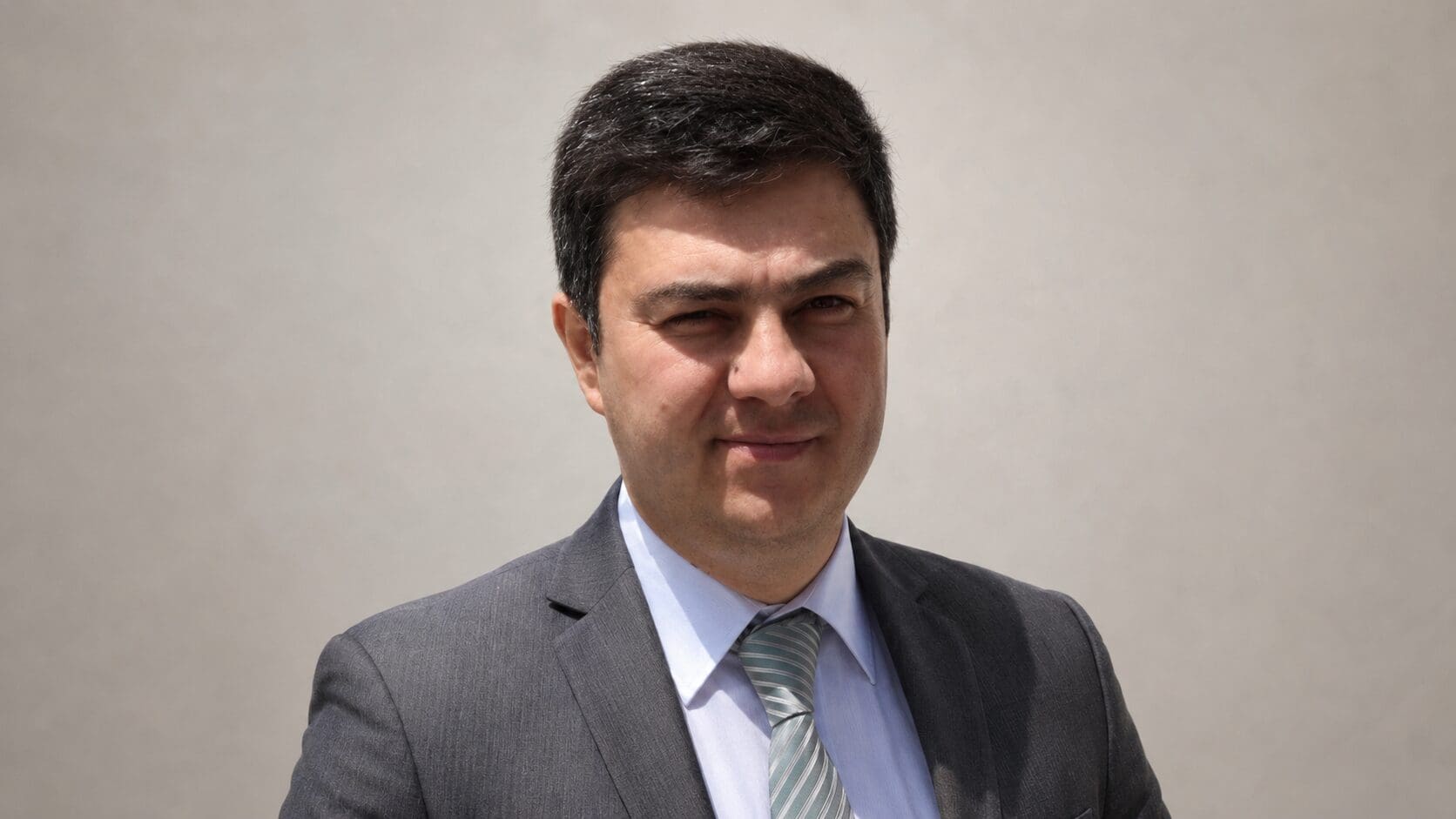
“We have various benefits for children. Most are designed for socially vulnerable families. There are also one-off payments, such as the benefit paid when a child is born. Low-income families with children under one receive financial assistance, as do parents caring for children under three. Women with more than five children are also eligible for benefits. Separate social payments are available for children with disabilities, children who have lost one of their parents, and other categories.”
Families currently receive a one-off payment of 600 manats (around $353 or €305) when a child is born. Low-income families with children under one receive 140 manats (around $82 or €71) per month. Women with more than five children receive 140 manats (around $82 or €71) per month for each child. The childcare benefit for children under three amounts to 44 manats (around $26 or €22) or 28 manats (around $16 or €14), depending on the child’s age.
In addition, separate payments are available for children with disabilities, those who have lost a breadwinner, children without parental care, and other social categories.
The issue, therefore, is not whether the state provides financial support to families with children at all. Such support already exists.
The main question is who is eligible for it.
Universal child benefits or targeted assistance?
Under a universal system, family income does not matter: if a child meets the eligibility criteria, the family receives a payment.
Under a targeted system, the government first assesses a family’s income, assets and social circumstances before deciding whether it needs assistance.
Fariz Namazly believes both models have advantages and disadvantages:
“There are currently proposals to introduce a universal child benefit — that is, to pay it to all children regardless of family income. Such a system is more transparent. Families would not have to declare their income, the process would be much simpler, and there would be no need to check their financial circumstances. All children would be treated equally.
But this would place a significantly greater burden on the budget. Wealthier families would also receive the benefit. If payments are limited to low-income families, public spending is lower, and the money goes to those who need it most. The problem is that determining a family’s actual income can be difficult, creating opportunities for abuse. Such cases have also occurred in the allocation of targeted social assistance: people have tried to formally give up their jobs or even arrange sham divorces to meet the eligibility criteria.”
The new Law on the Rights of the Child, adopted in 2026, explicitly enshrines a child’s right to social security. Under Article 24 of the law, every child has the right to material support at least equal to the subsistence minimum established by law. The same article states that the government provides social assistance to certain categories of citizens to protect children.
In 2026, the subsistence minimum for a child is 260 manats (around $153 or €132).
However, this provision does not in itself mean that the state is obliged to pay every child 260 manats in cash each month. It establishes a general right to material support, while direct social payments remain available only to specific categories.
Can child benefits make parents “lazy”?
It was against this backdrop that Gunay Agamali argued that parents should not expect financial assistance from the state when deciding to have a child, and that such benefits could supposedly foster dependency.
This argument shifts the debate away from social policy and towards the behaviour of parents themselves.
Yet Azerbaijan’s existing system already provides direct payments to families with children. The debate is therefore not about whether the state should support families financially at all, but whether payments should cover all children or only specific groups.
Earlier, Aygun Gumbatova, the wife of imprisoned opposition activist Agil Gumbatov, called for the introduction of child benefits. She cited her family’s difficult financial circumstances as the reason for her position.
“We have found ourselves in a difficult financial situation. My husband was arrested on false charges. He was the family’s sole breadwinner. Now I am left with three school-age children,” Gumbatova told a Caucasian Knot correspondent.
Her eldest child has autism and requires constant care, making it impossible for Gumbatova to work. According to her, the family’s only stable source of income is the 320-manat disability pension (around $188 or €162) paid for her child’s second-group disability status.
At the same time, supporting a universal child benefit does not necessarily mean that its proponents see it as a solution to all social and demographic problems.
Natig Jafarli, an economist and chairman of the REAL Party, believes the issue is too easily exploited for populist purposes:
“This is a very sensitive issue, and it is extremely convenient for populism. People who do not bear political responsibility can use it simply to score political points. Such promises easily resonate with the public. For example, someone comes out and says: let’s pay 500 manats [around $294 or €253] for every child. Someone with two or three children at home will naturally think: ‘Great, that’s 1,000–1,500 manats’ [around $588–882 or €507–760].”
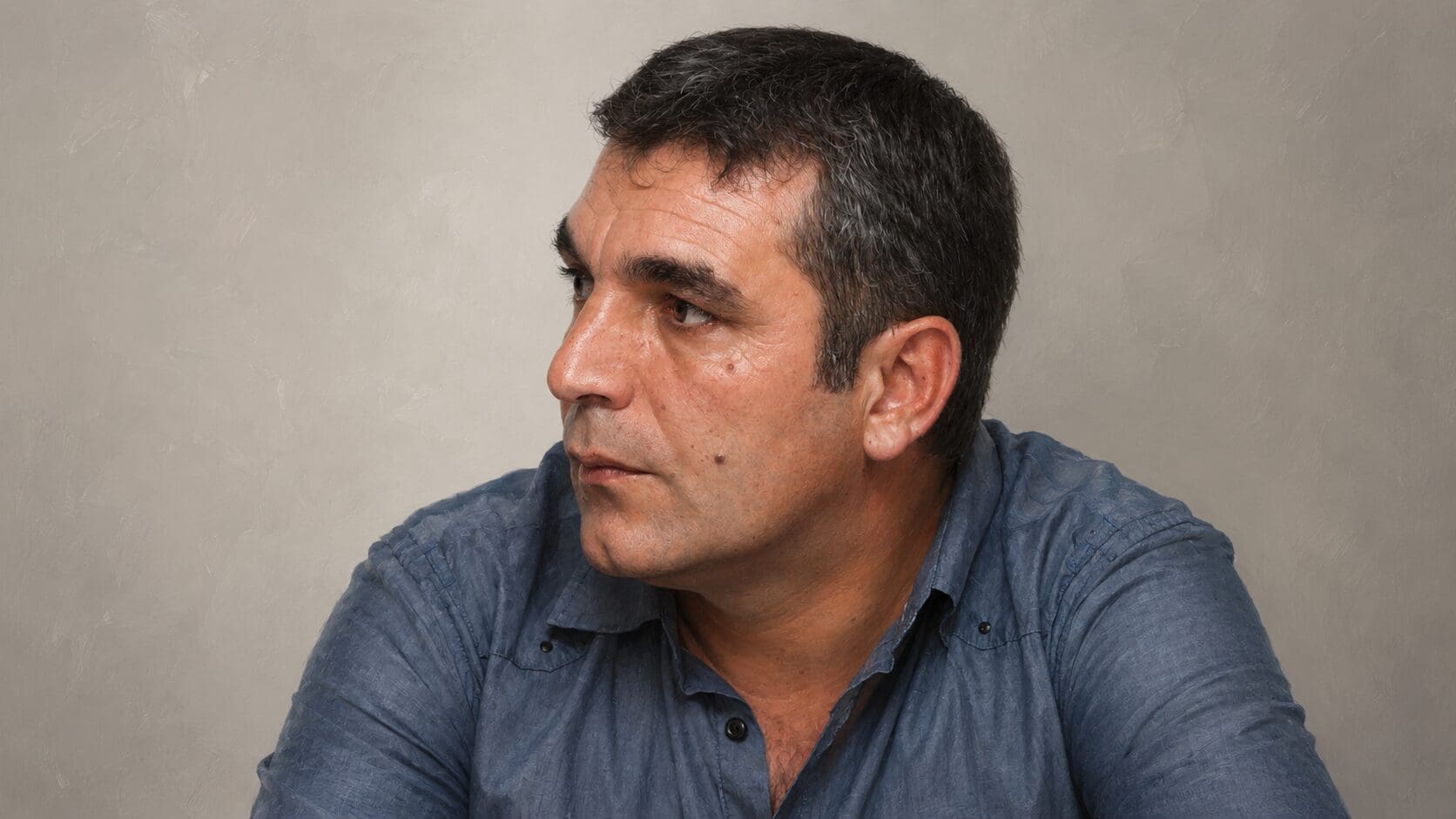
“That is precisely why the issue often fails to become the subject of serious discussion. It would be far more useful to sit down with government representatives, examine the budget’s capabilities and do the calculations: how much the state can afford, in what form, and under which model such payments could be introduced.
Sometimes populism goes so far that child benefits are presented as almost a solution to every problem. That is also wrong and misleads people. Azerbaijan already faces demographic problems, and the birth rate is falling. But claiming that simply introducing child benefits tomorrow would immediately reverse the situation is also populism. We can see this in European countries. In Poland, for example, families receive 800 zlotys [around $214 or €185] per child — a fairly substantial amount. Yet the demographic situation continues to deteriorate, and the fertility rate has fallen from 1.7 to 1.4.”
According to the World Bank, Azerbaijan’s total fertility rate was 1.7 children per woman in 2020, falling to 1.4 by 2024. The downward trend has continued in more recent statistics. According to Azerbaijan’s State Statistical Committee, 40,798 children were born in the country between January and June 2026. The number of births per 1,000 residents fell from 9.0 in the same period of 2025 to 8.0.
Can the budget afford a universal child benefit?
One of the main arguments against universal payments is their cost.
Natig Jafarli believes that child benefits are economically feasible in Azerbaijan, but that they do not necessarily have to be introduced for all children at once. In his view, the system could be rolled out in stages.
“If the aim is to reverse the demographic situation through child benefits, a benefit alone will not be enough. But from an economic perspective, such payments are possible. We simply need to determine the amount and the stages.
Several years ago, we proposed starting from the assumption that Azerbaijan has around 2.7 million children aged 0 to 18, and approximately 920,000 of them are second-born children in their families. If it is impossible to cover all children under 18 immediately, the programme could at least start with second and subsequent children. If we paid around 100 manats [around $59 or €51] per child, the first stage would require about 1 billion manats a year [around $588 million or €507 million]. That is an amount Azerbaijan’s budget could sustain.
If, on the other hand, we paid 100 manats a month to all 2.7 million children — even if we consider 100 manats a very small amount — the cost would exceed 3 billion manats a year [more than $1.76 billion or €1.52 billion] and reach approximately 3.2–3.3 billion manats [around $1.88–1.94 billion or €1.62–1.67 billion]. Such a burden could create certain difficulties for the budget at the initial stage. So we could start with 1 billion and then expand the programme as the economy’s capacity grows.”
Azerbaijan’s state budget for 2026 has approved revenues of 38.609 billion manats (around $22.71 billion or €19.57 billion) and expenditures of 41.7036 billion manats (around $24.53 billion or €21.14 billion).
Against this backdrop, spending more than 3 billion manats (over $1.76 billion or €1.52 billion) on a universal child benefit would indeed be a substantial expense.
But the scale of the expenditure alone does not settle the debate. A universal payment for every child is not the only possible option. The amount could depend on the child’s age, birth order, or parental income, or the programme could be introduced gradually.
The question, therefore, is not simply whether “the money is available in the budget”. It is also about which model of social policy the government considers a priority.
Birth rates are falling, but benefits are not the only factor
One reason the issue of child benefits has returned to the public agenda is the sharp decline in the number of births.
According to the State Statistical Committee, 122,846 children were born in Azerbaijan in 2022. The figure fell to 112,620 in 2023 and declined further to 102,310 in 2024. In 2025, the country recorded 95,875 births.
This means the annual number of births fell by nearly 27,000 between 2022 and 2025.
In 2025, the number of births per 1,000 residents fell from 10 to 9.4.
The age structure of the population is also changing. At the beginning of 2023, children under four accounted for 6.3% of the population. By the beginning of 2025, their share had fallen to 5.6%. Meanwhile, the proportion of people aged 65–69 rose from 3.9% to 4.6%, while the share of those aged 70 and over increased from 4.6% to 5.3%.
Sociologist Sanubar Heydarli told Meydan TV that support for young families is particularly important in this situation:
“Living standards in Azerbaijan cannot be described as high, and there are many social difficulties. That is why I consider child benefits an important form of support for young families. The figures also point to this: the birth rate is falling sharply, and the population is beginning to age.”
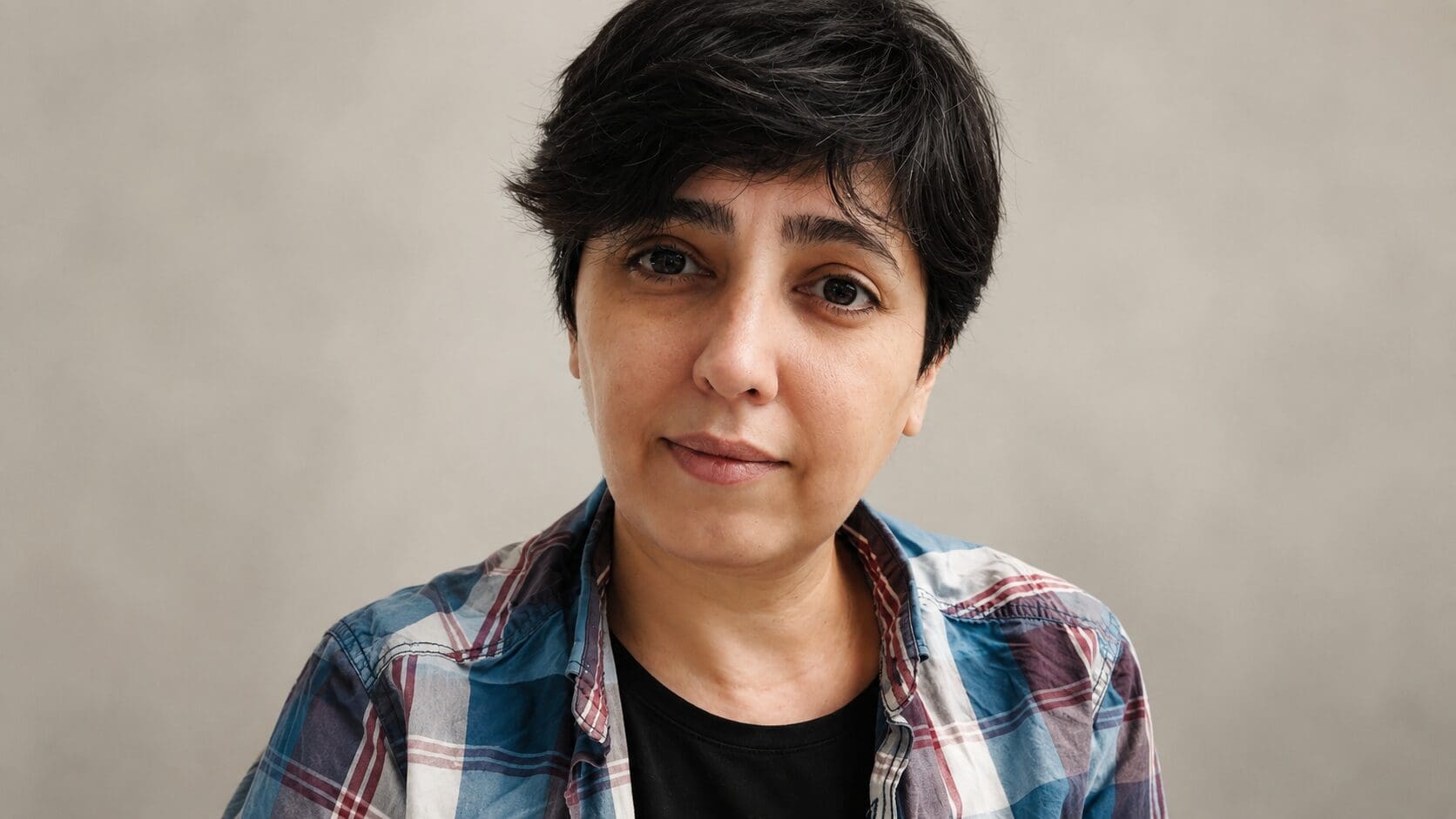
“But child benefits alone cannot solve this problem. We cannot assume that the government will start making payments and the birth rate will automatically rise. Other measures are needed alongside them. The decision to have a child depends on more than a family’s financial situation. Access to the labour market for women, a sense of social security, and the state of healthcare, education and social support systems all matter.
Nevertheless, child benefits provide significant support for young families. After a child is born, one parent temporarily leaves the labour market, reducing the family’s income. The state should therefore support families during childbirth and child-rearing. Child benefits are important, but they are not the only solution to demographic problems.”
What difference would 100 manats make?
Another question is how much the benefit would be worth.
Suppose the government pays 100 manats (around $59 or €51) per child each month. A family with two children would receive an additional 200 manats (around $118 or €101).
Could such an amount solve a family’s main financial problems?
Natig Jafarli believes it could not:
“In Europe, of every €100 spent on food, the figure is around €20 at most. If we spend half our income on food, that points to low living standards in Azerbaijan.
But much depends on the size of the benefit. Imagine a completely unrealistic scenario: the government pays 1,000 manats per child. Such an amount could indeed have a significant impact on poverty. But is that possible? No. If, at best, families receive 100 manats per child and a family with two children gets an additional 200 manats, would that be enough to eliminate poverty? Of course not.”
At the same time, the purpose of a child benefit does not necessarily have to be for the state to provide for a family entirely.
It could also be seen as the government’s contribution towards the additional expenses that inevitably arise when raising a child.
In the long term, Jafarli believes a completely different model would be ideal:
“People should be able to earn a living and support their own families. Small businesses and family businesses should be developed. The economy should move in a direction where people do not need such payments at all. That is the ideal model for me.
In principle, I am sceptical of the idea of the state constantly giving people money, because the more the state finances you, the more it can restrict your rights. We need to build a system, a society and a country where there is no longer any need for such payments. But is there a need for them now? Of course there is.”
Sanubar Heydarli also points to changing attitudes among parents towards raising children. Modern families may consciously choose to have fewer children, preferring to provide one or two children with better education, healthcare and opportunities for development.
What models have neighbouring countries adopted?
The experience of neighbouring countries shows that there is no single model for child benefits. In some countries, payments depend on family income; in others, they depend on the child’s birth order.
In Armenia, from 1 September 2026, every newborn child will qualify for a one-off payment of 500,000 drams, regardless of their birth order. This is equivalent to around 2,341 manats ($1,374 or €1,187). The Armenian government approved the decision on 13 August 2026.
In addition, a monthly payment of 50,000 drams — approximately 235 manats ($137 or €119) — is paid for the third and each subsequent child until the child turns six.
In Turkey, a one-off payment of 5,000 lira is available for the first child born on or after 1 January 2025. This is equivalent to around 176 manats ($104 or €89). For a second child, families receive 1,500 lira per month — around 53 manats ($31 or €27) — until the child turns five. For the third and subsequent children, the monthly payment is 5,000 lira (approximately 176 manats, $104 or €89).
In Georgia, the system is closer to a targeted model. Families with a social rating below the established threshold receive 200 lari per month — around 130 manats ($77 or €66) — for each child under 16. A UN report on social protection in Georgia states that the programme covers children from families with a social rating below 120,001 points.
According to figures for November 2025, more than 250,000 children were receiving these payments.
In Russia, the main unified child benefit is also not universal. When determining eligibility, authorities assess a family’s per capita income and other criteria of need. The payment can amount to 50%, 75% or 100% of the regional subsistence minimum for a child.
These examples show that the choice is not simply between having child benefits and not having them.
A government can provide a one-off payment at birth, introduce monthly benefits until a certain age, offer greater support for second and subsequent children, or limit payments to low-income families.
Azerbaijan currently follows the last model for the most part: targeted assistance and benefits for specific categories.
Is a separate law needed to introduce a universal child benefit?
According to Fariz Namazly, the government would not need to pass a separate law to introduce a universal child benefit:
“There is already a Law on Social Benefits, which could be amended. In addition, a new Law on the Rights of the Child has been adopted, and it could also be supplemented with provisions on new payments and benefits for children. In other words, the necessary provisions could be incorporated into either the Law on the Rights of the Child or the Law on Social Benefits.”
The burden on the budget — what about future costs?
Since 2006, the government’s overall approach has remained largely unchanged: instead of providing the same monthly payment for every child, it offers assistance based on a family’s financial need or a child’s membership in a specific social category.
As noted above, this does not mean the government provides no support to families with children. There are payments at birth, benefits for low-income families, childcare benefits, assistance for women with large families, and support for children with disabilities and those without parental care.
A universal child benefit would mean a shift away from this model.
Clearly, it would require substantial additional spending. At the same time, experts stress that child benefits alone cannot eliminate poverty or automatically reverse the decline in birth rates.
However, the falling number of births and the gradual ageing of the population raise a different question: can social policy be assessed solely in terms of how much money it costs today?
Sanubar Heydarli believes that failing to support families now could leave the state facing much higher costs in the future:
“By refusing to introduce child benefits today, leaving families to cope with their difficulties alone and failing to take responsibility, the state is effectively increasing its future expenditure associated with an ageing population.
Child benefits are a highly visible item of expenditure: when money is paid directly to families and the authorities calculate the total cost, the figures can seem enormous. But this ignores the fact that failing to support children today will translate into unavoidable spending on an ageing population in the future.
The state will have to pay more in pensions and benefits and increase healthcare spending. The proportion of elderly people will grow. As a result, the balance between taxes paid by the younger working population and spending on pensioners will be disrupted. There will be more pension recipients and fewer taxpayers. Ultimately, the burden on the state will only increase.”
With the support of the Mediset
Child benefits in Azerbaijan