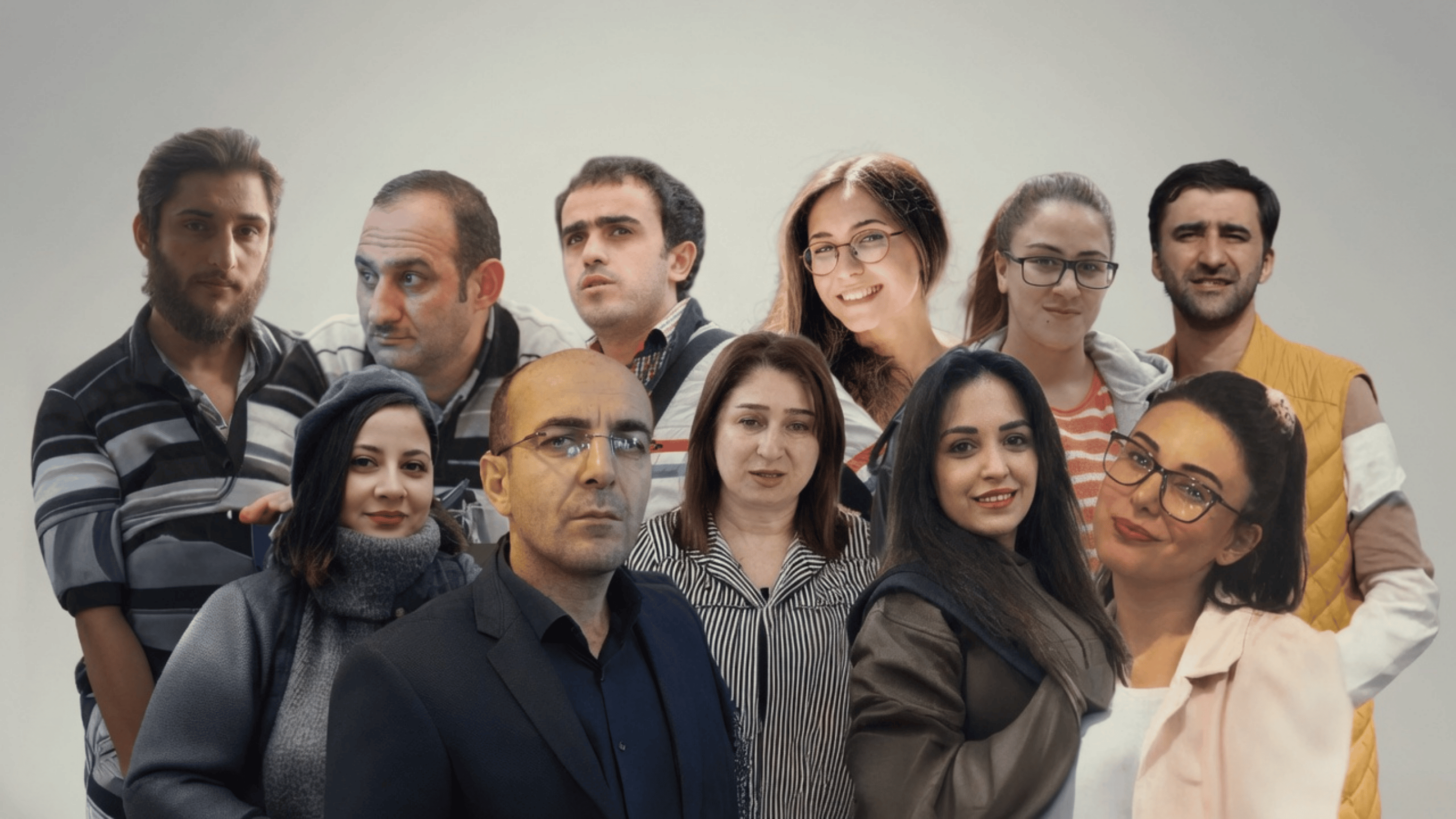
Azerbaijan’s Meydan TV case: ‘Investigator, prosecutor and judge in this case is Ilham Aliyev’






Journalist testifies in Meydan TV case
On 28 September, journalist Shamshad Agha, founder and editor-in-chief of the Arqument.az website, testified at Baku Court on Grave Crimes in the Meydan TV case. He rejected the charges against him, said there were inconsistencies in the criminal case materials and linked his arrest to his journalistic work.
In his testimony to the court, the journalist also said he had been subjected to violence during his detention and threatened that members of his family would be brought to a police station unless he disclosed the password to his phone.
“The 30-volume criminal case is based entirely on groundless accusations. This whole collection of papers they call a ‘criminal case’ has been fabricated,” Shamshad Agha said.
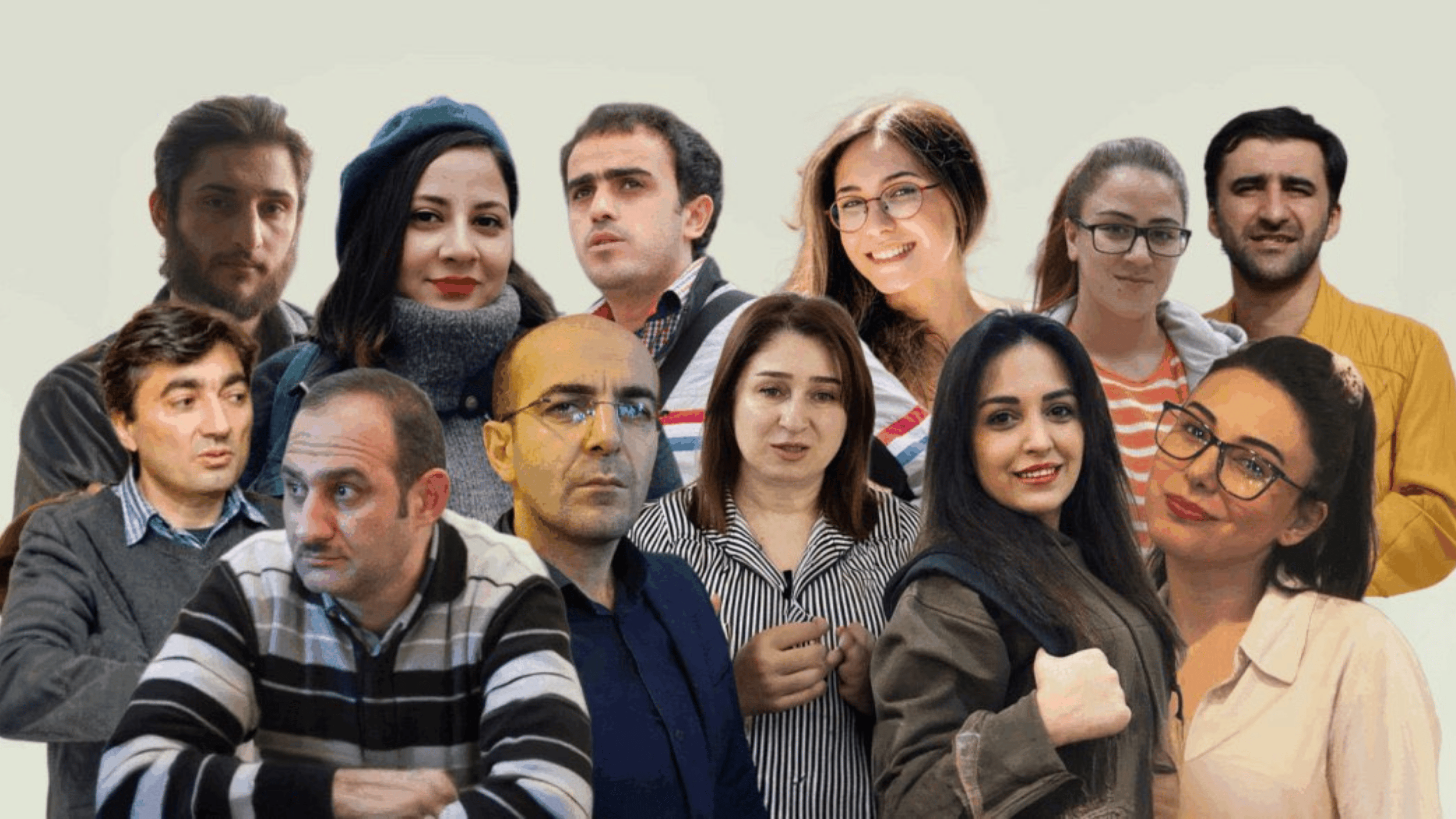
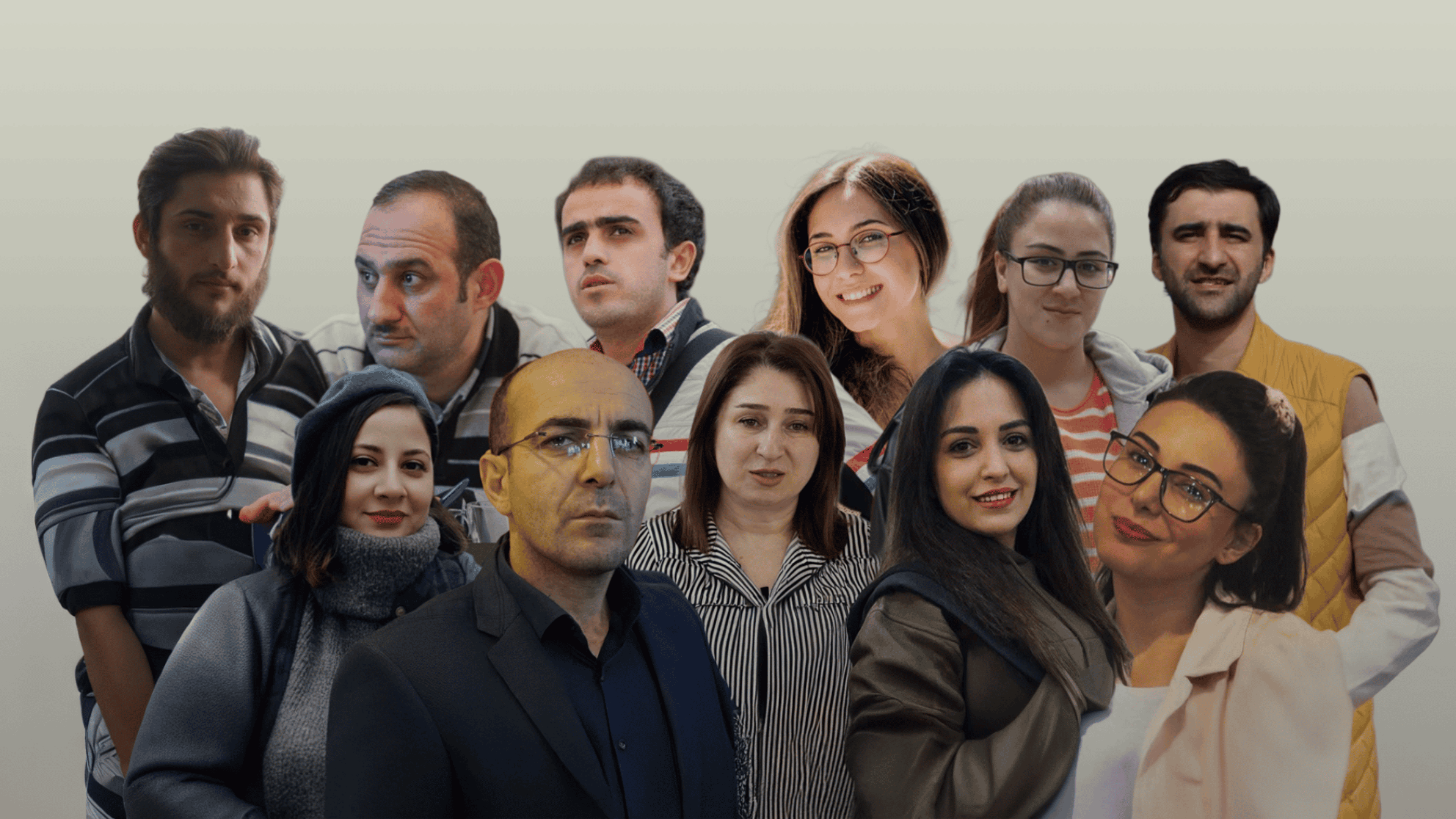
On 6 December 2024, Meydan TV journalists Ramin Deko (Jabrayilzade), Aynur Ganbarova (Elgunesh), Aysel Umudova, Aytaj Ahmadova (Tapdig), Khayala Aghayeva and Natig Javadli were detained. They were charged under Article 206.3.2 of Azerbaijan’s Criminal Code with smuggling committed by a group of people acting in prior conspiracy. The criminal proceedings against them became known as the “Meydan TV case”.
Journalists Shamshad Agha, Nurlan Libre, Fatima Movlamli, Ulviya Ali and Ahmad Mukhtar were later also arrested in connection with the case.
In August this year, the charges against the journalists were expanded, with additional charges brought under other articles of the Criminal Code.
Meydan TV says the arrests are linked to its journalists’ critical reporting.
The full version of the article is available in the Azerbaijani-language section.

Who am I?
I am Shamshad Agha – Shamshad Islam oglu Aghayev, a citizen of Azerbaijan, a journalist and poet who has faced repression at the hands of the political and ideological heirs of Stalinism.
I was born on 1 September 1982 in the village of Shivla in Lerik District. My childhood unfolded against the backdrop of the pain the Karabakh conflict brought to those close to me. I grew up during the so-called “transition period”, tending lambs on mountain slopes with a book in my hands.
My father worked as a teacher for 40 years. His library and the books he gave me largely shaped my worldview and my understanding of injustice and the need to resist it.
At school, we studied literature from the period of Stalinist repression. The fate of intellectuals who fell victim to the “Red Terror” instilled in me a deep rejection of Stalinism and shaped my attitude towards its political and ideological heirs.
I particularly remember the words of repressed Azerbaijani writer Yusif Vazir Chamanzaminli: “I learnt to resist oppression and injustice from my mother.” My mother taught me the same. If I lose her while I am in prison and cannot attend her funeral, I am certain she will know that I did not side with injustice and oppression.
Azerbaijan’s state television recently broadcast a film about literary critic Seyid Huseyn, who was repressed under Stalin. Because of his family ties to one of the leaders of Azerbaijan’s independence movement and his closeness to an opposition party, he was executed after a 20-minute trial, while his wife was sentenced to eight years in exile.
And this is being shown by the state television of a country whose authorities today, in my view, persecute women and imprison them for writing and speaking the truth. I am certain that if the Siberian camps still existed today, they would be sent there too.
That is the irony of history and fate.
When did I become involved in public and political life?
I became actively involved in public and political life during my university years. In 2003, I was an activist in the student movement. Following the presidential election, whose results I considered unfair, pressure on politically active students at the university intensified. In solidarity with the opposition Musavat party, which was facing pressure at the time, several other students and I joined the party.
At the same time, I wrote articles, short stories and poetry, which were published in regional and national publications. While still a student, I joined the Union of Writers of Azerbaijan, but later left it and, together with like-minded writers, established an independent literary association.
In 2007, I graduated with honours from Lankaran State University and spent three years teaching Azerbaijani language and literature at the school I had once attended. At the same time, I continued working with media outlets and reporting on problems in the region.
In 2010, I committed myself fully to journalism, and in 2014 I established the independent website Arqument.az, of which I remain founder and editor-in-chief.
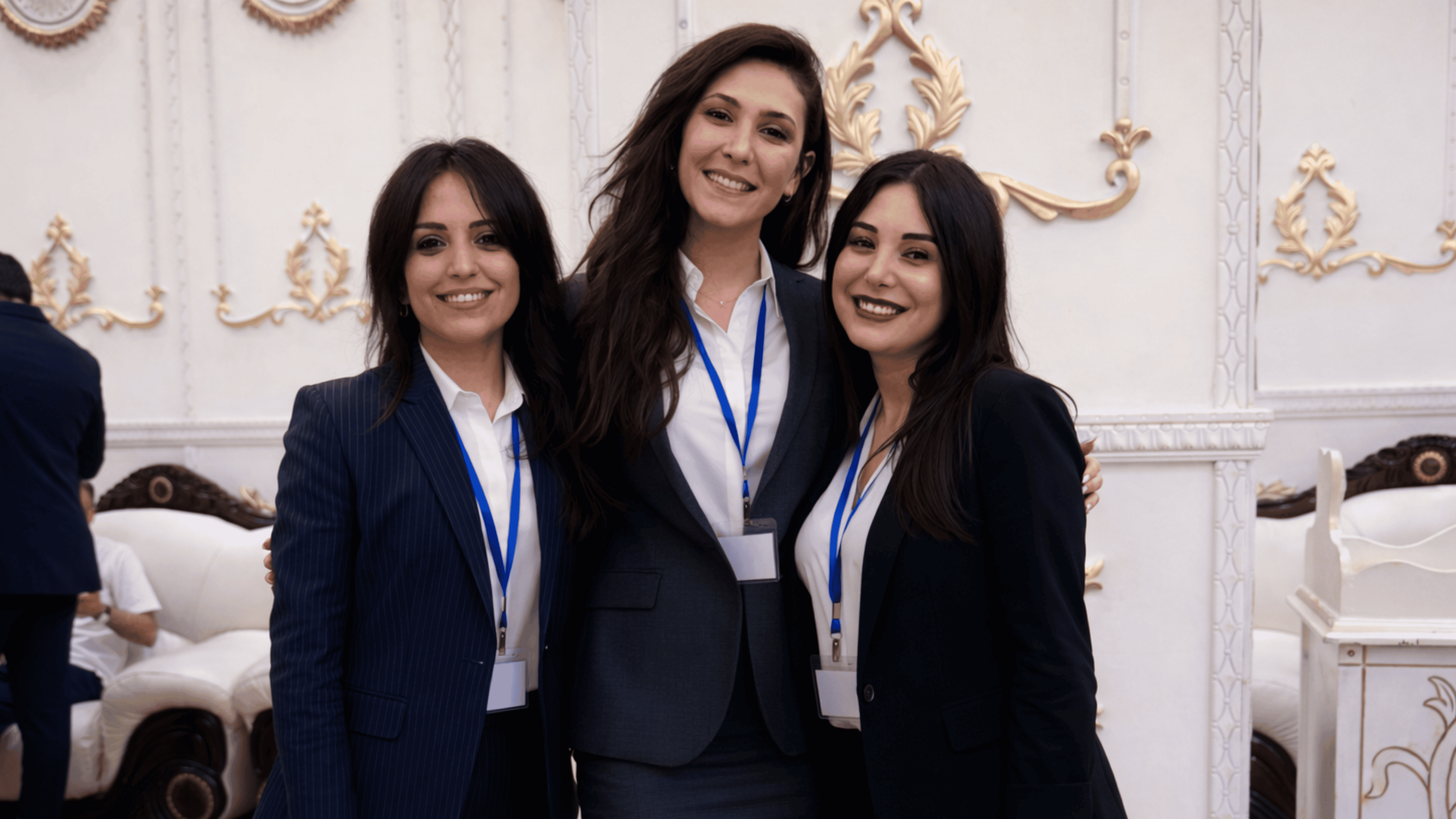
In 2016, together with Akif Gurbanov and Alasgar Mammadli, we founded the School of Democracy to train young journalists. Today, many of its founders, teachers and graduates are in prison on charges that I consider politically motivated.
Today, journalists, civil society representatives, activists and politicians facing repression by the Azerbaijani authorities are the voice of the country’s disenfranchised citizens
In my view, Abzas Media, Toplum TV and Meydan TV remain among the last platforms for freedom of expression in Azerbaijan. I am proud of my work with these independent media outlets and of my colleagues who are now on trial or in prison.
Journalism begins with doubt and courage. My colleagues have reported on the consequences of war, spoken out against restrictions on media freedom and continued their work even from prison. Some have received international recognition, while others have trained a new generation of journalists.
It is partly thanks to colleagues like these that I remain who I am. I’m glad you’re here, guys.
Why was I arrested?
In 2022, when Azerbaijan adopted a new law “On Media”, I actively opposed it and described it as a “death sentence for independent media”. I believed the authorities were seeking to push independent journalism out of the public sphere because, despite the considerable resources available to state and pro-government media, the public continued to trust independent sources of information.
While working as a presenter at Toplum TV, I heard even officials and MPs acknowledge that audiences placed greater trust in information from independent media. Meydan TV, which was established outside the country, also continued to overcome restrictions on access to information. In my view, the authorities chose to confront independent media through pressure rather than competition. The new law and the creation of a media register were part of this process. The Venice Commission also criticised the law. Many journalists, experts and civil society representatives who opposed it subsequently ended up in prison.
After the arrests of Abzas Media staff, I was approached, according to my account, by representatives of the security services who offered me co-operation, praising my professionalism and saying they needed my views as an expert. I refused. Further attempts were then made to contact me through intermediaries, and I later received a warning that I could be arrested. Despite this, I continued to refuse to co-operate.
Later, Russian Foreign Intelligence Service chief Sergei Naryshkin said after a visit to Baku that he had discussed joint action with the Azerbaijani side against Western-oriented media outlets and organisations. Soon afterwards, Sputnik Azerbaijan published an article mentioning me and Arqument.az, which I head, including our critical stance towards Russia over its war against Ukraine.
I saw this as a warning that I was about to be arrested. At the time, I continued meeting friends and defending my detained colleagues, and received several verbal warnings telling me to back down. But I could not do so. Otherwise, I would not have been able to look my colleagues – or former participants in our journalism training programmes who were already in detention – in the eye.
I did not back down out of heroism, but out of shame
One police officer told me that many people were afraid to protest because even mentioning certain names could have serious consequences. I replied that it was not about courage. We speak out because we are ashamed to remain silent in the face of injustice. It is this feeling that compels us to overcome our fear.
In my view, an authoritarian system seeks to suppress such civic courage by portraying independent journalists as people who supposedly “work for foreign powers”. But we are here because we spoke about what was happening in our own country.
How was I arrested?
At around 1am on 5 February 2025, I was detained near Neftchilar metro station. I say that I was beaten during my detention as officers demanded the password to my phone, and that I was denied medication for high blood pressure.
I was then taken to my home, where my brother and underage daughter were present. According to my account, one of the officers hit me when I told my family that I had been detained. I was not shown a court order authorising the search. Officers searched the flat and seized computers, phones, press cards and documents.
After finding no money in the flat, they again demanded my password and threatened to take my brother and daughter to the police station. To make them stop, I gave them the password. Despite my requests, my lawyer was not allowed to be present during the search.
At the Baku Main Police Department, I was asked to provide the password to my computer. I say that I was again subjected to violence, but I did not disclose the password. I refused to give evidence without a lawyer present.
After being questioned in the presence of my lawyer, during which I said my prosecution was politically motivated, I was placed in a temporary detention centre. On 6 February, Judge Rafael Sadigov ordered that I be remanded in custody. I consider the decision political and hold President Ilham Aliyev responsible for it.
After the court hearing, I was transferred to the Baku pre-trial detention centre. The stories of prisoners I met there reinforced my belief that the judicial and law-enforcement systems are unjust.
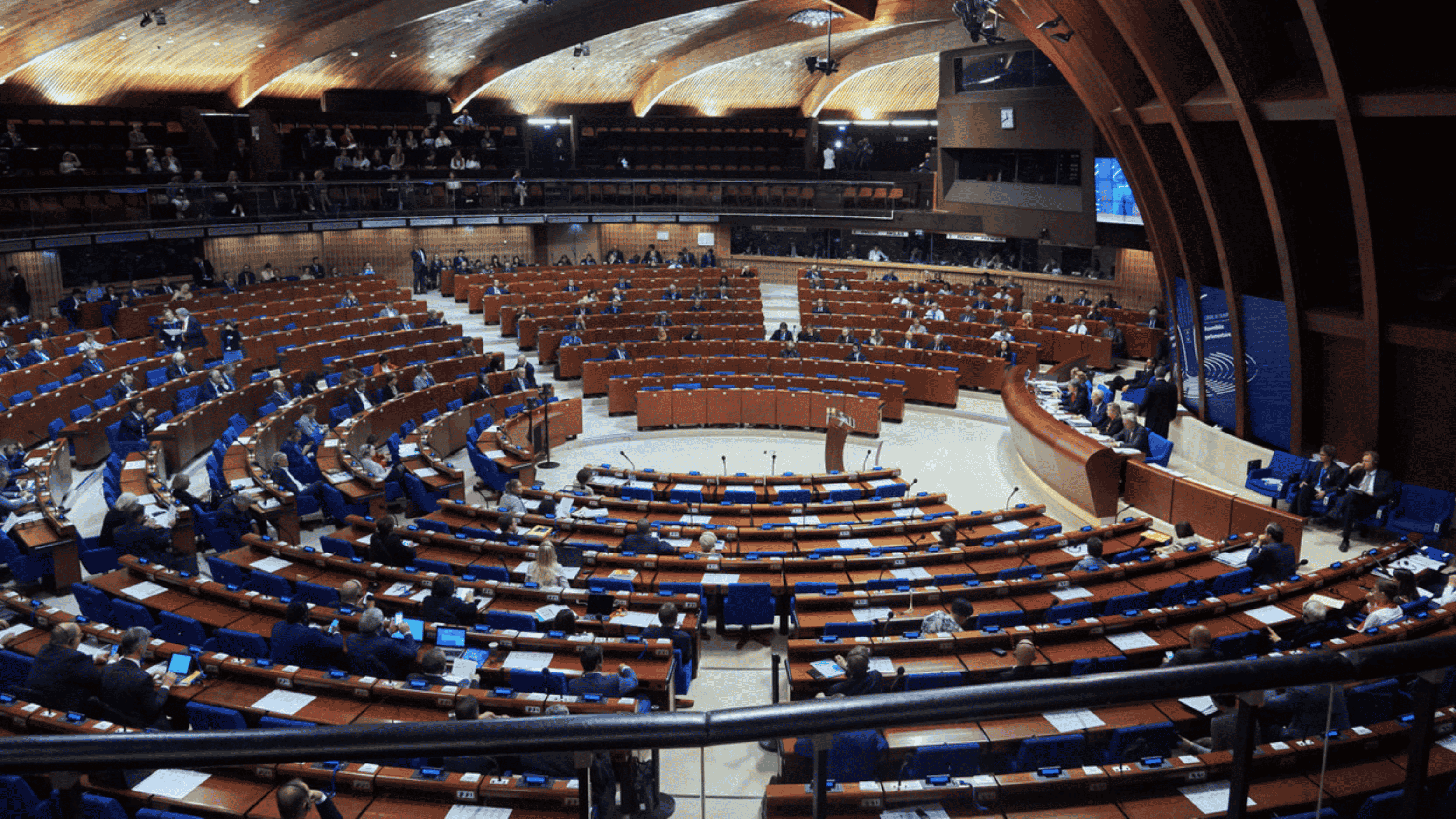
All this is happening in the 21st century in a country that is a member of the Council of Europe.
In my view, the existing system has an interest in the constant production of criminal cases, while investigative bodies seek to preserve their influence and privileges. Yet the state should not only prosecute alleged offenders but also address the causes of crime.
When a country has so many criminal cases and prisoners, society should consider the quality of governance. Where violence becomes an acceptable tool, it is difficult to speak of justice.
Every day in the pre-trial detention centre, I hear people praying and cursing those they believe are responsible for injustice. I wonder whether all this will ever end, and I am certain that it will. The authorities may try to drown out discontent through controlled media and entertainment, but in my view, one day it will turn into open protest.
Azerbaijan’s problems are not limited to media freedom and political rights. The country also faces serious social problems. According to official statistics, around 2.9 million people have registered medical conditions – almost a third of the population. I believe that talk of stability and victories conceals deep problems within society.
In my view, journalists are turned into political hostages precisely because they write about these problems. Meanwhile, those who investigate corruption and the transfer of state funds abroad are accused of receiving money from overseas. It is particularly disheartening that society often tolerates corruption and injustice. But I am certain this will not always be the case.
Alleged irregularities in the criminal case
I believe the 30-volume criminal case is based entirely on groundless accusations and was compiled in violation of the law. The prosecution alleges that I falsified documents but, in my view, has failed to provide convincing evidence.
In court, I pointed out that under Article 52.3 of the Code of Criminal Procedure, criminal case materials must be drawn up on specially numbered forms. I asked for these to be presented to the court, but it emerged that no such forms existed. On this basis, I believe the legal requirements governing the preparation of the case were not followed.
In my view, the prosecutor’s office should have discontinued the case, but instead effectively endorsed the alleged violations. I therefore hold both the prosecution representatives and the leadership of the prosecutor’s office responsible for them.
As a result, I believe that neither the 30 volumes of case materials nor the 600-page indictment based on them has proper legal validity. I maintain that numerous provisions of the Code of Criminal Procedure were violated during the investigation and preparation of the charges. That is why, in seeking to prove my innocence, I am constantly forced to refer to domestic and international law, while the investigation and the court, in my view, disregard its requirements.
Under rulings by the Plenum of Azerbaijan’s Supreme Court and the case law of the European Court of Human Rights, detaining a person requires evidence linking them to an offence and specific grounds for their detention. I believe the prosecution has provided no such evidence and that my detention is therefore unlawful.
At almost every hearing, I point to alleged violations and file motions, but the court rejects them. In my view, the charges are politically motivated and the case is not being examined objectively.
The investigator, prosecutor and judge in this case is Ilham Aliyev.
If President Ilham Aliyev has evidence that I was involved in smuggling or falsified documents, let him present it to the court. I am confident that an objective examination of the case materials will establish my innocence.
There are numerous contradictions in the case materials. I had never met Ulvi Tahirov and saw him for the first time in court. We had never communicated, and his testimony does not mention my name. Investigators have also presented no evidence linking me to Ramin Jabrayilzade, who, according to the case materials, was found with €38,000 when he was detained.
A record dated 16 January 2025 already identifies me as a defendant, even though I was not detained as a suspect until the night of 5 February. I was also linked to €40,000 from the Abzas Media case, although I am being tried as part of the Meydan TV case.
Investigators also cite my telephone conversations with Aynur Ganbarova, although their content has not been established. Another piece of purported “evidence” was a document stating that I had allegedly received €1,370, but a forensic examination commissioned by investigators found that the signature on it was not mine. An examination of my phones, laptop and storage devices also found no material of significance to the investigation.
I also consider the charge of illegal business activity to be unfounded: Arqument.az was officially registered in 2015, while I registered with the tax authorities as an individual in 2017. Investigators have also failed to specify which documents I allegedly falsified and used.
The claim that I repeatedly travelled abroad in 2024 and engaged in smuggling is also untrue: I did not leave the country at all that year.
I therefore believe that investigators have failed to present convincing evidence to support the charges of smuggling, illegal business activity, money laundering, document forgery and tax evasion.
As you can see, the prosecution has presented no evidence that I received grants from any organisations, engaged in money laundering or was involved in smuggling. Nevertheless, I remain in custody on the grounds that I might abscond from the investigation.
I consider this argument unfounded. In July 2024, as part of the Toplum TV case, an investigator conveyed through another witness that he wanted to question me. I called him myself and voluntarily went to the Baku Main Police Department the following day, where I gave evidence as a witness. If I had intended to abscond, why would I have contacted the investigator myself and gone in for questioning?
I was subsequently banned from leaving the country. The investigator justified the restriction by saying that I would allegedly be arrested in the near future. However, eight months passed, and I was eventually detained not in connection with the Toplum TV case but the Meydan TV case. According to my account, the investigator later said that if I had not been arrested in this case, another reason would have been found because the decision to arrest me had already been made.
I therefore consider the entire process unlawful and an act of politically motivated repression. In a country where political will takes precedence over the law, it is difficult to speak of a fair trial.
As Tolstoy wrote, when those who are supposed to uphold justice themselves commit injustices and show no respect for the law, human life or universal values, sooner or later this leads to grave consequences.