Baku-Paris-Moscow: What links French national’s release in Azerbaijan to Russian billionaire’s sanctions relief?






Aliyev pardons French citizen
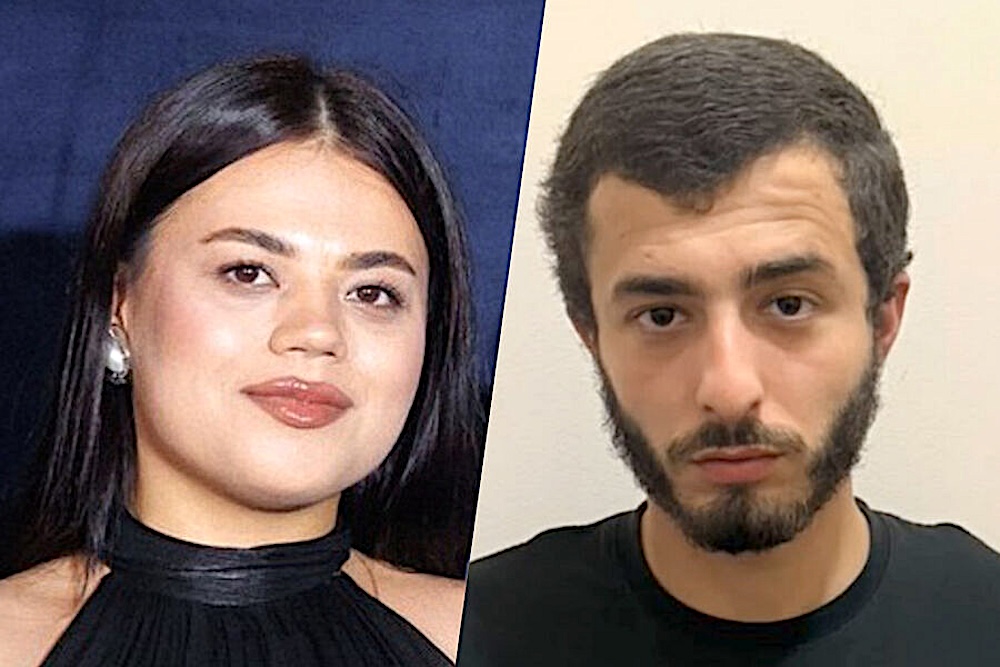
On 23 September, Ilham Aliyev pardoned French citizen Martin Ryan, who had been sentenced to 10 years in prison for espionage.
A day earlier, the European Union agreed, at France’s request, to remove Russian-Uzbek billionaire Alisher Usmanov from its sanctions list. According to the Financial Times, citing diplomatic sources, the two decisions form part of an agreement between Baku and Paris on the release of prisoners.
After years of confrontation over issues involving Armenia, Nagorno-Karabakh and France’s overseas territories, Baku and Paris reached an agreement on specific issues: France secured the release of its citizen, while Azerbaijan secured the lifting of European sanctions against the billionaire it had supported.
From a 10-year prison sentence to a pardon
The French citizen, identified in the pardon decree as Ryan Martin Richard, has been released from serving the remainder of his sentence. Authorities detained him on 4 December 2023, and on 16 March 2026 the Baku Court of Serious Crimes sentenced him to 10 years in prison.
According to the Azerbaijani side, Ryan, the head of Merkorama, was supposed to collect military and other information for France’s Directorate-General for External Security. Paris rejected the allegations. On 30 July, France’s Foreign Ministry condemned the appellate court’s decision to uphold the sentence, called the conviction arbitrary and demanded Ryan’s immediate release.
The 10-year sentence, which the court upheld in July, was therefore brought to an end in September by a presidential decision. Ryan’s fate took a decisive turn not in the courtroom, but as part of diplomatic negotiations over sanctions.
What did Paris do for Usmanov?
On 14 September, the Financial Times reported that France was seeking to have Usmanov removed from the EU sanctions list in exchange for the release of French citizens detained in Azerbaijan. Paris and Bratislava called for his sanctions to be lifted and vetoed the extension of the restrictions for another 12 months. The EU initially granted a one-week delay to allow negotiations to continue.
On 22 September, the sides reached a compromise: Mikhail Fridman was also removed from the sanctions list alongside Usmanov, while the remaining individual sanctions were extended for 36 months instead of the previous six. For Usmanov, this means the lifting of the asset freeze and EU travel ban.
The mechanism allowed Baku’s demand to reach the level of European policy. Azerbaijan, as a non-EU country, could not take part in the sanctions decision-making process. However, France’s interest in securing the return of its citizens allowed Paris to pursue this concession within the European Union.
Why is Usmanov important to Baku?
Azerbaijan’s support for Usmanov did not begin in recent days.
On 18 September, a senior Azerbaijani diplomat told Reuters that between November 2023 and March 2025, Baku and other members of the Organisation of Turkic States had sent letters supporting Usmanov to the leaders of the United States and European countries. The diplomat described him as a philanthropist who helps strengthen ties between the West, Central Asia and the Turkic world.
The same diplomat denied reports that Azerbaijan had pressured France. A French Foreign Ministry representative, meanwhile, declined to disclose details, saying the matter concerned national security.
On 21 September, Euronews also reported that Uzbekistan had played a role in reaching the agreement. According to the report, the proposed deal involved releasing two French citizens detained in Azerbaijan in exchange for removing Usmanov from the sanctions list, with Aliyev expected to sign a pardon decree. The EU made its sanctions decision the following day, after which Ryan received a presidential pardon. The events unfolded in the same sequence that Euronews had previously described.
Confrontation from Nagorno-Karabakh to New Caledonia
The political significance of the agreement becomes clearer against the backdrop of relations between Baku and Paris in recent years. France criticised Azerbaijan’s military actions in Nagorno-Karabakh and expanded defence cooperation with Armenia. Baku, in turn, viewed Paris’s military support for Yerevan as interference in the regional balance of power.
Azerbaijan also extended the confrontation to issues sensitive for France itself. The Baku Initiative Group, established in 2023, held events involving supporters of independence for New Caledonia, French Polynesia, Martinique and other territories. Links were established between these movements and Azerbaijani political structures.
When unrest broke out in New Caledonia in May 2024, France accused Baku of interference. Azerbaijan rejected the allegations. Changes to electoral rules and fears among the indigenous Kanak people of losing political influence lay at the heart of the domestic crisis. At the same time, the crisis became a new source of mutual accusations between Baku and Paris.
The current agreement points not so much to a resolution of these disputes as to the sides’ willingness to set them aside in order to achieve specific results. For Paris, the priority was securing the release of its citizen; for Baku, it was securing a decision on Usmanov, whom Azerbaijan had supported for years.
The cost of the concession for Europe
France is not the only party to face political costs from the agreement. Ukraine’s leadership opposed removing oligarchs from the sanctions list. Within the EU, there were also concerns that making exceptions to the bloc’s common sanctions policy for national interests could set a dangerous precedent.
The political outcome of these events is that the release of a prisoner in Baku became part of negotiations over European sanctions against Russia. France secured the release of its citizen, while Azerbaijan brought one of the EU’s most influential members into supporting a billionaire backed by Baku. This points more to diplomacy based on mutual concessions under pressure than to a restoration of trust between the two countries.
Aliyev pardons French citizen