

Top stories in Azerbaijan, Armenia, and Georgia from 28 September-2 October, 2026
 Live
Live




-
Friday, October 2, Azerbaijan. A trilateral meeting of the defence ministers of Azerbaijan, Turkey and Georgia opens in Baku today
-
Friday, October 2, Armenia. Azerbaijani serviceman detained in Armenia after crossing border and shooting woman in Syunik
-
Friday, October 2, Georgia. The Konrad Adenauer Foundation (KAS) is closing its office in Tbilisi
-
Thursday, October 1, Georgia. Journalist Mzia Amaglobeli, sentenced to two years in prison, receives Lech Wałęsa Solidarity Prize
-
Thursday, October 1, Armenia. US and Armenia move to practical steps on critical mineral extraction
-
Thursday, October 1, Azerbaijan. New Azerbaijani military equipment unveiled at ADEX-2026; agricultural machinery festival held in Zangilan district
-
Wednesday, September 30, Azerbaijan. ADEX-2026 defence industry exhibition opens in Baku; Infantino visits the city
-
Wednesday, September 30, Armenia. Rosatom in Yerevan presents Russian plan to build new nuclear power plant in Armenia
-
Wednesday, September 30, Georgia. Ex-PM Gharibashvili assesses his rule in latest prison letter, accuses opposition ex-PM Gakharia
-
Tuesday, September 29, Armenia. Overall positive PACE report on Armenia’s parliamentary elections
-
Tuesday, September 29, Azerbaijan. Court hearings continued in the “Meydan TV case”
-
Tuesday, September 29, Georgia. The EU is preparing individual roadmaps for Ukraine, Moldova, Montenegro and Albania, but Georgia is not on the list
-
Monday, September 28, Azerbaijan. Six years since start of Second Karabakh War marked as Day of Remembrance in Azerbaijan
-
Monday, September 28, Armenia. Social media erupted after Public Television aired no coverage of the 44-day war anniversary
-
Monday, September 28, Georgia. Georgia held memorial events marking the 33rd anniversary of the fall of Sokhumi
-
Top stories in Azerbaijan, Armenia, and Georgia from 23-25 September, 2026

-
Friday, October 2, Azerbaijan. A trilateral meeting of the defence ministers of Azerbaijan, Turkey and Georgia opens in Baku today
● Azerbaijan’s Prosecutor General’s Office said a conscript serving in a military unit in Lachin district left his unit without authorisation and was detained by Armenian authorities in Armenia. He had been wanted since 26 September. The Military Prosecutor’s Office has opened a criminal case. Azerbaijani state agencies are in contact with the Armenian side to establish all the circumstances.
● A delegation from the Council of the EU’s Working Party on Eastern Europe and Central Asia (COEST) is visiting Baku. At a meeting with Deputy Foreign Minister Yalchin Rafiyev, they discussed negotiations on a new EU-Azerbaijan bilateral agreement, as well as increased high-level contacts and expanding cooperation in energy, trade and transport. They also discussed Azerbaijan’s role in Europe’s energy security, prospects for increasing gas supplies and renewable energy projects, as well as the Azerbaijan-Armenia normalisation process.
● A trilateral meeting of the defence ministers of Azerbaijan, Turkey and Georgia opens in Baku today. All three ministers have arrived in Azerbaijan and visited Shusha in Karabakh together yesterday.
● ADEX 2026 defence exhibition continues in Baku, with 280 companies from 53 countries and 59 foreign delegations taking part. Azerbaijan’s Defence Industry Ministry said 130 locally produced items are displayed in a dedicated pavilion, including an armed ground robot, an unmanned ground kamikaze vehicle and a wheeled unmanned ground vehicle. The exhibition also features the BARS interceptor drone designed to neutralise enemy UAVs, the Boran drone and Qırat and Batur loitering munitions. A jointly developed Azerbaijani-Turkish attack UAV is also being presented for the first time.
● UK Defence Minister Vernon Coaker released a video message after visiting Baku, ADEX 2026 and meeting President Ilham Aliyev. “I am in Azerbaijan to deepen defence cooperation with a valued partner, continuing the work begun during my first visit in December 2025,” Coaker said. “Our strategic partnership will allow us to deepen cooperation in the most important areas — economic growth, security and innovation.” He added that he was proud that a delegation of 18 British companies was taking part in Azerbaijan’s defence exhibition for the first time.
● Joint Azerbaijan-Turkey-Uzbekistan military exercises, Strength of Unity 2026, have ended in Azerbaijan. Representatives from nine countries attended as observers.
● Russian President Vladimir Putin spoke about developing the North-South International Transport Corridor, which runs through Azerbaijan, saying Baku considers the project promising. Putin said Russia was ready to provide the necessary funding and that Iran now needed to complete its part of the work.
The North-South corridor starts in Russia and ends in India, passing through 11 countries. Its main advantage is a more than twofold reduction in distance and significantly lower container transport costs compared with the sea route through the Suez Canal. The route is based on a continuous railway line running from Russia’s Dagestan into Azerbaijan, south along the Caspian coast and onward to Iran. Currently, rail freight reaches a point on the Azerbaijan-Iran border and is transferred to road transport because the connecting railway section in Iran has not been completed.
Putin’s remarks came on the same day the US announced new sanctions on Iran, including against three major Iranian railway companies: Islamic Republic of Iran Railway Company, Raja Passenger Trains Company and Sherkat-E Rah Ahan-E Khamle-O-Naghle.
● Azerbaijan’s Energy Ministry said a meeting of the Azerbaijan-Greece intergovernmental commission was held successfully in Athens, co-chaired by Azerbaijani Energy Minister Parviz Shahbazov and Greek Deputy Foreign Minister Haris Theocharis. Since the Trans Adriatic Pipeline (TAP began operating in December 2020, Greece has received 6 billion cubic metres of Azerbaijani gas, while European countries have received 61.4 billion cubic metres. Trade between Azerbaijan and Greece grew by 27.6% in 2025 and by a further 25.35% in the first half of this year. The meeting highlighted Azerbaijan’s growing role in Europe’s energy security. The two sides signed a joint tourism action plan for 2026–2028.
● Energy Minister Parviz Shahbazov wrote on X: “Azerbaijan invites Greek companies to take advantage of the country’s favourable investment climate and regional transit opportunities, increase mutual investment and build long-term partnerships.”
● More than 70,000 Azerbaijani citizens have received free access to 21,000 online courses on Coursera, including AI programmes, under a government support programme. More than 3,000 courses have already been translated into Azerbaijani using AI. Azerbaijan has also signed an agreement with OpenAI that will allow more than 500,000 Azerbaijani students to study artificial intelligence.
● Cyber police have detained people involved in online casinos with a turnover of more than 5 million manats (about $3 million).
● The Günəş wedding venue in Kurdamir district has been closed following a mass food poisoning, and an investigation is under way. A total of 91 people were hospitalised after eating food served there.
● The Silk Road Swimming World Cup has opened in Baku. The competition runs from 1 to 3 October, with 216 athletes from 44 countries taking part.
● New verification rules have been introduced for online purchases of Baku-Tbilisi-Baku train tickets. Azerbaijani citizens must now verify their identity by entering the FIN code from their mygov ID account. The measure is intended to protect passengers’ interests and prevent possible violations. Foreign citizens must provide their country and phone number and verify the number with an OTP code.
● Another change on the Baku-Tbilisi-Baku route: from 1 November, four services will operate daily to meet growing demand, increasing the number of passenger seats by almost 50%. Tickets in standard class on the additional services will be 30% cheaper.
● Azerbaijan drew with Liechtenstein in a UEFA Nations League match in Baku. Azerbaijan have two points and sit second in the group, behind Lithuania on three points. Liechtenstein are bottom with one point.
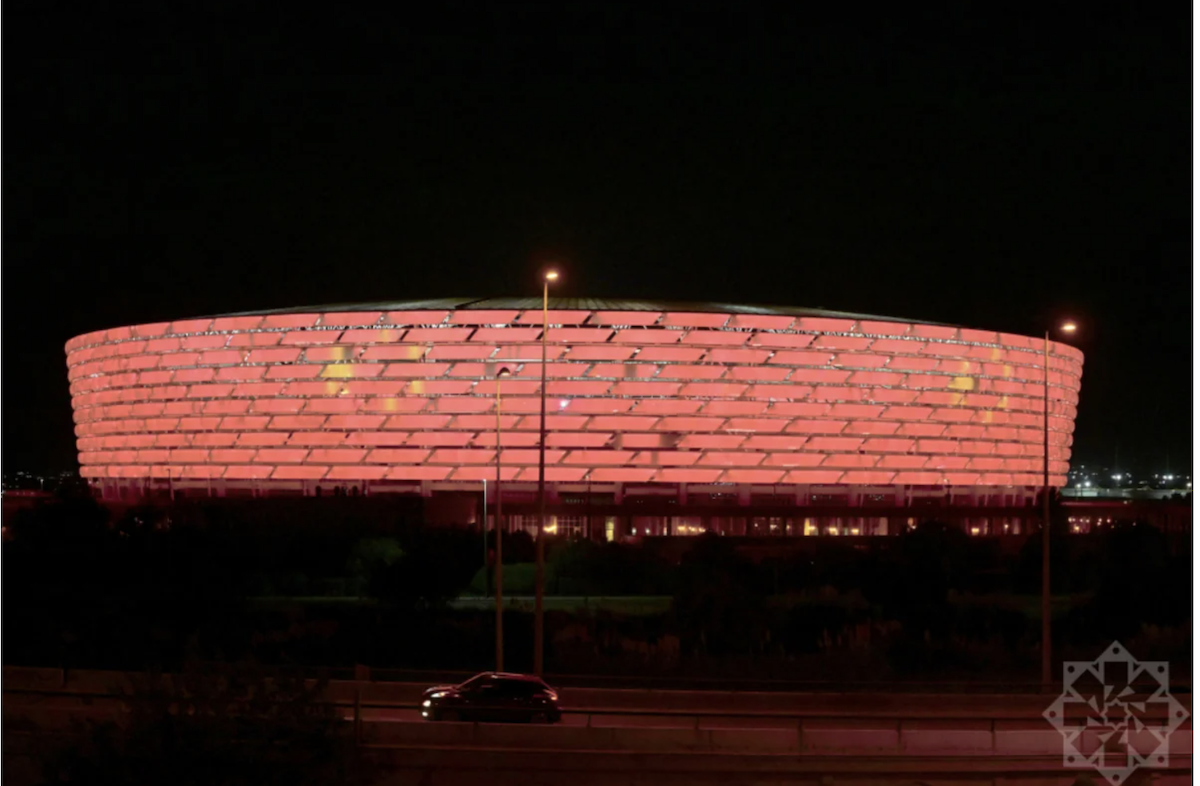
PHOTO: Baku Olympic Stadium illuminated in the colours of the Chinese flag to mark the 77th anniversary of the founding of the People’s Republic of China.
-
Friday, October 2, Armenia. Azerbaijani serviceman detained in Armenia after crossing border and shooting woman in Syunik
● An Azerbaijani serviceman has been detained in Armenia. According to the National Security Service, he illegally entered the country, broke into the home of a woman in Syunik and shot her in the leg. He then tried to flee but was detained. On 29 September, Azerbaijan’s State Security Service informed Yerevan that an Azerbaijani serviceman had left his unit without authorisation under unknown circumstances, and that he might have crossed into Armenia.
● The injured woman was taken to Sisian Medical Centre and later transferred to Yerevan. The same day, the medical centre reported that her children had also sought medical assistance for injuries. A child born in 2014 had a soft-tissue injury, while a child born in 2011 had a fracture of the right wrist.
● “This incident shows how unprotected our borders are,” said Ishkhan Saghatelyan, an MP from the opposition Armenia parliamentary faction. “It turns out that a lost Azerbaijani soldier crossed the border unhindered, reached an Armenian settlement and opened fire on an Armenian citizen. The most appalling and shameful thing is that we still do not know how long he could have moved freely around our country if this woman had not actually discovered him and taken the necessary action in self-defence,” he said. In his view, the government has only one option: arrest the Azerbaijani serviceman and exchange him for Armenians held in prisons in Baku.
● Anna Grigoryan, head of the same parliamentary faction, also called on the authorities not to hand over the serviceman detained in Syunik to Azerbaijan as a “gesture of goodwill”. “When an armed person enters your country and harms your fellow citizen, you cannot simply hand him over as a gesture of goodwill, forgetting that Armenian citizens are imprisoned in Baku. Especially those who write letters every day, speak about their situation and are subjected to torture,” Grigoryan said.
● Armenia ranks 13th among the safest countries in the world, Deputy Interior Minister Armen Ghazaryan said at a UN session.
● A project for rail and road links between Russia, Georgia and Armenia via Abkhazia has been presented in Moscow, according to Vector Caucasus. The initiative has been given the working name “Putin’s Path” and envisages restoring a transport route that existed during the Soviet era. Its authors propose viewing the project as part of a future unified transport and logistics system for the South Caucasus. Aram Safaryan, director of the Russian Studies Centre at Yerevan State University, said the restoration of the railway link through Abkhazia was back on the agenda because of a “significantly changed” political and geopolitical situation. He said the possibility of restoring the Moscow-Tbilisi railway via Abkhazia had already been discussed in 2016, but the initiative did not move forward. Safaryan now proposes viewing it not as a separate Russian project competing with other routes, but as part of a broader transport system for the South Caucasus.
● The US could eventually restrict transport along the Armenian section of the “Trump Route” (TRIPP) if Washington imposes relevant sanctions, Russian Security Council Deputy Secretary Alexei Shevtsov said. According to him, the agreement gives the US side significant powers within the joint company involved in implementing the project. “It has already been clearly established that all disputes concerning implementation of the agreement on the ‘Trump Route’ will be resolved under US and New York State law, while the contractor company will receive exclusive rights to use the land. This means that the Americans could eventually ‘filter’ cargo passing through the section under their control, or, roughly speaking, refuse to provide their services in a particular case,” Shevtsov said.
● Prime Minister Nikol Pashinyan has proposed introducing restrictions to prevent citizens from sending unfounded letters to the government. At a briefing, Pashinyan said he receives numerous appeals from citizens every day, some of which fall outside his remit. For example, people complain about the Court of Cassation, or family members turn to him over inheritance disputes. “A man complains that they are taking away his ‘grandfather’s land’. I ask him: what documents do you have for this land? It turns out he has no documents. So why is it ‘grandfather’s land’?” Pashinyan asked.
● Prime Minister Nikol Pashinyan met with White Kane, senior adviser at the White House Office of Faith-Based and Neighbourhood Partnerships. The importance of dialogue with the White House office dealing with these issues was emphasised.
● Nikol Pashinyan was asked under what circumstances Yerevan would join sanctions against Iran. “In our relations with friendly countries, we will do everything possible to preserve them. But there is a line we cannot cross — the risk of Armenia itself becoming subject to sanctions. If such a risk arises, we will have to make a decision,” the prime minister said.
● The abolition of funeral benefits in Armenia from 1 January will allow the minimum pension to increase by 1,000 drams (about $3), while the amount added for each year of employment will rise by 500 drams. Military pensions will also increase. Labour and Social Affairs Minister Arsen Torosyan explained that because the pension system uses complex formulas, it is not possible to give a specific figure for every pensioner. “But there will be an increase, and we will spend an additional 5.5 billion drams (about $15 million) on this,” Torosyan said.
● Representatives of the public organisation Union of Artsakh held a protest outside the government building. During the action, they handed the government a box containing 1,254 letters addressed to Armenians imprisoned in Azerbaijan. They also submitted an official petition addressed to Prime Minister Nikol Pashinyan.
-
Friday, October 2, Georgia. The Konrad Adenauer Foundation (KAS) is closing its office in Tbilisi
● The Konrad Adenauer Foundation (KAS) is closing its office in Tbilisi. The foundation sees the decision as a direct result of the “political and legal framework” created by the Georgian government and says that under these conditions it can no longer fulfil its core mission in Georgia. According to KAS, the government did not approve projects submitted by the foundation, as required under the new Law on Grants. The foundation says the German federal government also tried to help find a solution, but without success.
● The UK government has announced a new package of sanctions against Russia. The sanctions target four Georgian citizens — Nikoloz Mzhavanadze, Giorgi Iremadze, Mamuka Pipia and Paata Abuladze. According to the UK government, they are involved in spreading disinformation in support of the Kremlin. Sanctions have also been imposed on Marat Kambolov, the elected “president of South Ossetia”, Alan Gagloev, the former “president of South Ossetia”, and Russian political strategist Sergei Tolmachev. All three are linked to Georgia’s regions occupied by Russia. The new package includes 31 individuals, entities and vessels in total. Read more here
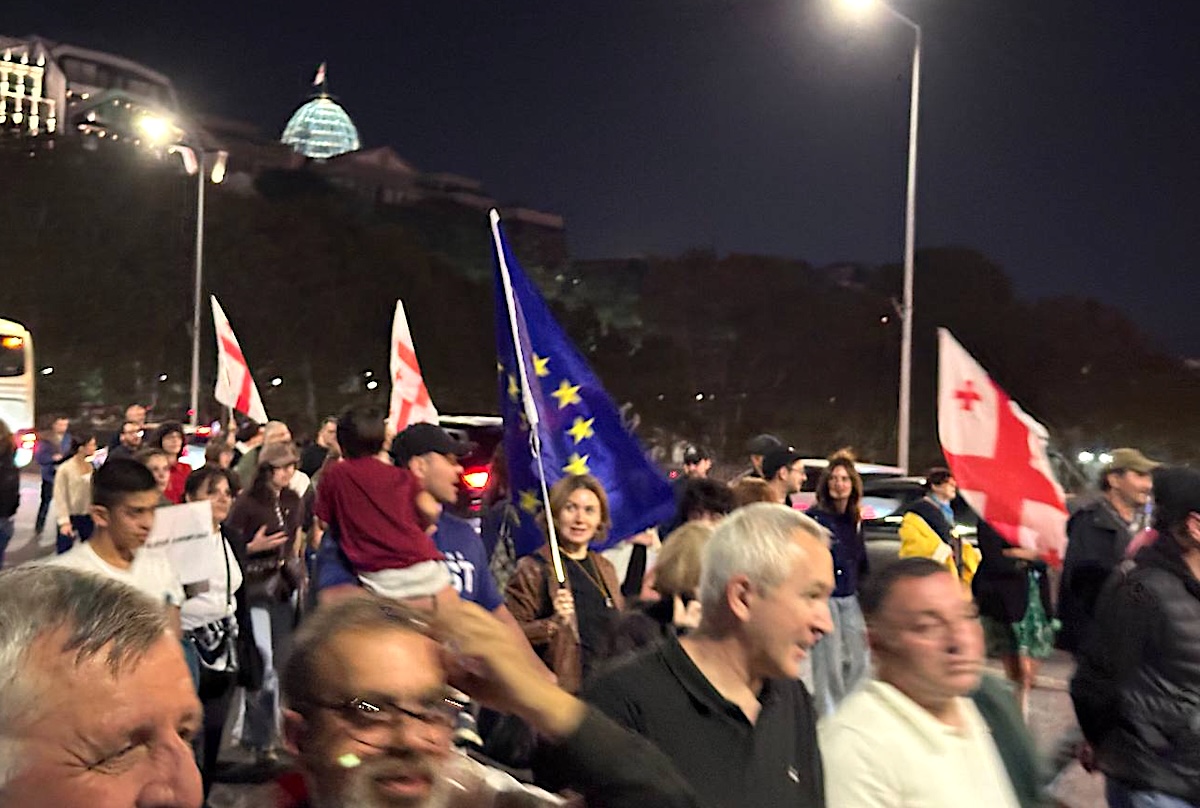
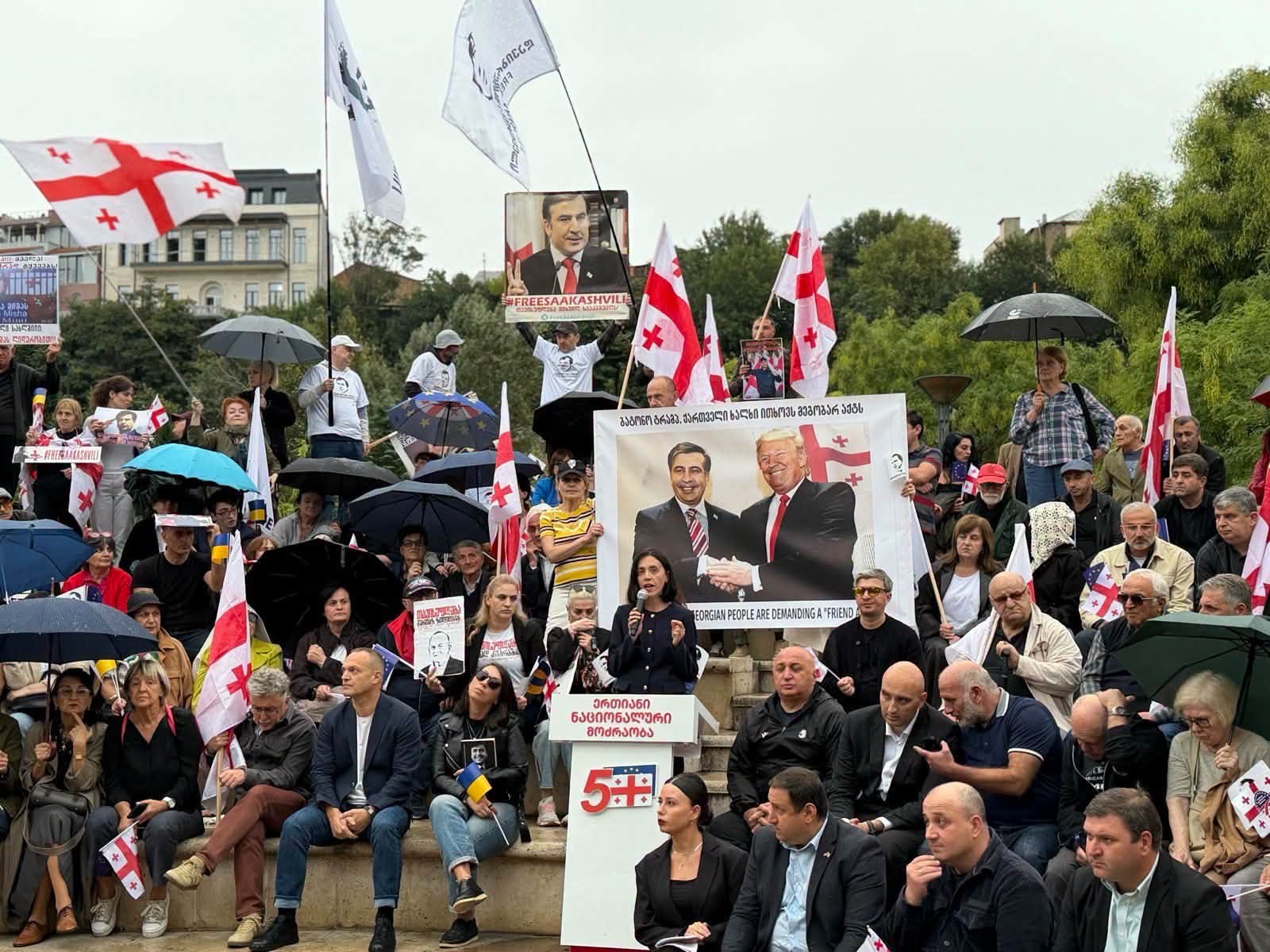
● On the fifth anniversary of former President Mikheil Saakashvili’s arrest, the United National Movement, founded by him, held a protest rally in Tbilisi’s Rike Park. Saakashvili also issued a statement from prison. He called his imprisonment “unjust captivity” and wrote that he remains optimistic five years on.
● The Foreign Ministry summoned Iranian Ambassador Seyed Ali Mojtaba Aghamiri over his statements about “reinterpreting” the history of Georgian Queen Ketevan, who was tortured to death in Iran in the 17th century and later recognised as a Christian martyr. Deputy Foreign Minister Alexander Khvtisiashvili told the ambassador that such initiatives go beyond his diplomatic mandate and create tensions in society. The authorities warned that they could take “additional measures” if similar incidents are repeated.
● The government administration published a photo showing Prime Minister Irakli Kobakhidze and US President Donald Trump shaking hands. The photo was reportedly taken at an official reception in New York on 22 September for leaders of countries attending the 81st session of the UN General Assembly.
● In 2027, pensions for people aged 70 and over will increase by 60 lari (about $23) to 555 lari (about $215), while pensions for those under 70 will rise by 20 lari to 390 lari (about $150). The 20% supplement for residents of mountainous regions will remain in place.
● According to Eurostat, 12,615 Georgian citizens have been forcibly returned from EU countries since the beginning of this year. In the first quarter, the figure was 10,475, putting Georgia second after Turkey by this measure. In the second quarter, 2,140 Georgian citizens were forcibly returned from the EU.
● A 13-year-old girl in Marneuli gave birth to twins, one of whom died. According to civic activist Samira Bayramova, the condition of the surviving newborn is critical. The Interior Ministry has launched an investigation under an article of the Criminal Code concerning sexual intercourse with a person under 16.
● Giorgi Udzilauri, a former senior official in the investigative service of the Finance Ministry who was arrested on espionage charges, said he is being held in the same cell as Russian citizen Mikhail Timofeev, who is awaiting extradition to Russia. According to Udzilauri, Timofeev is facing political persecution and a threat to his life in Russia. Udzilauri criticised the Georgian court’s decision and said Timofeev’s extradition to Russia would violate the European Convention on Human Rights.
● Public Broadcaster has still not met the demands of family members of people detained during a protest outside Public School No. 81, who have been staging a 24-hour protest. The protesters are demanding that the school be renovated and that children be allowed to return, as they are currently either studying in shifts, transferred to other schools or receiving remote education. They have demanded airtime and meetings with the broadcaster’s management. The protesters are angry that Public Broadcaster has not even reported on their protest in its news programme and say they will continue the action.
● The Israeli Embassy in Georgia said Israeli doctor of Georgian origin Shota Musaev was among the passengers who subdued a terrorist who attacked the pilot on a Flydubai flight. According to the embassy, he provided medical assistance to the seriously injured pilot and stopped severe bleeding. The aircraft, carrying 174 passengers, made an emergency landing in Saudi Arabia. The circumstances of the attack are being investigated by Saudi authorities.
● Metropolitan Arseny of Austria and Hungary, a representative of the Ecumenical Patriarchate, visited the Georgian Patriarchate with a 50-member delegation. The meeting reportedly focused on relations between the two churches and support for Georgian parishes in Austria and Hungary.
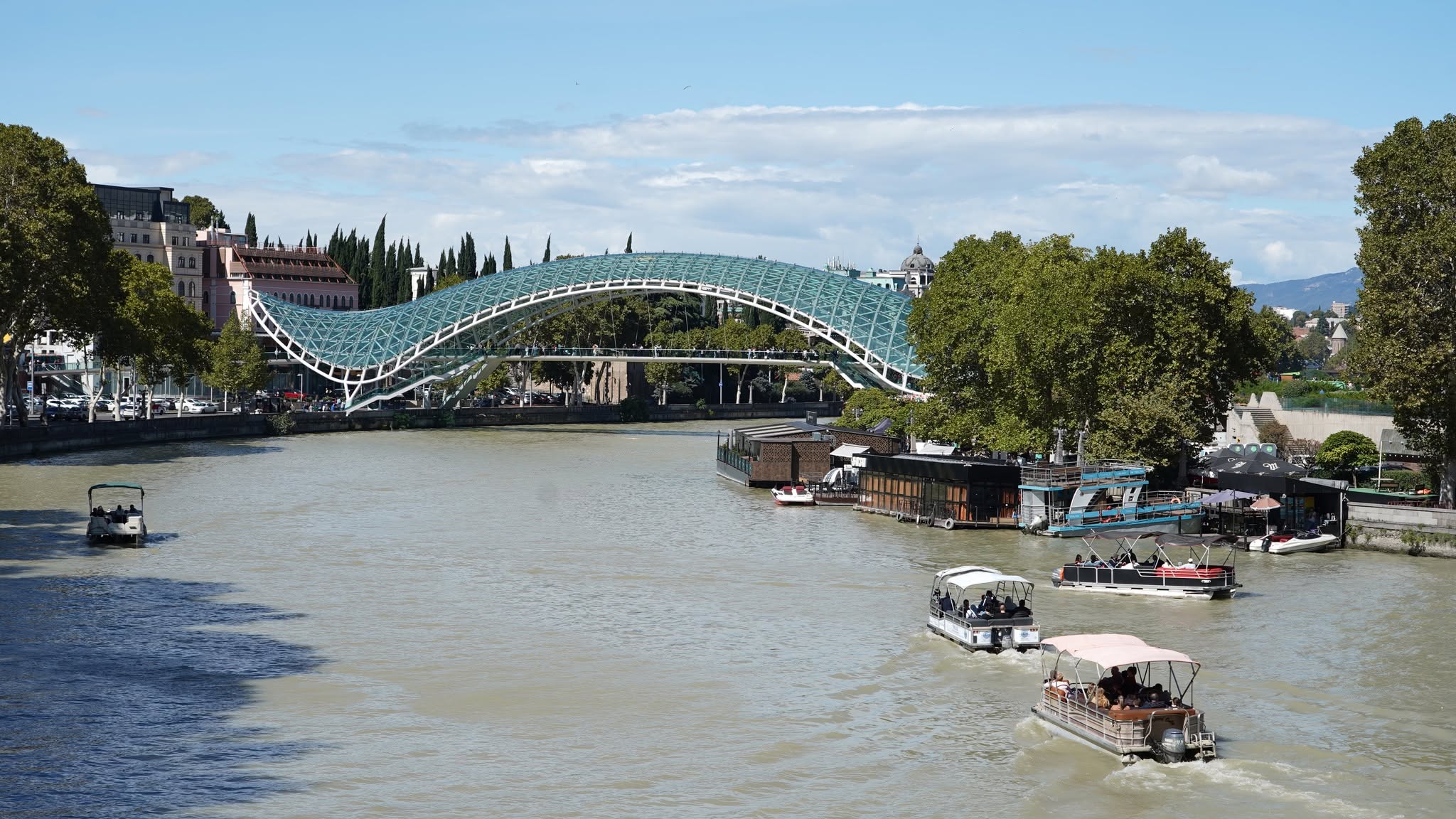
● Traffic restrictions are gradually being introduced in central Tbilisi for the Tbilisoba festival. Traffic for cars and public transport has been partially restricted on several streets and squares. According to the city authorities, celebrations will take place in Rike Park, Orbeliani and Gudiashvili squares, Legvtakhevi, Europe Square and on Metekhi Bridge. The ceremony honouring honorary citizens of Tbilisi is scheduled for 4 October.
📸 PHOTO: Rally in support of Mikheil Saakashvili
-
Thursday, October 1, Georgia. Journalist Mzia Amaglobeli, sentenced to two years in prison, receives Lech Wałęsa Solidarity Prize
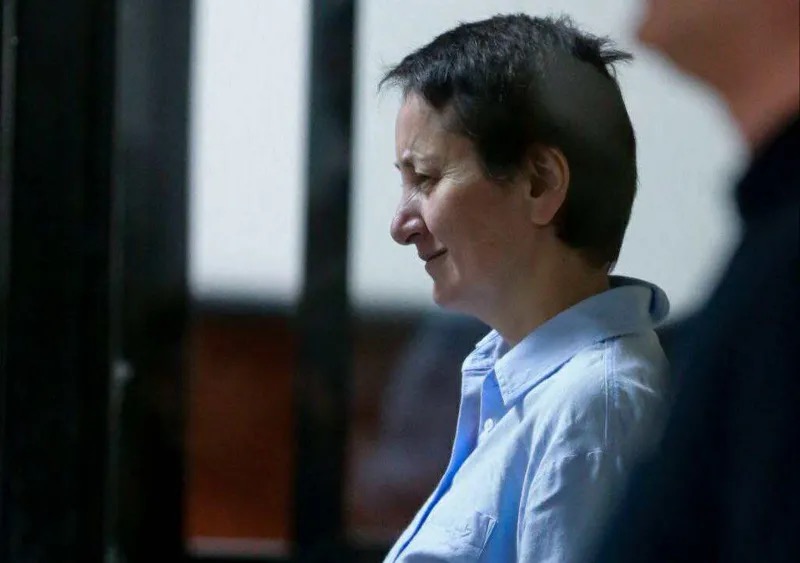
● Imprisoned Georgian journalist Mzia Amaglobeli, founder of popular outlets Batumelebi and Netgazeti, has received the Lech Wałęsa Solidarity Prize. The award ceremony took place in Warsaw on 30 September. Polish Foreign Minister Radosław Sikorski presented the award to Batumelebi representative Irma Dimitradze. Lech Wałęsa himself attended the ceremony.
Amaglobeli was sentenced to two years in prison in August 2025 for slapping a police officer who had insulted her. International organisations and diplomatic missions have condemned the sentence as excessive and called for her immediate release. Human rights groups say the case is politically motivated.
● Georgia is running for the OSCE chairmanship in 2027, although, according to the rapporteur, the EU does not support its candidacy. Cyprus is currently the only official candidate and is backed by most EU countries, while Turkey is blocking its candidacy. An EU official told the publication that Brussels is not considering alternative candidates. The issue could be raised at the OSCE Ministerial Council meeting in Lugano on 3–4 December.
● The draft 2027 state budget has been submitted to parliament. The basic salary in the public sector will rise to 1,735 lari (about $670), with overall public-sector salaries increasing by 8.4%. Pensions for people aged 70 and over will rise by 60 lari (about $25) to up to 555 lari (about $215). Pensions for those under 70 will rise by 20 lari (about $8) to up to 390 lari (about $150). Consolidated budget revenues are projected at 37.531 billion lari (about $15 billion). Parliament is expected to approve the final budget in December.
● Tbilisi Court of Appeals has upheld the sentences of Russian citizens Anastasia Zinovkina and Artem Gribul, who were each sentenced to eight years and six months in prison for acquiring and possessing a particularly large quantity of drugs. They deny the charges and say police planted the drugs in Tbilisi because of their participation in pro-European protests. The prosecution denies this.
● Former Interior Minister Vakhtang Gomelauri is testifying in the trial of former Interior Minister and Prime Minister Giorgi Gakharia, now an opposition leader living abroad. Prosecutors accuse Gakharia of abuse of office in 2019 over his decision, allegedly made without consulting other government agencies, to establish an additional police checkpoint near the occupation line in the Georgian-Ossetian conflict zone. Prosecutors say this sharply escalated tensions and created a risk of renewed violence. The charge carries a prison sentence of three to five years. Read more here
● The Education Ministry has issued a clarification amid frequent protests over school closures and the transfer of students to other schools. It denies reports that school premises could be sold off and says closure does not automatically mean demolition and construction of a new building. Teaching in alternative premises is temporary and related to student safety, the ministry said.
● Relatives of parents and students detained during protests over the closure of dozens of schools are holding a 24-hour protest outside Public Broadcaster. They are demanding a meeting with the broadcaster’s representatives and management. The families say they want to discuss the detainees’ cases live on air and present their position to the public. A similar protest was held in June.
● Protests have erupted in Georgia’s Women’s National League over allegations of sexual abuse. Several teams, including reigning champions Lanchkhuti, are refusing to play matches in solidarity with a 20-year-old footballer from Nike Luso. She says she was sexually harassed by the club’s former president, Turkish businessman Mehmet Uyar. A court fully acquitted him on 22 September. Nike Luso’s management denies the allegations and plans to sue for defamation, saying it has documents and video recordings proving the claimant’s testimony was false. The club says she acted in retaliation after her contract was not renewed. The Georgian Football Federation has not commented.
● TeleImedi, a business partner of pro-government broadcaster Imedi, ended 2025 with a loss of almost 500 million lari (about $195 million). Its auditor cited UK sanctions imposed on the broadcaster in February 2026 over the dissemination of false information and pro-Russian propaganda. The auditor warned of significant uncertainty over the company’s ability to continue operating. TeleImedi management says it expects to secure sufficient funding in the future.
● The National Bank is tightening rules on lending to individuals. From 1 February 2027, the income threshold currently applied to borrowers earning up to 1,500 lari (about $580) will also apply to those earning up to 2,000 lari (about $770). The threshold is later expected to rise to 2,500 lari (about $1,000). The National Bank says the aim is to reduce the risk of excessive indebtedness.
● Georgia’s Competition and Consumer Protection Agency has launched an investigation into the online food delivery market following a complaint by Yandex. The company alleges that Wolt and Glovo have agreements with some restaurants restricting their cooperation with other platforms and making it harder for new players to enter the market. No violation has been established at this stage.
● Bera Ivanishvili, son of Georgian Dream founder and billionaire Bidzina Ivanishvili, plans to sue several media outlets that have accused him of protecting so-called call centres, ordering people’s detention and involvement in illegal deals.
● In a statement from prison, convicted former President Mikheil Saakashvili called Georgia a “country abandoned”. He accused Russia of trying to adapt Georgian history to its own narratives and, in this context, referred to statements by Iran’s ambassador and historical disputes with Azerbaijan.
● Six people, five of them minors, were injured when a lift collapsed in a residential building in Tbilisi’s Sanazona district. According to Interpressnews, witnesses said the lift fell from the ninth floor. One young man suffered a broken leg, while three of those injured were taken to hospital.
● Russian citizen Alexander Popov was sentenced in Tbilisi to 15 days of administrative detention for urinating from a café balcony towards people below. According to Formula TV, he will be deported from Georgia after serving his sentence and banned from entering the country for three years.
-
Thursday, October 1, Armenia. US and Armenia move to practical steps on critical mineral extraction
● The US and Armenia are moving from agreements to practical steps on critical minerals, advancing implementation of their memorandum of understanding on the sector, the US Embassy said. Paul Hooper, a State Department official from the Bureau of Economic and Business Affairs, met Armenian government officials, businesspeople and civil society representatives to discuss the needs and opportunities of Armenia’s mining sector and possible areas of US technical assistance. “Together, we are building reliable and diversified critical mineral supply chains, promoting prosperity and strengthening the US-Armenia strategic partnership,” the embassy said.
● The EU Delegation in Armenia announced the launch of EU4Culture II. “Building on the success of its first phase, the programme will support creative regions, communities and cultural sectors in Armenia, fostering new ideas and opportunities,” it said.
● Armenian companies Davaro and Apricot signed a strategic partnership agreement covering robotic and unmanned technologies, digital control systems and advanced solutions for training military specialists.
● Aram Vardevanyan, deputy speaker of parliament from the opposition pro-Russian Strong Armenia party, spoke at PACE about what he described as the International Criminal Court’s inaction over events in Karabakh. “The forced expulsion of Armenians from the region in September 2023 is ethnic cleansing. Does the court’s inaction not threaten its authority and the principles of international justice?” Vardevanyan said. He argued that the international community had remained a passive observer of events in Karabakh between September 2020 and September 2023.
● An Armenian citizen has been detained in Georgia on suspicion of damaging a bust of Heydar Aliyev in Tbilisi. He is being held in pre-trial detention and charged with vandalism. The suspect is reportedly 40 years old and had arrived in Georgia as a tourist.
● A young man suspected of drug dealing was detained near School No. 46 in Yerevan. Footage shared on social media shows the suspect being restrained with his hands tied with a belt. A voice can be heard saying: “The people gathered here should tear you apart.”
● Relatives of missing persons met members of a parliamentary commission. They agreed to continue cooperation and develop a more specific agenda based on the proposals presented.
● Several days after the controversy, the Public Broadcaster Council decided to “study the circumstances” surrounding the channel’s failure to broadcast relevant coverage on 27 September, the day marking the start of the Second Karabakh War, instead showing a concert by popular singer Tata Simonyan. The broadcaster’s management had previously acknowledged the mistake and apologised to the public. The council said it would take appropriate measures within its authority to prevent a lack of responsibility towards issues of particular sensitivity to society.
● Armenia has launched an EU Twinning programme supporting universal health insurance reform.
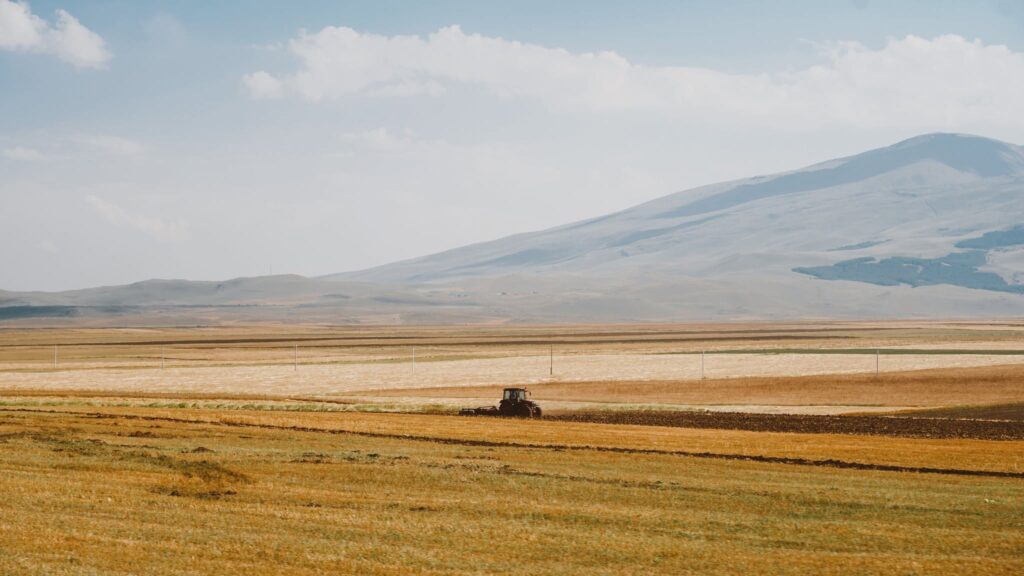
● Purebred Holstein heifers have been imported from Germany to Armenia by air. The Economy Ministry said this was the first time breeding cattle had been imported into Armenia by air. The shipment was organised by the Yeremyan group of companies. A total of 2,785 head of breeding cattle have now been imported into Armenia.
● A Juventus football academy and the Freedom Arena sports complex have officially opened in Yerevan.
-
Thursday, October 1, Azerbaijan. New Azerbaijani military equipment unveiled at ADEX-2026; agricultural machinery festival held in Zangilan district
● Turkey and Azerbaijan have unveiled their jointly produced Hürkuş trainer aircraft for the first time. The presentation took place at the ongoing ADEX-2026 defence exhibition in Baku. The 15th Securex Caspian security and rescue equipment exhibition is also being held. This year’s events bring together 53 countries and 280 companies and organisations from 30 countries.
● Several new examples of Azerbaijani military equipment are also being presented at ADEX-2026 for the first time.
• The Arrow 3 loitering munition is designed to strike targets at distances of up to 150–200 km.
• The Boran drone is designed to deliver shells and hand grenades to targets.
• KASIRGA is a vertical take-off attack UAV developed by Bayraktar Teknoloji, an Azerbaijani company owned by Turkish defence firm BAYKAR.
• The new AZ-4 assault rifle has a 5.56×45 mm calibre and is produced to NATO standards.
• The SIQR01 and SIQR02 are armed unmanned ground vehicles with a payload capacity of more than 600 kg.
● Turkey and Azerbaijan have signed defence deals worth $500 million, according to Turkey’s Defence Industry Agency.
● Azerbaijani President Ilham Aliyev met UK Defence Minister Vernon Coaker, who is attending ADEX for the first time. According to a press release, Aliyev said a new chapter was opening in Azerbaijan-UK relations, focused on defence industry cooperation. Coaker said Azerbaijan was a very important country for the UK and stressed London’s interest in continuing the friendship.
● The US Embassy said on X that Chargé d’Affaires Amy Carlon visited ADEX-2026 and Securex Caspian 2026. It noted the broad US participation, including first-time exhibitors Lockheed Martin, Northrop Grumman, Ondas, SIG SAUER, Vantor, Persistent Systems, Motorola, L3Harris, Curtiss-Wright and Space Eyes. “Under our Strategic Partnership Charter, the US and Azerbaijan continue to expand cooperation in defence and security,” the embassy said.
● Slovakia and Azerbaijan are discussing expanded defence industry cooperation, including drones. Slovakia has already signed a contract with Azerbaijan to supply fully automated mortars, Slovak Defence Ministry defence policy director Robert Bestro told journalists at ADEX-2026. He said Slovakia had significant experience in producing artillery systems and ammunition, but was interested in Azerbaijan’s experience in newer technological fields.
● During ADEX-2026, Azerbaijani Defence Minister Zakir Hasanov met his counterparts from the UK, Slovakia and the UAE, as well as a Russian Defence Ministry delegation.
● Azerbaijan, Uzbekistan and Turkey have held joint air force exercises to destroy ground targets as part of the ongoing Strength of Unity 2026 military drills in Azerbaijan.
● A delegation from Iran’s armed forces arrived in Baku for ADEX-2026. Azerbaijan’s chief of general staff met his Iranian counterpart. The Iranian delegation is also expected to meet observers invited to the Strength of Unity 2026 military exercises.
● Azerbaijan and Uzbekistan signed a bilateral military cooperation plan for 2027.
● The Raoul Wallenberg Centre for Human Rights has expressed concern over the health of detained Meydan TV journalist Aytaj Tapdig, who suffers from a deviated nasal septum and related chronic breathing problems. The organisation says her condition has deteriorated in detention, but she has been denied an ENT consultation and access to MRI or CT scans. Human Rights Watch previously reported similar concerns. The RWCHR says her detention is linked to her journalism and called on Azerbaijani authorities to drop the charges against her and other journalists and release them.
Twelve people are on trial in the Meydan TV case on charges including illegal entrepreneurship, smuggling, tax evasion, document forgery and money laundering. The journalists deny the charges and link their arrests to their professional activities and critical reporting.
● Azerbaijan Investment Holding and China’s Silk Road Fund are creating a joint investment fund with total capital of about $1 billion. It will finance projects in Azerbaijan and other countries participating in China’s Belt and Road Initiative.
● Serbia and Azerbaijan have signed a shareholders’ agreement to build a new 500 MW combined-cycle gas power plant in the Serbian city of Niš. A joint venture has been established between Serbia’s state energy company EPS, gas company Srbijagas and Azerbaijan’s state oil company SOCAR. The two sides will each hold a 50% stake.
● Azerbaijan and Greece held a meeting of their joint commission on economic, industrial and technological cooperation in Athens. Azerbaijani Energy Minister Parviz Shahbazov said the Southern Gas Corridor provides the strategic basis for energy cooperation between the two countries. Azerbaijan supplied around 700 million cubic metres of gas to Greece in the first eight months of this year. The meeting also discussed Azerbaijan’s offshore wind potential in the Caspian Sea and opportunities to export electricity to European markets.
● Prosecutor General Kamran Aliyev is in Russia attending a meeting of the CIS Council of Prosecutors General. He met Russian Prosecutor General Alexander Gutsan, and the two sides signed a bilateral cooperation programme for 2027–2028. Azerbaijan’s military prosecutor Bahruz Ahmadov also held meetings with his Russian and Chinese counterparts.
● A person suspected of damaging a bust of Azerbaijan’s national leader Heydar Aliyev has been detained in Tbilisi. The suspect is reportedly an Armenian citizen, a man aged over 40 who had arrived in Georgia as a tourist and had no close ties to the country. A court ordered his pre-trial detention. The preliminary hearing is scheduled for 12 November. The bust is currently covered, so the extent of the damage cannot be assessed visually. According to available information, part of the face was damaged. Georgia’s Interior Ministry and Prosecutor’s Office have provided no further details.
● Nigar Ramazanova of Azerbaijan’s National NGO Forum accused Armenia of withholding information and coordinates of mass graves in territories retaken by Azerbaijan. Speaking at the UN Human Rights Council in Geneva, she called for Armenia to fulfil its international obligations and provide the necessary maps. Ramazanova also said Armenia had systematically laid mines in Azerbaijani territories during the decades of occupation, creating a long-term humanitarian threat.
● Azerbaijan and Jordan have approved a full mutual visa-free regime.
● The Azerbaijani ombudsman’s salary will rise from 3,060 manats (about $1,800) to 12,000 manats (about $7,000). Several other senior officials, including the chair of the Central Election Commission, have received similar salary increases this year. Current Ombudsman Sabina Aliyeva has held the post since 2019. She is married to Siyavush Novruzov, a parliamentary committee chair and MP from the ruling New Azerbaijan Party. Human rights groups regularly criticise the ombudsman’s annual reports, including over what they say is a lack of response to reports of torture in detention. The ombudsman’s office generally rejects the allegations as unfounded.
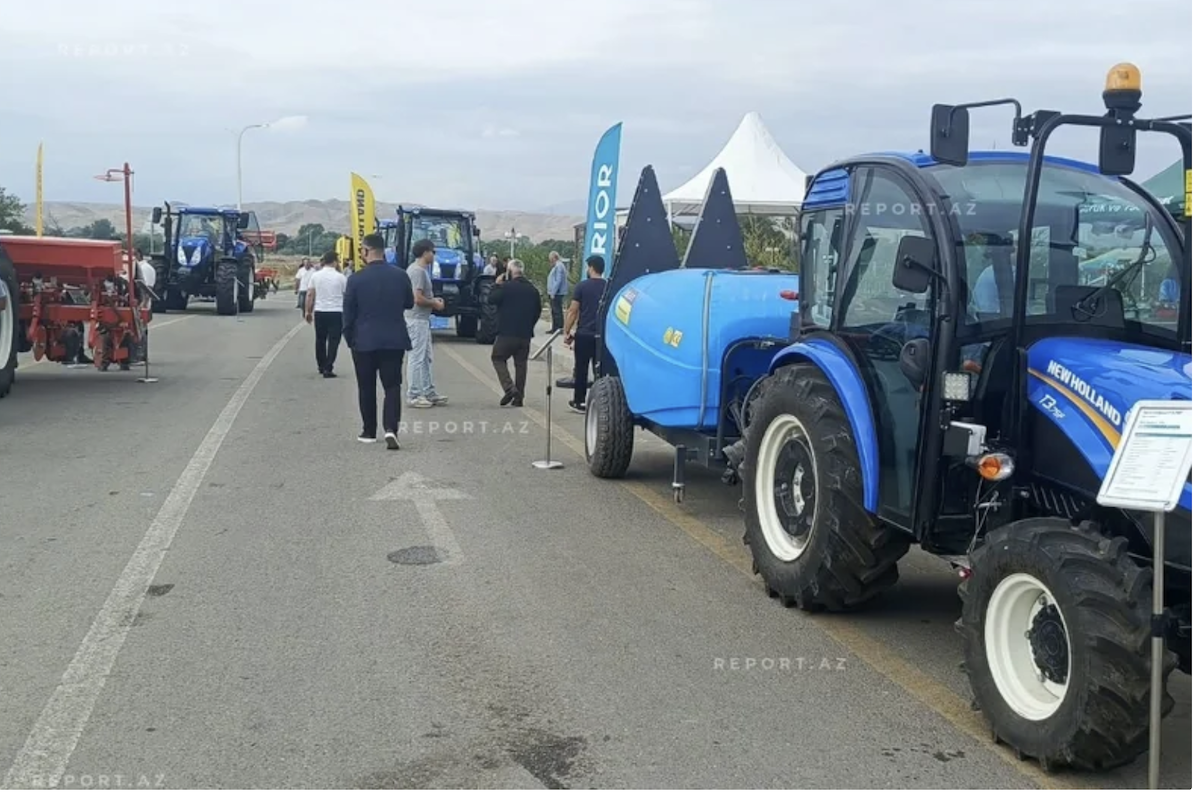
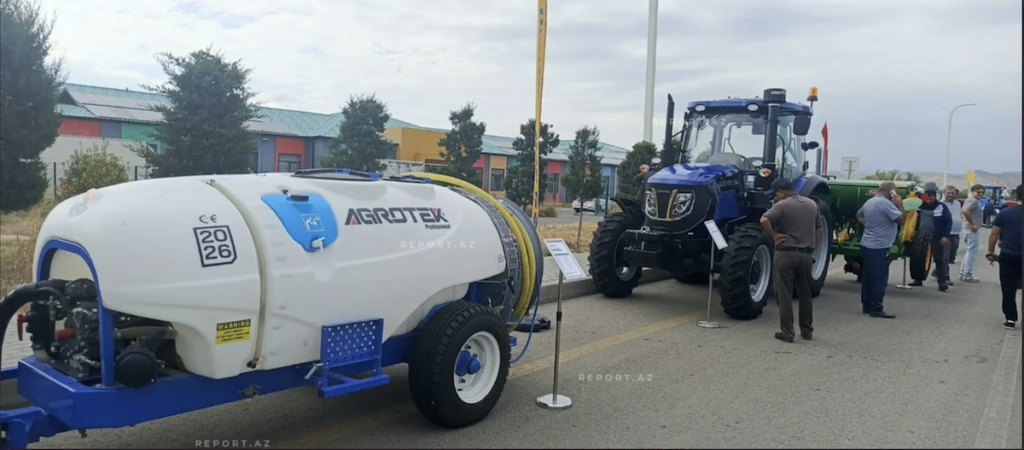
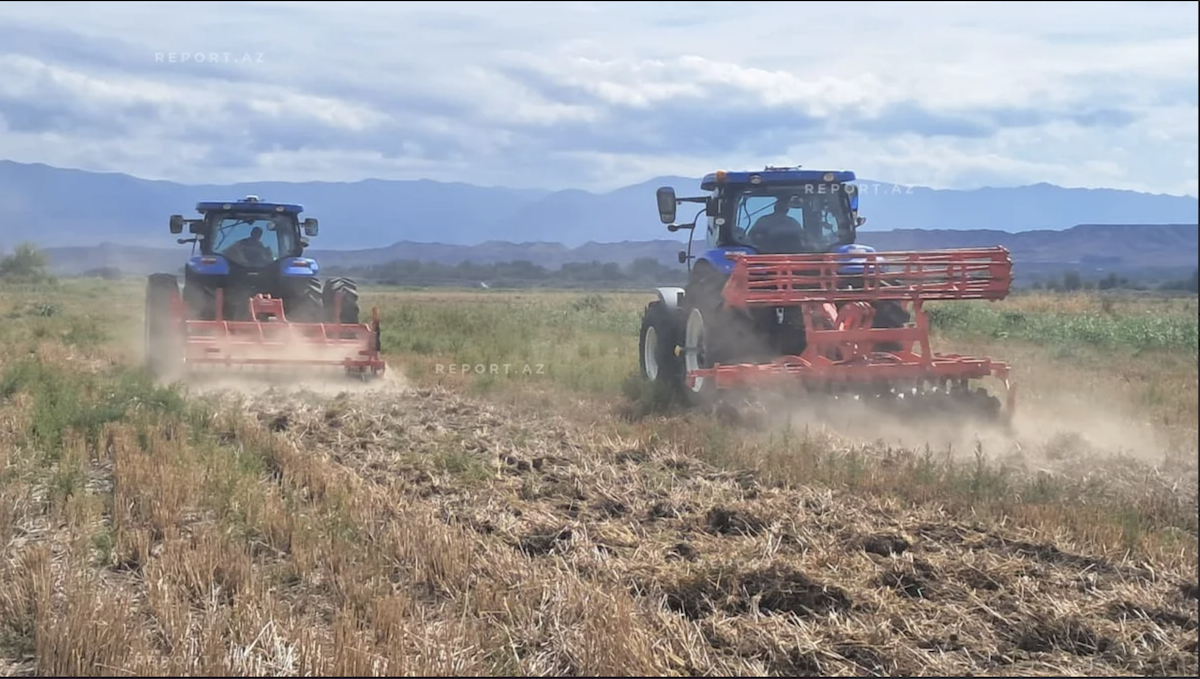
● The first agricultural machinery festival is taking place in Agaly village, Zangilan district (pictured). Tractors, ploughs, soil compactors, sprayers, combine harvesters and off-road vehicles from various manufacturers are on display. Farmers are being offered special purchase terms. The festival is called “Return to Karabakh”.
● The Swimming World Cup will take place in Baku’s Aquatics Palace from 1 to 3 October.
● More than 50 people, including seven children, have been hospitalised after a mass food poisoning at a wedding in Kurdamir. An investigation is under way.

-
Wednesday, September 30, Azerbaijan. ADEX-2026 defence industry exhibition opens in Baku; Infantino visits the city
● Deputy Prime Minister Shahin Mustafayev is visiting Tehran at the head of an official delegation. He met Iranian President Masoud Pezeshkian. The two sides stressed that longstanding historical and cultural ties provide a solid foundation for friendly and good-neighbourly relations. They discussed prospects for expanding cooperation in trade, transport and energy.
● Shahin Mustafayev rejected suggestions that Azerbaijani territory could be used against Iran during a meeting in Tehran with Mohsen Rezaei, secretary of Iran’s Supreme National Security Council, Iranian media report. Mustafayev stressed that Iran is a friendly country for Azerbaijan. According to reports, Rezaei said US and Israeli attacks on Iran violated all norms of international law and that Iran was firmly defending itself.
● Azerbaijani delegation led by Shahin Mustafayev took part in a meeting of the co-chairs of the joint commission on economic cooperation.
● President Ilham Aliyev called Iranian President Masoud Pezeshkian to congratulate him on his birthday. The two also stressed the importance of their recent meeting in Bishkek.
● Economy Minister Mikayil Jabbarov presented Azerbaijan’s transport and logistics potential at a seminar held as part of the 11th Annual Meeting of the Asian Infrastructure Investment Bank in Doha.
● The international ADEX-2026 defence industry exhibition is taking place in Baku from 30 September to 2 October.
● Slovak Defence Minister Robert Kaliňák told journalists in Baku that around 15 Slovak companies are taking part in ADEX-2026, with Slovakia presenting a national pavilion. “ADEX has become a very important defence industry exhibition not only in this region but on a broader scale,” Kaliňák said. He added that he was due to hold talks with several defence ministers attending ADEX-2026.
● Robert Kaliňák said the exhibition would feature the first joint Slovak-Azerbaijani defence product — an automated mortar system.
● Robert Kaliňák said Slovakia was interested in studying Azerbaijan’s experience with unmanned aerial vehicles. “We have already conducted studies and are convinced that your products are very good and meet our requirements,” he said. Kaliňák also said bilateral defence cooperation was already advancing in the areas of howitzers and mortars. Azerbaijan has already received Slovak-made howitzers, he said, adding that this area of cooperation “will continue”. He is due to meet Azerbaijan’s Defence Industry Minister Vugar Mustafayev on Wednesday to discuss further cooperation.
● Robert Kaliňák spoke at an event marking Slovakia’s Constitution Day and Armed Forces Day, saying: “Azerbaijan has demonstrated that it is capable of defending its national interests and territory. The concepts of sovereignty, the Constitution, identity, freedom and democracy take on particular significance when viewed through the experience of Azerbaijan. […] I would also like to congratulate Azerbaijan on its 30-year struggle, which ultimately ended in success.” Kaliňák also said Europe’s current security situation was difficult and that Slovakia was therefore sending troops to support its friends in Poland and Romania.
● Defence Minister Zakir Hasanov held meetings with Sudan’s defence minister and the chairman of Belarus’ State Military-Industrial Committee, who travelled to Baku to attend ADEX-2026. They discussed opportunities to expand military and military-technical cooperation.
● Ten private companies operating in Azerbaijan’s non-oil sector have more than doubled their non-oil exports since the beginning of the year, according to the Centre for Analysis of Economic Reforms and Communication. Together, they exported goods worth $697.1 million, an increase of $397.67 million from the same period last year. Azerbaijan International Mining Company Limited was the largest non-oil exporter among local private companies, followed by Prime Cotton and the Azerbaijan Sugar Production Association.
● The Washington Examiner published an article arguing that Azerbaijan-Armenia relations have changed completely, while Europe’s approach to the South Caucasus continues to be based on earlier assumptions. In May, President Ilham Aliyev addressed the European Political Community summit in Yerevan by video link from Baku — something that would have seemed unthinkable just a few years ago. Aliyev accused the European Parliament of trying to derail the peace process. The author argues that the fact that the Azerbaijani president criticised Europeans rather than Armenia in his address reflects major changes that Europe does not always recognise.
The article recalls that after the 44-day war in 2020, which resulted in Azerbaijan restoring control over Karabakh, the two sides moved towards a peace agreement, while European countries focused largely on the rights and security of Karabakh Armenians and sought to promote a special political status for the region.
The author also points to what they describe as a different approach by some European capitals: they firmly support Ukraine’s territorial integrity within its 1991 borders, while in Azerbaijan’s case they viewed the same issue as something that should be negotiated between Azerbaijan and Armenia. In the author’s view, this contributed to declining trust in European mediation. However, The Washington Examiner says Europe still has an opportunity to play a role in completing the Azerbaijan-Armenia peace process.
● Prosecutor General Kamran Aliyev is visiting Moscow. He reportedly presented a medal to Russian Supreme Court Chairman Igor Krasnov as a symbol of bilateral relations based on strategic partnership and allied cooperation.
● Economist Gubad Ibadoghlu, who is under house arrest, has been allowed to travel to Germany for medical treatment and arrived in Berlin on Tuesday. He told the Azadliq newspaper that he may need open-heart surgery. Ibadoghlu said the restrictions imposed on him remain in place, including a pledge not to leave his place of residence.
Ibadoghlu was arrested in Azerbaijan in July 2023. He was initially charged with producing and distributing counterfeit money, followed by charges of possessing and distributing materials of a religious extremist nature. In April 2024, he was transferred to house arrest because of health problems, and the measure was later replaced by police supervision. Shortly afterwards, Ibadoghlu announced the suspension of the activities of his Azerbaijan Democracy and Prosperity Party.
● An exhibition of Azerbaijani carpets has opened at the Vatican as part of the “Heavenly Religions” project, dedicated to Judaism, Christianity and Islam. Speaking at the opening ceremony, Raffaella Petrini, president of the Governorate of Vatican City State, said the exhibition creates opportunities for interfaith dialogue and is another confirmation of the positive nature of relations between Azerbaijan and the Vatican. Amina Malikova, director of the National Carpet Museum, said 28 weavers had spent eight years creating unique works for the “Heavenly Religions” project, marking the beginning of a new era in Azerbaijani carpet-making.
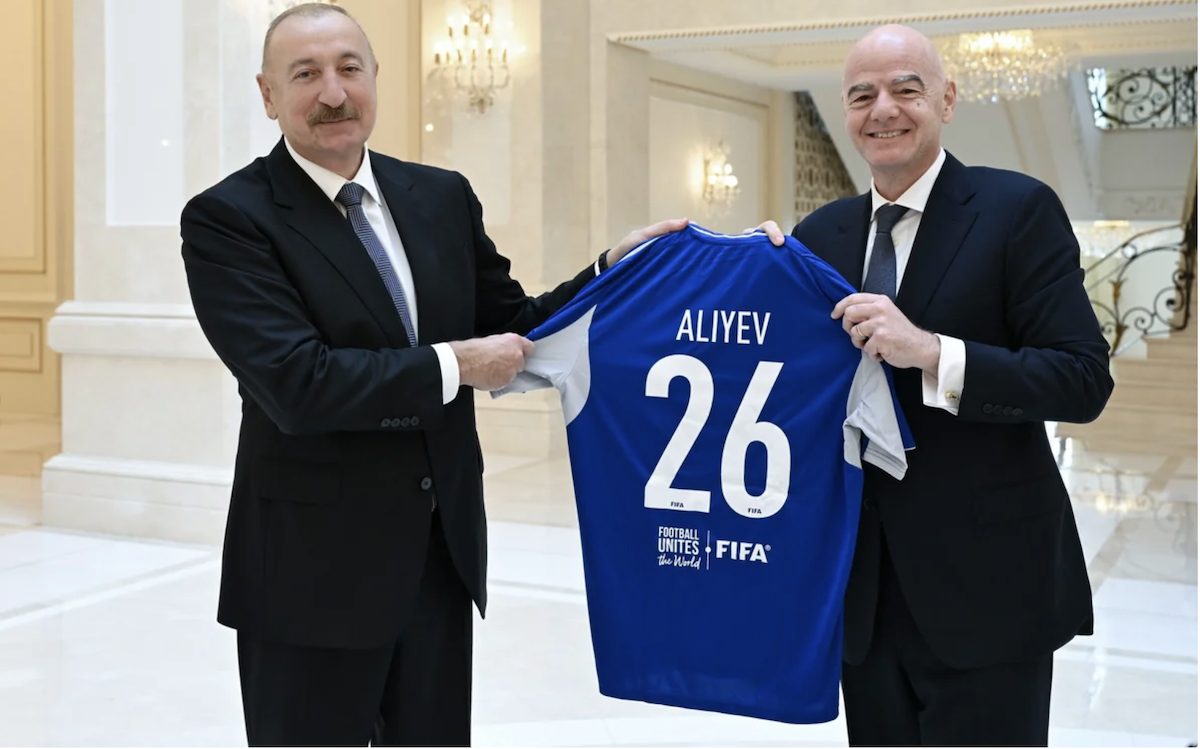
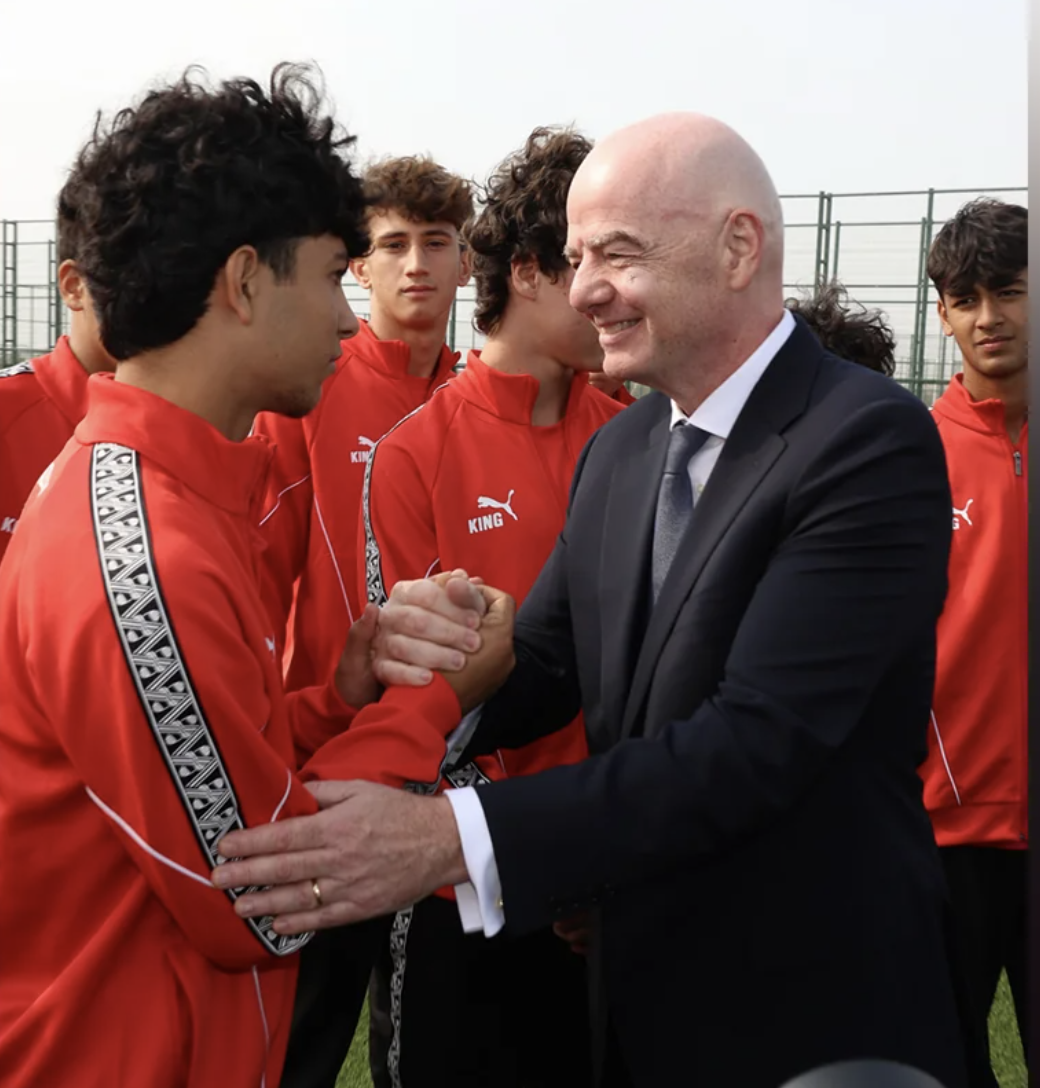
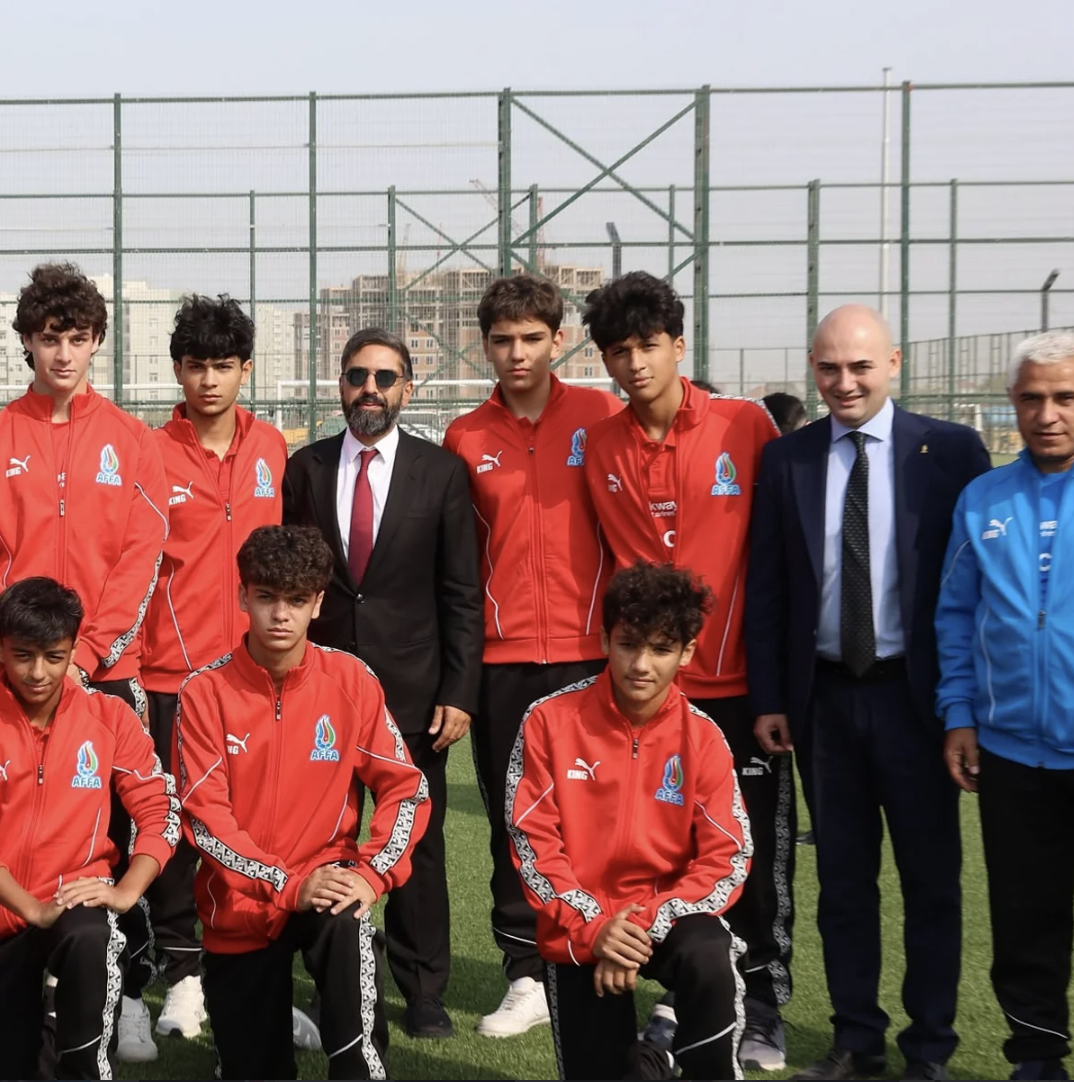
● FIFA President Gianni Infantino is in Baku. He posted on social media about meeting Azerbaijan’s U-15 national team and praised preparations for the first-ever FIFA U-15 World Cup and Festival, which will be held in Azerbaijan from 24 to 30 October. Infantino also met President Ilham Aliyev. They discussed preparations for the 2027 FIFA U-20 World Cup. The FIFA president presented Aliyev with a football and a shirt bearing his surname, as well as symbolic FIFA yellow and red cards and a pennant.
Azerbaijan have been drawn in Group AF of the first-ever U-15 World Cup and Festival and will face Andorra, Australia, Haiti, Israel and Timor-Leste.
-
Wednesday, September 30, Armenia. Rosatom in Yerevan presents Russian plan to build new nuclear power plant in Armenia
● The fifth meeting of the joint Armenian-Russian coordinating committee on the further extension of the operating life of Unit 2 of the Armenian Nuclear Power Plant was held in Yerevan. The Soviet-built reactor has been operating since 1980. Its operating life has already been extended once, until 2036. It was stated that Armenia needs to choose the technology and partner for a new nuclear power plant during this period.
● Alexei Likhachev, head of Russian state nuclear corporation Rosatom, travelled to Yerevan to attend the meeting. He told journalists that Russia was ready to involve international suppliers, including companies from the EU and Asia, in the possible construction of a new reactor in Armenia. “We are ready to see this project as an integrated international project,” Likhachev said. He noted that Rosatom is already implementing international projects involving suppliers and technologies from different countries.
● Prime Minister Nikol Pashinyan met with Likhachev and the delegation he led. Likhachev presented details of Russia’s proposals for building a new nuclear power plant in Armenia, including small- and medium-capacity reactors. Pashinyan said the government was continuing discussions on proposals received from international partners. A decision will be made soon, based solely on price, quality, safety, timelines and guarantees, the prime minister said.
● A serviceman from Russia’s 102nd Military Base was detained with drugs in Gyumri. The case materials have reportedly been handed over to the Investigative Committee.
● Russia has tightened rules on taking cash roubles out of the country to Armenia and other countries in the region. Individuals are now prohibited from taking more than 1 million roubles (about $12,000) to Armenia, Belarus, Kazakhstan, Kyrgyzstan, Azerbaijan, Tajikistan and Uzbekistan. At a time when all Russian banks are under sanctions and unable to make international transfers, the measure could create problems for many people. Private money transfers from relatives working in Russia remain a significant source of income for many people in Armenia.
● Representatives of leading French media outlets — Le Figaro, Le Parisien, Ouest-France, Groupe EBRA (Est-Bourgogne-Rhône-Alpes) and Radio France Internationale (RFI) — have arrived in Armenia to see first-hand the work being carried out under the French-funded IADAAM programme to improve agricultural irrigation and to assess the current condition of the Vedi Reservoir.
● Screenwriter and actor Vahram Sahakyan has been detained. According to the Investigative Committee, he published a post on his Facebook page containing incitement to and propaganda of hatred, intolerance and hostility. Administrative supervision has been imposed on Sahakyan, prohibiting him from publishing posts on social media.
● AMD 78.35 million (about $215,000) was fraudulently taken from 13 people as advance payments for the alleged import of cars. A criminal case has been opened against three people.
● Former Yerevan mayor and former Armenian transport and communications minister Gagik Beglaryan has filed a lawsuit with the Administrative Court against the Interior Ministry. He is seeking to have the ministry’s decisions revoking permits for several types of weapons declared invalid. The court has accepted the case for consideration.
● Graffiti depicting Albert Hovhannisyan, a soldier killed in the 2020 44-day war, has been removed from the wall of Victory Park in Yerevan. The city administration said this was related to renovation work on the wall and surrounding area. Albert Hovhannisyan’s father told journalists that he was discussing with the mayor’s press secretary how his son’s memory could be commemorated in the future, including the possibility of a sculpture or another artwork.
● Rosa Khachatryan, an employee of AraratCement, told journalists that she had been fired after sharing a Facebook post calling for higher wages. The plant is owned by businessman and pro-Russian opposition politician Gagik Tsarukyan, who is under arrest on fraud charges. Khachatryan says she only accidentally clicked “like” during another person’s Facebook livestream. The next day, she was called to the plant’s office, told that she was spreading false information and damaging the company’s reputation, and was pressured to submit a resignation letter.
-
Wednesday, September 30, Georgia. Ex-PM Gharibashvili assesses his rule in latest prison letter, accuses opposition ex-PM Gakharia
● In another letter from prison, former Prime Minister Irakli Gharibashvili assesses his 2021–2024 tenure and asks whether the situation in the country has improved or worsened since he stepped down. Gharibashvili lists economic growth, a reduction in public debt and the budget deficit, and obtaining EU candidate status among his government’s achievements. He writes that in January 2024, approval for his government and the Georgian Dream party stood at 60%. He again describes the resignation of Prime Minister Giorgi Gakharia, now in opposition, in 2021 as a “betrayal”.
● European political group ALDE has responded to criticism from Parliament Speaker Shalva Papuashvili and called on the Georgian authorities to immediately release people it considers political prisoners. ALDE named opposition politician Elene Khoshtaria, journalists and participants in peaceful demonstrations among them. Papuashvili had earlier called on ALDE to distance itself from a campaign against Arab investment led by Lelo, a Georgian opposition party that is a member of ALDE. Papuashvili described the campaign as “xenophobic”. ALDE says it does not take part in domestic political campaigns conducted by its members.
● The opposition United National Movement says the Interior Ministry has refused permission for a rally in Rike Park on 1 October calling for the release of imprisoned former President Mikheil Saakashvili. The ministry said the request submitted by the party did not meet legal requirements because it did not specify the expected number of participants and lacked the signature of the person responsible. The ministry also suggested that organisers consider changing the location or time because preparations are under way for the Tbilisoba city festival this weekend. The party said the rally would go ahead anyway, at 17:00 on 1 October near the river pier by Rike Park.
● Opposition activist and Girchi – More Freedom member Gela Khasaia (pictured) has been released after serving a year in prison. He was arrested in September 2025 together with fellow activist Vasil Kerdikoshvili. They were charged with intentionally causing minor bodily injury to a citizen following another protest. In May this year, they reached plea agreements and were sentenced to one year in prison and three years on probation. After his release, Khasaia said he would continue taking part in protests against the government.
● A new building will be constructed on the site of Tbilisi Public School No. 166, Infrastructure Minister Revaz Sokhadze told dozens of parents protesting the years-long delay in deciding the school’s fate. For three years, pupils have been attending different schools. The project for the new school is to be completed by the end of the year, with a tender to be announced in spring and construction expected to begin in late spring, the minister said. He said he was taking full responsibility for meeting these deadlines.
● The Competition Agency has launched an investigation into possible anti-competitive practices by food delivery companies Wolt and Glovo. The investigation follows a complaint by Delivery Technology Georgia, which claims that Wolt and Glovo have agreements with some restaurants and other food-service businesses that restrict their cooperation with other online platforms and make it harder for new competitors to enter the market. The agency will determine whether competition law has been violated.
● Heavy rain flooded several streets and residential courtyards in Batumi, while a slope collapsed in the settlement of Makhinjauri. According to Batumi City Hall, the landslide on Tamar Mepe Avenue has partially restricted traffic from Chakvi to Batumi; traffic is still possible via the motorway. Work is under way to pump out water and clear the roads.
● A foreign national has been arrested in Tbilisi on suspicion of damaging a bust of Heydar Aliyev, the former president of Azerbaijan. According to the Interior Ministry, an investigation is under way under the article covering damage to or destruction of another person’s property. The detainee’s citizenship has not been disclosed.
● New carriages for the Tbilisi metro were presented in China, with Tbilisi Mayor Kakha Kaladze also attending the presentation. Tbilisi is to receive 14 four-car trains and 11 five-car trains. Each new carriage will accommodate 280 passengers, and the carriages will be connected by open gangways. The exact date when the new trains will enter service has not yet been announced.
● Ketevan Khurodze has been elected to parliament to replace Maia Bitadze, who has become culture minister.
-
Tuesday, September 29, Armenia. Overall positive PACE report on Armenia’s parliamentary elections
● The parliamentary elections on 7 June gave voters a genuine choice between political alternatives and were generally well organised, according to a report by the PACE election observation delegation. At the same time, the report says that “Russia’s interference and its foreign information operations in a Council of Europe member state have reached unprecedented levels”. Russia’s direct pressure during the election period also took the form of increased trade restrictions and security threats. According to the report, the aim was to improperly influence voters in favour of opposition [pro-Russian] forces. The report also notes that statements by Western and European officials in support of the ruling authorities were likewise seen as a form of foreign interference, although they did not reach the level of coercion associated with Russia’s actions.
● The PACE report has drawn strong criticism from the pro-Russian opposition. “In Armenia, superpowers should work together, rather than Armenia being used as a tool by Europe against Russia or vice versa,” said Tigran Abramyan, secretary of the Strong Armenia parliamentary faction. Levon Kocharyan, an MP from the Armenia bloc, said he did not understand how PACE could assess the election results positively when the report itself documented numerous violations.
● The PACE report also addresses why the pro-Russian Prosperous Armenia party, led by businessman Gagik Tsarukyan, who is under arrest on fraud charges, failed to enter parliament. The report says that if the results from a couple of polling stations had been taken into account, the party could have crossed the 4% electoral threshold and won seats in parliament. “Prosperous Armenia and its electorate were thus left outside parliament, while the redistribution of seats allowed the ruling Civil Contract party to secure a three-fifths majority,” the report says.
● Prosperous Armenia responded to this part of the report. Tsarukyan’s press secretary said: “This proves once again that the truth cannot be hidden.”
● Russian state corporation Rosatom is working with Yerevan on the decommissioning of the former Nairit synthetic rubber plant in Armenia, Rosatom CEO Alexei Likhachev said. He also said Russia is involved in ongoing work at the Armenian nuclear power plant. “We are extending the plant’s operation. The leadership will decide which way to proceed, but we are present there,” Likhachev said.
● Speaking at the Parliamentary Assembly of the Council of Europe, MP Edward Lee said the Armenian authorities were exerting unprecedented pressure on the Armenian Apostolic Church and interfering in its internal affairs. He also proposed considering Armenia’s recent parliamentary elections in the context of the current government’s relationship with the Armenian Apostolic Church.
● Ripsime Grigoryan, a PACE MP from the ruling Civil Contract party, responded: “I would call this a very poorly informed statement when it comes to the Armenian Church and attacks on the Church.”
● Parliamentary Vice-Speaker Hayk Konjoryan of the ruling party was elected one of PACE’s vice-presidents under Armenia’s quota.
● Deputy Foreign Minister Vahan Kostanyan met with a delegation from the EU Council’s working group on Eastern Europe and Central Asia, comprising representatives of more than 20 EU member states, the European External Action Service and the European Commission. They held detailed discussions on current Armenia-EU relations. Kostanyan stressed the Armenian government’s commitment to deepening its partnership with the EU in line with the law adopted to launch Armenia’s EU membership process. The importance of the first Armenia-EU summit as a historic milestone in bilateral relations was also emphasised.
● Prime Minister Nikol Pashinyan met with Martin Eurnekian, CEO of Corporación América Airports. They discussed the company’s ongoing programmes in Armenia and prospects for expanding them, including the development of Yerevan’s Zvartnots airport and Shirak airport in Gyumri, both operated by the company under concession agreements, as well as other investment projects.
● More than seven churches in Karabakh have been completely destroyed since 2020, the year of the Second Karabakh War, said Hovik Avanesov, ombudsman for cultural heritage of the former unrecognised Nagorno-Karabakh Republic. He also said that around 10 villages had been completely destroyed and roughly the same number partially destroyed, while Stepanakert’s architectural heritage, including residential neighbourhoods, had also been completely destroyed. Avanesov presented the figures at a roundtable titled “Artsakh — three years later: facts, responsibility, the agenda for the future”.
● On 27 September, the sixth anniversary of the start of the 44-day war, Public Television aired no coverage of the anniversary and instead broadcast a concert by singer Tata Simonyan. This sparked widespread public outrage. Public Television apologised for airing the concert, saying it “fully acknowledges the mistake and is not looking for excuses”. “Relevant working procedures are being reviewed to prevent similar incidents from happening again,” it said.
● Singer Tata Simonyan also said that broadcasting her concert on such a day was a serious mistake. “I apologise for what happened, but I believe it is important to say that the concert belongs to Public Television. The material was used without my consent. Glory to our martyrs. I bow to their memory,” he wrote on Facebook.
-
Tuesday, September 29, Azerbaijan. Court hearings continued in the “Meydan TV case”
● The Trans-Caspian Transport Route, known as the Middle Corridor, will require more than $25 billion in investment by 2040, according to a World Bank report. Priority areas include rail networks, seaports and access roads. The report stresses that investment must be accompanied by better services and institutional reforms across all participating countries. The World Bank says the corridor’s success will depend on how effectively the countries cooperate in four key areas:
• Creating a single digital “window” for transport, transit and trade data to replace today’s fragmented exchange of paper documents, which significantly slows border crossings.
• Establishing a single market-oriented joint venture to integrate container and maritime services along the entire route.
• Strengthening coordination across the corridor to monitor performance, address bottlenecks and develop joint solutions.
• Introducing regulations that allow state-owned railway, port and shipping companies involved in the corridor to operate on more commercial terms.
The World Bank also says $30 billion in investment will be needed to develop road and rail infrastructure in participating countries and ensure smooth operations along the entire Middle Corridor. The largest investment needs are in Uzbekistan ($11.5 billion), Kazakhstan ($7.53 billion) and Turkey ($3.78 billion). Azerbaijan’s needs are estimated at $1.16 billion.
● Court hearings continued in the “Meydan TV case”. Of the 12 journalists arrested in the case on smuggling charges, 11 had already been questioned at previous hearings. On Monday, the court heard Shamshad Agha, founder and editor-in-chief of the Arqument.az website. He said he had been offered cooperation with the authorities before his arrest. He refused and was soon warned that his arrest was being prepared. Agha has been held in pre-trial detention for more than a year and a half. In court, he spoke about the mass arrests of staff from independent outlets AbzasMedia, Toplum TV and Meydan TV. “Despite spending millions of dollars, the Azerbaijani authorities have still failed to create media outlets trusted by the public — unlike these three outlets. It is impossible to create strong media without ensuring freedom,” Agha said. He rejected the charges, saying the criminal case had been fabricated and linking his arrest to his journalistic work.
● The Washington Examiner reports that Washington is paying particular attention to two journalists held in Azerbaijan who have worked with US media: 32-year-old Ulviya Ali (Guliyeva), who worked with Voice of America, and 31-year-old Farid Mehralizada, a reporter for the Azerbaijani service of Radio Free Europe/Radio Liberty. Mehralizada has been sentenced to nine years in prison, while the investigation against Guliyeva is continuing as part of the “Meydan TV case”. The journalists face charges including currency smuggling, illegal entrepreneurship, money laundering, tax evasion and document forgery. They deny the charges and say they are being persecuted because of their professional activities. The Washington Examiner says US-Azerbaijan relations have improved significantly over the past year, but the continued detention of the journalists remains a major source of tension. A special working group established in December 2025 is handling the journalists’ defence. Voice of America Deputy Director Chris Wallace told the newspaper that they stand in solidarity with US government agencies in efforts to secure the release of Guliyeva and Mehralizada.
● Azerbaijan and Iran discussed prospects for joint infrastructure projects in Tehran during a visit by an Azerbaijani delegation led by Deputy Prime Minister Shahin Mustafayev. A meeting of the joint economic commission reviewed progress on agreements reached at the commission’s meeting in Baku in February. The main focus was increasing the capacity of the International North-South Transport Corridor. Officials said construction of the Aghband-Kalala road bridge and infrastructure at the freight terminal in Astara had been completed, expanding its capacity. The sides agreed to proceed with the implementation of previously agreed projects and initiatives.
● Azerbaijan has become coordinator of the European Commission of the Codex Alimentarius, taking over from Germany after its term ended. The coordinator’s main task is to promote cooperation among countries in the European region on the implementation of international food safety standards. The Codex Alimentarius Commission operates under the auspices of the UN Food and Agriculture Organization and the World Health Organization.
● Another Azerbaijani citizen was injured in Kyiv in a Russian drone attack. The previous day, an Azerbaijani citizen was killed and several others injured in a drone strike on a market.
● A vehicle was damaged by an anti-tank mine in Shusha district, injuring the driver. The vehicle was reportedly travelling through a mine-contaminated area along the former line of contact in Karabakh. The Interior Ministry, Prosecutor General’s Office and the state demining agency ANAMA again urged citizens to follow safety rules and stay out of fenced-off areas. ANAMA said 1,385.8 hectares of land in areas described by Azerbaijani authorities as liberated from Armenian occupation had been cleared of mines over the past week.
● Another 30 children from Ukraine have arrived in Azerbaijan for a 10-day psychological rehabilitation programme. The programme will take place at the Gabala Children’s Rehabilitation Centre. The children will receive individual psychological consultations and group therapy, as well as yoga and dance therapy. They will also have access to therapeutic massage, a therapeutic pool and baths, art therapy and other rehabilitation services, as well as organised excursions. Around 500 children and young people from Ukraine have taken part in rehabilitation programmes in Azerbaijan so far.
● The right of Azerbaijanis to return to places in Armenia where they lived before being forced to leave during the conflict in the early 1990s was discussed at an international conference at the UN headquarters in New York. The conference, titled “Right to Return and Decolonisation: Restoring Delayed Historical Justice”, was organised by the Baku Initiative Group (BIG) on the sidelines of the 81st session of the UN General Assembly. Participants were shown a short documentary about the history of Azerbaijanis who, according to the organisers, were subjected to ethnic cleansing and expelled from Armenia.
● The International Mingachevir Regatta 2026 begins today. The first races will take place in Fuzuli on the Kendelen reservoir, with participants competing in 200-metre canoe and kayak races. The competition will continue on 30 September and 1 October at the Kur Olympic Training and Sports Centre in Mingachevir. More than 100 young rowers from Azerbaijan, Czechia, Georgia, Hungary, Kyrgyzstan, Latvia, Lithuania, Moldova, Tajikistan, Turkey, Ukraine and Uzbekistan are taking part.
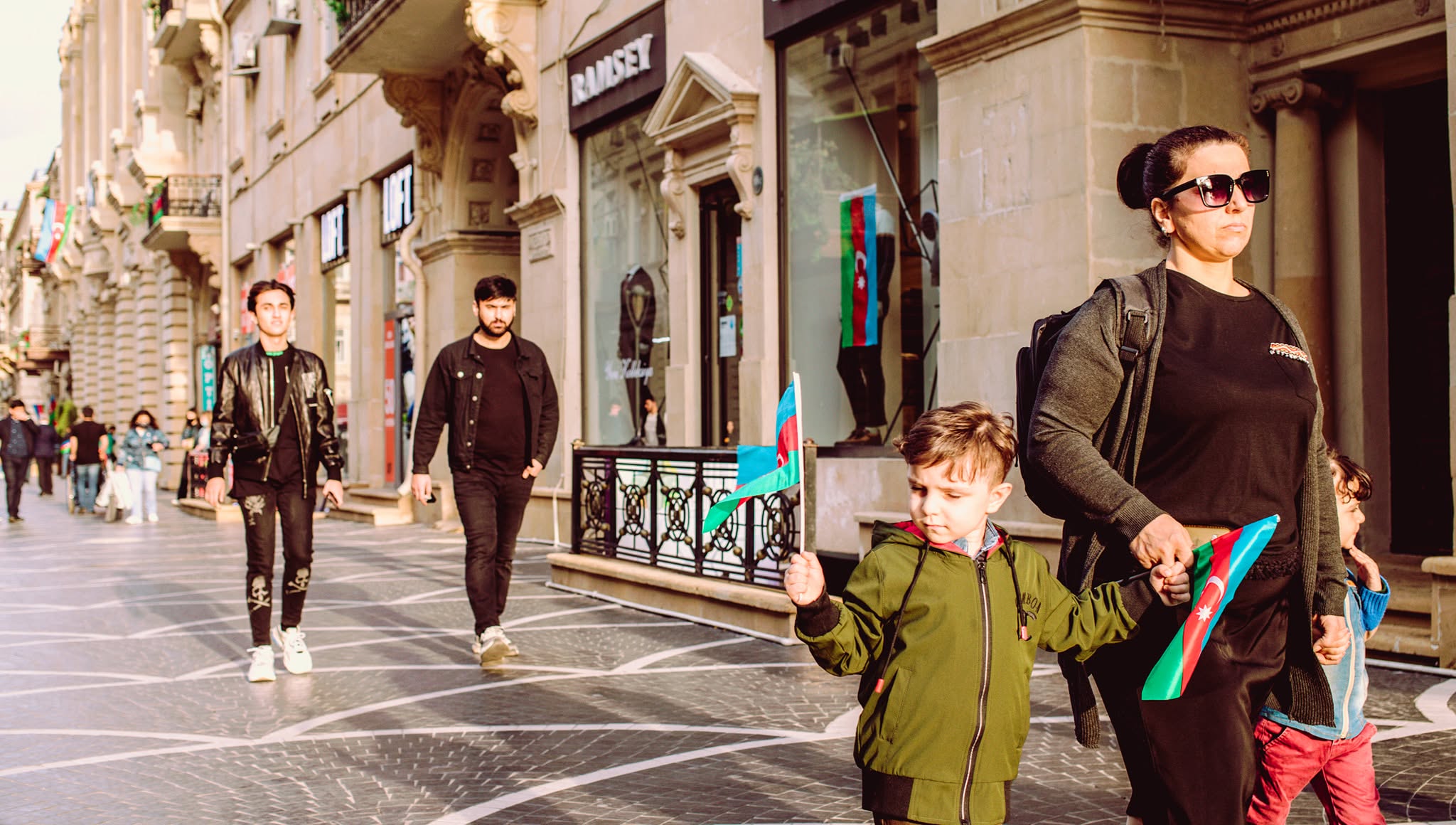
-
Tuesday, September 29, Georgia. The EU is preparing individual roadmaps for Ukraine, Moldova, Montenegro and Albania, but Georgia is not on the list
● The EU is preparing individual roadmaps for Ukraine, Moldova, Montenegro and Albania, but Georgia is not on the list, Politico reports. The documents are expected to set out stages of accession negotiations and specific conditions. According to the report, no such roadmap will be prepared for Georgia, Turkey or Serbia at this stage, as their accession processes have been suspended amid concerns over democratic backsliding. EU leaders are expected to continue discussing new mechanisms at a summit on 15–16 October.
● Belarusian citizen Lev Mikheev, who had sought asylum in Georgia since 2021, has been deported. Mikheev said he was detained after contacting the migration authorities to renew his documents and was told to leave the country. He chose Armenia, where he was detained as a person wanted by Belarus, but was later released. Georgia’s Interior Ministry says Mikheev’s rights were not violated and that, since 29 June 2026, he has no longer been considered an asylum seeker.
● Parliament has initiated a bill under which only people with annual household incomes above 100,000 lari (about $38,000) would pay annual property tax. The current threshold is 40,000 lari (about $15,000). The amendments have already been submitted to the parliamentary bureau and are expected to be fast-tracked. The next deadline for filing property tax declarations is 1 November.
● The Georgian Young Lawyers’ Association (GYLA) has submitted a report to the UN Special Rapporteur over the rising prison population in Georgia. According to a 2026 Council of Europe report, Georgia had around 232 prisoners per 100,000 people in January 2025, one of the highest rates in Europe. GYLA highlights overcrowding, the widespread use of pre-trial detention, shorter periods of eligibility for early release and inadequate use of alternatives to imprisonment.
● Russian airlines plan to expand flights to Georgia. Red Wings has applied to Russia’s civil aviation authorities for permission to operate new flights to Tbilisi and Batumi. Azimuth wants to operate five flights a week from Perm, Samara and Chelyabinsk to Tbilisi. Russian approval does not automatically mean the flights will start, as approval from the Georgian side is also required. Current flight schedules show Russian carriers already operating services to Tbilisi and Batumi.
● Students and parents at Tbilisi Public School No. 166 are protesting, demanding that the school’s major renovation be completed. Parents say children have been studying at different schools for three years, but despite an assessment by a state expert commission, reconstruction of the building has not begun. They are demanding either that the renovation be completed or that an alternative building be provided where all pupils can study together.
● The National Environment Agency has warned of deteriorating weather conditions through the morning of 1 October. Heavy rainfall is expected in most of western Georgia and some eastern regions, with possible thunderstorms, hail and strong winds, as well as rough seas. The agency says heavy rain could cause rising river levels, flash floods, landslides and mudslides. The threat level is moderate.
● Tbilisi Mayor Kakha Kaladze has travelled to China to inspect preparations for new carriages for the Tbilisi metro. In Nanjing, he will meet executives of state-owned CRRC, from which the city is buying 111 new carriages. The first new train sets are expected to be delivered by the end of the year.
● Georgia and Ukraine drew 0–0 in the second round of the Nations League. During the match at Tbilisi’s Dinamo Arena, fans of both teams chanted “Abkhazia is Georgia” and slogans in support of Ukraine. Georgia have one point after two rounds. Ramaz Svanadze has been appointed the team’s new head coach, replacing Willy Sagnol, who left the post several days ago.
● The opposition United National Movement will hold a rally on 1 October demanding the release of its leader, former President Mikheil Saakashvili, from prison.
● A Georgian parliamentary delegation led by Deputy Speaker Nino Tsilosani met with Azerbaijani Milli Majlis Speaker Sahiba Gafarova. According to a press release, they discussed strengthening strategic partnership and inter-parliamentary ties, as well as peace, stability and economic cooperation in the South Caucasus.
● New members have joined the Anti-Annexation Platform of Georgian Citizens: Teona Akubardia, Giorgi Rukhadze, Mamuka Samkharadze, Davit Kapanadze and Nodar Titirashvili. The platform, established a month ago, brings together politicians, experts, former diplomats and military personnel and aims to pursue lawful, public and peaceful action against Russia’s occupation and annexation policies.
-
Monday, September 28, Azerbaijan. Six years since start of Second Karabakh War marked as Day of Remembrance in Azerbaijan
● Sunday marked six years since the start of the Second Karabakh War in 2020. In Azerbaijan, 27 September is observed as a national Day of Remembrance. At noon, the country came to a standstill for a minute of silence. The Foreign Ministry, president and all ministries issued statements. Memorial events were held across the country throughout the day. President Ilham Aliyev and First Lady Mehriban Aliyeva, as well as groups of ministry and organisation employees, visited Victory Park in Baku, where they laid wreaths at the Victory Monument.
● In a social media post, President Ilham Aliyev wrote, among other things: “On 27 September 2020, a 44-day war began, as a result of which the Azerbaijani army liberated a significant part of the territories that had been under occupation [by Armenian forces]. During the fighting, 2,908 Azerbaijani servicemen were killed and six went missing. As a result of Armenia’s military aggression, 93 civilians were killed and 454 wounded. On 10 November, the leaders of Azerbaijan, Russia and Armenia signed a trilateral statement. Subsequently, the Aghdam, Kalbajar and Lachin districts were returned to Azerbaijan. Following the local anti-terrorist operation on 20 September 2023, Azerbaijan’s territorial integrity was fully restored.”
● Azerbaijani youth and volunteer organisations sent a statement to international organisations on the sixth anniversary of the Second Karabakh War. “The liberation of our historic lands in Karabakh and Eastern Zangezur, which had been under Armenian occupation for around 30 years, became a national victory and a triumph of international law,” the statement said. The authors recalled the deaths of civilians in Armenian strikes on the cities of Ganja, Barda and Tartar. The statement stressed that Azerbaijan, having won the war, extended a hand of peace to Armenia. The authors also highlighted “the active participation of young people who grew up amid forced displacement and occupation in the historic mission of rebuilding the territories liberated from occupation and restoring life there”.
● Turkish President Recep Tayyip Erdoğan marked Azerbaijan’s Day of Remembrance with a post on X: “Karabakh is Azerbaijani land and will remain so forever.”
● An Azerbaijani citizen was killed and several others wounded in a drone attack in Kyiv. The Russian strike hit a market where they were selling agricultural products.
● A two-day Azerbaijan International Investment Forum was held in Baku over the weekend under the theme “Restoring Trust in a Fragmented World: The South Caucasus as a Pillar of Global Connectivity and Investment Stability”. The forum was held under the patronage of the president, who also took part in one of the sessions. The session began with moderator Adebayo Ogunlesi, CEO of Global Infrastructure Partners, presenting ChatGPT-generated data on what President Ilham Aliyev had achieved over more than 20 years in office.
According to the data presented:
- GDP grew tenfold to $76 billion, while GDP per capita increased more than eightfold to $7,500.
- The poverty rate fell from 45% to 5%.
- The assets of the State Oil Fund grew 90-fold to $75 billion. While oil production declined, gas production increased tenfold. Azerbaijan is now a key natural gas supplier to Europe and Turkey.
- The non-oil sector grew 4.5-fold.
- Azerbaijan restored control over its internationally recognised territories.
In his speech, Ilham Aliyev said, among other things:
More than $350 billion in investment has been attracted over the past 20 years.
The economy’s priorities are oil and gas production, renewable energy, logistics, mining and food security.
The short-term goal is to minimise the use of natural gas for electricity generation and redirect the volumes freed up for export.
Freed-up energy capacity will be used to develop data centres, with active negotiations underway with leading global companies.
Azerbaijan is an active participant in two international transport corridors — East-West and North-South — and transit freight through Azerbaijan is growing rapidly.
A contract with Exxon will be signed to develop oil and gas fields with hard-to-recover reserves. If exploration is successful, this could lead to a new oil and gas boom in Azerbaijan.
A contract with Total will be signed for the second phase of development of the Absheron field, which will increase gas production in Azerbaijan.
The focus is not only on renewable energy generation but also on energy storage.
Investors are not needed for domestic purposes. However, investment is needed to develop infrastructure serving the interests of transnational companies.
This includes laying an undersea electricity cable from Kazakhstan and Uzbekistan across the Caspian Sea to connect Central Asia with Azerbaijan and then Europe.
Another project involves laying a cable across the Black Sea from Azerbaijan via Georgia to Romania.
On training personnel, Aliyev said that when the first production-sharing agreement was signed in 1994, more than 90% of employees were foreign specialists. Today, the share of foreign specialists in the country is around 5%.
Aliyev also urged investors not to believe “false news” in the media. Participants in such forums, he said, can see everything for themselves, ask people what they think about the country and its development, and whether they believe it is moving in the right direction — and make their own decisions.
● The Foreign Ministry published a report on Foreign Minister Jeyhun Bayramov’s intensive diplomatic week on the sidelines of the UN General Assembly in New York. According to the ministry, Bayramov held 37 bilateral meetings with counterparts, heads of international organisations and officials from various countries. Seventeen bilateral documents were signed as a result of the meetings. The minister also spoke at 11 high-level events.
● Italian Prime Minister Giorgia Meloni thanked President Ilham Aliyev for supporting efforts to regulate fuel prices in Italy. Azerbaijan’s state-owned SOCAR announced that, following Italy’s Eni, it would introduce price caps on petrol and diesel across the network of its subsidiary Italiana Petroli (IP). SOCAR said the company had responded to the Italian government’s call to support families and businesses that have been facing high fuel prices for more than six months amid geopolitical instability.
● Azerbaijan’s Media and Broadcasting Council issued a statement about “unfounded biased publications circulating on social media in Turkey and aimed at damaging the brotherly relations between Azerbaijan and Turkey, as well as creating a negative perception of these relations among the public”. It stressed that “these are not random initiatives by individuals, but part of a targeted campaign managed by certain circles”. “Azerbaijan does not rule out taking appropriate measures, including restricting entry to those organising and carrying out the campaign to discredit Azerbaijan,” the statement said.
● Ganimat Zahid, editor of the opposition newspaper Azadlig, who works in exile, announced the first “Congress of Azerbaijani Political Exiles”. Zahid said details of the discussions would be published in both text and video formats. Preparations for a second, more representative congress in the near future were also announced.
● Azerbaijan drew 1–1 with Lithuania in its opening match of the new UEFA Nations League season. The game was played in Vilnius. Earlier, Lithuania had beaten Liechtenstein 2–0 in its first group match.
● The Azerbaijan Grand Prix, held on the Baku street circuit from 24 to 26 September, has ended. British Mercedes driver George Russell won the race, followed by Red Bull’s Max Verstappen of the Netherlands in second and his teammate Isack Hadjar in third. The Baku circuit has 20 corners and 51 laps, with a total race distance of 306.049 km.
Photo Gabriel Cattaruzzi
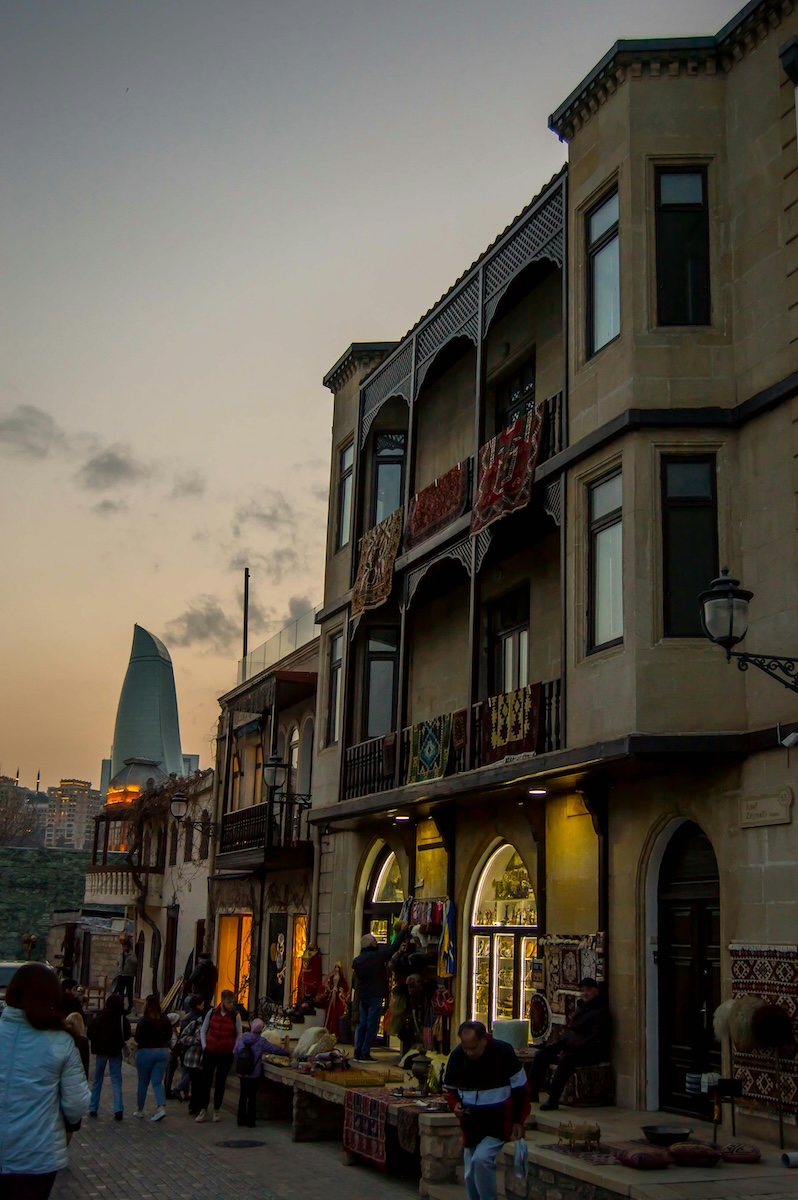
-
Monday, September 28, Armenia. Social media erupted after Public Television aired no coverage of the 44-day war anniversary
● Sunday marked six years since the start of the Second Karabakh War in 2020, which lasted 44 days. Early on 27 September 2020, Azerbaijan launched an offensive along the entire line of contact with the former unrecognised Nagorno-Karabakh Republic and in some sections of the Armenia-Azerbaijan border. Armenia declared martial law and announced general mobilisation. On the night of 9–10 November, the leaders of Armenia, Azerbaijan and Russia signed a trilateral statement, after which hostilities ended and Russian peacekeepers were deployed in Karabakh.
● Social media was flooded with criticism after Public Television aired no coverage of the anniversary of the 44-day war.
● On the sixth anniversary of the start of the 44-day war, members of parliament from the pro-Russian opposition parties Strong Armenia and Armenia, members of the Hayakve civic movement, and former leaders of the former unrecognised Nagorno-Karabakh Republic visited the Yerablur military pantheon.
● Opposition MP Anna Grigoryan demanded that Prime Minister Nikol Pashinyan answer why he failed to take steps that could have prevented the 2020 war, and instead took actions that brought the war closer and effectively gave Aliyev free rein to commit war crimes.
● Nzhde Iskandaryan, former state minister of the former unrecognised Nagorno-Karabakh Republic, said new protests by Karabakh Armenians in Armenia could take place. He said municipal authorities had refused to approve an application for a protest, but people still intend to take to the streets because their socioeconomic situation is becoming increasingly difficult.
● Armenia’s foreign minister and the UN High Commissioner discussed programmes aimed at integrating Karabakh Armenians into life in Armenia.
● Turkish President Recep Tayyip Erdoğan called Azerbaijan a “friendly and brotherly country” and honoured the memory of Azerbaijani servicemen killed in the fighting over Karabakh. Erdoğan also said: “Karabakh is Azerbaijani land and will remain so forever.”
● Two rescuers suffered smoke inhalation in a major fire at an electrical substation in Yerevan, with one hospitalised. The fire took more than two hours to extinguish. Power outages affected 14 streets, leaving around 5,000 subscribers in Yerevan without electricity. The cause of the fire is still under investigation. Romannos Petrosyan, interim manager of Electric Networks of Armenia, was at the scene. He told journalists that an internal investigation would be conducted across all departments and the legality of employees’ actions would be assessed.
● Travelling to the United States on a tourist visa for the purpose of giving birth and securing US citizenship for a newborn is not permitted, the US Embassy in Armenia warned. “A consular officer reviewing a visa application may refuse to issue a visa if there are grounds to believe that you are travelling for the purpose of giving birth,” the statement said.
● EU ambassadors travelled to Syunik province, where they reviewed work carried out under the “Resilient Syunik – Team Europe” initiative and discussed future priorities. The Dutch Embassy in Armenia said the group of ambassadors and partners saw first-hand how joint investments are working in practice. They visited a dairy company in Kapan, reviewed work to improve access to drinking water in Lehvaz, and visited Meghri Fruits, where Team Europe support has helped expand production, create new jobs and enter new export markets.
● Justice Minister Srbuhi Ghalyan was elected first vice-chair of the 15th UN Congress on Crime Prevention.
● Roscosmos cosmonaut of Armenian origin Harutyun Kiviryan has joined the crew of SpaceX’s Crew-14 mission, which is scheduled to travel to the International Space Station (ISS) in spring 2027.
-
Monday, September 28, Georgia. Georgia held memorial events marking the 33rd anniversary of the fall of Sokhumi
● Georgia held memorial events marking the 33rd anniversary of the fall of Sokhumi, when Georgian forces retreated from Abkhazia during the Georgian-Abkhaz war. On 27 September 1993, the fall of Sokhumi ended 11 days of fighting for the city. By government order, all state flags were lowered at administrative buildings in memory of those killed.
The fighting in Abkhazia began in August 1992 and lasted 13 months and 13 days. Here is a chronology of the Georgian-Abkhaz war, compiled jointly by Georgian and Abkhaz conflict researchers.
● A march was held in Tbilisi on Sunday under the slogan “Abkhazia is Georgia, glory to the heroes, Russia is the enemy”. It began near Tbilisi State University and ended at Heroes’ Square, where participants read out the names of those killed for Georgia’s unity and paid tribute to their memory. Opposition parties and their leaders took part.
● Tamar Chergoleishvili, one of the leaders of the opposition Federalists party, said a discussion on crimes committed by Russia in Abkhazia and the genocide of ethnic Georgians would be held in the Italian Senate on 2 October.
● Irakli Kobakhidze said one of Georgia’s main national tasks is the peaceful restoration of its territorial integrity. He accused opposition leaders Giorgi Baramidze, Nika Gvaramia and David Berdzenishvili of carrying out a task received “from outside the country”, aimed at pushing the issue of restoring territorial integrity into the background.
● The US and Swedish embassies marked the 33rd anniversary of the fall of Sukhumi. The US Embassy paid tribute to those killed defending Georgia and remembered people forced to leave their homes as a result of the war. Sweden reaffirmed its support for Georgia’s sovereignty, independence and territorial integrity and expressed sympathy with those affected by the conflict.
● Prime Minister Irakli Kobakhidze said he had a brief conversation with the US president and secretary of state at a reception in New York on the sidelines of the UN General Assembly. He said he expressed a desire to restore the strategic partnership between Georgia and the US. According to Kobakhidze, Tbilisi has already taken its step and now expects reciprocal steps from Washington.
● Parliament Speaker Shalva Papuashvili said the Georgian government is satisfied with the dynamics of relations with the US in recent months and believes they are “on the way to a reset”. He cited the appointment of a new acting US ambassador, cooperation between the foreign ministries and the Trump Tower project in Tbilisi as signs of this. He said full restoration of relations would require establishing a new strategic partnership.
● Irakli Kobakhidze and Shalva Papuashvili called participants in the nearly two-year-long continuous pro-European protests “sectarians”. Kobakhidze said the protests had “long been cancelled out” and now attract only 50–70 people a day. Papuashvili called the protesters an “aggressive and fundamentalist sect” and said politically motivated attacks on people were a form of “fascism”.
● Irakli Kobakhidze and Shalva Papuashvili criticised European liberal party ALDE for supporting opposition party Lelo in Georgia. Kobakhidze said ALDE “stands on the side of radicalism, including terrorist acts”. Papuashvili called Lelo a “fraudulent party”, accused it of “terrorism” and “xenophobia”, and urged ALDE to distance itself from Lelo’s positions.
● Droa party leader Elene Khoshtaria, who is serving a sentence, is returning from Vivamedi clinic to the women’s prison in Rustavi. Khoshtaria said the first stage of her treatment had been completed and she would continue treatment at the prison clinic. She said she would visit Vivamedi once a month for medication and medical checks.
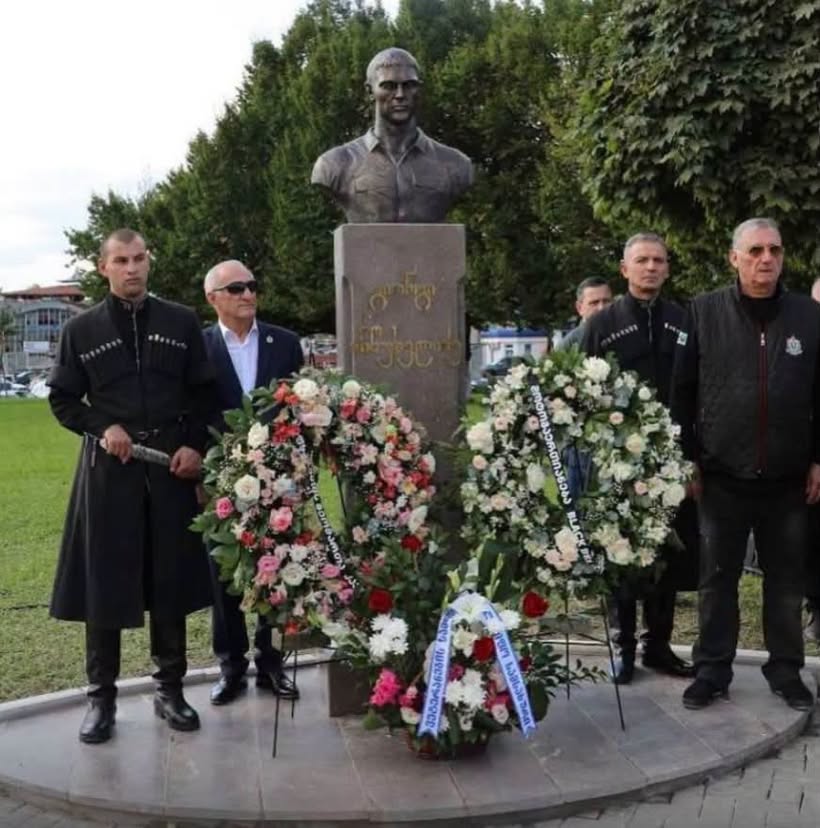
Screenshot -
Top stories in Azerbaijan, Armenia, and Georgia from 23-25 September, 2026