Local man in Abkhazia confesses to killing Russian tourist






Killing of Russian tourist in Abkhazia
A local man in Abkhazia who allegedly killed a Russian tourist has confessed to the crime following his arrest. Edgar Abukhba had previously served a prison sentence for a serious offence – rape involving extreme violence.
Abkhazia’s Interior Ministry said it had detained a suspect in the killing of Russian national Amina Bikbova.

A 26-year-old woman from Orenburg, Russia, was on holiday in the Abkhaz city of Gagra, where she met 25-year-old local fruit seller Edgar Abukhba.
The two exchanged messages for a couple of days. Then, on 24 September, Abukhba invited her for coffee, according to Amina’s friend. She has not been seen since and did not contact her family.
Concerned about their daughter’s disappearance, her parents contacted Abkhazia’s Interior Ministry.
A day later, the ministry announced that it had detained a suspect in the killing of the Russian tourist. He was identified as Edgar Abukhba.
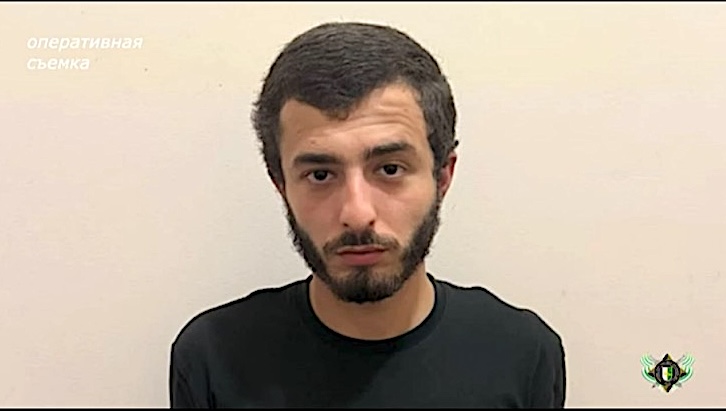
Abukhba initially denied any involvement in Amina Bikbova’s disappearance. He said they “had coffee, and later a guy came to pick her up and drove her away”.
He later confessed to the killing and told investigators where he had hidden the body.
According to Abukhba’s account, after coffee he took the woman to the rented apartment where he was staying. They had sex, after which he strangled her.
He then planned to dump her body in the Bzyb River. But he was unable to carry the body all the way to the river, so he left it, wrapped in a blanket, on the riverbank.
Edgar Abukhba had previously committed a similar crime.
In July 2019, he lured a Russian tourist into the former Abkhaz Council of Ministers building in Sukhum and raped her with extreme violence. He then tried to kill her, striking her repeatedly on the head with a brick. The woman survived, but was left permanently disabled.
A lower court sentenced him to 19 years in prison. However, Abkhazia’s Supreme Court, hearing his appeal, took into account that Abukhba was 17 at the time of the crime and was therefore considered a minor.
His sentence was reduced from 19 to nine years in prison.
Abukhba was released on 2 February 2024.
If Abukhba is found guilty of killing Russian tourist Amina Bikbova, he could now face a life sentence.
- Russian tourists pelt Abkhaz Supreme Court judge with stones
- Russian tourist shot in Abkhazia over bare torso – why are local authorities covering it up?
Commentary
Sukhumi blogger Ruslan Shakov published a commentary asking whether the killing could have been prevented and whether anything could have been done to stop Abukhba from committing another serious sexual offence.
“The more I look into Amina’s story, the fewer questions I have about ‘who specifically released Edgar Abukhba’ and the more I have about what happened after his release.
“It is important to understand that there was no single judge who simply decided to cut his sentence.
“Abukhba was sentenced to nine years for raping a Russian tourist, robbery and causing grievous bodily harm. The case then went through several levels of court. Because of the way sentences are enforced in Abkhazia, he was actually released on 2 February 2024, after serving about 4½ years.
The nine-year sentence itself was not formally reduced. But that is not really the main question.
What happened to him after he was released?
Abkhazia has a law providing for administrative supervision of people released from prison. And this is where I have questions.
Were any monitoring or preventive measures put in place after Abukhba’s release? Who is responsible for assessing the risk that someone who has committed such a violent crime could do it again, and how is that risk assessed?
I am not saying that administrative supervision would necessarily have saved Amina. No one can know that. But when someone who has committed such a crime returns to society, the work should not end on the day of his release.
A systemic reform of the security system is needed: reviewing certain provisions of criminal law, tighter controls on firearms, and strengthening the Interior Ministry in terms of personnel and technical capacity. […]
And then there are the comments directed at Amina.
Yes, it can be said that you should not go to the home of someone you barely know. But a risky decision does not make someone responsible for their own murder.
Amina may not have known who she was dealing with or what was in his past. The authorities did.
At the same time, I disagree with attempts to attribute the crime of one individual to all of Abkhazia. After the family reported her disappearance, law enforcement identified and detained a suspect and found the woman’s body. The investigation is continuing.
But good police work after a killing does not remove the main question: could something have been done before it happened?
And here I would like to see not a search for one guilty agency or one particular person, but an honest examination of what needs to change in the law and across the security system to prevent similar cases from happening again.”
The terminology, place names and views expressed in this article are those of the author and do not necessarily reflect the editorial position of this website.