Armenia debates new mechanisms to tackle vote-buying






Vote-buying in Armenia
Political activity remains intense in Armenia following the parliamentary election, with four opposition forces — the Strong Armenia and Armenia alliances, as well as the Prosperous Armenia and Wings of Unity parties — preparing to challenge the results in the Constitutional Court in the coming days.
The ruling Civil Contract party secured a majority, while the Strong Armenia and Armenia Alliance blocs also won seats in parliament. However, opposition parties have alleged “mass violations” by Civil Contract, including the misuse of administrative resources.
The ruling party rejects these claims and has instead accused the opposition of vote-buying. Representatives of Civil Contract have gone further, arguing that the opposition secured votes solely through bribery.
Citing vote-buying cases uncovered during the election campaign, the Anti-Corruption Committee of Armenia has proposed tightening the legislation.
The proposals include barring political forces involved in criminal vote-buying schemes from participating in elections.
“We must create guarantees that forces distributing electoral bribes will have no chance of exerting political influence in Armenia,” Prime Minister Nikol Pashinyan told parliament on Tuesday. He argued that the state has a “legitimate right” to deprive such groups of the opportunity to continue political activity.
At the same time, National Assembly Speaker Alen Simonyan said penalties for both giving and receiving electoral bribes should be increased, including longer prison terms.
Following the election, the ruling party also plans to introduce another legislative initiative. Under the proposed bill, only citizens who have lived in Armenia for at least six months during the year preceding a nationwide election would be eligible to vote.
Hayk Konjoryan, head of the Civil Contract parliamentary faction, said the measure had been requested by Armenian citizens permanently residing in the country. He noted that a similar requirement already exists in legislation governing local self-government elections.
“It is surprising that such a regulation exists for local government elections but not in national legislation. I believe the law will be brought into line,” Konjoryan said.
- Final election results in Armenia: Pashinyan’s party wins majority
- Georgian experts weigh impact of Armenian election on region
- Opinion: Why Putin hasn’t congratulated Pashinyan on his election victory
- ‘Russia’s Plan B has been activated’: analysis of Armenia’s preliminary election results
‘Citizenship alone is not enough’: Proposed six-month residency requirement
According to Hayk Konjoryan, the parliament will convene an extraordinary session to determine the conditions for participation in elections.
“Citizens who have spent at least six months in Armenia during the year preceding an election will be able to vote and decide the future of our state.”
Konjoryan said the draft legislation has already been prepared and that the need for such regulation emerged from recent public debate.
The ruling party lawmaker argued that citizenship and possession of an Armenian passport alone are insufficient. In his view, the right to determine the country’s future should belong to those who maintain an “organic connection” with the state. If a person’s interests are no longer tied to Armenia and they have not lived in the country for a long time, they will not personally experience the consequences of their electoral choice, he said.
“Local residents ask: ‘Is this fair? Armenia is not the centre of their interests.’ We saw the clearest examples during elections, when people arriving from abroad would say: ‘We vote and leave. We don’t care about the consequences,'” Konjoryan recalled.
He stressed that if the main opposition forces — which Civil Contract describes as a “three-headed party of war” — were to come to power and a war were to break out, those citizens would by then already be abroad. They would not go to war, their children would not take part in military action and they would not lose their property, he argued. According to Konjoryan, those consequences would be borne only by residents living in Armenia.
The term “three-headed party of war” is used by Prime Minister Nikol Pashinyan and his allies to refer to three opposition forces that took part in the election and advocated revisiting Armenia’s peace policy towards Azerbaijan. These are Strong Armenia, led by Russian-Armenian businessman Samvel Karapetyan; the Armenia Alliance headed by former president Robert Kocharyan; and Prosperous Armenia, founded by businessman Gagik Tsarukyan. Representatives of the ruling Civil Contract party argued throughout the campaign that the policies advocated by these opponents would inevitably lead to another war.
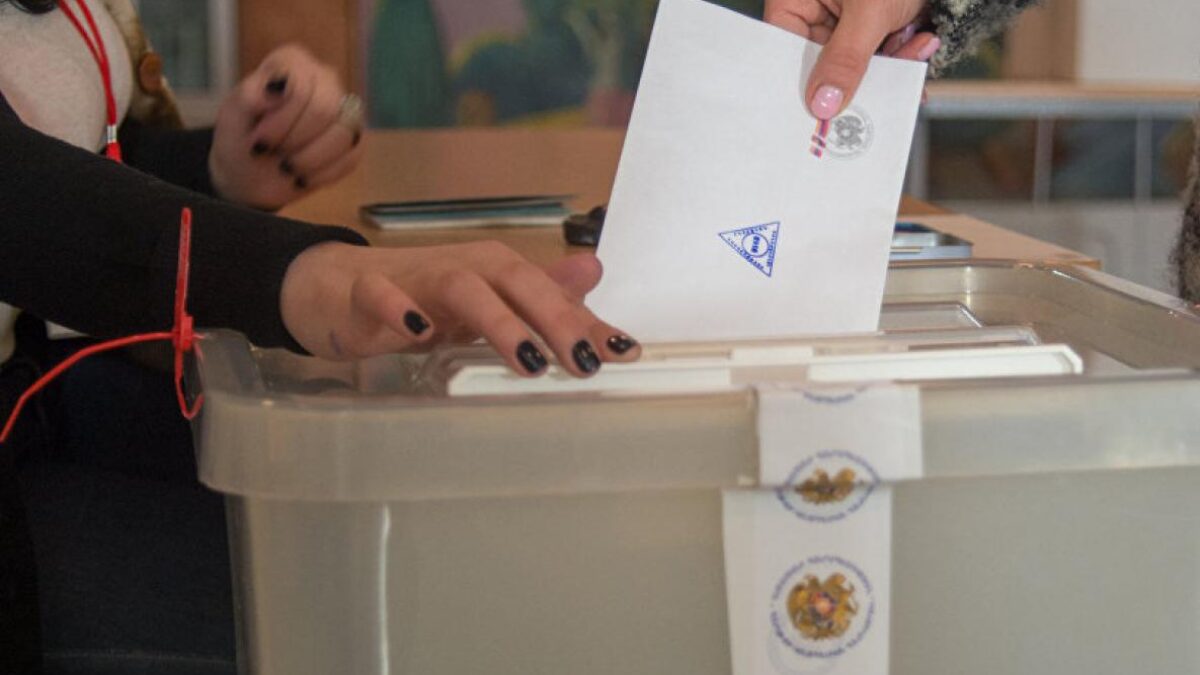
Nine years in prison instead of seven: tougher penalties for vote-buying
Parliament Speaker Alen Simonyan also outlined the agenda of the extraordinary parliamentary session that the ruling party plans to convene. He announced another legislative initiative aimed at increasing penalties for both offering and accepting electoral bribes.
Simonyan said that the maximum prison sentence for accepting electoral bribes would increase from seven to nine years. Penalties for offering bribes would also be toughened. Those found guilty of vote-buying during election campaigns would face up to 10 years in prison, compared with the current maximum of eight years.
He stressed that harsher criminal penalties would not be the only measure applied against offenders.
“There will be other instruments as well. In addition, political consequences are also being considered,” Simonyan said.

Anti-Corruption Committee proposes legislative amendments
The Anti-Corruption Committee of Armenia has asked the justice minister to initiate legislative amendments aimed at minimising the use of criminal schemes uncovered during recent investigations. The proposed measures are far-reaching and could include barring political forces linked to such schemes from participating in elections.
In a statement, the committee said its proposal was based on evidence obtained during investigations into corruption-related offences uncovered in the run-up to the 7 June 2026 parliamentary election. An analysis of these cases, it said, revealed a number of mechanisms used to facilitate electoral corruption schemes.
A draft law prohibiting parties implicated in vote-buying schemes from taking part in elections is now expected to be developed in the near future.
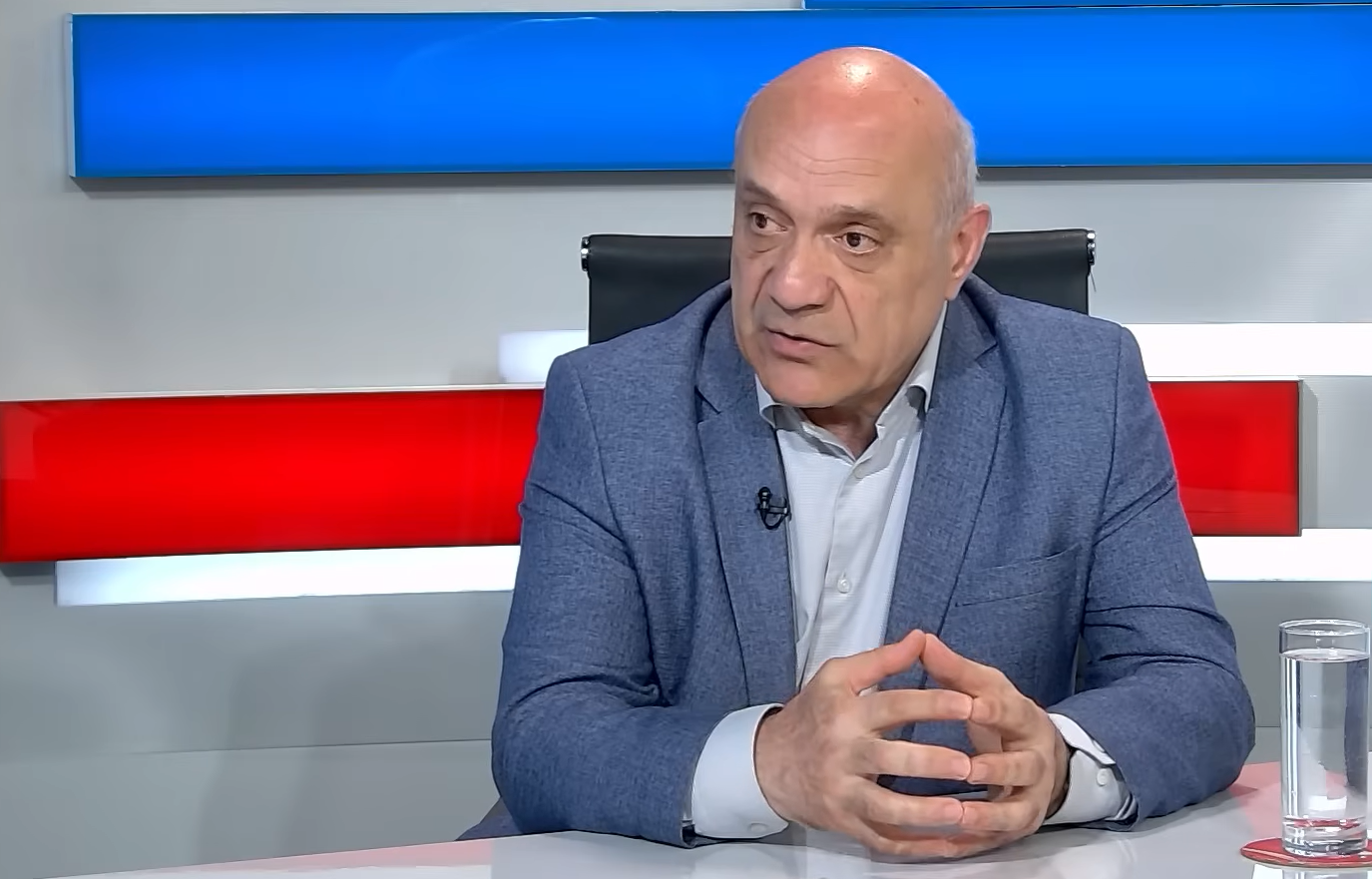
Call for law enforcement to uncover alleged vote-buying scheme
According to Deputy Parliament Speaker Ruben Rubinyan, it is obvious to him — and to any reasonable observer — that an individual distributing cash could not simply have “woken up one morning and decided” to hand out electoral bribes.
“It is obvious that [representatives of political forces] first gave these people the money and then instructed them: ‘Here is the money, go and pay people so that we get elected.’ To me, it is obvious that Strong Armenia, the Armenia Alliance and Prosperous Armenia bear responsibility. The leadership of these parties organised and directed this vote-buying process.“
Rubinyan said that everyone involved in distributing electoral bribes should be arrested.
“I call on law enforcement agencies to expose this scheme.”
He argued that arresting only those who carried out orders would not be sufficient, and called for those who allegedly organised and directed the “criminal scheme” to be held accountable as well.