How Heydar Aliyev explained Azerbaijan’s turbulent 1990s: power, war and opposition






The 1990s through Heydar Aliyev’s eyes
The years between 1990 and 1993 are widely seen as one of the most turbulent and defining periods in modern Azerbaijani history.
The collapse of the Soviet Union, the escalation of the Karabakh war, political infighting and a deep crisis of state authority shaped the country’s political trajectory for decades to come. One of the central figures of that period was Heydar Aliyev.
Heydar Aliyev was born on 10 May 1923. He was one of Azerbaijan’s most influential political figures, leading the country both during the Soviet period and after independence.
In 1969, he was appointed first secretary of the Central Committee of the Communist Party of Azerbaijan, effectively becoming the leader of Soviet Azerbaijan. He remained in the post until 1982, before being brought to Moscow as first deputy chairman of the Soviet Council of Ministers, a position he held until 1987.
After the collapse of the Soviet Union, he returned to power in 1993, when Azerbaijan was facing political turmoil and military setbacks in the Karabakh war. He served as president until 2003.
Following his death on 12 December 2003, he was buried in Baku. His son, Ilham Aliyev, has led Azerbaijan since October 2003.
The article is based on a study by the Baku Research Institute titled “Modern Azerbaijani History Through the Eyes of Politicians: Heydar Aliyev”.
According to a study by the Historical Research Group at the Baku Research Institute, the speeches and interviews of Heydar Aliyev provide an important insight into how he viewed the political turmoil of the early 1990s.
The study notes that, although Aliyev never wrote memoirs about his political career, his speeches, statements and interviews — collected in the 38-volume series “Our Independence is Eternal” — reflect his interpretation of the events of 1990–1993.
After being removed from the Soviet leadership in 1987, Aliyev said he spent years in political isolation in Moscow. He claimed that following the events of January 1990, attempts were made to prevent his return to Azerbaijan. At the same time, official documents suggest there was no formal ban on his entry into the country. The Azerbaijani leadership at the time feared his political ambitions and introduced an age limit for presidential candidates, effectively ruling him out of the election.
In 1990, Aliyev was elected to parliament from Nakhchivan, and a year later became chairman of the Supreme Assembly of the Nakhchivan Autonomous Republic. He later described his years there as “three years in exile”.
In his speeches, he referred to shortages of electricity and gas in the region, saying residents had been forced to cut down up to 70% of forests to survive the winter. Aliyev blamed the Popular Front authorities for the crisis, arguing that the blockade of Nakhchivan was being maintained deliberately.
The study notes that Heydar Aliyev emphasised that Turkish President Suleyman Demirel had provided Nakhchivan with a $100m loan, while Iranian President Akbar Hashemi Rafsanjani had also offered support. Aliyev described one of his key achievements as securing an agreement with Armenian President Levon Ter-Petrosyan under which Nakhchivan would not come under attack.
The political crisis of 1993 accelerated Aliyev’s return to power. Azerbaijani setbacks in the Karabakh war, a standoff between Suret Huseynov and the Popular Front government, as well as a separatist uprising led by Alikram Humbatov in the Talysh region, further destabilised the country.
In his speeches, Aliyev accused the Popular Front authorities of political inexperience and described their rule as “an experiment”. In his view, once elected president, Abulfaz Elchibey should have stepped down as leader of the Popular Front movement. Aliyev argued that those who came to power “did not understand what a state was”, leading to corruption and a governance crisis.
Notably, in his first parliamentary speech on 15 June 1993, Aliyev gave a positive assessment of the Popular Front’s policies on market reforms and independence. However, just two weeks later, in an interview with Russian television, he sharply criticised Elchibey, accusing him of being unable to govern the country.
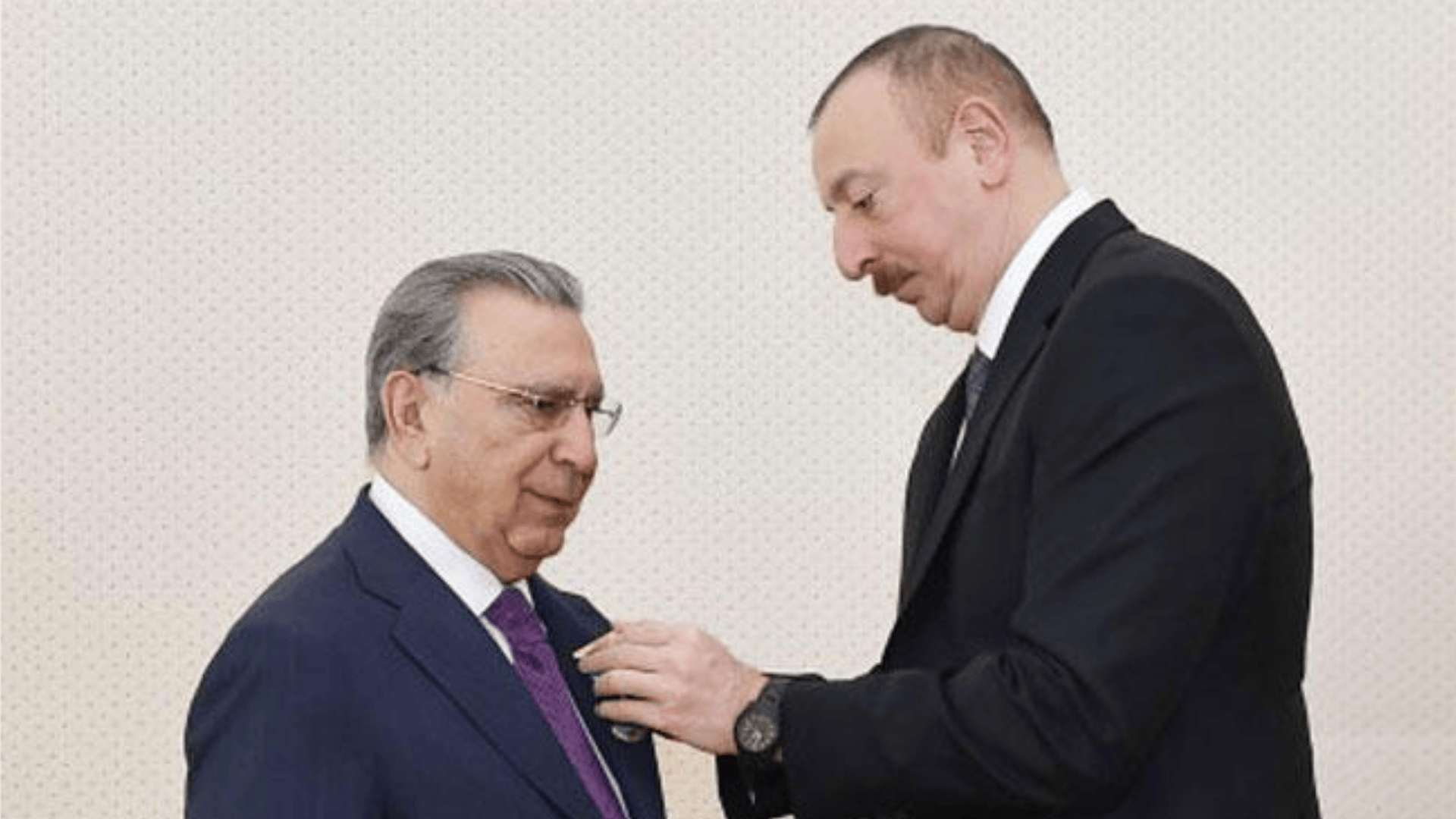
According to the Baku Research Institute study, a strong presidential system was central to Heydar Aliyev’s political thinking. He viewed parliamentary rule as dangerous for Azerbaijan, portraying it as a source of political infighting and instability. In his view, Azerbaijani society was not ready for parliamentary democracy, and maintaining state stability required power to be concentrated in a single centre.
On the Karabakh war, Aliyev accused the Popular Front authorities of failing to build a regular army, losing control over armed groups and “deliberately surrendering” some territories. He repeatedly raised the issue of desertion in the armed forces and called on young people to join the military. At the same time, he pointed to widespread corruption and abuses within the army.
The authors of the study note that, despite publicly expressing support for democracy and political freedoms, Aliyev took a different approach towards his political opponents. He largely portrayed confrontation between the opposition and the authorities as “a struggle for power” and questioned the sources of funding for independent media outlets.
By the end of 1993, Aliyev had fully consolidated power, while representatives of the Popular Front had been pushed out of state institutions. They were largely replaced by figures from the former Soviet nomenklatura.
According to the study’s conclusions, this period marked the end of Azerbaijan’s brief democratic experiment and the country’s return to a highly centralised system of rule.
The 1990s through Heydar Aliyev’s eyes