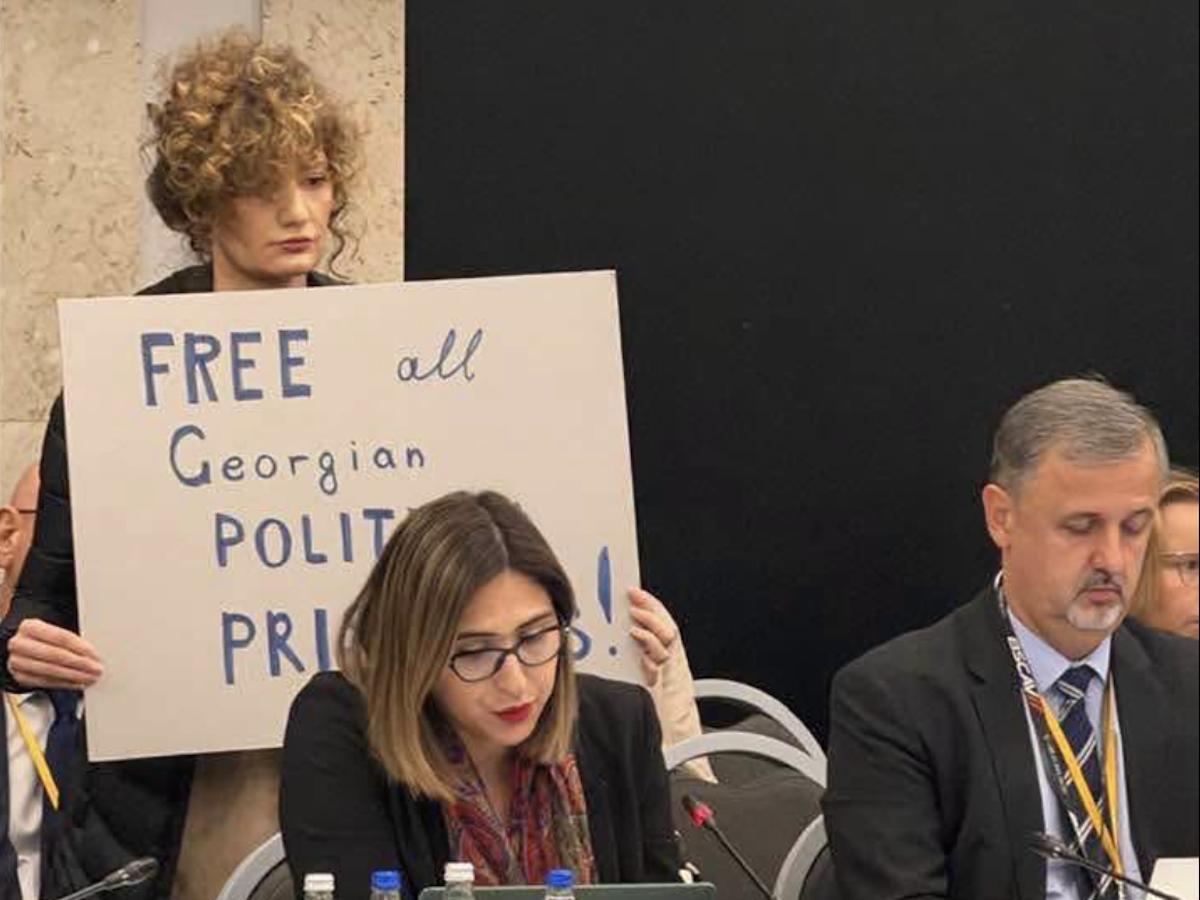


Transparency International declares detainees in Georgia’s 4 October case political prisoners






Political prisoners in Georgia
In an extensive report on the events of 4 October 2025 in Georgia, Transparency International Georgia claims that the authorities used a mechanism of political persecution against protest participants and deliberately constructed a narrative of an alleged “coup attempt” in order to portray the protest as an attempt at violent overthrow.
According to the organisation, the attempt ultimately failed, as neither the public nor international partners were convinced that a genuine plan to violently seize power existed. The report’s main conclusion is that those detained in connection with the 4 October case are political prisoners.
On 4 October 2025, municipal elections took place in Georgia amid a renewed political crisis in the country.
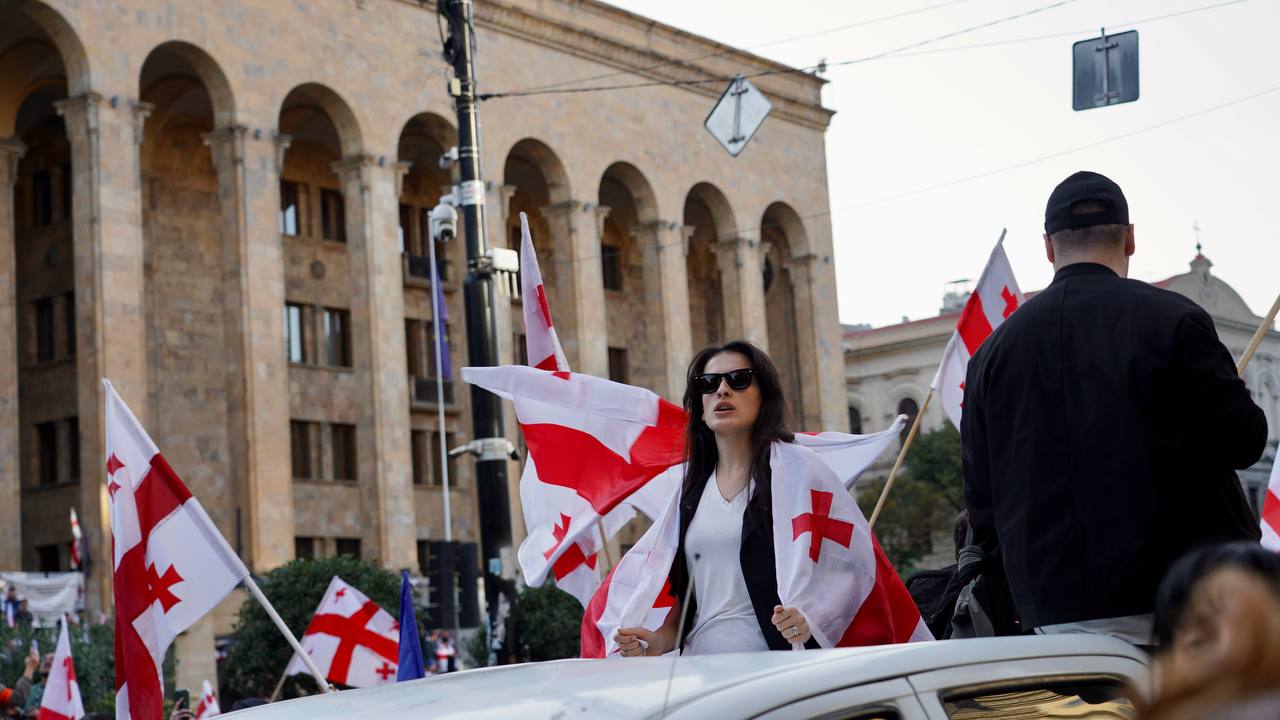
A number of political leaders organised a large anti-government rally in central Tbilisi, declaring their intention to carry out a “peaceful revolution”. They called on demonstrators to march towards the presidential palace and occupy it.
Several groups of protesters did so. They managed to enter the palace grounds, but by that point police and special forces had arrived at the scene. The protest was dispersed, while organisers and participants in the storming were detained.
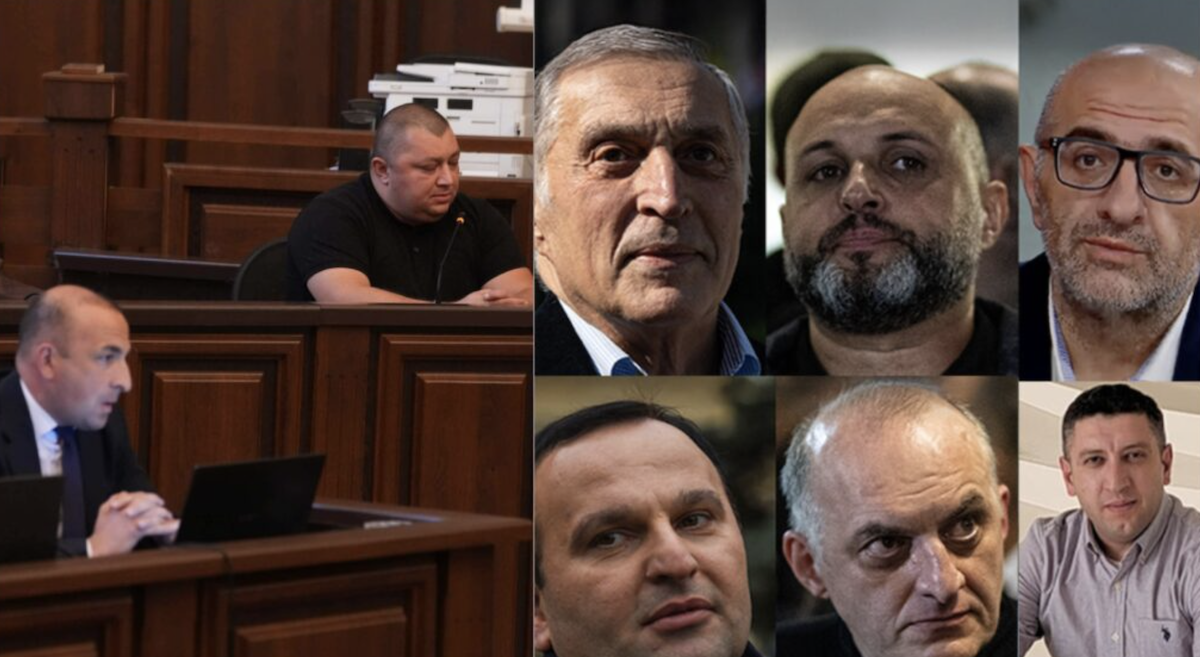
In the criminal case opened afterwards, charges were brought against 66 people. Five individuals — Paata Burchuladze, Murtaz Zodelava, Irakli Nadiradze, Lasha Beridze and Paata Mandzhgaladze — were each sentenced to seven years in prison. Three others — Tornike Mchedlishvili, Nika Gventsadze and Irakli Chkhvirkiya — received five-year sentences, while another defendant named Irakli was sentenced to two years in prison.
What TI report says
Participants in the rally accused the ruling party Georgian Dream of rigging the elections, abandoning the country’s European course and suppressing dissenting voices. The protest’s main political message was a call for the “peaceful overthrow” of the authorities — wording that the government later described as an “attempted coup”.
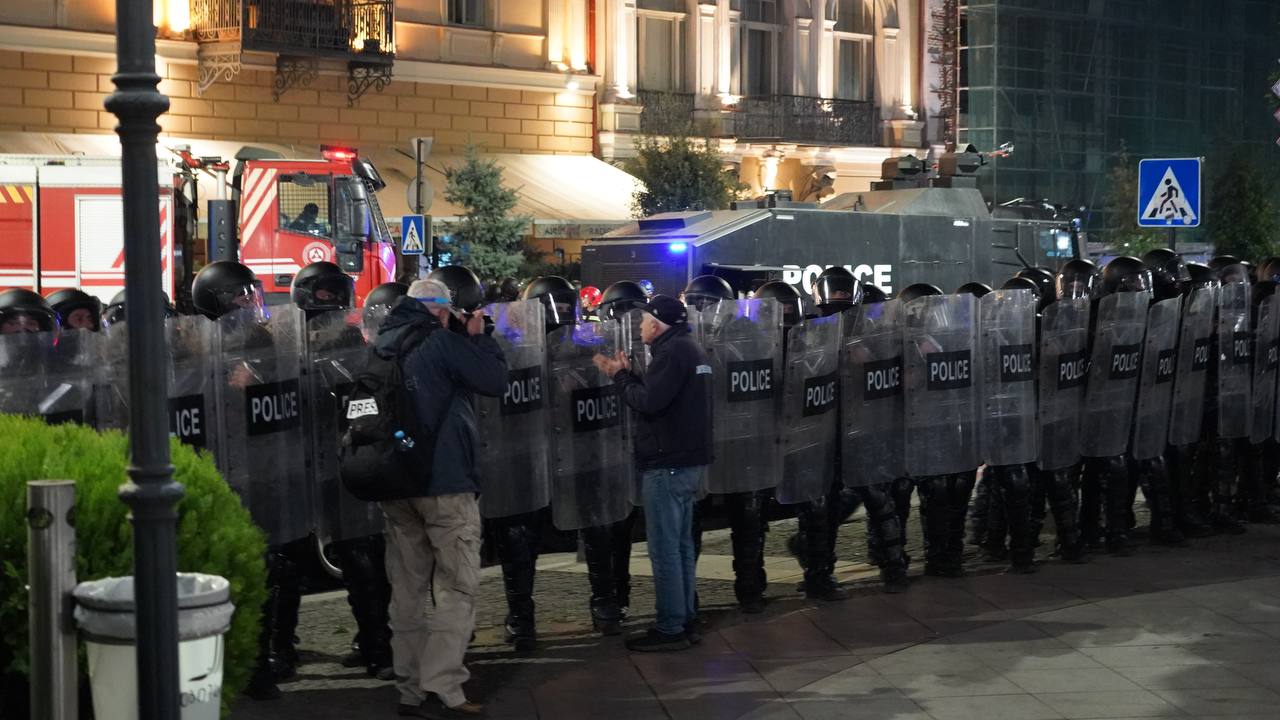
According to Transparency International Georgia, prosecutors built a significant part of their case around this phrase. However, TI argues that the call for a “peaceful overthrow” was a political slogan rather than an incitement to violence. The organisation states that provisions of the Criminal Code concerning the violent overthrow of power can only be applied where there is a direct call for violence or armed action.
Yet, the report stresses, neither the public speeches nor the protest scenario indicated the existence of a pre-planned violent operation. In TI’s assessment, the authorities turned political rhetoric into a criminal case.
The most controversial episode unfolded outside the presidential palace. Some protesters moved towards the building, where, minutes later, one section of the fence collapsed and several demonstrators entered the courtyard. Special forces then quickly took control of the area.
The report’s authors place particular emphasis on the fence itself. According to the organisation, there are reasonable grounds to suspect that the structure had been damaged in advance and fixed in such a way that it would not withstand even minimal pressure. The suspicion is reinforced by footage broadcast by TV Pirveli, which, according to the organisation, appears to show that the metal supports had been deformed.
The organisation also considers it suspicious that the fence — one of the central pieces of evidence in the case — was not properly preserved by law enforcement authorities. It was neither sealed off nor subjected to a full forensic examination. Moreover, experts reportedly prepared their conclusions without ever examining the fence itself, relying solely on photographic material.
Transparency International Georgia suggests that law enforcement agencies may themselves have created the conditions that triggered the confrontation. The report describes this as a possible “trap” or provocation — a practice criticised by the European Court of Human Rights in a number of its rulings.
The report also separately examines the role of the courts. Its authors argue that in a country where hundreds of public officials and dozens of judges are under international sanctions, it is difficult to speak of an independent judiciary. In their view, this environment created the conditions for political cases to be pursued through criminal proceedings.
The report’s central argument is that the Georgian authorities used the events of 4 October not to neutralise a genuine threat, but to intimidate the protest movement. According to the organisation, the theory of an attempted “coup” was never substantiated, while the case itself more closely resembles an attempt to portray a mass protest as a criminal act.
Political prisoners in Georgia