Gas tariffs in Georgia set to change, with new rates due in December


Gas prices in Georgia
In May, Prime Minister Irakli Kobakhidze promised that gas tariffs would remain unchanged. However, in October, parliament fast-tracked legislation authorising the National Energy and Water Supply Regulatory Commission (GNERC) to introduce higher tariffs for households with higher consumption.
Georgia has yet to officially announce any increase in gas prices.
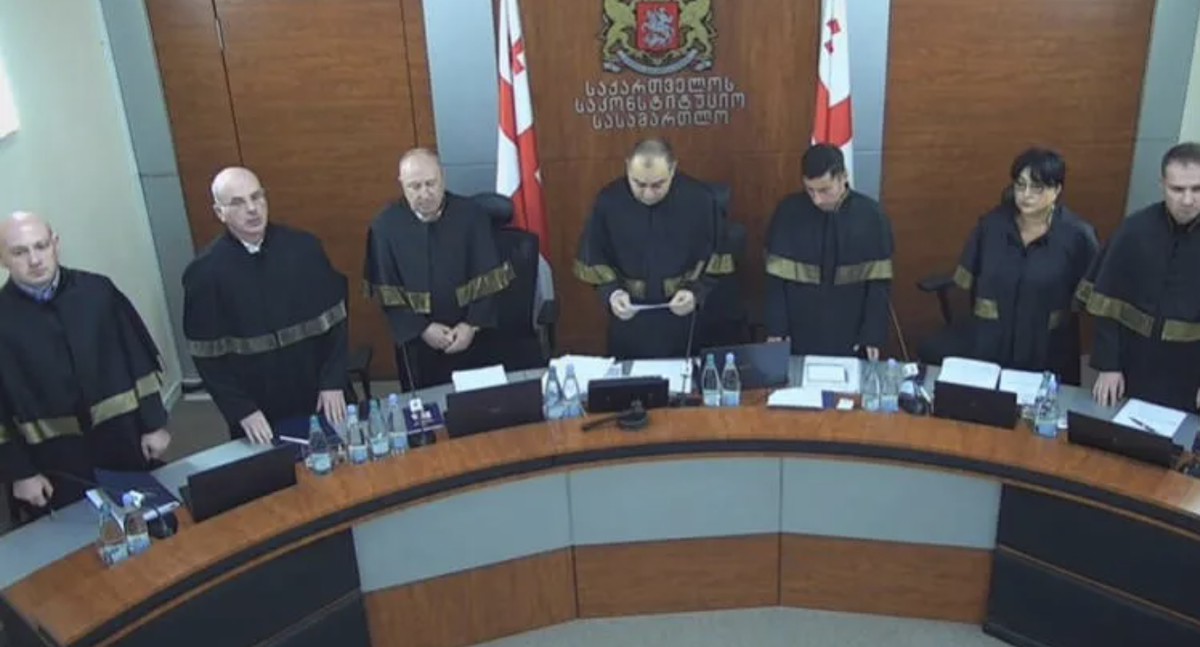
However, on 29 October, parliament passed a law allowing the Georgian National Energy and Water Supply Regulatory Commission (GNERC) to set household gas tariffs according to consumption levels.
The new tariffs are due to be set in December.
The authorities say the change aims to promote social fairness and encourage energy conservation.
However, the figures point to a different picture. Georgia’s annual gas consumption is rising, while supplies of cheaper Azerbaijani gas remain unchanged. The country covers the resulting shortfall with more expensive gas, mainly from Russia.
Against this backdrop, introducing tiered tariffs could allow the authorities to pass some of the rising costs on to consumers while formally keeping the “base tariff” unchanged — the very tariff the government promised in May not to raise.
For now, this remains a hypothesis based on analysis. The December decision by GNERC, when it sets specific consumption thresholds and the corresponding tariffs, will confirm or disprove it.
What has been decided — and what remains unclear
Parliament passed the law at its third reading, with 75 MPs voting in favour and five against. GNERC now has the authority to introduce different gas tariffs for household consumers according to their consumption levels. The powers will remain in force until 1 January 2038.
Parliament fast-tracked the bill and passed it within three days. The current gas tariff expires in December, so lawmakers needed to approve the new system before GNERC makes its decision at the end of the year.
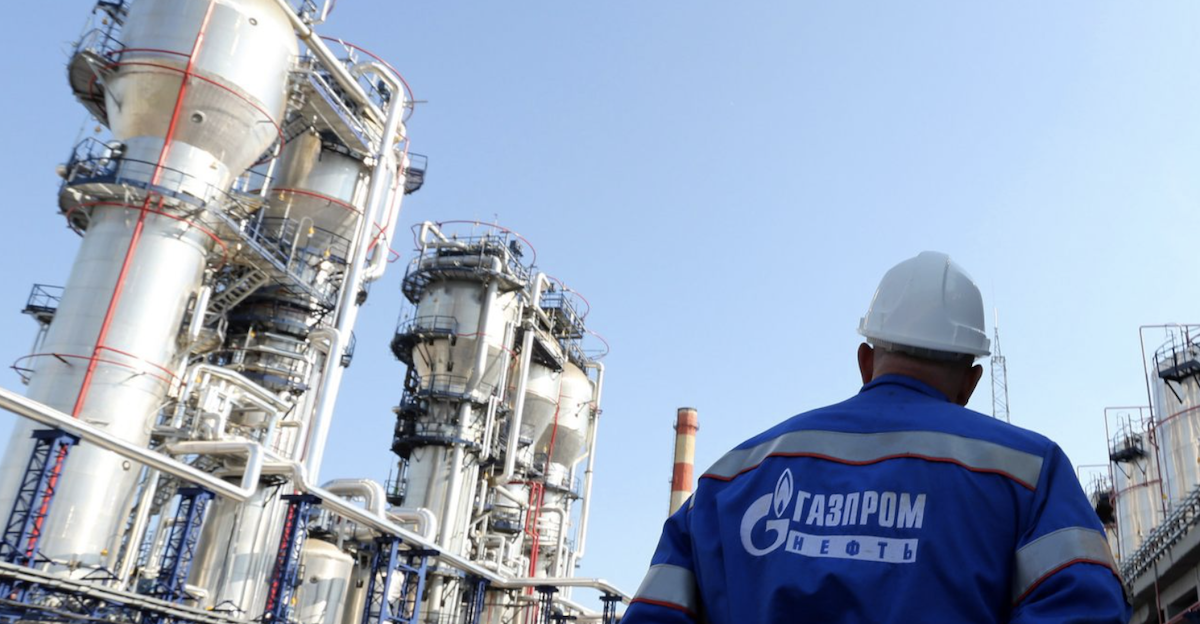
At present, households pay the same price for each cubic metre of gas, regardless of how much they consume. The Georgian National Energy and Water Supply Regulatory Commission (GNERC) sets separate tariffs for the service areas of individual gas distribution companies. Customers of Tbilisi Energy, which mainly serves the capital, pay 53.9 tetri (about $0.21) per cubic metre.
Customers of SOCAR Georgia Gas pay 56.9 tetri. The company is a subsidiary of Azerbaijan’s state-owned SOCAR and serves most of the country, apart from Tbilisi and several other settlements.
Customers of Sakorgaz also pay 56.9 tetri, while households served by the small regional company Telavgaz pay 58.9 tetri.
On 21 October, GNERC chairman Davit Narmania said that the commission would review gas and water tariffs by the end of the year, as the current tariff period expires in December. Narmania did not specify what changes the commission might introduce.
Shota Berekashvili, one of the bill’s sponsors and chairman of parliament’s Economic Policy Committee, explained the proposed model as follows: “Those who consume more will pay higher tariffs.” Asked about the specific consumption thresholds and prices, he referred the question to GNERC, saying: “GNERC sets the tariff and the final price.”
In its statement, GNERC said the changes aim to protect socially vulnerable households, ensure access to utility services and encourage the efficient use of resources.
Neither the commission nor the bill’s sponsors have said how many households could face higher tariffs.
The explanatory note accompanying the bill justifies the changes solely on social grounds. It makes no mention of gas prices, imports, Azerbaijan or Russia. Moreover, the six MPs from the parliamentary majority who drafted the bill explicitly state that it has no connection with any international agreements.
The explanatory note contains no assessment of the financial impact on households. The authors did not consult experts or examine the experience of other countries. One detail is particularly noteworthy: they say the new mechanism will introduce tariff changes gradually for different consumer groups. In other words, the document already provides for tariff changes — hardly an unexpected development.
The May promise and the October law
Last December, GNERC ruled out the possibility of an increase in gas prices.
On 17 December 2025, GNERC chairman Davit Narmania said: “At this stage, there are neither expectations nor grounds for an increase in natural gas tariffs.” According to Civil.ge, following consultations with the government, the commission decided to keep gas prices unchanged for one year.
On 18 May 2026, Georgia and Azerbaijan extended their 2003 gas purchase and sale agreement for another 20 years. The following day, Prime Minister Irakli Kobakhidze announced that the new agreement would allow Georgia to maintain existing household tariffs.
He described the terms as “ideal” but declined to disclose specific details, citing commercial confidentiality. In June, Kobakhidze clarified that Georgia would continue to receive 500 million cubic metres of gas annually at a “social” (subsidised) price.
Even before the agreement, energy expert Murman Margvelashvili had warned that hopes of maintaining the previous terms were unrealistic. “It is naive to believe that anyone would willingly continue supplying gas on the same terms,” he told Batumelebi in an interview in April.
According to Margvelashvili, Georgia had been paying $70-75 per 1,000 cubic metres for this gas. If the price rose to $120, the country would have to pay an additional $60-70 million annually for the same volume.
The price set under the new agreement has not been made public.
Economist Roman Gotsiridze, a former president of the National Bank and an opposition politician, argues that the parties signed only an intergovernmental agreement in May, while they have yet to conclude a commercial contract for additional gas supplies. “We know how much gas we will receive from Azerbaijan, but nobody knows the price yet,” he said on PalitraNews.
Gotsiridze said Georgia had bought gas from the Shah Deniz field at $70 per 1,000 cubic metres, but that preferential pricing arrangement expires at the end of the year. This contradicts the prime minister’s claim that Georgia had secured the continuation of the subsidised tariff. Since the authorities have not disclosed the exact price, it is impossible to verify either account.
“The government misled us by claiming that the contract with Azerbaijan was so favourable that the subsidised gas tariff would not rise,” Gotsiridze said. He concluded that gas costs would increase for everyone, adding: “It is a fact — they have decided to raise the tariff.” However, he provided no evidence to support his claims.
Analyst Kakha Kakishvili takes a more cautious position. “I am not claiming that a decision to increase natural gas prices has already been made,” he said.
He questioned why the authorities had introduced a new mechanism so urgently in October, just before the start of the heating season, if the prime minister had promised in May to keep tariffs unchanged. “What has changed in these five months?” Kakishvili asked.
He also disagreed with the assumption that households consuming more gas can necessarily afford to pay higher tariffs. High gas consumption often occurs in large families, among pensioners and in homes with poor insulation.
“In these circumstances, higher gas consumption is not a luxury but a necessity,” he wrote.
Kakishvili believes the government should publish specific figures showing how many households will keep their current tariff and how many will face an increase.
The price of cheaper gas is fixed, but consumption is rising
According to a 2025 report by the Georgian National Energy and Water Supply Regulatory Commission (GNERC), Georgia consumed 3.172 billion cubic metres of gas last year.
Imports accounted for 99.6% of this volume: 71.7% came from Azerbaijan and 27.9% from Russia.
Russian gas imports reached 886 million cubic metres, a 12% increase on 2024.
The regulator itself has explained the reason for this rise. According to GNERC member Givi Sanikidze, annual imports from Azerbaijan remained at around 2.3 billion cubic metres between 2020 and 2025, while consumption rose from 2.6 billion to almost 3.2 billion cubic metres.
Georgia covered the shortfall with Russian gas. Imports from Russia increased from 204 million to 886 million cubic metres over the same period.
Russian gas comes at a high price. Under Prime Ministerial Decree No. 2212 of 25 December 2025, Georgia pays $215 per 1,000 cubic metres for the first 250 million cubic metres of Russian gas, and $185 per 1,000 cubic metres for volumes above that threshold. By comparison, Margvelashvili said additional gas from Azerbaijan cost $70-75 per 1,000 cubic metres. This pricing structure has been in place since 2017.
According to BM.GE, the government website published a decree with an attached document specifying the exact prices. The authorities removed the document after experts and media outlets drew attention to it. The decree itself classified the attachment as a “commercial secret”.
In the first quarter of 2025, Georgia spent more on Russian gas than on Azerbaijani gas for the first time in 18 years.
According to the plan published by the Ministry of Economy, Georgia intended to import just 400 million cubic metres of gas from Russia in 2026, equivalent to 12% of total consumption. That is half the volume imported last year, when Russian gas accounted for almost 28% of total consumption.
The plan offers no explanation for the intended reduction in Russia’s share this year, particularly given that consumption is not falling but rising. Actual figures already contradict the plan. According to Netgazeti, the value of Russian gas purchases continued to increase between January and September 2026.
For many years, the state-owned Georgian Oil and Gas Corporation has kept household gas prices low. The corporation buys gas and sells it to distribution companies at a price below its own purchase cost. It covers the difference from its own revenue.
In 2013, the corporation cut the tariff in this way, using its own funds. According to calculations published by BM.GE in 2021, the subsidy cost the company 500 million lari over two years. Earlier this year, energy expert Gia Arabidze said that this arrangement places a heavy burden on the corporation.
This mechanism helps explain why the government may need a system of tiered tariffs, although the authorities have not said so explicitly. The volume of cheaper Azerbaijani gas remains unchanged from year to year.
As domestic gas consumption rises, more expensive supplies — mainly from Russia — cover the additional demand. Under a system of tiered tariffs, households with the highest consumption would take on some of the cost of this more expensive gas, shifting the burden away from the state-owned company.
Who will be affected?
According to figures published on the basis of a GNERC report, the average household in Tbilisi consumes 1,304 cubic metres of gas a year. In the towns of the Shida Kartli region, the figure stands at 1,416 cubic metres, while in the villages of Racha-Lechkhumi it is 503 cubic metres.
At the current tariff, an average household in Tbilisi pays around 704 lari a year. Most of this amount goes towards heating during the winter months.
Much will depend on the model GNERC chooses. Neighbouring countries use different approaches. Azerbaijan has operated an annual quota system since 2016. Households pay the lowest rate for consumption of up to 1,200 cubic metres a year, a medium rate for up to 2,500 cubic metres, and the highest rate for any consumption above that level.
Turkey introduced monthly consumption limits in spring 2026, setting higher thresholds for colder provinces. In both countries, the higher tariff applies only to the gas consumed above the established limit.
Armenia, by contrast, has a single tariff. The average annual consumption of a household in Tbilisi — 1,304 cubic metres — already exceeds the lowest threshold under Azerbaijan’s system. In other words, if Georgia adopted a similar model, the average household in Tbilisi would have to pay the higher rate.
Another important question is whether the authorities will set annual or monthly limits. Georgia already uses monthly consumption limits for electricity. If the authorities apply the same approach to gas, many households will move into a higher tariff category during the winter, when they heat their homes.
As a result, households that use gas for heating will pay more. These will not necessarily be the wealthiest households.
Critics say tariff increases are being “packaged” to make them more palatable
Gotsiridze sees the proposed model as a way to “package” a price increase so that consumers find it less painful.
“Tariffs will rise for everyone, although the impact will vary: some households will feel a smaller increase, while others will face a more significant one,” he said.
In a social media post, he argues that consumption levels do not reliably indicate household income. Large families and people living in poorly insulated homes, for example, naturally need more gas.
He believes the authorities should provide social support through targeted programmes rather than shift the financial burden from one group of consumers to another.
Electricity tariffs offer a warning. Georgia has operated a tiered electricity pricing system for years, but the increase in April 2026 affected every tariff band. Household rates charged by Telmiko now range from 20.041 to 28.537 tetri per kWh. According to Civil.ge, the increase ranged from 18% to 34%.
Gotsiridze says the steepest rise — almost 35% — affected households that consume up to 100 kWh of electricity a month. The tiered system therefore failed to protect the most economical consumers from higher prices.
The opposition sees the change as an attempt to increase household expenses ahead of the winter season. Lasha Parulava, a member of the political council of the Unity – National Movement party, called for the tariff revision to be cancelled, saying: “This is a path to social terror!”
He argues that higher utility bills will increase business costs, eventually pushing up the prices of bread and other bakery products.
Sopio Khorguani, an MP from the Gakharia for Georgia party, recalled the May agreement, which the government had presented as a success. She questioned why gas prices could rise if the agreement was genuinely so favourable.
Khorguani claims the government has already decided to raise tariffs. In her view, a simultaneous increase for all consumer groups could trigger public protests. The authorities are therefore presenting the changes as though only wealthier households will have to pay more. However, Khorguani provides no evidence to support this claim.
Nikoloz Alavidze, a former deputy economy minister and co-founder of the organisation Djeri Sakartvelo, noted that parliament passed the law in an extremely short time, without assessing its potential impact or properly informing the public.
How Georgia’s gas situation developed: a brief history
Until the mid-2000s, Georgia received almost all its gas from Russia. On 22 January 2006, during a particularly harsh winter, two explosions in North Ossetia damaged both gas pipelines leading to Georgia. A third explosion several hours later knocked out a power transmission line.
For several days, much of the population remained without gas or electricity. Emergency supplies from Azerbaijan and Iran helped the country through the crisis. President Mikheil Saakashvili accused Russia of carrying out deliberate sabotage, while Moscow blamed insurgents. Authorities never established who was responsible.
Later that year, Russia imposed an embargo on Georgian wine and mineral water. In October, it completely cut transport and communications links with Georgia. By the end of the year, Gazprom demanded that Georgia double gas prices and offered lower rates only if Tbilisi sold it the main gas pipeline. Georgia refused.
The South Caucasus Pipeline provided an alternative. Under an agreement reached in October 2003, before the Rose Revolution, Georgia secured the right to receive 5% of the gas transported through the pipeline as a transit fee. The agreement also allowed it to buy additional gas at a preferential price. The pipeline began operating in late 2006.
By 2009, gas imports from Azerbaijan had exceeded supplies from Russia. When the United National Movement left power in 2012, Tbilisi residents paid 50.62 tetri per cubic metre of gas. Russia mainly supplied gas to Georgia as payment in kind for transit deliveries to Armenia.
During the 2012 election campaign, Bidzina Ivanishvili said that gas prices could fall threefold. In March 2013, the tariff did fall, although not by three times: it dropped from 51 to 46 tetri. The state-owned corporation covered the difference.
In 2017, the government accepted Gazprom’s demand to replace gas payments for transit with cash payments. Energy Minister Kakha Kaladze said the agreement’s details were a commercial secret. In Tbilisi, the household tariff rose from 46.1 to 54 tetri in June 2021 and has remained at that level ever since.
Prices for businesses, which the government does not regulate, have risen much more sharply. According to a 2024 review by the Transport Corridor Research Center, business gas tariffs increased by 72% between September 2018 and January 2024, rising from 75 tetri to 1.29 lari. The report identified the depreciation of the Georgian lari as the main reason.
Gas prices in Georgia