Azerbaijan gets just $65 of every $120 barrel of oil – where does rest go?


Azerbaijan’s oil revenues
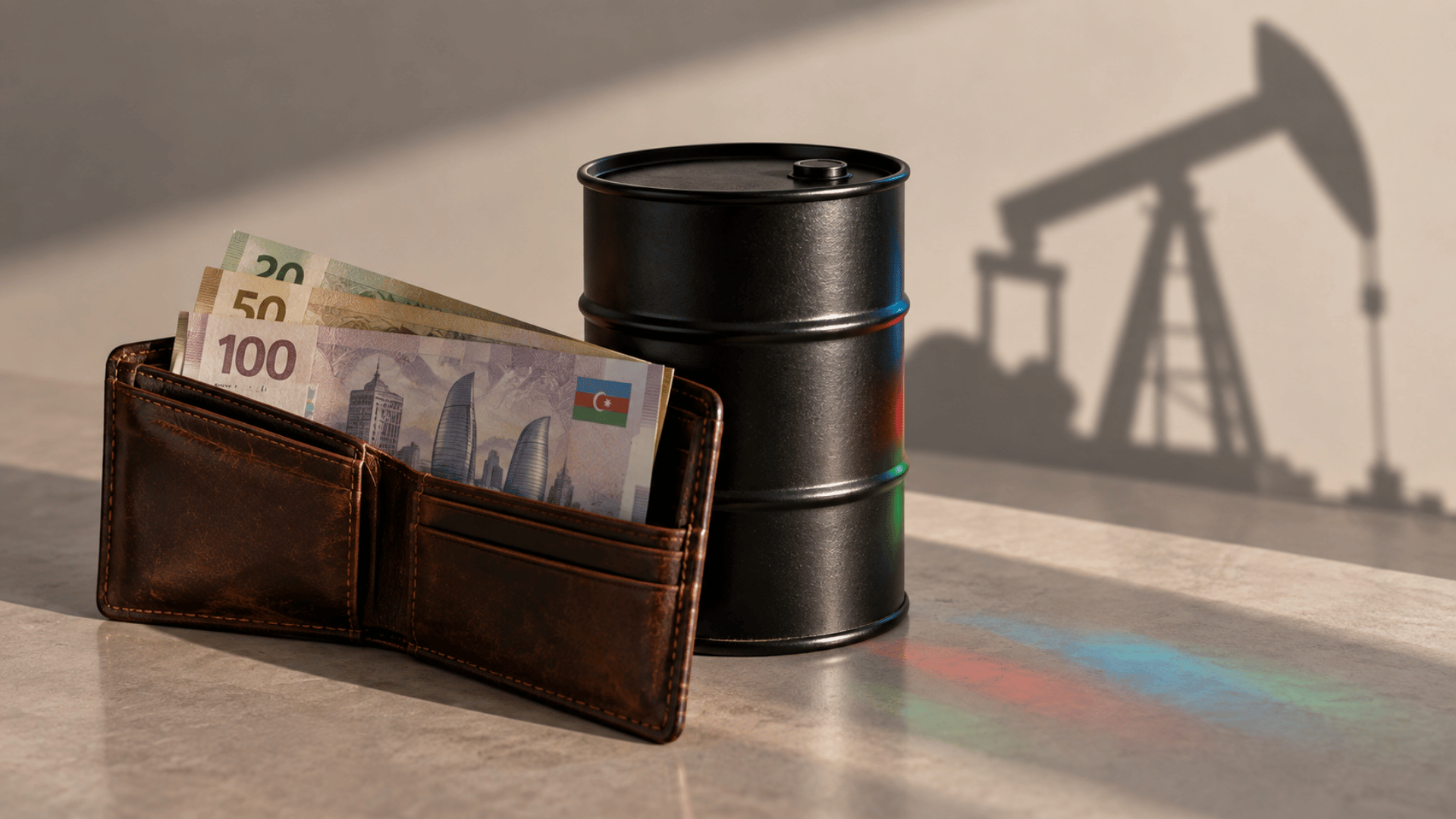
The price of Azerbaijani oil on the global market fluctuated between $120 and $130 a barrel in October, reaching $133 on 9 October. However, the state budget was drawn up on the basis of a forecast price of $65 a barrel.
The government is now using the same benchmark price for the 2027 budget.
Yet rising oil prices have not translated into the expected increase in either the State Oil Fund’s assets or state budget revenues.
According to a report published by the State Oil Fund on 20 October, its assets have increased by just $462 million since the beginning of the year. Meanwhile, transfers from the fund to the state budget have fallen by 11.4% compared with the same period last year.
JAMnews previously reported that the government plans to reduce transfers from the Oil Fund and increase income tax deductions from salaries in the 2027 budget. Now another question arises:
If oil is selling for significantly more than the price assumed in the budget, where is the additional revenue going?
Why is the budget based on a price of $65 a barrel?
Every year, when preparing the state budget, the government forecasts the average oil price for the coming year. It uses this estimate to calculate tax receipts and other revenues.
In November 2025, Finance Minister Sahil Babayev told parliament that the government had set its 2026 oil price forecast at $65 a barrel based on average estimates from 22 organisations. At the time, Brent crude traded at $64–65 a barrel.
However, the situation changed in early 2026.
In its July report, the State Oil Fund noted that the conflict between the US and Iran had triggered “high volatility” in energy markets. According to figures that Samir Nasirov, head of the Central Bank’s Statistics Department, presented in September, Azerbaijani oil averaged $94.5 a barrel in the first half of the year.
That was 33% higher than in the same period last year and approximately 45% above the price assumed in the budget.
According to the Finance Ministry’s preliminary figures, the 2027 budget also assumes an oil price of $65 a barrel. However, in its medium-term expenditure framework for 2027–2030, the ministry describes the likelihood of oil prices falling below $65 next year as “low”.
In other words, the budget relies on a price close to what the ministry itself considers one of the less favourable scenarios.
Using a lower forecast price means that additional oil revenues go to the State Oil Fund rather than directly into the state budget.
Economist Natig Jafarli made this point back in March, when oil prices began to rise.
He said higher prices would affect “not the state budget directly”, but the consolidated budget, which also includes the State Oil Fund’s resources.
According to Jafarli’s calculations, every $1 increase in the oil price brings the fund approximately $450,000 in additional revenue each day.
Supporters of the government’s policy see this additional revenue as a reserve that could help finance security spending.
In March, Vugar Bayramov, a member of the Milli Majlis Committee on Economic Policy, told OC Media that the additional revenue would allow the government to fund “priority areas such as national security”.
Why are higher oil prices not bringing additional revenue into the state budget?
The government determines how much money the State Oil Fund must transfer to the state budget each year before the financial year begins. It sets the amount out in the fund’s budget.
According to the Finance Ministry, the fund transferred 9.628 billion manats (approximately $5.663 billion) to the state budget between January and September, exactly as planned.
However, this was 1.23 billion manats (approximately $723 million) less than in the same period last year.
Total state budget revenue from the oil and gas sector reached 12.93 billion manats (approximately $7.6 billion). This was 625.5 million manats (approximately $368 million), or 5.1%, above the forecast.
Since the State Oil Fund made transfers as planned, tax payments from oil companies accounted for the additional revenue.
According to the ministry, the Shah Deniz project paid 1.54 billion manats in taxes (approximately $906 million), SOCAR paid 1.3 billion manats (approximately $765 million), and the Azeri-Chirag-Gunashli project contributed 461 million manats (approximately $271.2 million).
Overall, state budget revenues in the first nine months exceeded the forecast by 2.8%.
In other words:
- In the first half of the year, oil prices were approximately 45% above the level assumed in the budget.
- Yet total state budget revenues exceeded the forecast by just 2.8% in the first nine months.

Если деньги остаются в фонде, почему его активы не растут?
Согласно отчету Нефтяного фонда, значительная часть дополнительных доходов либо не поступила в фонд, либо была поглощена другими расходами и убытками.
Нефтяной фонд, январь–сентябрь 2026 года (млн манатов):
| Indicator | Amount |
|---|---|
| Revenues from the sale of profitable oil and gas | 7 343,9 |
| Proceeds from the sale of the state’s stake in the Southern Gas Corridor | 1 390,9 |
| Other oil and gas revenues | 5,8 |
| Income from asset management | 3 600,7 |
| Total revenues | 12 341,3 |
| Transfers to the state budget | -9 628,0 |
| Expenditure on project implementation and management | -53,2 |
| Losses due to changes in gold prices and foreign exchange rates | -1 874,0 |
| Increase in the Fund’s assets | 786.1 (approximately $462 million) |
Source: State Oil Fund. JAMnews calculated the figure in the final row using the fund’s published data on asset growth.
The figures point to three conclusions.
- First, the fund’s revenue from oil and gas sales (7.34 billion manats) fell 2.3 billion manats short of the amount it transferred to the state budget (9.63 billion manats). Revenue from the fund’s overseas investments and proceeds from the sale of the state’s stake in the Southern Gas Corridor helped cover the gap.
- Second, changes in gold prices and exchange rates caused losses of 1.87 billion manats (approximately $1.01 billion). At the end of the first half of the year, losses stood at 3.69 billion manats (approximately $2.17 billion), but they narrowed in the third quarter. Gold has become one of the fund’s key assets in recent years. In its assessment of the fund’s 2026 budget, the Chamber of Accounts noted that rising gold prices had generated a significant share of the fund’s non-budget revenues in the first nine months of 2025. The same assessment warned that, as oil revenues and production volumes decline, the fund’s assets could “be rapidly depleted”.
- Third, despite higher oil prices, the fund’s oil revenues did not grow at a comparable rate. According to the fund’s report, receipts from the Azeri-Chirag-Gunashli field averaged 729 million manats (approximately $428.8 million) a month in the first half of the year, compared with 732 million manats (approximately $430.6 million) in the third quarter. JAMnews calculated these figures using data from the State Oil Fund.
Oil production is declining
According to preliminary figures from the Energy Ministry, Azerbaijan produced 19.9 million tonnes of oil, including gas condensate, between January and September. This was 3.9% less than in the same period last year.
Exports show a similar trend. According to State Customs Committee data for January–August, the physical volume of crude oil exports fell by 7.8% compared with the same period last year, while their value increased by just 10.5%.
In other words, although Azerbaijan sells each barrel of oil at a higher price, it exports less oil. Falling production partly offsets the additional revenue from higher prices.
In September, economist Elchin Mammadov highlighted this contradiction in an interview with Sfera.az:
“Although the average oil price has risen by around 30% this year compared with 2025, the latest published statistics point to a continued decline in the oil and gas sector.”
He said the sector’s gross domestic product had fallen by 0.8%.
In the assessment mentioned above, the Chamber of Accounts also forecast that oil production at the Azeri-Chirag-Gunashli fields would fall to 120.1 million barrels in 2026, down 3 million barrels from the previous year.

What will change for citizens?
According to the preliminary 2027 budget figures presented by the government, transfers from the State Oil Fund will fall by 935 million manats to 11.9 billion manats (approximately $550 million).
The income tax rate on the portion of salaries up to 2,500 manats (approximately $1,470) in the private non-oil and gas sector will rise from 3% to 5%. It will increase further to 7% in 2028. Meanwhile, the government plans to cover 2.75 billion manats (approximately $1.617 billion) of the projected budget deficit of 3.17 billion manats (approximately $1.867 billion) through borrowing.
News that the country’s foreign exchange reserves had exceeded $90 billion had already sparked public debate. Critics called on the government to use some of these funds to improve living standards.
The government, meanwhile, sees reducing the budget’s dependence on oil revenues as a positive trend. Commenting on the preliminary 2027 budget figures, Vugar Bayramov welcomed the increase in the share of non-oil revenues to more than 60%, saying this would make the budget more resilient.
Under this approach, the less the budget depends on oil revenues, the less vulnerable it becomes to falling oil prices.
What happens next?
Oil prices through the end of this year and into next year will depend largely on developments in the Middle East.
However, the Finance Ministry’s forecast suggests that even if oil prices remain high, the State Oil Fund’s assets will not grow. According to the ministry’s medium-term expenditure framework, the fund’s assets are expected to stand at $73.9 billion by 2030. That is below their current level of $74 billion.
An analysis by Meydan TV, based on the document, forecasts a 25.5% decline in oil and gas revenues to the budget between 2026 and 2030. Meanwhile, debt servicing costs are expected to rise to around 3 billion manats (approximately $1.765 billion).
The government’s draft budget for 2027 once again assumes an oil price of $65 a barrel. It also provides for lower transfers from the State Oil Fund and higher income tax deductions from salaries.

Azerbaijan’s oil revenues