Middle Corridor set to triple capacity as Azerbaijan strengthens strategic role






Azerbaijan in the Middle Corridor
In recent years, the Middle Corridor, also known as the Trans-Caspian International Transport Route (TITR), has emerged as one of the fastest-growing trade routes across Eurasia.
After 2022, as countries sought alternatives to the Northern Corridor that passes through Russia, cargo volumes along the route began to rise rapidly. While annual freight volumes stood at around 0.6–0.8 million tonnes between 2019 and 2021, they exceeded 4.5 million tonnes in 2024.
Elevate Crossroads, an analytical and consulting platform focused on the South Caucasus and the Black Sea region, has published recommendations outlining a concrete roadmap for tripling those volumes.
According to the report, the proposals represent not merely a technical list of measures but an important element of the region’s broader geoeconomic transformation.

10 priority projects: a strategy to remove bottlenecks
According to the analysis, tripling cargo volumes will require ten key infrastructure and logistics upgrades. The projects mainly cover Central Asia, the Caucasus and the Black Sea basin.
Central Asian segment: construction of a railway bypass around Almaty, a new direct railway link between Uzbekistan and Kazakhstan, and the modernisation of ferry and port infrastructure at Kazakhstan’s Aktau port. The report stresses that addressing challenges linked to the falling level of the Caspian Sea is of particular importance.
Caucasus and Turkey segment: renewal of Georgia’s locomotive and rolling-stock fleet, expansion of the Port of Poti and the railway network, and modernisation of the Akhalkalaki–Turkey border and Sivas–Kars–Georgia border railway sections, which the report identifies as some of the corridor’s most critical bottlenecks.
European segment: a high-capacity rail connection across the Bosphorus via the Third Bridge, as well as major investments in port and railway infrastructure in Romania and Bulgaria.
“Soft” infrastructure: simplifying border procedures along the entire corridor, improving service quality and accelerating the digitalisation of logistics processes.
The list does not include projects directly linked to Azerbaijan. The report suggests this is no coincidence. Azerbaijan has already demonstrated a certain level of preparedness, while Elevate Crossroads primarily targets weaker links in the corridor. However, the route’s central section — Kazakhstan–Caspian Sea–Azerbaijan–Georgia — runs through Azerbaijani territory, and the efficiency of this segment remains crucial to the success of the entire corridor.

Azerbaijan: from transit country to regional hub
Over the past 15 years, Azerbaijan has made strategic investments in the development of the Middle Corridor. One of the key steps was the expansion of the Baku International Sea Trade Port in Alat.
After the first phase entered operation in 2018, a new development plan approved by President Ilham Aliyev in December 2024 set a target of increasing the port’s annual capacity to 25 million tonnes of cargo and 500,000 TEU containers. The expansion aims to support not only transit operations but also value-added logistics and industrial activities, particularly through integration with the Alat Free Economic Zone.
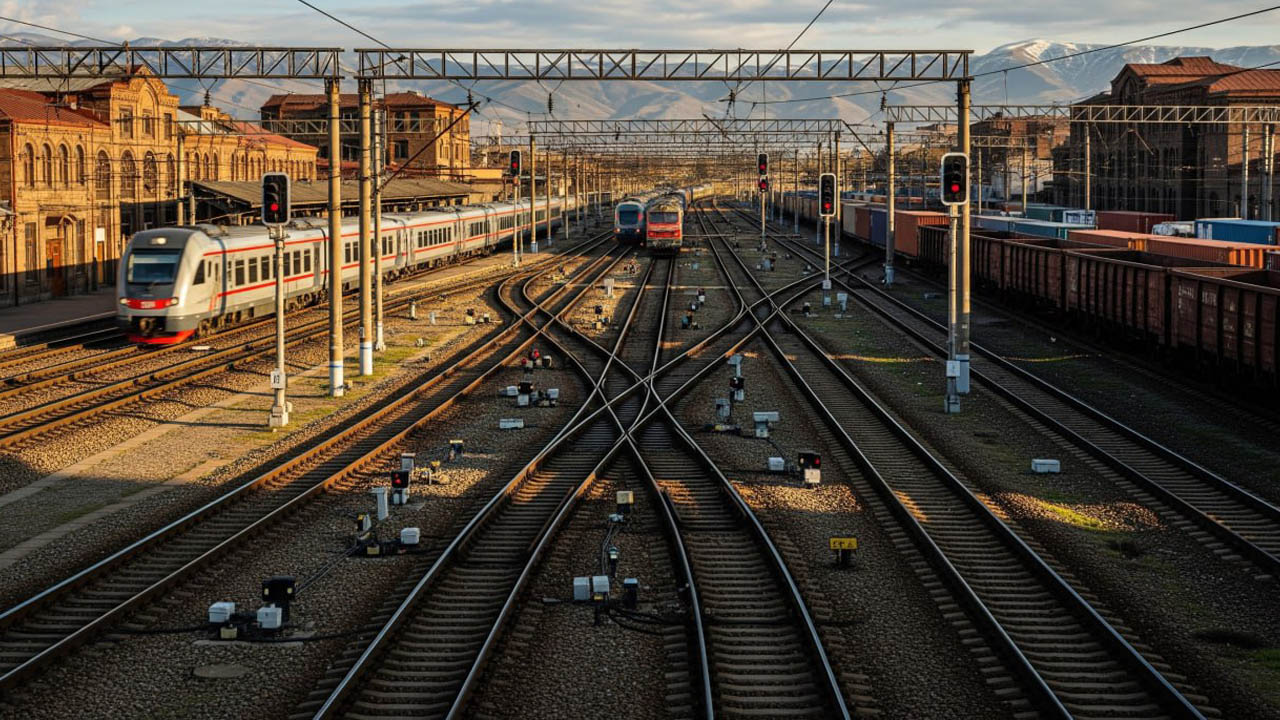
The Baku–Tbilisi–Kars railway has been operating since 2017. Following the reconstruction of its Georgian section in 2024, annual cargo capacity increased to 5 million tonnes. Authorities plan to raise that figure further in the future.
In 2023, Azerbaijan, Kazakhstan and Georgia established the joint venture Middle Corridor Multimodal Ltd. China joined the initiative in 2025.
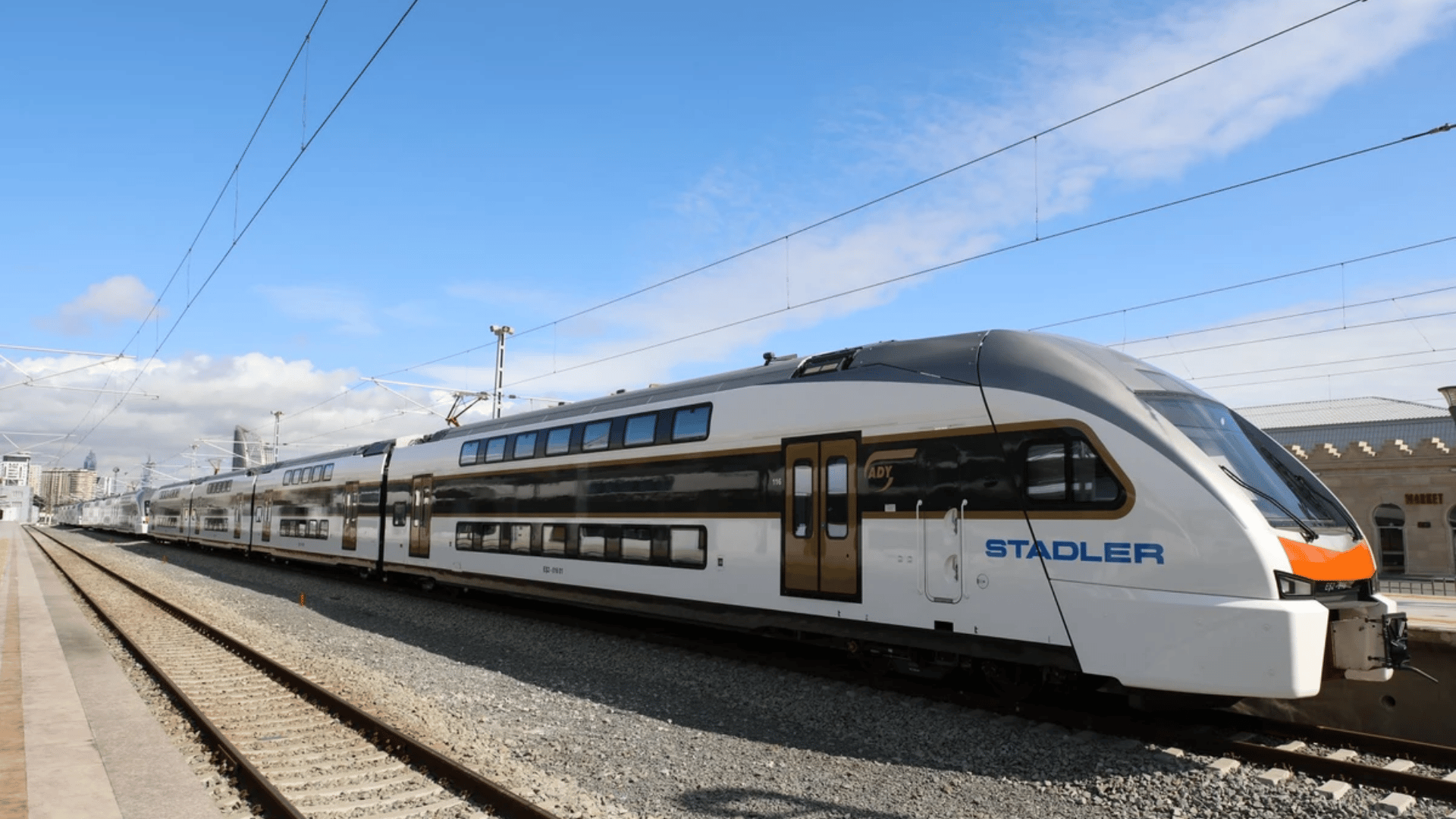
Statistics for 2025 also highlight Azerbaijan’s growing role. During the first 11 months of the year, Azerbaijan Railways handled more than 350 block trains from China, a 34% increase compared with the same period a year earlier. Container throughput at the Port of Alat rose by 40.8%.
These figures suggest that Azerbaijan is strengthening its position as a key gateway in the Eurasian trade network.
Expert assessments: optimism and cautious warnings
Nino Lezhava, Executive Director of Elevate Crossroads, describes the development of the corridor as a gradual process focused on removing bottlenecks.
She notes that the Middle Corridor has already become an important component of China’s Belt and Road Initiative. According to Lezhava, current infrastructure upgrades aim to address problem areas in the Caspian region, Central Asia and the South Caucasus.
Lezhava particularly highlights the rapid growth of container traffic. During the first half of 2025, 9,849 TEU passed through Georgia, an increase of 173% compared with the same period a year earlier. She says the route represents the fastest overland alternative to the northern corridor that runs through Russia.
Independent analyst Fuad Shahbazov views Azerbaijan’s role in a broader strategic context. In his assessment, Baku is not only investing in transit infrastructure but also taking an active role in regional coordination, strengthening the country’s influence across Eurasia.
Shahbazov argues that Azerbaijan’s cooperation with Kazakhstan and other partners extends beyond the Middle Corridor and includes new transport initiatives.
International organisations and research centres have also weighed in on the issue. In an analysis published in April, the Carnegie Endowment for International Peace argued that the Middle Corridor represents not a “permanent route” but a “window of opportunity” for Central Asian states. The report identifies infrastructure gaps, governance challenges, climate change — including the declining level of the Caspian Sea — and geopolitical risks as the main obstacles.
At the same time, forecasts by the OECD and the EBRD suggest that cargo volumes could reach 10–11 million tonnes by 2030 if key bottlenecks are removed.
Some experts remain more cautious. They argue that the corridor is still expensive and complex to operate. Multiple transshipment points, differences in customs regimes and uncertainty over cargo volumes continue to create additional risks. A shortage of vessels on the Caspian Sea and slow transport links between ports are also considered major challenges.
Nevertheless, a broad consensus has emerged that, with sufficient political will, sustained investment and institutional cooperation, the Middle Corridor could become a catalyst for regional development.
For Azerbaijan: a window of opportunity and cautious optimism
Elevate Crossroads’ ten priority projects aim to transform the Middle Corridor from an “alternative route” into a sustainable Eurasian transport artery. In this process, Azerbaijan is no longer a passive participant. Through infrastructure investments, institutional cooperation and political commitment, it has become an active player.
However, ports and railways alone will not guarantee success. Deepening regional cooperation, adapting to climate-related risks and accelerating digital transformation are equally important.
According to experts, if these conditions are met, the period from 2027 to 2030 could bring not only higher transit revenues for Azerbaijan but also a significant strengthening of its strategic position in the region. Otherwise, the corridor may remain merely a “window of opportunity” and fall short of its full potential.

Azerbaijan in the Middle Corridor