Armenia's new parliament: balance of power, tools of government and opposition's dead end






Balance of power in Armenia’s new parliament
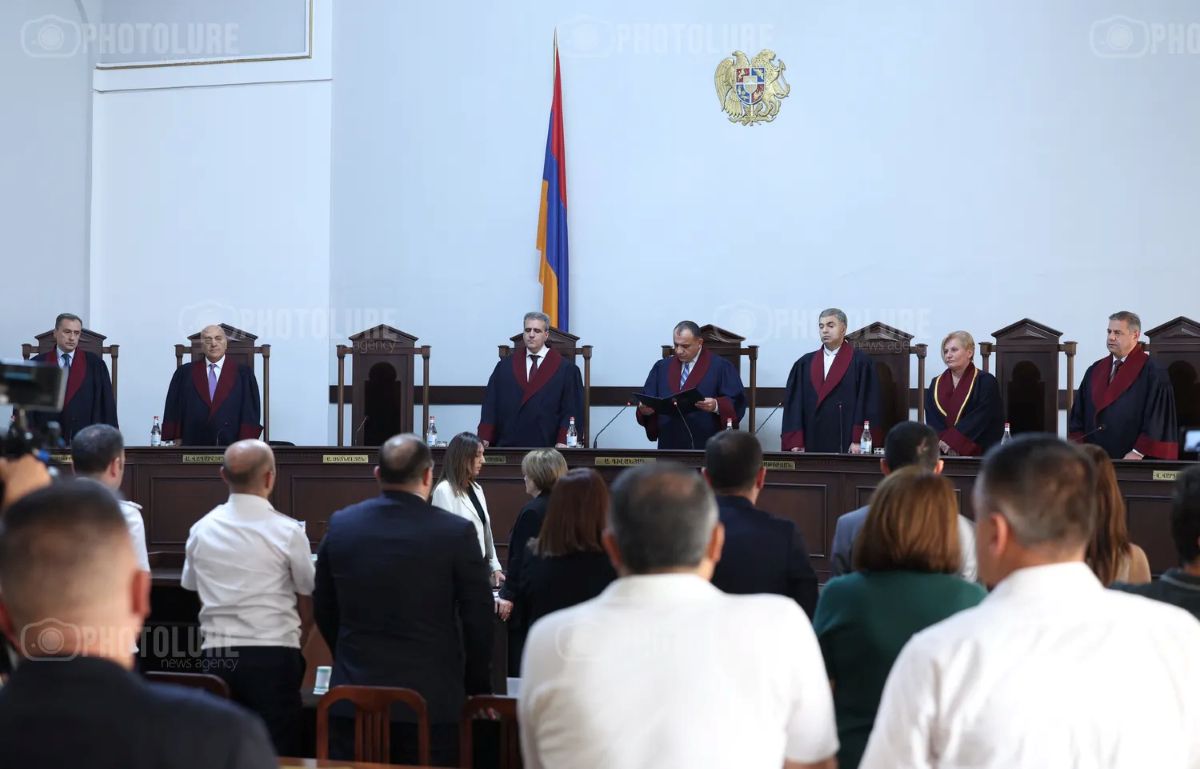
The parliamentary election results in Armenia have confirmed the continuity of the country’s political system while exposing deep structural contradictions. Political competition has shifted decisively towards intense polarisation. The National Assembly risks turning into little more than a platform for mutual accusations resembling a television talk show, rather than the country’s highest legislative body.
- Armenia’s new parliament holds first session as opposition, as expected, makes its presence felt
- ‘Regional stability is main achievement’: assessing Washington peace summit one year on
- ‘We have proved that Armenia is not a province, but a crossroads’ — Pashinyan
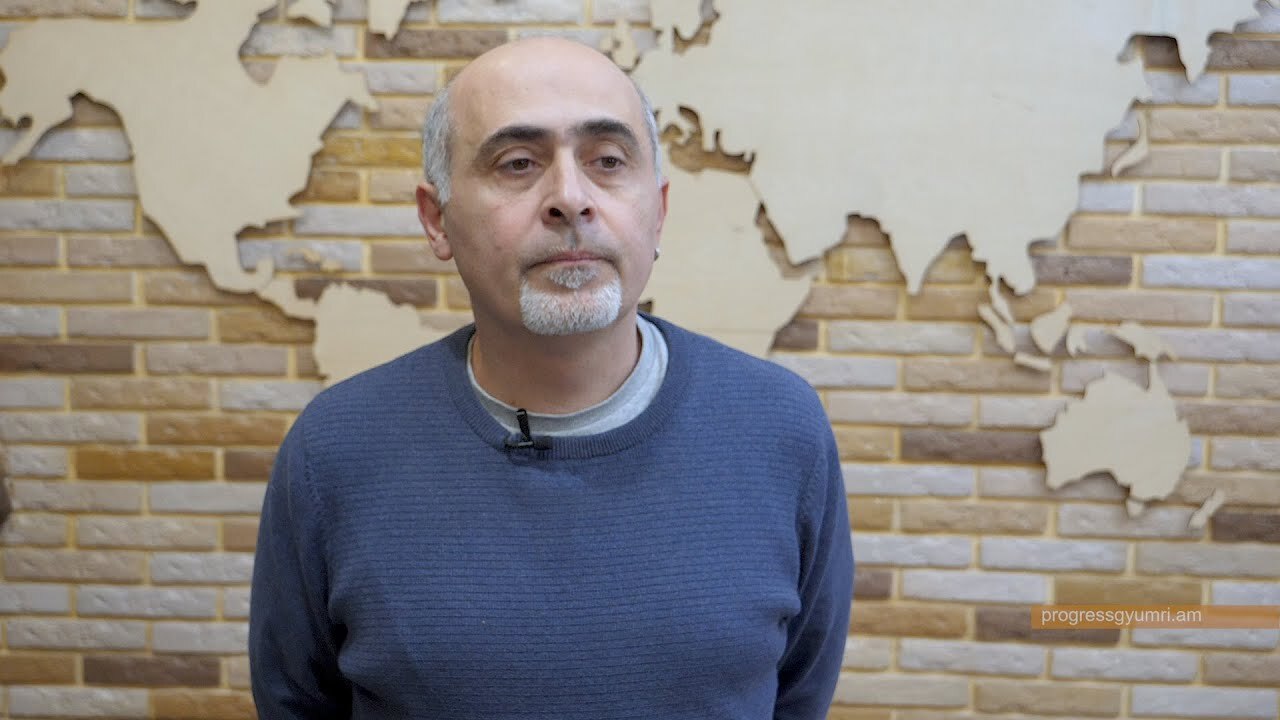
Political analyst Alexander Iskandaryan’s assessment
Continuity of the system, limits of influence and a fragmented opposition
“The new National Assembly has retained the key feature of its predecessor. The Constitution allows the ruling Civil Contract party to make almost any decision on its own, except on issues that require a constitutional majority. The two opposition factions — former president Robert Kocharyan’s Armenia Alliance and businessman Samvel Karapetyan’s Strong Armenia — have access to the media and the parliamentary platform, and can openly express their views and criticise the government. However, they have no real leverage over current policy.
The opposition forces have undergone a reshuffle. In the eighth National Assembly, Kocharyan’s faction held the largest number of seats. In the new parliament, however, it is the smaller of the two opposition factions. They are also unlikely to build a stable coalition or an “umbrella” structure. Because of their different origins and the lack of a practical basis for cooperation, even if they unite, they will not secure 50% of the seats needed to take the initiative. A long-term alliance is impossible. In 35 years of the Third Republic, the opposition has never managed to produce a successful example of unity. The minority is therefore left with little more than keeping the protest movement alive.”
Legitimacy, voters and the government’s narratives
“The ruling party has significant external legitimacy. This includes recognition of the election results by the US, EU, Turkey and Azerbaijan, as well as Russia’s refusal to withhold recognition from Nikol Pashinyan. The ruling force also relies on support from the bureaucracy. In fact, bureaucratic legitimacy has grown stronger. Civil servants clearly understand their ties to the political leadership and recognise the risks that a change of elites could bring.
At the same time, the government’s social legitimacy remains low. Kocharyan won 10% despite his high negative rating, while Karapetyan’s party, hastily assembled over six months with its leader under arrest, won a quarter of the vote despite high turnout. This is a serious signal of the level of public dissatisfaction.
Realising that its support will not grow, the government abandoned any real ideology. Political strategists pragmatically discarded the “high-minded Yerevan intelligentsia”, which would not have voted for the government anyway and would not have gone to the polls. Instead, they focused on their target audience: residents of small towns and villages with lower levels of education, young people and older generations.
To maintain control, the government uses several narratives:
“Peace versus war” — portraying opponents as the “party of war” and frightening voters with the prospect that an opposition victory would lead to a new war in September.
“Democrats versus oligarchs” — selectively labelling businesses. Wealthy entrepreneurs who support the government are simply called “businessmen”, while any affluent opponents are automatically branded “oligarchs”.
“Europe versus Russia” — systematically linking the entire opposition to Moscow. Karapetyan is portrayed this way because he came from Russia, Gagik Tsarukyan because of his ties to Belarus, and Kocharyan as Putin’s personal friend.
Accusing voters of supporting the opposition solely for money. This new level of polarisation has emerged in official statements by the authorities.”
The government’s geopolitical narrative and the opposition’s dead end
“The government’s anti-Russian discourse found fertile ground. These sentiments had been developing for years, and the events of 2020 and 2023 — the war in Karabakh, followed by the exodus of the entire Armenian population from Nagorno-Karabakh — only strengthened them.
At the same time, people across the post-Soviet space have traditionally associated the word “European” with quality and development: European healthcare, European education, European cars and so on. The government has effectively exploited this perception. Direct public support for Pashinyan from senior US officials, up to and including the US president, also played an important role.
The opposition has found itself in a strategic dead end. It cannot openly say “we are pro-Russian” or “we are not pro-Russian”. Unable to reject the geopolitical trend that enjoys broad public support, opposition parties have had to adapt and repeat that they are “also in favour of cooperation with Europe, but for a more carefully calibrated policy”.
Personal attacks instead of alternative programmes
“Instead of substantive work, the opposition is sliding into negative rhetoric and personal attacks: who is corrupt, who got their wife a job, who owns which flat and who once “didn’t even have a washing machine”. Armenian society knows perfectly well how the bureaucratic hierarchy works, so such “exposés” do not work. All these scandals only play into the government’s hands, allowing it to say: “Look who we have to work with in parliament.”
A constructive alternative would be to develop concrete programmes in different areas — healthcare, pensions, the economy, the army and so on. Even if the ruling majority rejects, say, 15 such professional programmes in a row, a systematic effort to offer solutions will eventually resonate with society. For now, trolling has replaced politics.”
Real state priorities: security, energy and meritocracy
“While parliament is busy trolling, the country’s key problems remain unresolved. One of them is security.
It is wrong to call the situation with Azerbaijan peace. You can see what real peace looks like on the border with Georgia, for example: people can cross freely using an ID card, while there are no transport corridors, European observers, military guards or concrete walls, even though 30% of the border remains undelimited. With Baku, however, there is only a state of “no war”. That is far from peace. At the same time, Azerbaijan is rapidly expanding its military capabilities in every sphere, including its air force.
Armenia needs to make foreign policy decisions and find ways to overcome the energy crisis.
Relations with all four neighbours — Russia, Turkey, Azerbaijan and Iran — are in crisis. Meanwhile, the Armenian-American TRIPP “Trump Route” project — a transit route through Armenia — remains little more than a political narrative. At the same time, launching new facilities, such as an AI data centre in Hrazdan, could create an acute electricity shortage that talk of American small modular nuclear reactors alone cannot solve.
In the Armenian city of Hrazdan, Firebird AI’s artificial intelligence factory has begun operations. The facility is the largest AI data centre in the region. The first phase of the project, worth more than $500 million, uses advanced NVIDIA accelerators and server equipment from leading global manufacturers. Some experts believe the factory’s launch could put additional pressure on the country’s energy system. (firebird.ai)
The state needs a competent administration to overcome these challenges.
The country needs to embrace meritocracy, appointing people based on competence rather than loyalty.
Finally, the country’s leadership needs to reconsider its attitude towards citizens.
Nikol Pashinyan is the prime minister of all Armenians, not just the voters of Civil Contract. The claim that people could only have voted against the government in exchange for money is false and toxic. The government now faces a vast array of real problems. Its first task is to recognise the scale of those challenges and start addressing them.
Balance of power in Armenia’s new parliament